

Tilly Offers Tips for Employee Retention

In a New Hope article, Urban Planning Chair Chris Tilly offered three tips on how to keep businesses fully staffed in a challenging labor market. Health and safety concerns during the pandemic and complaints about poor working conditions have left many industries struggling to fill positions. Many workers have refused to settle for unsafe and stressful jobs that don’t pay enough. According to Tilly, “attracting good employees comes down to pay and respect,” so businesses must offer enough money to employees, as well as respectful treatment and appropriate safety conditions. He also recommended “selling the job during the interviews” and considering changes to make the job more attractive. To maximize employee retention, he recommended investing time and effort into hands-on training for new employees. “There is nothing more frustrating to a new employee than being thrown into a retail situation without enough background,” he said. 


Tilly on Job Insecurity Even Amid a Labor Crunch

Urban Planning Chair Chris Tilly spoke to the New York Times about “just-in-time scheduling,” a labor practice based on customer demand that leads to great fluctuations in employee work hours. While some part-time workers prefer the flexibility of this model, many say it leaves them with too little income or an erratic schedule delivered on short notice. Nationwide, companies are complaining that they can’t fill jobs. Offering more full-time jobs would create a more stable work force, but many businesses are resistant to doing so, believing that the market will correct itself. Tilly said the increased reliance on part-time workers, particularly in the retail and hospitality industries, began decades ago, in part because of the mass entry of women into the work force. “A light bulb went on one day. ‘If we’re expanding part-time schedules, we don’t have to offer benefits, we can offer a lower wage rate,'” he explained.

Tilly Analyzes Restructuring of Best Buy

Urban Planning Chair Chris Tilly spoke to Retail Dive about the internal reorganization of Best Buy following a recent large wave of layoffs. The company has been struggling to compete against generalist stores, such as Walmart and Target, as well as Amazon. Over the last decade, Best Buy said it prized a “human-centric approach” focusing on the company’s front-line workers, but it recently cut many full-time employees in favor of part-time staff who are expected to be knowledgeable about all areas of the store. “It’s clear that the entire store-based consumer electronics industry has faced incredible pressure from online sales,” Tilly said. “The fact that Best Buy survived and bounced back is miraculous, when a lot of other companies were going down.” The pandemic made competition even tougher by shifting more things online. “If you’re just competing with online sales, what is the difference between Best Buy and Amazon?” Tilly asked.


Tilly Examines Impact of Inflation

Urban Planning Chair Chris Tilly was featured in a Sacramento Bee article discussing the impact of inflation on the 2022 midterm elections. Prices have increased 5.4% in the last year, one of the steepest rises since 2008, and California now has the highest per-gallon gas price in the country. According to Tilly, higher prices at the pump hurt agriculture-heavy regions like the San Joaquin Valley more than any other areas of the state. “A lot of the agricultural valley workforces are relatively low-income, which means that they’re ill-equipped to deal with higher prices,” Tilly explained. Businesses struggling to handle the costs of inflation are more likely to raise the costs of their goods and less likely to increase the wages of their workers. “If I’m an agricultural worker, and possibly even an agricultural worker who’s dealing with supply chain problems in their own industry, then I’ve got a problem,” he said.


Tilly on Newfound American Labor Power

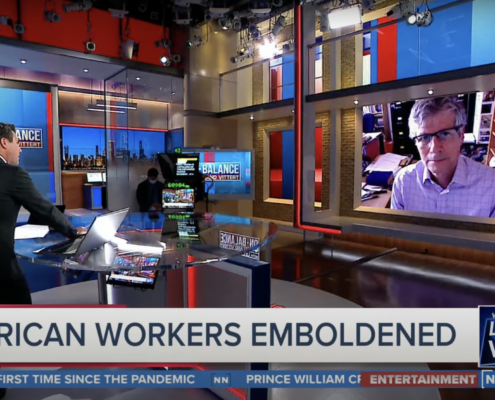
Urban Planning Professor Chris Tilly joined NewsNation Now to discuss the labor strikes going on across the country. “We’ve seen growing inequality in this country since the 1970s, so it makes sense for workers to point that out at a time when they have some leverage to do so,” Tilly said. The gap between the CEO and the worker has consistently grown in recent decades. Tilly explained that the power of unions depends on labor shortages and the supply chain, and workers now have more power than they have had in years. “That power is real, but we don’t know how long it will last,” he said. “If workers get [paid] more, that will contribute to inflation, but if what that means is that workers are getting a bigger piece of the pie, I would agree that that’s a good thing,” Tilly concluded.


Tilly Explains Labor Shortage Patterns

Urban Planning Chair Chris Tilly was featured in a Vox article discussing labor shortages as many low-wage workers demand better working conditions. Nearly 16 million Americans quit their jobs between April and July, highlighting the mental and physical fatigue experienced by many, as well as the desire to improve work environments. “For a lot of people, it’s been traumatizing,” Tilly said. Essential workers in California experienced a 30% increase in deaths in the first 10 months of the pandemic, according to an analysis of public data. Many low-wage jobs lack benefits such as health insurance and sick leave, and the work itself can be physically and emotionally taxing. “People settled for that, but they weren’t necessarily thrilled with those jobs,” Tilly explained. He also pointed out that any increases in hourly wages are often countered by inflation. “The labor shortage giveth, and the end of the labor shortage taketh away,” Tilly said.


Tilly on Boost in Workers’ Bargaining Power

Urban Planning Chair Chris Tilly was featured in an Associated Press article about the growing strength of union workers. A nationwide worker shortage spurred by the COVID-19 pandemic has given union workers an opportunity to demand higher wages and better working conditions. “Low-end jobs more typically have a labor surplus,” Tilly said. “But there are also shortages at higher skill levels, including jobs where there are chronic shortages like nurses, machinists and teachers.” Tilly predicted that, as the job market starts to slow in coming months, union workers may lose some of their newly claimed bargaining power. “As long as the economy is growing — and growing at a relatively vigorous pace — that’s going to continue helping workers, and for that matter, dealing unions a better hand, too,” he explained. “But we are not necessarily in a new era that’s going to look exactly like it has for the last few months.”


Tilly on the Intrusiveness of AI Technology

Urban Planning Chair Chris Tilly was featured in a Fox32 news segment about the growing use of artificial intelligence technology in the food industry. Many stores such as McDonald’s and Amazon Go are testing drive-thru and AI invisible checkout systems. Tilly explained that these new technologies have an impact on both consumers and the workforce. “To some extent, workers are being replaced by this technology,” he said. “At the same time, the expansion of services like curbside pickup means that workers are being added.” While the workforce may be balanced out by the expansion of these new technologies, Tilly noted that the services can be very intrusive for consumers. “Artificial intelligence is always on, always tracking what people are doing,” he said. While the Amazon Go model has currently only been implemented in small stores with many sensors and cameras, Tilly predicted that technology will most likely allow companies to expand these services in the long run.


Tilly on Improving Working Conditions Amid Labor Crunch

Urban Planning Chair Chris Tilly spoke to Grocery Dive and Business Insider about the growing labor shortage, which comes as many retail employees are demanding improved working conditions. “Consumer demand is expanding faster than people are able and willing to go back into the labor force,” Tilly explained. “I don’t think we’re at a point where workers have permanently gained the upper hand, but I would be cautious about saying exactly when the power is going to shift back more to employers.” In the grocery sector, Tilly recommended that employers market their positions as opportunities for growth and advancement, in addition to offering higher wages. “Back when retail was a relatively desirable job, part of what made it that way was you actually could have a retail career, and it was not just a very small number of people who became supervisors and managers and took that path to the top,” he said.


Tilly Unpacks Frustrations of Retail Workers

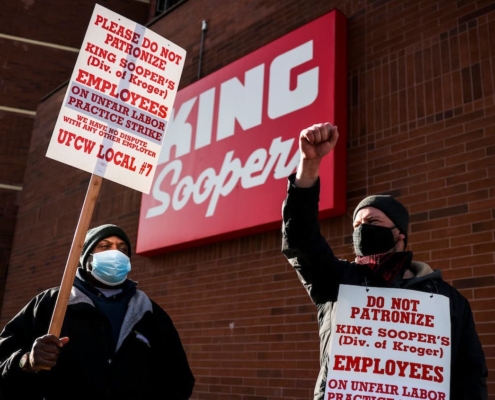
Urban Planning Professor Chris Tilly was featured in a Business Insider article about frustrated retail employees who are leveraging the demand for labor and fighting for increased pay, benefits, paid sick leave and childcare. Tilly explained that “consumer demand appears to be outpacing retailers’ ability to staff stores,” which gives more leverage to workers. “I don’t think we’re at a point where workers have permanently gained the upper hand, but I would be cautious about saying exactly when the power is going to shift back more to employers,” he said. According to Tilly, the central problem is that “retailers are having trouble attracting workers at the rates of pay that they’re offering.” For years, retail workers have expressed their frustrations about low wages, stress and lack of respect in the workplace. “It’s not surprising that these kinds of jobs are not appealing to workers who have some level of choice in the matter,” Tilly said.