
Measuring the Impact of the Community Schools Model

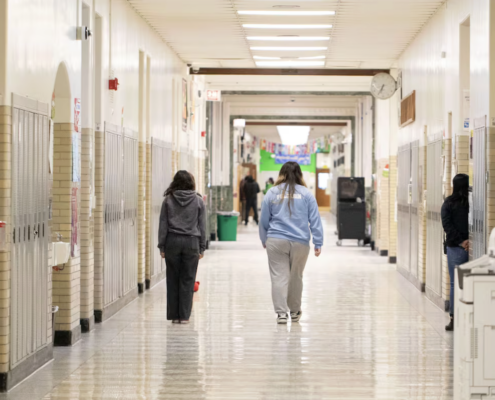
A Chalkbeat article on a Chicago Public Schools initiative to give high-poverty schools about $500,000 annually for wraparound support cited UCLA Luskin’s Isaac Opper, who has studied the effectiveness of community schools models elsewhere.

The Sustainable Community Schools program supports partnerships with nonprofits to transform some of the city’s most disinvested campuses into service-rich neighborhood hubs.

A Chalkbeat analysis, however, suggests that the investments have not yet led to widespread improvement in how likely students are to attend school regularly, graduate from high school, or pass key reading and math tests. Chicago school officials say the model needs more time to show results; it plans to triple the number of campuses in the program by 2027.

Research has shown that well-implemented programs can yield measurable student gains, said Opper, an assistant professor of public policy who helped evaluate New York City’s community schools program. Over several years, it produced attendance gains, graduation rate increases, and modest but notable test score improvements, he said.

In Chicago, said Opper, “If you are seeing no difference, one story is that Sustainable Community Schools isn’t working. Another is that it is working, but so are other things the district is doing.”

Two New Faculty Members Join UCLA Luskin Department of Public Policy

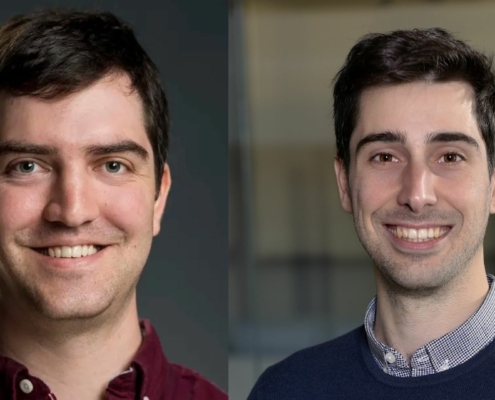
This fall, the UCLA Luskin School of Public Affairs welcomes two new assistant professors to its Department of Public Policy: Isaac Opper and Carlo Medici. Both scholars are economists who use empirical research and data-driven methods to explore policy-relevant questions that shape education, labor markets, and public institutions.

“We are excited to have recruited two extremely talented economists who we expect will not only contribute to scholarly research but also contribute to informing policy,” says Robert Fairlie, professor and chair of the public policy department. “They are both studying topics of utmost relevance. Students in our program and more broadly at UCLA will benefit from their expertise in microeconomics, statistics, and policy topics around immigration, labor, education, and other topics.”

Isaac Opper, an applied microeconomist, focuses on education policy and the statistical methods used to evaluate its effectiveness. “My largest body of work studies how education policy can be designed to improve student outcomes,” he said. This year, he will teach required statistics courses for both undergraduate Public Affairs and Master of Public Policy students. Opper added that he’s eager to “move from evaluating specific policy interventions to thinking more broadly about public policy,” continuing a career devoted to evidence-based reform. 

Carlo Medici, whose expertise spans labor economics, political economy, and economic history, studies the interaction between immigration, labor markets, and institutions. “I’m especially looking forward to working with colleagues and students who are passionate about how institutions and policies shape the economy,” Medici said. His research draws on both contemporary and historical data to illuminate the roots of modern policy challenges.