Skip to content
  • Students & Alumni
    • Career Services
    • Alumni Relations
    • Student Support
    • Graduate Resource Library
    • For Employers
  • News
  • Events
    • Events Calendar
    • Luskin Summit
    • Luskin Lecture Series
    • California Policy Briefing
    • Commencement
  • Students & Alumni
    • Career Services
    • Alumni Relations
    • Student Support
    • Graduate Resource Library
    • For Employers
  • News
  • Events
    • Events Calendar
    • Luskin Summit
    • Luskin Lecture Series
    • California Policy Briefing
    • Commencement
Giving
UCLA Luskin School of Public Affairs Logo
  • Academics
    Departments & Programs
    • Global Public Affairs
    • Public Policy
    • Real Estate Development
    • Social Welfare
    • Urban Planning
    • Undergraduate Program
    • Global Public Affairs
    • Public Policy
    • Real Estate Development
    • Social Welfare
    • Urban Planning
    • Undergraduate Program
    Graduate Degrees
    • Master of Global Public Affairs (MGPA)
    • Master of Public Policy (MPP)
    • Master of Real Estate Development (MRED)
    • Master of Social Welfare (MSW)
    • Master of Urban and Regional Planning (MURP)
    • PhD in Social Welfare
    • PhD in Urban Planning
    • Master of Global Public Affairs (MGPA)
    • Master of Public Policy (MPP)
    • Master of Real Estate Development (MRED)
    • Master of Social Welfare (MSW)
    • Master of Urban and Regional Planning (MURP)
    • PhD in Social Welfare
    • PhD in Urban Planning
    Undergraduate Degrees
    • BA in Public Affairs
    • Minor in Urban and Regional Studies
    • Minor in Gerontology
    • Minor in Public Affairs
    • BA in Public Affairs
    • Minor in Urban and Regional Studies
    • Minor in Gerontology
    • Minor in Public Affairs
    Professional Certificates
    • AI in Public Affairs Certificate
    • AI in Public Affairs Certificate
  • Admissions
    Program Specific Admissions
    • Global Public Affairs
    • Public Policy
    • Real Estate Development
    • Social Welfare
    • Urban Planning
    • Undergraduate Program
    • Global Public Affairs
    • Public Policy
    • Real Estate Development
    • Social Welfare
    • Urban Planning
    • Undergraduate Program
  • Faculty
    Our Faculty
    • All Faculty
    • Public Policy
    • Real Estate Development
    • Social Welfare
    • Urban Planning
    • All Faculty
    • Public Policy
    • Real Estate Development
    • Social Welfare
    • Urban Planning
    Leadership
    • Our Dean
    • Board of Advisors
    • Faculty Executive Committee
    • Our Dean
    • Board of Advisors
    • Faculty Executive Committee
  • Research Centers
    • Agile Visual Analytics Lab (AVAL)

      Empowers stakeholders with data to make informed decisions for children, families, and communities.

    • Berggruen Governance Index

      Evaluates the quality of political governance and democracy worldwide.

    • Center for Neighborhood Knowledge (CNK)

      Specializes in spatial analysis of socioeconomic disparities in neighborhoods.

    • Center for Policy Research on Aging (CPRA)

      Explores the societal and policy implications of an aging population.

    • Institute of Transportation Studies (ITS)

      Advances research, education, and meaningful civic engagement on transportation issues.

    • Institute on Inequality and Democracy

      Advances scholarship that confronts threats to democracy in America and around the world.

    • Latin American Cities Initiative

      Connects urban planning and policy networks across the Americas.

    • Latino Policy & Politics Institute (LPPI)

      Addresses policy challenges facing Latinos and communities of color.

    • Lewis Center for Regional Policy Studies

      Studying housing affordability and transportation equity in the L.A. region.

    • Los Angeles Education Research Institute (LAERI)

      Collaborates with schools to improve educational outcomes for L.A. students.

    • Luskin Center for Innovation

      Informing effective and equitable environmental policy that improves lives.

    • UCLA Voting Rights Project

      The flagship project for voting rights litigation and policy research.

    All Research Centers
  • Outcomes
Home / News / Data to the People

Data to the People

Data experts like Jianchao Lai SW PhD ’23 of the UCLA Agile Visual Analytics Lab strive to make information accessible and meaningful for all
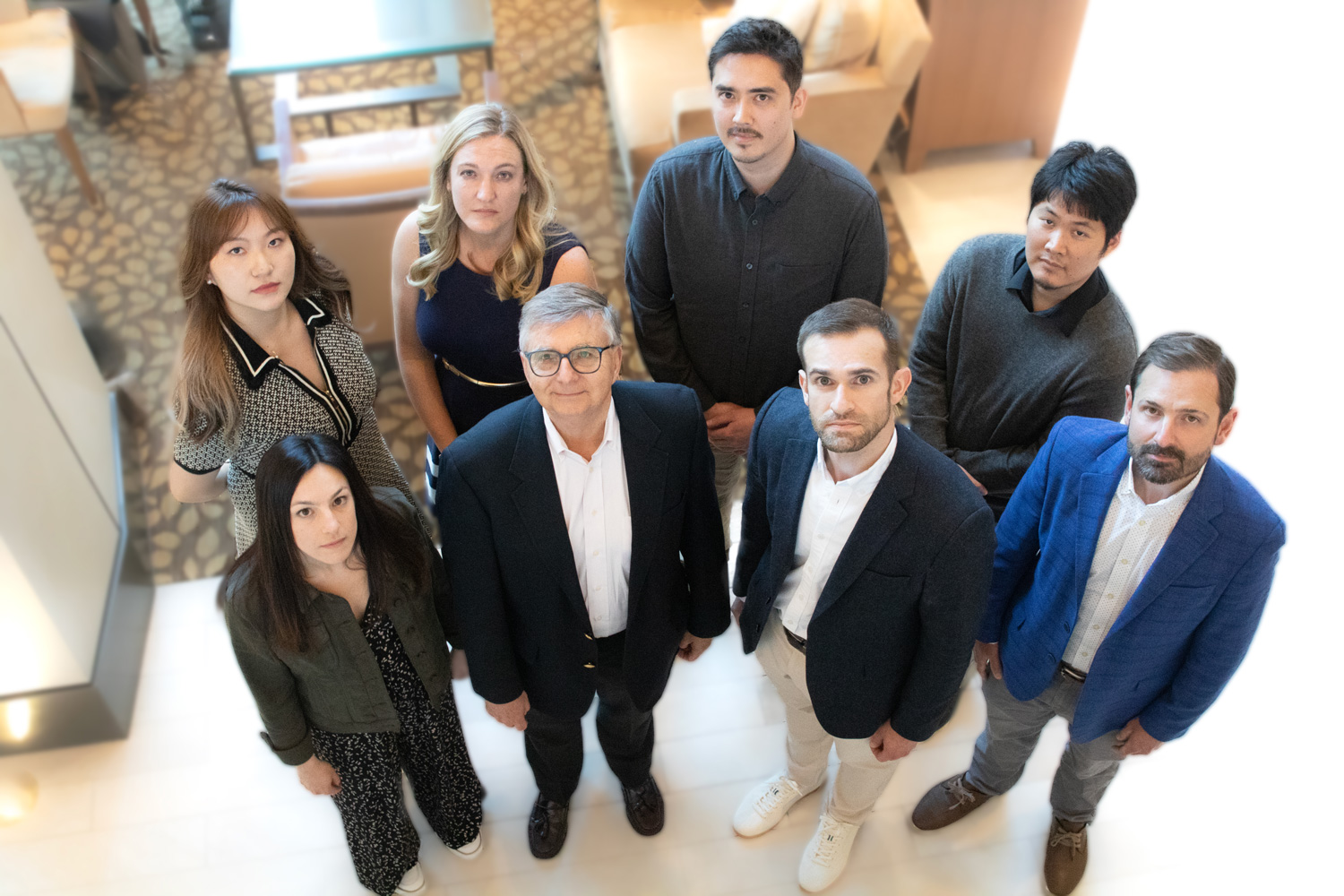
Members of the Agile Visual Analytics Lab hosted the Human Services Workforce Development Evaluation Symposium (HSWDES) at UCLA in May 2023
Members of the Agile Visual Analytics Lab hosted the Human Services Workforce Development Evaluation Symposium (HSWDES) at UCLA in May 2023. From left, they are, back row: Jianchao Lai, Ashley Long, Taylor Herhusky, Bryan Maekawa; front row: Kaitlyn Childs, Todd Franke, Jonathan Litt, Robert Blagg. Not Pictured: Priya Kanneboyina, Samyalisa Enright Jones, Sandra Kirkner and Susana Agama. Photo by Les Dunseith

Posted in

  • School of Public Affairs

Published on

  • December 19, 2023
  • child welfare, data analysis, innovation

Share this Article

By Les Dunseith

Connecting people to data.

That’s the mission of a team of data experts at the UCLA Luskin School of Public Affairs known as the UCLA Agile Visual Analytics Lab, or AVAL. For almost a decade, the faculty, staff and student innovators at AVAL have been reimagining how vital information is put into the hands of people whose decisions impact the lives of others.

AVAL’s efforts have been funded by over $24 million in contracts and grants, and recently, the AVAL team was awarded $9.4 million from the Children’s Bureau, an office within the U.S. Department of Health and Human Services, to establish, by cooperative agreement, a Quality Improvement Center on Workforce Analytics. The effort, led by AVAL and in partnership with three other universities and several private consultants, will work with at least six public or tribal child welfare agencies to advance their use of data in addressing child welfare workforce needs.

The AVAL team strives to help academic and community partners engage with data in meaningful ways, streamlining the data collection process and creating interactive visualizations of the results. Among the team of innovators is Jianchao Lai, who has been crunching numbers and helping to visualize data at AVAL since 2019, all while working toward the PhD in Social Welfare she earned in June 2023.
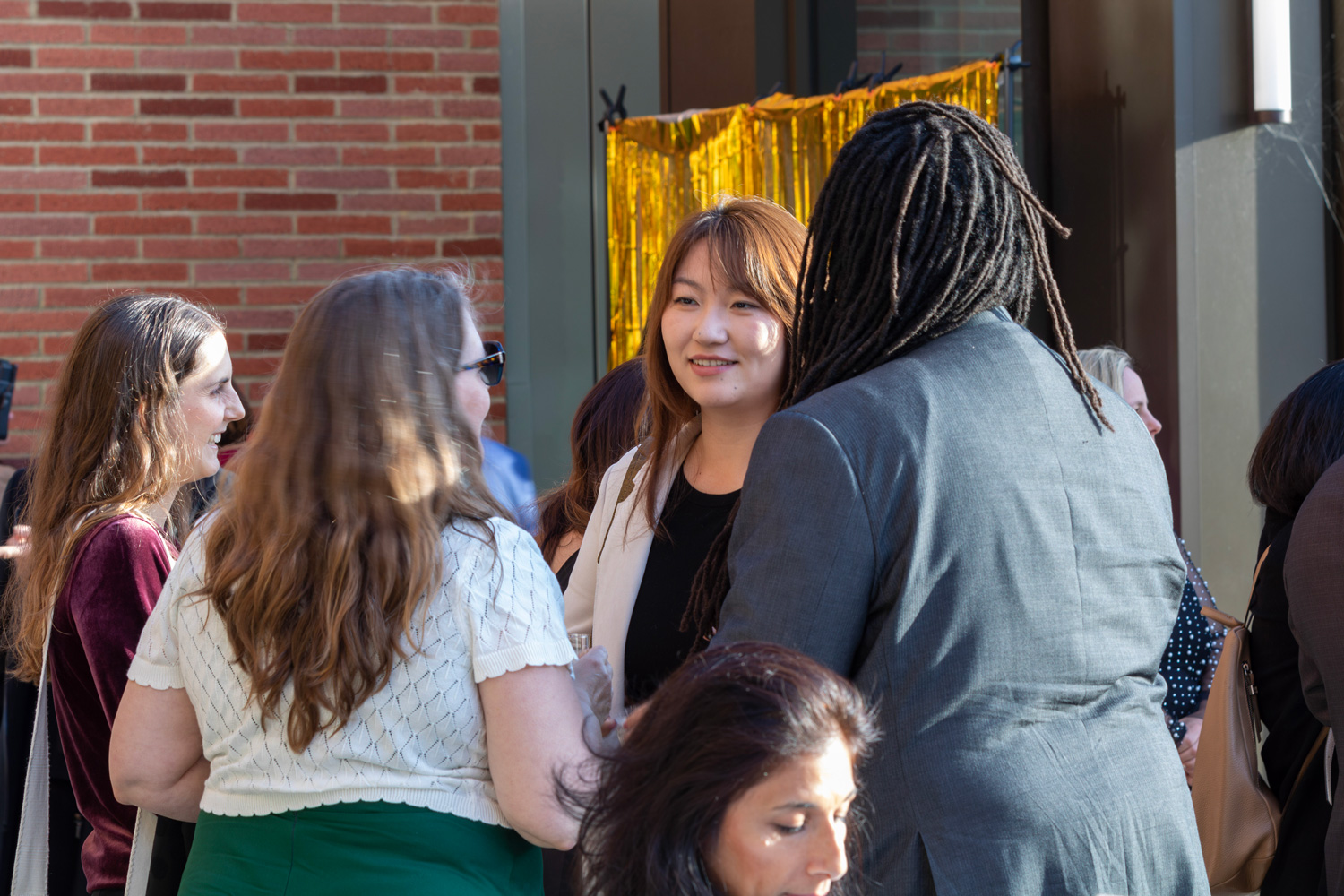
a group of women chat during an event at UCLA

“People have different backgrounds and ideas about how to do research and what’s the best for their community. We’re bridging these differences and letting the data tell the story.”
—Jianchao Lai, center

Lai, who was hired upon graduation as a full-time staff member by AVAL, did not envision this career for herself when she first left China to pursue an education abroad. That changed when she met Todd Franke, professor of social welfare and co-founder of AVAL.

“The first professor I met at the UCLA Welcome Day was Todd,” recalled Lai, who had written to Franke with questions about resources available to her on campus and asking how she might contribute to the educational community. “And since then, he has been helping me through the whole PhD process, through the ups and downs.”

Franke and co-founder Robert Blagg were motivated to create AVAL in 2014 based on their experiences writing lengthy research reports and then seeing that the findings didn’t get used by stakeholders.

“The context in which programs, policies and practices are implemented is constantly changing, and too often lengthy written reports get filed away after someone skims through the executive summary,” Franke said. “Narrative reports don’t allow diverse stakeholders to easily explore findings from unique perspectives. AVAL was created to ensure stakeholders have the vital information they need — and ultimately use — to make more timely and sound decisions.”

Data vizualiztion

An example of a data visualization developed for a previous child welfare workforce project. Image courtesy of Agile Visual Analytics Lab Click here to see an interactive version.

The AVAL team strives to help academic and community partners engage with data in meaningful ways, streamlining the data collection process and creating interactive visualizations of the results.

Read more about the grant on UCLA Newsroom

As part of their work with the Children’s Bureau’s previous Quality Improvement Center for Workforce Development, the AVAL team partnered with the Washington State Department of Children, Youth and Families to develop an interactive dashboard describing characteristics of their workforce and key indicators such as staff turnover and retention.

The new federal funding will further support efforts to build upon the innovations developed by AVAL and other partners through their work with the Children’s Bureau. It will provide funding across five years for work to be completed in cooperation with researchers at the University of Nebraska, Lincoln; the University of Washington; the University of Pittsburgh; and several nationally recognized private consultants. Franke will be the principal investigator, with Blagg as the co-PI.

portrait photo of Jianchao Lai“When your evidence is not digestible to practitioners, it’s not going to lead to any changes. Charts, graphs and diagrams help them to see the process and use the data in a very interactive and timely manner.”
—Jianchao Lai


Educators today often talk about evidence-based practice and data-driven decision-making. “But when your evidence is not digestible to practitioners, it’s not going to lead to any changes,” Lai said. “Charts, graphs and diagrams help them to see the process and use the data in a very interactive and timely manner.”

When data presentations are visually appealing, they can enhance immediate understanding. “I’m that way about data visualization myself,” Lai said. “Sometimes, I don’t want to read through all of the numbers — just show me the graphs first.”

Data crunching is an acquired skill for Lai, who earned a bachelor’s from Nanjing University in China and a master’s from the University of Wisconsin-Madison in social work. The topics for her work at AVAL can be wide-ranging, but she noted that some projects have coincided with her academic interest in children and her prior experience working with child services organizations.

“I kind of understand from doing micro social work that involves families and children that, you know, three hours of therapy per week for that family is never enough,” said Lai, noting that is particularly true for marginalized populations such as new immigrants and families living in poverty.

“We need to change the system before we can make a real impact.”

Changing a system sometimes begins with challenging widely held perceptions.

During her doctoral program at UCLA, for example, Lai pursued a research interest in the underreporting and underservice of child maltreatment and gender-based violence in Asian American communities. Lai’s dissertation explored the experiences of Asian American families in California’s child welfare system from a quantitative perspective. And in a qualitative research component, she interviewed Asian American young adults who had experienced abuse in their childhoods that was never reported to Child Protective Services.

“The experience was so intense,” Lai said. “And it’s a problem that is kind of invisible. It’s like, ‘Why focus on Asians? They’re OK. They’re a model minority.’ ”

Lai said incidents of hate crimes against Asian Americans during the pandemic may have helped change some people’s misconceptions. “It’s sad to say, but this was a good timing for people to realize something has been going on for a long time.”

At AVAL, Lai has worked with organizations and agency officials to ensure that time-sensitive data is collected and processed in a timely, consistent manner that allows it to be viewed through interactive online dashboards and updated with the latest information.

“Imagine a massive data table — it’s very difficult for people to see trends. So, we transform those dry tables into pictures that are easy to understand and unlock new insights,” Lai explained. “Let’s say they want to see the differences year by year, or by age group, we can design these pictures so users can engage with the data and find answers to their questions faster.”

Applied research of this type is most effective when it accounts for the fact that data users come from all walks of life.

“People have different backgrounds and ideas about how to do research and what’s the best for their community,” Lai said. “We’re bridging these differences and letting the data tell the story.”

Data visualization

A data visualization example relating to a previous child welfare workforce project. Image courtesy of Agile Visual Analytics Lab Click here to see an interactive version.

Informative and engaging data visualizations help stakeholders make decisions, said Jonathan Litt, deputy director of AVAL. As part of the Children’s Bureau’s Quality Improvement Center for Workforce Development, the AVAL team analyzed data on workforce needs and created interactive dashboards for eight child welfare agencies in a national study of frontline child welfare workers.

“These dashboards enabled each agency to explore underlying factors for high turnover rates,” said Litt, noting that the agencies then were able to target strategies at addressing those factors directly. In early September, the AVAL team was awarded a new grant of $9.4 million to build upon the innovations developed by AVAL and other partners through their previous work with the Children’s Bureau.

A hiring challenge for AVAL, Litt said, is finding people whose skill sets encompass the three areas they seek — an understanding of human services fields, an applied research orientation and an aptitude for technical work.

Few potential staff members possess all three, he said. “Dr. Lai is an example of someone who came in with a human services background and research training, and she has embraced opportunities to expand technical skills with data processing and analytics tools beyond her formal education,” Litt said.

Although Lai often works on tasks independently, she treasures the human interaction that comes with collaborative research projects at AVAL.

“The fascinating aspect for me is transitioning from a purely academic background to engaging in more practical and applied research,” she said. “A traditional academic might argue there’s only one interpretation for a particular kind of information. But with our work, you realize that people think so differently.”

The more she talks with other researchers or engages with clients and other partners, Lai said, the more she understands herself.

“I want to make an impact on other people’s lives, to do something to help them fulfill their promise, just like they’ve been helping me, directly or indirectly,” she said. “Fundamentally, the work I’m part of makes me feel constantly empowered. I think, ‘Wow. As a community, we can do so much.’ Let’s carry on the work!”

Faculty Mentioned in this Article
todd-franke_9009187534_o_e-e1462560296166

Todd Franke

Professor Emeritus of Social Welfare

Trained in social work and educational psychology, Professor Franke seeks to achieve a better understanding of, and improve the responsiveness...

Related Articles

Jorja Leap Ford Foundation|Jorja Leap Ford Foundation

UCLA Luskin’s Two-Year Evaluation of Community-Led Violence Intervention in Newark

February 24, 2026
Luskin in the News
UCLA’s two-year evaluation shows Newark’s Community Street Team reduces violent crime, builds trust, and strengthens sustainable,...
Read More
Duncan Lindsey. Photo by Alan Braus.

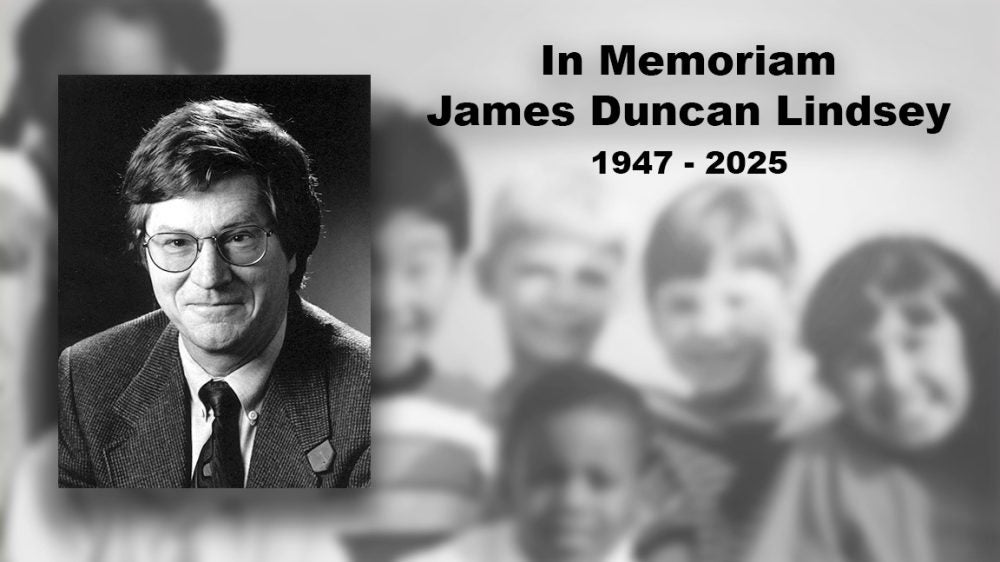
In Memoriam: James Duncan Lindsey

June 25, 2025
School of Public Affairs
The UCLA Luskin Social Welfare professor emeritus was a pioneering scholar of child welfare....
Read More
'Act! Make this world better

Gary Segura Reappointed to 2nd Term as UCLA Luskin Dean

May 5, 2022
Education
Segura, who was first appointed as dean in 2016, has overseen the addition of a new...
Read More
woman in isolation at home for virus outbreak

Students Provide a Direct Line to Help Struggling County Workers

June 18, 2020
Health Care
Social Welfare students partner with L.A. County to support those struggling during COVID-19 pandemic...
Read More
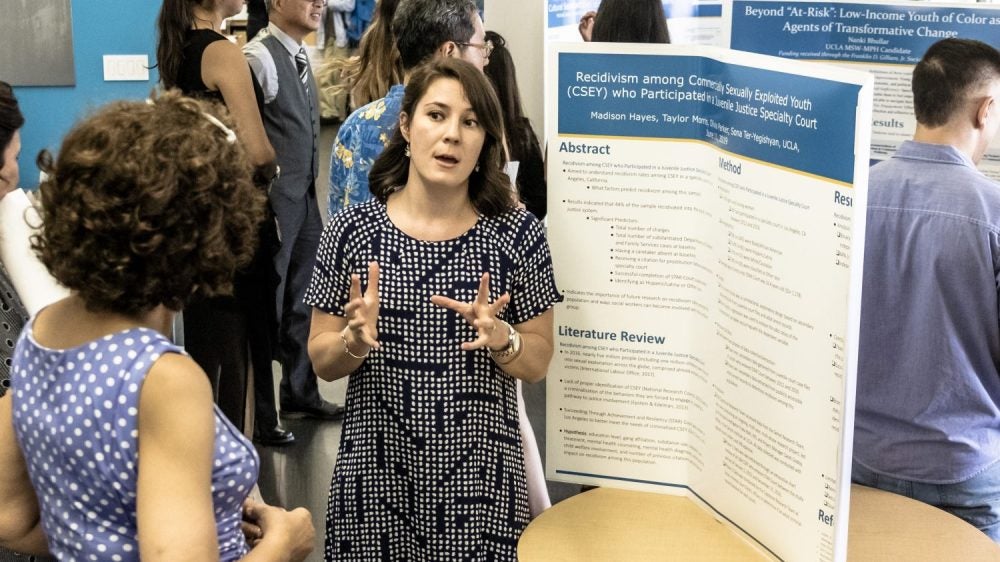
Madison Hayes presents research into sexually exploited youth, completed as part of Social Welfare's capstone requirement

Graduating Students Seek Out Solutions Near and Far

July 16, 2019
Alumni
The capstone research projects that are now part of all UCLA Luskin programs tackle local challenges...
Read More
header-gradient4

Students Present Research on Child Welfare Issues

June 8, 2018
Luskin's Latest Blog
Yearlong research projects were developed by students in Social Welfare's CalSWEC Public Child Welfare program....
Read More
Learn more about UCLA Luskin

Find contact information and get answers to your questions.

Contact Us

Public Affairs Building
337 Charles E. Young Drive East
Los Angeles, California 90095

Linkedin Youtube Instagram Facebook X-twitter
Campus Resources
  • Map, Directions, Parking
  • Directory
  • Academic Calendar
  • Careers
  • Map, Directions, Parking
  • Directory
  • Academic Calendar
  • Careers
School Resources
  • About
  • Our Dean
  • Administration
  • Luskin School Intranet
  • Board of Advisors
  • Contact Us
  • Visit Us
  • About
  • Our Dean
  • Administration
  • Luskin School Intranet
  • Board of Advisors
  • Contact Us
  • Visit Us
UCLA logo
© 2026 Regents of the University of California
  • Emergency
  • Accessibility
  • Privacy & Terms of Use
  • Emergency
  • Accessibility
  • Privacy & Terms of Use
Facebook Instagram Linkedin X-twitter Youtube Threads
UCLA Luskin School of Public Affairs Logo
Academics
Departments
  • Global Public Affairs
  • Public Policy
  • Real Estate Development
  • Social Welfare
  • Urban Planning
  • Undergraduate Program
  • Global Public Affairs
  • Public Policy
  • Real Estate Development
  • Social Welfare
  • Urban Planning
  • Undergraduate Program
Graduate Programs
  • Master of Global Public Affairs (MGPA)
  • Master of Public Policy (MPP)
  • Master of Real Estate Development (MRED)
  • Master of Social Welfare (MSW)
  • Master of Urban and Regional Planning (MURP)
  • PhD in Social Welfare
  • PhD in Urban Planning
  • Master of Global Public Affairs (MGPA)
  • Master of Public Policy (MPP)
  • Master of Real Estate Development (MRED)
  • Master of Social Welfare (MSW)
  • Master of Urban and Regional Planning (MURP)
  • PhD in Social Welfare
  • PhD in Urban Planning
Undergraduate Programs
  • BA in Public Affairs
  • Minor in Urban and Regional Studies
  • Minor in Gerontology
  • Minor in Public Affairs
  • BA in Public Affairs
  • Minor in Urban and Regional Studies
  • Minor in Gerontology
  • Minor in Public Affairs
Professional Certificates
  • AI in Public Affairs Certificate
  • AI in Public Affairs Certificate
Admissions
Program Specific Admissions
  • Global Public Affairs
  • Public Policy
  • Real Estate Development
  • Social Welfare
  • Urban Planning
  • Undergraduate Program
  • Global Public Affairs
  • Public Policy
  • Real Estate Development
  • Social Welfare
  • Urban Planning
  • Undergraduate Program
Faculty
Our Faculty
  • All Faculty
  • Public Policy
  • Real Estate Development
  • Social Welfare
  • Urban Planning
  • All Faculty
  • Public Policy
  • Real Estate Development
  • Social Welfare
  • Urban Planning
Leadership
  • Our Dean
  • Board of Advisors
  • Faculty Executive Committee
  • Our Dean
  • Board of Advisors
  • Faculty Executive Committee
Research Centers
  • Agile Visual Analytics Lab (AVAL)

    Empowers stakeholders with data to make informed decisions for children, families, and communities.

  • Berggruen Governance Index

    Evaluates the quality of political governance and democracy worldwide.

  • Center for Neighborhood Knowledge (CNK)

    Specializes in spatial analysis of socioeconomic disparities in neighborhoods.

  • Center for Policy Research on Aging (CPRA)

    Explores the societal and policy implications of an aging population.

  • Institute of Transportation Studies (ITS)

    Advances research, education, and meaningful civic engagement on transportation issues.

  • Institute on Inequality and Democracy

    Advances scholarship that confronts threats to democracy in America and around the world.

  • Latin American Cities Initiative

    Connects urban planning and policy networks across the Americas.

  • Latino Policy & Politics Institute (LPPI)

    Addresses policy challenges facing Latinos and communities of color.

  • Lewis Center for Regional Policy Studies

    Studying housing affordability and transportation equity in the L.A. region.

  • Los Angeles Education Research Institute (LAERI)

    Collaborates with schools to improve educational outcomes for L.A. students.

  • Luskin Center for Innovation

    Informing effective and equitable environmental policy that improves lives.

  • UCLA Voting Rights Project

    The flagship project for voting rights litigation and policy research.

All Research Centers
Outcomes
Common Search Terms

Results will show as you type.