• Public Policy
  • Social Welfare
  • Real Estate Development
  • Urban Planning
  • Luskin Home
  • Undergraduate Program
  • Stay in Touch
  • Events Calendar
  • Give Now
  • About
    • Our Dean
    • Board of Advisors
    • Contact Us
    • Visit Us
    • Diversity, Disparities and Difference
    • Communications
      • UCLA Luskin in the News
      • Luskin Forum Online
  • Departments
    • Public Policy
    • Real Estate Development
    • Social Welfare
    • Undergraduate Program
    • Urban Planning
  • Apply
    • Master of Public Policy
    • Master of Real Estate Development
    • Master of Social Welfare
    • Master of Urban and Regional Planning
      • Double Degree With Sciences Po
    • PhD in Social Welfare
    • PhD in Urban Planning
    • Undergraduate Programs
  • Faculty
    • All
    • Public Policy
    • Social Welfare
    • Urban Planning
    • Real Estate Development
    • Faculty Executive Committee
    • Open Positions
  • Student Affairs & Alumni
    • Career Services
      • Employers
      • Fellowships
    • Student Support
    • Graduate Resource Library
    • Alumni Relations
  • Support
  • Programs
    • Research Centers & Affiliated Research
    • CA Title IV-E Education Program
    • Global Public Affairs (GPA)
    • Data Analytics Certificate
    • Luskin Lecture Series
    • Luskin Summit
    • UCLA Luskin California Policy Briefing
    • Public Service Weekend
    • Commencement
  • Administration
    • Financial Services
    • Events Office
    • Information Technology
  • Search
  • Menu Menu

Archive for category: Public Policy News

Counteracting the Market Dominance That Keeps Health Care So Expensive Research by UCLA Luskin's Wesley Yin is one of several projects made possible by nearly $55 million in awards to the school

December 3, 2025/0 Comments/in Public Policy, Public Policy News, School of Public Affairs Wesley Yin /by Mary Braswell

Americans are facing rising health expenses year after year, with many compelled to skip or delay the care their families need. To investigate the root causes of this barrier to affordability, UCLA Luskin’s Wesley Yin has embarked on a pair of ambitious studies of market power in the health care industry — and how it might be checked.

Yin’s research, funded by the nonprofit Arnold Ventures, will seek to answer several questions:

How has consolidation in the industry — mergers among hospitals, physician practices, insurers, and pharmaceutical managers, for example —  eroded competition?

How has the market dominance of hospitals and other medical care providers suppressed wages in the health sector — an industry that accounts for 18% of the U.S. economy?

Can “public option” health insurance plans, with cost structures set by government statute, exert enough pressure to counteract the price-negotiating power of dominant providers, leading to lower health care bills?
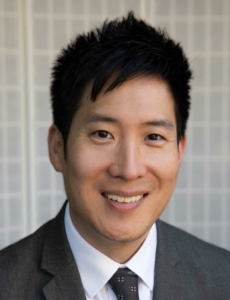
Headshot of man in suit, white shirt, tie

Professor Yin will tap into powerful research tools to explore market forces in the health sector.

“There are a lot of markets in the U.S. economy that are no longer competitive. This can generate some benefits at times. But the broad concern is that this can create a lot of distortions in the markets, which ultimately bear down on consumers and on workers through higher prices, fewer options, and lower wages,” said Yin, a UCLA Luskin professor of public policy with a joint appointment at the UCLA Anderson School of Management.

“Health care is an industry where this concentration has been rising for decades.”

Yin’s two-year study was made possible by a $466,000 grant from Arnold Ventures, which funds research into policy solutions that address inequity and injustice. It is one of several grants and contracts that have brought nearly $55 million to the UCLA Luskin School of Public Affairs from April to October 2025.

By far the largest component of that funding — more than $47 million — is from federal, state, and county agencies that contract with UCLA Luskin Social Welfare to administer social services and training programs.

Philanthropic groups, nonprofits, community organizations, and public agencies have also stepped up to support UCLA Luskin research spanning the school’s broad portfolio: fair housing, water quality, voting rights, K-12 education, parking reform, and more.

The common thread is a desire to find policy solutions to the most pressing issues of our time, with donors turning to UCLA for its extensive faculty expertise and deep resources as a top-tier research university.

Yin’s work draws on his experience as a scholar, economist and public servant. Motivated by a desire to understand the causes and consequences of excessive market power, he recently co-authored a high-impact study of the crippling impact of medical debt in America.

In the Biden Administration, Yin served as Chief Economist of the White House Office of Management and Budget, where he helped advance policies surrounding affordability and competition. In the Obama Administration a decade earlier, he helped implement the Affordable Care Act during his service in the Department of Treasury and Council of Economic Advisors.

For his current project on the health care industry’s market power, Yin and his research team will tap into powerful resources, including the Federal Statistical Research Data Center, housed in the UCLA Luskin Public Affairs building. Access is highly selective, requiring security clearances and confidentiality agreements — but the massive trove of data opens up vast opportunities for novel research.

Yin has secured permission to analyze anonymized U.S. Census Bureau and Internal Revenue Service files to assess the impact of consolidation in the health care industry on workers’ earnings and job stability — including the potential for lopsided bargaining power and wage inequality.

For a second investigation funded by the grant, Yin and his team will review records from Washington state’s public option health care program, the first in the nation. They hope to identify how such public-private partnerships in procurement can best be structured to act as a brake on soaring health care costs.

“In theory, a public option, if it’s structured well, could try to achieve the prices of what a competitive market would have achieved,” said Yin. “The big question is how to design a public option program with teeth that also supports a healthy hospital market. This project essentially is to understand this.”

Jennifer Gorman MPP ’26 Drives Hydrogen Innovation at Honda As a summer intern on Honda’s Hydrogen Solutions Team, Gorman conducted market research, regulatory analysis, and workforce planning.

August 27, 2025/0 Comments/in Business and the Environment, Environment, For Students, Luskin's Latest Blog, Public Policy, Public Policy News /by Peaches Chung

Jennifer Gorman MPP ’26 reflects on her summer with American Honda Motor Co.’s Hydrogen Solutions Team, where she gained firsthand insight into how corporations, policymakers, and implementers collaborate to advance clean energy solutions.

Where are you working this summer and what are your primary responsibilities or focus areas day-to-day? 

This summer I interned at American Honda Motor Co. on their Hydrogen Solutions Team within the Sustainable Business Development Unit. One of my main projects was a market validation analysis, where I mapped regulatory requirements, reviewed decarbonization plans across California, and interviewed potential public sector offtakers to help Honda assess fuel cell market demand and shape its commercialization strategy. I also created a workforce development strategy for internal use to guide the company’s efforts to build a skilled workforce capable of servicing its fuel cells. Together, these projects helped Honda better understand where demand for fuel cells is strongest and how to support the workforce needed to scale its hydrogen business. 

What’s one insight or perspective you’ve gained that surprised you, shifted your thinking, or changed how you approach public policy? 

Through conversations with transit agencies, cities, and energy service providers, I realized how critical it is to include implementers in policy design. Too often, policies are developed at a high level without fully accounting for the realities faced by those responsible for executing them. For instance, California’s Innovative Clean Transit rule requires transit agencies to purchase 100% zero-emissions buses by 2029, but currently, only one zero-emissions bus model meets the range needed for most routes. Engaging implementers can reveal practical challenges and opportunities that aren’t apparent from a pure policy or analytical perspective. Policymaking must be a collaborative process that integrates the expertise of those who will bring policies to life on the ground.  

As a policy student, what insights have you gained about how large companies like Honda navigate government regulations, environmental standards, or energy policy? 

Working at Honda showed me that corporate sustainability strategy isn’t just about following regulations; it’s also about anticipating policy trends to guide strategic planning and investments. Companies actively advocate for policies and programs that align with their business goals, monitor emerging standards, evaluate potential market opportunities, and plan technology and workforce development accordingly. This experience gave me a new perspective on how policy impacts real-world outcomes: it shapes the pace of innovation, and the practical steps companies take to implement cleaner energy solutions.  

Any advice for peers seeking similar internships or career paths? 

Don’t be afraid to explore careers or internships beyond the traditional government or nonprofit paths. The private sector plays a critical role as both an advocate and implementer in policy processes. Experiencing policy from this perspective can reveal how decisions are put into practice, how incentives shape behavior, and ultimately how change happens. These insights can help you become a more thoughtful and effective policy practitioner in any context. 

Summer Job Diaries: Margaret Saunders MPP ’26 From the Classroom to NASA: A Summer at the Intersection of Data, Policy, and the Planet

August 11, 2025/0 Comments/in Environment, For Students, Public Policy, Public Policy News, School of Public Affairs /by Peaches Chung

Margaret Saunders, a Master of Public Policy student at UCLA Luskin, spent her summer with NASA’s DEVELOP program researching how California’s redwood forests are impacted by and recover from wildfires, using Earth observation data to inform environmental understanding and policy.

What organization or agency are you working with this summer, and what are your primary responsibilities day‑to‑day?  

This summer, I participated in the NASA DEVELOP program. DEVELOP is part of NASA’s Earth Sciences Division’s Earth Action program and works with participants and partner organizations to address important environmental issues using NASA Earth Observations. Throughout the course of 10 weeks, our team has been working remotely to conduct a research project which assesses how redwood forests are impacted by wildfires in Santa Cruz, California and investigate how they recover after fires. Day to day, myself and my team are using Earth observations to investigate this issue and creating science communications to explain our findings!

Which Luskin course, concept, or skill have you found yourself using the most so far—or what public policy concepts and theories have you seen up close and personal?  

During my first year in the Luskin Public Policy program, I learned how to use RStudio for policy-related work. Seeing how this is used for Earth Observations has reinforced how vital this tool is for addressing a range of environmental concerns. Working with partner organizations has been particularly valuable, as it has given me in-depth insight into the impact of fires on redwood forests, people, and the economy—crucial issues for policy.

How has this experience shaped your career goals or next steps at Luskin? Any advice for peers seeking similar internships or research opportunities?  

This experience has had a huge impact on my career goals. It has always been important to me to pursue work that makes a difference to people and the planet, and seeing the impact DEVELOP projects can have on real organizations and communities has reinforced that goal. From a skills perspective, experiencing the technical side of this work has shown me a new way to achieve this goal and the program has built my skillset massively. For anyone who is passionate about environmental change and wants to expand their skillset my advice is to seek and say yes to opportunities that challenge you and expose you to new environmental concerns because that is where the most growth happens. Every new experience expands both your skills and your network which helps you to develop personally and professionally!

How has working on Earth science and geospatial projects with NASA DEVELOP shaped your perspective on the role of data in driving policy decisions, and has it influenced your future career goals?

Data is vital for policy decisions. While NASA DEVELOP doesn’t prescribe policy, working on this project has shown me how using data to highlight issues can provide important guidance for decision-making. In particular, data and maps are a great tool for visualizing a problem or providing a holistic yet detailed view of a situation. In a policy context, data makes the background for policy issues accessible for a range of people across different fields and areas of expertise which is important for making decisions that support all relevant stakeholders!

Luskin Alum Edgar Garcia MURP ’06 Welcomes Mayor Bass at Executive Directive Signing Edgar Garcia stands alongside Mayor Karen Bass as city advances protections for immigrants at historic Los Angeles landmark.

July 11, 2025/0 Comments/in Alumni, For Policymakers, For Students, For Undergraduates, Latinos, Luskin's Latest Blog, Politics, Public Policy, Public Policy News, School of Public Affairs, Uncategorized, Urban Planning los angeles history /by Peaches Chung

UCLA Luskin alum Edgar Garcia MURP ’06 helped mark a significant moment in Los Angeles history as he welcomed Mayor Karen Bass to El Pueblo de Los Ángeles Historical Monument on July 11, where she signed a new executive directive to strengthen city protections for immigrant communities.

“In 1931, our plaza here, was the site of the forced repatriation of U.S. citizens of Mexican heritage, where raids occurred on unsuspecting visitors…It’s a sad history but a powerful reminder of what we are facing today,” said Garcia. “The fear and trauma of so many back then, has once again been awakened across our city. But there’s also another history — one rooted in hope, unity and solidarity.”

From the painful legacy of forced repatriations in the 1930s to the sanctuary movement sparked at La Placita Church in the 1980s by Father Olivares, Edgar reminded us our city’s history holds both trauma and hope — and a responsibility to protect our most vulnerable.

Mayor Bass’ directive comes in response to a wave of recent ICE raids in Los Angeles. The directive requires all city departments to comply with L.A.’s sanctuary ordinance, submit preparedness plans, and expand access to resources through Immigrant Affairs Liaisons. It also forms a working group to guide LAPD response to ICE activity and seeks federal records on recent immigration enforcement actions.

Garcia currently serves as Interim General Manager of the El Pueblo de Los Angeles Historical Monument, where he uses his educational background in urban planning as a tool for preservation, education, and community empowerment. His leadership reflects a deep commitment to honoring Los Angeles’ diverse history while shaping how future generations engage with and protect the city’s cultural and historic spaces.
Watch the full KTLA news coverage of this event here.

Villasenor Testifies Before U.S. Congress on Artificial Intelligence

May 12, 2025/0 Comments/in Luskin's Latest Blog, Public Policy News John Villasenor /by Stan Paul

UCLA Luskin Professor of Public Policy John Villasenor testified on May 8, 2025, before the U.S. Congress Subcommittee on Courts, about Intellectual Property, Artificial Intelligence, and the Internet.

Villasenor, who also holds appointments in electrical and computer engineering, management and law at UCLA, was among experts from academia, government and the private sector who joined the Washington, D.C. hearing convened to examine the role of trade secret protection in U.S. artificial intelligence development and countering economic espionage by foreign competitors and nation-states. The panel of experts also commented on protecting U.S. intellectual property as legislation and governmental policy are being developed regarding AI competition, transparency, and other issues.

“America is the clear global leader in AI, a technology that is foundational to our continued economic prosperity and national security,” said Villasenor, faculty co-director of the UCLA Institute for Technology, Law, and Policy at UCLA Luskin. But, he noted, because of that competitive differentiation, the U.S. also is vulnerable in several ways.

Villasenor explained that because American AI companies are so innovative and market-leading, that they are prime targets for trade secret theft. He also cautioned that policy discussions on AI regulation do not provide sufficient consideration to potential collateral damage to trade secret rights, emphasizing that overly expansive transparency rules would undermine AI leadership.

In the global context, he remarked that the preeminence of American AI companies also creates an asymmetry and consequently policymakers outside the U.S. may have less concern than their U.S. counterparts about the collateral damage to trade secrets resulting from AI regulations.

“They will have little incentive to regulate in a manner that preserves the competitive advantage of U.S. AI companies,” Villasenor said.

Watch Villasenor’s testimony (starting after minute 51). Read his testimony.

UCLA Partners With New Independent Commission for Climate-Resilient Fire Recovery Experts will provide L.A. civic leaders with research-informed policy options for building safer, more resilient communities

February 18, 2025/0 Comments/in Climate Change, Environment, For Faculty, For Policymakers, For Students, For Undergraduates, Politics, Public Policy, Public Policy News, School of Public Affairs, Urban Planning Megan Mullin /by Mary Braswell

By Jason Islas

Los Angeles County Supervisor Lindsey Horvath and UCLA Chancellor Julio Frenk announced that UCLA will provide its world-class research expertise and programmatic support to an independent commission tasked with developing policy recommendations to guide a safe and resilient recovery for Los Angeles in the wake of the 2025 wildfires.

“The commission we are announcing is a terrific example of our university and its partners in the region working together,” Frenk said at a Feb. 13 news conference. “UCLA is not just a university in Los Angeles. It is a university of Los Angeles. Today’s blue-ribbon commission answers that call to action, and we are pleased to partner with Supervisor Horvath on this important initiative.”

“Los Angeles County cannot afford to simply rebuild what was lost — we must build for the future,” Horvath said. “This is our opportunity to rethink how we design communities, fortify infrastructure, and protect lives from the growing threats of the climate crisis. The blue-ribbon commission will ensure that we lead the way in creating fire-safe, climate-resilient communities that will stand for generations. Our communities are invited into this process led by Los Angeles’ leading experts across academia, urban design and sustainability, environmental justice, housing and finance.”

UCLA’s advisors will be led by Megan Mullin, faculty director of the Luskin Center for Innovation, in consultation with Julia Stein, deputy director for the Emmett Institute on Climate Change and the Environment at UCLA School of Law, and in partnership with Alex Hall, director of the Sustainable LA Grand Challenge. They will marshal UCLA’s expertise to bring objective, research-informed insights and innovative options to a commission of more than a dozen respected civic leaders, chaired by Los Angeles Cleantech Incubator CEO Matt Peterson, to inform their policy recommendations for L.A.’s future.

“Our region has always lived with fire, but our communities weren’t built for the climate-induced mega-fires we see now,” Mullin said. “We have a short window of opportunity to not only rebuild homes and businesses but also to create more resilient and equitable communities.”

The commission will develop recommendations focused on:

  • Fire-safe reconstruction: Implementing fire-resistant materials, defensible space strategies and climate-smart building standards.
  • Resilient infrastructure: Undergrounding utilities, expanding water storage and conveyance, and hardening power grids.
  • Faster rebuilding: Identifying resilient home designs and systems that could be pre-approved to expedite reconstruction, and offering financial incentives to support rebuilding.
  • Equitable recovery: Reducing the risk of displacement, ensuring affordable insurance and prioritizing support for vulnerable communities.

“An uncoordinated race to rebuild will amplify inequality and leave people at risk of future fires. This commission seeks to change that with thoughtful, data-driven policy solutions to build resilient communities for the future we’re facing,” Mullin said.

Hall, who launched the Climate and Wildfire Research Initiative through the Sustainable LA Grand Challenge to develop knowledge, tools and new modes of thinking to confront Southern California’s rapidly evolving wildfire challenge, said, “Los Angeles is at a turning point. This commission is a generational opportunity for UCLA to provide L.A. civic leaders with the expert knowledge — drawn from years of rigorous research — they need to create the policies that will shape the region for decades to come.”

“The world is watching to see how L.A. comes back from these devastating fires; it is hard to overstate the historic importance of this moment — and the role our university will play,” Hall said.

Participating UCLA faculty include:

  • Emmett Institute on Climate Change and the Environment: Mary Nichols
  • Luskin School of Public Affairs: Anastasia Loukaitou-Sideris, Evelyn Blumenberg, Greg Pierce, Mike Lens, Paul Ong, Minjee Kim, Liz Koslov
  • School of Architecture and Urban Design: Dana Cuff, Stephanie Landregan
  • Ziman Center for Real Estate: Stuart Gabriel
  • Institute of the Environment and Sustainability: Stephanie Pincetl, Aradhna Tripati
  • UCLA Labor Center: Saba Waheed
  • Fielding School of Public Health: Wendy Slusser

A portion of this effort is supported by a grant from the California Community Foundation and in-kind support from UCLA.

In Memoriam: Donald Shoup, Renowned UCLA Urban Planner and Parking Reform Pioneer Legendary Luskin professor, parking 'guru' and global figure in transportation and land use planning sparked a dedicated following of enthusiasts known as 'Shoupistas'

February 12, 2025/0 Comments/in For Faculty, For Policymakers, For Students, For Undergraduates, Public Policy, Public Policy News, School of Public Affairs, Transportation, Urban Planning Donald Shoup /by Mary Braswell

By Stan Paul

Donald Shoup, distinguished professor emeritus of urban planning, whose decades of teaching and scholarship at UCLA greatly influenced the field of land-use planning as well as generations of scholars, students and urban planners, died following a short illness on February 6, 2025, in Los Angeles. He was 86.

Shoup, a titan in the field of urban planning and specifically parking reform, is renowned for his pathbreaking research into how cities manage, or mismanage, parking spaces. This work, which demonstrated that seemingly mundane provisions in zoning codes had rendered many places overly dependent on driving, brought him academic accolades and made him an unlikely hero for a generation of urbanists determined to repair American cities. 

Among planners, government officials and activists, he became known as “UCLA’s parking guru,” a “parking rock star” and the “Shoup Dogg.” A Facebook group, thousands strong, sprung up organically to help spread his message. He even found his way into pop culture, as the subject of a YouTube animated feature on the television show “Adam Ruins Everything.”

Shoup was born in Long Beach in 1938 and earned his PhD in economics in 1968 at Yale University, where he also received master’s and bachelor’s degrees in economics and a BE in electrical engineering. He came to UCLA’s Institute of Government and Public Affairs in 1968 as a postdoctoral scholar and research economist — the same year as Harvey S. Perloff, the founding dean of the School of Architecture and Urban Planning. 

Donald Shoup’s social media bios described him as “Professor of Urban Planning at UCLA. Saving the world one parking space at a time.” Photo by Les Dunseith

Following his two-year appointment, Shoup taught at the University of Michigan but returned to UCLA in 1974 as an associate professor of urban planning, becoming a full professor in 1980. 

During his time at UCLA, he chaired the Department of Urban Planning, directed the UCLA Institute of Transportation Studies, and also held appointments and visiting and honorary scholar posts at several academic institutions, including Cambridge University, the University of Hawaii, the University of Buffalo, and the Beijing Transportation Research Center.  In 1993, he was invited to the White House in recognition of his research on employer-paid parking. From 2009-2017, he served as editor of the University of California’s ACCESS magazine. He retired from UCLA in 2015 as a distinguished professor.

Over the course of his career, Shoup won numerous awards. He was a fellow of the American Institute of Certified Planners, a select group of professional planners nominated by their peers in recognition of their “significant and transformational improvements to the field of planning and the communities they served.” In 2017, he received the Distinguished Educator Award from the Associated Collegiate Schools of Planning. The award, presented biennially, is the highest honor bestowed by the organization in appreciation of significant contributions that have made a difference to planning scholarship, education and practice. 

In 2021, he received the Dickson Emeritus Professorship Award honoring outstanding research, scholarly work, teaching and/or educational service performed at UCLA by an emeritus or emerita professor since retirement. 

Much of this prestige flowed from Shoup’s landmark book, “The High Cost of Free Parking,” which was first published in 2005. The book was the culmination of decades of his work and research on parking reform and parking as the link between land use and transportation.

Revised in 2011, “The High Cost of Free Parking”  has been translated into multiple languages, including Chinese, Russian, Romanian and Persian, and recorded as an audiobook. The book argues that cities make two crucial mistakes regarding parking. First, they fail to price the parking on their streets, and as a result curb spaces fill up and become hard to find. Second, to solve the problem they have created on the street, cities force into existence, through their zoning codes, excessive amounts of parking off street. In combination, these two errors compound each other. They lead cities to quietly subsidize cars, increase traffic congestion, worsen air pollution, encourage sprawl, degrade urban design, damage the economy, raise housing costs, reduce walkability, accelerate global warming, and make urban life more difficult for people who do not drive. 

Shoup’s proposed solution was to reverse these mistakes: start pricing the parking on-street, and stop requiring it off-street. The book became a classic in urban planning circles. Shoup wrote with wry wit and charm, and chose clarity over academic jargon, making it accessible. As a result, Shoup’s reform ideas gained steady acceptance in cities worldwide. The Parking Reform Network, a national nonprofit founded to advance Shoup’s ideas, has documented over 3,000 cities that have adopted some of his suggested reforms.  

In 2018, the American Planning Association included the publication of “The High Cost of Free Parking” in its timeline of key events in American city planning since 1900. Other books in this timeline included Rachel Carson’s “Silent Spring” and Jane Jacobs’ “Death and Life of Great American Cities.” A follow-up book that he edited, “Parking and the City” also became a vital resource for reformers; the planning website Planetizen included it in its list of top-10 books published in 2018.

Despite his retirement, Shoup was still a very active member of the UCLA Luskin community. He could often be seen in the corridors of the Luskin building or at the ITS offices. He was also scheduled to teach his famous parking class in the spring 2025 quarter.

He is survived by his wife Pat Shoup, brother Frank Shoup, his niece Allison Shoup, nephew Elliot Shoup, Elliot’s wife Megan and their three children.

Read more about Donald Shoup’s vast accomplishments and share your memories at this Tribute Page.

Tribute gifts in Don’s memory can be made to the Donald and Pat Shoup Endowed Fellowship Fund in Urban Planning at the UCLA Luskin School of Public Affairs, which will support fellowships for graduate students focusing on transportation studies. Gifts can also be made by check payable to the UCLA Foundation. Please include “Fund #82172E” in the memo field and mail to: The UCLA Foundation; PO Box 7145; Pasadena, CA 91109-9903

Mapping a Just Way Forward for L.A. As Los Angeles grapples with the impact of catastrophic fires, experts in public affairs provide context and insight

February 11, 2025/0 Comments/in Environment, For Faculty, For Policymakers, For Students, For Undergraduates, Politics, Public Policy, Public Policy News, Research Projects, Resources, School of Public Affairs, Social Welfare, Social Welfare News, Transportation, Urban Planning /by Mary Braswell

Experts from the UCLA Luskin School of Public Affairs are providing context and insight to news outlets covering Los Angeles’ catastrophic wildfires and the road to recovery. Here is a selection of their comments:

  • Liz Koslov, assistant professor of urban planning, on the need for humane and reasonable policies for recovery after the fires: “Rather than dream we can retreat our way out of the crisis, we must relearn, and learn anew, how to live with fire.” — New York Times     |     More from Koslov:  Bloomberg, Irish Times, The City
  • Megan Mullin, professor of public policy and faculty director of the UCLA Luskin Center for Innovation, on the importance of setting community-driven priorities for post-fire recovery: “Without forethought and without coordination, we’re going to risk a rebuild that amplifies the region’s inequality.” — Marketplace     |     More from Mullin:  Vox
  • Paul Ong, director of the UCLA Center for Neighborhood Knowledge, on the challenges of recovery in diverse neighborhoods: “Altadena is a litmus test about how committed we are to racial justice.” —  CBS Evening News      |     More from Pierce:  Los Angeles Times
  • Veronica Terriquez, professor of urban planning and director of the UCLA Chicano Studies Research Center, on the loss of Chicano historian Juan Gómez-Quiñones’s archives in the Palisades fire: “The loss of his papers, the loss of other people’s archives. … We’re losing something really precious.” — Los Angeles Times
  • Gregory Pierce, co-executive director of the UCLA Luskin Center for Innovation, on water supplies needed to battle the flames: “It happened so quickly and ferociously, I’m not sure having any level of water would have made a difference.” — Washington Post    |     More from Pierce:  NPR, New York Times, WhoWhatWhy, Today Explained, CNBC, Los Angeles Times
  • Anastasia Loukaitou-Sideris, interim dean of the Luskin School and distinguished professor of urban planning, on the inequalities arising from Southern California car culture, including wildfire risks heightened by climate change: Smog-producing cars became so central to life in the region because of “transportation policy that has quite favored the automobile and given a tremendous amount of investment to build the freeways.” — The Atlantic
  • Michael Manville, chair of UCLA Luskin Urban Planning, on the fires’ stressors on the Southern California housing market: “The upshot is that a lot of people who had been housed — who do have, for the most part, strong incomes — have just been thrust into the housing market, and they’re going to push up prices and rents, and also compete for contractors in an already tight labor market to get things rebuilt.”  — Commercial Observer    |    More from Manville:  Reason, New York Times
  • Chhandara Pech, deputy director of the UCLA Center for Neighborhood Knowledge, on research showing that language barriers prevented some Asian American residents from easily accessing emergency information during the fires: “Government agencies should not only focus on reaching the largest population that’s affected by the wildfires, but it should also prioritize supporting the most vulnerable and hard-to-reach communities.” — Los Angeles Times
  • Paavo Monkkonen, professor of urban planning and public policy, on streamlining the bureaucracy of home-building, a reform long-sought by affordable housing advocates and now coming to pass only in fire-affected areas: “Now suddenly we’re going to get it — but just for this.”  — New York Times     |    More from Monkkonen:   Libération
  • Michael Lens, professor of urban planning and public policy, on L.A.’s elevated housing prices: “Folks who haven’t had to really think about where they’re going to live next — who may have been living in, fortunately, stable housing situations for the last couple decades — are going to see a lot of sticker shock.” — LAist    |     More from Lens:  Los Angeles Times, Fortune
  • José Loya, assistant professor of urban planning, on the likelihood that more affordable housing options can be found farther from the fire zones: “L.A. is still a very, very large place.” — Los Angeles Times, Washington Post
  • Silvia González, director of research at the UCLA Latino Policy and Politics Institute, on an LPPI study finding that at least 35,000 Latino workers are facing loss of their livelihood due to the wildfires: ““This is going to be a five-, six-, seven-year recovery effort.” — Los Angeles Times     |     More from LPPI:  CBS8, New York Times, Spectrum News 1, Univision, CalMatters, Streetsblog LA, The Guardian, Science News
  • Edith de Guzman of the UCLA Luskin Center for Innovation on the perfect storm of conditions that led to the disaster: “There is an element of human hubris in this to think we can have full control. Nobody would blame officials for not stopping a hurricane — when a hurricane comes, it comes.” — The Guardian     |     More from De Guzman:  NPR All Things Considered, ABC News, NPR Morning Edition, Los Angeles Times
  • Stephen Commins, associate director of Global Public Affairs at UCLA Luskin, on the challenge of cleaning up homes and neighborhoods: “Every home has potential hazards — from older homes with asbestos to any home that contained paint cans, lithium batteries and other standard but toxic when incinerated household items.” — UCLA Newsroom
  • Zev Yaroslavsky, veteran public servant and director of the Los Angeles Initiative at UCLA Luskin, on the city’s preparations for the 2028 Olympics and Paralympics: “What we cannot allow to happen is for the Olympics to take away the government’s attention from the most important thing, which is to rebuild after the fire.” — New York Times      |     More from Yaroslavsky:  L.A. Times Today, New York Times
  • Adam Millard-Ball, director of the UCLA Institute of Transportation Studies, on disconnected streets and disaster preparedness: “We’re seeing that the least-connected streets are in places that have historically been affected by fire. We know that the places that have burned in the past are also likely to burn in the future, and that’s true even in urbanized areas as well.” — Bloomberg     |     More from Millard-Ball:  Streetsblog, Next City
  • Minjee Kim, assistant professor of urban planning, on political rhetoric surrounding government requirements for rebuilding damaged or destroyed homes: “For any rebuilding that needs to happen, there shouldn’t be any additional ‘development permit’ that needs to be secured.” — Politico


UCLA ITS Funds Research on Vulnerable Communities, L.A. Fire Response Five projects will explore transportation challenges and community engagement in disaster recovery

February 6, 2025/0 Comments/in For Faculty, For Policymakers, For Students, For Undergraduates, Public Policy, Public Policy News, School of Public Affairs, Social Welfare, Social Welfare News, Urban Planning Adam Millard-Ball /by Mary Braswell

California has long battled wildfires, but the scale and impact of recent fires have pushed emergency response systems to their limits. The fires that broke out in Los Angeles County in January presented new challenges as flames reached deeper into urban areas.

As recovery efforts begin, the fires have highlighted critical gaps in our region’s emergency response and transportation systems, especially for vulnerable communities. To assess and understand these challenges, the UCLA Institute of Transportation Studies is funding five rapid-response research projects, with results expected within one to three months:

  • Understanding mobility challenges for vulnerable communities with limited vehicle access — Tierra Bills, UCLA assistant professor of public policy and civil and environmental engineering
  • Improving evacuation plans for transit riders — Madeline Brozen, deputy director of the UCLA Lewis Center for Regional Policy Studies
  • Bridging gaps in evacuation and resilience strategies for older adults with disabilities — Yeonsu Song, UCLA assistant professor of nursing and medicine
  • Exploring community-driven approaches to infrastructure rebuilding — Megan Mullin, faculty director of the UCLA Luskin Center for Innovation
  • Strengthening street network resilience after disasters — John Gahbauer, UCLA ITS research consultant

The studies aim to support policymakers, transit agencies, emergency planners and local communities in shaping a more equitable and resilient approach to disaster response in the Los Angeles region.

UCLA ITS Director Adam Millard-Ball noted that the wildfire threat in Los Angeles is not going away. “We’re supporting research that can help us to be prepared for a future emergency, and to plan for rebuilding in an equitable, resilient manner,” Millard-Ball said.

Read full descriptions of the projects on the UCLA Institute of Transportation Studies site

View more fire-related research from the Luskin School


UCLA Launches New Master of Real Estate Development Program Greg Morrow, a real estate professional, educator and UCLA alumnus, will lead the Luskin School-based initiative

January 7, 2025/0 Comments/in Alumni, Business and the Environment, Climate Change, Development and Housing, For Faculty, For Policymakers, For Students, For Undergraduates, Public Policy, Public Policy News, School of Public Affairs, Urban Planning Anastasia Loukaitou-Sideris /by Mary Braswell
UCLA is launching a master of real estate development program, or MRED, which combines the resources of America’s top-ranked public university with hands-on learning from industry leaders in one of the world’s most dynamic real estate markets and learning labs.

The one-year UCLA Luskin MRED is a new kind of real estate program, distinguished by unprecedented collaboration with industry leaders and opportunities for students to apply their academic training to real-world challenges through case studies, site visits and competitions. Mentoring, internship and networking opportunities will give them further access to innovative thinkers and workplace experiences to enhance their career prospects.

The MRED program’s cutting-edge curriculum integrates academic and experiential learning to equip students with both the analytical and practical skills to succeed in a range of careers and a big-picture understanding of the real estate industry’s power to create meaningful community impact.

UCLA has appointed Greg Morrow, a real estate professional and educator who founded UC Berkeley’s MRED+Design program, to lead the new UCLA program. Morrow earned master’s degrees in city planning and architecture from MIT and a doctorate in urban planning from UCLA.

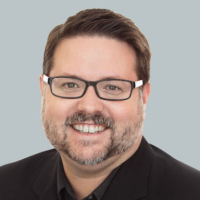
Headshot of a man with glasses

Greg Morrow

“I’m thrilled to be back in L.A. to launch an MRED program that is unlike any other in content, outlook and emphasis on real estate’s central role in shaping society,” Morrow said. “Working with our industry partners, we aim to cultivate future leaders who have superb professional skills and a deep understanding of socioeconomic and policy issues in order to create more livable, resilient, equitable communities.”

MRED students will study under and work alongside accomplished professionals, including developers, lenders, private equity investors, real estate and land use lawyers, affordable housing officials, policy leaders, architects, builders, construction executives, planners and innovators in sustainability. These industry experts helped design the curriculum and will teach most of the classes.

“We’re teaming up with UCLA’s faculty to ensure that students gain the essential skills to succeed in whichever real estate field they choose,” said Alex Rose, executive vice president for development at Continental Development Corp. and a member of UCLA Luskin’s board of advisors. “From day one, graduates of the UCLA Luskin MRED program will have the tools to contribute not just to their employers but to make a difference in their communities as well.”

The interdisciplinary program is housed in the Luskin School of Public Affairs’ urban planning department and will include courses in the Anderson School of Management, UCLA Law and other departments across the university. Students will also have access to broad real estate expertise at UCLA through the Ziman Center for Real Estate, Lewis Center for Regional Policy Studies and the innovative cityLab research center in the department of architecture and urban design.

The new program reflects the University of California’s effort to establish educational paths that address specific workforce needs. In addition to nuts-and-bolts real estate competencies, MRED students will be exposed to the latest trends in real estate —  from AI and new design paradigms to advanced construction techniques and financing tools. The program will also address key issues of affordability, equity, sustainability and how development interacts with larger urban development systems.

The curriculum is designed to develop students’ critical thinking, teamwork, communication and problem-solving skills, which are also essential for success in the workplace.

“Los Angeles is an ideal city in which to study real estate,” said Cecilia Estolano, a member of the Luskin board of advisors and a leading expert on contemporary urban planning issues with experience in economic and workforce development, land use, environmental equity and urban revitalization. “We have a diverse economy, dynamic neighborhoods and a range of real estate problems requiring bold, innovative, systemic solutions. UCLA’s MRED will challenge students to situate real estate development in a broader policy context.”

A cultural trendsetter that welcomes reinvention, Los Angeles is undergoing an ambitious urban transformation, including major housing and transit initiatives, as it prepares to host the 2026 World Cup, the 2027 Super Bowl and the 2028 Summer Olympics.

“Los Angeles has proven to be a laboratory marked by innovations that become models for the nation,” said Andy Cohen, co-chair of the Gensler design and architecture firm. “UCLA is at the heart of this global metropolis, giving students in this important new program front-line access to learn from the best so they can shape the real estate industry and build a better future for our cities — locally and internationally.”

“Luskin is a powerful platform that seeks to educate and challenge change-makers to tackle pressing societal issues,” said Anastasia Loukaitou-Sideris, interim dean of UCLA Luskin. “The new master in real estate program is a perfect fit for Luskin. We can’t wait to welcome our first class next year.”

The program is designed for applicants from diverse fields, within and outside real estate, and backgrounds.

“UCLA is a global brand that attracts leading scholars, students and industry partners and has a devoted international alumni network,” Morrow said. “By leveraging the best of UCLA and its alumni, the UCLA Luskin MRED program will build a global brand in real estate. Our graduates will not only change the industry but also change the face of real estate.”

Page 1 of 25123›»

Recent Posts

  • Oil and Gas Companies Sacrificing Plastic-Burdened Communities January 7, 2026
  • A sixth-generation Altadena resident presents a community recovery roadmap after the fires January 7, 2026
  • Risks of Privatization of Fannie Mae and Freddie Mac January 6, 2026
  • Pandemic Relief Programs Helped Small Businesses Survive, but Fraud Risk Remains January 5, 2026
  • Why Cars Are More Expensive Than Ever December 23, 2025

Contact

UCLA Luskin School of Public Affairs

3250 Public Affairs Building - Box 951656
Los Angeles, CA 90095-1656

Campus Resources

  • Maps, Directions, Parking
  • Directory
  • Contact
  • Academic Calendar
  • Careers
  • Diversity
  • University of California
  • Terms of Use

Follow

The statements on this page represent the views of people affiliated with the Luskin School of Public Affairs and do not necessarily represent the views of the University of California, or UCLA or its Chancellor.

Posts and comments by individuals at UCLA on social media channels may not reflect the opinions or policies of UCLA, the University of California or the Luskin School, nor its benefactors and academic partners.

Scroll to top
