Public Policy Celebrates 20th Anniversary, Alumna of the Year Honored Jaime Nack ’02 is recognized for entrepreneurship, leadership and impact at UCLA and beyond

By Stan Paul

Since graduating its first class of 17 students in 1998, the Master of Public Policy program at the UCLA Luskin School of Public Affairs has equipped nearly 900 more for careers in the public, private and nonprofit sectors.

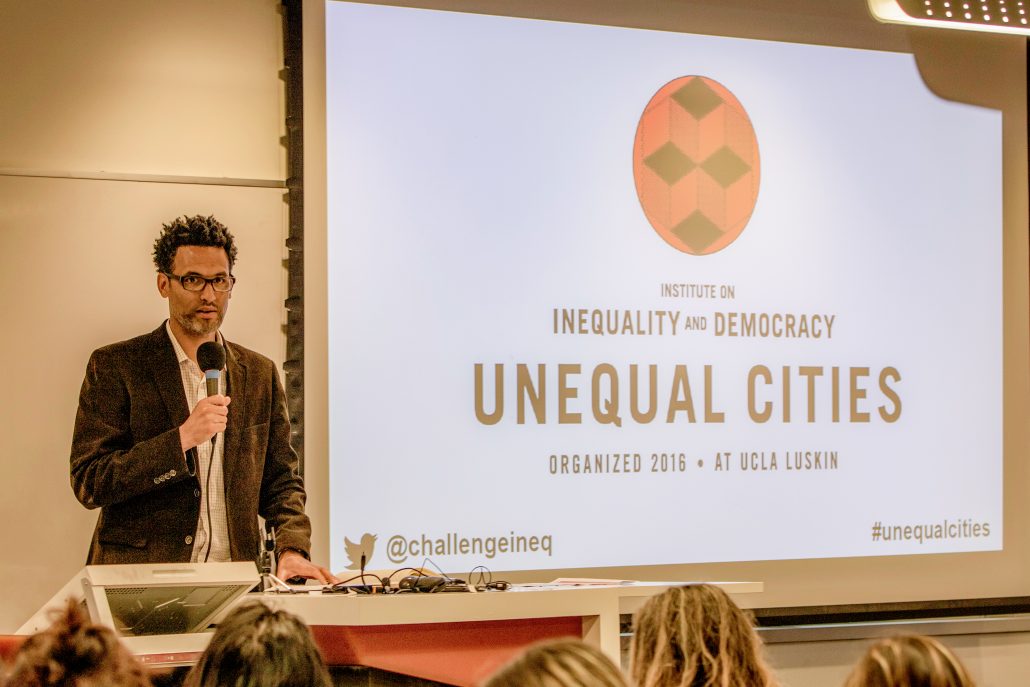
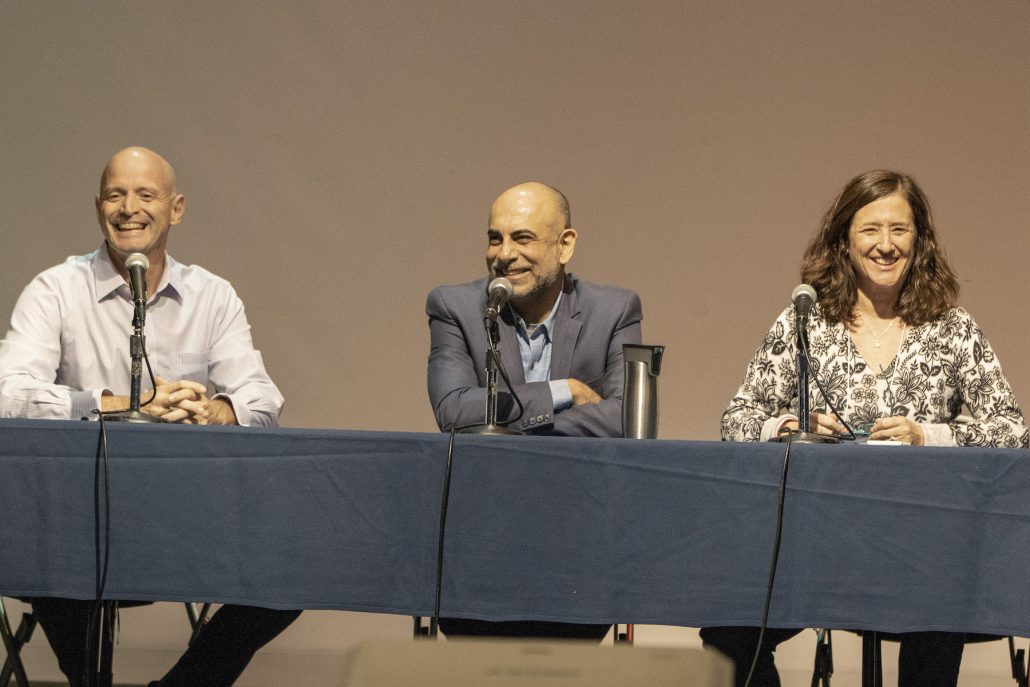
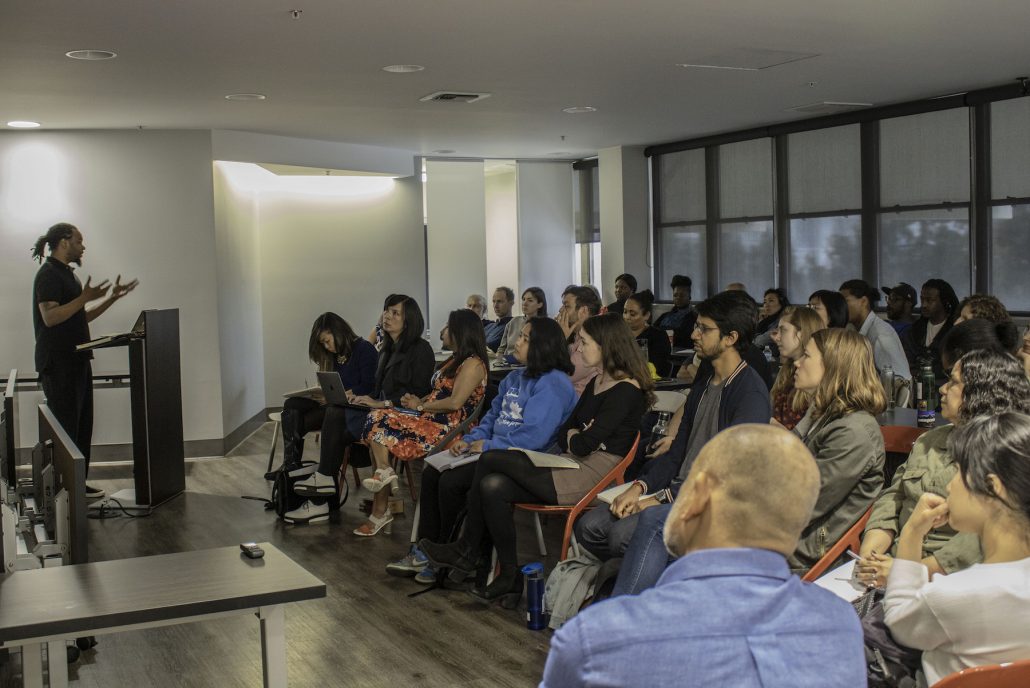
The highly competitive MPP program that now admits about 70 students each year celebrated its second decade with alumni, faculty, staff, friends and family Sept. 22, 2018, at the UCLA Luskin Conference Center.

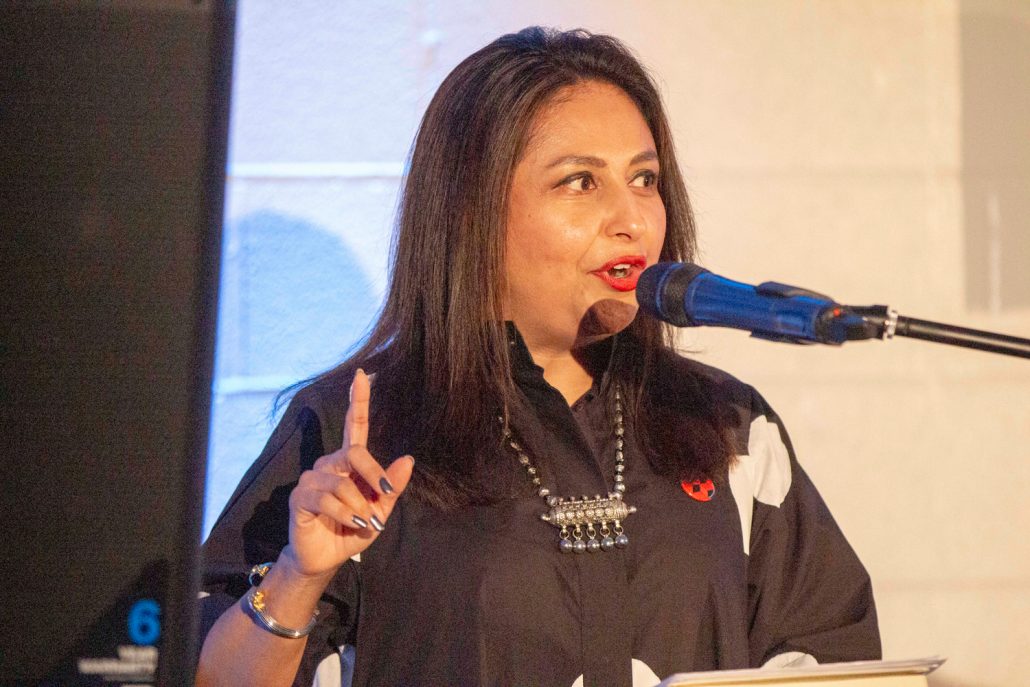
As part of the MPP program’s milestone anniversary, Jaime Nack MPP ’02 was named Alumna of the Year.

An entrepreneur and environmental consultant, Nack was a Luskin School Public Policy minor before pursuing her graduate degree. She credits UCLA with helping her meld her interests and foster her career.

“I always knew I wanted to focus on ‘impact’ and figuring out a way to effect change around the landscape around me, and public policy felt like the best place where I could actually explore those interests,” Nack said. “Whether it be transportation or housing or social welfare, all of the pieces that I was interested in my impact puzzle I found at Luskin, I found in public policy.”

Also during the celebration, five current students were given the UCLA Luskin MPP Alumni Fellowship Awards for outstanding leadership and service. The students, nominated by their classmates, were: Marissa Ayala, Robert Gamboa, Gabriela Solis, Caio Velasco and Erica Webster.

“A lot’s happened since many of you graduated,” Dean Gary Segura told the crowd, citing a list of accomplishments that included 19 new UCLA Luskin faculty hires, nine of whom are in Public Policy; the addition of new research centers; the launch of an undergraduate major in Public Affairs this fall; and, “more importantly, the training of a generation of MPPs who’ve gone off and made the world a better, cleaner, more just place to live.”

“We have impact on things that we care about,” such as climate change, water pollution, public education, health care, civil society and social inequality, Segura said. “All of these things are things that faculty at Luskin Public Policy work with students every day to understand, to explain, to search for solutions.”

On hand to celebrate two decades of growth and success was Public Policy chair JR DeShazo, who recalled his more than 20 years on the School’s faculty.

Despite the growth of the Public Policy community, “we need all the MPPs we can get in this day and age,” said DeShazo, who is also director of the UCLA Luskin Center for Innovation.

“We share a common goal of creating a more just society and opportunities for all of its members,” he added. “We gather today because we are part of a community committed to strengthening our civil society, and we gather here today because we all know that our future depends on us investing in staying connected and supporting one another.”

Former Public Policy chairs including Mark Peterson and Michael Stoll attended the anniversary celebration.

“We have all watched the department and program grow from the excitement of the founding moment to become an institution of considerable reputation and influence,” Peterson said prior to the event. “You can see it in our graduates, where they go and what they do.”

Peterson added, “There is no better embodiment of that impact than Jaime Nack.”

Nurit Katz MPP ’08, who currently serves as UCLA’s chief sustainability officer and executive officer of facilities management, presented the Alumna of the Year Award to Nack, crediting her leadership in sustainability and climate issues nationally and internationally.

Nack’s accomplishments as an entrepreneur include founding Three Squares Inc., an environmental consulting firm, and serving as director of sustainability and greening operations for the 2008 and 2012 Democratic National Conventions, marking the first time the DNC took measures to reduce the events’ environmental impact on host cities. She also has served as a member of the National Women’s Business Council — an Obama Administration appointment — and is on UCLA’s Alumni Association Board of Directors. In 2011, Nack was named a Young Global Leader by the World Economic Forum.

Nack described her career journey as “non-linear” but said she found a path to environmental consulting because it was a “perfect blend of policy, business and impact.”

“So the last 20 years have take me through the Arctic to the White House,” said Nack, who returned recently from an Arctic expedition sponsored by FutureTalks, and more recently served as head of sustainability for the Global Climate Action Summit in San Francisco.

“It’s been great to be a part of and play a role in some of those, but I definitely think that a big part of who I am comes from my experiences on campus with professors, with staff. I owe a debt of gratitude. … I can’t wait to see what the next 20 years brings for Luskin.”

View a Flickr album from the event.


Gore, DeShazo Share Insights on California’s Climate Leadership Luskin Center for Innovation director joins environment champion and Nobel laureate at global Climate Reality leadership training

By Stan Paul

‘We’re going to win this. … Have no doubt about that, we will win this.’
— Al Gore

More than 2,200 people eager to learn how to make a difference in the future of the planet came together at the Los Angeles Convention Center for the largest-ever Climate Reality Leadership Corps training led by former U.S. Vice President Al Gore.

Participants from California, the United States and more than 50 countries took part in the three-day training session that began Aug. 28, 2018, and included working with the best-selling author of An Inconvenient Truth — and subject of the Oscar-winning documentary. They heard from world-renowned scientists, communicators and other experts about how to work together to find solutions to the global climate crisis by influencing public opinion and policy and encouraging action in their own communities.

“In the United States we have a tremendous amount of climate denial. We have a president who is a bitter opponent right now of addressing climate change,” said Ken Berlin, president and CEO of the Washington, D.C.-based Climate Reality Project, in his opening remarks.

The purpose of the ongoing series of trainings, held worldwide starting in 2016, is to develop a critical mass of activists to ensure there is enough support for addressing the climate crisis, Berlin said before introducing Gore, who appeared on stage to a standing ovation.

Joining Gore on the first panel of the day, “California’s Roadmap for Climate Change,” was JR DeShazo, director of the UCLA Luskin Center for Innovation, and other experts including Fran Pavley, former member of the California State Senate, and Veronica Garibay, co-founder and co-director of the Leadership Counsel for Justice and Accountability.

“Here we are again at a time when our national government is … disappointing so many of us. Once again California is stepping forward,” Gore said in his opening remarks.

Citing California as a national leader and example to other states in addressing the environment and climate change, Gore started the conversation by asking DeShazo, “What is it about California that has led this state to be such a driven leader on climate policies?”

“I think California understands how important historically it was to deal with its air quality challenges,” said DeShazo, Public Policy chair at the UCLA Luskin School of Public Affairs. “And so, in the ’60s and ’70s the state developed this robust set of state agencies to tackle that problem in the energy sector and the transportation sector,” he said.

DeShazo credited state leadership, including Sen. Pavley, with passing legislation that allowed those agencies to shift attention, “with all their expertise and authority, to attack climate change in a very comprehensive way.”

Gore also asked DeShazo to cite examples of the state “breaking up the problem … and addressing those elements in an intelligent way.”

“We decarbonized electricity while making appliances more efficient. We introduced the low-carbon fuel standard in the transportation sector, making transportation fuels lower-carbon while making vehicles more efficient and pushing for electric vehicles. So there was a broad-based scoping plan that really covers all of the relevant carbon-generating sectors of the state,” DeShazo said. He also credited state leadership that was “based upon a California that wanted to take responsibility for its emissions.”

DeShazo, who also holds appointments with UCLA’s Institute of the Environment and Sustainability, UCLA Luskin Urban Planning and UCLA’s civil and environmental engineering departments, recalled that during the nationwide recession California voters rejected a ballot initiative to halt the state’s climate policies.

“We said ‘no,’ ” he said, explaining, “We want to continue with the commitment that the legislature had made on our behalf. … I think that is really evidence of California’s commitment.”

More recently, DeShazo said, a “second generation” of climate policies in California has focused on environmental justice. “There’s a clean vehicles program, and there’s one for low-income consumers, there’s a weatherization program and there’s one for disadvantaged communities,” he said. A significant portion of the $2 billion a year generated by cap and trade is reinvested to benefit disadvantaged communities, he added. This year, the UCLA Luskin Center for Innovation is part of two partnership grants that will benefit disadvantaged communities in particular. The grants ─ awarded by California’s Strategic Growth Council ─ total more than $4 million.

As a result of all of this, the state is making progress. “We’re on track to reach the goal of 50 percent renewable energy in 2020, 10 years ahead of schedule in reaching this goal,” DeShazo said. “And that’s terrific because we need to electrify the transportation sector, and we’re committed to that and that’s where a lot of the heavy lifting still awaits us.”

View more photos from the Climate Reality Leadership Corps training on Flickr.
Policy Academy Offers Tools to Take On Challenges in Latino Communities Three days of workshops at UCLA Luskin teach elected officials from Connecticut to California how to support their constituencies

By Stan Paul

When elected leaders from across the country gathered at the UCLA Luskin School of Public Affairs for three days of workshops on housing, transit, criminal justice, education, public safety and immigration, a recurring theme ran through each conversation.

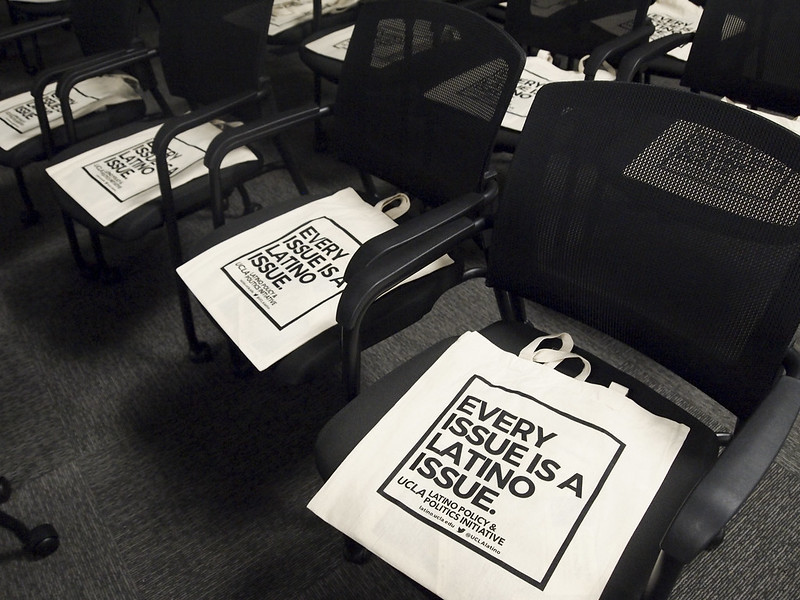
“Every issue, every single issue, is a Latino issue,” said Sonja Diaz, founding director of the UCLA Latino Policy and Politics Initiative and a 2010 graduate of UCLA Luskin who got a master’s degree in public policy.

Diaz was speaking to about 60 state legislators, county and municipal officials, school board members and higher education trustees at the first-ever National Education Leadership and Public Policy Academy, held Aug. 3–5.

Organized by LPPI and the National Association of Latino Elected and Appointed Officials Educational Fund, the event was a “master’s course of our policy work … in the hopes that you will take this information and apply it in your communities,” Diaz told participants, who traveled from as far away as Florida, Connecticut and Hawaii.

Discussions led by expert panelists, she said, would be informed by two things: data and facts.

“By shaping policy and making sure this policy is tailored for kids, for immigrants, communities of color and, frankly, all Americans, we’re all better off,” Diaz said. “And we’re going to do it together.”

For Arturo Vargas, chief executive officer of NALEO Educational Fund, one major goal was how to get to the “great unengaged.” Many Latinos have little or no faith in the political system, he said, and “there isn’t any significant investment in Latino voter engagement in the United States.”

Citing the 2016 elections, Vargas continued, “Half of the Latino electorate was not part of the national conversation with the campaigns, and it happens consistently.” He urged officeholders to take up some of this responsibility in their districts.

UCLA Luskin graduate student Gabriela Solis helps lead a real-world policy practicum during the conference. Photo by Tessa McFarland

The weekend series of presentations and workshops was supported by the Bill and Melinda Gates Foundation and by State Farm. It included opportunities to network with peers and while participating in group sessions, attendees developed tools and information to craft policy reforms on issues such as public safety.

Marisa Perez, a member of the board of trustees at Cerritos College, said many Latino students get their start in higher education at a community college.

“Whatever I can take back to my college to better support our students, that’s what I’m looking forward to learning about,” Perez said as the conference got underway.

Citing an achievement gap in his home state, Jon Koznick, a member of the Minnesota House of Representatives, said he wanted more hard data on issues related to Latino youth, especially boys.

“I’m excited to learn a little bit more about how we can have some stronger impact” in economic development and employment, he said.

Speakers and panelists at the academy included researchers from UCLA and other universities, as well as from policy institutes, foundations and associations.

Gary Segura, dean of UCLA Luskin, presented a case study on transit-oriented development in Oakland’s Fruitvale Village, that city’s largest Latino community. With co-panelist Chris Iglesias, chief executive officer of the nonprofit Unity Council, he discussed how the city used transit as a means for economic development and how that affected residents’ socioeconomic well-being.

Segura, a faculty co-director of Latino Policy and Politics Initiative, pointed to the initiative’s empirical study comparing Fruitvale residents to those living in similar communities over a 15-year period in the Bay Area and throughout California. The study found that, although the Latino population in Fruitvale changed by only 1 percent, homeownership increased by 8 percent, the bachelor’s degree completion rate climbed by 13 percent, and household income increased by 47 percent.

“So you can change a place without changing a people if you provide a set of economic structures and opportunities and services,” Segura said.

The dean encouraged participants to seek partnerships with local policy schools. “Oftentimes, communities of color think of universities as not invested in their issues, and, by the way, that frequently is true,” Segura said. “But there are places where that is not true and I would encourage you to look.”

Matt Barreto, UCLA professor of political science and Chicana and Chicano studies, presented demographic data to explain the growth in the country’s Latino population.

“Why is the Latino population growing so quickly? Because we have an extremely young population,” said Barreto, pointing out that the largest population distribution is under age 5; for whites, the largest group is adults in their 50s.

“The population is growing at a rate faster now than most demographers 10 years ago were anticipating or estimating. And it’s almost entirely driven by U.S. births,” said Barreto, also a faculty co-director of LPPI.

Amada Armenta, who joined the UCLA Luskin Urban Planning faculty in July, spoke about the intersections between criminal justice and immigration enforcement systems.

Even in so-called sanctuary cities, contact with the police can have consequences for immigrants because of Immigration and Customs Enforcement’s practice of using criminal justice databases to find immigrants and staking out jails and courthouses to take people into custody.

“Interactions with police have important ramifications for the way people feel about local government, democracy and their place in society more generally,” Armenta said. “I want local leaders to understand that … true community policing requires changing police practices so that they align with priorities of neighborhood residents.”

In a keynote lunchtime address, Vargas of the National Association of Latino Elected and Appointed Officials, focused on the U.S. Census.

“The census is really only about two things: It’s about power and money: who gets it, who keeps it, and who’s denied it,” he said. “When the numbers are wrong, the allocation of political power is uneven.”

Legal battles over a proposed citizenship question are being waged in court, he said, but the public also must be heard. The U.S. Census Bureau is seeking public input on the 2020 headcount.

“We need your help, people,” Vargas said. “We need to fight this.”

View more photos from the conference in an album on Flickr.

LPPI NALEO conference

Cecilia Estolano named to UC Board of Regents UCLA Luskin alumna and adjunct faculty member will help shape higher education in California for years to come

Cecilia V. Estolano MA UP ’91 has been appointed to the University of California Board of Regents. 

Estolano, who teaches as an adjunct faculty member at UCLA Luskin, is one of four new regents appointed by Gov. Jerry Brown on Aug. 6.

“I am eager to partner with these accomplished new board members,” UC President Janet Napolitano said.  “Serving on the UC Board of Regents offers a powerful opportunity to shape California higher education for years to come and ensure that future students receive the same excellent UC education as did previous generations of Californians.”

Estolano, an expert in sustainable economic development and urban revitalization, is chief executive officer at Estolano LeSar Advisors. She co-founded the firm in 2011 with UCLA alumni Jennifer LeSar UP ’92 and and Katherine Perez-Estolano MA UP ’97.

Estolano’s long list of accomplishments includes serving as chief executive officer at the City of Los Angeles Community Redevelopment Agency and as a senior policy advisor at the U.S. Environmental Protection Agency. In addition to her UCLA Luskin master’s degree, Estolano earned a juris doctorate from UC Berkeley and previously served as counsel at Gibson Dunn and Crutcher LLP and as special assistant city attorney in the Los Angeles city attorney’s office.

New appointees to the UC Board of Regents, who must be approved by the California Senate, serve 12-year terms.

Photo by George Foulsham

Read about Estolano, center, LeSar and Perez-Estolano, founders of a Los Angeles-based planning and policy firm.


New Grants Totaling $4.1 Million Will Build Climate Resilience UCLA Luskin Center for Innovation is a partner in two climate research grants from the Strategic Growth Council

By Colleen Callahan

Record-breaking heat and scorching summer wildfires are signs of a hotter California. As part of efforts to further knowledge and action on climate change, the UCLA Luskin Center for Innovation (LCI) is part of two winning partnership grants ─ totaling more than $4 million ─ awarded by California’s Strategic Growth Council.

The Council’s new and competitive Climate Change Research Program is part of California Climate Investments, a statewide initiative that is putting billions of cap-and-trade dollars to work reducing greenhouse gas emissions, strengthening the economy, and improving public health and the environment. Both grants will benefit disadvantaged communities in particular.

Measuring the Impacts of Climate Change on Vulnerable Communities to Design and Target Protective Policies

A nearly $1.5-million grant led by LCI involves multiple studies of heat-related climate impacts, as well as factors that make populations and communities vulnerable, plus opportunities to build resilience. Climate change could exacerbate existing inequities, and LCI will develop tools to help government agencies target responses and empower communities.

“The goal is to increase the climate resilience of California’s vulnerable communities in the face of rapidly increasing extreme heat events,” said JR DeShazo, the grant’s principal investigator and LCI director.

The researchers include R. Jisung Park, an LCI scholar and an assistant professor of public policy and environmental health sciences at UCLA Luskin, who will assess climate change impacts on low-income workers. Gregory Pierce, associate director of research at LCI, will assess the climate risk of vulnerable built environments — including affordable housing — to better inform protective policies.

Collaborations with government agencies, nonprofit organizations and community leaders will be integral to the work. For example, civic partners will oversee the development of geographic tools to identify areas disproportionately affected by heat-related climate change and vulnerability factors. Stakeholders will also be able to identify policies, funding and other opportunities to increase resilience in vulnerable areas and among vulnerable populations such as low-income workers and residents.

The analysis of resilience opportunities will also be collaborative. A partnership with the Liberty Hill Foundation and community-based organizations will test a coordinated outreach pilot called Opportunity Communities to promote clean and affordable energy, transportation and associated financial assistance for low-income households. Researchers will assess the effectiveness of this strategy to build financial and health resilience to climate change impacts.

Climate Smart Communities Consortium

A partnership grant led by UC Davis and the UC Institute of Transportation Studies will also involve LCI. This $2.6-million grant to a multifaceted group of researchers from seven academic institutions will tackle the challenge of transportation-related environmental impacts, which fall disproportionately on low-income communities of color. Researchers will seek solutions that reduce emissions and improve the mobility and quality of life for California’s most vulnerable communities.

LCI will collaboratively study interrelated areas of innovative mobility, electrification and freight movement, using equity and policy engagement lenses as crosscutting themes. Research will center on regional case study initiatives and statewide initiatives to demonstrate findings.

The Strategic Growth Council brings together multiple agencies and departments to support sustainable communities emphasizing strong economies, social equity and environmental stewardship. For updates during implementation of the latest grants, see LCI’s climate action program at innovation.luskin.ucla.edu/climate.


New Grants Ensure Watts Leadership Institute’s Mission Will Continue to Grow An infusion of more than $650,000 will be invested in marginalized neighborhoods

By Mary Braswell

The community garden launched by the Watts Leadership Institute (WLI) a year ago is growing, thriving, bearing fruit.

The same could be said for the institute itself.

Since the start of 2018, the UCLA Luskin-based WLI has received several grants totaling more than $650,000 that will allow it to expand its core mission of empowering the community leaders of Watts.

“We’re absolutely thrilled,” said co-founder Jorja Leap, adjunct professor of social welfare. “We’re finding great support for this model, the idea that we want to lift up and help the small nonprofits and real community leaders in these marginalized communities.”

Along with Karrah Lompa MSW ’13, Leap founded the institute in 2016 with a two-year $200,000 startup grant from The California Wellness Foundation.

Since January, WLI has received new and increased investments:

  • An additional two-year grant of $250,000 from The California Wellness Foundation is an expression of confidence that its initial investment was effectively used in the community.
  • The Weingart Foundation is providing $200,000 for the next two years to support its efforts in Southern California communities most deeply affected by poverty and economic inequity.
  • Ballmer Group provided $150,000 over two years.  Ballmer Group supports efforts to improve economic mobility and has invested significantly in direct services and capacity building in the Watts-Willowbrook area.
  • GRoW@Annenberg has invested more than $50,000 this year as part of a multiyear commitment for the WLI GRoW Community Garden. It has also provided generous additional funding and technical assistance to enhance WLI community engagement and outreach. In addition, GRoW’s founder, Gregory Annenberg Weingarten, has awarded almost $100,000 directly to Watts community leaders working with WLI.

These continued philanthropic investments will “take our mission to another level,” Leap said. Lompa added that “having the support of these leading philanthropic institutions reinforces both the need for WLI and the impact these leaders are making in Watts.”

“We are grateful for these new funders and grants because they help diversify WLI’s overall funding, helping us lead by example when encouraging WLI leaders to diversify their own funding streams,” Lompa said.

The funds are quickly being put to use on the ground in Watts. WLI works with community leaders who are already making a difference and provides them with the tools, resources and training to be more effective — including tutorials on using tablets to keep their books as well as tips on navigating the Southern California policy and philanthropic landscape.

“These are the people that the community listens to and follows,” Leap said of the first cohort of 12 Watts leaders supported by the institute. “They live there, they work there. But they’ve never had the capacity to really do the work of which they are capable.”

The key for WLI, she said, is to listen to people who are acutely aware of what their neighborhood needs. WLI builds on this knowledge by responding with tangible help to sustain the leaders and their efforts.

Leap told the story of WLI cohort member Amada Valle, a community organizer and advocate for residents of the Jordan Downs public housing development. “Amada is teaching women to sew and to create women-led businesses,” Leap said. “And what do you need if you’re teaching women to sew? Sewing machines.” Thanks to funds allocated by The California Wellness Foundation for direct service reinvestment, Valle received a grant from WLI to purchase six sewing machines.

“You would have laughed if you had walked into the Luskin development office and seen all these boxes of sewing machines, all piled up,” Leap said.

Doing good works is contagious, WLI has found. Los Angeles City Councilman Joe Buscaino donated office space to the institute. The Johnny Carson Foundation funded an MSW internship in Watts. The UCLA Luskin IT team offers technical support, bringing community leaders to campus for tutorials.

“That’s really our dream — to have everybody working together and leading within their community,” said Leap, who has been active in Watts for 40 years, since she attended UCLA for her BA, MSW and Ph.D.

“With WLI, UCLA Luskin has a 24/7 presence in Watts. This is not lip service, and we don’t want to be a temporary program. We’re part of the community, and we want to be,” she said. “We’re honored to be.”

Justice — and Smog Checks — for All New UCLA Center for Innovation study finds that the Tune In & Tune Up smog repair program in the San Joaquin Valley efficiently tackles pollution and poverty

By Colleen Callahan

A 34-year-old mother dropped out of college in San Francisco due to mobility issues.

A young couple with four children walked to get around when their vehicles broke down.

A homeless woman relied on her car for both housing and travel purposes.

These are just a few of the more than 40,000 individuals who have benefited over the past four years from the San Joaquin Valley’s smog test and vehicle repair program known as Tune In & Tune Up.

A new study from the UCLA Luskin Center for Innovation analyzed Tune In & Tune Up data and finds that this program, which has been operating since 2005, is pioneering a model that other regions could use to efficiently reduce emissions from cars and other light-duty vehicles while achieving equity objectives. It is one of the first transportation programs in the nation premised on jointly achieving efficiency, equity and environmental objectives. That it exists to serve residents in the San Joaquin Valley is only more critical given that this eight-county region has disproportionately high levels of pollution and poverty compared to the rest of the state.

Tune in & Tune Up is a program of the San Joaquin Valley Air Pollution Control District funded by enhanced vehicle registration fees and implemented by a nonprofit organization, Valley Clean Air Now (Valley CAN). The program provides free smog checks for residents of the valley. Owners of vehicles that do not pass emission tests receive vouchers redeemable for up to $850 in smog repairs.

UCLA evaluated the program with regard to efficiency, equity and environmental objectives.

“Tune In & Tune Up operates efficiently, in part by keeping attrition low and passing funds to a high level of program participants,” said Gregory Pierce MURP ’11 PhD UP ’15, co-author of the study and associate director of research at the UCLA Luskin Center for Innovation.

Analysis of previously unexplored data by Pierce and Rachel Connolly, who will be pursuing her Ph.D. in public health at UCLA in the fall, found that Valley CAN recorded 41,688 unique attendees at its Tune In & Tune Up events since 2012. Of vehicle owners offered a voucher, the vast majority (78 percent) redeemed their vouchers at a smog repair shop. This resulted in the program providing over $12 million in direct financing for smog repairs to more than 20,000 qualified residents of the valley since 2012. This equates to about $2.7 million allocated annually to 4,500 annual customers.

Residents from nearly every neighborhood in the San Joaquin Valley (97 percent of all census tracts) attended a Tune In & Tune Up event. Researchers equate that very high level of engagement to the wide reach of the events — several events were held in each county several times per year — and effective outreach. Valley CAN partners with community-based organizations, local radio stations and newspapers to spread the word about the program in multiple languages and in multiple neighborhoods throughout the valley.

“Tune In & Tune Up is the largest program in the state to offer light-duty transportation assistance to a substantial number of low-income households through a grassroots approach,” Pierce said.

Researchers found that while the program is equal opportunity, the program distributed the most financial benefits to neighborhoods most in need within the valley. The study concluded that the program successfully targeted communities with lower incomes, higher percentages of minority households and higher levels of cumulative pollution threats than the regional average.

The program also successfully targeted vehicles most likely to be high emitters, according to researchers. The study found that the vehicles reached by the Tune In & Tune Up program are much older, have higher odometer readings and are more often unregistered than the average for the state’s overall fleet of light-duty vehicles.

“This is important because older vehicles emit a disproportionate amount of smog-forming pollution linked to asthma and other respiratory diseases. Yet many low-income residents of the valley have no choice but to drive old vehicles because they live in rural areas with limited or no access to public transit,” Pierce said.

In addition to receiving smog checks and vehicle repair vouchers, attendees of Tune In & Tune Up events also learn about additional opportunities such as incentives worth thousands of dollars that are available for low-income Californians who voluntarily scrap their older, high-emitting cars and replace them with newer, cleaner and more fuel-efficient cars.

“Tune In & Tune Up should be considered as a complementary approach to meeting air quality standards in low- or moderate-density regions throughout the U.S. where the built environment does not allow for the cost-effective build out of a full-serve transit network or where financing for zero-emission vehicles is constrained,” the researchers noted in the study.

The researchers concluded that features of the Tune In & Tune Up program can serve as potentially replicable models for supporting the type of social and environmental justice objectives increasingly expected by many policymakers and residents of California.

Decriminalizing Latinos Is Focus of Criminal Justice Gathering Latino Policy & Politics Initiative brings together scholars, policymakers and nationally known advocates for the Latino community for a day of presentations, discussions and workshops

A recent gathering at UCLA Luskin included a full-day of programming related to efforts to advance visibility on the experience of Latinos in the criminal justice system across the United States.

Dozens of experts and scholars on Latino issues at the local, state and national levels gathered on campus May 31, 2018, for a day of presentations and workshops organized by the Latino Policy and Politics Initiative (LPPI) and LatinoJustice PRLDEF. Attendees included a number of nationally known advocates for Latinos, including LatinoJustice President Juan Cartagena.

“It is so reaffirming seeing Latinx people talking about these issues,” Cartagena told a packed classroom of workshop participants, including several UCLA Luskin students. “Everyone in this room should be listed as experts.”

The sessions began with an introduction from Dean Gary Segura, who was also one of the participants in a high-level strategy workshop focusing on Latino civil rights and the U.S. criminal justice system.

He told attendees that he helped found LPPI in part to address a shortfall in research about issues of importance to Latinos, including inequalities in the criminal justice system.

“People across the ideological divide agree that this is an issue for the Latino community,” said Segura, who said he hoped the day would provide an opportunity for attendees to “think constructively about the things that have to happen” in order to bring about change.

Matt Barreto answers a question during the opening panel, which was streamed live over social media. Photo by Les Dunseith

A discussion hosted by LPPI’s founding director, Sonja Diaz, followed with Cartagena and Matt A. Barreto, a professor of political science and Chicana/o Studies at UCLA and the other co-founder of LPPI. They zeroed in on the fact that national discussions have historically downplayed the impact on Latinos of criminal justice policies related to policing, mass incarceration or unequal rates of prosecution.

“Why are Latinos invisible in this discussion?” Barreto asked. “It’s because we are invisible in the data.”

For example, the U.S. Census has historically grouped Latinos with whites in its tabulations based on ethnicity. And this shortcoming has been replicated in much of the research at the state and local levels.

“So many people don’t count Latinos,” Barreto said. “This makes advocacy impossible.”

Today, some states still do not count Latinos as a separate group, he said. Even when Latinos are specified in the data, “some counties have better data than others.”

Discussions like this one continued for several hours, and participants had an opportunity to hear from wide range of people — scholars, policymakers and community advocates. That evening, the participants viewed a sneak peek of the in-progress documentary, “Bad Hombres,” by award-winning filmmaker Carlos Sandoval, and then heard from the director, Cartagena, UCLA lecturer Virginia Espino, and from some of the people featured in the film.

Noting an “insurmountable amount of knowledge of Latino criminal justice knowledge on the stage,” second-year UCLA Luskin student Gabriela Solis Torres participated in the gathering and shared her impressions via social media, saying, “I am so honored to be in the same of the room as such inspiring leaders.”

View additional photos in an album on Flickr


‘Get Comfortable Being Uncomfortable’ In commencement address, Riverside Mayor Rusty Bailey issues a call to action to more than 200 change agents from Public Policy, Social Welfare and Urban Planning

By Stan Paul

Before conferring hard-won master’s and doctoral degrees upon the 2018 graduating class of the UCLA Luskin School of Public Affairs, Dean Gary Segura gave one last assignment:

“Act! Act on … any of a dozen major challenges facing the United States and the world. Act! Make this world better. Make this country what it aspires to be.

“Our celebration today is less about what you’ve already done and far more about what you are expected to do,” Segura told the more than 200 Public Policy, Social Welfare and Urban Planning students graduating before an audience of family, friends and faculty in UCLA’s historic Royce Hall on June 15, 2018.

Following the conferral of degrees, the celebration continued at an outdoor reception. The sea of black graduation gowns was brightened by a rainbow of tassels and academic regalia, along with elaborately decorated mortarboards that told the students’ stories, if in a few words:

“For my family that dreams beyond borders.” “53, got my degree.” “Every end is a new beginning.” One message, in Spanish, thanked parents … and coffee. Another honored the past and projected hope for future generations: “I am my ancestor’s wildest dreams.”

One UCLA Luskin grad who put his degree to good use is William R. “Rusty” Bailey MPP ’99, who is now in his second term as mayor of Riverside, California.

“Rusty Bailey’s leadership of Riverside has been characterized by a willingness to put human well-being at the forefront of his city’s agenda,” Segura said, introducing the keynote speaker. The dean cited Bailey’s focus on serving the city’s homeless, encouraging green development, enhancing mass transit and supporting the arts for his hometown of more than 300,000.

Bailey recalled the two decades since he was admitted to the first MPP class at UCLA Luskin.

“I was sitting where you were almost 20 years ago,” said the West Point graduate and former city councilman. “This institution gave me the tools, the confidence and the network I needed to achieve my ultimate career goal of serving as the mayor of my hometown. …

“If there’s any group of people prepared to tackle these issues and others I’ve mentioned, it is you — UCLA Luskin School graduates,” said Bailey, who was named MPP Alumnus of the Year in 2013. “You are equipped with a well-rounded toolkit that includes social advocacy, policy analysis and community development along with an incredible network of professors, research centers and alumni to keep you encouraged, motivated and accountable.”

Bailey cautioned, “You better get comfortable being uncomfortable,” but added, “Luskin has prepared you to handle it.”

Like the dean, Bailey ended his speech with a challenge for the graduates: “Let’s make it happen. Go out into this world and make things happen for your neighbors, for your families and for humanity.”

‘I refuse to let this diploma allow my fight to fade.
The work does not end when we cross the stage.’

— Student speaker Gabriela Hernandez

Student speakers representing each Luskin School department underscored the message that their work is not done.

“We did it, but we didn’t do it alone,” said MPP Ramandeep Kaur, the daughter of immigrants who spoke for her classmates in thanking those who made their accomplishments possible. “Hopefully now we can explain what public policy means,” she joked.

Kaur said that public policy has historically been used to support discriminatory practices in housing, zoning ordinances, transportation and labor. “But in my hands, in our hands, it can mean so much more,” she said. “In our hands, having a master’s in public policy means having the tools to upend the status quo and disrupt those narratives.

“As change agents, we’re going to rewrite history and those unjust public policies.”

Urban Planning student speaker Aleli Balaguer said her fellow graduates have been more than just classmates during the rigorous two-year program.

“They are kind, passionate, honest, forthright and unwavering in their vision,” Balaguer said. Coming from very different backgrounds, they shared family stories over meals and traveled the globe together, from New Orleans to Mexico to Japan, the Philippines and Indonesia, she said.

“We hosted each other in our families’ homes and worked on group projects until the sun rose, and we presented at Google and multiple city halls,” she said. But, most importantly for Balaguer, “We imagined better, more equitable cities together.”

Social Welfare class speaker Gabriela Hernandez told her fellow students and audience members, “Today, after years of difficult work, I have reclaimed my anger. I am no longer ashamed to be angry. I call my anger passion.”

She recited a poem recounting her journey in the MSW program to “remind us that no matter how far from slavery and segregation we have gone, there is still hella work to be done.”

Her poem concluded:

“The work does not end when you cross the stage/
You were born to fight for life/
I refuse to let this diploma allow my fight to fade/
The work does not end when we cross the stage/
It marks the beginning/
Let my words sink in, feel what you got to feel then please turn that page/
The work does not end when we cross the stage/
Smile because you deserve it, but do not forget those still trapped in a cage/
The work does not end when you cross the stage/
You call it rage, you call it anger, it’s passion/
Let us hold each other up, together, let us take action”

This year, Segura said, the Luskin School has been true to its mission: improving the quality of life for individuals, families and communities. Students and faculty have taken on issues including greenhouse gas abatement, prison population reduction, gentrification, gun violence, home ownership and homelessness in Los Angeles, and economic development across Asia, Africa and Latin America, he said.

But the challenges that lie ahead are great, he warned.

“We live in perilous times. You enter a career in public well-being at a time when longstanding assumptions about our values as a society are challenged in ways most of us had never imagined possible,” Segura said.

Of the separation of migrant families at the nation’s border, he said: “Today, here in the United States of America, 10,000 children are being held in detention, in cages, with foil blankets, ripped from their parents’ arms. Over 1,400 of them have been misplaced, gone missing, some likely into child trafficking. The country plans to build a camp — a camp — to hold 5,000 more children.”

The dean then asked pointedly, “What are you going to do about this? Indeed, what am I going to do about this?”

Segura sent the newly minted change agents into the world with the words of Henry David Thoreau, “Be not simply good; be good for something.”

View additional photos from UCLA Luskin Commencement 2018 on Flickr:


Commencement 2018