The Bruins Who Come Back: Álvaro Huerta He left UCLA for activism, then returned to complete his degree — launching a career in teaching and advocacy

This excerpt originally appeared in UCLA Magazine, “The Bruins Who Come Back,” by John Harlow (April 28, 2026). Read the full story here.

Making Good Trouble

For some, stepping away from the pursuit of a degree is nothing short of a moral imperative.

In the mid-1980s, Sacramento-born Álvaro Huerta ’03, M.A. ’06 was two years into his studies at UCLA, on track to graduate with a degree in mathematics. But then the campus roiled with protests, climaxing in a seven-day hunger strike against a state clampdown on financial support for undocumented students. Huerta felt he needed to do more for the poor and racially victimized community he knew so well. Putting activism first, he dropped out.
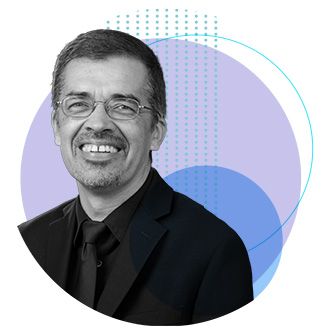
Feeling he needed to do more for poor and underserved communities, Álvaro Huerta decided to leave UCLA two years into his studies so he could pursue activism. He returned to graduate in 2003.

Feeling he needed to do more for poor and underserved communities, Álvaro Huerta decided to leave UCLA two years into his studies so he could pursue activism. He returned to graduate in 2003.

For the next 13 years, he went on to make what he calls “good trouble,” speaking out against and fighting racial injustice in Los Angeles. He stood up for Latino gardeners when the city threatened to jail them for using leaf blowers; he helped defeat plans to build a toxin-spewing power plant in South Gate that would have never been considered for a wealthier area. He was proud of his work. But it gnawed at him that he was often overlooked for promotions at nonprofits because he didn’t have a degree.

“Even in the revolution, the higher educated will get a better view,” he jokes wryly.

The final straw, he says, was losing a job to a Bruin graduate. By then, in the late 1990s, he had a young family of his own. His Bruin wife, Antonia Montes ’91, urged him to overcome any feelings of awkwardness and discomfort and return to UCLA. “I was a very different person than that 17-year-old know-it-all,” he recalls. “I had taught myself to read and write to university level, and I knew how things worked at college — something other students take for granted, but that my mom, who cleaned houses all her life, could not help me with.”

Huerta says the first key was finding out that you could, in fact, come back to campus to finish. In 1987, instead of abruptly quitting like some of his peers, he had filed an “incomplete” so he could be readmitted without applying from scratch. “Fill in the paperwork,” he urges anyone who may be facing the tough call to pause their degree. “UCLA wants you to finish your studies.”

The second key was to find someone who understood his background and lived experience. “Like many, I was mentored by Juan Gómez-Quiñones [’62, M.A. ’64, Ph.D. ’72] in history, and later Leo Estrada in urban planning,” Huerta says. “They helped many people navigate not just with their studies — they could be very stern — but also life in higher education, and with cultural empathy.”

Huerta graduated with a B.A. in history in 2003 and a master’s in urban planning in 2006. After that, there was no stopping him. He went on to UC Berkeley for his Ph.D. in city and regional planning, then taught classes about the intersection of religious and community organizing values at Harvard Divinity School. He is now a professor of urban planning and ethnic studies at California State Polytechnic University, Pomona.

“My roots are deep at UCLA,” he says. Those roots include not only his own degrees and his professional roles on campus, but also his wife’s economics degree and the degree his brother, the lauded portraitist Salomón Huerta M.F.A. ’98, received from UCLA in 1998.

Huerta is now a visiting scholar at the Chicano Studies Research Center. Last year, UCLA Alumni Affairs recognized him with the Bruin Excellence in Civic Engagement Award for his work as a teacher and community influencer. It has been a long journey for the former hunger striker. But, he says, he’s glad he listened to his wife —  and came home to UCLA.
Trends in Ridership Associated With Rising Gas Prices

Rising gas prices driven by the ongoing Iran war are contributing to a noticeable increase in public transit ridership across California, particularly in Los Angeles and San Francisco. Historically, spikes in fuel costs have encouraged more people to use buses and trains, and early signs suggest a similar pattern may be emerging. However, a recent Los Angeles Times article, notes that transit agencies—still recovering from the sharp decline in ridership during the COVID-19 pandemic—are watching closely to determine whether this surge represents a lasting shift in commuter behavior.

Mike Manville, professor of of urban planning at the UCLA, emphasizes the limits of price-driven behavior changes, explaining that higher gas costs alone are unlikely to fundamentally shift commuting patterns. As he puts it, “People don’t necessarily abandon their cars just because gas gets expensive.”

Wasserman on the New York MTA’s Varied Revenue Stream

The New York Metropolitan Transportation Authority (MTA) is poised to benefit significantly from three downstate casino licenses awarded in December 2025 to Bally’s, Hard Rock, and Genting’s Resorts World. Analysts say the deals provide both immediate and long-term financial gains. According to Ion Analytics, the MTA has already secured $1.5 billion in upfront licensing fees and is expected to receive hundreds of millions annually from gaming tax revenues, potentially nearing $1 billion per year by 2036.

The MTA’s revenue stream has what research program manager at the UCLA Institute of Transportation Studies Jacob Wasserman calls a “mixed pool,” consisting of various sources including real estate taxes and a payroll mobility tax. Wasserman called this variety necessary and stated that “One-time revenue streams match well with one-time capital projects. But on the operating side, an agency would prefer a steadier revenue source to match ongoing expenses.” Ultimately, his perspective points to the ongoing challenge of aligning short-term gains with long-term transit needs.

Luskin Professor Martin Gilens Elected to the National Academy of Sciences Martin Gilens is recognized for his influential research on inequality and democracy.

Martin Gilens, professor of public policy, political science and social welfare at UCLA, has been elected to the National Academy of Sciences (NAS), one of the highest honors in the scientific community. NAS membership is awarded to scholars in recognition of distinguished and continuing achievements in original research and is widely regarded as a mark of excellence across academic disciplines.

The National Academy of Sciences, established in 1863 under a congressional charter signed by President Abraham Lincoln, elects members annually for their significant contributions to science and scholarship. Election reflects sustained impact in advancing knowledge and shaping research in one’s field.

Gilens is a leading scholar of American politics and public policy, widely recognized for his research on inequality, public opinion, and democratic responsiveness. His work has shaped contemporary understanding of how policy outcomes reflect—or diverge from—the preferences of citizens across socioeconomic groups.

Gilens earned his Ph.D. in sociology from the University of California, Berkeley, and has held fellowships at the Institute for Advanced Study in Princeton, Stanford’s Center for Advanced Study in the Behavioral Sciences, and the Russell Sage Foundation. Before joining UCLA in 2018, he held faculty appointments at Yale and Princeton Universities.

Looking Back on Route 66’s Historical Role in Westward Migration

Route 66, known as the Mother Road, marks its 100th anniversary this year, prompting reflection on its complex legacy as both a symbol of American mobility and a site of racial exclusion. In an article by LAist, the historic highway is examined not only as a pathway for westward migration, but also as a dangerous route for Black Americans fleeing Jim Crow-era oppression.

Built in 1926 and spanning more than 2,000 miles, Route 66 became a key corridor for migration, commerce and military movement. However, for Black travelers, the journey was fraught with segregated accommodations, sundown towns and the constant threat of violence.

Today, Route 66 is no longer part of the U.S. highway system, surpassed by the newer Interstate Highway System and the 10 Freeway. Professor of public policy and urban planning at UCLA Michael Stoll notes that rising housing costs and gentrification are continuing to reshape where Black families live in Southern California, with many moving to regions like the Inland Empire and Antelope Valley. His comments underscore how transportation systems—from Route 66 to modern freeways—have long played a role in shaping community formation, access and inequality.

David C. Turner III on Movement Building and Strengthening Unity in Resistance

In a Guardian op-ed, David C. Turne rand Eric Morrison-Smith argue that internal division is one of the greatest threats to contemporary resistance movements. They contend that ego, ideological rigidity, and mistrust weaken coalitions at a time they describe as rising authoritarianism in the United States.

Turner, assistant professor of Black life and racial justice at UCLA, calls for movements to prioritize relationship-building, accountability, and transformative justice practices that repair harm without reproducing punitive systems. He highlights findings from years of organizing and surveying more than 35,000 Los Angeles residents, noting a consistent message since the 2020 uprisings: “divest from punishment and invest in people,” which he describes as reflecting broad moral clarity across communities.

The CPUC’s Plans for an Unprecedented Building Decarbonization

California’s SB 1221 introduces a first-of-its-kind approach to decarbonization by shifting from individual building upgrades to neighborhood-wide transitions away from natural gas. According to Legal Planet, the California Public Utilities Commission is developing pilot program guidelines, due by July 2026, but key details remain unresolved. The policy aims to cut emissions, retire aging gas infrastructure and deliver benefits like improved air quality and potential cost savings.

The UCLA Luskin Center for Innovation is helping shape the conversation through a detailed FAQ that expands on official guidance and provides independent analysis of the law’s rollout. The guidelines for this program are a major part of Senate Bill 1221, which was recently signed into law by Governor Newsom, and will hopefully answer some of these questions when they are finalized by this upcoming July.

Ong on Asian Surname Growth Trends in the U.S.

New data released by the U.S. Census Bureau, reported by the Associated Press, reveals  that Asian surnames are taking the lead as the fastest-growing surnames in the country. While traditional surnames like Smith, Williams, and Johnson still hold the top spots, Asian surnames–particularly Zhang, Liu, and Wang–are quickly climbing the ranks. Representing 7% of the U.S. population, Asians are also the fastest-growing racial or ethnic group in the country,

UCLA research professor and director of the Center for Neighborhood Knowledge Paul Ong notes that immigration has been central to this growth. “Much of the growth of the Asian population has been driven by immigrants and their children,” he said, adding that policy shifts could slow that trajectory. “Consequently, when Asians crack the top surname rank will be pushed further into the future.”

Hope Is Hard Work: Laphonza Butler Delivered Call to Action on Building Power From the Ground Up At the annual Luskin Summit, the former U.S. senator joined 400 scholars, students, and leaders in search for lasting equity and well-being

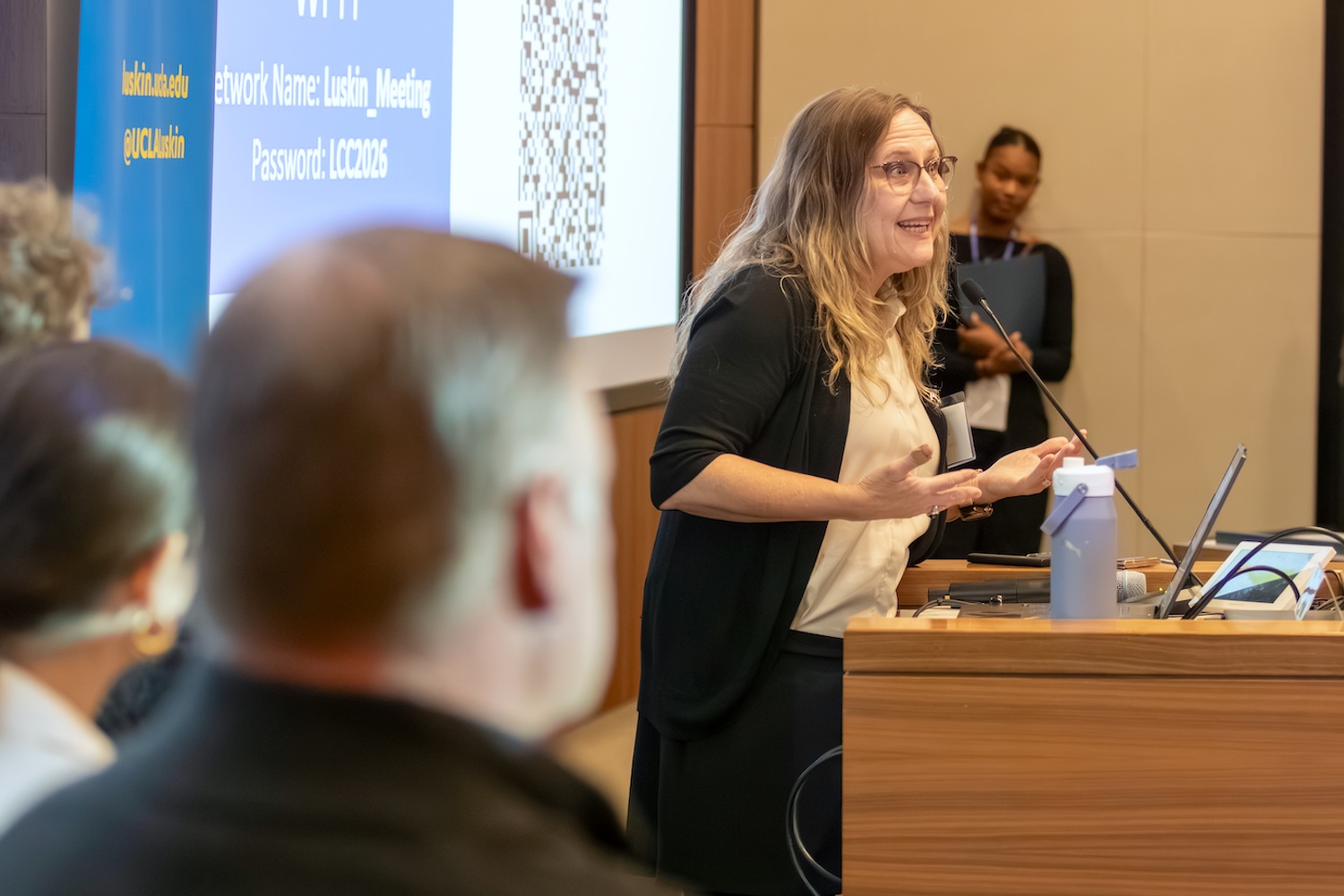
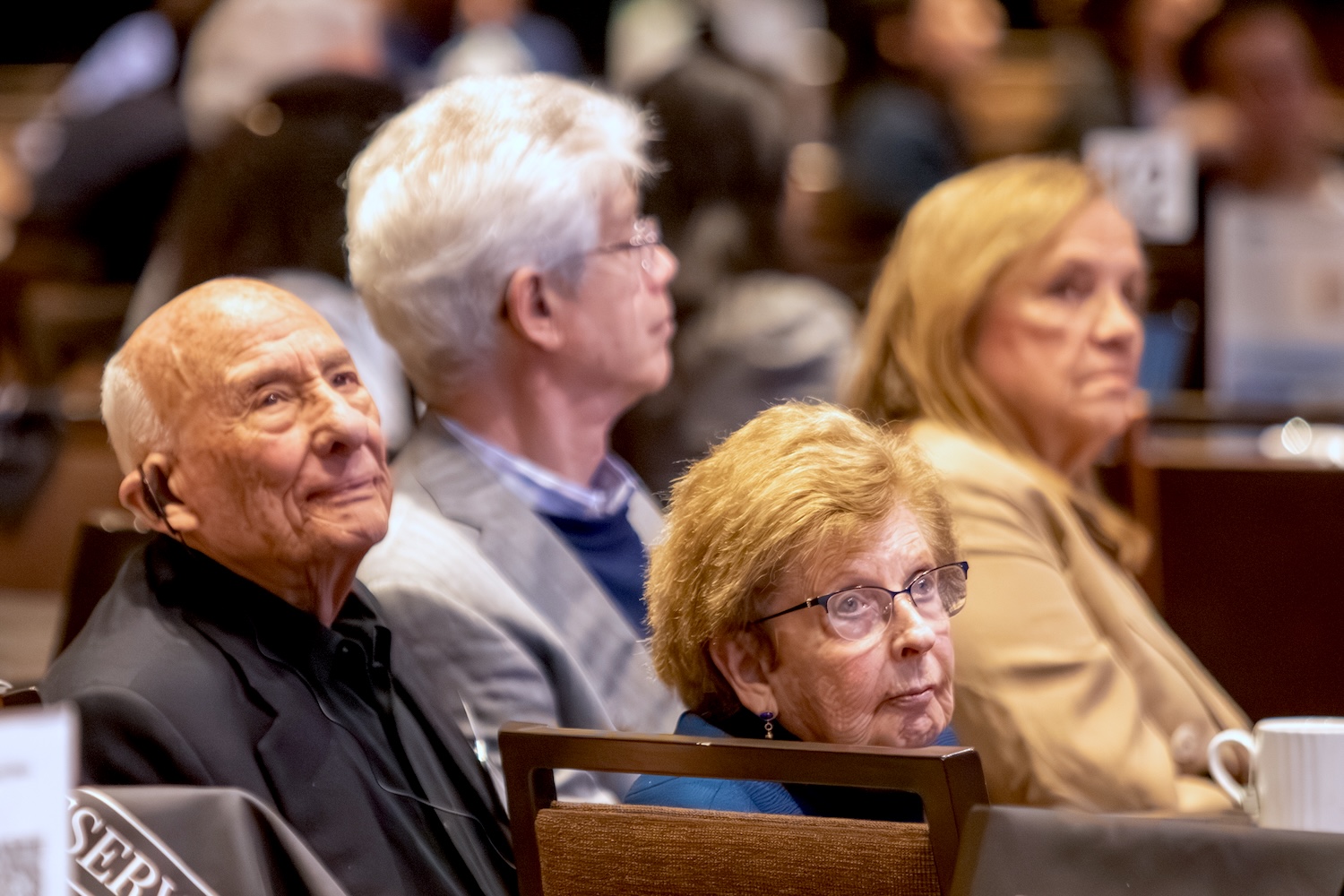
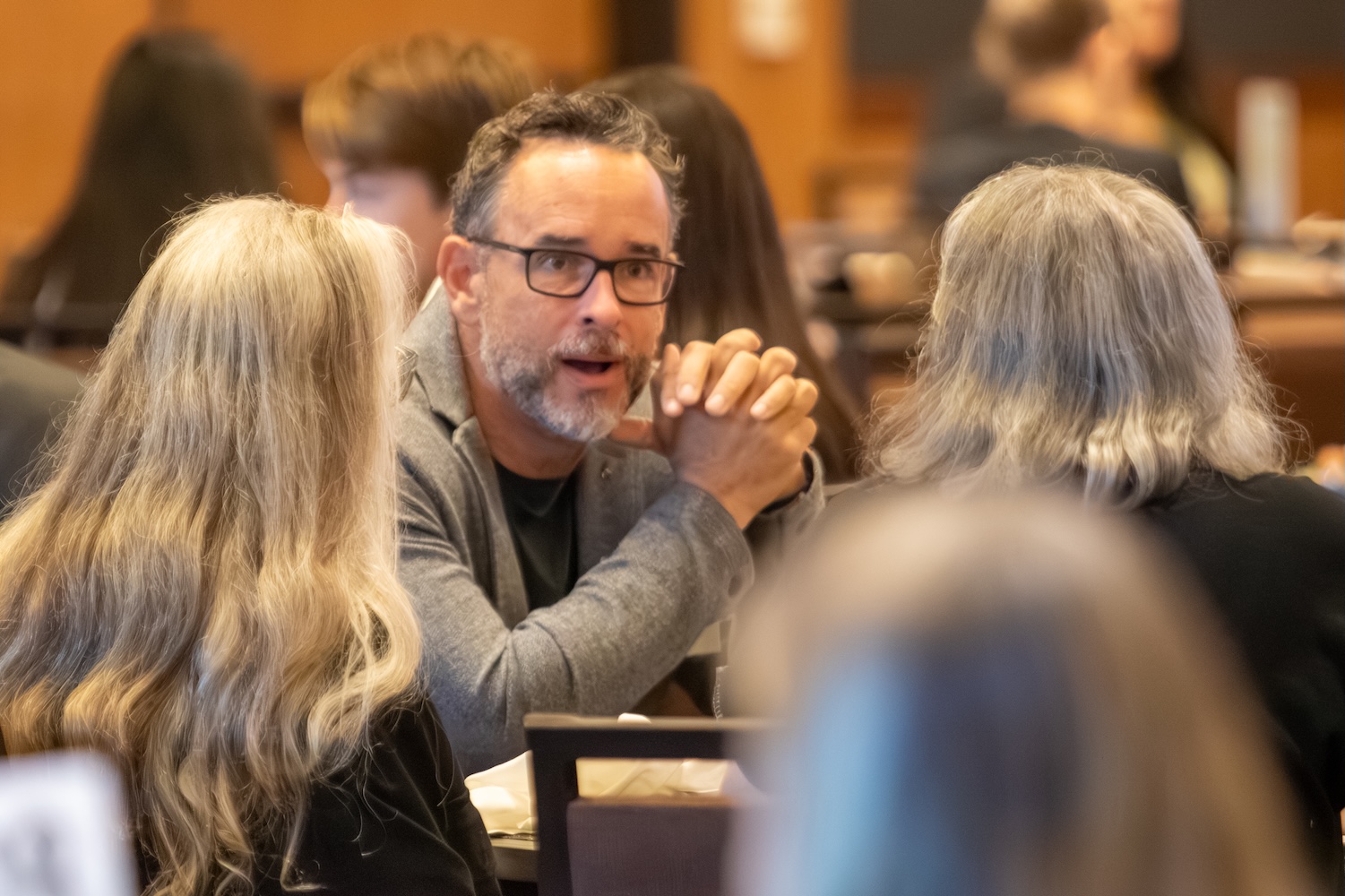
Former U.S. Sen. Laphonza Butler brought a message of resiliency and resolve to more than 400 scholars, students, community leaders, and elected officials who came together at UCLA last week to take on California’s most entrenched problems.

“Too many Californians, too many Angelenos, are not OK,” Butler told the crowd gathered for the eighth annual UCLA Luskin Summit on April 15. But she added, “The people in this room, the communities that you serve, have already proven that change is possible. …

“I keep returning to this one thing that sustains me: It’s that hope is not a joyful feeling. Hope, UCLA, is hard work.”

Butler, who served as a labor leader, political advisor and UC regent before joining the U.S. Senate in 2023 to complete the term of the late Dianne Feinstein, delivered the keynote address following a morning centered on strengthening resilience and equity at the local level.

Sharing Research and Solutions

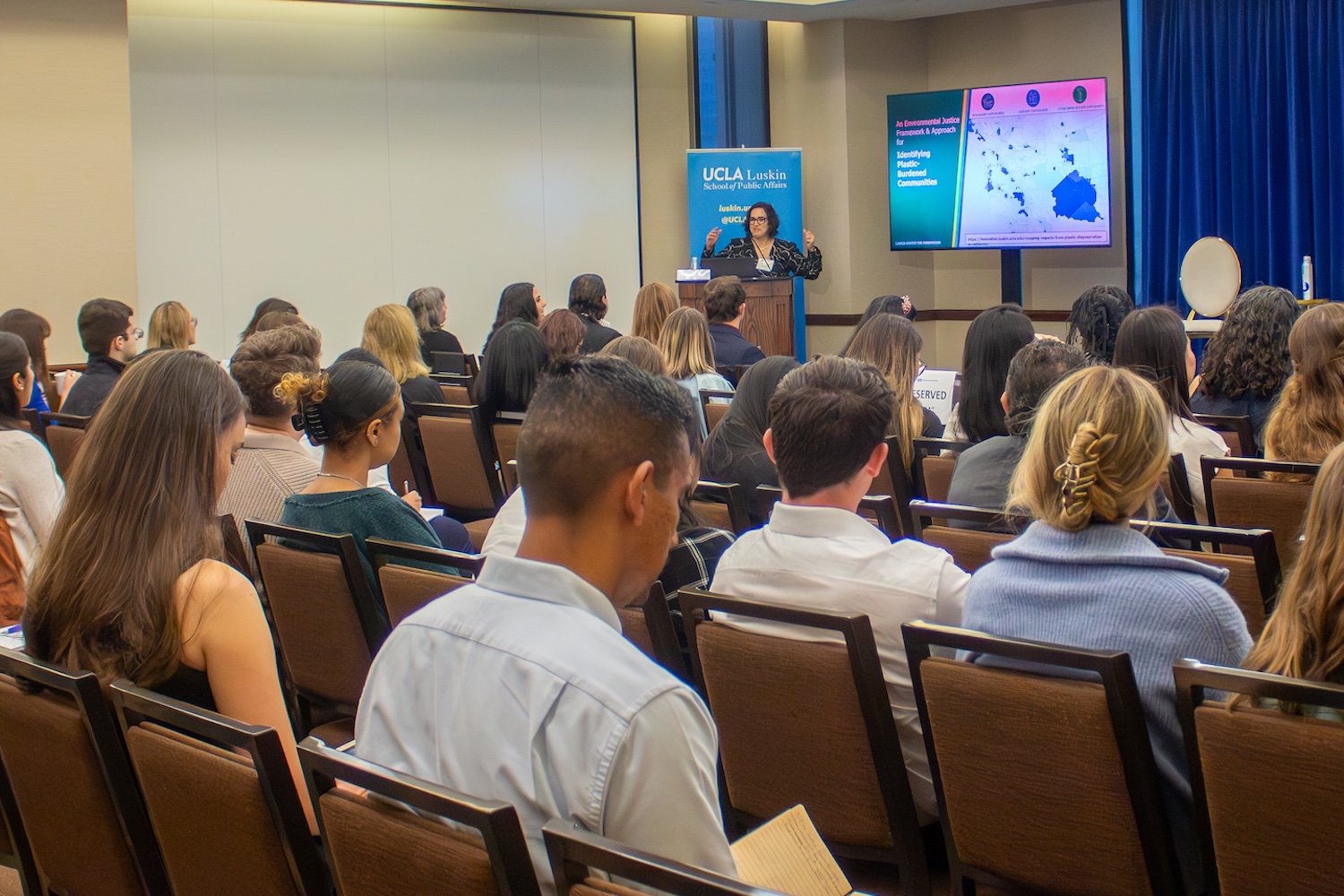
Researchers from the UCLA Luskin School of Public Affairs teamed up with difference-makers in the public, private, and nonprofit sectors to share the latest advances in four areas of concern:

  • California’s housing strategy, including the state’s new zoning rules aimed at making shelter more affordable
  • Environmental health and justice, including the impact of extreme heat as L.A. hosts a series of mega-events, and the toll plastic pollution takes on vulnerable communities
  • Transportation security, including new strategies for elevating security, trust, and comfort among public transit riders
  • Socioeconomic vulnerability, including strategies to bridge intergenerational inequities, and regulatory tools that can be used to promote more inclusive growth

Launched in 2019, the UCLA Luskin Summit provides a bridge between academia, policymakers, and civil society, with the goal of finding evidence-based solutions to California’s most pressing concerns. This year’s gathering highlighted recent research from the UCLA Luskin Center for Innovation, UCLA Institute of Transportation Studies, UCLA Lewis Center for Regional Policy Studies, and departments of Public Policy, Social Welfare, and Urban Planning.

Master of Urban Planning student O’Philia Le said she chose to attend the summit to learn how UCLA Luskin research is put into practice in the world.

“A key takeaway for me was that large-scale racial justice and global environmental impacts really start with local solutions. However, those solutions don’t just happen on their own,” she said.

“They require political pressure, community engagement, and an intentional push to actually move forward. As an aspiring planner, I believe that this is key to the work that we do.”

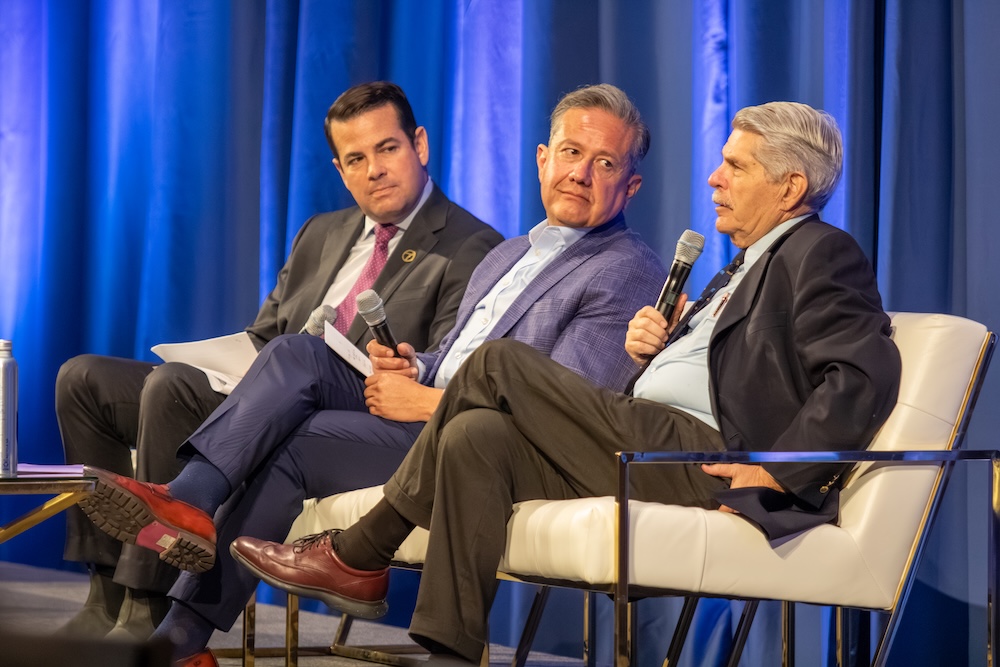
three men in suits sitting on stage

From left, ABC7’s Josh Haskell, Miguel Santana of the California Community Foundation, and Zev Yaroslavsky of UCLA Luskin’s Los Angeles Initiative review results from the 2026 Quality of Life Index. Photo by Michael Troxell

Quality of Life Index Reveals Growing Strain

The summit also hosted the release of this year’s UCLA Quality of Life Index (QLI), a project of the Luskin School’s Los Angeles Initiative, directed by Zev Yaroslavsky. The survey found that Los Angeles County residents’ satisfaction with their lives has hit the lowest level in the QLI’s 11-year history.

“We’ve been through a lot in the last five years: COVID; punishing increases in the cost of living; last year’s catastrophic fires, the worst natural disaster in the history of this city; tariffs; and this year the destabilizing implementation of the Trump administration’s immigration sweeps, which started right here in our own back yard,” he said. “All of these have taken their toll on virtually every aspect of our lives in every part of our region.”

Cost of living continues to be the single biggest driver of residents’ quality of life, though its rating declined from 2025, according to the survey. Among the 1,400 Los Angeles County residents polled in March, housing affordability remained the dominant concern, while rising costs for utilities, groceries, and taxes were cited more frequently than in prior years.

Ratings fell across nearly every category compared with last year, with six areas reaching their lowest levels since the survey began in 2016: education, transportation and traffic, jobs and the economy, public safety, neighborhood conditions, and relations among different races, ethnicities, and religions.

A Call to Action for the Next Generation

In her remarks, Butler also addressed the sobering results of the QLI.

“Every year the Quality of Life Index holds up a mirror to Los Angeles County,” she said. “And every year, it asks us to be brave enough to look in that mirror.”

She stressed, however, that “alongside every data point of strain, there’s a counter story, one that doesn’t get enough attention — the story that happens when people organize, when coalitions hold, when accountability is real.”

To the service-minded students in the room, she issued a call to action, echoing the summit’s theme of empowering local communities. Some of them would go to Washington and some to Sacramento, where they are desperately needed, she said.

“But some of you — hear me — need to go to places that don’t make headlines. To neighborhoods where the data actually lives, to communities where the stakes are immediate, not to study them but to be accountable to them. …

“The communities most impacted by vulnerability are also most engaged in building solutions. … Survival demands participation.”

View more photos from the 2026 UCLA Luskin Summit on Flickr.

Shane Phillips Weighs In on San Diego’s Proposed Vacancy Tax

A Los Angeles Times article highlights San Diego’s upcoming vote on a “non-primary home” tax. The proposal would impose an $8,000 annual tax on homes left vacant for more than half the year, potentially generating up to $24 million to support housing efforts. It targets an estimated 5,000 underutilized properties in a city where housing costs remain among the highest in the nation.

Supporters argue the tax could increase housing availability and discourage vacancies, while critics question its financial burden on homeowners and the allocation of revenue.

UCLA Lewis Center for Regional Policy Studies housing manager Shane Phillips commented on the policy, stating, “This is a policy, essentially, to bring luxury housing back onto the market.” He emphasized that “we are talking very small stakes compared to the scale of the crisis and the need.”