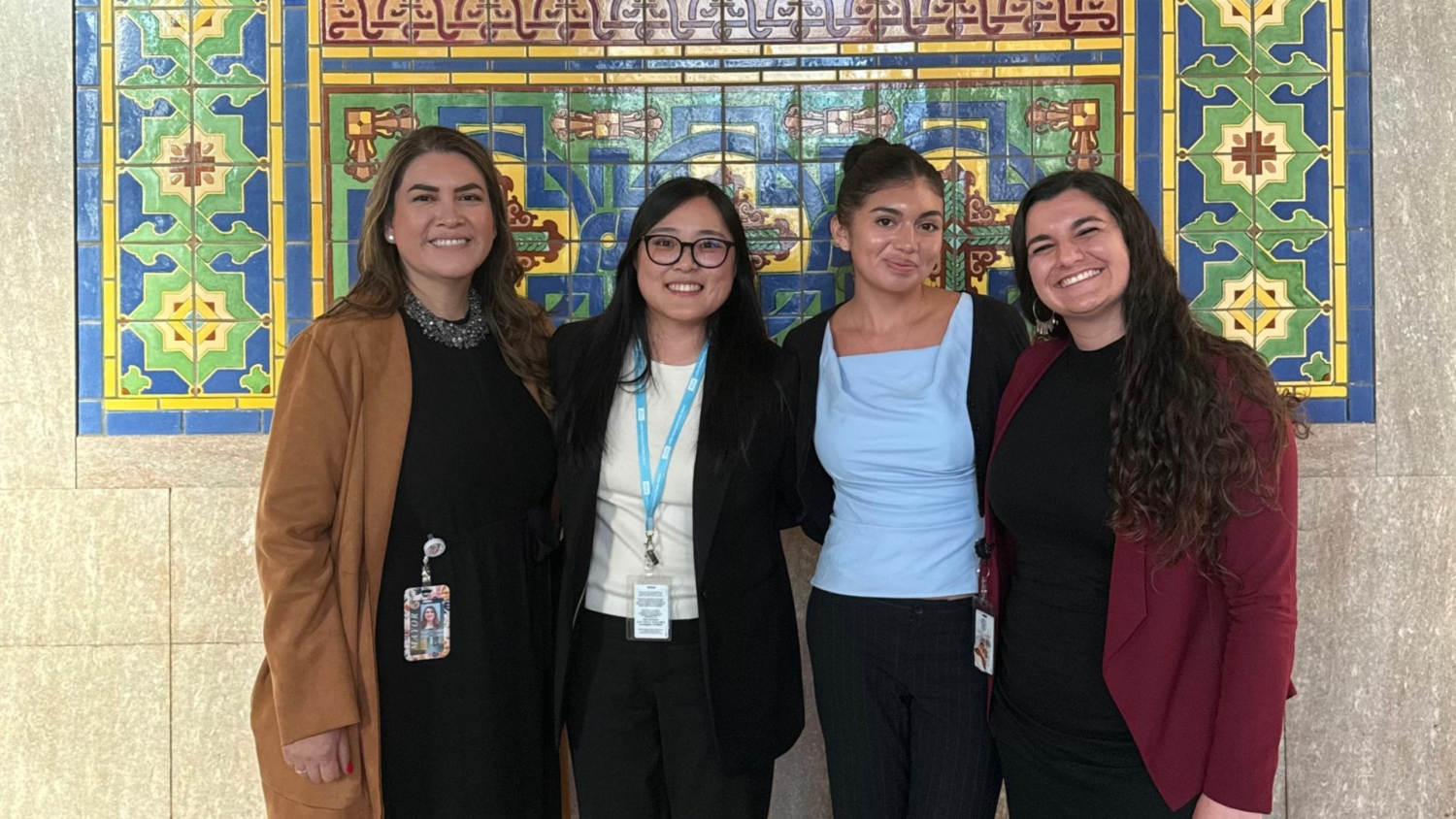
Q&A: Advancing Equity for Immigrant Communities with MPP Student Jenny Jihyun Kim A David Bohnett Fellow reflects on turning policy training into meaningful action.
You were recently selected as a David Bohnett Fellow with the Mayor’s Office of Immigrant Affairs. What excites you most about this opportunity, and how do you see it advancing your career goals?
I am deeply honored to be selected as a David Bohnett Fellow with the Mayor’s Office of Immigrant Affairs, especially at a time when Los Angeles, as a city, is at the forefront of protecting and uplifting immigrant communities. This opportunity excites me because it allows me to see firsthand how local government can translate values into action. For example, working on Executive Directive 12, which is designed to strengthen protections and access to city services for immigrant families, has allowed me to witness how policy can directly improve and make a difference in people’s lives. Throughout my time at the UCLA Luskin MPP Program, I often reflected on what it means to create equitable, evidence-based policy. At the mayor’s office of immigrant affairs, I see how this applies in real life. I observed how data, advocacy, and collaboration converge to shape city policy and address issues faced by the community. This experience as a David Bohnett fellow directly advances my long-term career goal of becoming a leader who bridges communities and policymakers. With my background in grassroots organizing and now my exposure to policymaking in local government, I’m developing the skills and the perspective needed to be an effective advocate for immigrant rights and equity in public policy.
“I aspire to be an advocate within the spaces of policy and ensure that community members are not just represented in policy discussions, but they are brought in as active partners in shaping policy.”
As part of your fellowship, you’re working inside a government office where policy decisions are made and implemented. What have you learned so far about how public policy actually takes shape in practice, and how has that influenced your perspective as a future policymaker?
Working inside the Mayor’s Office has shown me that policy-making and policy implementation are a collaborative effort. It has shown me that it’s not just about writing good policy, but also that building relationships and trust is crucial. In being part of the team leading the Executive Directive 12, I’ve had the opportunity to work alongside policy makers, a team of lawyers, community leaders, city department leaders, and other various stakeholders, each bringing a unique perspective and ideas to the table. Through this process, I am seeing how much coordination and communication it takes to ensure that a policy is implemented equitably with the right intentions. One key lesson I have observed and learned is that equitable policy “making” requires ongoing conversation with those most impacted. The power to make meaningful change lies in the community, and it is when you work with directly impacted people that policy becomes more grounded and sustainable. This experience has influenced my perspective as a future policymaker by reinforcing that creating meaningful change requires centering the voices of those with lived experiences. I’ve also learned that implementation and accountability are just as critical as policy design itself, also recognizing that implementation requires continuous communication and collaboration.
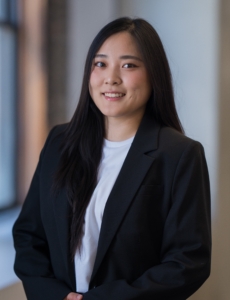
The Luskin School emphasizes hands-on learning and connecting policy theory with real-world practice. Can you share an example of how your coursework or training has directly informed your fieldwork or fellowship projects?
My coursework at UCLA Luskin has taught me to critically analyze social issues through both quantitative and qualitative lenses. I learned that it is not only about understanding what the problem is, but also why it exists, how proposed policies might create intended and unintended consequences, how to provide recommendations to relevant stakeholders, how to evaluate recommendations, and how to work collaboratively on implementing them. For example, I have observed in meetings with policymakers and community leaders how qualitative and quantitative data are constantly discussed. I learned that narratives of impacted community members alongside quantitative data reflecting the scope of their experiences play a significant role in informing and shaping policy decisions. Additionally, in my Methods of Policy Analysis class, I learned about the various evaluation criteria, including effectiveness, equity, efficiency, feasibility, and more. When meeting with all City Departments’ Immigrant Affairs Liaison to support the implementation of Executive Directive 12, I was able to bring this analytical lens into practice. I considered how each department’s role and its programs impact the directive’s effectiveness and equity in serving immigrant communities. Remembering the different frameworks I learned at Luskin, I was able to contribute to discussions about the accessibility of city resources in multiple languages and ensuring that City Departments account for diverse factors that could influence implementation in their respective fields.
Looking ahead, how do you envision leveraging your Luskin education and professional experiences to drive change for immigrant and underserved communities—both locally and globally?
Through my time at Luskin and my professional experiences, I have witnessed how evidence-based policy, cross-sector collaboration, and community engagement can come together to create meaningful change for the immigrant and underserved communities. At NAKASEC, I learned about grassroots organizing. At the UCLA Dream Resource Center and Labor Center, I learned about research justice. At Luskin, I am learning about policy and policy analysis. At the Mayor’s Office of Immigrant Affairs, I am learning about putting my MPP knowledge into practice. While I recognize I have much to learn, I aspire to be an advocate within the spaces of policy and ensure that community members are not just represented in policy discussions, but they are brought in as active partners in shaping policy.
Five or ten years from now, where do you hope to be, and what kind of impact do you ultimately want to make through your career in public policy?
In five to ten years, I hope to be working in a leadership role within a local or regional government abroad or with an international organization, where I can continue to design, research, recommend, implement, and evaluate policies that advance equity and protect the rights of immigrant and underserved communities. My goal is to be a public policy expert who brings both professional expertise and lived experience as an immigrant to the table, ensuring that community voices are included in decision-making and that human rights remain at the center of public policy. Ultimately, I hope to conduct my own research analyzing the evolving patterns of human migration and to develop actionable policy recommendations for countries to promote safe, dignified, and equitable migration journeys. I aspire to contribute to advancing social systems where migrants have access to essential resources and services, and where they are empowered to make informed decisions for themselves and their families.






Leave a Reply
Want to join the discussion?Feel free to contribute!