Home / News / UCLA Luskin Summit Focused on Rebuilding and Recovery from the Wildfires
UCLA Luskin Summit Focused on Rebuilding and Recovery from the Wildfires
L.A. Mayor Karen Bass and other community leaders joined nearly 400 attendees to highlight the wide spectrum of recovery efforts
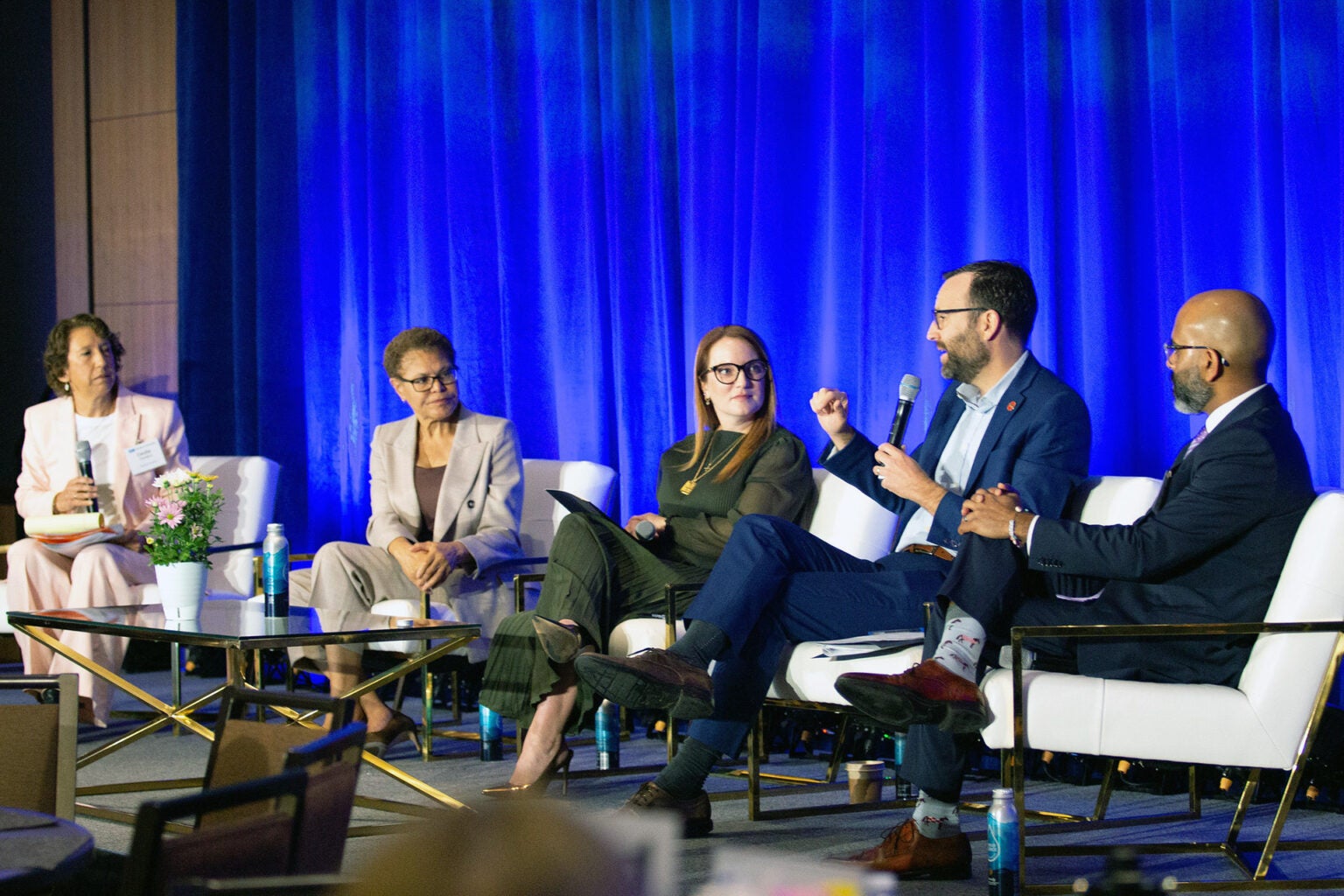
Pictured, left to right is Cecilia Estolano, Karen Bass, Lindsey Horvath, Ben Allen, and Anish Saraiya|Photos by Stan Paul/UCLA Luskin School of Public Affairs||||||||||||
UCLA Luskin Summit Focused on Rebuilding and Recovery from the Wildfires
L.A. Mayor Karen Bass and other community leaders joined nearly 400 attendees to highlight the wide spectrum of recovery efforts
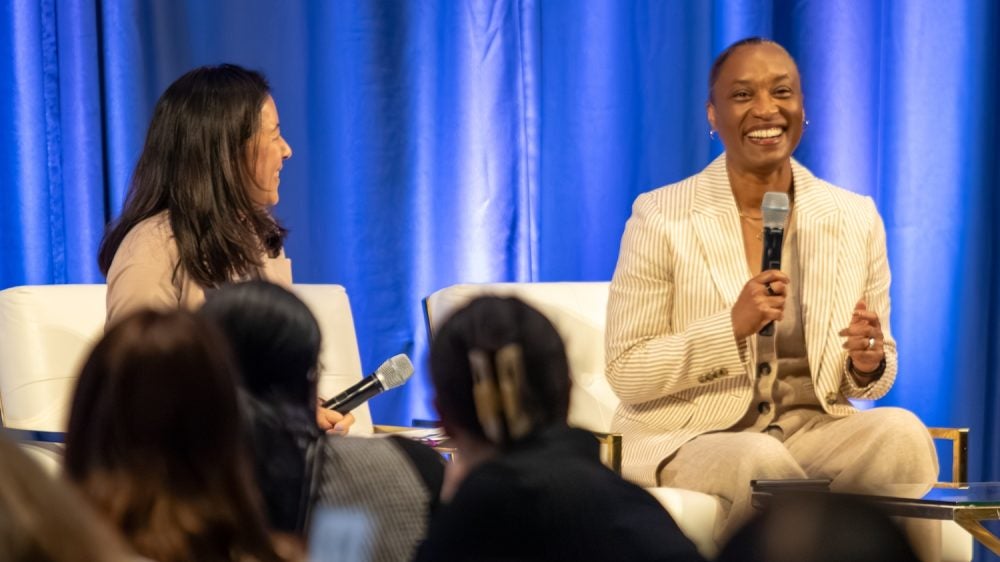
By Kate ShirleyThe wildfires that ravaged Los Angeles in January 2025 were, by many measures, the worst disaster in modern Los Angeles County history. All told, the fires killed at least 30 people, forced more than 200,000 to evacuate, destroyed more than 18,000 homes and structures, and burned over 57,000 acres of land in total.As the disaster unfolded just a few miles from the UCLA campus, UCLA Luskin faculty — experts on climate science, city planning, governance, health and mental health, transportation, demographics and more — were called upon to share their scholarship on the causes and impacts of the fires. When it was over, it was clear that UCLA Luskin had a unique role to play in the rebuilding and recovery efforts as well as shaping the conversation around what comes next.This is how the seventh annual UCLA Luskin Summit came to focus on rebuilding and recovery following the fires in the Los Angeles region. Experts from UCLA, community groups, nonprofit organizations, and government agencies came together on April 16 to share their expertise to guide a collective, equitable recovery in the county.Guest speakers at the plenary sessions included Los Angeles Mayor Karen Bass, UCLA Chancellor Julio Frenk, Supervisor Lindsey Horvath, CA State Senator Ben Allen, and former L.A. City Councilmember and Supervisor Zev Yaroslavsky, as well as representatives from the Pasadena Community Foundation, Altadena Recovery, Department of Angels, Hilton Foundation, and Ballmer Group.The results of the 2025 Quality of Life Index (QLI) were also released at the event by Yaroslavsky. This year’s survey revealed the scope of the fire and its impact on L.A. County residents, as well as growing concerns about the cost of living and deportation fears following the 2024 election.As Yaroslavsky outlined at the Summit, there was no overall change in the QLI this year. However, the score of 53 matches last year’s lowest ever in the 10 years of the QLI’s existence. The survey has hit this low point in three out of the last four years.He also highlighted how the collective trauma of the January wildfires was more widespread than anticipated, with effects felt all across the county in areas ranging from North County to South Bay.“The wildfires that raged in Altadena and Pacific Palisades in January are the story of this year’s survey,” said Yaroslavsky. “These catastrophic events have left devastating physical and psychological impacts in their wake. Although the primary victims are those who lost their lives, homes, and possessions, millions of other Angelenos have been touched by these terrifying events in myriad ways. These impacts cross geographic, economic and racial lines that can only be described as a shared trauma across Los Angeles County.”Read the entire QLI reportPhotos by Stan PaulIn the opening session — which focused on the rebuilding progress and goals for an equitable recovery — moderator Cecilia Estolano, UCLA Luskin Board of Advisors member and CEO of Estolano Group, summed up the Luskin Summit neatly: “We knew that this was our moment to pull together as a university, as a school that is responsive to the community, to the crisis at hand, and to make this Summit a place for all of Los Angeles to convene. Not just about how did it happen, or what do we do? But, how do we move forward? And how do we go bigger and bolder than before.”Mayor Bass stressed the importance of working together to expedite the recovery process, emphasizing the wide-ranging emotional toll of the fires, where not just homes and businesses were destroyed, but schools, libraries, parks, and gathering places, with communities scattered indefinitely.She also stressed her office’s work issuing emergency directives to cut through red tape to promote and fast-track the rebuilding efforts.“Over 500 properties have been cleared in the Palisades,” Bass said. “We have 19 permits that were already approved with over a hundred permits in the pipeline. We had the water and power back on in less than 2 months. Compare that to other fires where it took months to achieve this same effort.” (As of our publication date, according to the Mayor’s Office more than 1,500 properties have been cleared, 47 permits related to rebuilding efforts have been issued by the City of L.A., and hundreds of permit applications are in the process of being reviewed).Supervisor Horvath underscored the importance of listening to the affected communities, and coming together to unite efforts.“Listening is an important component — as much as putting our best foot forward in terms of the policies, and how we work together. The most important thing that we can do is hear what is on the hearts and minds of our constituents on a daily basis, and that needs to be at the center of our work and what’s driving us — how we bring people together.”Following the opening session, attendees then divided into breakout sessions which were organized into tracks focused on strategies for rebuilding, community recovery for vulnerable populations, impacts on mental and physical health, and climate risk and resilience. Researchers and faculty from UCLA Luskin’s Urban Planning Department, Social Welfare, Latino Policy and Politics Institute, Institute on Inequality and Democracy, Center for Neighborhood Knowledge, Master of Real Estate Development, and UCLA Institute of Environment and Sustainability shared expertise across these topics.The closing session focused on the role philanthropy can play in recovery across the city and how philanthropic organizations can collaborate with public funding and private sector leaders to support the essential rebuilding efforts in the L.A. Basin.Moderated by Jacqueline Waggoner, chair of the UCLA Luskin Board of Advisors, session panelists included Jennifer DeVoll, President & CEO of the Pasadena Community Foundation, Andrew King from the Department of Angels, Peter Laugharn, President & CEO of the Hilton Foundation, and Nina Revoyr, Executive Director, Los Angeles & National Public Safety for the Ballmer Group.During the session, these nonprofit leaders shared plans to assemble the resources of the private and nonprofit sectors, to augment and amplify local, state and federal resources to rebuild.Waggoner concluded the event by emphasizing the need to work together to see real change and appealed to all attendees to take what they learned that day and find real world applications.“We need to move together in one voice,” she said. “We need to take action from community voice and investments and work across all types of partners and agencies. At the end of the day, it’s going to take all of you as advocates, developers, foundations, government entities, and community members to build a safer and more resilient Los Angeles.”View the summit website to watch videos or listen to audio of all of the sessions presented. View photos by Stan Paul.