Skip to content
  • Students & Alumni
    • Career Services
    • Alumni Relations
    • Student Support
    • Graduate Resource Library
    • For Employers
  • News
  • Events
    • Events Calendar
    • Luskin Summit
    • Luskin Lecture Series
    • California Policy Briefing
    • Commencement
  • Students & Alumni
    • Career Services
    • Alumni Relations
    • Student Support
    • Graduate Resource Library
    • For Employers
  • News
  • Events
    • Events Calendar
    • Luskin Summit
    • Luskin Lecture Series
    • California Policy Briefing
    • Commencement
Giving
UCLA Luskin School of Public Affairs Logo
  • Academics
    Departments & Programs
    • Global Public Affairs
    • Public Policy
    • Real Estate Development
    • Social Welfare
    • Urban Planning
    • Undergraduate Program
    • Global Public Affairs
    • Public Policy
    • Real Estate Development
    • Social Welfare
    • Urban Planning
    • Undergraduate Program
    Graduate Degrees
    • Master of Global Public Affairs (MGPA)
    • Master of Public Policy (MPP)
    • Master of Real Estate Development (MRED)
    • Master of Social Welfare (MSW)
    • Master of Urban and Regional Planning (MURP)
    • PhD in Social Welfare
    • PhD in Urban Planning
    • Master of Global Public Affairs (MGPA)
    • Master of Public Policy (MPP)
    • Master of Real Estate Development (MRED)
    • Master of Social Welfare (MSW)
    • Master of Urban and Regional Planning (MURP)
    • PhD in Social Welfare
    • PhD in Urban Planning
    Undergraduate Degrees
    • BA in Public Affairs
    • Minor in Urban and Regional Studies
    • Minor in Gerontology
    • Minor in Public Affairs
    • BA in Public Affairs
    • Minor in Urban and Regional Studies
    • Minor in Gerontology
    • Minor in Public Affairs
    Professional Certificates
    • AI in Public Affairs Certificate
    • AI in Public Affairs Certificate
  • Admissions
    Program Specific Admissions
    • Global Public Affairs
    • Public Policy
    • Real Estate Development
    • Social Welfare
    • Urban Planning
    • Undergraduate Program
    • Global Public Affairs
    • Public Policy
    • Real Estate Development
    • Social Welfare
    • Urban Planning
    • Undergraduate Program
  • Faculty
    Our Faculty
    • All Faculty
    • Public Policy
    • Real Estate Development
    • Social Welfare
    • Urban Planning
    • All Faculty
    • Public Policy
    • Real Estate Development
    • Social Welfare
    • Urban Planning
    Leadership
    • Our Dean
    • Board of Advisors
    • Faculty Executive Committee
    • Our Dean
    • Board of Advisors
    • Faculty Executive Committee
  • Research Centers
    • Agile Visual Analytics Lab (AVAL)

      Empowers stakeholders with data to make informed decisions for children, families, and communities.

    • Berggruen Governance Index

      Evaluates the quality of political governance and democracy worldwide.

    • Center for Neighborhood Knowledge (CNK)

      Specializes in spatial analysis of socioeconomic disparities in neighborhoods.

    • Center for Policy Research on Aging (CPRA)

      Explores the societal and policy implications of an aging population.

    • Agile Visual Analytics Lab (AVAL)

      Empowers stakeholders with data to make informed decisions for children, families, and communities.

    • Berggruen Governance Index

      Evaluates the quality of political governance and democracy worldwide.

    • Center for Neighborhood Knowledge (CNK)

      Specializes in spatial analysis of socioeconomic disparities in neighborhoods.

    • Center for Policy Research on Aging (CPRA)

      Explores the societal and policy implications of an aging population.

    • Institute of Transportation Studies (ITS)

      Advances research, education, and meaningful civic engagement on transportation issues.

    • Institute on Inequality and Democracy

      Advances scholarship that confronts threats to democracy in America and around the world.

    • Latin American Cities Initiative

      Connects urban planning and policy networks across the Americas.

    • Latino Policy & Politics Institute (LPPI)

      Addresses policy challenges facing Latinos and communities of color.

    • Institute of Transportation Studies (ITS)

      Advances research, education, and meaningful civic engagement on transportation issues.

    • Institute on Inequality and Democracy

      Advances scholarship that confronts threats to democracy in America and around the world.

    • Latin American Cities Initiative

      Connects urban planning and policy networks across the Americas.

    • Latino Policy & Politics Institute (LPPI)

      Addresses policy challenges facing Latinos and communities of color.

    • Lewis Center for Regional Policy Studies

      Studying housing affordability and transportation equity in the L.A. region.

    • Los Angeles Education Research Institute (LAERI)

      Collaborates with schools to improve educational outcomes for L.A. students.

    • Luskin Center for Innovation

      Informing effective and equitable environmental policy that improves lives.

    • UCLA Voting Rights Project

      The flagship project for voting rights litigation and policy research.

    • Lewis Center for Regional Policy Studies

      Studying housing affordability and transportation equity in the L.A. region.

    • Los Angeles Education Research Institute (LAERI)

      Collaborates with schools to improve educational outcomes for L.A. students.

    • Luskin Center for Innovation

      Informing effective and equitable environmental policy that improves lives.

    • UCLA Voting Rights Project

      The flagship project for voting rights litigation and policy research.

    All Research Centers
  • Outcomes
Home / News / A New Approach to Preventing Weapons-Related Violence at California Schools

A New Approach to Preventing Weapons-Related Violence at California Schools

Study gauges the prevalence of weapons on campuses and provides a comprehensive look at factors that put schools at risk
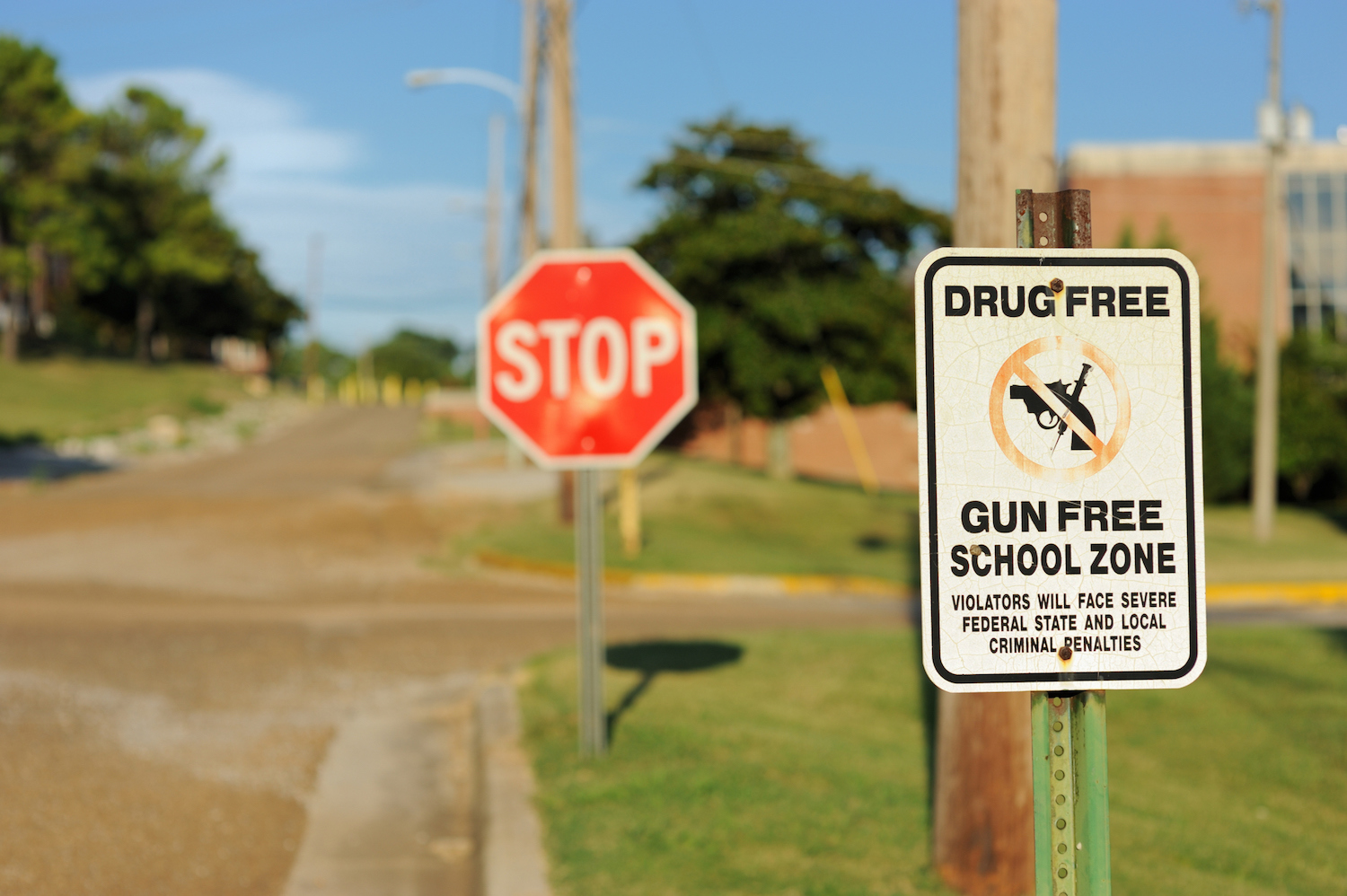
Gun free school zone

Posted in

  • Education, School of Public Affairs, Social Welfare, Undergraduates

Published on

  • June 30, 2021
  • education, gun violence, school climate, school safety, school violence, schools, Social Welfare, weapons

Share this Article

By Mary Braswell

At some schools in California, nearly 1 in 5 students say they have either carried a weapon or been injured or threatened with one, according to a new study co-authored by UCLA Social Welfare Professor Ron Avi Astor that examines the presence of weapons in the state’s public middle and high schools and recommends focusing on campus-level conditions that could serve as warning signs for violence.

“Although tragic incidents of shootings in schools are rare and directly affect only a small number of students, tens of thousands of students report bringing weapons to school, and many more see other students in their school carrying weapons,” said Astor, who holds joint appointments at the UCLA Luskin School of Public Affairs and UCLA School of Education and Information Studies.

The study, co-authored with Rami Benbenishty of Hebrew University of Jerusalem, was published recently in the Journal of School Violence.

Based on surveys of nearly 890,000 California students in grades 7, 9 and 11, the research focuses on all types of weapons — not only guns — and assesses how factors such as the level of crime in a school’s surrounding neighborhood, students’ feelings of belongingness or victimization at school, their relationships with teachers and staff, and their perceptions about whether disciplinary practices are fair can heighten or lower the potential for weapons-carrying and violence.

This holistic or school-wide approach represents a significant departure from previous school-violence studies, which have typically sought to identify risk factors around individual students who might pose a threat, Astor noted.

“A major limitation of current ‘shooter’ studies is that they tend to maintain a narrow focus on individual perpetrators,” the authors write. “Although it is very difficult to detect students who perpetrate school shootings, it is possible to identify schools that have many students who are involved with weapons.”

The number of students who reported seeing weapons on campus is very low at many schools, according to the study, which included a representative sample of students from every county in the state who completed the California Healthy Kids Survey between 2013 and 2015.

However, in 3.3% of schools, more than 15% of students reported carrying a weapon, and in 5.8% of schools, at least 15% of students said they had been injured by a weapon or threatened with one. It is at these schools in particular, Astor and Benbenishty say, that an approach focused on improving campuswide conditions can bear the most fruit.

“It is imperative to develop a monitoring system to identify such schools and channel resources to this vulnerable group of students, educators and parents,” said Astor, who teaches a UCLA undergraduate course on ways to improve school safety. “We must create opportunities to hear their voices and explore local solutions that make their schools safer.”

Fostering a warm, supportive school environment is key to reducing the presence of weapons and creating a truly safe campus, according to the authors, whose previous research has demonstrated that prioritizing a culture of care, funneling more resources to vulnerable schools and elevating the voices of students, teachers and students leads to a drop in the number of weapons at schools.

“Students who trust that teachers support them and have a sense of safety in school may be less inclined to bring weapons to school,” the authors write.

In this new study, Astor and Benbenishty also focus on the unintended negative consequences of past efforts to deter individual shooters by “hardening” schools with metal detectors, security cameras and armed staff, as well as “active shooter” drills and harsh mandatory punishments that research shows often demonstrated bias against students of color.

These measures, they noted, frequently created fortress-like campuses that greatly diminished students’ well-being, heightened the fear of violence on school grounds and sent more of the nation’s children into the school-to-prison pipeline.

“Schools,” the authors conclude, “could develop a variety of caring and supportive approaches to reduce weapons-related behaviors … that do not include law enforcement methods and do not increase the school-to-prison pipeline.”

Faculty Mentioned in this Article

Ron Avi Astor

Professor of Social Welfare

Ron Avi Astor holds the Marjorie Crump Chair Professorship in Social Welfare at the UCLA Luskin School of Public Affairs...

Related Articles

map of USA with red highlighted states.

Ron Astor Weighs In on the Persistence of School Paddling in the New York Sun

September 21, 2026
Luskin in the News
Read More
female students hug

A Painful Realization About What’s Behind School Shootings

July 31, 2026
Luskin in the News
UCLA Luskin's Ron Avi Astor says improving campus climate can only go so far in a...
Read More
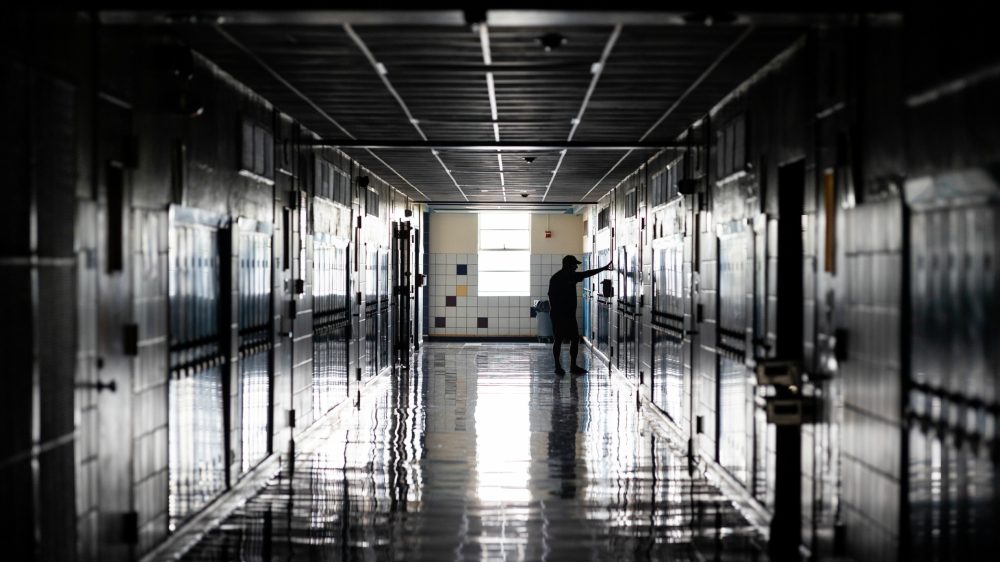
Dimly lit hallway of a high school, with lockers on either side, a man stands with his arms out touching a wall, conveying sadness.

Astor Weighs In on Investigation Following Fatal Graduation Shooting

June 22, 2026
Luskin in the News
Ron Avi Astor discusses the unusual lack of information released following a fatal shooting after a...
Read More
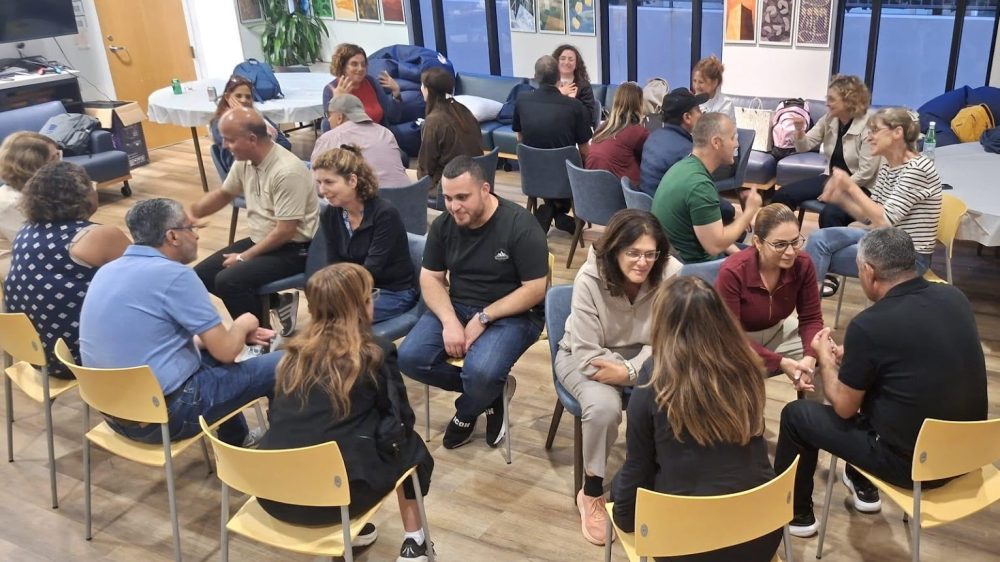
Visiting educators share childhood experiences that led them to their line of work, along with their takeaways from the weeklong exchange hosted by UCLA

At UCLA, a Week of ‘Building Peace Through Education’

June 16, 2026
School of Public Affairs
Research exchange brings together Jewish, Muslim and Druze educators from across Israeli society....
Read More
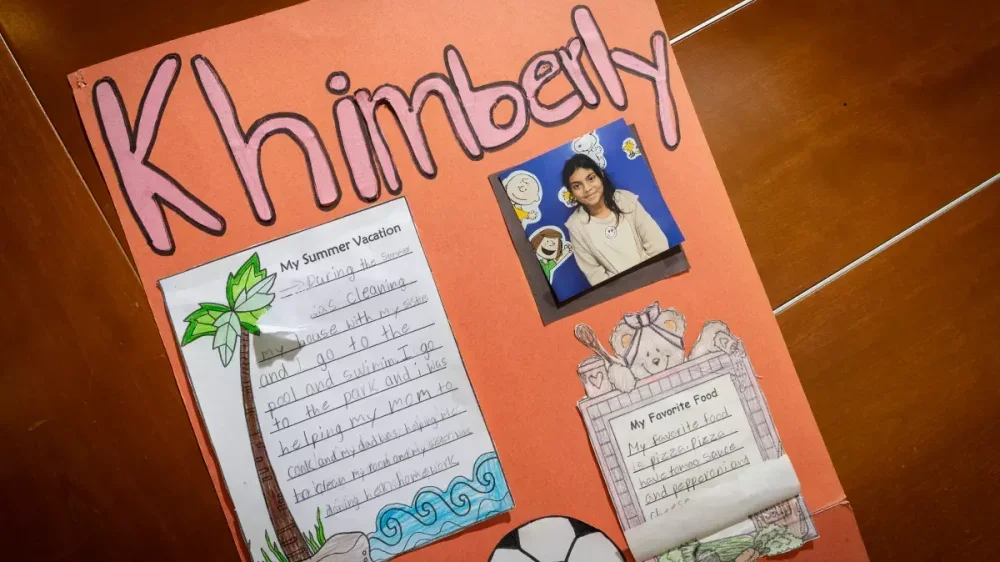
Twelve-year-old Khimberly Zavaleta Chuquipa died after an alleged bullying incident at her school

12-Year-Old’s Death After Bullying Incident Reveals School’s Inaction

May 4, 2026
Luskin in the News
A lawsuit has been filed against an LAUSD school for mishandling of bullying reports after a...
Read More
Head shot of man with glasses

Ron Avi Astor Receives AERA Research Award in Human Development

April 8, 2026
Luskin's Latest Blog
UCLA Luskin Social Welfare professor is honored by the American Educational Research Association....
Read More
Learn more about UCLA Luskin

Find contact information and get answers to your questions.

Contact Us

Public Affairs Building
337 Charles E. Young Drive East
Los Angeles, California 90095

Linkedin Youtube Instagram Facebook X-twitter
Campus Resources
  • Map, Directions, Parking
  • Directory
  • Academic Calendar
  • Careers
  • Map, Directions, Parking
  • Directory
  • Academic Calendar
  • Careers
School Resources
  • About
  • Our Dean
  • Administration
  • Board of Advisors
  • Contact Us
  • Visit Us
  • About
  • Our Dean
  • Administration
  • Board of Advisors
  • Contact Us
  • Visit Us
UCLA logo
© 2026 Regents of the University of California
  • Emergency
  • Accessibility
  • Privacy & Terms of Use
  • Emergency
  • Accessibility
  • Privacy & Terms of Use
Facebook Instagram Linkedin X-twitter Youtube Threads
UCLA Luskin School of Public Affairs Logo
Academics
Departments
  • Global Public Affairs
  • Public Policy
  • Real Estate Development
  • Social Welfare
  • Urban Planning
  • Undergraduate Program
  • Global Public Affairs
  • Public Policy
  • Real Estate Development
  • Social Welfare
  • Urban Planning
  • Undergraduate Program
Graduate Programs
  • Master of Global Public Affairs (MGPA)
  • Master of Public Policy (MPP)
  • Master of Real Estate Development (MRED)
  • Master of Social Welfare (MSW)
  • Master of Urban and Regional Planning (MURP)
  • PhD in Social Welfare
  • PhD in Urban Planning
  • Master of Global Public Affairs (MGPA)
  • Master of Public Policy (MPP)
  • Master of Real Estate Development (MRED)
  • Master of Social Welfare (MSW)
  • Master of Urban and Regional Planning (MURP)
  • PhD in Social Welfare
  • PhD in Urban Planning
Undergraduate Programs
  • BA in Public Affairs
  • Minor in Urban and Regional Studies
  • Minor in Gerontology
  • Minor in Public Affairs
  • BA in Public Affairs
  • Minor in Urban and Regional Studies
  • Minor in Gerontology
  • Minor in Public Affairs
Professional Certificates
  • AI in Public Affairs Certificate
  • AI in Public Affairs Certificate
Admissions
Program Specific Admissions
  • Global Public Affairs
  • Public Policy
  • Real Estate Development
  • Social Welfare
  • Urban Planning
  • Undergraduate Program
  • Global Public Affairs
  • Public Policy
  • Real Estate Development
  • Social Welfare
  • Urban Planning
  • Undergraduate Program
Faculty
Our Faculty
  • All Faculty
  • Public Policy
  • Real Estate Development
  • Social Welfare
  • Urban Planning
  • All Faculty
  • Public Policy
  • Real Estate Development
  • Social Welfare
  • Urban Planning
Leadership
  • Our Dean
  • Board of Advisors
  • Faculty Executive Committee
  • Our Dean
  • Board of Advisors
  • Faculty Executive Committee
Research Centers
  • Agile Visual Analytics Lab (AVAL)

    Empowers stakeholders with data to make informed decisions for children, families, and communities.

  • Berggruen Governance Index

    Evaluates the quality of political governance and democracy worldwide.

  • Center for Neighborhood Knowledge (CNK)

    Specializes in spatial analysis of socioeconomic disparities in neighborhoods.

  • Center for Policy Research on Aging (CPRA)

    Explores the societal and policy implications of an aging population.

  • Agile Visual Analytics Lab (AVAL)

    Empowers stakeholders with data to make informed decisions for children, families, and communities.

  • Berggruen Governance Index

    Evaluates the quality of political governance and democracy worldwide.

  • Center for Neighborhood Knowledge (CNK)

    Specializes in spatial analysis of socioeconomic disparities in neighborhoods.

  • Center for Policy Research on Aging (CPRA)

    Explores the societal and policy implications of an aging population.

  • Institute of Transportation Studies (ITS)

    Advances research, education, and meaningful civic engagement on transportation issues.

  • Institute on Inequality and Democracy

    Advances scholarship that confronts threats to democracy in America and around the world.

  • Latin American Cities Initiative

    Connects urban planning and policy networks across the Americas.

  • Latino Policy & Politics Institute (LPPI)

    Addresses policy challenges facing Latinos and communities of color.

  • Institute of Transportation Studies (ITS)

    Advances research, education, and meaningful civic engagement on transportation issues.

  • Institute on Inequality and Democracy

    Advances scholarship that confronts threats to democracy in America and around the world.

  • Latin American Cities Initiative

    Connects urban planning and policy networks across the Americas.

  • Latino Policy & Politics Institute (LPPI)

    Addresses policy challenges facing Latinos and communities of color.

  • Lewis Center for Regional Policy Studies

    Studying housing affordability and transportation equity in the L.A. region.

  • Los Angeles Education Research Institute (LAERI)

    Collaborates with schools to improve educational outcomes for L.A. students.

  • Luskin Center for Innovation

    Informing effective and equitable environmental policy that improves lives.

  • UCLA Voting Rights Project

    The flagship project for voting rights litigation and policy research.

  • Lewis Center for Regional Policy Studies

    Studying housing affordability and transportation equity in the L.A. region.

  • Los Angeles Education Research Institute (LAERI)

    Collaborates with schools to improve educational outcomes for L.A. students.

  • Luskin Center for Innovation

    Informing effective and equitable environmental policy that improves lives.

  • UCLA Voting Rights Project

    The flagship project for voting rights litigation and policy research.

All Research Centers
Outcomes
Common Search Terms

Results will show as you type.