
Skip to content
  • Students & Alumni
    • Career Services
    • Alumni Relations
    • Student Support
    • Graduate Resource Library
    • For Employers
  • News
  • Events
    • Events Calendar
    • Luskin Summit
    • Luskin Lecture Series
    • California Policy Briefing
    • Commencement
  • Students & Alumni
    • Career Services
    • Alumni Relations
    • Student Support
    • Graduate Resource Library
    • For Employers
  • News
  • Events
    • Events Calendar
    • Luskin Summit
    • Luskin Lecture Series
    • California Policy Briefing
    • Commencement
Giving
UCLA Luskin School of Public Affairs Logo
  • Academics
    Departments & Programs
    • Global Public Affairs
    • Public Policy
    • Real Estate Development
    • Social Welfare
    • Urban Planning
    • Undergraduate Program
    • Global Public Affairs
    • Public Policy
    • Real Estate Development
    • Social Welfare
    • Urban Planning
    • Undergraduate Program
    Graduate Degrees
    • Master of Global Public Affairs (MGPA)
    • Master of Public Policy (MPP)
    • Master of Real Estate Development (MRED)
    • Master of Social Welfare (MSW)
    • Master of Urban and Regional Planning (MURP)
    • PhD in Social Welfare
    • PhD in Urban Planning
    • Master of Global Public Affairs (MGPA)
    • Master of Public Policy (MPP)
    • Master of Real Estate Development (MRED)
    • Master of Social Welfare (MSW)
    • Master of Urban and Regional Planning (MURP)
    • PhD in Social Welfare
    • PhD in Urban Planning
    Undergraduate Degrees
    • BA in Public Affairs
    • Minor in Urban and Regional Studies
    • Minor in Gerontology
    • Minor in Public Affairs
    • BA in Public Affairs
    • Minor in Urban and Regional Studies
    • Minor in Gerontology
    • Minor in Public Affairs
    Professional Certificates
    • AI in Public Affairs Certificate
    • AI in Public Affairs Certificate
  • Admissions
    Program Specific Admissions
    • Global Public Affairs
    • Public Policy
    • Real Estate Development
    • Social Welfare
    • Urban Planning
    • Undergraduate Program
    • Global Public Affairs
    • Public Policy
    • Real Estate Development
    • Social Welfare
    • Urban Planning
    • Undergraduate Program
  • Faculty
    Our Faculty
    • All Faculty
    • Public Policy
    • Real Estate Development
    • Social Welfare
    • Urban Planning
    • All Faculty
    • Public Policy
    • Real Estate Development
    • Social Welfare
    • Urban Planning
    Leadership
    • Our Dean
    • Board of Advisors
    • Faculty Executive Committee
    • Our Dean
    • Board of Advisors
    • Faculty Executive Committee
  • Research Centers
    • Agile Visual Analytics Lab (AVAL)

      Empowers stakeholders with data to make informed decisions for children, families, and communities.

    • Berggruen Governance Index

      Evaluates the quality of political governance and democracy worldwide.

    • Center for Neighborhood Knowledge (CNK)

      Specializes in spatial analysis of socioeconomic disparities in neighborhoods.

    • Center for Policy Research on Aging (CPRA)

      Explores the societal and policy implications of an aging population.

    • Institute of Transportation Studies (ITS)

      Advances research, education, and meaningful civic engagement on transportation issues.

    • Institute on Inequality and Democracy

      Advances scholarship that confronts threats to democracy in America and around the world.

    • Latin American Cities Initiative

      Connects urban planning and policy networks across the Americas.

    • Latino Policy & Politics Institute (LPPI)

      Addresses policy challenges facing Latinos and communities of color.

    • Lewis Center for Regional Policy Studies

      Studying housing affordability and transportation equity in the L.A. region.

    • Los Angeles Education Research Institute (LAERI)

      Collaborates with schools to improve educational outcomes for L.A. students.

    • Luskin Center for Innovation

      Informing effective and equitable environmental policy that improves lives.

    • UCLA Voting Rights Project

      The flagship project for voting rights litigation and policy research.

    All Research Centers
  • Outcomes
Undergraduate

Minor in Public Affairs

This minor teaches the skills of policy analysis and exposing students to the issues facing today’s policymakers and opinion leaders across the public and nonprofit sectors.
  • Undergraduate Program Home
  • Academic Programs
  • Admissions
  • Research
  • Experiential Learning
  • Student Resources
  • Faculty
  • Contact Us
  • Undergraduate Program Home
  • Academic Programs
  • Admissions
  • Research
  • Experiential Learning
  • Student Resources
  • Faculty
  • Contact Us
Slide for more

Program Overview

The Minor in Public Affairs teaches undergraduate students the skills of policy analysis and exposes them to the local, state, national, and international issues facing today’s policymakers and opinion leaders. Courses explore the public and nonprofit sectors and provide a theoretical, conceptual, and practical foundation, with particular attention to issues facing urban areas, social welfare, and public policies that affect individuals and groups.
Learn More about Our Minors

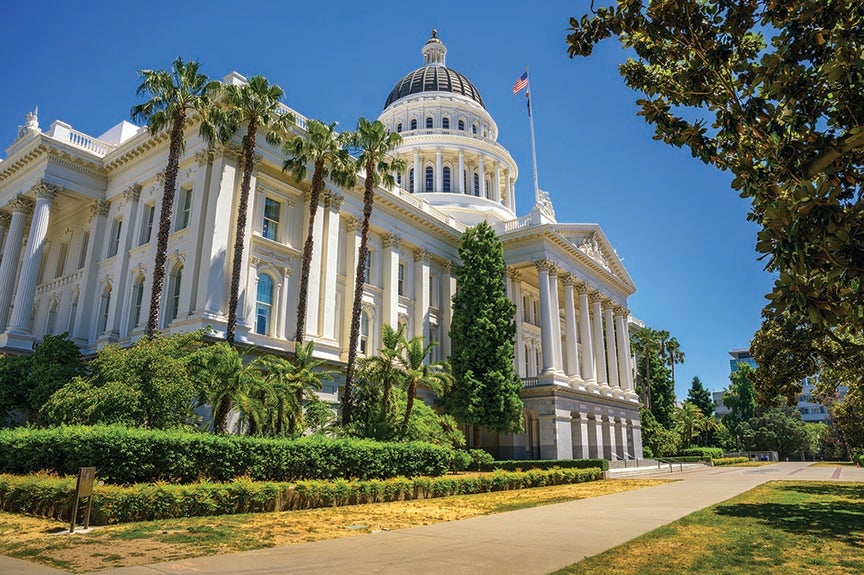
California State Capitol building on a sunny day in Sacramento. The California State Capitol stands as a historic edifice, combining neoclassical architecture with the functions of state government.

Minor Requirements

Below are the requirements for the Minor in Public Affairs effective Winter 2019. The minor requires a total of 7 courses outlined below. Click the link Overview of the Public Affairs Minor (catalog 19W+) to download a printable handout.

Lower Division Courses (2 courses):

  • Required Core Course: Public Affairs 10 (complete with a grade of B or better)
  • Public Affairs 40 (Microeconomics) or Public Affairs 60 (Statistics)
  • Notes:
    • Requests to substitute the lower division courses will not be approved.
    • Effective Fall 2023, Public Affairs 60 is not open for credit to students with credit for Economics 41, Political Science 6, Statistics 10, 12, 13, or 15.
    • Students who have completed ECON 41 / POL SCI 6 / STATS 10/12/13/15 in lieu of Public Affairs 60 should enroll in Public Affairs 40 as their second lower division course.
    • Students who have completed ECON 1 in lieu of Public Affairs 40 should enroll in Public Affairs 60 as their second lower division course.
    • Students who have completed both ECON 1 and ECON 41 / POL SCI 6 / STATS 10/12/13/15 are not eligible to enroll in Public Affairs 40 or Public Affairs 60. These students may petition to satisfy the Public Affairs 40/60 requirement by completing an additional upper division Public Affairs elective. Students should contact the Luskin Minor counselor via the MyUCLA Message Center to discuss the course substitution petition process.

Upper Division Courses (5 courses):

Students must complete five upper division courses by following either Plan I or Plan II:

  • Plan I: Complete two upper division theory/methods courses from the approved list (see below) and three upper division electives from the approved list (see below).
  • Plan II: Complete three upper division theory/methods courses from the approved list (see below) and two upper division electives from the approved list (see below).

Below is the list of approved upper division courses for the Public Affairs Minor:

  • Upper division theory courses for the Public Affairs Minor:
    • PUB AFF M109. Introduction to Cities and Planning (4 units)
    • PUB AFF 110. The Urban Revolution: Space and Society in a Global Context (4 units)
    • PUB AFF 111. Microeconomics: Addressing Market Failures and Inequality (4 units)
    • PUB AFF 112. Social Movements (4 units)
    • PUB AFF 113. Policy Analysis: Approaches to Addressing Social Problems (4 units)
    • PUB AFF 114. People, Organizations, and Systems (4 units)
  • Upper division methods courses for the Public Affairs Minor:
    • PUB AFF 115. Using Quantitative Methods to Understand Social Problems and their Potential Solutions (5 units)
    • PUB AFF 116. Using Qualitative Methods to Understand Social Problems and their Potential Solutions (5 units)
  • Upper division elective courses for the Public Affairs minor are Luskin courses numbered 100-199.
    • Elective courses will vary year to year, please see the Upper Division Offerings for the current options. Students may choose from upper division, undergraduate courses (100-199) within any of the four Luskin academic units:
      • Public Affairs (PUB AFF)
      • Public Policy (PUB PLC)
      • Social Welfare (SOC WLF)
      • Urban Planning (URBN PL)

Eligibility to Declare the Minor

Eligibility criteria to declare the Public Affairs Minor. To be eligible to declare the minor, students must meet the following criteria:

  • Be in good academic standing and have an overall grade-point average of 2.0; and
  • Complete Public Affairs 10 with a grade of B or better; and
  • Be able to complete all degree requirements, including requirements for the minor, within their time-to-degree and 216 unit maximum.

Declare the Minor

To declare the Public Affairs minor, students must complete the following:

  1. Submit the Request to Declare the Public Affairs Minor form (linked here). Please allow 10-15 business days for processing.
  2. After you complete the Request to Declare the Minor form, a Luskin academic counselor will review your eligibility to declare the minor.
    • If you are eligible to declare the minor, your Request to Declare the Minor petition will be approved, you will be declared into the minor, and you will receive a confirmation email via MyUCLA Message Center.
    • If you are not eligible to declare the minor, your Request to Declare the Minor petition will be denied and you will receive a notification with next steps via MyUCLA Message Center.

Students who are majoring in one of the professional Schools are required to speak with their School counselor to discuss their eligibility to declare the minor and the petition process for declaring a minor. If you are required to complete a petition, please submit the petition form(s) to the Public Affairs Undergraduate Program as instructed by your School.

Students are encouraged to meet with their academic counseling unit prior to submitting the Request to Declare the Minor form to review their degree progress, time-to-degree, unit maximum, and eligibility to declare a minor.

Important Policies for the Minor

  • Effective Fall 2023, Public Affairs 60 is not open for credit to students with credit for Economics 41, Political Science 6, Statistics 10, 12, 13, or 15.
  • Public Affairs 40/60 requirement:
    • Requests to substitute the Public Affairs 40 (microeconomics) and Public Affairs 60 (statistics) lower division courses will not be approved. If a student has taken a course in statistics or economics it is recommended that they take the other course to satisfy the second lower division requirement.
    • Public Affairs minors who have completed ECON 41 / POL SCI 6 / STATS 10/12/13/15 in lieu of Public Affairs 60 should enroll in Public Affairs 40 as their second lower division course.
    • Public Affairs minors who have completed ECON 1 in lieu of Public Affairs 40 should enroll in Public Affairs 60 as their second lower division course.
    • Public Affairs minors who have completed both ECON 1 and ECON 41 / POL SCI 6 / STATS 10/12/13/15 are not eligible to enroll in Public Affairs 40 or Public Affairs 60. These students may petition to satisfy the Public Affairs 40/60 requirement by completing an additional upper division Public Affairs elective. Students should contact the Luskin Minor counselor via MyUCLA Message Center to discuss the course substitution petition process. Students who are approved to submit this course substitution petition should submit it after they enroll in the 6th upper division Public Affairs course.
  • By petition only, students may request to use one outside course (not from a Luskin academic unit) as an elective towards the minor.
  • Fieldwork and internship courses, such as Social Welfare 130A, 130B, may not be applied toward the minor.
  • A minimum of 20 units applied toward the minor requirements must be in addition to units applied toward major requirements or another minor.
  • Each minor course must be taken for a letter grade, and students must have an overall grade-point average of 2.0 or better.
  • Successful completion of the minor is indicated on the transcript and diploma.
  • Effective Fall 2020, students pursuing the Public Affairs major cannot pursue a minor in Public Affairs or Urban and Regional Studies.

Enroll in Courses for the Minor

Course Offerings

To help you plan your minor, you can view the Luskin undergraduate course offerings for the academic year on the Enrollment Procedures website. We recommend that you meet regularly with a Luskin counselor to ensure you are making progress in your minor.

Enrollment Restrictions and Passes

Most Luskin undergraduate courses (Public Affairs, Urban Planning, Social Welfare, Gerontology, Public Policy) have the enrollment restrictions noted below. To view specific restrictions for each course, please review the “Class Notes” on the Schedule of Classes.

  • First Pass: Public Affairs pre-majors and majors can enroll in Public Affairs courses.
  • Second Pass (first week): Public Affairs pre-majors and majors, Gerontology minors, Public Affairs minors, and Urban and Regional Studies minors, can enroll in Public Affairs courses, space permitting.
  • Second Pass (after the first week): Any student may enroll in Public Affairs courses, space permitting. Specific dates will be posted in the Schedule of Classes in the Class Notes section of the course description.

You can view detailed information about enrollment restrictions and passes for Luskin undergraduate courses on the Enrollment Procedures website.

Prior to declaring the minor, you will have access to enroll in Luskin courses after the first week of second pass. After you declare the minor, you will have access to enroll in Luskin undergraduate courses once your second pass begins.

PTE Requests

If a Luskin undergraduate course is at capacity, you can request a PTE number by submitting the PTE request form. Please note that PTE requests are not guaranteed approval.

Questions?

For questions about enrollment in Luskin undergraduate courses, please contact the Public Affairs Undergraduate Program via MyUCLA Message Center.

For More Information

Contact the Public Affairs Undergraduate Program via MyUCLA Message Center for questions about eligibility, declaring the minor, and degree planning.

Learn more about UCLA Luskin

Find contact information and get answers to your questions.

Contact Us

Public Affairs Building
337 Charles E. Young Drive East
Los Angeles, California 90095

Linkedin Youtube Instagram Facebook X-twitter
Campus Resources
  • Map, Directions, Parking
  • Directory
  • Academic Calendar
  • Careers
  • Map, Directions, Parking
  • Directory
  • Academic Calendar
  • Careers
School Resources
  • About
  • Our Dean
  • Administration
  • Luskin School Intranet
  • Board of Advisors
  • Contact Us
  • Visit Us
  • About
  • Our Dean
  • Administration
  • Luskin School Intranet
  • Board of Advisors
  • Contact Us
  • Visit Us
UCLA logo
© 2026 Regents of the University of California
  • Emergency
  • Accessibility
  • Privacy & Terms of Use
  • Emergency
  • Accessibility
  • Privacy & Terms of Use
Facebook Instagram Linkedin X-twitter Youtube Threads
UCLA Luskin School of Public Affairs Logo
Academics
Departments
  • Global Public Affairs
  • Public Policy
  • Real Estate Development
  • Social Welfare
  • Urban Planning
  • Undergraduate Program
  • Global Public Affairs
  • Public Policy
  • Real Estate Development
  • Social Welfare
  • Urban Planning
  • Undergraduate Program
Graduate Programs
  • Master of Global Public Affairs (MGPA)
  • Master of Public Policy (MPP)
  • Master of Real Estate Development (MRED)
  • Master of Social Welfare (MSW)
  • Master of Urban and Regional Planning (MURP)
  • PhD in Social Welfare
  • PhD in Urban Planning
  • Master of Global Public Affairs (MGPA)
  • Master of Public Policy (MPP)
  • Master of Real Estate Development (MRED)
  • Master of Social Welfare (MSW)
  • Master of Urban and Regional Planning (MURP)
  • PhD in Social Welfare
  • PhD in Urban Planning
Undergraduate Programs
  • BA in Public Affairs
  • Minor in Urban and Regional Studies
  • Minor in Gerontology
  • Minor in Public Affairs
  • BA in Public Affairs
  • Minor in Urban and Regional Studies
  • Minor in Gerontology
  • Minor in Public Affairs
Professional Certificates
  • AI in Public Affairs Certificate
  • AI in Public Affairs Certificate
Admissions
Program Specific Admissions
  • Global Public Affairs
  • Public Policy
  • Real Estate Development
  • Social Welfare
  • Urban Planning
  • Undergraduate Program
  • Global Public Affairs
  • Public Policy
  • Real Estate Development
  • Social Welfare
  • Urban Planning
  • Undergraduate Program
Faculty
Our Faculty
  • All Faculty
  • Public Policy
  • Real Estate Development
  • Social Welfare
  • Urban Planning
  • All Faculty
  • Public Policy
  • Real Estate Development
  • Social Welfare
  • Urban Planning
Leadership
  • Our Dean
  • Board of Advisors
  • Faculty Executive Committee
  • Our Dean
  • Board of Advisors
  • Faculty Executive Committee
Research Centers
  • Agile Visual Analytics Lab (AVAL)

    Empowers stakeholders with data to make informed decisions for children, families, and communities.

  • Berggruen Governance Index

    Evaluates the quality of political governance and democracy worldwide.

  • Center for Neighborhood Knowledge (CNK)

    Specializes in spatial analysis of socioeconomic disparities in neighborhoods.

  • Center for Policy Research on Aging (CPRA)

    Explores the societal and policy implications of an aging population.

  • Institute of Transportation Studies (ITS)

    Advances research, education, and meaningful civic engagement on transportation issues.

  • Institute on Inequality and Democracy

    Advances scholarship that confronts threats to democracy in America and around the world.

  • Latin American Cities Initiative

    Connects urban planning and policy networks across the Americas.

  • Latino Policy & Politics Institute (LPPI)

    Addresses policy challenges facing Latinos and communities of color.

  • Lewis Center for Regional Policy Studies

    Studying housing affordability and transportation equity in the L.A. region.

  • Los Angeles Education Research Institute (LAERI)

    Collaborates with schools to improve educational outcomes for L.A. students.

  • Luskin Center for Innovation

    Informing effective and equitable environmental policy that improves lives.

  • UCLA Voting Rights Project

    The flagship project for voting rights litigation and policy research.

All Research Centers
Outcomes
Common Search Terms

Results will show as you type.