Skip to content
  • Students & Alumni
    • Career Services
    • Alumni Relations
    • Student Support
    • Graduate Resource Library
    • For Employers
  • News
  • Events
    • Events Calendar
    • Luskin Summit
    • Luskin Lecture Series
    • California Policy Briefing
    • Commencement
  • Students & Alumni
    • Career Services
    • Alumni Relations
    • Student Support
    • Graduate Resource Library
    • For Employers
  • News
  • Events
    • Events Calendar
    • Luskin Summit
    • Luskin Lecture Series
    • California Policy Briefing
    • Commencement
Giving
  • Academics
    Departments & Programs
    • Global Public Affairs
    • Public Policy
    • Real Estate Development
    • Social Welfare
    • Urban Planning
    • Undergraduate Program
    • Global Public Affairs
    • Public Policy
    • Real Estate Development
    • Social Welfare
    • Urban Planning
    • Undergraduate Program
    Graduate Degrees
    • Master of Global Public Affairs (MGPA)
    • Master of Public Policy (MPP)
    • Master of Real Estate Development (MRED)
    • Master of Social Welfare (MSW)
    • Master of Urban and Regional Planning (MURP)
    • PhD in Social Welfare
    • PhD in Urban Planning
    • Master of Global Public Affairs (MGPA)
    • Master of Public Policy (MPP)
    • Master of Real Estate Development (MRED)
    • Master of Social Welfare (MSW)
    • Master of Urban and Regional Planning (MURP)
    • PhD in Social Welfare
    • PhD in Urban Planning
    Undergraduate Degrees
    • BA in Public Affairs
    • Minor in Urban and Regional Studies
    • Minor in Gerontology
    • Minor in Public Affairs
    • BA in Public Affairs
    • Minor in Urban and Regional Studies
    • Minor in Gerontology
    • Minor in Public Affairs
    Professional Certificates
    • Data Analytics Certificate
    • Data Analytics Certificate
  • Admissions
    Program Specific Admissions
    • Global Public Affairs
    • Public Policy
    • Real Estate Development
    • Social Welfare
    • Urban Planning
    • Undergraduate Program
    • Global Public Affairs
    • Public Policy
    • Real Estate Development
    • Social Welfare
    • Urban Planning
    • Undergraduate Program
  • Faculty
    Our Faculty
    • All Faculty
    • Public Policy
    • Real Estate Development
    • Social Welfare
    • Urban Planning
    • All Faculty
    • Public Policy
    • Real Estate Development
    • Social Welfare
    • Urban Planning
    Leadership
    • Our Dean
    • Board of Advisors
    • Faculty Executive Committee
    • Our Dean
    • Board of Advisors
    • Faculty Executive Committee
  • Research Centers
    • Agile Visual Analytics Lab (AVAL)

      Empowers stakeholders with data to make informed decisions for children, families, and communities.

    • Berggruen Governance Index

      Evaluates the quality of political governance and democracy worldwide.

    • Center for Neighborhood Knowledge (CNK)

      Specializes in spatial analysis of socioeconomic disparities in neighborhoods.

    • Center for Policy Research on Aging (CPRA)

      Explores the societal and policy implications of an aging population.

    • Agile Visual Analytics Lab (AVAL)

      Empowers stakeholders with data to make informed decisions for children, families, and communities.

    • Berggruen Governance Index

      Evaluates the quality of political governance and democracy worldwide.

    • Center for Neighborhood Knowledge (CNK)

      Specializes in spatial analysis of socioeconomic disparities in neighborhoods.

    • Center for Policy Research on Aging (CPRA)

      Explores the societal and policy implications of an aging population.

    • Institute of Transportation Studies (ITS)

      Advances research, education, and meaningful civic engagement on transportation issues.

    • Institute on Inequality and Democracy

      Advances scholarship that confronts threats to democracy in America and around the world.

    • Latin American Cities Initiative

      Connects urban planning and policy networks across the Americas.

    • Latino Policy & Politics Institute (LPPI)

      Addresses policy challenges facing Latinos and communities of color.

    • Institute of Transportation Studies (ITS)

      Advances research, education, and meaningful civic engagement on transportation issues.

    • Institute on Inequality and Democracy

      Advances scholarship that confronts threats to democracy in America and around the world.

    • Latin American Cities Initiative

      Connects urban planning and policy networks across the Americas.

    • Latino Policy & Politics Institute (LPPI)

      Addresses policy challenges facing Latinos and communities of color.

    • Lewis Center for Regional Policy Studies

      Studying housing affordability and transportation equity in the L.A. region.

    • Los Angeles Education Research Institute (LAERI)

      Collaborates with schools to improve educational outcomes for L.A. students.

    • Luskin Center for Innovation

      Informing effective and equitable environmental policy that improves lives.

    • UCLA Voting Rights Project

      The flagship project for voting rights litigation and policy research.

    • Lewis Center for Regional Policy Studies

      Studying housing affordability and transportation equity in the L.A. region.

    • Los Angeles Education Research Institute (LAERI)

      Collaborates with schools to improve educational outcomes for L.A. students.

    • Luskin Center for Innovation

      Informing effective and equitable environmental policy that improves lives.

    • UCLA Voting Rights Project

      The flagship project for voting rights litigation and policy research.

    All Research Centers
  • Outcomes
Home / News / Financial Support Advances Timely, Problem-Solving Research

Financial Support Advances Timely, Problem-Solving Research

Amid rising costs and declining state support, grants and gifts are more important than ever
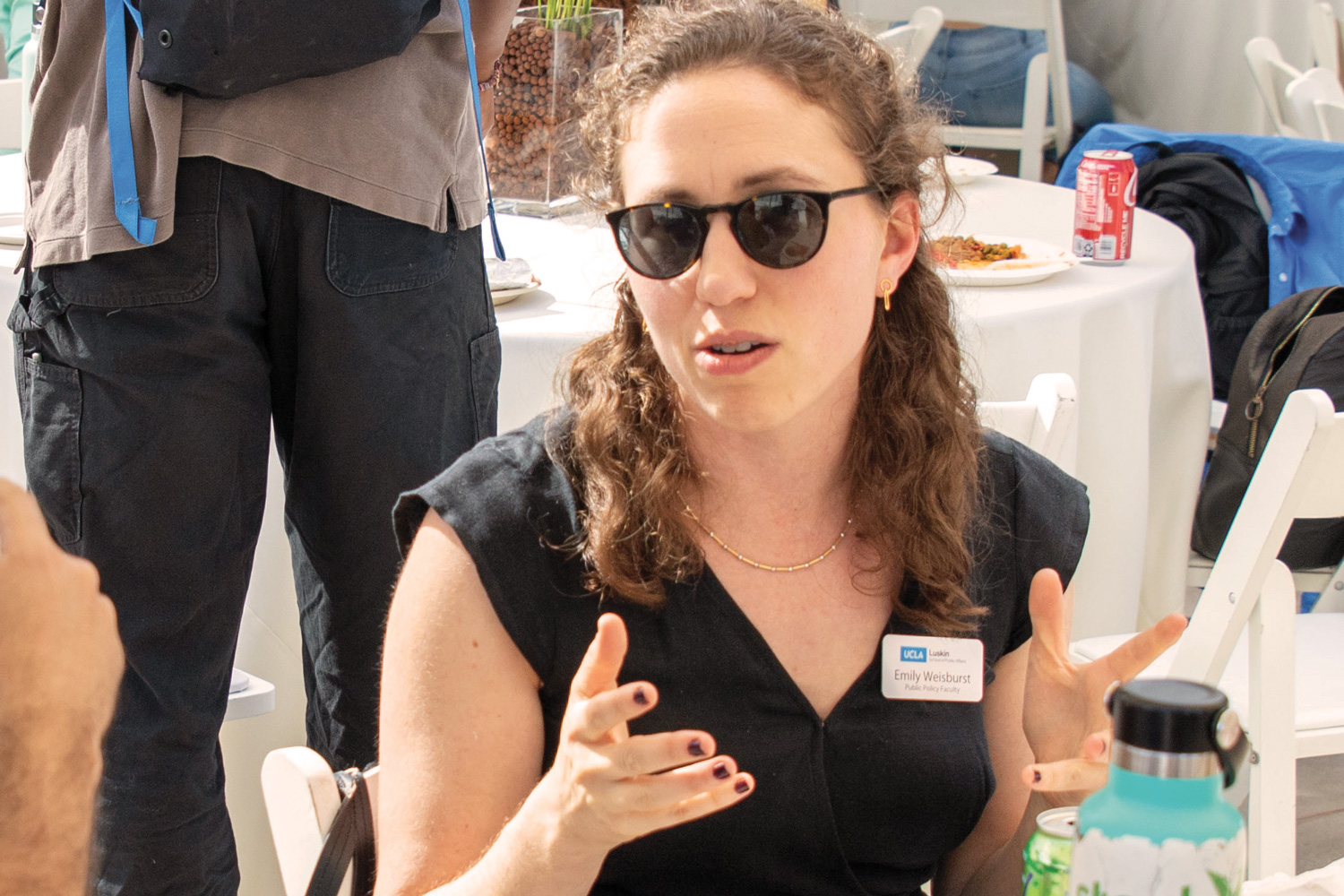
woman in sunglasses gestures while seated an event
Research by Emily Weisburt of Public Policy focuses on the impact of exposure to crime on police decision-making. Photo by Les Dunseith

Posted in

  • Uncategorized

Published on

  • December 21, 2023
  • equality, Incarceration, law enforcement, police, safety, youth

Share this Article

By Stan Paul

In the most recent fiscal year, UCLA Luskin received more than $32 million in extramural funding, which includes research grants and contracts, gifts from individuals, foundation funding and endowments. The School’s fundraising efforts contributed to almost $11.5 million of that total.

Amid rising costs and declining state funding for the University of California system, this type of support is more important than ever. External funding sources large and small allow individual scholars and UCLA Luskin-affiliated research centers to continue to pursue important and timely research on numerous policy issues, including such pressing topics as the environment, labor, crime and social justice. Here are just a few examples:

RETREATING FROM FIRE-PRONE ZONES

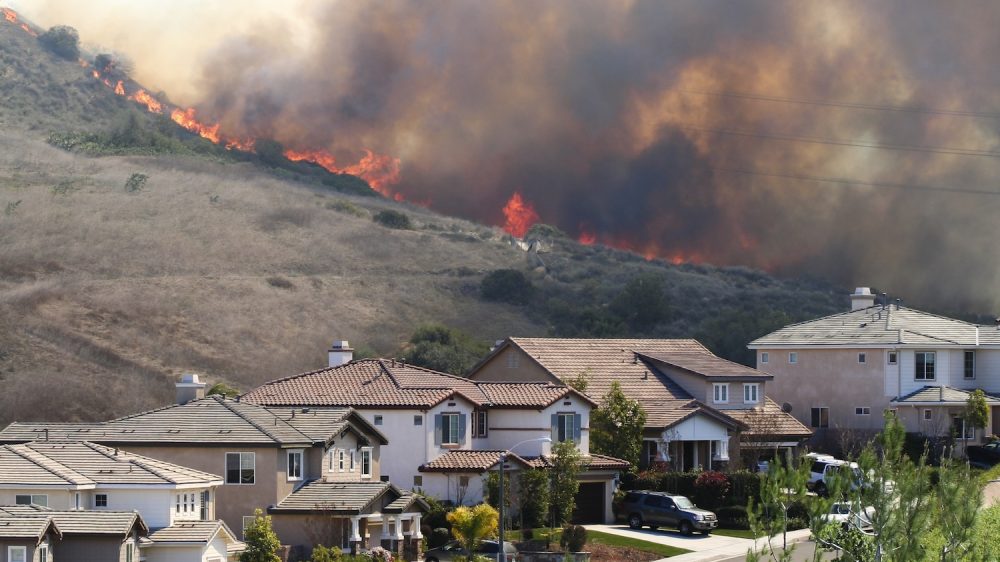
The devastation of wildfires is well-known in California — loss of life, displacement of people from their homes, and high rebuilding costs to individuals, governments and the private sector.

Liz Koslov, assistant professor of urban planning, studies social dimensions of climate change, environmental and climate justice, and how cities are adapting to effects such as extreme weather and sea-level rise as a scholar at UCLA Luskin and in association with the Institute of the Environment and Sustainability at UCLA.

This research on wildfires and “managed retreat” has received support from the National Science Foundation, or NSF. The concept, in general, involves moving people and infrastructure out of harm’s way well before disaster strikes and is part a growing debate about managed retreat in high-risk coastal areas and fire-prone zones.

The grant resulted from the NSF’s 2022 call for proposals, which recognized wildland fire as “becoming an increasingly prevalent and pressing phenomenon nationally and globally.”

Her proposal received a one-year planning grant to develop a research agenda on the intersection of wildfire and managed retreat. The award is funded through the NSF’s Humans, Disasters, and the Built Environment Program and the independent federal agency’s Human-Environment and Geographical Sciences Program.

“While there have been recent calls in the media, and by some policymakers and academics, to consider relocating people and infrastructure away from places facing high wildfire risk, little research examines whether retreat is an effective or equitable response in wildfire contexts,” Koslov said. The existing understanding of managed retreat is based almost exclusively on studies by herself and others that focused on flooding and sea-level rise.

Koslov and her co-principal investigator Kathryn McConnell, a postdoctoral research associate at Brown University’s Population Studies and Training Center, argue that the dynamics of wildfire require attention in their own right.

MAPPING RACE, POVERTY, CRIME AND POLICING

Exposure to crime is among the factors that impact police decision-making and public trust in police, and that topic is part of a new study by Emily Weisburst, an assistant professor of public policy.

Thanks to a two-year grant from the Russell Sage Foundation, Weisburst and a UCLA colleague, Felipe Gonçalves of economics, plan to shed light on how and why the experience of crime and police enforcement of crime may differ in the United States for individuals from different races and income groups. The project uses descriptive mapping to look at disparities using high-frequency policing data — information that Weisburst said has not previously been available on a large scale.

Data from 911 calls, crimes and arrests across U.S. cities will be used to measure how Americans of different races and income levels are exposed to criminal activity. The researchers intend to document variations in exposure to crime and policing at a granular level in order to estimate the causal impact of residential segregation on racial gaps in neighborhood crime and arrest exposure.

“The analysis is really exciting, but it’s almost secondary to cleaning the data because the data collection is so ambitious. We’re getting these individual records of 911 calls, crimes and arrests from hundreds of cities around the country,” Weisburst said.

The data will come in different forms from different cities, and it all must be validated. Most of the data is now there to be verified, she said, “which allows UCLA graduate students and undergraduate students to get involved.”

Once disparities are mapped, the researchers will try to understand a primary causal factor: “We’re going to look at how these gaps vary across cities depending on their degree of segregation,” Weisburst said.

Guaranteed Income in L.A.

Assistant Professor of Social Welfare Judith Perrigo is more than two years into a five-year study to evaluate an experiment whereby some Los Angeles residents negatively affected by the pandemic have been receiving a guaranteed income of $1,000 a month.

Perrigo’s work, funded in conjunction with Los Angeles County and the University of Pennsylvania, is part of a larger effort to evaluate similar programs in cities across the nation.

Perrigo is currently looking at L.A.’s version, a pilot program called Breathe in which 1,000 individuals received $1,000 a month for 36 months. She is working with a team that includes co-principal investigator Margaret Thomas, formerly of UCLA and now an assistant professor at the University of Chicago, as well as PhD students.

“We designed a randomized controlled trial following those 1,000 people that are receiving guaranteed income,” Perrigo said. In addition, researchers are contacting about 2,000 people who are not receiving guaranteed income, but applied for the program.

“We’re examining the differences between those two groups on overall health and well-being,” Perrigo said.

A digital dashboard shows in real time how people are using the funds. It includes demographic data on participants, and the economic context for pilot participants in terms of unemployment and inflation.

The spending breakdown shows that food, transportation and housing are among the top expenditures, whereas health care/medical expenses and education are closer to the bottom. “Not surprisingly, the majority are using [the money] for basic needs like rent and utilities,” Perrigo said.

More broadly, she is also interested in understanding the program’s impact on health, mental health, overall well-being and child development. The researchers are looking at a subset of families that have young children under age 5.

“We want to know if this program, or a program like this, can help disrupt intergenerational poverty,” said Perrigo, who specializes in advancing holistic well-being for young children.

A Second Chance for Incarcerated Youths

Laura Abrams, professor and chair of Social Welfare, is among a team of researchers from across the country awarded support by the Laura and John Arnold Foundation to lead an extensive national study of young people sentenced to life in prison who are ultimately given a chance at freedom.

The team’s three-year project is building a base of knowledge that supports safe and equitable sentencing and “second-look” policies for people sentenced to life in prison for offenses committed before they were age 18. Some have spent years behind bars.

“This research seeks to answer critical policy questions,” Abrams said. “Can we develop a set of evidence-informed policies that provide second chances for people serving long sentences for violent crimes? Can we reduce our overreliance on long sentences in the future without compromising public safety?”
Faculty Mentioned in this Article
Judith Perrigo

Judith L. Perrigo

Assistant Professor of Social Welfare

Judith (Judy) Perrigo is an Assistant Professor in the Department of Social Welfare at the UCLA Luskin School of Public...

Koslov2III-1

Liz Koslov

Assistant Professor of Urban Planning, Environment and Sustainability, and Sociology

Liz Koslov is Assistant Professor of Urban Planning, Environment and Sustainability, and Sociology at UCLA. Her research brings an interdisciplinary...

EmilyWeisburst_Headshot_Cropped

Emily Weisburst

Associate Professor of Public Policy

I am an Associate Professor of Public Policy at the Luskin School of Public Affairs at the University of California,...

Related Articles

Flames on ridge in back of street with two-story houses

Some Homeowners Are Going Without Insurance But Choosing to Stay Put

January 21, 2026
School of Public Affairs
The inaugural UCLA Luskin California Poll also reveals residents’ experiences of financial well-being, along with wide-ranging...
Read More
Children at a table, playing with colorful building blocks

Pandemic Set Kindergartners Back Developmentally

March 25, 2025
Luskin in the News
Research led by UCLA Luskin's Judith Perrigo finds lower scores in language and thinking skills and...
Read More
Downtown LA just after sunset during blue hour, captured from a helicopter point of view with lighted City Hall building.

UCLA Grants Deepen Ties to the L.A. Community

March 17, 2025
Public Policy
Projects by Luskin faculty will build collaboration among scholars, students and local partners....
Read More
Professor Laura Abrams, center, at the CSWA ceremony with her doctoral students Taylor Reed, left, and Julia Lesnick

Honors for UCLA Luskin Social Welfare Professor and Alumna

March 4, 2025
Luskin's Latest Blog
Professor Laura Abrams and alumna Aurea Montes-Rodriguez are recognized by the California Social Welfare Archives....
Read More
LAbrmsIncarc1

Abrams on the Decline of Juvenile Incarceration in the United States

February 26, 2025
Luskin in the News
People who are incarcerated at young ages for longer periods of time are less likely to...
Read More
Two people seated in circle of people

Abrams on Promoting Justice for Troubled Youth

February 7, 2025
Luskin in the News
At universities around the country, social workers are being trained in more holistic strategies and practices...
Read More
Learn more about UCLA Luskin

Find contact information and get answers to your questions.

Contact Us

Public Affairs Building
337 Charles E. Young Drive East
Los Angeles, California 90095

Linkedin Youtube Instagram Facebook X-twitter
Campus Resources
  • Map, Directions, Parking
  • Directory
  • Academic Calendar
  • Careers
  • Map, Directions, Parking
  • Directory
  • Academic Calendar
  • Careers
School Resources
  • About
  • Our Dean
  • Administration
  • Board of Advisors
  • Contact Us
  • Visit Us
  • About
  • Our Dean
  • Administration
  • Board of Advisors
  • Contact Us
  • Visit Us
UCLA logo
© 2026 Regents of the University of California
  • Emergency
  • Accessibility
  • Privacy & Terms of Use
  • Emergency
  • Accessibility
  • Privacy & Terms of Use
Facebook Instagram Linkedin X-twitter Youtube Threads
Academics
Departments
  • Global Public Affairs
  • Public Policy
  • Real Estate Development
  • Social Welfare
  • Urban Planning
  • Undergraduate Program
  • Global Public Affairs
  • Public Policy
  • Real Estate Development
  • Social Welfare
  • Urban Planning
  • Undergraduate Program
Graduate Programs
  • Master of Global Public Affairs (MGPA)
  • Master of Public Policy (MPP)
  • Master of Real Estate Development (MRED)
  • Master of Social Welfare (MSW)
  • Master of Urban and Regional Planning (MURP)
  • PhD in Social Welfare
  • PhD in Urban Planning
  • Master of Global Public Affairs (MGPA)
  • Master of Public Policy (MPP)
  • Master of Real Estate Development (MRED)
  • Master of Social Welfare (MSW)
  • Master of Urban and Regional Planning (MURP)
  • PhD in Social Welfare
  • PhD in Urban Planning
Undergraduate Programs
  • BA in Public Affairs
  • Minor in Urban and Regional Studies
  • Minor in Gerontology
  • Minor in Public Affairs
  • BA in Public Affairs
  • Minor in Urban and Regional Studies
  • Minor in Gerontology
  • Minor in Public Affairs
Professional Certificates
  • Data Analytics Certificate
  • Data Analytics Certificate
Admissions
Program Specific Admissions
  • Global Public Affairs
  • Public Policy
  • Real Estate Development
  • Social Welfare
  • Urban Planning
  • Undergraduate Program
  • Global Public Affairs
  • Public Policy
  • Real Estate Development
  • Social Welfare
  • Urban Planning
  • Undergraduate Program
Faculty
Our Faculty
  • All Faculty
  • Public Policy
  • Real Estate Development
  • Social Welfare
  • Urban Planning
  • All Faculty
  • Public Policy
  • Real Estate Development
  • Social Welfare
  • Urban Planning
Leadership
  • Our Dean
  • Board of Advisors
  • Faculty Executive Committee
  • Our Dean
  • Board of Advisors
  • Faculty Executive Committee
Research Centers
  • Agile Visual Analytics Lab (AVAL)

    Empowers stakeholders with data to make informed decisions for children, families, and communities.

  • Berggruen Governance Index

    Evaluates the quality of political governance and democracy worldwide.

  • Center for Neighborhood Knowledge (CNK)

    Specializes in spatial analysis of socioeconomic disparities in neighborhoods.

  • Center for Policy Research on Aging (CPRA)

    Explores the societal and policy implications of an aging population.

  • Agile Visual Analytics Lab (AVAL)

    Empowers stakeholders with data to make informed decisions for children, families, and communities.

  • Berggruen Governance Index

    Evaluates the quality of political governance and democracy worldwide.

  • Center for Neighborhood Knowledge (CNK)

    Specializes in spatial analysis of socioeconomic disparities in neighborhoods.

  • Center for Policy Research on Aging (CPRA)

    Explores the societal and policy implications of an aging population.

  • Institute of Transportation Studies (ITS)

    Advances research, education, and meaningful civic engagement on transportation issues.

  • Institute on Inequality and Democracy

    Advances scholarship that confronts threats to democracy in America and around the world.

  • Latin American Cities Initiative

    Connects urban planning and policy networks across the Americas.

  • Latino Policy & Politics Institute (LPPI)

    Addresses policy challenges facing Latinos and communities of color.

  • Institute of Transportation Studies (ITS)

    Advances research, education, and meaningful civic engagement on transportation issues.

  • Institute on Inequality and Democracy

    Advances scholarship that confronts threats to democracy in America and around the world.

  • Latin American Cities Initiative

    Connects urban planning and policy networks across the Americas.

  • Latino Policy & Politics Institute (LPPI)

    Addresses policy challenges facing Latinos and communities of color.

  • Lewis Center for Regional Policy Studies

    Studying housing affordability and transportation equity in the L.A. region.

  • Los Angeles Education Research Institute (LAERI)

    Collaborates with schools to improve educational outcomes for L.A. students.

  • Luskin Center for Innovation

    Informing effective and equitable environmental policy that improves lives.

  • UCLA Voting Rights Project

    The flagship project for voting rights litigation and policy research.

  • Lewis Center for Regional Policy Studies

    Studying housing affordability and transportation equity in the L.A. region.

  • Los Angeles Education Research Institute (LAERI)

    Collaborates with schools to improve educational outcomes for L.A. students.

  • Luskin Center for Innovation

    Informing effective and equitable environmental policy that improves lives.

  • UCLA Voting Rights Project

    The flagship project for voting rights litigation and policy research.

All Research Centers
Outcomes
Common Search Terms

Results will show as you type.