Skip to content
  • Students & Alumni
    • Overview
    • Career Services
    • Alumni Relations
    • Student Support
    • Graduate Resource Library
  • News
  • Events
    • Events Calendar
    • Luskin Summit
    • Luskin Lecture Series
    • California Policy Briefing
    • Commencement
  • Students & Alumni
    • Overview
    • Career Services
    • Alumni Relations
    • Student Support
    • Graduate Resource Library
  • News
  • Events
    • Events Calendar
    • Luskin Summit
    • Luskin Lecture Series
    • California Policy Briefing
    • Commencement
Giving
  • Academics
    Departments
    • Public Policy
    • Real Estate Development
    • Social Welfare
    • Undergraduate Program
    • Urban Planning
    • Public Policy
    • Real Estate Development
    • Social Welfare
    • Undergraduate Program
    • Urban Planning
    Graduate Programs
    • Master of Public Policy (MPP)
    • Master of Real Estate Development (MRED)
    • Master of Social Welfare (MSW)
    • Master of Urban and Regional Planning (MURP)
    • PhD in Social Welfare
    • PhD in Urban Planning
    • Master of Public Policy (MPP)
    • Master of Real Estate Development (MRED)
    • Master of Social Welfare (MSW)
    • Master of Urban and Regional Planning (MURP)
    • PhD in Social Welfare
    • PhD in Urban Planning
    Undergraduate Programs
    • BA in Public Affairs
    • Minor in Urban and Regional Studies
    • Minor in Gerontology
    • Minor in Public Affairs
    • BA in Public Affairs
    • Minor in Urban and Regional Studies
    • Minor in Gerontology
    • Minor in Public Affairs
    Professional Certificates
    • Data Analytics Certificate
    • Data Analytics Certificate
  • Admissions
    Program Specific Admissions
    • Public Policy
    • Real Estate Development
    • Social Welfare
    • Urban Planning
    • Undergraduate Program
    • Public Policy
    • Real Estate Development
    • Social Welfare
    • Urban Planning
    • Undergraduate Program
  • Faculty
    Our Faculty
    • All Faculty
    • Public Policy
    • Real Estate Development
    • Social Welfare
    • Urban Planning
    • All Faculty
    • Public Policy
    • Real Estate Development
    • Social Welfare
    • Urban Planning
    Leadership
    • Our Dean
    • Board of Advisors
    • Faculty Executive Committee
    • Our Dean
    • Board of Advisors
    • Faculty Executive Committee
  • Research Centers
    • Agile Visual Analytics Lab (AVAL):

      Uses data visualization to improve decision-making for family and child services.

    • Berggruen Governance Index

      Evaluates the quality of political governance and democracy worldwide.

    • Center for Neighborhood Knowledge (CNK)

      Specializes in spatial analysis of socioeconomic disparities in neighborhoods.

    • Center for Policy Research on Aging (CPRA)

      Explores the societal and policy implications of an aging population.

    • Agile Visual Analytics Lab (AVAL):

      Uses data visualization to improve decision-making for family and child services.

    • Berggruen Governance Index

      Evaluates the quality of political governance and democracy worldwide.

    • Center for Neighborhood Knowledge (CNK)

      Specializes in spatial analysis of socioeconomic disparities in neighborhoods.

    • Center for Policy Research on Aging (CPRA)

      Explores the societal and policy implications of an aging population.

    • Institute of Transportation Studies (ITS)

      A national leader in transportation policy and mobility research.

    • Institute on Inequality and Democracy

      Advances scholarship addressing displacement and dispossession in Los Angeles and beyond.

    • Latin American Cities Initiative

      Connects urban planning and policy networks across the Americas.

    • Latino Policy & Politics Institute (LPPI)

      Addresses policy challenges facing Latinos and communities of color.

    • Institute of Transportation Studies (ITS)

      A national leader in transportation policy and mobility research.

    • Institute on Inequality and Democracy

      Advances scholarship addressing displacement and dispossession in Los Angeles and beyond.

    • Latin American Cities Initiative

      Connects urban planning and policy networks across the Americas.

    • Latino Policy & Politics Institute (LPPI)

      Addresses policy challenges facing Latinos and communities of color.

    • Lewis Center for Regional Policy Studies

      Researches housing, transportation, and economic development in Southern California.

    • Los Angeles Education Research Institute (LAERI)

      Collaborates with schools to improve educational outcomes for L.A. students.

    • Luskin Center for Innovation (LCI)

      Focuses on environmental policy, clean energy, and climate justice.

    • UCLA Voting Rights Project

      The flagship project for voting rights litigation and policy research.

    • Lewis Center for Regional Policy Studies

      Researches housing, transportation, and economic development in Southern California.

    • Los Angeles Education Research Institute (LAERI)

      Collaborates with schools to improve educational outcomes for L.A. students.

    • Luskin Center for Innovation (LCI)

      Focuses on environmental policy, clean energy, and climate justice.

    • UCLA Voting Rights Project

      The flagship project for voting rights litigation and policy research.

    All Research Centers
  • Outcomes
Home / Getting a Handle on the Future

Getting a Handle on the Future

Transportation experts join with policymakers and entrepreneurs to tackle the impact of disruptive technology on urban mobility
||

Posted in

  • Alumni, Complete Streets, Development and Housing, Digital Technologies, Education, Electric Vehicles and Alternative Fuels, Environment, For Policymakers, The Lewis Center, Transportation, Urban Planning

Published on

  • January 4, 2019
  • innovation, mobility, technology, transit, Transportation, Urban Planning

Share this Article

By Will Livesley-O’Neill

Getting around Southern California has never been easy. But the infamously congested region has grown even more complicated with the arrival of new private services — including ridehail companies such as Lyft and Uber and electric scooter operators such as Bird and Lime — looking to disrupt how people travel.
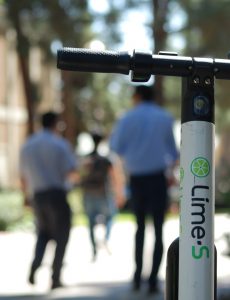
Motorized scooters are often seen at UCLA.

As in any field impacted by technology-fueled disruption, transportation policymakers want to find ways to adapt. And that requires taking stock of what the transportation system is meant to do and, more importantly, whom it is meant to serve.

This was the focus of the 28th annual UCLA Lake Arrowhead Symposium, hosted by the Institute of Transportation Studies (UCLA ITS) and Lewis Center for Regional Policy Studies, in October. At the university’s retreat center in the San Bernardino Mountains, dozens of the nation’s leading experts on transportation and land use policy pondered the symposium’s theme, “From Public Transit to Public Mobility.”

The changing nature of travel means different things for elected officials, planners, academics, advocates and tech leaders. But everyone fundamentally agrees that, as LA Metro chief planning officer and symposium panelist Therese McMillan put it, “there’s a public interest in how private activity happens in a public space.” The modes may change, but the mission of a safe, effective, accessible transportation system remains the same.

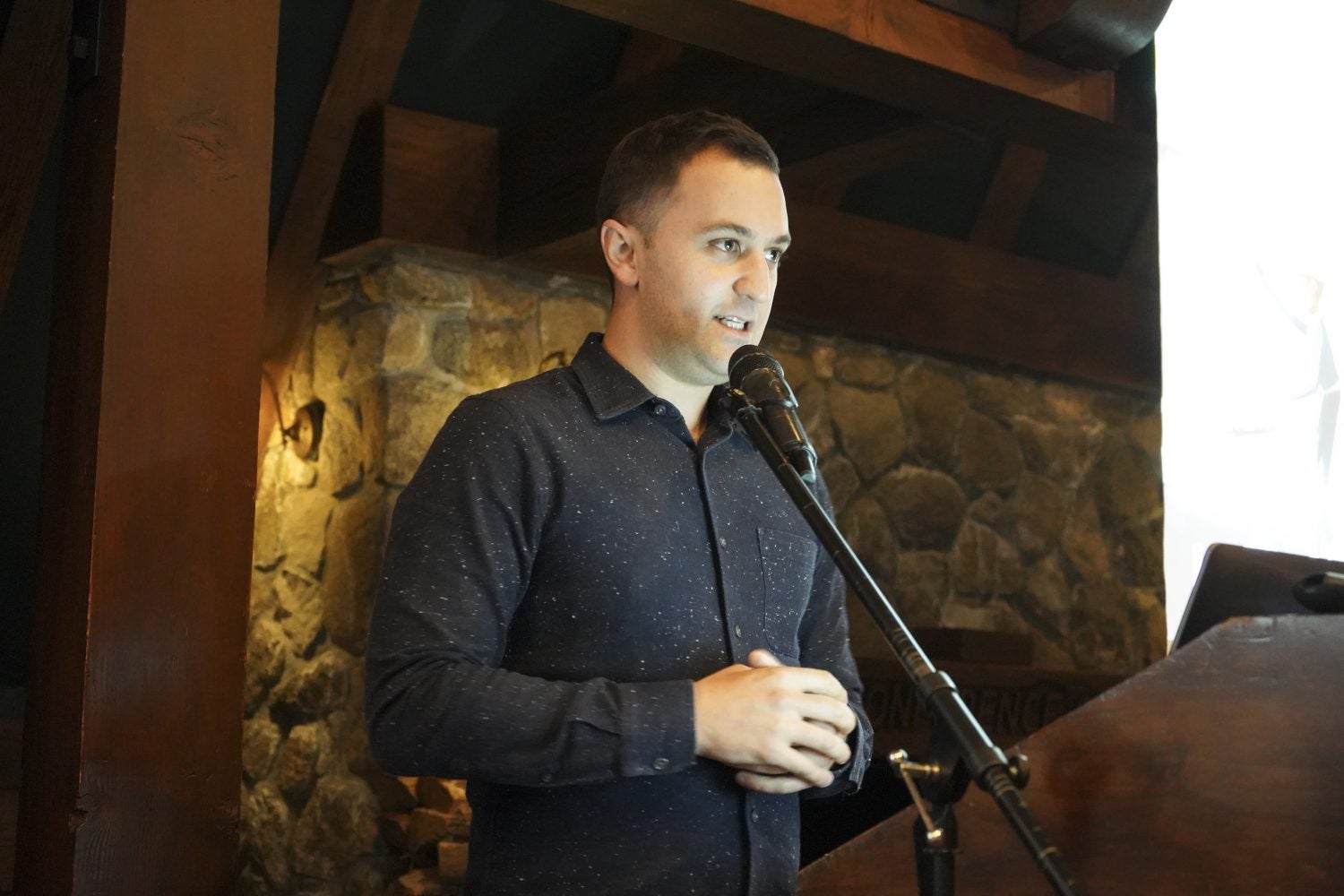
John Zimmer, co-founder and president of Lyft, set the tone for a discussion of balance between tradition and innovation. Lyft has been actively expanding beyond ridehailing into other forms of mobility, including e-scooters and automated vehicles. The company’s stated goal of providing more options for consumers and reducing the number of people driving

alone benefits the environment — as well as those profiting from the service.

But the way that some tech companies roll out new products — a “move fast and break things” model — often leads to public backlash.

Southern California has been ground zero for arguments about the traffic tie-ups and sidewalk clutter allegedly caused by ridehailing and scooters. Public officials are being forced to make policy on the fly — although some such as Francie Stefan, chief mobility officer in Santa Monica, describe that as an opportunity. Santa Monica recently partnered with Lyft, Uber, Bird and Lime to introduce new regulations on the number of e-vehicles in the city while funding infrastructure improvements.

“[We] made a conscious choice to embrace new technology and work through some of the kinks that are inherent in change,” Stefan says.

Technology also gives cities the chance to innovate and to fulfill some hard-to-implement planning goals. Willa Ng, an associate director at Google’s Sidewalk Labs, presented an example at her panel on “coding  the curb.”

“If we need to do more stuff at the curb, and we need to have those spaces constantly turning over, we can’t have it managed by a static aluminum sign,” Ng explains, outlining how creating a flexible digital management system could allow the same section of curb to be used for parking, ridehail drop-offs, delivery unloading, or as a bike and scooter lane depending on the time of day. New transportation technology can crowd and complicate the use of public space, but it can also help make sure the space is better used to benefit the most people.

For example, Anastasia Loukaitou-Sideris, a professor of urban planning at UCLA Luskin, recently spoke to the University of California for a story and accompanying video about e-scooters titled, “What the battle over scooters gets wrong.”

Urban planners recently adopted a model known as “complete streets” that involves rethinking how shared space is divided between a street and a sidewalk, Loukaitou-Sideris says. This model abandons the assumption that streets are for cars and sidewalks are for pedestrians.

“The complete street perceives the street as a space where different transportation modes can coexist: not only cars, but also buses, and lanes for trams, bicycles and scooters,” according to Loukaitou-Sideris. “Nobody wants to compromise the safety of anyone by mixing these modes. So that’s where planning and design needs to come in.”

People-centered design — of services, systems and infrastructure — is at center stage in these policy discussions. Technology needs to be a tool to help improve transportation for people, not an end goal in itself.

“A lot of people are really annoyed with private capital coming into the mobility space without understanding people’s travel needs,” says Clarrissa Cabansagan of the Bay Area climate change nonprofit TransForm. But tech disruption will be worthwhile if it provides people with more options to get around besides driving their own car, she says.
Professor Brian Taylor of UCLA Luskin Urban Planning

Urban Planning Professor Brian D. Taylor, director of UCLA ITS, co-authored a groundbreaking 2018 study that found that Southern Californians are buying more cars than ever and turning away from public transit. That’s the exact opposite outcome of what policymakers had sought and shows the need to set new priorities for shared public spaces.

“We have to manage the automobile more intelligently. We can’t just allow people to drive anywhere they want, anytime they want,” Taylor says. “We need to create environments that are more conducive to travel by foot, by bike, by scooter or by public transit.”

New and old mobility services could work hand-in-hand to reduce private car travel. Ideally, technology should improve, not replace or eliminate, traditional transit, according to transportation experts.

“We should really focus on making the core strength of transit something we do incredibly well,” says Houston-based planner and author Christof Spieler, who spoke at the conference. With transit ridership falling across most of the country, new policies need to make riding the bus as easy as hailing a Lyft, he says, noting that public transit can move many more people much more effectively than any ridehail vehicle or scooter.

Bay Area transportation advocate Ratna Amin argues that focusing on riders as people, not cogs in a machine, is key.

“When we think about public transit as a utility, we focus on the bare minimum: We got the service out, it’s clean enough, the doors opened, the bus stop is there and it’s labeled,” Amin says. “We need to actually talk to people and find out what their experience is, and try different possibilities out to see if they improve the experience.”

Seattle is one of just a few American cities to see an increase in transit ridership in recent years. Terry White, the deputy general manager of Seattle’s transit operator, believes one factor has been key to success: an emphasis on making sure service is equitable.

“Transportation is a human right for everyone,” White says. “We’re trying to make sure everyone gets an opportunity to

be mobile.”

That’s ultimately what a better transportation system will mean — mobility for all, regardless of whether they take a bus or ride a scooter. Efficient use of public space lessens the need for gridlocked, polluting private vehicles.

The disruption of old transit methods is still in its early stages, with plenty of blind spots to be navigated. But as Juan Matute, deputy director of UCLA ITS, recently told LA Weekly, it’s important to remember that the disruption from new technology is likely to lessen over time.

“The safety hazards are comparable to those for automobile use,” Matute said of the new innovations, particularly e-scooters. “We’ve had over 100 years to figure out a lot of things.”
Faculty Mentioned in this Article

No results found.

Related Articles

People taking the subway.

Will the Opening of the D Line Change Commuter Behavior?

May 20, 2026
Luskin in the News
The opening of the D Line means access to a more convenient route, but it remains...
Read More
Portrait of Donald Shoup on the left with a screen capture of the 3 panelists (host of MIT Mobility Forum, Brian Taylor, and author Daniel Heiss) during their panel discussion on recent episode of the MIT Mobility Forum.

MIT Mobility Forum Reflects on Donald Shoup’s Influence on Parking Policy

March 16, 2026
Luskin in the News
Brian Taylor reflects on Donald Shoup’s enduring influence and the hidden costs of so-called “free” parking....
Read More
People sitting inside a metro train.

Taylor on Chicago Transit Overhaul Amid Funding Boost

March 13, 2026
Luskin in the News
Chicago’s public transportation system is entering a period of historic investment....
Read More
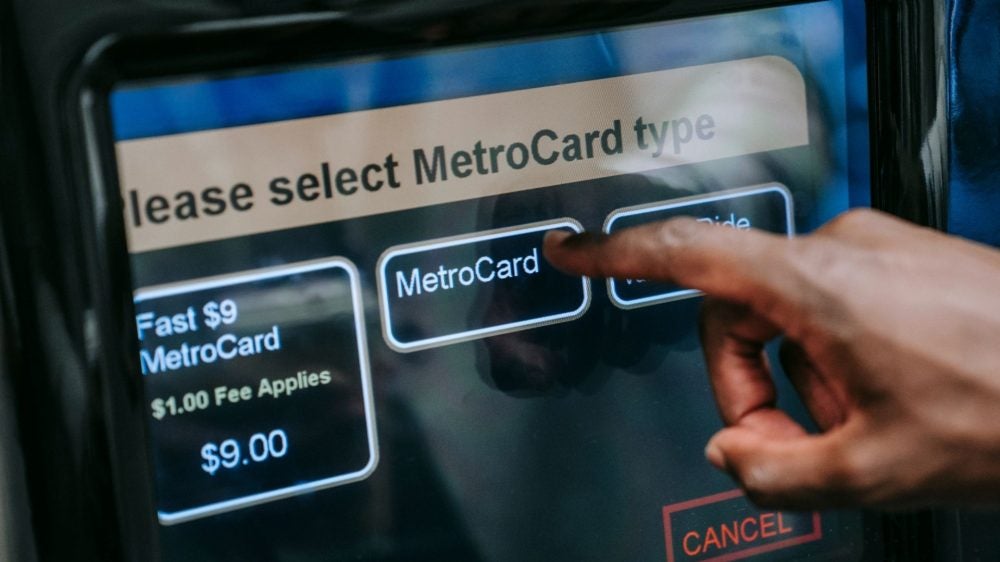
Hand typing on a metrocard machine at a new york subway to pay for a fare.|A person swiping the yellow and blue Metrocard at a new york subway station entrance. Photo of hand swiping the card.

Brian Taylor on the Retirement of New York’s MetroCard

January 12, 2026
Luskin in the News
New York City's iconic, gold-and-blue MetroCard is being retired after more than three decades....
Read More
Aerial view of LA skyline and congested freeways at night

Taylor on Why Traffic Is Getting Worse

December 15, 2025
Luskin in the News
In the post-pandemic LA region, “there’s traffic because there’s 18 and a half million people who...
Read More
Climate Dispatch podcast logo.

Taylor on the Growth of L.A.’s Transportation Infrastructure

June 9, 2025
Luskin in the News
UCLA transportation expert talks about how land use and transportation behavior shapes cities....
Read More
silhoutette of person looking through window blinds

America Is Becoming a Nation of Homebodies

March 17, 2025
Luskin in the News
People are spending nearly 1.5 hours less outside their homes in 2023 than they did in...
Read More
fuzzy socks on feet set against blanket

A Post-COVID Change in How We Live Our Lives

November 26, 2024
Luskin in the News
Americans are spending more time at home, according to new research from UCLA Luskin and Clemson...
Read More
woman on couch with remote

Not Going Out Is the ‘New Normal’ Post-Covid, Study Finds

October 31, 2024
School of Public Affairs
Responses from 34,000 people reveal a decline in out-of-home activities, according to a new study by...
Read More
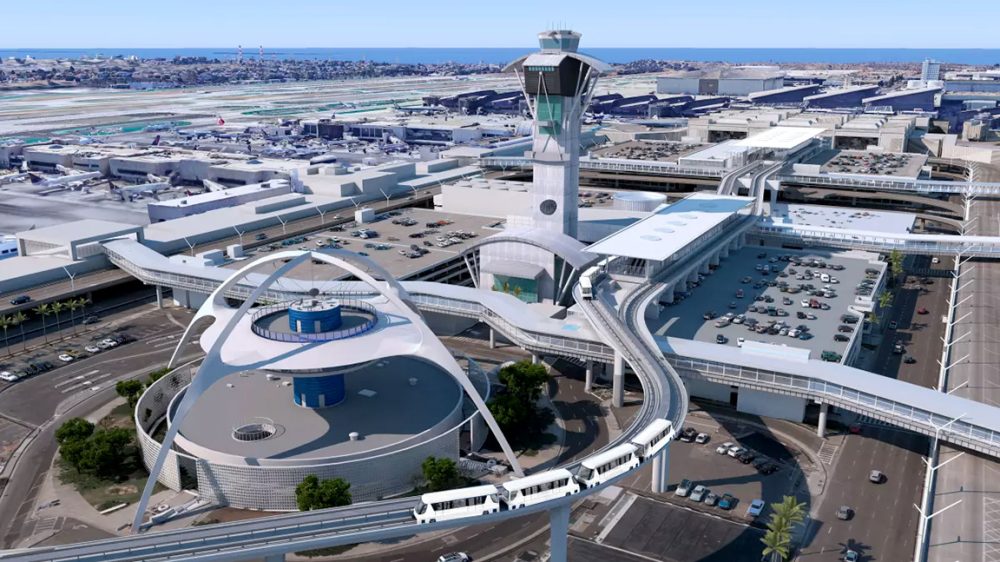
LAXpmover1

LAX’s Long-Awaited Rail Connection

October 28, 2024
Luskin in the News
After decades of talk, the link to major L.A.'s air transportation hub is now set to...
Read More
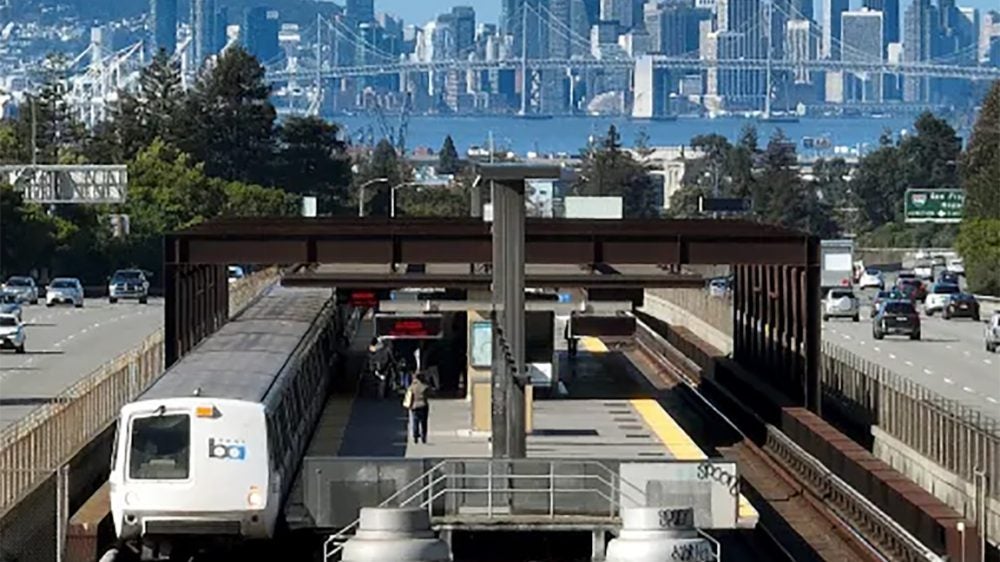
TransitPhot1

Taylor on Cutting Transit Service

October 4, 2024
Luskin in the News
Transit agencies consider service cuts as COVID-era federal aid runs out....
Read More
Man in glasses at podium with blue and black backdrop|

Leadership Transition at UCLA Institute of Transportation Studies

July 2, 2024
For Faculty
After more than two decades guiding research center's growth, Brian Taylor hands reins to Adam Millard-Ball....
Read More
Learn more about UCLA Luskin

Find contact information and get answers to your questions.

Contact Us

Public Affairs Building
337 Charles E. Young Drive East
Los Angeles, California 90095

Linkedin Youtube Instagram Facebook X-twitter
Campus Resources
  • Map, Directions, Parking
  • Directory
  • Academic Calendar
  • Careers
  • Map, Directions, Parking
  • Directory
  • Academic Calendar
  • Careers
School Resources
  • About
  • Our Dean
  • Administration
  • Board of Advisors
  • Contact Us
  • Visit Us
  • About
  • Our Dean
  • Administration
  • Board of Advisors
  • Contact Us
  • Visit Us
© 2026 Regents of the University of California
  • Emergency
  • Accessibilty
  • Privacy & Terms of Use
  • Emergency
  • Accessibilty
  • Privacy & Terms of Use
Facebook Instagram Linkedin X-twitter Youtube Threads
Academics
Departments
  • Public Policy
  • Real Estate Development
  • Social Welfare
  • Undergraduate Program
  • Urban Planning
  • Public Policy
  • Real Estate Development
  • Social Welfare
  • Undergraduate Program
  • Urban Planning
Graduate Programs
  • Master of Public Policy (MPP)
  • Master of Real Estate Development (MRED)
  • Master of Social Welfare (MSW)
  • Master of Urban and Regional Planning (MURP)
  • PhD in Social Welfare
  • PhD in Urban Planning
  • Master of Public Policy (MPP)
  • Master of Real Estate Development (MRED)
  • Master of Social Welfare (MSW)
  • Master of Urban and Regional Planning (MURP)
  • PhD in Social Welfare
  • PhD in Urban Planning
Undergraduate Programs
  • BA in Public Affairs
  • Minor in Urban and Regional Studies
  • Minor in Gerontology
  • Minor in Public Affairs
  • BA in Public Affairs
  • Minor in Urban and Regional Studies
  • Minor in Gerontology
  • Minor in Public Affairs
Professional Certificates
  • Data Analytics Certificate
  • Data Analytics Certificate
Admissions
Program Specific Admissions
  • Public Policy
  • Real Estate Development
  • Social Welfare
  • Urban Planning
  • Undergraduate Program
  • Public Policy
  • Real Estate Development
  • Social Welfare
  • Urban Planning
  • Undergraduate Program
Faculty
Our Faculty
  • All Faculty
  • Public Policy
  • Real Estate Development
  • Social Welfare
  • Urban Planning
  • All Faculty
  • Public Policy
  • Real Estate Development
  • Social Welfare
  • Urban Planning
Leadership
  • Our Dean
  • Board of Advisors
  • Faculty Executive Committee
  • Our Dean
  • Board of Advisors
  • Faculty Executive Committee
Research Centers
  • Agile Visual Analytics Lab (AVAL):

    Uses data visualization to improve decision-making for family and child services.

  • Berggruen Governance Index

    Evaluates the quality of political governance and democracy worldwide.

  • Center for Neighborhood Knowledge (CNK)

    Specializes in spatial analysis of socioeconomic disparities in neighborhoods.

  • Center for Policy Research on Aging (CPRA)

    Explores the societal and policy implications of an aging population.

  • Agile Visual Analytics Lab (AVAL):

    Uses data visualization to improve decision-making for family and child services.

  • Berggruen Governance Index

    Evaluates the quality of political governance and democracy worldwide.

  • Center for Neighborhood Knowledge (CNK)

    Specializes in spatial analysis of socioeconomic disparities in neighborhoods.

  • Center for Policy Research on Aging (CPRA)

    Explores the societal and policy implications of an aging population.

  • Institute of Transportation Studies (ITS)

    A national leader in transportation policy and mobility research.

  • Institute on Inequality and Democracy

    Advances scholarship addressing displacement and dispossession in Los Angeles and beyond.

  • Latin American Cities Initiative

    Connects urban planning and policy networks across the Americas.

  • Latino Policy & Politics Institute (LPPI)

    Addresses policy challenges facing Latinos and communities of color.

  • Institute of Transportation Studies (ITS)

    A national leader in transportation policy and mobility research.

  • Institute on Inequality and Democracy

    Advances scholarship addressing displacement and dispossession in Los Angeles and beyond.

  • Latin American Cities Initiative

    Connects urban planning and policy networks across the Americas.

  • Latino Policy & Politics Institute (LPPI)

    Addresses policy challenges facing Latinos and communities of color.

  • Lewis Center for Regional Policy Studies

    Researches housing, transportation, and economic development in Southern California.

  • Los Angeles Education Research Institute (LAERI)

    Collaborates with schools to improve educational outcomes for L.A. students.

  • Luskin Center for Innovation (LCI)

    Focuses on environmental policy, clean energy, and climate justice.

  • UCLA Voting Rights Project

    The flagship project for voting rights litigation and policy research.

  • Lewis Center for Regional Policy Studies

    Researches housing, transportation, and economic development in Southern California.

  • Los Angeles Education Research Institute (LAERI)

    Collaborates with schools to improve educational outcomes for L.A. students.

  • Luskin Center for Innovation (LCI)

    Focuses on environmental policy, clean energy, and climate justice.

  • UCLA Voting Rights Project

    The flagship project for voting rights litigation and policy research.

All Research Centers
Outcomes
Common Search Terms

Results will show as you type.