Skip to content
  • Students & Alumni
    • Career Services
    • Alumni Relations
    • Student Support
    • Graduate Resource Library
    • For Employers
  • News
  • Events
    • Events Calendar
    • Luskin Summit
    • Luskin Lecture Series
    • California Policy Briefing
    • Commencement
  • Students & Alumni
    • Career Services
    • Alumni Relations
    • Student Support
    • Graduate Resource Library
    • For Employers
  • News
  • Events
    • Events Calendar
    • Luskin Summit
    • Luskin Lecture Series
    • California Policy Briefing
    • Commencement
Giving
UCLA Luskin School of Public Affairs Logo
  • Academics
    Departments & Programs
    • Global Public Affairs
    • Public Policy
    • Real Estate Development
    • Social Welfare
    • Urban Planning
    • Undergraduate Program
    • Global Public Affairs
    • Public Policy
    • Real Estate Development
    • Social Welfare
    • Urban Planning
    • Undergraduate Program
    Graduate Degrees
    • Master of Global Public Affairs (MGPA)
    • Master of Public Policy (MPP)
    • Master of Real Estate Development (MRED)
    • Master of Social Welfare (MSW)
    • Master of Urban and Regional Planning (MURP)
    • PhD in Social Welfare
    • PhD in Urban Planning
    • Master of Global Public Affairs (MGPA)
    • Master of Public Policy (MPP)
    • Master of Real Estate Development (MRED)
    • Master of Social Welfare (MSW)
    • Master of Urban and Regional Planning (MURP)
    • PhD in Social Welfare
    • PhD in Urban Planning
    Undergraduate Degrees
    • BA in Public Affairs
    • Minor in Urban and Regional Studies
    • Minor in Gerontology
    • Minor in Public Affairs
    • BA in Public Affairs
    • Minor in Urban and Regional Studies
    • Minor in Gerontology
    • Minor in Public Affairs
    Professional Certificates
    • AI in Public Affairs Certificate
    • AI in Public Affairs Certificate
  • Admissions
    Program Specific Admissions
    • Global Public Affairs
    • Public Policy
    • Real Estate Development
    • Social Welfare
    • Urban Planning
    • Undergraduate Program
    • Global Public Affairs
    • Public Policy
    • Real Estate Development
    • Social Welfare
    • Urban Planning
    • Undergraduate Program
  • Faculty
    Our Faculty
    • All Faculty
    • Public Policy
    • Real Estate Development
    • Social Welfare
    • Urban Planning
    • All Faculty
    • Public Policy
    • Real Estate Development
    • Social Welfare
    • Urban Planning
    Leadership
    • Our Dean
    • Board of Advisors
    • Faculty Executive Committee
    • Our Dean
    • Board of Advisors
    • Faculty Executive Committee
  • Research Centers
    • Agile Visual Analytics Lab (AVAL)

      Empowers stakeholders with data to make informed decisions for children, families, and communities.

    • Berggruen Governance Index

      Evaluates the quality of political governance and democracy worldwide.

    • Center for Neighborhood Knowledge (CNK)

      Specializes in spatial analysis of socioeconomic disparities in neighborhoods.

    • Center for Policy Research on Aging (CPRA)

      Explores the societal and policy implications of an aging population.

    • Institute of Transportation Studies (ITS)

      Advances research, education, and meaningful civic engagement on transportation issues.

    • Institute on Inequality and Democracy

      Advances scholarship that confronts threats to democracy in America and around the world.

    • Latin American Cities Initiative

      Connects urban planning and policy networks across the Americas.

    • Latino Policy & Politics Institute (LPPI)

      Addresses policy challenges facing Latinos and communities of color.

    • Lewis Center for Regional Policy Studies

      Studying housing affordability and transportation equity in the L.A. region.

    • Los Angeles Education Research Institute (LAERI)

      Collaborates with schools to improve educational outcomes for L.A. students.

    • Luskin Center for Innovation

      Informing effective and equitable environmental policy that improves lives.

    • UCLA Voting Rights Project

      The flagship project for voting rights litigation and policy research.

    All Research Centers
  • Outcomes
Home / News / How the Weinstein Scandal Ignited a Movement

How the Weinstein Scandal Ignited a Movement

Gains made in the #MeToo era are tempered by unresolved questions of accountability, journalist Megan Twohey tells a UCLA audience
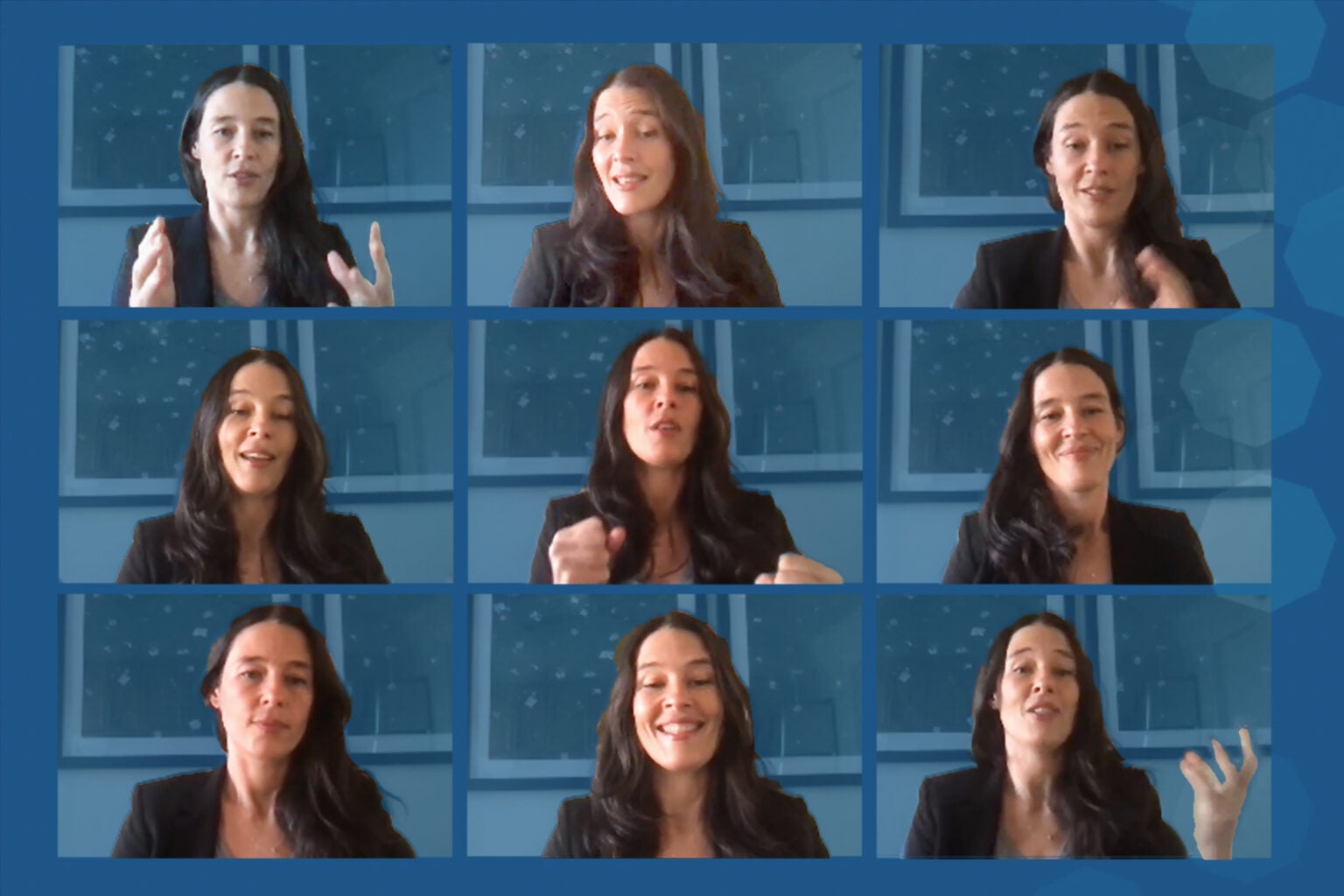
New York Times reporter Megan Twohey shares behind-the-scenes details of the investigation into Harvey Weinstein during a Luskin Lecture event
New York Times reporter Megan Twohey shares behind-the-scenes details of the investigation into Harvey Weinstein during a Luskin Lecture event.

Posted in

  • School of Public Affairs, Undergraduates

Published on

  • March 10, 2021

Share this Article

By Mary Braswell

The New York Times investigation that exposed producer Harvey Weinstein’s long history as a sexual predator set off a chain of events that led to prison for the Hollywood power broker and empowerment for women around the world who stepped up to share their own stories of abuse.

Today, the story continues to unfold, with contours of the investigation now coming to light and nagging questions of accountability still unanswered, journalist Megan Twohey told a UCLA audience during a March 9 virtual lecture.

Twohey and Jodi Kantor shared a byline on that first blockbuster piece in the fall of 2017, part of a body of work that would earn their newspaper the Pulitzer Prize for Public Service. Both reporters were bowled over by the whirlwind of events that followed.

“One day we were working on this incredibly difficult story, and then just a few days later we started to see change happening everywhere,” Twohey said. “The #MeToo movement turned out to be more sweeping and durable than we could have ever predicted.”

Twohey’s talk was the latest in the UCLA Meyer and Renee Luskin Lecture Series, which brings together scholars as well as national and local leaders to address society’s most pressing problems, such as the culture’s long history of men getting away with abusing their authority. Though hundreds of powerful men have lost their jobs since Twohey and Kantor’s story broke, the fallout continues, including in the recent mini-series “Allen v. Farrow,” which documents the sexual abuse case against filmmaker Woody Allen.

As the team’s reporting continued over months and years, “there was also growing confusion and frustration that in some ways it felt like everything was changing — and then it also felt like nothing was changing at all,” Twohey said.

‘At a time when everything can feel stuck, and the very notion of “truth” is collapsing, we want you to know that journalism and facts can win.’ — Megan Twohey

The story, they realized, was less about one man’s misdeeds and more about a sprawling system of coercion and complicity that had facilitated predatory behavior for generations.

“The real moral of the Weinstein story began to dawn on us,” Twohey said. “For decades this man had racked up allegation after allegation and, instead of stopping him, more and more people had helped him.”

During the event, which drew viewers from around the world, Twohey described the pervasive use of non-disclosure agreements to buy the silence of women who lodged complaints.

“Nobody would say that a victim of sexual harassment or sexual assault shouldn’t receive financial recompense for what’s happened to them,” she said. “I think the real question here is the secrecy … that allows predators to cover their tracks and to keep hurting other people.”

The #MeToo movement transformed cultural norms, but there is still no consensus on how to handle sexual abuse cases, Twohey said.

“What is the scope of behavior under scrutiny?” she asked. “Are we talking only about allegations of rape and sexual harassment, or are we talking about grayer areas, like a boss’ awkward hand on an employee’s back?”

Complicating the conversation are charges that the #MeToo era has led to false accusations and quick ousters without due process.

But Twohey assured the audience that, “at a time when everything can feel stuck, and the very notion of ‘truth’ is collapsing, we want you to know that journalism and facts can win.”

Twohey and Kantor reveal details of their reporting journey, including information that was originally off the record, in their 2019 book “She Said: Breaking the Sexual Harassment Story That Helped Ignite a Movement.”

“When we started we had no idea whether Harvey Weinstein had done anything wrong. Remember, he was considered a humanitarian, a philanthropist,” Twohey told the Luskin Lecture audience.

Over the next several months, the two journalists approached a long list of sources, persuaded them to tell their stories, then appealed to them to go public. They also amassed records including Weinstein Company accounting records, human resources complaints, notes from internal conference calls, emails and more.

“When we went back to women to ask them to go on the record, we were asking them to stand on a body of evidence,” Twohey said.

Satisfied that the story was air-tight, the New York Times prepared to publish, knowing that Weinstein had launched a campaign to discredit the women who had come forward — and also aware that another journalist, Ronan Farrow, was racing to break the story. His reporting for the New Yorker, published a few days later, earned a share of the Pulitzer for Public Service.

Days after the stories went to press, Weinstein was fired from the film studio he co-founded. Within months, he was arrested and charged with rape in New York. In February 2020, he was sentenced to 23 years in prison.

At the Luskin Lecture, Twohey spoke with UCLA’s Meredith Phillips, an associate professor of public policy and sociology and chair of the undergraduate program at UCLA Luskin, about parallels between investigative journalism and social science research, two fields that require strict adherence to evidence from many sources.

Twohey said that throughout her coverage of the Weinstein story and its aftermath, she honored the distinction between journalism and advocacy.

“We reporters gather the facts, pick up a pen and hope that by revealing the truth we can help bring about change.”
Faculty Mentioned in this Article
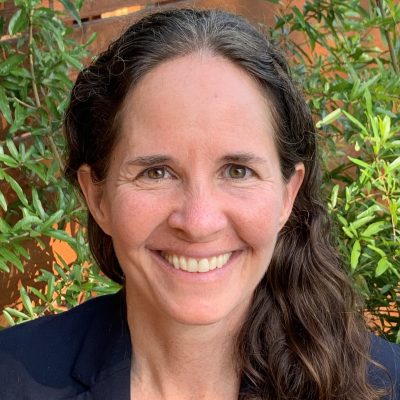
Phillips_M_2022

Meredith Phillips

Professor of Public Policy and Sociology

Phillips studies the causes and consequences of educational inequality. She specializes in the causes of ethnic and socioeconomic disparities in...

Related Articles

young woman sits on steps outside a building

Making Data More Used and Useful

December 21, 2023
Luskin Forum Online
Undergraduate courses meet growing desire of students like Arielle Cunanan to master new technologies....
Read More
students walking on college campus

Advanced High School Math Courses Pave Way for College Success, Report Finds

September 25, 2023
Luskin's Latest Blog
Study by the Los Angeles Education Research Institute at UCLA Luskin assesses college performance of L.A....
Read More
Students study at table

Phillips on Benefits of Taking 12th-Grade Math

February 9, 2023
Luskin in the News
Taking a fourth year of high school math can open doors to higher education, according to...
Read More
Young people at a desk with books and laptop

Taking 12th Grade Math Opens Doors to Higher Education, Research Finds

January 18, 2023
Public Policy
UCLA-led study following nearly 27,000 L.A. Unified students yields insights that can help inform education policy....
Read More
Chat With Chair 1

Undergrads Gather to ‘Chat With the Chair’

April 29, 2022
Luskin's Latest Blog
Current and prospective public affairs majors gather for casual conversation with department chair Meredith Phillips, Luskin...
Read More
Breeze Velazquez says she's grateful for the support of friends, family and the community she found in the Luskin undergraduate program

A Platform for Elevating Student Voices

October 12, 2021
Education
As UCLA's new student body president, Breeze Velazquez embraces her role as an advocate for her...
Read More
Learn more about UCLA Luskin

Find contact information and get answers to your questions.

Contact Us

Public Affairs Building
337 Charles E. Young Drive East
Los Angeles, California 90095

Linkedin Youtube Instagram Facebook X-twitter
Campus Resources
  • Map, Directions, Parking
  • Directory
  • Academic Calendar
  • Careers
  • Map, Directions, Parking
  • Directory
  • Academic Calendar
  • Careers
School Resources
  • About
  • Our Dean
  • Administration
  • Luskin School Intranet
  • Board of Advisors
  • Contact Us
  • Visit Us
  • About
  • Our Dean
  • Administration
  • Luskin School Intranet
  • Board of Advisors
  • Contact Us
  • Visit Us
UCLA logo
© 2026 Regents of the University of California
  • Emergency
  • Accessibility
  • Privacy & Terms of Use
  • Emergency
  • Accessibility
  • Privacy & Terms of Use
Facebook Instagram Linkedin X-twitter Youtube Threads
UCLA Luskin School of Public Affairs Logo
Academics
Departments
  • Global Public Affairs
  • Public Policy
  • Real Estate Development
  • Social Welfare
  • Urban Planning
  • Undergraduate Program
  • Global Public Affairs
  • Public Policy
  • Real Estate Development
  • Social Welfare
  • Urban Planning
  • Undergraduate Program
Graduate Programs
  • Master of Global Public Affairs (MGPA)
  • Master of Public Policy (MPP)
  • Master of Real Estate Development (MRED)
  • Master of Social Welfare (MSW)
  • Master of Urban and Regional Planning (MURP)
  • PhD in Social Welfare
  • PhD in Urban Planning
  • Master of Global Public Affairs (MGPA)
  • Master of Public Policy (MPP)
  • Master of Real Estate Development (MRED)
  • Master of Social Welfare (MSW)
  • Master of Urban and Regional Planning (MURP)
  • PhD in Social Welfare
  • PhD in Urban Planning
Undergraduate Programs
  • BA in Public Affairs
  • Minor in Urban and Regional Studies
  • Minor in Gerontology
  • Minor in Public Affairs
  • BA in Public Affairs
  • Minor in Urban and Regional Studies
  • Minor in Gerontology
  • Minor in Public Affairs
Professional Certificates
  • AI in Public Affairs Certificate
  • AI in Public Affairs Certificate
Admissions
Program Specific Admissions
  • Global Public Affairs
  • Public Policy
  • Real Estate Development
  • Social Welfare
  • Urban Planning
  • Undergraduate Program
  • Global Public Affairs
  • Public Policy
  • Real Estate Development
  • Social Welfare
  • Urban Planning
  • Undergraduate Program
Faculty
Our Faculty
  • All Faculty
  • Public Policy
  • Real Estate Development
  • Social Welfare
  • Urban Planning
  • All Faculty
  • Public Policy
  • Real Estate Development
  • Social Welfare
  • Urban Planning
Leadership
  • Our Dean
  • Board of Advisors
  • Faculty Executive Committee
  • Our Dean
  • Board of Advisors
  • Faculty Executive Committee
Research Centers
  • Agile Visual Analytics Lab (AVAL)

    Empowers stakeholders with data to make informed decisions for children, families, and communities.

  • Berggruen Governance Index

    Evaluates the quality of political governance and democracy worldwide.

  • Center for Neighborhood Knowledge (CNK)

    Specializes in spatial analysis of socioeconomic disparities in neighborhoods.

  • Center for Policy Research on Aging (CPRA)

    Explores the societal and policy implications of an aging population.

  • Institute of Transportation Studies (ITS)

    Advances research, education, and meaningful civic engagement on transportation issues.

  • Institute on Inequality and Democracy

    Advances scholarship that confronts threats to democracy in America and around the world.

  • Latin American Cities Initiative

    Connects urban planning and policy networks across the Americas.

  • Latino Policy & Politics Institute (LPPI)

    Addresses policy challenges facing Latinos and communities of color.

  • Lewis Center for Regional Policy Studies

    Studying housing affordability and transportation equity in the L.A. region.

  • Los Angeles Education Research Institute (LAERI)

    Collaborates with schools to improve educational outcomes for L.A. students.

  • Luskin Center for Innovation

    Informing effective and equitable environmental policy that improves lives.

  • UCLA Voting Rights Project

    The flagship project for voting rights litigation and policy research.

All Research Centers
Outcomes
Common Search Terms

Results will show as you type.