Skip to content
  • Students & Alumni
    • Overview
    • Career Services
    • Alumni Relations
    • Student Support
    • Graduate Resource Library
  • News
  • Events
    • Events Calendar
    • Luskin Summit
    • Luskin Lecture Series
    • California Policy Briefing
    • Commencement
  • Students & Alumni
    • Overview
    • Career Services
    • Alumni Relations
    • Student Support
    • Graduate Resource Library
  • News
  • Events
    • Events Calendar
    • Luskin Summit
    • Luskin Lecture Series
    • California Policy Briefing
    • Commencement
Giving
  • Academics
    Departments
    • Public Policy
    • Real Estate Development
    • Social Welfare
    • Undergraduate Program
    • Urban Planning
    • Public Policy
    • Real Estate Development
    • Social Welfare
    • Undergraduate Program
    • Urban Planning
    Graduate Programs
    • Master of Public Policy (MPP)
    • Master of Real Estate Development (MRED)
    • Master of Social Welfare (MSW)
    • Master of Urban and Regional Planning (MURP)
    • PhD in Social Welfare
    • PhD in Urban Planning
    • Master of Public Policy (MPP)
    • Master of Real Estate Development (MRED)
    • Master of Social Welfare (MSW)
    • Master of Urban and Regional Planning (MURP)
    • PhD in Social Welfare
    • PhD in Urban Planning
    Undergraduate Programs
    • BA in Public Affairs
    • Minor in Urban and Regional Studies
    • Minor in Gerontology
    • Minor in Public Affairs
    • BA in Public Affairs
    • Minor in Urban and Regional Studies
    • Minor in Gerontology
    • Minor in Public Affairs
    Professional Certificates
    • Data Analytics Certificate
    • Data Analytics Certificate
  • Admissions
    Program Specific Admissions
    • Public Policy
    • Real Estate Development
    • Social Welfare
    • Urban Planning
    • Undergraduate Program
    • Public Policy
    • Real Estate Development
    • Social Welfare
    • Urban Planning
    • Undergraduate Program
  • Faculty
    Our Faculty
    • All Faculty
    • Public Policy
    • Real Estate Development
    • Social Welfare
    • Urban Planning
    • All Faculty
    • Public Policy
    • Real Estate Development
    • Social Welfare
    • Urban Planning
    Leadership
    • Our Dean
    • Board of Advisors
    • Faculty Executive Committee
    • Our Dean
    • Board of Advisors
    • Faculty Executive Committee
  • Research Centers
    • Agile Visual Analytics Lab (AVAL):

      Uses data visualization to improve decision-making for family and child services.

    • Berggruen Governance Index

      Evaluates the quality of political governance and democracy worldwide.

    • Center for Neighborhood Knowledge (CNK)

      Specializes in spatial analysis of socioeconomic disparities in neighborhoods.

    • Center for Policy Research on Aging (CPRA)

      Explores the societal and policy implications of an aging population.

    • Agile Visual Analytics Lab (AVAL):

      Uses data visualization to improve decision-making for family and child services.

    • Berggruen Governance Index

      Evaluates the quality of political governance and democracy worldwide.

    • Center for Neighborhood Knowledge (CNK)

      Specializes in spatial analysis of socioeconomic disparities in neighborhoods.

    • Center for Policy Research on Aging (CPRA)

      Explores the societal and policy implications of an aging population.

    • Institute of Transportation Studies (ITS)

      A national leader in transportation policy and mobility research.

    • Institute on Inequality and Democracy

      Advances scholarship addressing displacement and dispossession in Los Angeles and beyond.

    • Latin American Cities Initiative

      Connects urban planning and policy networks across the Americas.

    • Latino Policy & Politics Institute (LPPI)

      Addresses policy challenges facing Latinos and communities of color.

    • Institute of Transportation Studies (ITS)

      A national leader in transportation policy and mobility research.

    • Institute on Inequality and Democracy

      Advances scholarship addressing displacement and dispossession in Los Angeles and beyond.

    • Latin American Cities Initiative

      Connects urban planning and policy networks across the Americas.

    • Latino Policy & Politics Institute (LPPI)

      Addresses policy challenges facing Latinos and communities of color.

    • Lewis Center for Regional Policy Studies

      Researches housing, transportation, and economic development in Southern California.

    • Los Angeles Education Research Institute (LAERI)

      Collaborates with schools to improve educational outcomes for L.A. students.

    • Luskin Center for Innovation (LCI)

      Focuses on environmental policy, clean energy, and climate justice.

    • UCLA Voting Rights Project

      The flagship project for voting rights litigation and policy research.

    • Lewis Center for Regional Policy Studies

      Researches housing, transportation, and economic development in Southern California.

    • Los Angeles Education Research Institute (LAERI)

      Collaborates with schools to improve educational outcomes for L.A. students.

    • Luskin Center for Innovation (LCI)

      Focuses on environmental policy, clean energy, and climate justice.

    • UCLA Voting Rights Project

      The flagship project for voting rights litigation and policy research.

    All Research Centers
  • Outcomes
Home / ITS, Lewis Center Have Thrived for Decades

ITS, Lewis Center Have Thrived for Decades

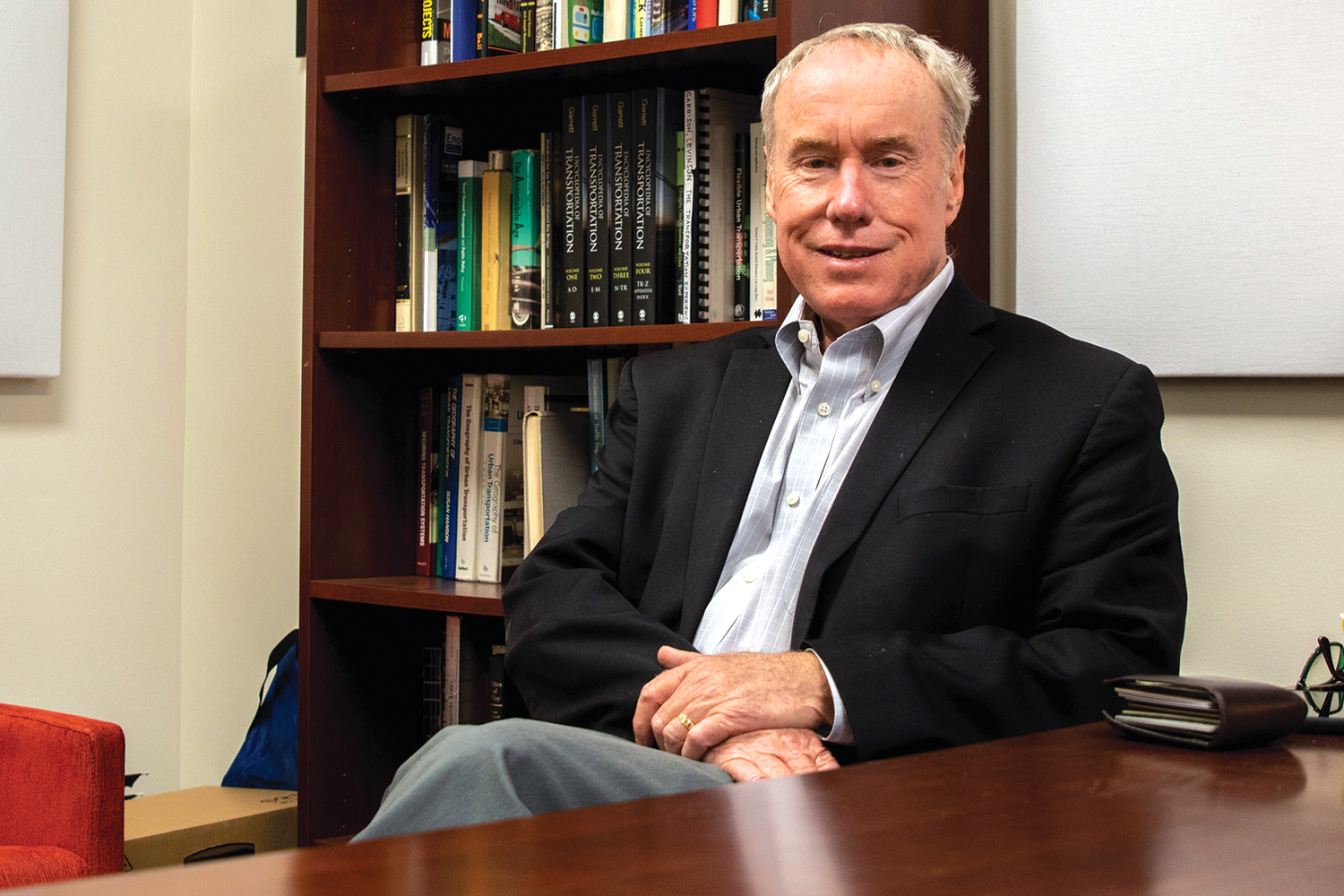
man sits with hands folded on lap and bookshelf in background

Posted in

  • Luskin Forum Online

Published on

  • June 22, 2022
  • California, education, history, leadership, legacy, research, transit, Transportation

Share this Article

The Institute of Transportation Studies was created within the University of California in 1947 and has been in permanent existence at UCLA since 1994. The Lewis Center for Regional Policy Studies marked its 30th year in 2020 with a grand celebration just six days before COVID-19 was declared a global pandemic. Both remain influential and productive, promoting a faculty-student research relationship that for many is a hallmark of the Luskin School experience. Here are interviews with the two current directors and a handful of alumni.ย 

Brian Taylor, UCLA double-alumnus, longtime professor and director of the Institute of Transportation Studies

Why are UCLA and ITS the right fit for you?

Oh, I keep coming back to UCLA. I transferred from Berkeley to UCLA as an undergraduate โ€ฆ and went to graduate school at Berkeley. And then I came back to UCLA for my Ph.D. in urban planning, but at the time it was in the Graduate School of Architecture and Urban Planning. I taught [at another university] for a while and then was recruited to come back to UCLA a third time.ย 

I understand that I was the first faculty member hired in the โ€œSchool of Public Affairs.โ€ My appointment began July 1st, 1994, and the School began on July 1st, 1994, at midnight.ย 

What we know today as the Institute of Transportation Studies at the University of California โ€ฆ was created by the California Legislature in 1947 to examine the growing transportation needs for the state of California after World War II. The original branch was at UC Berkeley, and eventually a branch was opened at UCLA. It existed from the 1950s into, I believe, the early 1970s, primarily in engineering. โ€ฆ They used to crash test cars in what is now the sculpture garden. They had the tracks, and theyโ€™d run them up with the dummies in the cars.ย 

[That version was later moved] from UCLA to Irvine. โ€ฆ In 1994, the branch at UCLA was reestablished, but instead of being in civil engineering, it was established in whatโ€™s now the Luskin School of Public Affairs. And the founding director was Professor Martin Wachs.ย 

Transportation is the thing that everybodyโ€™s an expert in. Because they all travel.ย 

What makes it unique is that transportation is one of the things that connect all of human activity. Itโ€™s education, communication. Where we live, where we work, where we shop, where we play, how we relate to friends. Weโ€™ve learned what itโ€™s like to do it by Zoom and thatโ€™s one way. And the other way is to come together. And if you come together for activities, whether itโ€™s manufacturing, or to socialize, or to see a sporting event or to go shopping, those things all require transportation systems.ย 

The transportation program at UCLA is fairly unique among universities. โ€ฆ Others tend to have their centers anchored in engineering, and it is very much an infrastructure focus. We are anchored in a school of public affairs. And because of that, our transportation experts, who are known around the world, are not, quote-unquote, transportation experts. Theyโ€™re people who focus on transportation around some realm. So, take [professor] Donald Shoup. He was basically a land economist who realized that parking had huge effects on urban development and the environment. And as a land economist, heโ€™s become one of the most prominent transportation scholars in the country.

Only the late Marty Wachs and I, and now [recent faculty addition] Tierra Bills as the third, were actually first and foremost transportation people, even though weโ€™re widely considered as one of the top transportation research centers in the country. And because we bring in these experts from these other fields who see the connections to urban design and safety, to the environment and to economic outcomes in poverty, to all of these things connected to transportation, [it] has made us so relevant and so intellectually rich as a result.

How do students benefit from being associated with ITS?

ITS, like many of the other centers, has for years devoted substantial funding to students, offering scholarships to recruit outstanding students, diverse students to the Luskin School. At this point itโ€™s millions of dollars in scholarships. We are the largest single funder of students at UCLA outside of โ€” I have been told this repeatedly โ€” outside of the graduate division in terms of funding our students.

Is there a signature event or a signature activity?

Oh, yes. Itโ€™s the UCLA Lake Arrowhead Symposium on the Transportation-Land Use-Environment Connection. Weโ€™ve been doing it since โ€™91. Itโ€™s at UCLAโ€™s Lake Arrowhead Conference Center, and we are known internationally for this symposium. It has led to changes in policy at the state and federal level. We have had secretaries of transportation in California, the head of the Federal Transit Administration, and weโ€™ve had prominent academics from around the worldto speak.

Any unmet challenges or missed opportunities over the years?

I think urban planners could have been more intentional about addressing transportation justice and equity issues.

And there is โ€” I hate to use the word disturbing โ€” but the view of transportation in the eyes of many public officials, whether on the right or the left, often involves big projects, concrete and steel. They might favor some projects or oppose others. So, often we are approached and asked, โ€œWhat can you do to help us? How do I get approval for this project or kill this other project?โ€ But when we engage with public officials, rarely do they just say, โ€œThis is a vexing problem. What can we do to address it?โ€


Urban Planning alumni Andrew Mondschein PhD โ€™12 of the University of Virginia and Anne Brown MURP โ€™14, PhD โ€™18 of the University of Oregon worked with ITS while students; Lance MacNiven MURP โ€™16 is the national zero-emission lead for WSP USA, a civil engineering firm

How does your career today relate to your time at UCLA?

Mondschein: Iโ€™m still really interested in travel behavior and expanding the idea of what accessibility is and how we understand that concept. And that all came from the opportunities, the things that I experienced and the things I got to work on at UCLA. I do work on accessibility, particularly looking at cognitive mapping and understanding how people actually understand the opportunities that are available to them and the way that transportation systems shape that.

MacNiven: Although I never worked for ITS directly, I was very close with Brian [Taylor], and he was kind of a partial advisor with the late, great Marty Wachs for my capstone project. I am the national lead for zero-emission vehicles and fleet planning support and serve as a project manager forthe transition to zero-emission vehicles, primarily for transit and freight.

My capstone was connected to L.A. Metro bus system ridership and basically improving ridership. โ€ฆ Iโ€™m back on the bus side primarily with the zero-emission aspect. A lot of my studies and research with ridership and trends definitely inform the duty cycles and other things that we look at on the zero-emission side.

Brown: Iโ€™ve always been in transportation equity. Essentially, with the rise of shared mobility during my six years at UCLA, thatโ€™s the angle I went. UCLA provided flexibility to pivot into this whole new opening. Back in 2014, we just had no idea what was going on with any of these services.

What stands out about your time at UCLA?

Brown: Brian [Taylor], Evy [Blumenberg] and Marty [Wachs] were some of my primary advisors the entire timeI was at UCLA, kind of like surrogate parents and grandparents in a work context. They all came to my wedding. Itโ€™s just a wonderful community.

The support goes beyond the classroom. Itโ€™s out of the classroom on research projects. But thereโ€™s depth of care that they really invest in you as an individual. And it goes beyond graduation, too. Weโ€™re in regular touch. It feels like any time an email pops up or the call comes through, itโ€™s like no time has passed.

Mondschein: Fundamentally, the people at ITS were so supportive and could take anyone that was excited and engaged in transportation and encourage them to think how it might have benefit to society and might be able to change the world.

It was really a special kind of unique environment to be able to talk to like-minded people in a little bit of an educational hothouse. It was a lot of fun.

MacNiven: The professors, you know, itโ€™s full of brainiacs; we could spend all day talking about how smart they are. But itโ€™s the human connection that really draws people in and keeps us tight.ย 

When I first came to UCLA, reading about [Wachs, Taylor and Shoup], I was intimidated. I was like, โ€œOh, man, thereโ€™s Brian Taylor.โ€ But then you get to know him. And, quite honestly, a lot of the times Iโ€™m talking to Brian Taylor itโ€™s about college basketball.

Marty was my capstone advisor. He was busy but he accepted me. And I would go to his house on the weekends, you know, to basically bug him with questions. And there were times when my wife had our car, and he would offer to come pick me up to go to his house on a Saturday.ย 

That stuff sticks with you forever. It really shows the community.

Brown: I think about advice I was given early on but have not yet mastered. Itโ€™s to think, โ€œWhat are the questions? Whatโ€™s the purpose of doing the research?โ€

You can use research to answer questions that can better transportation, better society, better connect people to opportunities.ย 

I canโ€™t look at a new technology without thinking, โ€œWell, what do we do with this? How can we harness this to better the public good? What are its potential pitfalls and how do we avoid those?โ€ In a lot of ways, my professors are the voices in my head that continue to drive my research agenda. They trained me in their own style. And I am forever grateful for that.

MacNiven: Thereโ€™s no perfect silver bullet to this in terms of which transportation system we should favor. We deal with this a lot on the zero-emissions side because everyone seems to think that zero emission is the silver bullet to solve all our environmental problems.

But weโ€™re always trying to think about the pros, and the cons. Who are the winners? Who are the losers? And letโ€™szoom in on those โ€œlosersโ€ a little bit to see how we can mitigate those situations.

Itโ€™s not just producing great research, but also trying to translate it into practice.ย 


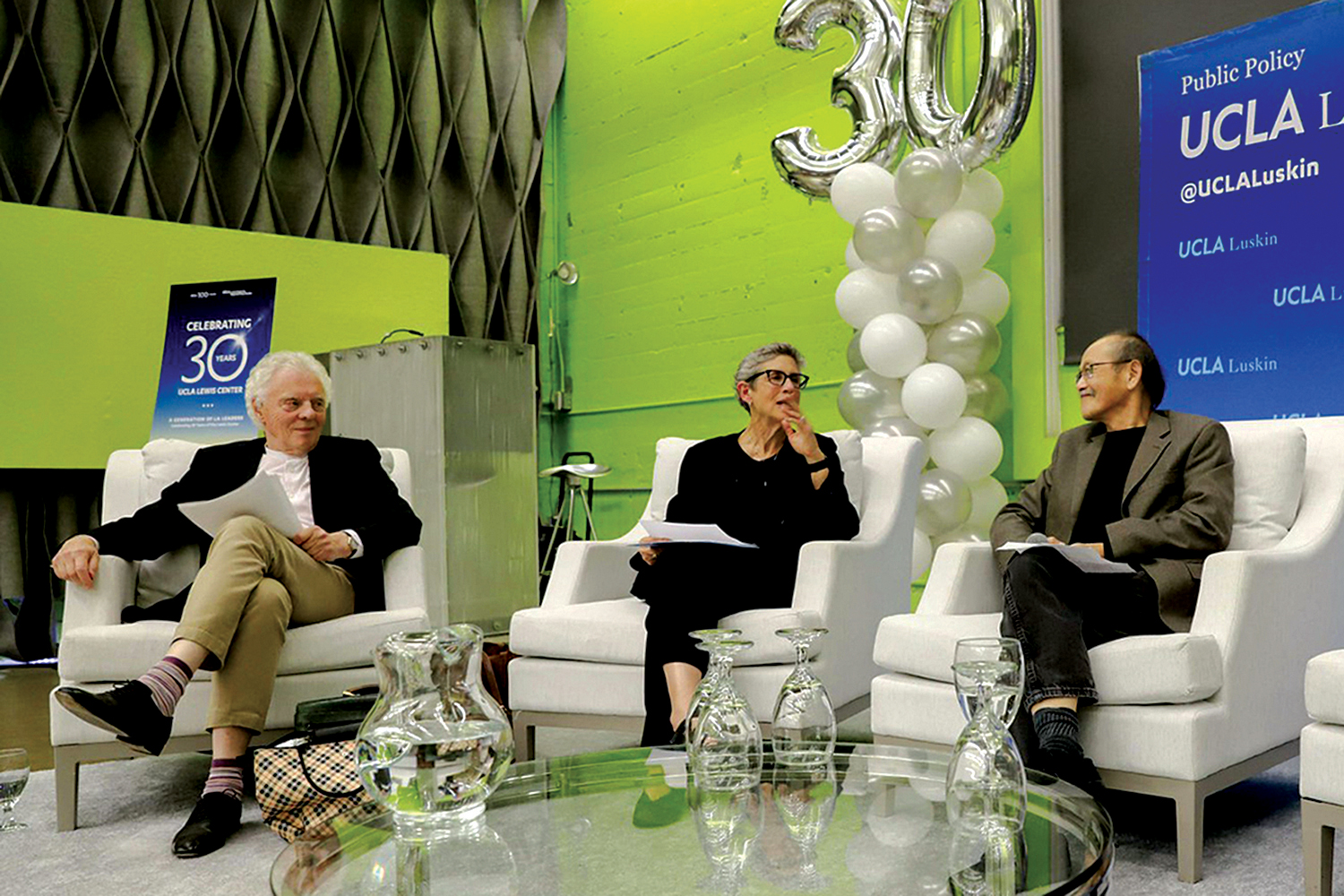
two men and a woman sit in large white chairs and talk
UCLA Luskin scholars Allen Scott, left, Evelyn Blumenberg and Paul Ong have each led the Lewis Center for Regional Policy Studies during its three-decade history.

Evelyn Blumenberg MA UP โ€™90, Ph.D. โ€™95, a faculty member since 1995 and director of the Lewis Center for Regional Policy Studies since 2018

Who works with the Lewis Center and has it changed over its three decades of existence?

I was first involved with the Lewis Center as a student. I did projects through the Lewis Center when I was a doctoral student [when it was still] in the School of Architecture and Urban Planning.ย 

The overall mission of the Lewis Center has held constant, but within that broader mission, each of the directors put their own stamp on the kinds of policy issues they were engaged in, and on who they were collaborating with.

And the areas of emphasis have evolved with the directors. Currently, we do โ€œlive,โ€ โ€œmoveโ€ and โ€œworkโ€ as our three areas. A lot of โ€œliveโ€ is focused on affordable housing qualities of neighborhoods. โ€œMoveโ€ is the work we do on transportation in the region. And โ€œworkโ€ reflects our interest in jobs and the regional economy.ย 

We work with students in all of the graduate and undergraduate degree programs.

The Lewis Center, like some of the other centers in the Luskin School, helps fund capstone projects in all three departments. And there are also students who get funding from the Lewis Center and write policy briefs that are based on their work.

We also help solicit some of the capstone projects. We do a broad solicitation, but many of [the clients] are alumni. Some of them had been involved in Lewis Center projects when they were students. Itโ€™s like match.com, where we try to match our great students with great projects. And thatโ€™s one way in which former students who are now alums can participate.ย 

How do faculty benefit from their association with the Lewis Center?

Faculty are really good at academic research. And they can figure out how to fund academic research. And, you know, they have to produce academic scholarship in order to get promoted. That happens with or without the Lewis Center.ย 

The Lewis Center allows them to amplify the policy implications of their research.ย 

Certainly, they apply for funds through the Lewis Center, and that helps their academic portfolio. But the big advantage is that we have the ability to help them promote their findings to communities, to elected officials and to other stakeholders.ย 

And we do it in a number of ways. We create reports and policy briefs. We have started a podcast around housing and affordable housing. We structure a lot of our events around the scholarship of faculty. They can use those events as a way of getting out their research and the policy and planning recommendations that fall from it.

And being involved with Lewis Center is a vehicle for bringing faculty and students together on topical areas. As an individual faculty member, oftentimes youโ€™re working on your own. The centers offer a collegial place to interact and to creatively think about how to pursue policy interventions.ย 

Weโ€™ve had meetings where all we do is brainstorm. We think about bringing faculty and students together to think about what the next round of research should be. So, itโ€™san incubator.

I got into this business to make a difference, right? To improve communities, to make life better for low-income households. This is an opportunity to translate the research into policy, and to do it with others.

Faculty Mentioned in this Article

No results found.

Related Articles

People taking the subway.

Will the Opening of the D Line Change Commuter Behavior?

May 20, 2026
Luskin in the News
The opening of the D Line means access to a more convenient route, but it remains...
Read More
Portrait of Donald Shoup on the left with a screen capture of the 3 panelists (host of MIT Mobility Forum, Brian Taylor, and author Daniel Heiss) during their panel discussion on recent episode of the MIT Mobility Forum.

MIT Mobility Forum Reflects on Donald Shoupโ€™s Influence on Parking Policy

March 16, 2026
Luskin in the News
Brian Taylor reflects on Donald Shoupโ€™s enduring influence and the hidden costs of so-called โ€œfreeโ€ parking....
Read More
People sitting inside a metro train.

Taylor on Chicago Transit Overhaul Amid Funding Boost

March 13, 2026
Luskin in the News
Chicagoโ€™s public transportation system is entering a period of historic investment....
Read More
Hand typing on a metrocard machine at a new york subway to pay for a fare.|A person swiping the yellow and blue Metrocard at a new york subway station entrance. Photo of hand swiping the card.

Brian Taylor on the Retirement of New Yorkโ€™s MetroCard

January 12, 2026
Luskin in the News
New York City's iconic, gold-and-blue MetroCard is being retired after more than three decades....
Read More
Aerial view of LA skyline and congested freeways at night

Taylor on Why Traffic Is Getting Worse

December 15, 2025
Luskin in the News
In the post-pandemic LA region, โ€œthereโ€™s traffic because thereโ€™s 18 and a half million people who...
Read More
Climate Dispatch podcast logo.

Taylor on the Growth of L.A.โ€™s Transportation Infrastructure

June 9, 2025
Luskin in the News
UCLA transportation expert talks about how land use and transportation behavior shapes cities....
Read More
silhoutette of person looking through window blinds

America Is Becoming a Nation of Homebodies

March 17, 2025
Luskin in the News
People are spending nearly 1.5 hours less outside their homes in 2023 than they did in...
Read More
fuzzy socks on feet set against blanket

A Post-COVID Change in How We Live Our Lives

November 26, 2024
Luskin in the News
Americans are spending more time at home, according to new research from UCLA Luskin and Clemson...
Read More
woman on couch with remote

Not Going Out Is the ‘New Normal’ Post-Covid, Study Finds

October 31, 2024
School of Public Affairs
Responses from 34,000 people reveal a decline in out-of-home activities, according to a new study by...
Read More
LAXpmover1

LAX’s Long-Awaited Rail Connection

October 28, 2024
Luskin in the News
After decades of talk, the link to major L.A.'s air transportation hub is now set to...
Read More
TransitPhot1

Taylor on Cutting Transit Service

October 4, 2024
Luskin in the News
Transit agencies consider service cuts as COVID-era federal aid runs out....
Read More
Man in glasses at podium with blue and black backdrop|

Leadership Transition at UCLA Institute of Transportation Studies

July 2, 2024
For Faculty
After more than two decades guiding research center's growth, Brian Taylor hands reins to Adam Millard-Ball....
Read More
Learn more about UCLA Luskin

Find contact information and get answers to your questions.

Contact Us

Public Affairs Building
337 Charles E. Young Drive East
Los Angeles, California 90095

Linkedin Youtube Instagram Facebook X-twitter
Campus Resources
  • Map, Directions, Parking
  • Directory
  • Academic Calendar
  • Careers
  • Map, Directions, Parking
  • Directory
  • Academic Calendar
  • Careers
School Resources
  • About
  • Our Dean
  • Administration
  • Board of Advisors
  • Contact Us
  • Visit Us
  • About
  • Our Dean
  • Administration
  • Board of Advisors
  • Contact Us
  • Visit Us
© 2026 Regents of the University of California
  • Emergency
  • Accessibilty
  • Privacy & Terms of Use
  • Emergency
  • Accessibilty
  • Privacy & Terms of Use
Facebook Instagram Linkedin X-twitter Youtube Threads
Academics
Departments
  • Public Policy
  • Real Estate Development
  • Social Welfare
  • Undergraduate Program
  • Urban Planning
  • Public Policy
  • Real Estate Development
  • Social Welfare
  • Undergraduate Program
  • Urban Planning
Graduate Programs
  • Master of Public Policy (MPP)
  • Master of Real Estate Development (MRED)
  • Master of Social Welfare (MSW)
  • Master of Urban and Regional Planning (MURP)
  • PhD in Social Welfare
  • PhD in Urban Planning
  • Master of Public Policy (MPP)
  • Master of Real Estate Development (MRED)
  • Master of Social Welfare (MSW)
  • Master of Urban and Regional Planning (MURP)
  • PhD in Social Welfare
  • PhD in Urban Planning
Undergraduate Programs
  • BA in Public Affairs
  • Minor in Urban and Regional Studies
  • Minor in Gerontology
  • Minor in Public Affairs
  • BA in Public Affairs
  • Minor in Urban and Regional Studies
  • Minor in Gerontology
  • Minor in Public Affairs
Professional Certificates
  • Data Analytics Certificate
  • Data Analytics Certificate
Admissions
Program Specific Admissions
  • Public Policy
  • Real Estate Development
  • Social Welfare
  • Urban Planning
  • Undergraduate Program
  • Public Policy
  • Real Estate Development
  • Social Welfare
  • Urban Planning
  • Undergraduate Program
Faculty
Our Faculty
  • All Faculty
  • Public Policy
  • Real Estate Development
  • Social Welfare
  • Urban Planning
  • All Faculty
  • Public Policy
  • Real Estate Development
  • Social Welfare
  • Urban Planning
Leadership
  • Our Dean
  • Board of Advisors
  • Faculty Executive Committee
  • Our Dean
  • Board of Advisors
  • Faculty Executive Committee
Research Centers
  • Agile Visual Analytics Lab (AVAL):

    Uses data visualization to improve decision-making for family and child services.

  • Berggruen Governance Index

    Evaluates the quality of political governance and democracy worldwide.

  • Center for Neighborhood Knowledge (CNK)

    Specializes in spatial analysis of socioeconomic disparities in neighborhoods.

  • Center for Policy Research on Aging (CPRA)

    Explores the societal and policy implications of an aging population.

  • Agile Visual Analytics Lab (AVAL):

    Uses data visualization to improve decision-making for family and child services.

  • Berggruen Governance Index

    Evaluates the quality of political governance and democracy worldwide.

  • Center for Neighborhood Knowledge (CNK)

    Specializes in spatial analysis of socioeconomic disparities in neighborhoods.

  • Center for Policy Research on Aging (CPRA)

    Explores the societal and policy implications of an aging population.

  • Institute of Transportation Studies (ITS)

    A national leader in transportation policy and mobility research.

  • Institute on Inequality and Democracy

    Advances scholarship addressing displacement and dispossession in Los Angeles and beyond.

  • Latin American Cities Initiative

    Connects urban planning and policy networks across the Americas.

  • Latino Policy & Politics Institute (LPPI)

    Addresses policy challenges facing Latinos and communities of color.

  • Institute of Transportation Studies (ITS)

    A national leader in transportation policy and mobility research.

  • Institute on Inequality and Democracy

    Advances scholarship addressing displacement and dispossession in Los Angeles and beyond.

  • Latin American Cities Initiative

    Connects urban planning and policy networks across the Americas.

  • Latino Policy & Politics Institute (LPPI)

    Addresses policy challenges facing Latinos and communities of color.

  • Lewis Center for Regional Policy Studies

    Researches housing, transportation, and economic development in Southern California.

  • Los Angeles Education Research Institute (LAERI)

    Collaborates with schools to improve educational outcomes for L.A. students.

  • Luskin Center for Innovation (LCI)

    Focuses on environmental policy, clean energy, and climate justice.

  • UCLA Voting Rights Project

    The flagship project for voting rights litigation and policy research.

  • Lewis Center for Regional Policy Studies

    Researches housing, transportation, and economic development in Southern California.

  • Los Angeles Education Research Institute (LAERI)

    Collaborates with schools to improve educational outcomes for L.A. students.

  • Luskin Center for Innovation (LCI)

    Focuses on environmental policy, clean energy, and climate justice.

  • UCLA Voting Rights Project

    The flagship project for voting rights litigation and policy research.

All Research Centers
Outcomes
Common Search Terms

Results will show as you type.