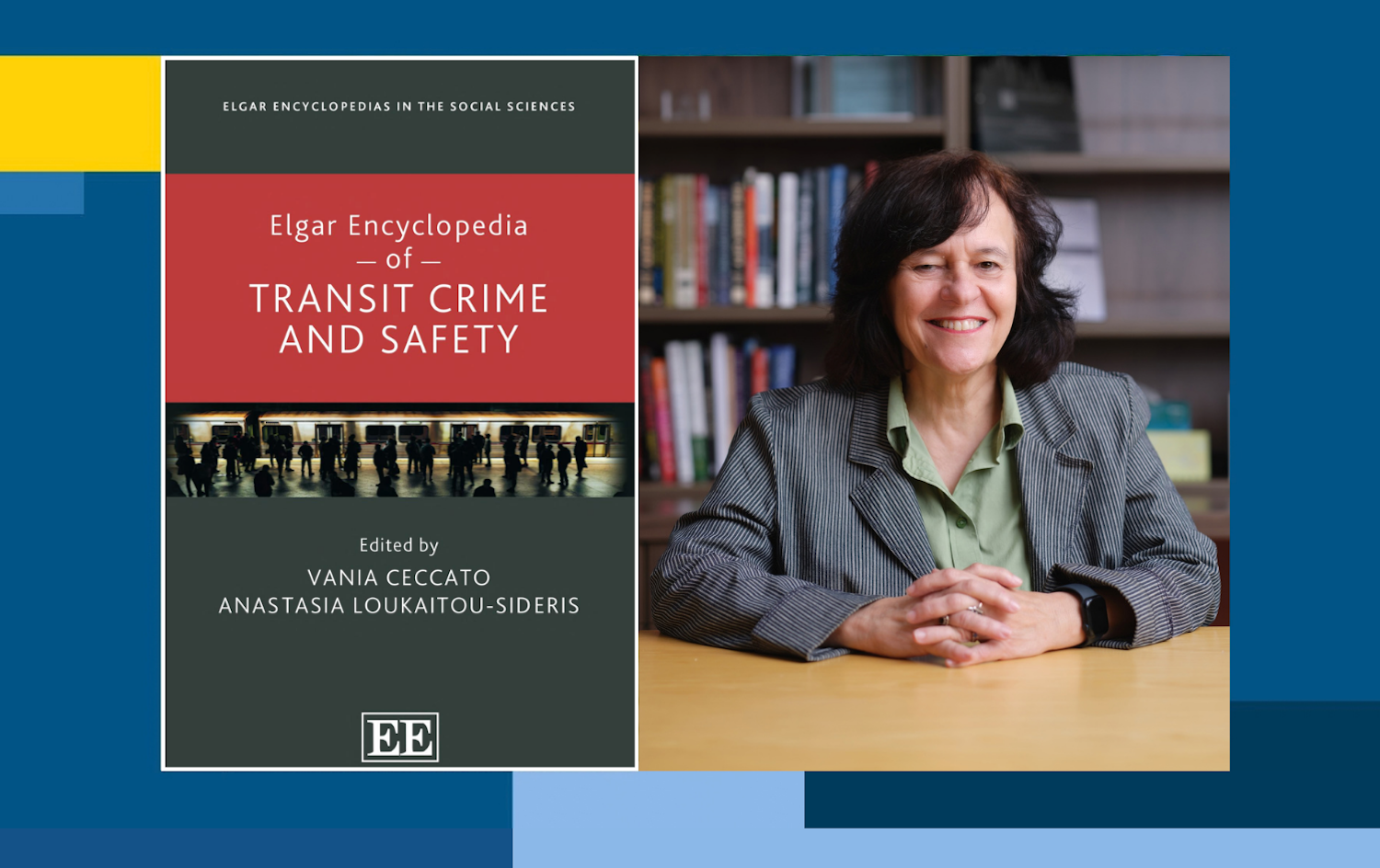
A new book co-edited by UCLA Luskin Dean Anastasia Loukaitou-Sideris provides a comprehensive overview of crime on transit systems around the world, highlighting safety as a key component of transit sustainability.
“Elgar Encyclopedia of Transit Crime and Safety” is an authoritative reference source that examines the social, spatial, and behavioral factors that shape riders’ experiences. Loukaitou-Sideris and scholar Vania Ceccato co-edited the volume and authored chapters that reflect their expertise in this arena that affects millions of transit riders worldwide.
“This is the kind of project that reflects work I’ve cared about for a long time — understanding how the design of our transit systems shapes whether riders, especially women, older adults, and other vulnerable groups, actually feel safe using them,” said Loukaitou-Sideris, a distinguished professor of urban planning.
The encyclopedia examines crimes against individuals, including assault, robbery, harassment, and hate crimes, and also behaviors targeting property and the transit system itself. It considers settings including trains, buses, ferries, ride-shares, and self-driven vehicles, as well as locales including stations, platforms, and pedestrian tunnels.
One of the chapters authored by Loukaitou-Sideris examines the built environment surrounding bus stops and stations, and how safety can be improved through effective urban design. One section of the encyclopedia is devoted to security measures such as crime-mapping, drones, facial recognition, and bystander training.
“I hope that this book becomes an important resource for planners and transit agencies working to make our systems safer and more welcoming for everyone,” Loukaitou-Sideris said.