Skip to content
  • Students & Alumni
    • Career Services
    • Alumni Relations
    • Student Support
    • Graduate Resource Library
    • For Employers
  • News
  • Events
    • Events Calendar
    • Luskin Summit
    • Luskin Lecture Series
    • California Policy Briefing
    • Commencement
  • Students & Alumni
    • Career Services
    • Alumni Relations
    • Student Support
    • Graduate Resource Library
    • For Employers
  • News
  • Events
    • Events Calendar
    • Luskin Summit
    • Luskin Lecture Series
    • California Policy Briefing
    • Commencement
Giving
UCLA Luskin School of Public Affairs Logo
  • Academics
    Departments & Programs
    • Global Public Affairs
    • Public Policy
    • Real Estate Development
    • Social Welfare
    • Urban Planning
    • Undergraduate Program
    • Global Public Affairs
    • Public Policy
    • Real Estate Development
    • Social Welfare
    • Urban Planning
    • Undergraduate Program
    Graduate Degrees
    • Master of Global Public Affairs (MGPA)
    • Master of Public Policy (MPP)
    • Master of Real Estate Development (MRED)
    • Master of Social Welfare (MSW)
    • Master of Urban and Regional Planning (MURP)
    • PhD in Social Welfare
    • PhD in Urban Planning
    • Master of Global Public Affairs (MGPA)
    • Master of Public Policy (MPP)
    • Master of Real Estate Development (MRED)
    • Master of Social Welfare (MSW)
    • Master of Urban and Regional Planning (MURP)
    • PhD in Social Welfare
    • PhD in Urban Planning
    Undergraduate Degrees
    • BA in Public Affairs
    • Minor in Urban and Regional Studies
    • Minor in Gerontology
    • Minor in Public Affairs
    • BA in Public Affairs
    • Minor in Urban and Regional Studies
    • Minor in Gerontology
    • Minor in Public Affairs
    Professional Certificates
    • AI in Public Affairs Certificate
    • AI in Public Affairs Certificate
  • Admissions
    Program Specific Admissions
    • Global Public Affairs
    • Public Policy
    • Real Estate Development
    • Social Welfare
    • Urban Planning
    • Undergraduate Program
    • Global Public Affairs
    • Public Policy
    • Real Estate Development
    • Social Welfare
    • Urban Planning
    • Undergraduate Program
  • Faculty
    Our Faculty
    • All Faculty
    • Public Policy
    • Real Estate Development
    • Social Welfare
    • Urban Planning
    • All Faculty
    • Public Policy
    • Real Estate Development
    • Social Welfare
    • Urban Planning
    Leadership
    • Our Dean
    • Board of Advisors
    • Faculty Executive Committee
    • Our Dean
    • Board of Advisors
    • Faculty Executive Committee
  • Research Centers
    • Agile Visual Analytics Lab (AVAL)

      Empowers stakeholders with data to make informed decisions for children, families, and communities.

    • Berggruen Governance Index

      Evaluates the quality of political governance and democracy worldwide.

    • Center for Neighborhood Knowledge (CNK)

      Specializes in spatial analysis of socioeconomic disparities in neighborhoods.

    • Center for Policy Research on Aging (CPRA)

      Explores the societal and policy implications of an aging population.

    • Institute of Transportation Studies (ITS)

      Advances research, education, and meaningful civic engagement on transportation issues.

    • Institute on Inequality and Democracy

      Advances scholarship that confronts threats to democracy in America and around the world.

    • Latin American Cities Initiative

      Connects urban planning and policy networks across the Americas.

    • Latino Policy & Politics Institute (LPPI)

      Addresses policy challenges facing Latinos and communities of color.

    • Lewis Center for Regional Policy Studies

      Studying housing affordability and transportation equity in the L.A. region.

    • Los Angeles Education Research Institute (LAERI)

      Collaborates with schools to improve educational outcomes for L.A. students.

    • Luskin Center for Innovation

      Informing effective and equitable environmental policy that improves lives.

    • UCLA Voting Rights Project

      The flagship project for voting rights litigation and policy research.

    All Research Centers
  • Outcomes
Home / News / New Study Documents Lack of Economic Progress in South L.A. Over the Past 50 Years

New Study Documents Lack of Economic Progress in South L.A. Over the Past 50 Years

Researchers at UCLA Luskinโ€™s Center for Neighborhood Knowledge list inequities in wages, housing, education and transportation
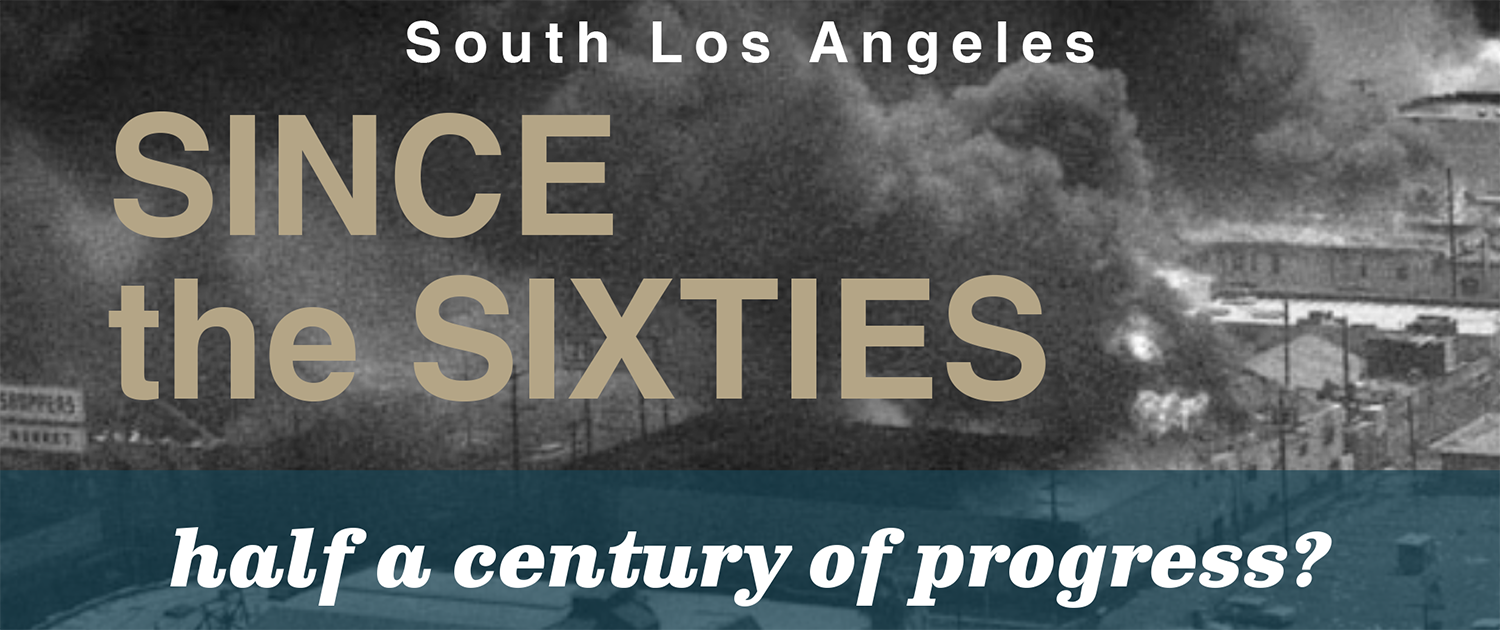
Detail of the report's cover
Detail of the report's cover.

Posted in

  • Public Policy, School of Public Affairs, Social Welfare, Urban Planning

Published on

  • February 28, 2018
  • economics, housing, poverty, violence

Share this Article

In the half-century since the Kerner Commissionโ€™s report on urban unrest, South Los Angeles has experienced little economic progress, according to a new study by the Center for Neighborhood Knowledge, part of UCLA Luskin.In 1960, South L.A. workers made 80 cents on the dollar compared to the average Los Angeles County worker. In the last 50 years, that gap has widened. Today, the average full-time, full-year worker in South L.A. earns about 60 cents on every dollar earned by the average county resident.โ€œThis report is a sobering snapshot of the inequalities that have persisted in South Los Angeles 50 years since the 1968 report,โ€ said Paul Ong, director of the Center for Neighborhood Knowledge. ย Disparitiesย in earnings are the main driver of income inequality. Earnings are critical in overall quality of life โ€” low earnings can translate into less access to necessities, amenities, and opportunities.Earnings in South L.A. have failed to catch up to county levels, according to the researchers. That widening pay gap is driven in part by a steady decline of male wages.South Los Angeles is home to 722,000 persons, and epitomizes the plight of inner-city neighborhoods. It is the site where frustrations of a marginalized and neglected community boiled over in 1965 Watts riots and 1992 civil unrest. These reactions to the lack of progress should not have been unexpected given the realities documented by this CNK report.In addition to earnings, the study also documents inequities in:HousingHomeownership, the principal mechanism for wealth accumulation for middle-class residents, is lower in South L.A. than the county and has declined over time. Today, fewer than one in three South L.A. residents own their home.The high demand for housing has translated not only to higher cost but also higher home values. After adjusting for inflation, the average home is priced at nearly three times as much today as itย was in 1960. This places financial strain on new buyers and puts ownership further out of reach for renters.TransportationCar ownership is critical in Los Angeles where, despite large investments in public transit, lacking a car can severely limit oneโ€™s access to job and educational opportunities.ย Availability of cars within households has improved over time; nonetheless, households in South LA are twice as likely to lack a car, according to the study. South LA residents remain three times as likely to rely on public transit for commuting.EducationEducational attainment is critical in preparing children to be successful and productive adults. However, public schools have continued to be โ€œseparate and unequal.โ€ Elementary school performance on standardized testing reveals persistent gaps between South LA and the most affluent neighborhoods in West L.A.Early childhood preparation can be critical toward the goal of fostering successful students. Fifty years ago, recommendations concerning education specifically prioritized the expansion of preschool programs. In 1960, preschool enrollment was virtually non-existent in both South L.A. and the county.In 1990, children in South L.A. were only half as likely as county children to be enrolled in a private preschool. This can be taken as an indicator of the wide gaps in the availability of resources for education to residents in South L.A. compared to the county. This gap has grown since then. In 2016, county children are four times as likely as South L.A. children to be enrolled in a private preschool.View the full report.
Technical noteThere are no definitive boundaries for South Los Angeles. Over time, the boundaries have shifted as the neighborhood has changed. This study is based on public use microdata areas (PUMAs), which are defined by the U.S. Census Bureau. These are reasonable approximations of the curfew area for the 1965 Watts Riot, the post-1992 Civil Unrest Rebuild L.A. zone, and the Los Angeles Times Neighborhood Mapping Projectโ€™s South Los Angeles area.All data, with the exception of school performance, come from PUMS samples. The 1960 data are extracted from IPUMS. Additional data come from tract-level statistics reported by the U.S. Census Bureau. Data on elementary school performance combine assessment scores from Californiaโ€™s Standardized Testing and Reporting with historical information of schools, reported in the 1965 McCone Report.
This project was supported by the following partners: the Haynes Foundation, the Institute on Inequality and Democracy at UCLA Luskin, the UCLA Lewis Center, the UCLA Office of Equity, Diversity, and Inclusion, the UCLA Luskin Center for History and Policy, the UCLA Institute for Research on Labor and Employment, Professor Manisha Shah, and the UCLA Asian American Studies Center.
Faculty Mentioned in this Article
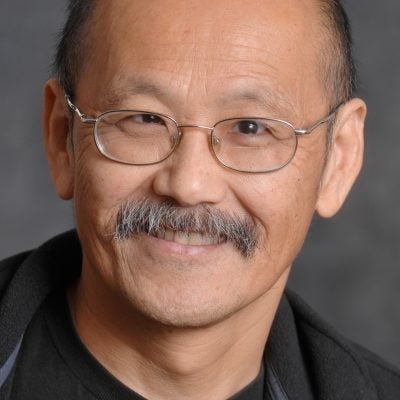
Paul Ong

Paul Ong

Research Professor and Director of the Center for Neighborhood Knowledge

Professor Ong has done research on the labor market status of minorities and immigrants, displaced high-tech workers, work and spatial/transportation...

Related Articles

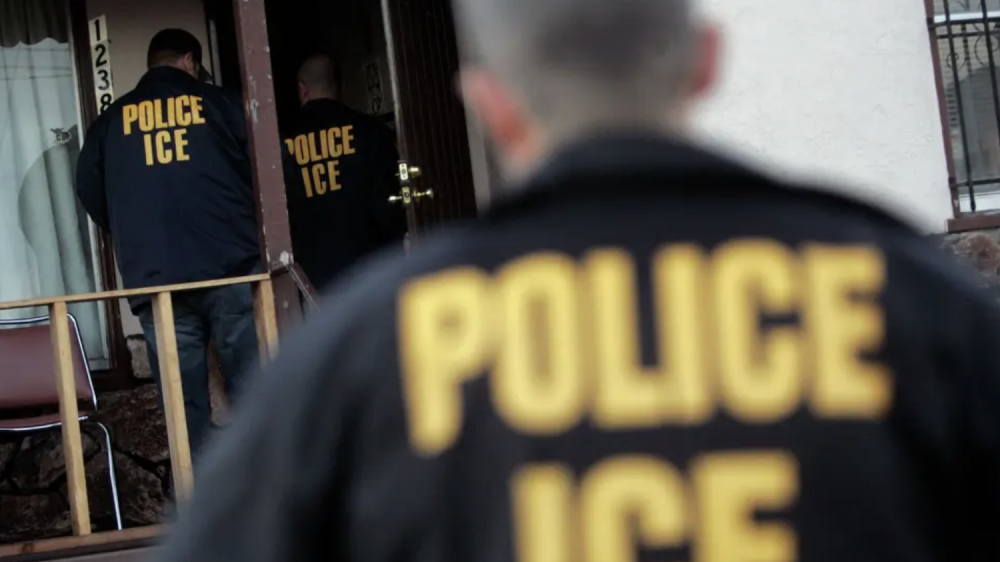
Officers in jackets that say " Police, ICE" enter a house

An Uptick in ICE Arrests Outside the Spotlight

September 2, 2026
Luskin in the News
Read More
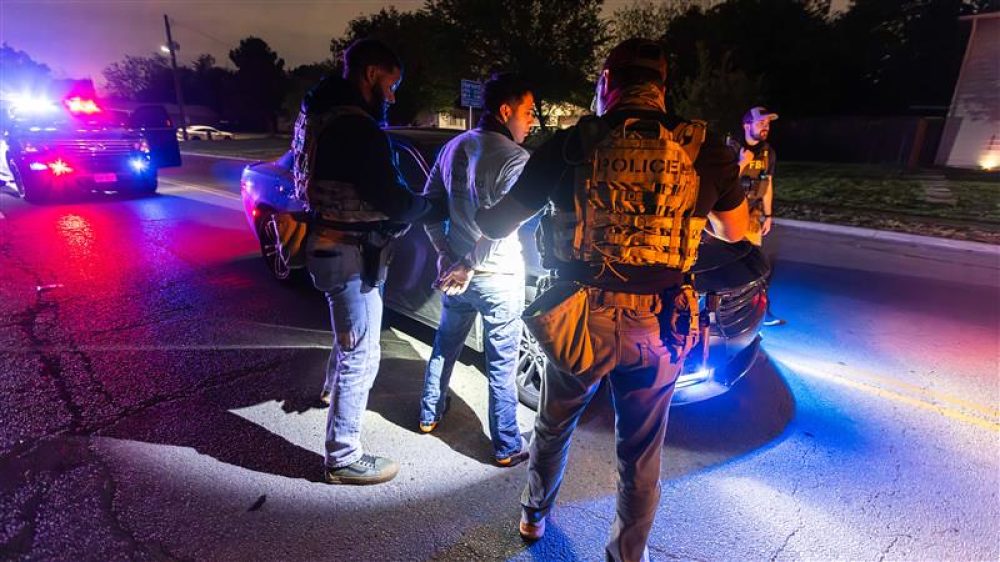
Immigration enforcement officers handcuff a man in the night, in front of a car in the middle of the road.

New Center for Neighborhood Knowledge Analysis Undercuts โ€œWorst of the Worstโ€ Deportation Claims

May 27, 2026
Luskin's Latest Blog
New UCLA research finds Latino ICE arrests surged while non-criminal immigrants increasingly became targets of enforcement...
Read More
US Census Image|Ong In the News

Ong on Asian Surname Growth Trends in the U.S.

April 23, 2026
Luskin in the News
Asian surnames are taking the lead as the fastest-growing surnames in the country and UCLA research...
Read More
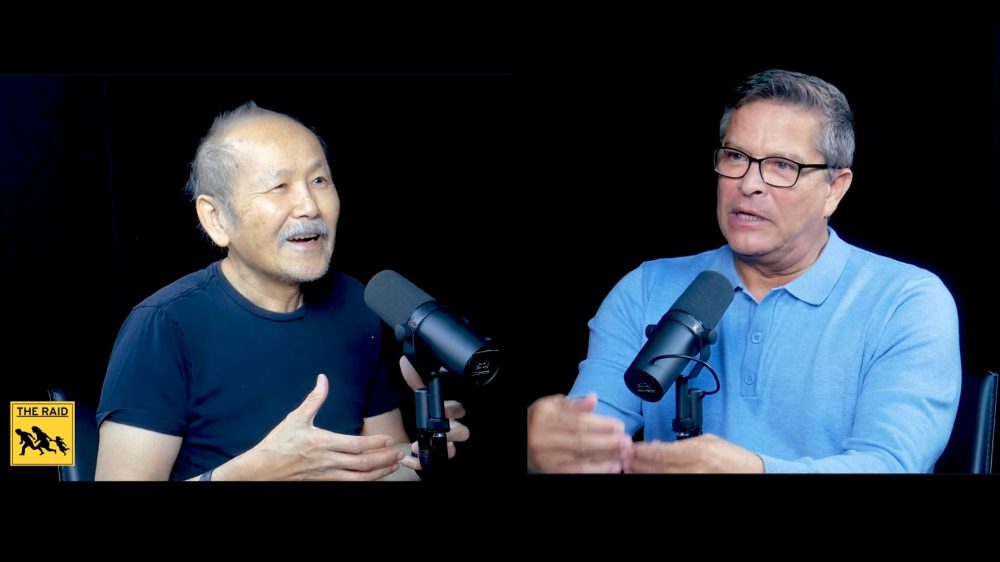
Website Header Imag (4)

Paul Ong on the Raid Podcast Talks Immigration Shifts and the Impact on Communities of Color

April 16, 2026
Luskin in the News
Paul Ong discusses ICE raids, immigration policy shifts, and the lasting fear and impact on communities...
Read More
Neighborhood destroyed by wildfire.

Ensuring Rebuilding Efforts Preserve Altadena’s Historically Black Identity

March 24, 2026
Luskin in the News
As Altadena works to recover after the Eaton Fire, homeowners express concerns about preserving the cultural...
Read More
Person in handcuffs.

Ong on the Current State of Immigration Enforcement

February 18, 2026
Luskin in the News
Paul Ong shares that the increasing arrests, detainments, and deportations of non criminals โ€œreflects a shift...
Read More
Learn more about UCLA Luskin

Find contact information and get answers to your questions.

Contact Us

Public Affairs Building
337 Charles E. Young Drive East
Los Angeles, California 90095

Linkedin Youtube Instagram Facebook X-twitter
Campus Resources
  • Map, Directions, Parking
  • Directory
  • Academic Calendar
  • Careers
  • Map, Directions, Parking
  • Directory
  • Academic Calendar
  • Careers
School Resources
  • About
  • Our Dean
  • Administration
  • Luskin School Intranet
  • Board of Advisors
  • Contact Us
  • Visit Us
  • About
  • Our Dean
  • Administration
  • Luskin School Intranet
  • Board of Advisors
  • Contact Us
  • Visit Us
UCLA logo
© 2026 Regents of the University of California
  • Emergency
  • Accessibility
  • Privacy & Terms of Use
  • Emergency
  • Accessibility
  • Privacy & Terms of Use
Facebook Instagram Linkedin X-twitter Youtube Threads
UCLA Luskin School of Public Affairs Logo
Academics
Departments
  • Global Public Affairs
  • Public Policy
  • Real Estate Development
  • Social Welfare
  • Urban Planning
  • Undergraduate Program
  • Global Public Affairs
  • Public Policy
  • Real Estate Development
  • Social Welfare
  • Urban Planning
  • Undergraduate Program
Graduate Programs
  • Master of Global Public Affairs (MGPA)
  • Master of Public Policy (MPP)
  • Master of Real Estate Development (MRED)
  • Master of Social Welfare (MSW)
  • Master of Urban and Regional Planning (MURP)
  • PhD in Social Welfare
  • PhD in Urban Planning
  • Master of Global Public Affairs (MGPA)
  • Master of Public Policy (MPP)
  • Master of Real Estate Development (MRED)
  • Master of Social Welfare (MSW)
  • Master of Urban and Regional Planning (MURP)
  • PhD in Social Welfare
  • PhD in Urban Planning
Undergraduate Programs
  • BA in Public Affairs
  • Minor in Urban and Regional Studies
  • Minor in Gerontology
  • Minor in Public Affairs
  • BA in Public Affairs
  • Minor in Urban and Regional Studies
  • Minor in Gerontology
  • Minor in Public Affairs
Professional Certificates
  • AI in Public Affairs Certificate
  • AI in Public Affairs Certificate
Admissions
Program Specific Admissions
  • Global Public Affairs
  • Public Policy
  • Real Estate Development
  • Social Welfare
  • Urban Planning
  • Undergraduate Program
  • Global Public Affairs
  • Public Policy
  • Real Estate Development
  • Social Welfare
  • Urban Planning
  • Undergraduate Program
Faculty
Our Faculty
  • All Faculty
  • Public Policy
  • Real Estate Development
  • Social Welfare
  • Urban Planning
  • All Faculty
  • Public Policy
  • Real Estate Development
  • Social Welfare
  • Urban Planning
Leadership
  • Our Dean
  • Board of Advisors
  • Faculty Executive Committee
  • Our Dean
  • Board of Advisors
  • Faculty Executive Committee
Research Centers
  • Agile Visual Analytics Lab (AVAL)

    Empowers stakeholders with data to make informed decisions for children, families, and communities.

  • Berggruen Governance Index

    Evaluates the quality of political governance and democracy worldwide.

  • Center for Neighborhood Knowledge (CNK)

    Specializes in spatial analysis of socioeconomic disparities in neighborhoods.

  • Center for Policy Research on Aging (CPRA)

    Explores the societal and policy implications of an aging population.

  • Institute of Transportation Studies (ITS)

    Advances research, education, and meaningful civic engagement on transportation issues.

  • Institute on Inequality and Democracy

    Advances scholarship that confronts threats to democracy in America and around the world.

  • Latin American Cities Initiative

    Connects urban planning and policy networks across the Americas.

  • Latino Policy & Politics Institute (LPPI)

    Addresses policy challenges facing Latinos and communities of color.

  • Lewis Center for Regional Policy Studies

    Studying housing affordability and transportation equity in the L.A. region.

  • Los Angeles Education Research Institute (LAERI)

    Collaborates with schools to improve educational outcomes for L.A. students.

  • Luskin Center for Innovation

    Informing effective and equitable environmental policy that improves lives.

  • UCLA Voting Rights Project

    The flagship project for voting rights litigation and policy research.

All Research Centers
Outcomes
Common Search Terms

Results will show as you type.