Skip to content
  • Students & Alumni
    • Overview
    • Career Services
    • Alumni Relations
    • Student Support
    • Graduate Resource Library
  • News
  • Events
    • Events Calendar
    • Luskin Summit
    • Luskin Lecture Series
    • California Policy Briefing
    • Commencement
  • Students & Alumni
    • Overview
    • Career Services
    • Alumni Relations
    • Student Support
    • Graduate Resource Library
  • News
  • Events
    • Events Calendar
    • Luskin Summit
    • Luskin Lecture Series
    • California Policy Briefing
    • Commencement
Giving
  • Academics
    Departments
    • Public Policy
    • Real Estate Development
    • Social Welfare
    • Undergraduate Program
    • Urban Planning
    • Public Policy
    • Real Estate Development
    • Social Welfare
    • Undergraduate Program
    • Urban Planning
    Graduate Programs
    • Master of Public Policy (MPP)
    • Master of Real Estate Development (MRED)
    • Master of Social Welfare (MSW)
    • Master of Urban and Regional Planning (MURP)
    • PhD in Social Welfare
    • PhD in Urban Planning
    • Master of Public Policy (MPP)
    • Master of Real Estate Development (MRED)
    • Master of Social Welfare (MSW)
    • Master of Urban and Regional Planning (MURP)
    • PhD in Social Welfare
    • PhD in Urban Planning
    Undergraduate Programs
    • BA in Public Affairs
    • Minor in Urban and Regional Studies
    • Minor in Gerontology
    • Minor in Public Affairs
    • BA in Public Affairs
    • Minor in Urban and Regional Studies
    • Minor in Gerontology
    • Minor in Public Affairs
    Professional Certificates
    • Data Analytics Certificate
    • Data Analytics Certificate
  • Admissions
    Program Specific Admissions
    • Public Policy
    • Real Estate Development
    • Social Welfare
    • Urban Planning
    • Undergraduate Program
    • Public Policy
    • Real Estate Development
    • Social Welfare
    • Urban Planning
    • Undergraduate Program
  • Faculty
    Our Faculty
    • All Faculty
    • Public Policy
    • Real Estate Development
    • Social Welfare
    • Urban Planning
    • All Faculty
    • Public Policy
    • Real Estate Development
    • Social Welfare
    • Urban Planning
    Leadership
    • Our Dean
    • Board of Advisors
    • Faculty Executive Committee
    • Our Dean
    • Board of Advisors
    • Faculty Executive Committee
  • Research Centers
    • Agile Visual Analytics Lab (AVAL):

      Uses data visualization to improve decision-making for family and child services.

    • Berggruen Governance Index

      Evaluates the quality of political governance and democracy worldwide.

    • Center for Neighborhood Knowledge (CNK)

      Specializes in spatial analysis of socioeconomic disparities in neighborhoods.

    • Center for Policy Research on Aging (CPRA)

      Explores the societal and policy implications of an aging population.

    • Agile Visual Analytics Lab (AVAL):

      Uses data visualization to improve decision-making for family and child services.

    • Berggruen Governance Index

      Evaluates the quality of political governance and democracy worldwide.

    • Center for Neighborhood Knowledge (CNK)

      Specializes in spatial analysis of socioeconomic disparities in neighborhoods.

    • Center for Policy Research on Aging (CPRA)

      Explores the societal and policy implications of an aging population.

    • Institute of Transportation Studies (ITS)

      A national leader in transportation policy and mobility research.

    • Institute on Inequality and Democracy

      Advances scholarship addressing displacement and dispossession in Los Angeles and beyond.

    • Latin American Cities Initiative

      Connects urban planning and policy networks across the Americas.

    • Latino Policy & Politics Institute (LPPI)

      Addresses policy challenges facing Latinos and communities of color.

    • Institute of Transportation Studies (ITS)

      A national leader in transportation policy and mobility research.

    • Institute on Inequality and Democracy

      Advances scholarship addressing displacement and dispossession in Los Angeles and beyond.

    • Latin American Cities Initiative

      Connects urban planning and policy networks across the Americas.

    • Latino Policy & Politics Institute (LPPI)

      Addresses policy challenges facing Latinos and communities of color.

    • Lewis Center for Regional Policy Studies

      Researches housing, transportation, and economic development in Southern California.

    • Los Angeles Education Research Institute (LAERI)

      Collaborates with schools to improve educational outcomes for L.A. students.

    • Luskin Center for Innovation (LCI)

      Focuses on environmental policy, clean energy, and climate justice.

    • UCLA Voting Rights Project

      The flagship project for voting rights litigation and policy research.

    • Lewis Center for Regional Policy Studies

      Researches housing, transportation, and economic development in Southern California.

    • Los Angeles Education Research Institute (LAERI)

      Collaborates with schools to improve educational outcomes for L.A. students.

    • Luskin Center for Innovation (LCI)

      Focuses on environmental policy, clean energy, and climate justice.

    • UCLA Voting Rights Project

      The flagship project for voting rights litigation and policy research.

    All Research Centers
  • Outcomes
Home / Q&A with Tristhan Lim: Public Affairs Minor Shaping Equitable Cities

Q&A with Tristhan Lim: Public Affairs Minor Shaping Equitable Cities

From GIS and transportation data to public policy and urban planning, a Luskin minor student reflects on how coursework connects cities, systems, and equity.
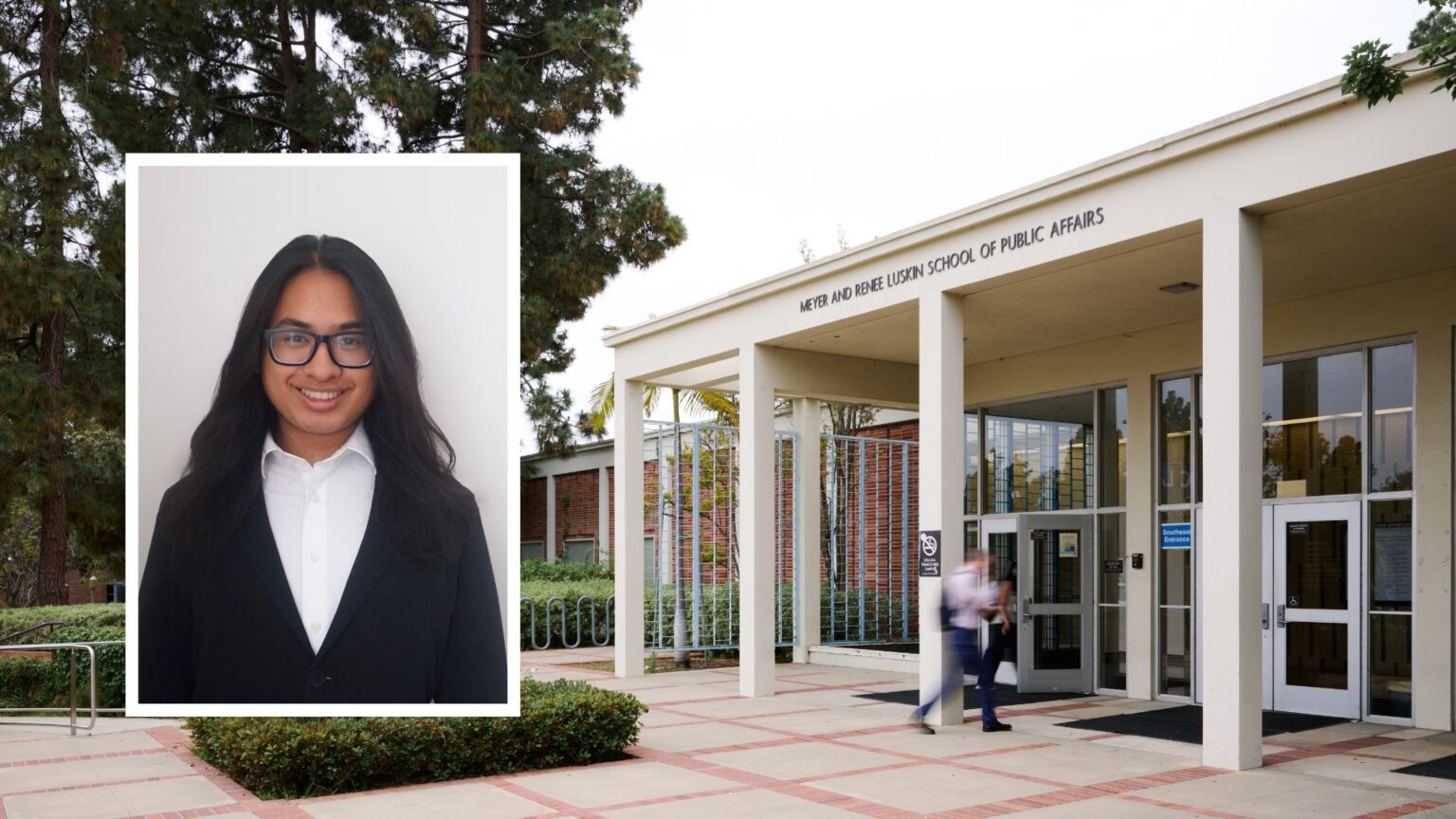
Headshot of UCLA student Tristhan Lim over a landscape shot of the public affairs building at UCLA.||||||||Tristhan Lim

Posted in

  • For Students, For Undergraduates, Luskin's Latest Blog, Urban Planning

Published on

  • June 11, 2026
  • GIS, Urban Planning

Share this Article

Why did you choose to pursue the public affairs minor?

I chose to pursue the Public Affairs minor because I wanted to understand the policy side of the urban issues I studied in my Geography classes. I have always cared about cities, transportation, housing, and infrastructure, but Public Affairs gave me a stronger framework for understanding how these decisions get made. The minor helped me connect mapping, data, and spatial analysis to questions of equity and access in our built environment. I wanted to understand why they happen, who they affect, and what kinds of policies can respond to them.
Tristhan Lim
Tristhan Lim is a Geography Major,  Public Affairs and Geospatial Information Systems & Technologies Minor

What does “urban planning” mean to you personally, and how has your time at Luskin shaped or changed that definition?

To me, urban planning means shaping cities in ways that improve people’s everyday lives. Before Luskin, I mostly understood planning through the physical city: streets, transit, housing, parks, and land use. My time at Luskin expanded that definition. I now see urban planning as deeply connected to political power, equity, access, community-building, and public decision-making. Luskin taught me that planning does not only ask what a city should look like. It also asks who gets access, who benefits, who faces displacement, and who gets included in decisions that shape the city.

Is there a specific class, professor, or project at Luskin that completely shifted your perspective on the field of public affairs?

I enjoyed PUB 113, Policy Analysis: Approaches to Addressing Social Problems, with Professor Covington in Spring 2025. This class shifted my perspective when thinking about policies and public programs, as it helped me understand how these ideas or projects move through bureaucracies, institutions, and management before they reach the public. I learned that agencies must interpret rules, manage resources, coordinate departments, and respond to political, financial, and administrative constraints before enacting a policy. That helped me see public affairs as more than policy ideas on paper. I got to learn that implementation depends on the people, systems, and institutions responsible for carrying out those decisions. 

This class also gave me useful context for my work on infrastructure projects with UCLA Transportation and the City of Los Angeles – Bureau of Street Services. When I work with transportation data, GIS maps, sidewalk infrastructure, or mobility projects, I can better understand the larger process behind those projects. Public infrastructure requires coordination between planners, engineers, departments, funding sources, and community needs. PUB 113 helped me see how slow, complex, and layered policy implementation can become, especially in a city like Los Angeles. I now approach infrastructure work with a stronger understanding of how policy, management, and bureaucracy shape what actually gets built, maintained, or improved.

How has your Luskin coursework helped you navigate the real-world complexities of LA’s transportation systems?

Luskin helped me understand that transportation is not a singular matter. Transportation connects to housing affordability, labor, race, disability access, public health, the built environment, and economic opportunity. My coursework helps me ask better questions when I work with that data. Instead of only asking which route works fastest, I think about who has access to reliable transportation, who faces longer commute burdens, and how transportation planning can either reduce or reproduce inequality (shoutout PUB AFF 155 – Economics and Equity in Transportation Systems with Professor Bills)

Can you explain what you do as a Geographic Information Systems Intern for the City of Los Angeles and a Transportation Planning Intern for UCLA? What does a typical day look like for you?

As a Geographic Information Systems Intern for the City of Los Angeles, I work with spatial data to support city projects. My work includes cleaning datasets, creating maps, analyzing infrastructure, and using GIS tools to help visualize urban conditions. A lot of the work involves turning raw data into maps, dashboards, and visuals that planners, engineers, and decision-makers can use. An interesting project I am currently working on right now is analyzing which streets in Los Angeles should receive cool pavement to help reduce urban heat!
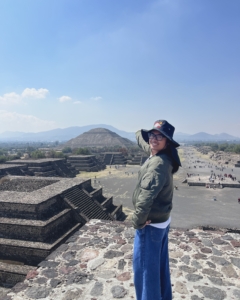
As a Transportation Planning Intern for UCLA, specifically in the Mobility and Traffic Systems unit, I support projects related to campus mobility and transportation behavior. I work with transportation data, commute/mobility patterns, GIS maps, dashboards, and reports that help UCLA understand how students, staff, and faculty move to and around campus. A typical day might include cleaning transportation data, building a map in ArcGIS, updating a dashboard, analyzing survey results, or preparing visuals for a report. I enjoy this work because it combines technical GIS skills with real planning questions about mobility, access, safety, and how people experience the campus environment.


How do you balance a demanding academic schedule, a city internship, and your extracurricular commitments?

I balance everything by being clear about my priorities. Work experience in my field matters a lot to me, so I try to structure my schedule around school and internships first. I use my calendar heavily, break big assignments into smaller tasks, and try not to wait until the last minute when I know my work schedule will get busy. I have also learned that balance does not always mean doing everything equally; sometimes school takes priority, sometimes work takes priority, and sometimes I need to step back from extracurriculars. The biggest thing has been learning how to manage my time without overcommitting. 

Where do you see yourself in 5 or 10 years? What kind of impact do you ultimately want to make through your career?

In 5 to 10 years, I see myself pursuing a master’s in urban planning or master’s in GIS. Career-wise, I want to work in a job that combines GIS, planning, and urban analytics. I want to use data and mapping to make cities more accessible, sustainable, and equitable. Long term, I hope to work on projects that improve transportation systems, reduce barriers to mobility, and help communities access better infrastructure and public resources. 

What advice would you give to other Luskin students?

My advice would be to take advantage of every opportunity to connect coursework with real-world experience. Public affairs can feel very broad. Internships, projects, and campus work can help you figure out what issues you want to focus on. I would also tell students not to underestimate technical skills. Learning GIS, data analysis, writing, and visualization can make your public affairs background even stronger. 


Related Articles

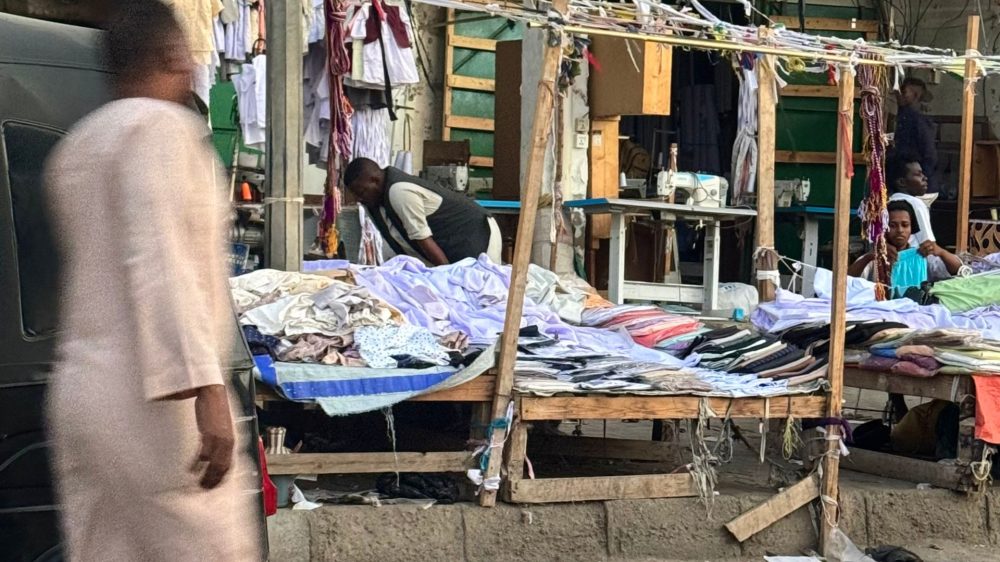
Merchants and vendors at Port Sundan, Sudan, with a man walk across the street

Summer Spotlight: Muram Ibrahim Explores Urban Planning in Post-Conflict Port Sudan

August 11, 2026
Luskin's Latest Blog

This summer, Muram Ibrahim MURP ’27 worked with the Municipal Office of Planning in Port Sudan,...

Read More
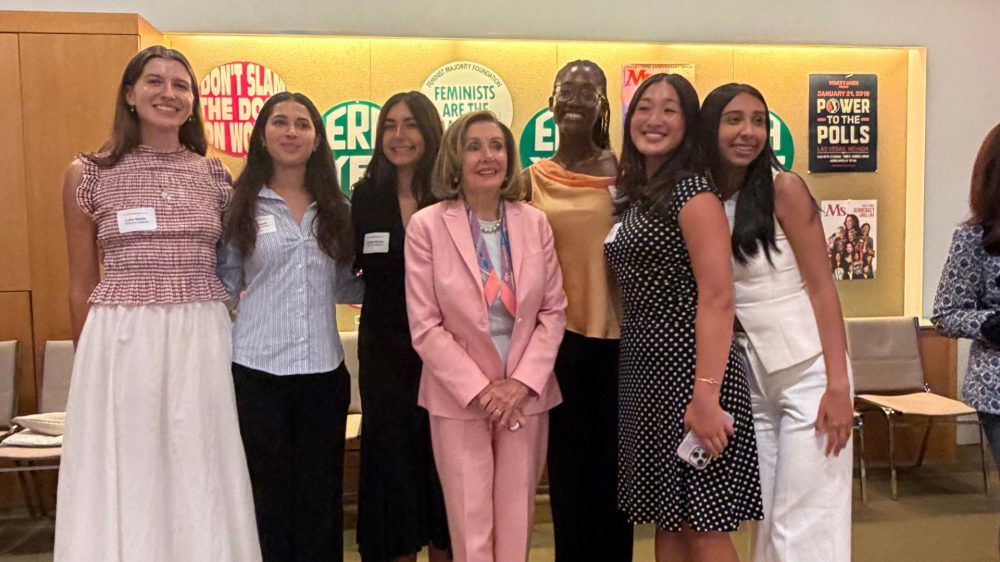
Luka Marks stands with Nancy Pelosi and group of women at Feminist Majority Foundation|Luka Marks Stands in front of wall holding up a poster that says Ms. This is what democracy looks like.

Summer Spotlight: Luka Marks Champions Reproductive Justice at the Feminist Majority Foundation

August 7, 2026
Luskin's Latest Blog
UCLA MPP student Luka Marks reflects on her Feminist Majority Foundation internship supporting reproductive justice, research...
Read More
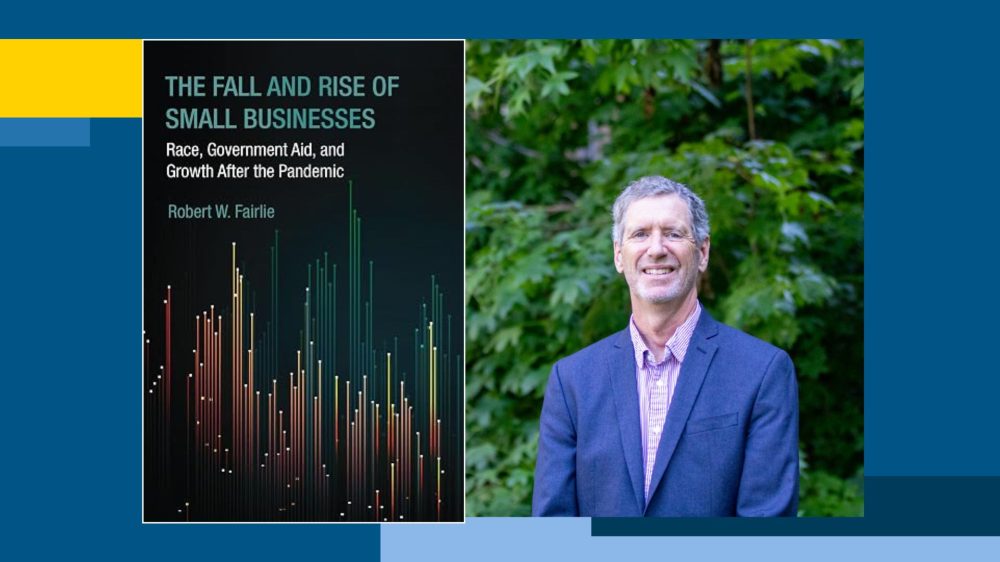
Headshot of Robert Fairlie with cover of his new book the Fall and Rise of Small Businesses.

New Book Examines Small Business Recovery and Racial Equity After the Pandemic

August 7, 2026
Luskin's Latest Blog
UCLA Luskin Professor Robert Fairlie explores how government aid, entrepreneurship and racial inequality shaped small business...
Read More
Photo of Port in South Africa with boats on the harbor and a ferris wheel far away on the right

Summer Spotlight: Cooper Emmott Explores Housing and Spatial Justice in South Africa

August 4, 2026
Luskin's Latest Blog
UCLA MURP student Cooper Emmott reflects on his Cape Town internship advancing housing, land policy and...
Read More
Learn more about UCLA Luskin

Find contact information and get answers to your questions.

Contact Us

Public Affairs Building
337 Charles E. Young Drive East
Los Angeles, California 90095

Linkedin Youtube Instagram Facebook X-twitter
Campus Resources
  • Map, Directions, Parking
  • Directory
  • Academic Calendar
  • Careers
  • Map, Directions, Parking
  • Directory
  • Academic Calendar
  • Careers
School Resources
  • About
  • Our Dean
  • Administration
  • Board of Advisors
  • Contact Us
  • Visit Us
  • About
  • Our Dean
  • Administration
  • Board of Advisors
  • Contact Us
  • Visit Us
© 2026 Regents of the University of California
  • Emergency
  • Accessibilty
  • Privacy & Terms of Use
  • Emergency
  • Accessibilty
  • Privacy & Terms of Use
Facebook Instagram Linkedin X-twitter Youtube Threads
Academics
Departments
  • Public Policy
  • Real Estate Development
  • Social Welfare
  • Undergraduate Program
  • Urban Planning
  • Public Policy
  • Real Estate Development
  • Social Welfare
  • Undergraduate Program
  • Urban Planning
Graduate Programs
  • Master of Public Policy (MPP)
  • Master of Real Estate Development (MRED)
  • Master of Social Welfare (MSW)
  • Master of Urban and Regional Planning (MURP)
  • PhD in Social Welfare
  • PhD in Urban Planning
  • Master of Public Policy (MPP)
  • Master of Real Estate Development (MRED)
  • Master of Social Welfare (MSW)
  • Master of Urban and Regional Planning (MURP)
  • PhD in Social Welfare
  • PhD in Urban Planning
Undergraduate Programs
  • BA in Public Affairs
  • Minor in Urban and Regional Studies
  • Minor in Gerontology
  • Minor in Public Affairs
  • BA in Public Affairs
  • Minor in Urban and Regional Studies
  • Minor in Gerontology
  • Minor in Public Affairs
Professional Certificates
  • Data Analytics Certificate
  • Data Analytics Certificate
Admissions
Program Specific Admissions
  • Public Policy
  • Real Estate Development
  • Social Welfare
  • Urban Planning
  • Undergraduate Program
  • Public Policy
  • Real Estate Development
  • Social Welfare
  • Urban Planning
  • Undergraduate Program
Faculty
Our Faculty
  • All Faculty
  • Public Policy
  • Real Estate Development
  • Social Welfare
  • Urban Planning
  • All Faculty
  • Public Policy
  • Real Estate Development
  • Social Welfare
  • Urban Planning
Leadership
  • Our Dean
  • Board of Advisors
  • Faculty Executive Committee
  • Our Dean
  • Board of Advisors
  • Faculty Executive Committee
Research Centers
  • Agile Visual Analytics Lab (AVAL):

    Uses data visualization to improve decision-making for family and child services.

  • Berggruen Governance Index

    Evaluates the quality of political governance and democracy worldwide.

  • Center for Neighborhood Knowledge (CNK)

    Specializes in spatial analysis of socioeconomic disparities in neighborhoods.

  • Center for Policy Research on Aging (CPRA)

    Explores the societal and policy implications of an aging population.

  • Agile Visual Analytics Lab (AVAL):

    Uses data visualization to improve decision-making for family and child services.

  • Berggruen Governance Index

    Evaluates the quality of political governance and democracy worldwide.

  • Center for Neighborhood Knowledge (CNK)

    Specializes in spatial analysis of socioeconomic disparities in neighborhoods.

  • Center for Policy Research on Aging (CPRA)

    Explores the societal and policy implications of an aging population.

  • Institute of Transportation Studies (ITS)

    A national leader in transportation policy and mobility research.

  • Institute on Inequality and Democracy

    Advances scholarship addressing displacement and dispossession in Los Angeles and beyond.

  • Latin American Cities Initiative

    Connects urban planning and policy networks across the Americas.

  • Latino Policy & Politics Institute (LPPI)

    Addresses policy challenges facing Latinos and communities of color.

  • Institute of Transportation Studies (ITS)

    A national leader in transportation policy and mobility research.

  • Institute on Inequality and Democracy

    Advances scholarship addressing displacement and dispossession in Los Angeles and beyond.

  • Latin American Cities Initiative

    Connects urban planning and policy networks across the Americas.

  • Latino Policy & Politics Institute (LPPI)

    Addresses policy challenges facing Latinos and communities of color.

  • Lewis Center for Regional Policy Studies

    Researches housing, transportation, and economic development in Southern California.

  • Los Angeles Education Research Institute (LAERI)

    Collaborates with schools to improve educational outcomes for L.A. students.

  • Luskin Center for Innovation (LCI)

    Focuses on environmental policy, clean energy, and climate justice.

  • UCLA Voting Rights Project

    The flagship project for voting rights litigation and policy research.

  • Lewis Center for Regional Policy Studies

    Researches housing, transportation, and economic development in Southern California.

  • Los Angeles Education Research Institute (LAERI)

    Collaborates with schools to improve educational outcomes for L.A. students.

  • Luskin Center for Innovation (LCI)

    Focuses on environmental policy, clean energy, and climate justice.

  • UCLA Voting Rights Project

    The flagship project for voting rights litigation and policy research.

All Research Centers
Outcomes
Common Search Terms

Results will show as you type.