
Skip to content
  • Students & Alumni
    • Career Services
    • Alumni Relations
    • Student Support
    • Graduate Resource Library
    • For Employers
  • News
  • Events
    • Events Calendar
    • Luskin Summit
    • Luskin Lecture Series
    • California Policy Briefing
    • Commencement
  • Students & Alumni
    • Career Services
    • Alumni Relations
    • Student Support
    • Graduate Resource Library
    • For Employers
  • News
  • Events
    • Events Calendar
    • Luskin Summit
    • Luskin Lecture Series
    • California Policy Briefing
    • Commencement
Giving
UCLA Luskin School of Public Affairs Logo
  • Academics
    Departments & Programs
    • Global Public Affairs
    • Public Policy
    • Real Estate Development
    • Social Welfare
    • Urban Planning
    • Undergraduate Program
    • Global Public Affairs
    • Public Policy
    • Real Estate Development
    • Social Welfare
    • Urban Planning
    • Undergraduate Program
    Graduate Degrees
    • Master of Global Public Affairs (MGPA)
    • Master of Public Policy (MPP)
    • Master of Real Estate Development (MRED)
    • Master of Social Welfare (MSW)
    • Master of Urban and Regional Planning (MURP)
    • PhD in Social Welfare
    • PhD in Urban Planning
    • Master of Global Public Affairs (MGPA)
    • Master of Public Policy (MPP)
    • Master of Real Estate Development (MRED)
    • Master of Social Welfare (MSW)
    • Master of Urban and Regional Planning (MURP)
    • PhD in Social Welfare
    • PhD in Urban Planning
    Undergraduate Degrees
    • BA in Public Affairs
    • Minor in Urban and Regional Studies
    • Minor in Gerontology
    • Minor in Public Affairs
    • BA in Public Affairs
    • Minor in Urban and Regional Studies
    • Minor in Gerontology
    • Minor in Public Affairs
    Professional Certificates
    • AI in Public Affairs Certificate
    • AI in Public Affairs Certificate
  • Admissions
    Program Specific Admissions
    • Global Public Affairs
    • Public Policy
    • Real Estate Development
    • Social Welfare
    • Urban Planning
    • Undergraduate Program
    • Global Public Affairs
    • Public Policy
    • Real Estate Development
    • Social Welfare
    • Urban Planning
    • Undergraduate Program
  • Faculty
    Our Faculty
    • All Faculty
    • Public Policy
    • Real Estate Development
    • Social Welfare
    • Urban Planning
    • All Faculty
    • Public Policy
    • Real Estate Development
    • Social Welfare
    • Urban Planning
    Leadership
    • Our Dean
    • Board of Advisors
    • Faculty Executive Committee
    • Our Dean
    • Board of Advisors
    • Faculty Executive Committee
  • Research Centers
    • Agile Visual Analytics Lab (AVAL)

      Empowers stakeholders with data to make informed decisions for children, families, and communities.

    • Berggruen Governance Index

      Evaluates the quality of political governance and democracy worldwide.

    • Center for Neighborhood Knowledge (CNK)

      Specializes in spatial analysis of socioeconomic disparities in neighborhoods.

    • Center for Policy Research on Aging (CPRA)

      Explores the societal and policy implications of an aging population.

    • Institute of Transportation Studies (ITS)

      Advances research, education, and meaningful civic engagement on transportation issues.

    • Institute on Inequality and Democracy

      Advances scholarship that confronts threats to democracy in America and around the world.

    • Latin American Cities Initiative

      Connects urban planning and policy networks across the Americas.

    • Latino Policy & Politics Institute (LPPI)

      Addresses policy challenges facing Latinos and communities of color.

    • Lewis Center for Regional Policy Studies

      Studying housing affordability and transportation equity in the L.A. region.

    • Los Angeles Education Research Institute (LAERI)

      Collaborates with schools to improve educational outcomes for L.A. students.

    • Luskin Center for Innovation

      Informing effective and equitable environmental policy that improves lives.

    • UCLA Voting Rights Project

      The flagship project for voting rights litigation and policy research.

    All Research Centers
  • Outcomes
Home / News / UCLA Researchers Seek Juvenile Justice Alternatives for Children Under 12

UCLA Researchers Seek Juvenile Justice Alternatives for Children Under 12

UC study indicates that a minimum-age standard is needed to protect California children from prosecution in the juvenile court system
A recent University of California study offers a powerful rationale for shielding children 11 years old and younger from prosecution and incarceration in the
A recent University of California study offers a powerful rationale for shielding children 11 years old and younger from prosecution and incarceration in the state’s juvenile justice system. Photo by Stan Paul

Posted in

  • School of Public Affairs, Social Welfare

Published on

  • April 11, 2017
  • California Legislature, children, criminal justice, juvenile justice

Share this Article

By Stan Paul

Dr. Elizabeth Barnert, left, and Laura Abrams. Photo by George Foulsham

Although Laura Abrams and Dr. Elizabeth Barnert come from opposite ends of the UCLA campus, their work in their respective academic professions meets at the intersection of health and juvenile justice.

A recent University of California study led by Abrams, professor of social welfare in the UCLA Luskin School of Public Affairs, and Barnert, an assistant professor of pediatrics in the David Geffen School of Medicine at UCLA, offers a powerful rationale for shielding children 11 years old and younger from prosecution and incarceration in the state’s juvenile justice system.

“Children in the juvenile justice system literally meet the definition of children with special health care needs,” said Barnert, who worked with Abrams as members of a team affiliated with the University of California Criminal Justice and Health Consortium. Prior to their study, which was recently published in International Journal of Prisoner Health, the issue in California was not on anyone’s radar, they said.

“Kids in conflict with the law are kids that typically have unmet health needs. We see a lot of undiagnosed depression, ADHD and learning disabilities — or absentee parents who can’t support their children due to working three jobs, deportation, imprisonment or substance abuse,” Barnert said. “When we prosecute these children or lock them away, we’re putting them in a system that traumatizes them further and often makes their problems worse.”

The UCLA study brought together UC experts from social welfare, medicine, psychology and psychiatry, law and criminology, as well as community partners from organizations such as the Children’s Defense Fund-California and the National Center for Youth Law.

“Our findings provide a rationale for why California should have a minimum age for entering the juvenile justice system and why children 11 and younger should be excluded,” Barnert said. “The study recommendations are based on international human rights standards, guidelines from organizations like the American Academy of Pediatricians, and medical evidence that children’s brains do not fully mature until their mid-20s.”

Added Abrams: “The United Nations Convention on the Rights of the Child has established a standard on children in conflict with the law. The convention states that every country should have a minimum age of criminal responsibility, or what we refer to as a minimum age of juvenile justice jurisdiction. The United States does not have this type of law at the federal level, however, so it is up to the states to determine.”

Abrams pointed out that protections for minors already built into current state law are based on the capacity or the intent to commit a crime, as well as the competency to stand trial. California’s 58 counties, however, set many of their own juvenile probation standards. Therefore, “there’s no way to insure, without a minimum-age law, that state laws around capacity and competency are being implemented fairly and without geographic or racial disparities. There is no statewide oversight of these mechanisms for protecting children,” Abrams said.

Findings and recommendations from the UC study and related policy briefs prepared by the researchers include:

  • Children should be held less culpable under criminal law, given their expected developmental immaturity, as repeatedly recognized in recent U.S. Supreme Court decisions.
  • Children have a diminished capacity to make intentional decisions regarding participation in crimes or to understand that an act was morally wrong.
  • Children have less developed abilities to understand court proceedings and meaningfully participate, emotionally or cognitively, in working with attorneys to wage their own defense.

California currently has no law that specifies a minimum age for prosecuting and imprisoning minors. But a new state senate bill, SB 439, which incorporates the research and recommendations in the UC study, would change that by amending sections 601 and 602 of the California Welfare and Institutions Code related to juvenile court jurisdiction. In particular, the bill would substitute current references to “any person under 18 years of age” with language specifying individuals “ages 12 to 18.”

In its first hearing on April 4, the senate’s committee on public safety passed the bill, which was then referred to the senate appropriations committee, the next step in the legislative process. The bill is part of a package of criminal justice reform bills put forth by the legislators in March.

Proposed amendments and revisions to SB 439 can be found online.

Related Articles

Downtown LA just after sunset during blue hour, captured from a helicopter point of view with lighted City Hall building.

UCLA Grants Deepen Ties to the L.A. Community

March 17, 2025
Public Policy
Projects by Luskin faculty will build collaboration among scholars, students and local partners....
Read More
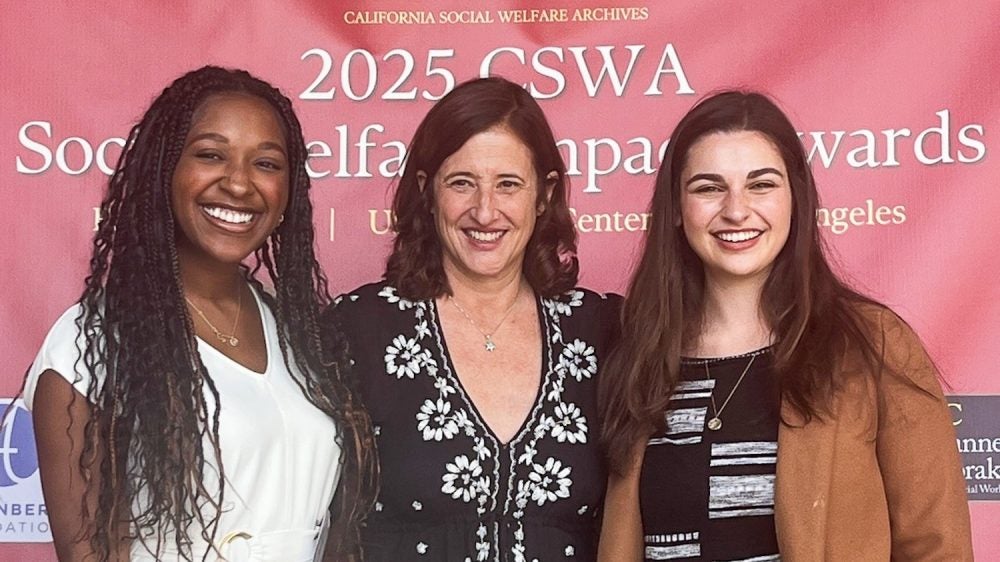
Professor Laura Abrams, center, at the CSWA ceremony with her doctoral students Taylor Reed, left, and Julia Lesnick

Honors for UCLA Luskin Social Welfare Professor and Alumna

March 4, 2025
Luskin's Latest Blog
Professor Laura Abrams and alumna Aurea Montes-Rodriguez are recognized by the California Social Welfare Archives....
Read More
LAbrmsIncarc1

Abrams on the Decline of Juvenile Incarceration in the United States

February 26, 2025
Luskin in the News
People who are incarcerated at young ages for longer periods of time are less likely to...
Read More
Two people seated in circle of people

Abrams on Promoting Justice for Troubled Youth

February 7, 2025
Luskin in the News
At universities around the country, social workers are being trained in more holistic strategies and practices...
Read More
Photo by fotojog/iStock

New Study Provides First Nationwide Window on Juvenile Lifer Population

June 13, 2024
School of Public Affairs
New study is the first to supply concrete numbers and a full demographic profile of the...
Read More
photo of woman with blond hair in front of flowering plants

Poco Kernsmith Appointed New Chair of Social Welfare

April 29, 2024
Alumni
UCLA Luskin alumna will return to her doctoral alma mater this summer as chair and professor....
Read More
Learn more about UCLA Luskin

Find contact information and get answers to your questions.

Contact Us

Public Affairs Building
337 Charles E. Young Drive East
Los Angeles, California 90095

Linkedin Youtube Instagram Facebook X-twitter
Campus Resources
  • Map, Directions, Parking
  • Directory
  • Academic Calendar
  • Careers
  • Map, Directions, Parking
  • Directory
  • Academic Calendar
  • Careers
School Resources
  • About
  • Our Dean
  • Administration
  • Luskin School Intranet
  • Board of Advisors
  • Contact Us
  • Visit Us
  • About
  • Our Dean
  • Administration
  • Luskin School Intranet
  • Board of Advisors
  • Contact Us
  • Visit Us
UCLA logo
© 2026 Regents of the University of California
  • Emergency
  • Accessibility
  • Privacy & Terms of Use
  • Emergency
  • Accessibility
  • Privacy & Terms of Use
Facebook Instagram Linkedin X-twitter Youtube Threads
UCLA Luskin School of Public Affairs Logo
Academics
Departments
  • Global Public Affairs
  • Public Policy
  • Real Estate Development
  • Social Welfare
  • Urban Planning
  • Undergraduate Program
  • Global Public Affairs
  • Public Policy
  • Real Estate Development
  • Social Welfare
  • Urban Planning
  • Undergraduate Program
Graduate Programs
  • Master of Global Public Affairs (MGPA)
  • Master of Public Policy (MPP)
  • Master of Real Estate Development (MRED)
  • Master of Social Welfare (MSW)
  • Master of Urban and Regional Planning (MURP)
  • PhD in Social Welfare
  • PhD in Urban Planning
  • Master of Global Public Affairs (MGPA)
  • Master of Public Policy (MPP)
  • Master of Real Estate Development (MRED)
  • Master of Social Welfare (MSW)
  • Master of Urban and Regional Planning (MURP)
  • PhD in Social Welfare
  • PhD in Urban Planning
Undergraduate Programs
  • BA in Public Affairs
  • Minor in Urban and Regional Studies
  • Minor in Gerontology
  • Minor in Public Affairs
  • BA in Public Affairs
  • Minor in Urban and Regional Studies
  • Minor in Gerontology
  • Minor in Public Affairs
Professional Certificates
  • AI in Public Affairs Certificate
  • AI in Public Affairs Certificate
Admissions
Program Specific Admissions
  • Global Public Affairs
  • Public Policy
  • Real Estate Development
  • Social Welfare
  • Urban Planning
  • Undergraduate Program
  • Global Public Affairs
  • Public Policy
  • Real Estate Development
  • Social Welfare
  • Urban Planning
  • Undergraduate Program
Faculty
Our Faculty
  • All Faculty
  • Public Policy
  • Real Estate Development
  • Social Welfare
  • Urban Planning
  • All Faculty
  • Public Policy
  • Real Estate Development
  • Social Welfare
  • Urban Planning
Leadership
  • Our Dean
  • Board of Advisors
  • Faculty Executive Committee
  • Our Dean
  • Board of Advisors
  • Faculty Executive Committee
Research Centers
  • Agile Visual Analytics Lab (AVAL)

    Empowers stakeholders with data to make informed decisions for children, families, and communities.

  • Berggruen Governance Index

    Evaluates the quality of political governance and democracy worldwide.

  • Center for Neighborhood Knowledge (CNK)

    Specializes in spatial analysis of socioeconomic disparities in neighborhoods.

  • Center for Policy Research on Aging (CPRA)

    Explores the societal and policy implications of an aging population.

  • Institute of Transportation Studies (ITS)

    Advances research, education, and meaningful civic engagement on transportation issues.

  • Institute on Inequality and Democracy

    Advances scholarship that confronts threats to democracy in America and around the world.

  • Latin American Cities Initiative

    Connects urban planning and policy networks across the Americas.

  • Latino Policy & Politics Institute (LPPI)

    Addresses policy challenges facing Latinos and communities of color.

  • Lewis Center for Regional Policy Studies

    Studying housing affordability and transportation equity in the L.A. region.

  • Los Angeles Education Research Institute (LAERI)

    Collaborates with schools to improve educational outcomes for L.A. students.

  • Luskin Center for Innovation

    Informing effective and equitable environmental policy that improves lives.

  • UCLA Voting Rights Project

    The flagship project for voting rights litigation and policy research.

All Research Centers
Outcomes
Common Search Terms

Results will show as you type.