With Election Day just weeks away, Californians are preparing to weigh in on no fewer than 14 initiatives on the state ballot. Proposition 40, known as the Billionaire Tax, stands out if only for the amount of money poured into the campaigns on each side of the measure — upwards of $215 million, the vast majority spent by parties hoping to kill or neutralize the tax.
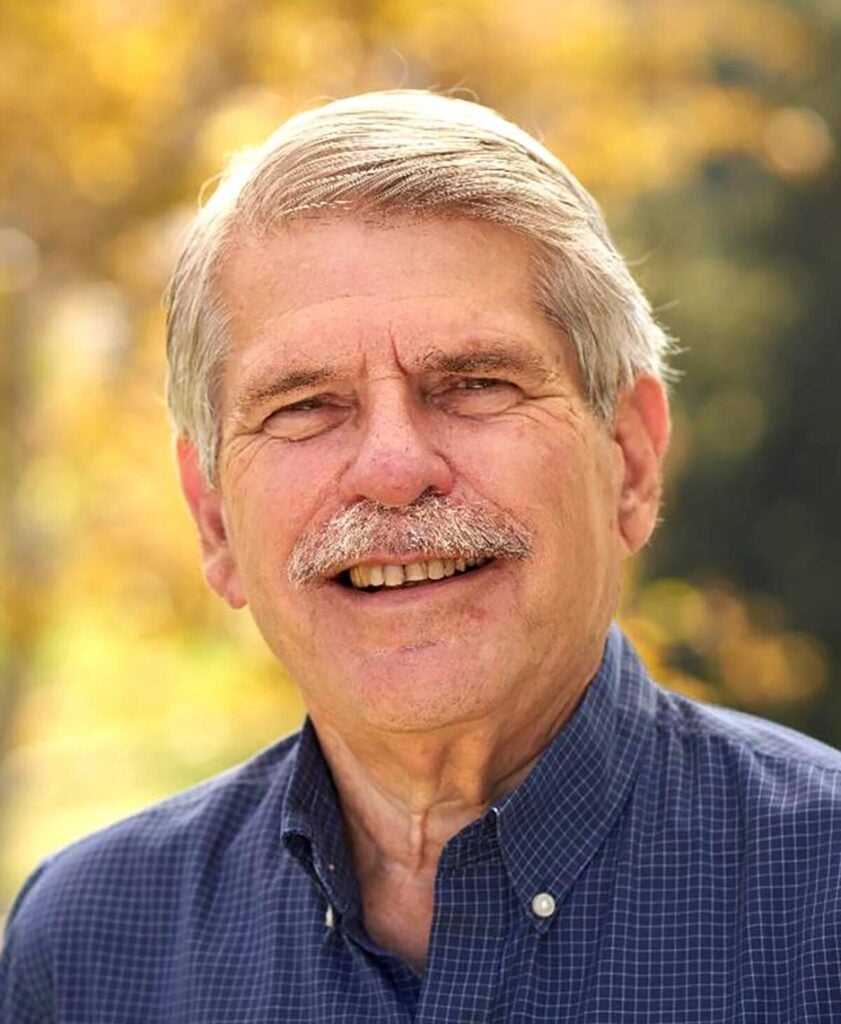
Drawing on his decades of public service, Zev Yaroslavsky, director of the Los Angeles Initiative at the UCLA Luskin School of Public Affairs, provided an overview and analysis of the issues surrounding the high-profile measure.
Elected to the Los Angeles City Council in 1976, at age 26, Yaroslavsky served for two decades before joining the Los Angeles County Board of Supervisors, where he served another two decades.
With UCLA degrees in economics, history and British imperial history, Yaroslavsky returned to his alma mater to teach public policy and lead the Los Angeles Initiative, where he has directed UCLA Luskin’s annual Quality of Life Index measuring residents’ satisfaction with their life in Los Angeles County.
Yaroslavsky’s comments on Proposition 40 have been edited for space and clarity.
Tell us about the origins of Proposition 40 and how it would work, if passed.
Proposition 40 is an initiative that was put on the ballot by the Service Employees International Union – United Health Care Workers West. That’s a health care employee union that wanted to find a way to raise revenues in the state of California that would mitigate some of the cuts that were imposed by the Trump administration’s budget bill last year. This proposition was designed to generate a whole lot of money to try to mitigate some of those cuts.
The measure is a 5% tax on billionaires’ wealth. Based on the way the proposition is written, if you qualify as a billionaire – which is only a few of us in California, a couple of hundred, perhaps – it’s a 5% tax on their wealth, which includes many of their assets: private businesses, bonds, stocks, some retirement funds, artwork and other personal assets.
The state legislative analyst can’t make an exact estimate of how much revenue will be generated by this tax. But they say it will be in the tens of billions of dollars. Ninety percent of the revenues in Prop 40 would be earmarked for health care, and 10% would be earmarked for education.
While the federal cuts will last until Congress and the president rescind them, and who knows how long that will take, Prop 40 is a one-time tax, so it may mitigate it in the first year. But what do you do in year 2 or 3? And that’s one of the things that any public policy analyst would say: “OK, what do we do next year?” There is no answer to that.
Summarize the arguments of those in support and in opposition to Proposition 40.
Proponents of the measure say that they put this initiative on the ballot because residents, especially poorer residents in California, are facing an existential threat to their health care.
The Trump budget cuts are substantial, impacting millions of Californians who rely on Medicaid, known as Medi-Cal here in California. It impacts health care delivery including hospitals, clinics. It will adversely impact the health of our citizens, mainly people who are on the lower end of the economic spectrum.
Gov. Newsom and others – including many labor organizations and liberal Democrats, not just Republicans – have opposed this tax because of what they called the unintended consequences of this measure.
They say that some of the billionaires have already left the state and established residency in other states in order to avoid Prop 40’s impact. The problem with that is that the income tax revenues that are generated in California, which are the largest single source of revenue to run the state, are disproportionately paid for by these same billionaires. So if they leave the state, they not only won’t pay the wealth tax but they won’t pay state income tax, which could be a huge hit on the state budget.
This is a very controversial measure. It’s very appealing in California and to most people who feel that the wealthiest people among us are not paying their fair share. I’m one of those who believe that. But sometimes, you have to be very sophisticated in passing revenue measures that don’t, in and of themselves, cost you revenue on the other side of the equation.
The critics also cite one paragraph in Proposition 40, which I’ve looked at myself and it’s troubling, as someone who has put many initiatives on the ballot in my day. Prop 40 has a paragraph in it that allows amendments to the measure by the Legislature without a vote of the people. Critics argue that this could cause this measure to lower the threshold below $1 billion and include a wider swath of taxpayers without a public vote. They say it could extend to all pensions and retirement funds, not just some. Prop 40 supporters say the claim that this language could fundamentally alter the tax is just a scare tactic.
If Californians pass the measure, what would happen next?
You can be sure that if Proposition 40 passes, it won’t go into effect immediately. There will be lawsuits filed from A to Z, and it will certainly go up to the state Supreme Court, and it may even go to the United States Supreme Court and through the federal legal system. And it could be some years before the fight over the legality of this is resolved. So if it passes, no one should assume that come January 1st, we’re going to start collecting money on this.
And two other propositions, put on the ballot by billionaire interests, are designed to cancel Proposition 40 should it pass. Proposition 41 and 42 basically preclude and prohibit these kinds of wealth taxes. If all three measures pass, the one with the most votes is the one that will prevail.
What are the implications of establishing tax policy through the initiative system?
Government finance, state finance, local finance are very complex issues. If you try to read Proposition 40, as I have, it’s not easy to understand. So I think ballot box budgeting is difficult.
And the initiative process has become an arena for special interests to advance issues that they could never get through the state Legislature. In this case, it’s Service Employees International Union, a union that I’ve worked with and respect greatly. And you’ve got the billionaires who are fighting this measure and spending infinitely more money than the union can ever spend.
The investment community is a player in this thing, too. Uncertainty is not a good thing in the finance business. And when budgeting on a large scale is done through a ballot measure, and it becomes a thing every two or four years, then the people who rate the bonds – which cities and counties in the state have to issue to build roads and hospitals and things of that sort – will raise the borrowing costs to the governing entity that issues those bonds.
One of the reasons the initiative proponents went this route with the wealth tax is because there are so many ways that very wealthy people can avoid paying the same percentage of income tax that you and I pay. So how do you get them to pay their fair share? What is the right way to do it? Some of these tax shelters that allow the wealthiest among us to shelter their assets in such a way that they’re minimally taxed, those loopholes should be revisited. Now that’s easy for me to say and it’s easy for us to want, but to get it through the Congress or even the state Legislature is very tough.
Speak to the public sentiment in California that set the stage for a billionaire tax on the ballot.
This is not only an economic issue for California voters. It’s also an emotional issue.
Equity, fairness, all of the things that people feel are missing today – in a way, this is a proxy for that debate. Win or lose, it would be a marginal victory if this changes the urgency in Sacramento and beyond, even in Washington, about the issue of income inequality, because I think that’s one of the biggest dangers to our nation.
The polling shows this a very close race right now. With the amount of money that’s being spent against it, it wouldn’t shock me if it didn’t pass. But it got on the ballot with a ton of signatures statewide and, generally speaking, people don’t have a lot of empathy for billionaires. I think people are fed up, and this may be their way to send the politicians a message.