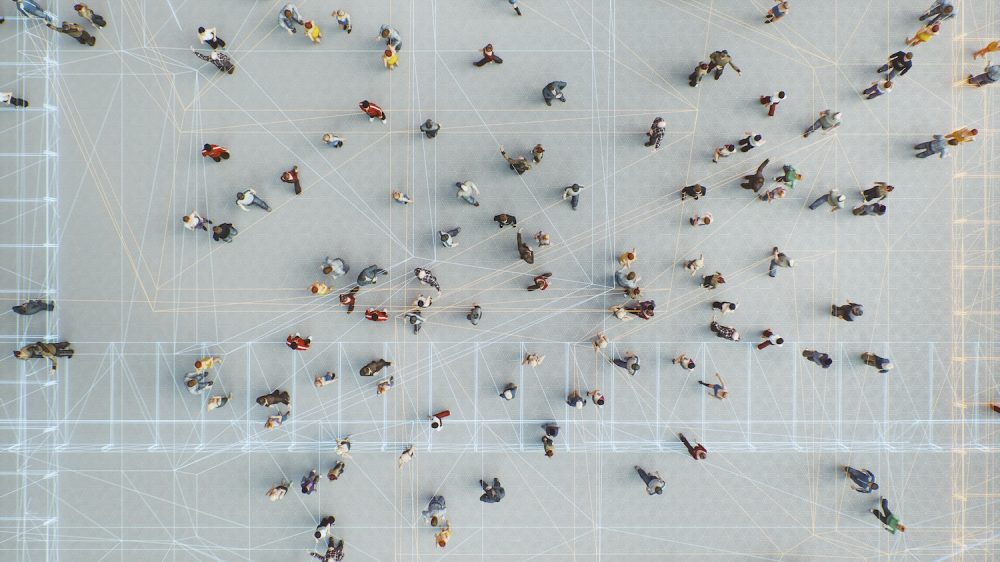
With the proliferation of security cameras, smart doorbells, facial recognition, location sharing and social media tracking, Americans are increasingly aware, if not entirely comfortable, that they’re being watched.
Surveillance has become part of everyday life, but one tool has drawn a particularly visceral reaction across the country, from urban and rural locales alike, and spanning the political spectrum.
Flock cameras, launched less than a decade ago to help communities fight crime, are now a civil liberties flashpoint, with people organizing across state borders to plot the devices’ location and even share tips on how to deface or dismantle them. Municipalities around the country are now weighing whether to terminate or scale back their Flock contracts amid the uproar.
UCLA Luskin scholar Zachary Steinert-Threlkeld, who employs sophisticated computational science tools to understand the dynamics of social movements, shared his insights on the origins of Flock Safety and the impacts of its technology.
Steinert-Threlkeld is an associate professor of public policy and faculty director of two UCLA certificate programs – AI in Public Affairs for professionals and Data Analytics for Luskin graduate students. A political scientist by training, he uses geolocated social posts, machine learning and computer vision to build vast databases that shed light on repressive regimes, state violence and mass protests around the world.
Steinert-Threlkeld’s comments have been edited for space.
What are Flock cameras and how are they used?
Flock cameras are both very old and very new technology. The old part is that it is a license plate reader, which is very similar to what municipalities use to catch you if you are running a red light or misusing a toll road or HOV lane. The new part is that a private company is running this hardware, the hardware is much cheaper, and it runs a lot of sophisticated software, including AI models on top of the actual images that are being captured.
So in addition to getting the license plate number and state and registration date, which is the old part, it also has “vehicle fingerprinting” that also records information about the vehicle. Is it a truck? Is it a car? What’s the color? Is there physical damage? Are there bumper stickers?
The safety explanation of this is that oftentimes with vehicular theft, the license plates are immediately removed or occluded. And so if you were to rely on just license plate reading, you may not solve a lot of crimes. With this vehicle fingerprinting you can be more effective at catching criminals.
Now Flock is very careful to say they don’t identify people. That is, you can’t search for someone by name. But they do give visual fingerprints for individuals in vehicles.
There’s also a software procedural innovation. Municipalities agree to install a Flock system in exchange for a subscription fee, and they can elect to make their Flock data available to other municipalities also in the network. And they can set the level of access – neighboring jurisdictions, the same state, or anyone nationwide.
And so again, there is a safety angle for this, which is that if someone steals a car in Santa Monica, they’re probably not going to stay in Santa Monica. With the Flock system, you can ping other Flock municipalities, as long as they’ve opted into the network, and get a travel path for the vehicle. You can see where it’s gone and maybe even where it is currently parked.
So you can see the double-edged sword here already. By collecting a lot more information, you theoretically make it harder for criminals to get away with their crimes, but then you also are collecting a lot more information about people than we were before.
How does the introduction of Flock technology fit into a landscape where our movements and behaviors are already increasingly monitored?
For context, we have been digitally surveilled since the rise of the internet. People first got creeped out with personalized ads because Google is looking at your search history, and how dare they? There was an uproar about social media manipulating our emotions by changing our feed. And then we move on and forget about it.
Then starting in the late 2010s, people started to become aware of data brokers selling their cell phone location records. There were similar concerns about law enforcement scooping up data for people who didn’t consent to it and who weren’t criminals or under suspicion of being criminals. Eventually that was rectified with Congressional action.
With my data set, people are posting tweets online and a stranger like me can read them. I have images taken in public, in squares, in parks that are shared by public accounts but that contain people who are not the account holders, they’re just in the background.
So it’s one thing to know you’re being watched. We already understand that online, when the ads that Google or Instagram shows us change as we search or as they read our text messages. But it still feels ethereal, out there and a little fake.
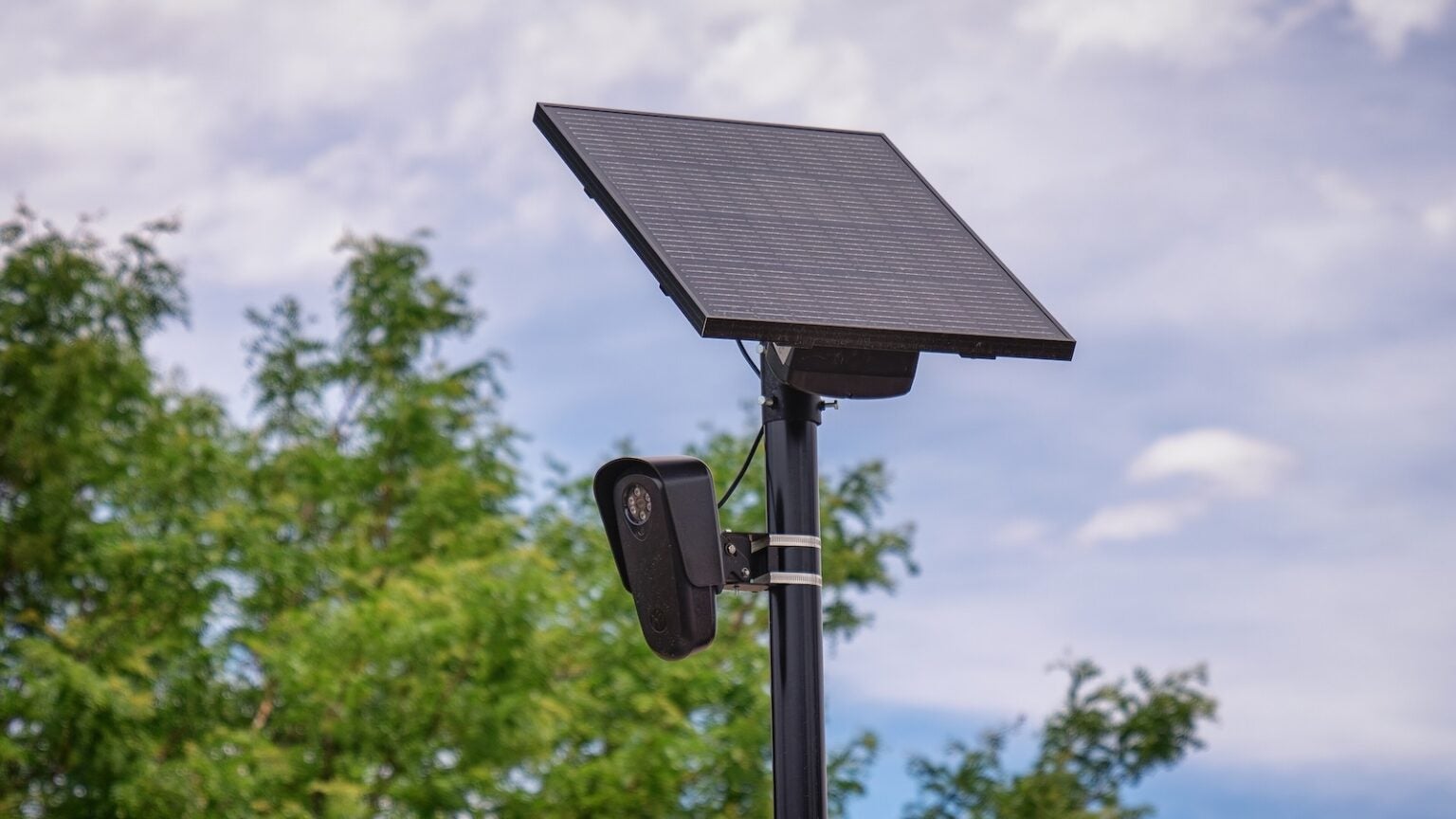
It’s another thing to be able to watch the watchers, to actually see the surveillance in real time, as with Flock cameras. Once you know what they look like, you start to see that same little black box with the lights around the camera almost everywhere.
And then maybe you do some reading and you learn that Flock has 120,000 cameras, and what you thought was a minor privacy issue is actually perhaps the greatest privacy infringement currently going on.
Why did the public backlash against did Flock cameras swell so quickly?
Flock got started in 2017 by three Georgia State recent graduates who moved into a neighborhood that all of a sudden had a crime wave. And the police officer said they couldn’t make any progress because there was no evidence, there was no video or photography of the situation. And so they said, well, this is an easy win with current technology. And so they built Flock.
It was a darling of a startup. It quickly became a unicorn, had a $1 billion valuation, and it received a lot of news coverage. So it’s not like this was some unknown stealth company that people didn’t know about.
What did change is the political environment after President Trump’s election. One controversy for Flock is that they were seen as a tool of ICE, and ICE’s actions were very controversial from the get-go.
Flock is careful to say they don’t work with any federal government agency, which is true. No federal government agency contracts with Flock. But if you know someone in law enforcement and you’re friendly with them, then they could look up something for you. Plenty of police officers have professional relationships with federal officers, including immigration agents, and were more than willing to run a query.
For half of America, any collaboration with ICE, any facilitating of their mission, is wrong. So all of a sudden Flock is no longer the tool that helps recover your car or protects your community. Now they’re the Big Brother arm of ICE who is tracking down citizens and permanent residents and unlawfully detaining them and expelling them.
But I think the nail in the coffin for Flock has been the privacy angle. For half the country, immigrants are bad, especially immigrants who are not documented. Maybe ICE wasn’t supposed to use the Flock cameras, but we’re OK with that. But that same half of the country loves privacy. Privacy is bipartisan, of course, but the people who are pro cracking down on immigration are very much against violations of our personal privacy and freedoms.
What’s lies ahead for the cameras and the company?
I don’t think Flock will go away. I think it will become tougher to use. And protections against abuse will be implemented.
Why do I think that? Well, first off, this is the exact same pathway that social media and then cellphone location dataset providers have taken. It used to be that if you were a police officer and you wanted to find a device near a crime scene, or you wanted to see who is protesting, you just paid a third party or you asked Google for a location and they said yes. Now, thanks to some Supreme Court rulings and congressional action, you need a warrant to get that information. Now we have guardrails against their abuse and seem, as a society, to have moved on.
I expect Flock will get there. The wrinkle is that license plate reading has already been upheld as constitutional because all the photography is happening on public streets so you have no expectation of privacy. So the issue for Flock isn’t going to be that they are impinging on people’s privacy. It’s going to be that they need to better restrict who can access their systems.
And so my guess is that at some point you’ll see laws or a Supreme Court ruling that says you need probable cause, you therefore need a warrant to even access the system. To run a search, you can no longer just be a random police officer and go in and query, which you can do now.
Flock since before this controversy has been expanding into other methods of surveillance. They recently bought a startup that mounts drones on buildings, and whenever there’s a call to 911 or police dispatch, it flies there and provides surveillance before first responders get there. They have bought gunshot detection systems, and Flock will now be able to detect if there are gunshots and send these drones there.
Flock also still has a fairly large source of revenue from homeowner associations, which is how they started. And that is seen as less problematic because the video by default stays with the HOA, and if you’re a member, at some level you’ve given some consent and you have more awareness of what is happening.
What can we expect on the public policy front?
Policy changes are coming. There have been congressional hearings about Flock, and there have been several anti-Flock bills introduced in Washington, D.C.
In California, the speaker of the House just refused to bring a bill to the floor for a vote on the last day of the session that would have put more regulation on Flock. This had bipartisan support, but it somehow mysteriously died. And so that suggests to me that there are machinations going on and that there will be some sort of other compromise that will come forward.
So, however you feel about the issue, if you want to influence what the future looks like, now is the time to contact your state or national representative, attorney general’s office or governor.