
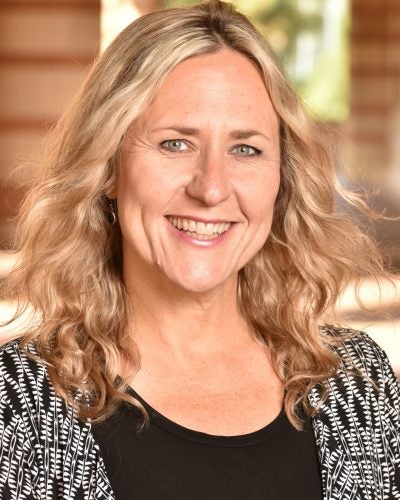
Professor Lené Levy-Storms studies how social relationships affect health and health behaviors among older adults in both community and institutional settings. She employs both quantitative and qualitative methodology and uses both primary and secondary data sets for intervention and observational inquiries. Previously, Dr. Levy-Storms has studied social support networks among minority older adults using social network analysis. Her core research concerns communication issues between health care providers and older adults, specifically paid and unpaid caregivers. She is particularly interested in how social support occurs through interpersonal communication during care. In 2003, Dr. Levy-Storms received career development award from the National Institute on Aging titled, “Therapeutic Communication during Nursing Home Care,” which laid the foundation for her ongoing research agenda. In 2010, Dr. Levy-Storms became a Health and Aging Policy Fellow and began to examine policy issues related to paid caregivers in long-term care settings, and she recently published a policy brief.
With her NIA Career Development Award and subsequent funding from the Hartford Foundation, the Archstone Foundation, the American Medical Directors’ Association, and the National Alzheimer’s Association, Dr. Levy-Storms collected video- and audio-recordings of paid and unpaid caregivers interacting with older adults in various long-term care settings, which in collaboration with Susan Kohler created “Get Connected,” a communication training program for providing care to older adults living with dementia. Because of “Get Connected,” she received funding from the UCLA Bedari Kindness Institute in 2021 to train long-term care facilities how to train their staffs with it as well as a UCLA Innovators Fellowship in 2022 to explore bringing it to market. The goal of using the communication strategies in “Get Connected” is to obtain an emotional connection, which can be difficult as the older adults progress to later stages of dementia. She is currently writing a proposal to use emotion recognition software to measure emotional connections during caregiving after training with “Get Connected.”
From 1998-2000, she was an assistant professor in the Department of Health Promotion and Gerontology and a fellow of the Sealy Center on Aging at the University of Texas Medical Branch in Galveston, TX. In 2000, she joined the UCLA Department of Medicine, Division of Geriatrics as an assistant professor. At that time, she also became an associate director of the UCLA/Borun Center for Gerontological Research, an appointment which she continues to hold. The Borun Center is based at the Jewish Home for the Aging in Reseda, CA and focuses on applied research to improve the quality of life of older adults in long-term care settings. She now holds a joint appointment with Medicine/Geriatrics and Social Welfare. She also co-directs the UCLA Gerontology Interdisciplinary Minor since 2012.