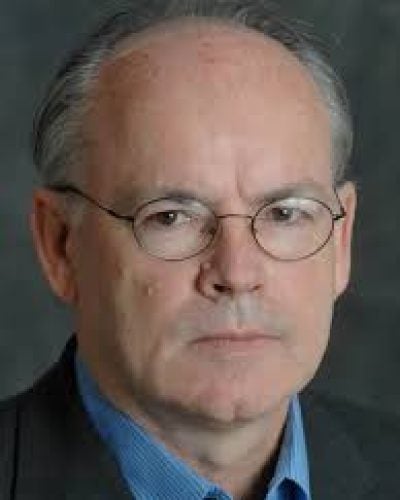
Randall Crane studies the housing, transportation, and economic development challenges of cities, such as rushed urbanization, urban design/behavior linkages, urban environmental problems, public finances, housing and transportation demographics, and the measure, meaning and governance of sprawl. This work is international, with field experience in China, Colombia, Guyana, Indonesia, Kenya, the Philippines, Thailand, Vietnam, and Yemen, and a Fulbright professorship at the Colegio de México in Mexico City.
His areas of interest are Asia, climate change, community development, economic development, environment, gender issues, housing, international and comparative planning, labor and employment, Latin America, poverty, race and ethnicity, transportation, and urban redevelopment. His current research projects are: (1) the design of municipal taxes, fees, and prices; (2) person-versus place-based economic and community development; (3) Chinese urbanization; (4) the demographics of travel, 1985-2013; and (5) understanding smart growth.
Current Research Projects
The design of municipal taxes, fees and prices. Picking up where I left off in a series of papers in the 1990s on the determinants of the efficient and equitable mix of impact fees, property taxes, and other revenue instruments in theory and practice.
Person-versus place-based economic and community development (with Michael Manville). When are urban development strategies best addressed at geography, and when best aimed at individuals regardless of where they live and work?
Chinese urbanization. A substantial share of the world’s urbanization over the next few decades will be concentrated in China. I am particularly interested in the evolution of public/private governance of land development and the joint issues of suburbanization and CBD development/redevelopment, which come together in increasingly common greenfield CBD construction at the city edge.
The demographics of travel, 1985-present. How do race, age, sex and other social and economic circumstances (such as household formation) influence both the demand for and supply of travel by place, means and purpose? That is, what are the substantive linkages between labor and housing markets over space?
The demographics of US housing, 1985-2013. How have the specific patterns of housing use and conditions changed in US cities over the past two decades, across a broad spectrum of individual and community characteristics? Why?
Understanding smart growth (with Daniel Chatman). What is different, better and worse about so-called smart growth urban development strategies as efforts to address the problems of modern urbanization? This includes a current project for the state agency responsible for implementing California’s primary climate change legislation, focused on the lessons of various land use strategies (“Analyzing the economic benefits and costs of smart growth,” CARB, 2011-2014).
Chaired PhD Committees
Charisma Shonté Acey, PhD (2009) “Exit, voice, loyalty and structural silence: Citizen-consumer access and behavior in Nigeria’s urban water markets,” Professor UC Berkeley
Daniel Chatman, PhD (2005) “How the built environment influences non-work travel: Theoretical and empirical essays,” Professor UC Berkeley
Richard Crepeau, PhD (1995) “Mobility and the metropolis: Issues of travel and land use in urban America,” Professor Appalachian State University
Lynne Cripe, PhD (1997) “Predictors of community participation in sanitation facility improvement: Attitudes among female peri-urban residents of Quezon City,” Director The Konterra Group
Thomas H. Culhane, PhD (2010) “Getting into hot water: Problematizing hot water service demand, The case of old Cairo,” Professor University of South Florida
Priyam Das, PhD (2009) “Promise or compromise? Community managed water supply for the urban poor in Madhya Pradesh, India,” Professor University of Hawai’i at Mānoa
D. Gregg Doyle, PhD (2003) “‘Only a nobody walks’: The decline of pedestrian trips in the United States,” Consultant
Charles J. Gabbe, PhD (2016) “Do land use regulations matter? Why and how?” Professor Santa Clara University
Michael Heimert, PhD (1988) “Contractual alternatives for durable goods requiring maintenance,” Managing Director and Global Leader, Duff & Phelps, LLC
David Mason, PhD (2011) “Cooperation as collateral? : social capital and joint liability : microfinance group lending in Nicaragua,” The World Bank
Jan Mazurek, PhD (2008) “The politics of counting carbon: Lessons from the California Climate Action Registry,” Director, ClimateWorks Foundation
Gregory Pierce, PhD (2015) “Basic services, low-income settlements and the local state: How collectively-organized initiatives redress inequalities,” Senior Researcher & Adjunct Professor UCLA
Oscar Alberto Pombo López, PhD (1997) “Water, sanitation, and poverty in the Mexican borderlands: Considerations of water sanitation strategies used by the poor in Tijuana,” Professor El Colegió de la Frontera Norte, Mexico
Lisa Schweitzer, PhD (2004) “Environmental sacrifice zones: Risk and transport in Southern California,” Professor University of Southern California
Hyun-Gun Sung, PhD (2005) “Transit friendly Areas: The role of residential relocation and housing development in rail ridership over time,” Professor Chungbuk National University, Korea
Beth Tamayose, PhD (2011) “Rise of western land and water regulation on the Hawaiian Islands: An historical analysis of land, property, and water governance, 1840s-1910s,” Consultant