Skip to content
  • Students & Alumni
    • Career Services
    • Alumni Relations
    • Student Support
    • Graduate Resource Library
    • For Employers
  • News
  • Events
    • Events Calendar
    • Luskin Summit
    • Luskin Lecture Series
    • California Policy Briefing
    • Commencement
  • Students & Alumni
    • Career Services
    • Alumni Relations
    • Student Support
    • Graduate Resource Library
    • For Employers
  • News
  • Events
    • Events Calendar
    • Luskin Summit
    • Luskin Lecture Series
    • California Policy Briefing
    • Commencement
Giving
UCLA Luskin School of Public Affairs Logo
  • Academics
    Departments & Programs
    • Global Public Affairs
    • Public Policy
    • Real Estate Development
    • Social Welfare
    • Urban Planning
    • Undergraduate Program
    • Global Public Affairs
    • Public Policy
    • Real Estate Development
    • Social Welfare
    • Urban Planning
    • Undergraduate Program
    Graduate Degrees
    • Master of Global Public Affairs (MGPA)
    • Master of Public Policy (MPP)
    • Master of Real Estate Development (MRED)
    • Master of Social Welfare (MSW)
    • Master of Urban and Regional Planning (MURP)
    • PhD in Social Welfare
    • PhD in Urban Planning
    • Master of Global Public Affairs (MGPA)
    • Master of Public Policy (MPP)
    • Master of Real Estate Development (MRED)
    • Master of Social Welfare (MSW)
    • Master of Urban and Regional Planning (MURP)
    • PhD in Social Welfare
    • PhD in Urban Planning
    Undergraduate Degrees
    • BA in Public Affairs
    • Minor in Urban and Regional Studies
    • Minor in Gerontology
    • Minor in Public Affairs
    • BA in Public Affairs
    • Minor in Urban and Regional Studies
    • Minor in Gerontology
    • Minor in Public Affairs
    Professional Certificates
    • AI in Public Affairs Certificate
    • AI in Public Affairs Certificate
  • Admissions
    Program Specific Admissions
    • Global Public Affairs
    • Public Policy
    • Real Estate Development
    • Social Welfare
    • Urban Planning
    • Undergraduate Program
    • Global Public Affairs
    • Public Policy
    • Real Estate Development
    • Social Welfare
    • Urban Planning
    • Undergraduate Program
  • Faculty
    Our Faculty
    • All Faculty
    • Public Policy
    • Real Estate Development
    • Social Welfare
    • Urban Planning
    • All Faculty
    • Public Policy
    • Real Estate Development
    • Social Welfare
    • Urban Planning
    Leadership
    • Our Dean
    • Board of Advisors
    • Faculty Executive Committee
    • Our Dean
    • Board of Advisors
    • Faculty Executive Committee
  • Research Centers
    • Agile Visual Analytics Lab (AVAL)

      Empowers stakeholders with data to make informed decisions for children, families, and communities.

    • Berggruen Governance Index

      Evaluates the quality of political governance and democracy worldwide.

    • Center for Neighborhood Knowledge (CNK)

      Specializes in spatial analysis of socioeconomic disparities in neighborhoods.

    • Center for Policy Research on Aging (CPRA)

      Explores the societal and policy implications of an aging population.

    • Institute of Transportation Studies (ITS)

      Advances research, education, and meaningful civic engagement on transportation issues.

    • Institute on Inequality and Democracy

      Advances scholarship that confronts threats to democracy in America and around the world.

    • Latin American Cities Initiative

      Connects urban planning and policy networks across the Americas.

    • Latino Policy & Politics Institute (LPPI)

      Addresses policy challenges facing Latinos and communities of color.

    • Lewis Center for Regional Policy Studies

      Studying housing affordability and transportation equity in the L.A. region.

    • Los Angeles Education Research Institute (LAERI)

      Collaborates with schools to improve educational outcomes for L.A. students.

    • Luskin Center for Innovation

      Informing effective and equitable environmental policy that improves lives.

    • UCLA Voting Rights Project

      The flagship project for voting rights litigation and policy research.

    All Research Centers
  • Outcomes
Home / News / Planning a New Future for Tacubaya

Planning a New Future for Tacubaya

UCLA Luskin Urban Planning students use their capstone project to provide guidance to Mexico City as it re-envisions one of its neighborhoods
A group of Luskin MURP students studied the Tacubaya neighborhood of Mexico City in the fall 2015 and winter 2016 quarters
A group of Luskin MURP students studied the Tacubaya neighborhood of Mexico City in the fall 2015 and winter 2016 quarters.

Posted in

  • School of Public Affairs, Urban Planning

Published on

  • July 13, 2016
  • capstone project, Urban Planning

Share this Article

By George Foulsham

Within the heart of Mexico City sits the bustling neighborhood of Tacubaya, population 5,000. Centuries ago, the area was considered rural, but in the mid-19th century urban growth in Mexico City swallowed Tacubaya and it became one of the poorer neighborhoods in a giant metropolis.

Tacubaya of today is defined by intersecting transportation lines that transformed the once-sleepy neighborhood into a central transit hub for thousands of commuters who swarm the area at various times of the day and night. Crime, poverty, unemployment and informal housing are all painful evidence of a community that has suffered from neglect and a lack of investment. Freeway development and an absence of a cohesive community plan have led to a dearth of public amenities as well.

It’s a town that could use help — the kind of help that urban planners could provide.

To address Tacubaya’s issues, the Secretaría de Desarrollo Urbano y Vivienda (SEDUVI), an agency within the Mexico City government, hired international consulting company CTS EMBARQ to help design a new development tool, El Sistema de Actuacion por Cooperacion (SAC). Translation: a performance system by cooperation. The hope is that EMBARQ’s SAC will help revitalize Tacubaya by providing incentives for developers, thus stimulating new affordable housing development and improving transportation while avoiding pitfalls such as congestion, gentrification and displacement.

Enter the UCLA Luskin School of Public Affairs, specifically master’s students from the Department of Urban Planning. Luskin student David Leipziger worked at the World Resources Institute and established a relationship with several EMBARQ offices. Leipziger asked EMBARQ if there might be an opportunity to work with one of the company’s offices around the world. They suggested Mexico City.

“Mexico City seemed to make the most sense for us because of the proximity, and the students just had a lot of interest in what we could be doing,” said Shafaq Choudry, who graduated in June with her Master’s in Urban and Regional Planning (MURP). “There are a lot of parallels that run between the congestion issues that Mexico City faces and L.A.”

Out of this inquiry came a “really fruitful partnership,” according to Choudry, and a 2015-16 capstone project for 16 Luskin MURP students. EMBARQ and Mexico City officials agreed to work with the Luskin students, who studied Tacubaya in the fall 2015 and winter 2016 quarters and provided a detailed report on recommendations that could help officials design a road map for the future of the neighborhood.

The research initiative was arranged by Leipziger and sponsored by Stephen Commins, a lecturer in Urban Planning and associate director of the Global Public Affairs program at UCLA Luskin.

“The capstone projects provide the students with the opportunity to apply the different analytical and research skills that they have learned in the program to a practical, complex set of problems that are similar to what they face as planners,” Commins said. “A key goal is to have applied knowledge and this is what this project entailed.”

Once the details were finalized, the Luskin students conducted extensive research about the context and history of Tacubaya.

“We then took the steps to identify what areas of expertise that CTS EMBARQ provides, and how we could fill in the gaps,” Choudry said. “It worked out well because we’re a group of 16 and everyone is coming with their own interests. And they want to take ownership — what section am I going to be contributing to? And when it’s your thesis project, you really want it to be a reflection of your own interests and your unique research that you want to put out there into the world.”

So 16 students divided into four groups. The teams broke down their daunting task (most capstone projects require a full academic year, not just two quarters) into four categories: incentivizing inclusive housing development; integrating informal housing (any form of shelter outside of government regulation); enhancing mobility and access; and revitalizing public space.

All capstone projects can be challenging, especially when the focus of the research is several thousand miles away, Commins said. “There is a struggle to get focus early as well as the challenge of working remotely,” he said. “As the work progresses, there is a tension between wanting to be thorough and having limited time.”

Choudry said the students very quickly realized that the project would offer important educational and life lessons.

“As the project started to progress, we had to make sure that whatever we were researching and recommending in our findings, that they complemented one another,” Choudry said. “Then, at the end, we’re not producing four separate reports. That was a process in itself. I found it fascinating.”

Another challenge: Only four of the 16 students could fluently speak and read Spanish. “Google translate is a very good tool,” Choudry said.

The students traveled to Tacubaya in shifts, one group going in early December and the others during the second week of January.

“It was intense,” Choudry said. “That was our only opportunity to see the site, start documenting it, talking to as many people as we could.”

The students arranged interviews and established workday schedules with EMBARQ. “At the end of all of this,” Choudry said, “we had to determine what deliverables we would be able to bring to them in the next 10 weeks. It put the pressure on all of us.”

After two visits, countless meetings and hundreds of hours of research, the UCLA Luskin students produced an executive summary and a set of recommendations designed to inform and assist CTS EMBARQ and Mexico City officials with the task of improving life in Tacubaya.

Among the students’ recommendations:

  • Creating a more participatory process that includes Tacubaya residents in housing development decisions.
  • Establishing cooperative methods of ownership in informal housing developments to prevent future displacement.
  • Investing in bicycle paths and traffic-calming measures to help ease congestion caused by heavy traffic surrounding the transit hub.
  • Developing public spaces that fit the community’s needs and desires while designing a future that embraces environmental sustainability.
  • Creating a tiered public benefit zoning system to provide an incentive for development.

The students’ final recommendations have been submitted to CTS EMBARQ. “They were very pleased with the report,” Choudry said. “Our hope was that this could help inform their work, moving forward. That’s how we thought the implementation of this report could be seen. What we’ve done is handed it all off to EMBARQ, with the trust that they may carry it forward to the officials in Mexico City.

“As students, we get to play this role of, this is our client, but we have this opportunity for them to hear a voice that they might not be able to incorporate as easily, given the relationship they have with the city,” she added. “What we realized as a class was that we can push the bar further. And whether or not EMBARQ incorporates this into their final recommendations, at least we gave them some food for thought.”

Commins said the Tacubaya Capstone project is a great example of how students can fulfill the UCLA Luskin mission.

“Their presentation was indeed representative of the commitment of our students to engage in real-world questions, to dig into the complexities of urban planning in Mexico City, and to propose specific approaches that are both attuned to the needs of a diverse population and grounded in the specific political/regulatory/environmental context of Tacubaya,” Commins said.

Read the students’ full report.
Related Articles

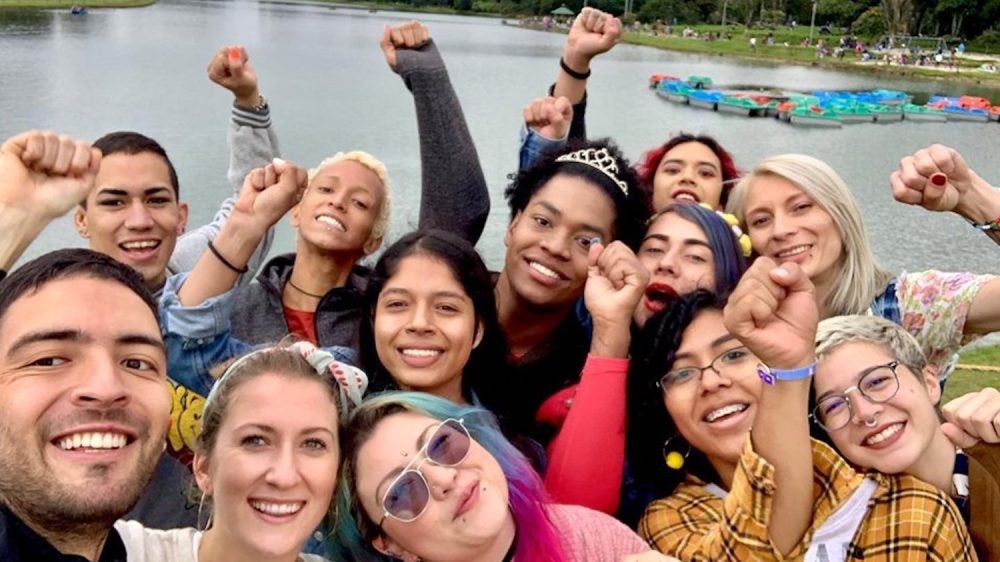
Olivia Miller, front row, second from left, with colleagues during her International Practice Pathway fellowship in Bogota

Students Reflect on International Summer Fellowships

May 27, 2025
Luskin's Latest Blog
Global Public Affairs sent eight UCLA Luskin graduate students around the world as part of the...
Read More
Photo of Rick Caruso

Commins on Los Angeles Leadership and Wildfire Recovery

April 8, 2025
Luskin in the News
Recovery and rebuilding efforts become politicized during a crucial time for the city....
Read More
Scott MacMillan stands at the front of the room addressing the audience about his biography

Book Launch Focuses on Founder of Nonprofit BRAC

November 15, 2022
Luskin's Latest Blog
Scott MacMillan's book on the life of Fazle Hasan Abed details the humble origins of BRAC...
Read More
Image of Professor Shah speaking and gesturing with her hands with a blue overlay.

Luskin Summit Focuses on Advancing Gender Equality Through Sports

April 7, 2022
Luskin's Latest Blog
Professor Manisha Shah’s research highlights how sport can be used to engage boys and young men...
Read More
International policy expert Kate Almquist Knopf

Expert on Africa Presents Senior Fellows Talk

February 13, 2020
Luskin's Latest Blog
Policy expert Kate Almquist Knopf tells UCLA audience that Africa will be the big international affairs...
Read More
Vivek Maru, founder of the legal advocacy nonprofit Namati, speaks to a Global Public Affairs gathering

Waging a Battle Against Environmental Injustice

October 30, 2019
Luskin's Latest Blog
Founder of Namati, an international legal empowerment nonprofit, shares stories of grassroots victories with Global Public...
Read More
Learn more about UCLA Luskin

Find contact information and get answers to your questions.

Contact Us

Public Affairs Building
337 Charles E. Young Drive East
Los Angeles, California 90095

Linkedin Youtube Instagram Facebook X-twitter
Campus Resources
  • Map, Directions, Parking
  • Directory
  • Academic Calendar
  • Careers
  • Map, Directions, Parking
  • Directory
  • Academic Calendar
  • Careers
School Resources
  • About
  • Our Dean
  • Administration
  • Luskin School Intranet
  • Board of Advisors
  • Contact Us
  • Visit Us
  • About
  • Our Dean
  • Administration
  • Luskin School Intranet
  • Board of Advisors
  • Contact Us
  • Visit Us
UCLA logo
© 2026 Regents of the University of California
  • Emergency
  • Accessibility
  • Privacy & Terms of Use
  • Emergency
  • Accessibility
  • Privacy & Terms of Use
Facebook Instagram Linkedin X-twitter Youtube Threads
UCLA Luskin School of Public Affairs Logo
Academics
Departments
  • Global Public Affairs
  • Public Policy
  • Real Estate Development
  • Social Welfare
  • Urban Planning
  • Undergraduate Program
  • Global Public Affairs
  • Public Policy
  • Real Estate Development
  • Social Welfare
  • Urban Planning
  • Undergraduate Program
Graduate Programs
  • Master of Global Public Affairs (MGPA)
  • Master of Public Policy (MPP)
  • Master of Real Estate Development (MRED)
  • Master of Social Welfare (MSW)
  • Master of Urban and Regional Planning (MURP)
  • PhD in Social Welfare
  • PhD in Urban Planning
  • Master of Global Public Affairs (MGPA)
  • Master of Public Policy (MPP)
  • Master of Real Estate Development (MRED)
  • Master of Social Welfare (MSW)
  • Master of Urban and Regional Planning (MURP)
  • PhD in Social Welfare
  • PhD in Urban Planning
Undergraduate Programs
  • BA in Public Affairs
  • Minor in Urban and Regional Studies
  • Minor in Gerontology
  • Minor in Public Affairs
  • BA in Public Affairs
  • Minor in Urban and Regional Studies
  • Minor in Gerontology
  • Minor in Public Affairs
Professional Certificates
  • AI in Public Affairs Certificate
  • AI in Public Affairs Certificate
Admissions
Program Specific Admissions
  • Global Public Affairs
  • Public Policy
  • Real Estate Development
  • Social Welfare
  • Urban Planning
  • Undergraduate Program
  • Global Public Affairs
  • Public Policy
  • Real Estate Development
  • Social Welfare
  • Urban Planning
  • Undergraduate Program
Faculty
Our Faculty
  • All Faculty
  • Public Policy
  • Real Estate Development
  • Social Welfare
  • Urban Planning
  • All Faculty
  • Public Policy
  • Real Estate Development
  • Social Welfare
  • Urban Planning
Leadership
  • Our Dean
  • Board of Advisors
  • Faculty Executive Committee
  • Our Dean
  • Board of Advisors
  • Faculty Executive Committee
Research Centers
  • Agile Visual Analytics Lab (AVAL)

    Empowers stakeholders with data to make informed decisions for children, families, and communities.

  • Berggruen Governance Index

    Evaluates the quality of political governance and democracy worldwide.

  • Center for Neighborhood Knowledge (CNK)

    Specializes in spatial analysis of socioeconomic disparities in neighborhoods.

  • Center for Policy Research on Aging (CPRA)

    Explores the societal and policy implications of an aging population.

  • Institute of Transportation Studies (ITS)

    Advances research, education, and meaningful civic engagement on transportation issues.

  • Institute on Inequality and Democracy

    Advances scholarship that confronts threats to democracy in America and around the world.

  • Latin American Cities Initiative

    Connects urban planning and policy networks across the Americas.

  • Latino Policy & Politics Institute (LPPI)

    Addresses policy challenges facing Latinos and communities of color.

  • Lewis Center for Regional Policy Studies

    Studying housing affordability and transportation equity in the L.A. region.

  • Los Angeles Education Research Institute (LAERI)

    Collaborates with schools to improve educational outcomes for L.A. students.

  • Luskin Center for Innovation

    Informing effective and equitable environmental policy that improves lives.

  • UCLA Voting Rights Project

    The flagship project for voting rights litigation and policy research.

All Research Centers
Outcomes
Common Search Terms

Results will show as you type.