Skip to content
  • Students & Alumni
    • Career Services
    • Alumni Relations
    • Student Support
    • Graduate Resource Library
    • For Employers
  • News
  • Events
    • Events Calendar
    • Luskin Summit
    • Luskin Lecture Series
    • California Policy Briefing
    • Commencement
  • Students & Alumni
    • Career Services
    • Alumni Relations
    • Student Support
    • Graduate Resource Library
    • For Employers
  • News
  • Events
    • Events Calendar
    • Luskin Summit
    • Luskin Lecture Series
    • California Policy Briefing
    • Commencement
Giving
UCLA Luskin School of Public Affairs Logo
  • Academics
    Departments & Programs
    • Global Public Affairs
    • Public Policy
    • Real Estate Development
    • Social Welfare
    • Urban Planning
    • Undergraduate Program
    • Global Public Affairs
    • Public Policy
    • Real Estate Development
    • Social Welfare
    • Urban Planning
    • Undergraduate Program
    Graduate Degrees
    • Master of Global Public Affairs (MGPA)
    • Master of Public Policy (MPP)
    • Master of Real Estate Development (MRED)
    • Master of Social Welfare (MSW)
    • Master of Urban and Regional Planning (MURP)
    • PhD in Social Welfare
    • PhD in Urban Planning
    • Master of Global Public Affairs (MGPA)
    • Master of Public Policy (MPP)
    • Master of Real Estate Development (MRED)
    • Master of Social Welfare (MSW)
    • Master of Urban and Regional Planning (MURP)
    • PhD in Social Welfare
    • PhD in Urban Planning
    Undergraduate Degrees
    • BA in Public Affairs
    • Minor in Urban and Regional Studies
    • Minor in Gerontology
    • Minor in Public Affairs
    • BA in Public Affairs
    • Minor in Urban and Regional Studies
    • Minor in Gerontology
    • Minor in Public Affairs
    Professional Certificates
    • AI in Public Affairs Certificate
    • AI in Public Affairs Certificate
  • Admissions
    Program Specific Admissions
    • Global Public Affairs
    • Public Policy
    • Real Estate Development
    • Social Welfare
    • Urban Planning
    • Undergraduate Program
    • Global Public Affairs
    • Public Policy
    • Real Estate Development
    • Social Welfare
    • Urban Planning
    • Undergraduate Program
  • Faculty
    Our Faculty
    • All Faculty
    • Public Policy
    • Real Estate Development
    • Social Welfare
    • Urban Planning
    • All Faculty
    • Public Policy
    • Real Estate Development
    • Social Welfare
    • Urban Planning
    Leadership
    • Our Dean
    • Board of Advisors
    • Faculty Executive Committee
    • Our Dean
    • Board of Advisors
    • Faculty Executive Committee
  • Research Centers
    • Agile Visual Analytics Lab (AVAL)

      Empowers stakeholders with data to make informed decisions for children, families, and communities.

    • Berggruen Governance Index

      Evaluates the quality of political governance and democracy worldwide.

    • Center for Neighborhood Knowledge (CNK)

      Specializes in spatial analysis of socioeconomic disparities in neighborhoods.

    • Center for Policy Research on Aging (CPRA)

      Explores the societal and policy implications of an aging population.

    • Institute of Transportation Studies (ITS)

      Advances research, education, and meaningful civic engagement on transportation issues.

    • Institute on Inequality and Democracy

      Advances scholarship that confronts threats to democracy in America and around the world.

    • Latin American Cities Initiative

      Connects urban planning and policy networks across the Americas.

    • Latino Policy & Politics Institute (LPPI)

      Addresses policy challenges facing Latinos and communities of color.

    • Lewis Center for Regional Policy Studies

      Studying housing affordability and transportation equity in the L.A. region.

    • Los Angeles Education Research Institute (LAERI)

      Collaborates with schools to improve educational outcomes for L.A. students.

    • Luskin Center for Innovation

      Informing effective and equitable environmental policy that improves lives.

    • UCLA Voting Rights Project

      The flagship project for voting rights litigation and policy research.

    All Research Centers
  • Outcomes
Home / News / A Nexus of Latin Cities

A Nexus of Latin Cities

New initiative Ciudades finds common ground in urban spaces across the Western hemisphere
Paavo Monkkonen's research into housing, land use and sprawl in Mexico and other countries inspired him to establish the Latin American Cities Initiative
Paavo Monkkonen's research into housing, land use and sprawl in Mexico and other countries inspired him to establish the Latin American Cities Initiative. Photo by Stan Paul

Posted in

  • Alumni, Education, Global Public Affairs, Public Policy, School of Public Affairs, Undergraduates, Urban Planning

Published on

  • June 7, 2019
  • education, immigration, international relations, Latin America, Los Angeles, Mexico

Share this Article

By Mary Braswell

They came from Sacramento in the north, Mexico City in the south and points in between, drawn to the UCLA Luskin School of Public Affairs by a common pursuit: increasing access to high-quality housing in urban areas where opportunities abound.

It’s a worthy goal, shared across borders but beset by a lack of consensus on how to achieve it. So planners, professors and government officials from throughout Mexico and California gathered to share their insights on moving forward, invited by one of UCLA Luskin’s newest ventures, the Latin American Cities Initiative.

The workshop visitors — along with urbanists throughout the region — have much to learn from one another, said Paavo Monkkonen, associate professor of urban planning and public policy, and founding director of the initiative, known as Ciudades.

“Los Angeles is home to millions from across Latin America,” Monkkonen said. “Because of this shared history and present, and because of the potential for urban learning across the region, we established Ciudades to deepen our connections and intellectual exchanges.”

Launched in early 2019 with the support of UCLA Luskin Dean Gary Segura, the initiative is just the latest example of the School’s global ambitions and outreach.

With the international city of Los Angeles as a home base, faculty have spearheaded research into HIV-infected youth in sub-Saharan Africa, mass protests in Ukraine, sex markets in Indonesia and degradation of the Amazon rainforest, among many other pursuits.

The School’s Global Public Affairs program brings graduate students into the mix, preparing them to navigate an increasingly integrated world. GPA students choose from a wide array of concentrations, including political dynamics, health and social services, the environment, development, migration and human rights.

Ciudades zeroes in on the Western Hemisphere. The binational, bilingual workshop on urban housing was just the type of cross-pollination of ideas that the initiative was created to foster.

In cities across Mexico and California, low-density sprawl has limited access to jobs, transit, retail and parks, creating roadblocks to prosperity. But federal and state programs to remedy this with denser urban development have met with resistance from municipalities, which often face political blowback.

Bridging this divide was the aim of the Ciudades workshop. Planners, academics, students and officials from all levels of government, including the cities of Tijuana, Ensenada, Compton and Los Angeles, came together to share data, resources and cautionary tales. Among them was Haydee Urita-Lopez MURP ’02, a senior planner with the city of Los Angeles.

“I’m just very happy today that we’re able to collaborate at this academic and practical level,” Urita-Lopez said, inviting her colleagues to continue the conversation in the weeks and months ahead. “We share an integrant political, social and cultural history. … Geopolitical lines on a map have not erased our cultural ties.”

Ciudades focuses on urban spaces in the Americas, but the topics it embraces are unlimited. Local democracy, public finance, indigenous populations and historical preservation will steer the dialogue in a knowledge network that reaches across disciplines as well as borders, Monkkonen said.

He envisions field visits by faculty and students from each of UCLA Luskin’s graduate departments, Public Policy, Social Welfare and Urban Planning. Grants and internships will promote Latin-focused student research.

Monkkonen’s studio courses in Baja California provide one model for learning: Students identify a problem, define the scope of their analysis, then conduct interviews, site visits and scholarly readings to develop practical solutions.

Ciudades also brings voices from across the Americas to campus. Over the 2019 winter quarter, students and the public heard from experts on social mobility in São Paulo, indigenous groups in Cancun, sustainable development in Bogotá and many other topics as part of the weekly Ciudades Seminar Series.

“Academia and professional practice can benefit a lot from greater levels of communication,” and that interplay creates a spirited learning environment, Monkkonen said. When students speak with practitioners, both sides ask questions that professors may not have thought to ask, he added.

The connections that Ciudades is forging will make UCLA Luskin a draw for graduate students, planners and policymakers from across the region, Monkkonen predicted. Looking ahead, he envisions quarter-long exchange programs with universities in South America and Central America.

“Our student population is so Latin-descended, and many want to study in the places their parents are from,” he said.

Monkkonen has been interested in the Spanish-speaking world since he can remember. Enrolled in a Culver City elementary school that offered one of the first language immersion programs, he became fluent as a child. As a young man, he taught English as a second language in Spain and Mexico. His wife is from Mexico and his daughter is a dual citizen. Monkkonen is a permanent resident of Mexico and is currently applying for dual citizenship.

Much of Monkkonen’s long-term research is based in Mexico, but he has also conducted studies in Argentina, Brazil and across Asia. UCLA Luskin, he said, is an ideal laboratory for urban studies in the region.

In March, Ciudades posed the question “Is L.A. a Latin American City?” Author and journalist Daniel Hernandez and UCLA’s Eric Avila debated the question at a forum moderated by Monkkonen.

The answer, they concluded, was both yes and no.

Los Angeles “is developing in a way that only benefits the people who already have money,” a familiar pattern in Latin American cities, Hernandez said.

Avila, a professor of Chicano studies and urban planning, said the city’s population and built environment are very Latin but “Los Angeles is not a Latin American city in regard to the historically sustained efforts to whitewash and erase the Spanish and Mexican past.”

The panelists touched on racial hierarchies, environmental justice, gentrification, food, art and identity. It was merely one of many conversations Ciudades intends to spark.

“We hope that this initiative is just the beginning of something larger that deepens ties across South, Central and North America,” Monkkonen said.

Zoe Day contributed to this report.

Faculty Mentioned in this Article
Monkkonen|Monkkonen

Paavo Monkkonen

Professor of Urban Planning and Public Policy

Paavo Monkkonen is Professor of Urban Planning and Public Policy at the UCLA Luskin School of Public Affairs. He researches...

Related Articles

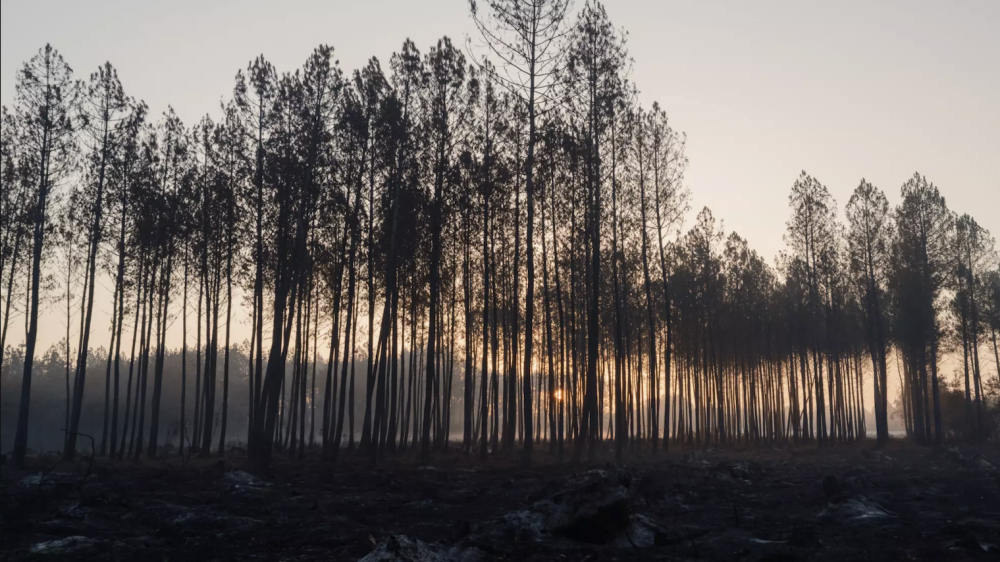
A stand of scorched trees near burned ground

Lessons from California After a Summer of Wildfire in Europe

September 9, 2026
Luskin in the News
Read More
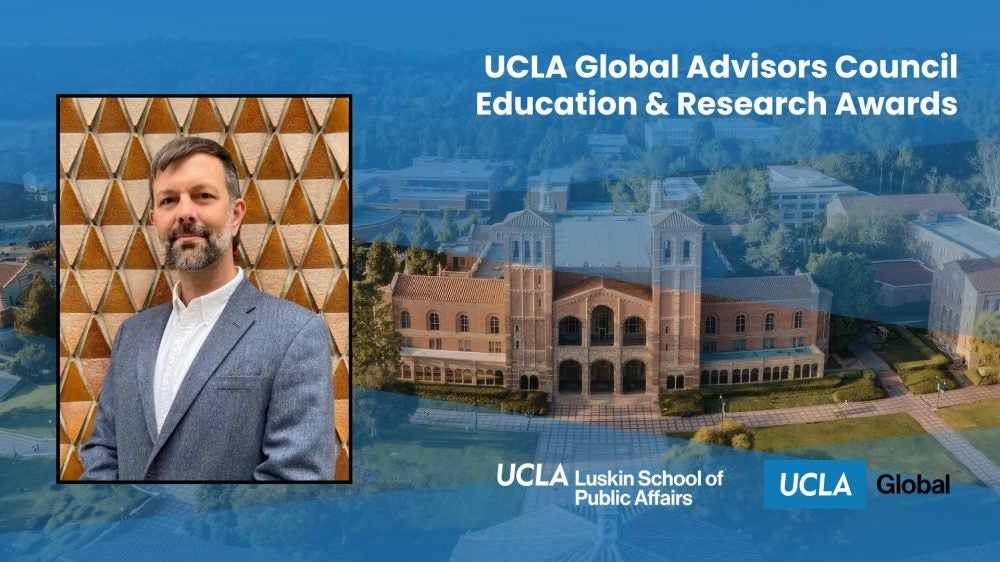
Headshot of Paavo on left with an aerial shot of campus with the words "UCLA Global Awards" on the top right.

Paavo Monkonnen Receives Awards to Expand UCLA’s Global Reach

September 3, 2026
School of Public Affairs

Expanding UCLA’s global reach is one of the strategic goals under the UCLA Connects initiative. In support...

Read More
woman looking at expenses

California Is the Most Expensive State for a Comfortable Lifestyle

April 3, 2026
Luskin in the News
UCLA Luskin's Paavo Monkkonen weighs in on report that finds that a six-figure salary is needed...
Read More
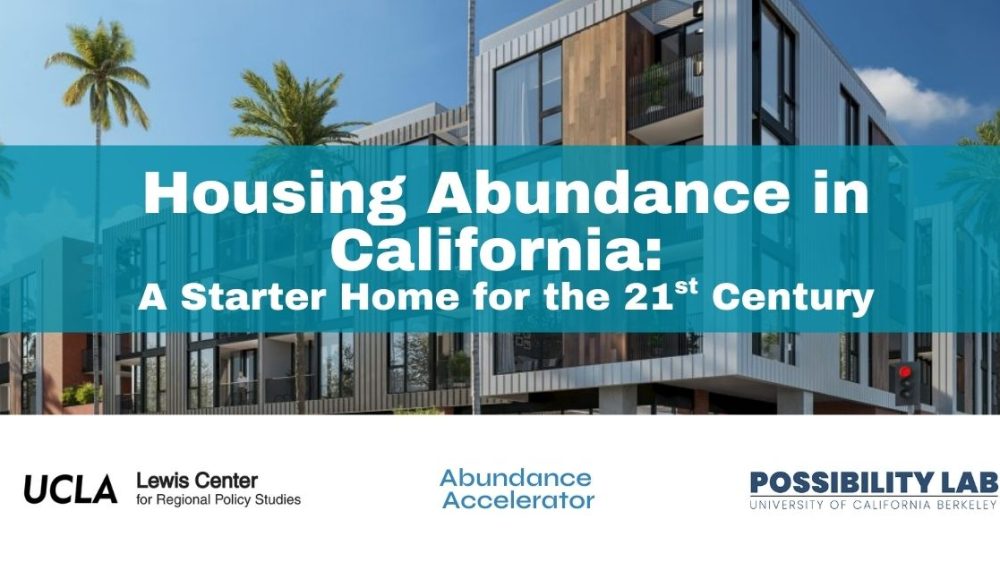
Housing Abundance in California: Starter Home for the 21st century written over a photo of a what looks like new construction town homes.

What would it take to make housing, energy, and transportation affordable in California?

January 14, 2026
Luskin in the News
Researchers argue that “abundance” requires smarter housing design, people-first transportation, and a more flexible, affordable energy...
Read More
Downtown LA just after sunset during blue hour, captured from a helicopter point of view with lighted City Hall building.

UCLA Grants Deepen Ties to the L.A. Community

March 17, 2025
Public Policy
Projects by Luskin faculty will build collaboration among scholars, students and local partners....
Read More
multicolored arrows

Luskin Experts Join UC Consortium Aimed at Meeting Californians’ Basic Needs

October 9, 2024
Luskin's Latest Blog
Their work on housing and transportation solutions is part of an effort to address persistent economic...
Read More
Learn more about UCLA Luskin

Find contact information and get answers to your questions.

Contact Us

Public Affairs Building
337 Charles E. Young Drive East
Los Angeles, California 90095

Linkedin Youtube Instagram Facebook X-twitter
Campus Resources
  • Map, Directions, Parking
  • Directory
  • Academic Calendar
  • Careers
  • Map, Directions, Parking
  • Directory
  • Academic Calendar
  • Careers
School Resources
  • About
  • Our Dean
  • Administration
  • Luskin School Intranet
  • Board of Advisors
  • Contact Us
  • Visit Us
  • About
  • Our Dean
  • Administration
  • Luskin School Intranet
  • Board of Advisors
  • Contact Us
  • Visit Us
UCLA logo
© 2026 Regents of the University of California
  • Emergency
  • Accessibility
  • Privacy & Terms of Use
  • Emergency
  • Accessibility
  • Privacy & Terms of Use
Facebook Instagram Linkedin X-twitter Youtube Threads
UCLA Luskin School of Public Affairs Logo
Academics
Departments
  • Global Public Affairs
  • Public Policy
  • Real Estate Development
  • Social Welfare
  • Urban Planning
  • Undergraduate Program
  • Global Public Affairs
  • Public Policy
  • Real Estate Development
  • Social Welfare
  • Urban Planning
  • Undergraduate Program
Graduate Programs
  • Master of Global Public Affairs (MGPA)
  • Master of Public Policy (MPP)
  • Master of Real Estate Development (MRED)
  • Master of Social Welfare (MSW)
  • Master of Urban and Regional Planning (MURP)
  • PhD in Social Welfare
  • PhD in Urban Planning
  • Master of Global Public Affairs (MGPA)
  • Master of Public Policy (MPP)
  • Master of Real Estate Development (MRED)
  • Master of Social Welfare (MSW)
  • Master of Urban and Regional Planning (MURP)
  • PhD in Social Welfare
  • PhD in Urban Planning
Undergraduate Programs
  • BA in Public Affairs
  • Minor in Urban and Regional Studies
  • Minor in Gerontology
  • Minor in Public Affairs
  • BA in Public Affairs
  • Minor in Urban and Regional Studies
  • Minor in Gerontology
  • Minor in Public Affairs
Professional Certificates
  • AI in Public Affairs Certificate
  • AI in Public Affairs Certificate
Admissions
Program Specific Admissions
  • Global Public Affairs
  • Public Policy
  • Real Estate Development
  • Social Welfare
  • Urban Planning
  • Undergraduate Program
  • Global Public Affairs
  • Public Policy
  • Real Estate Development
  • Social Welfare
  • Urban Planning
  • Undergraduate Program
Faculty
Our Faculty
  • All Faculty
  • Public Policy
  • Real Estate Development
  • Social Welfare
  • Urban Planning
  • All Faculty
  • Public Policy
  • Real Estate Development
  • Social Welfare
  • Urban Planning
Leadership
  • Our Dean
  • Board of Advisors
  • Faculty Executive Committee
  • Our Dean
  • Board of Advisors
  • Faculty Executive Committee
Research Centers
  • Agile Visual Analytics Lab (AVAL)

    Empowers stakeholders with data to make informed decisions for children, families, and communities.

  • Berggruen Governance Index

    Evaluates the quality of political governance and democracy worldwide.

  • Center for Neighborhood Knowledge (CNK)

    Specializes in spatial analysis of socioeconomic disparities in neighborhoods.

  • Center for Policy Research on Aging (CPRA)

    Explores the societal and policy implications of an aging population.

  • Institute of Transportation Studies (ITS)

    Advances research, education, and meaningful civic engagement on transportation issues.

  • Institute on Inequality and Democracy

    Advances scholarship that confronts threats to democracy in America and around the world.

  • Latin American Cities Initiative

    Connects urban planning and policy networks across the Americas.

  • Latino Policy & Politics Institute (LPPI)

    Addresses policy challenges facing Latinos and communities of color.

  • Lewis Center for Regional Policy Studies

    Studying housing affordability and transportation equity in the L.A. region.

  • Los Angeles Education Research Institute (LAERI)

    Collaborates with schools to improve educational outcomes for L.A. students.

  • Luskin Center for Innovation

    Informing effective and equitable environmental policy that improves lives.

  • UCLA Voting Rights Project

    The flagship project for voting rights litigation and policy research.

All Research Centers
Outcomes
Common Search Terms

Results will show as you type.