Skip to content
  • Students & Alumni
    • Career Services
    • Alumni Relations
    • Student Support
    • Graduate Resource Library
    • For Employers
  • News
  • Events
    • Events Calendar
    • Luskin Summit
    • Luskin Lecture Series
    • California Policy Briefing
    • Commencement
  • Students & Alumni
    • Career Services
    • Alumni Relations
    • Student Support
    • Graduate Resource Library
    • For Employers
  • News
  • Events
    • Events Calendar
    • Luskin Summit
    • Luskin Lecture Series
    • California Policy Briefing
    • Commencement
Giving
UCLA Luskin School of Public Affairs Logo
  • Academics
    Departments & Programs
    • Global Public Affairs
    • Public Policy
    • Real Estate Development
    • Social Welfare
    • Urban Planning
    • Undergraduate Program
    • Global Public Affairs
    • Public Policy
    • Real Estate Development
    • Social Welfare
    • Urban Planning
    • Undergraduate Program
    Graduate Degrees
    • Master of Global Public Affairs (MGPA)
    • Master of Public Policy (MPP)
    • Master of Real Estate Development (MRED)
    • Master of Social Welfare (MSW)
    • Master of Urban and Regional Planning (MURP)
    • PhD in Social Welfare
    • PhD in Urban Planning
    • Master of Global Public Affairs (MGPA)
    • Master of Public Policy (MPP)
    • Master of Real Estate Development (MRED)
    • Master of Social Welfare (MSW)
    • Master of Urban and Regional Planning (MURP)
    • PhD in Social Welfare
    • PhD in Urban Planning
    Undergraduate Degrees
    • BA in Public Affairs
    • Minor in Urban and Regional Studies
    • Minor in Gerontology
    • Minor in Public Affairs
    • BA in Public Affairs
    • Minor in Urban and Regional Studies
    • Minor in Gerontology
    • Minor in Public Affairs
    Professional Certificates
    • AI in Public Affairs Certificate
    • AI in Public Affairs Certificate
  • Admissions
    Program Specific Admissions
    • Global Public Affairs
    • Public Policy
    • Real Estate Development
    • Social Welfare
    • Urban Planning
    • Undergraduate Program
    • Global Public Affairs
    • Public Policy
    • Real Estate Development
    • Social Welfare
    • Urban Planning
    • Undergraduate Program
  • Faculty
    Our Faculty
    • All Faculty
    • Public Policy
    • Real Estate Development
    • Social Welfare
    • Urban Planning
    • All Faculty
    • Public Policy
    • Real Estate Development
    • Social Welfare
    • Urban Planning
    Leadership
    • Our Dean
    • Board of Advisors
    • Faculty Executive Committee
    • Our Dean
    • Board of Advisors
    • Faculty Executive Committee
  • Research Centers
    • Agile Visual Analytics Lab (AVAL)

      Empowers stakeholders with data to make informed decisions for children, families, and communities.

    • Berggruen Governance Index

      Evaluates the quality of political governance and democracy worldwide.

    • Center for Neighborhood Knowledge (CNK)

      Specializes in spatial analysis of socioeconomic disparities in neighborhoods.

    • Center for Policy Research on Aging (CPRA)

      Explores the societal and policy implications of an aging population.

    • Institute of Transportation Studies (ITS)

      Advances research, education, and meaningful civic engagement on transportation issues.

    • Institute on Inequality and Democracy

      Advances scholarship that confronts threats to democracy in America and around the world.

    • Latin American Cities Initiative

      Connects urban planning and policy networks across the Americas.

    • Latino Policy & Politics Institute (LPPI)

      Addresses policy challenges facing Latinos and communities of color.

    • Lewis Center for Regional Policy Studies

      Studying housing affordability and transportation equity in the L.A. region.

    • Los Angeles Education Research Institute (LAERI)

      Collaborates with schools to improve educational outcomes for L.A. students.

    • Luskin Center for Innovation

      Informing effective and equitable environmental policy that improves lives.

    • UCLA Voting Rights Project

      The flagship project for voting rights litigation and policy research.

    All Research Centers
  • Outcomes
Home / News / COVID-19 Pandemic Could Cost California Transportation Billions in Revenue

COVID-19 Pandemic Could Cost California Transportation Billions in Revenue

New research highlights need for policymakers to prepare for a future shortfall
image of a vehicle at a gas station pumping gas
Revenue from gas taxes in California will decline as a result of less driving during the coronavirus pandemic.

Posted in

  • Environment, Research, School of Public Affairs, Transportation, Undergraduates, Urban Planning

Published on

  • May 13, 2020
  • California, COVID-19, electric vehicles, government, transportation

Share this Article

California could lose up to $20 billion in transportation revenue over the next 10 years because of the COVID-19 pandemic, according to research released May 12 by the Mineta Transportation Institute, or MTI.

Researchers Asha Weinstein Agrawal of MTI at San Jose State University and Hannah King and Martin Wachs of UCLA Luskin projected how much revenue will be generated over the next decade by state taxes on fuel purchases and fees on vehicle ownership. COVID-19 has reduced those revenues substantially because people are driving less and therefore buying less fuel.

Projected total revenue varied according to different economic recovery scenarios examined by the researchers.

“Under a worst-case scenario, a slow economic recovery could cause California to receive 17% less revenue through 2030 than the state would have received without COVID-19,” said Agrawal, the director of MTI’s National Transportation Finance Center. The projected revenue for the slow-recovery scenario is $98 billion, compared to a projected $118 billion without the pandemic.

State policy choices could impact projected revenues, according to the study. The researchers identified a recovery scenario that could generate $121 billion, a 3% gain, thanks to a swift and complete economic recovery coupled with policies to encourage Californians to purchase electric vehicles.

“California policymakers are hastily planning for a future with less-than-anticipated revenue,” said Wachs, a professor emeritus of urban planning at UCLA and a researcher at its Institute of Transportation Studies. “The scenarios in this study are not predictions of what will happen, but with so much uncertainty about the future, they help policymakers ask important ‘what if’ kinds of questions.”

The study focused on transportation revenue collected by the state thanks to a package of taxes and fees established in 2017 by Senate Bill 1. This revenue comes from gasoline and diesel fuel taxes, an annual fee on vehicles with the rate based on vehicle value, and an annual fee for zero-emission vehicles.

The report did not include transportation funds in California that are raised locally through transit fares, tolls, sales taxes and property taxes. Nor did it include any federal funding that would aid in transportation recovery.

A shortfall in state transportation revenue would trickle down to drivers.

“Revenue shortfalls will likely result in both reduced maintenance and delayed capital investments,” Agrawal said. “Drivers will have to wait longer for planned improvements like replacing outdated bridges and rehabilitating freeways.”

The researchers modeled scenarios based on transportation-specific variables that are most likely to be affected by COVID-19, including fuel consumption, the number of registered petroleum-powered and electric vehicles, and the price of cars. They also projected potential revenue from possible government policies to stimulate the market, such as tax credits to encourage vehicle purchases.

Comparing them to a baseline of what was expected before the COVID-19 emergency, the researchers examined five recovery scenarios: 1) slow, 2) moderate, 3) moderate with a stagnated vehicle market, 4) moderate with an electric-vehicle stimulus, and 5) fast with an electric-vehicle stimulus.

The study was funded by the Mineta Transportation Institute at the request of the California Transportation Commission. The researchers were scheduled to present their findings during a virtual webinar on May 14.

The lead author of the study was Agrawal. King is a doctoral student in urban planning at UCLA.
Related Articles

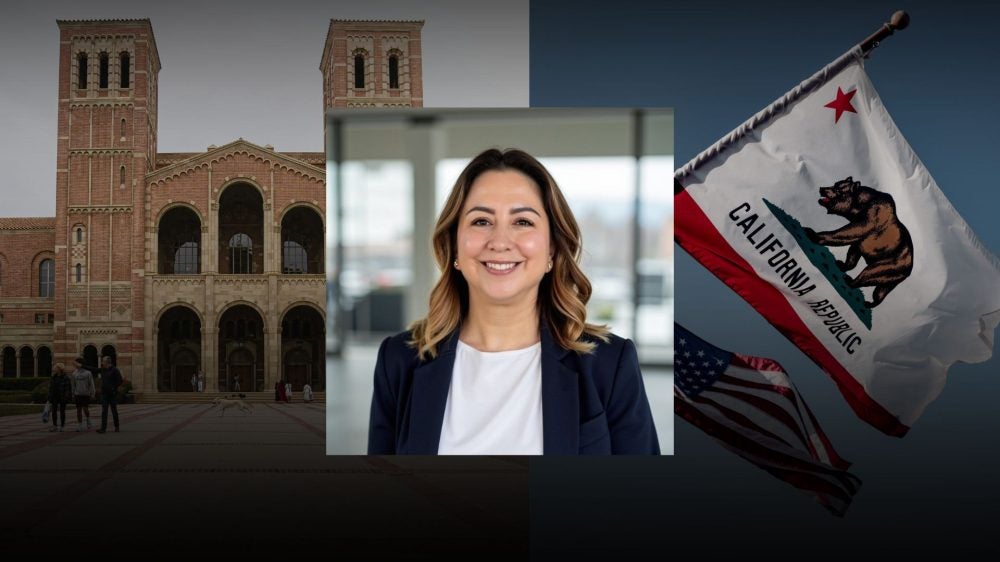
Royce hall on the left with the california flag on the right with the headshot of Avygail Sanchez in the center, background is very blurred black.

UCLA Luskin Alumna Avygail Sanchez Appointed to California State Board of Pharmacy

November 10, 2026
Luskin's Latest Blog

Avygail Sanchez MA UP ’04, a UCLA Luskin alumna and longtime leader in government relations and...

Read More
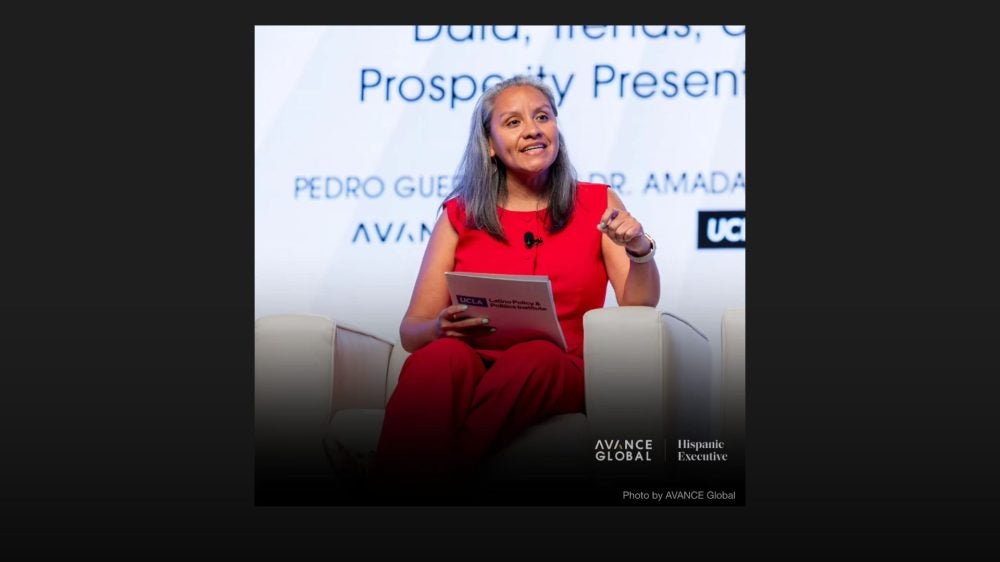
Amada Armenta on stay in a red dress, woman with gray shoulder length hair

Amada Armenta on the Power of Research and Storytelling

November 3, 2026
Luskin in the News
Read More
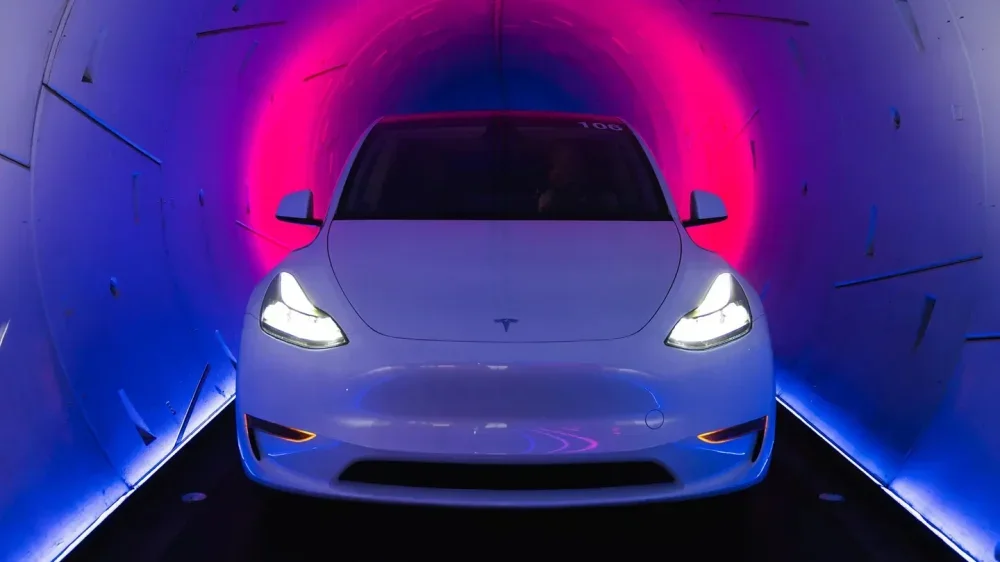
White Tesla in a pink lit tunnel. The Music City Loop in Nashville will feature twin, 10-mile tunnels between downtown and its international airport when it opens in 2027. The Boring Company

Examining the Risks of Elon Musk’s Nashville Tunnel Project

November 3, 2026
Luskin in the News
Read More
Front entrance of Luskin School of Public Affairs

Luskin Faculty Recognized Among World’s Top 2% of Scientists

November 2, 2026
Luskin's Latest Blog

UCLA Luskin School of Public Affairs faculty members have been recognized in the 2026 Stanford-Elsevier Top...

Read More
Learn more about UCLA Luskin

Find contact information and get answers to your questions.

Contact Us

Public Affairs Building
337 Charles E. Young Drive East
Los Angeles, California 90095

Linkedin Youtube Instagram Facebook X-twitter
Campus Resources
  • Map, Directions, Parking
  • Directory
  • Academic Calendar
  • Careers
  • Map, Directions, Parking
  • Directory
  • Academic Calendar
  • Careers
School Resources
  • About
  • Our Dean
  • Administration
  • Luskin School Intranet
  • Board of Advisors
  • Contact Us
  • Visit Us
  • About
  • Our Dean
  • Administration
  • Luskin School Intranet
  • Board of Advisors
  • Contact Us
  • Visit Us
UCLA logo
© 2026 Regents of the University of California
  • Emergency
  • Accessibility
  • Privacy & Terms of Use
  • Emergency
  • Accessibility
  • Privacy & Terms of Use
Facebook Instagram Linkedin X-twitter Youtube Threads
UCLA Luskin School of Public Affairs Logo
Academics
Departments
  • Global Public Affairs
  • Public Policy
  • Real Estate Development
  • Social Welfare
  • Urban Planning
  • Undergraduate Program
  • Global Public Affairs
  • Public Policy
  • Real Estate Development
  • Social Welfare
  • Urban Planning
  • Undergraduate Program
Graduate Programs
  • Master of Global Public Affairs (MGPA)
  • Master of Public Policy (MPP)
  • Master of Real Estate Development (MRED)
  • Master of Social Welfare (MSW)
  • Master of Urban and Regional Planning (MURP)
  • PhD in Social Welfare
  • PhD in Urban Planning
  • Master of Global Public Affairs (MGPA)
  • Master of Public Policy (MPP)
  • Master of Real Estate Development (MRED)
  • Master of Social Welfare (MSW)
  • Master of Urban and Regional Planning (MURP)
  • PhD in Social Welfare
  • PhD in Urban Planning
Undergraduate Programs
  • BA in Public Affairs
  • Minor in Urban and Regional Studies
  • Minor in Gerontology
  • Minor in Public Affairs
  • BA in Public Affairs
  • Minor in Urban and Regional Studies
  • Minor in Gerontology
  • Minor in Public Affairs
Professional Certificates
  • AI in Public Affairs Certificate
  • AI in Public Affairs Certificate
Admissions
Program Specific Admissions
  • Global Public Affairs
  • Public Policy
  • Real Estate Development
  • Social Welfare
  • Urban Planning
  • Undergraduate Program
  • Global Public Affairs
  • Public Policy
  • Real Estate Development
  • Social Welfare
  • Urban Planning
  • Undergraduate Program
Faculty
Our Faculty
  • All Faculty
  • Public Policy
  • Real Estate Development
  • Social Welfare
  • Urban Planning
  • All Faculty
  • Public Policy
  • Real Estate Development
  • Social Welfare
  • Urban Planning
Leadership
  • Our Dean
  • Board of Advisors
  • Faculty Executive Committee
  • Our Dean
  • Board of Advisors
  • Faculty Executive Committee
Research Centers
  • Agile Visual Analytics Lab (AVAL)

    Empowers stakeholders with data to make informed decisions for children, families, and communities.

  • Berggruen Governance Index

    Evaluates the quality of political governance and democracy worldwide.

  • Center for Neighborhood Knowledge (CNK)

    Specializes in spatial analysis of socioeconomic disparities in neighborhoods.

  • Center for Policy Research on Aging (CPRA)

    Explores the societal and policy implications of an aging population.

  • Institute of Transportation Studies (ITS)

    Advances research, education, and meaningful civic engagement on transportation issues.

  • Institute on Inequality and Democracy

    Advances scholarship that confronts threats to democracy in America and around the world.

  • Latin American Cities Initiative

    Connects urban planning and policy networks across the Americas.

  • Latino Policy & Politics Institute (LPPI)

    Addresses policy challenges facing Latinos and communities of color.

  • Lewis Center for Regional Policy Studies

    Studying housing affordability and transportation equity in the L.A. region.

  • Los Angeles Education Research Institute (LAERI)

    Collaborates with schools to improve educational outcomes for L.A. students.

  • Luskin Center for Innovation

    Informing effective and equitable environmental policy that improves lives.

  • UCLA Voting Rights Project

    The flagship project for voting rights litigation and policy research.

All Research Centers
Outcomes
Common Search Terms

Results will show as you type.