Skip to content
  • Students & Alumni
    • Overview
    • Career Services
    • Alumni Relations
    • Student Support
    • Graduate Resource Library
  • News
  • Events
    • Events Calendar
    • Luskin Summit
    • Luskin Lecture Series
    • California Policy Briefing
    • Commencement
  • Students & Alumni
    • Overview
    • Career Services
    • Alumni Relations
    • Student Support
    • Graduate Resource Library
  • News
  • Events
    • Events Calendar
    • Luskin Summit
    • Luskin Lecture Series
    • California Policy Briefing
    • Commencement
Giving
  • Academics
    Departments
    • Public Policy
    • Real Estate Development
    • Social Welfare
    • Undergraduate Program
    • Urban Planning
    • Public Policy
    • Real Estate Development
    • Social Welfare
    • Undergraduate Program
    • Urban Planning
    Graduate Programs
    • Master of Public Policy (MPP)
    • Master of Real Estate Development (MRED)
    • Master of Social Welfare (MSW)
    • Master of Urban and Regional Planning (MURP)
    • PhD in Social Welfare
    • PhD in Urban Planning
    • Master of Public Policy (MPP)
    • Master of Real Estate Development (MRED)
    • Master of Social Welfare (MSW)
    • Master of Urban and Regional Planning (MURP)
    • PhD in Social Welfare
    • PhD in Urban Planning
    Undergraduate Programs
    • BA in Public Affairs
    • Minor in Urban and Regional Studies
    • Minor in Gerontology
    • Minor in Public Affairs
    • BA in Public Affairs
    • Minor in Urban and Regional Studies
    • Minor in Gerontology
    • Minor in Public Affairs
    Professional Certificates
    • Data Analytics Certificate
    • Data Analytics Certificate
  • Admissions
    Program Specific Admissions
    • Public Policy
    • Real Estate Development
    • Social Welfare
    • Urban Planning
    • Undergraduate Program
    • Public Policy
    • Real Estate Development
    • Social Welfare
    • Urban Planning
    • Undergraduate Program
  • Faculty
    Our Faculty
    • All Faculty
    • Public Policy
    • Real Estate Development
    • Social Welfare
    • Urban Planning
    • All Faculty
    • Public Policy
    • Real Estate Development
    • Social Welfare
    • Urban Planning
    Leadership
    • Our Dean
    • Board of Advisors
    • Faculty Executive Committee
    • Our Dean
    • Board of Advisors
    • Faculty Executive Committee
  • Research Centers
    • Agile Visual Analytics Lab (AVAL):

      Uses data visualization to improve decision-making for family and child services.

    • Berggruen Governance Index

      Evaluates the quality of political governance and democracy worldwide.

    • Center for Neighborhood Knowledge (CNK)

      Specializes in spatial analysis of socioeconomic disparities in neighborhoods.

    • Center for Policy Research on Aging (CPRA)

      Explores the societal and policy implications of an aging population.

    • Agile Visual Analytics Lab (AVAL):

      Uses data visualization to improve decision-making for family and child services.

    • Berggruen Governance Index

      Evaluates the quality of political governance and democracy worldwide.

    • Center for Neighborhood Knowledge (CNK)

      Specializes in spatial analysis of socioeconomic disparities in neighborhoods.

    • Center for Policy Research on Aging (CPRA)

      Explores the societal and policy implications of an aging population.

    • Institute of Transportation Studies (ITS)

      A national leader in transportation policy and mobility research.

    • Institute on Inequality and Democracy

      Advances scholarship addressing displacement and dispossession in Los Angeles and beyond.

    • Latin American Cities Initiative

      Connects urban planning and policy networks across the Americas.

    • Latino Policy & Politics Institute (LPPI)

      Addresses policy challenges facing Latinos and communities of color.

    • Institute of Transportation Studies (ITS)

      A national leader in transportation policy and mobility research.

    • Institute on Inequality and Democracy

      Advances scholarship addressing displacement and dispossession in Los Angeles and beyond.

    • Latin American Cities Initiative

      Connects urban planning and policy networks across the Americas.

    • Latino Policy & Politics Institute (LPPI)

      Addresses policy challenges facing Latinos and communities of color.

    • Lewis Center for Regional Policy Studies

      Researches housing, transportation, and economic development in Southern California.

    • Los Angeles Education Research Institute (LAERI)

      Collaborates with schools to improve educational outcomes for L.A. students.

    • Luskin Center for Innovation (LCI)

      Focuses on environmental policy, clean energy, and climate justice.

    • UCLA Voting Rights Project

      The flagship project for voting rights litigation and policy research.

    • Lewis Center for Regional Policy Studies

      Researches housing, transportation, and economic development in Southern California.

    • Los Angeles Education Research Institute (LAERI)

      Collaborates with schools to improve educational outcomes for L.A. students.

    • Luskin Center for Innovation (LCI)

      Focuses on environmental policy, clean energy, and climate justice.

    • UCLA Voting Rights Project

      The flagship project for voting rights litigation and policy research.

    All Research Centers
  • Outcomes
Home / Early Childhood Incarceration Linked to High Rates of Physical, Mental Health Issues

Early Childhood Incarceration Linked to High Rates of Physical, Mental Health Issues

Half of those admitted to juvenile justice facilities before their teen years reported suicidal thoughts as adults

Posted in

  • School of Public Affairs, Social Welfare, Social Welfare News

Published on

  • March 29, 2018
  • children, criminal justice, Incarceration, jail, juvenile justice, Luskin School of Public Affairs, prison, Social Welfare, UCLA Luskin School of Public Affairs

Share this Article

By Ryan Hatoum

Elizabeth Barnert, left, and Laura Abrams. Photo by George Foulsham

When children are placed in juvenile detention centers, jails or prisons before their teenage years, they are much more likely to experience serious physical and mental health issues as adults, according to a new study by UCLA researchers.

The UCLA researchers reported that more than 21 percent of people who had been incarcerated as children reported poor general health in adulthood, compared with 13 percent for those incarcerated later in life and 8 percent for those never incarcerated. The study appears in the International Journal of Prisoner Health.

“Those at risk for imprisonment during childhood need special attention from the health care sector,” said Elizabeth Barnert, principal investigator of the study and an assistant professor of pediatrics at the David Geffen School of Medicine at UCLA. “The rates of poor health outcomes among people who’ve been incarcerated tell us there’s a huge need for us to take better care of them — both as kids and as adults.”

There has been a growing international movement to find alternatives to juvenile incarceration — or the detainment of minors in juvenile halls, probation camps and other juvenile justice facilities — for the youngest offenders. Many countries are raising the minimum age at which adolescents can be incarcerated and are deferring children to other programs for rehabilitation.

Researchers from the Geffen School, UCLA Luskin School of Public Affairs and UCLA Mattel Children’s Hospital analyzed data from 14,689 adult participants in the National Longitudinal Study of Adolescent to Adult Health. Their analysis considered three groups: adults who had been incarcerated during the ages of 7 to 13; adults who had been incarcerated during the ages of 14 to 32; and adults who had never been incarcerated.

“From the data we have available, it’s hard to pinpoint exactly why those who enter the juvenile justice system at a young age face greater health challenges,” said Laura Abrams, also a principal investigator of the study and a professor and chair of Social Welfare at the Luskin School. “It’s likely a combination of trauma, which can lead to troubled behavior and long-term health problems, and the lasting effects of the conditions of early imprisonment.”

A key study finding were the differences among the groups’ mental health symptoms. Thirty-eight percent of the people who had been incarcerated before age 14 experienced symptoms of depression in adulthood, contrasted with 24 percent of those who were incarcerated at age 14 to 32 and 15 percent of the never-incarcerated group.

In other findings, more than one in four of those incarcerated before age 14 reported suicidal thoughts as adults, contrasted with about one in 10 of the group incarcerated at later ages and one in 15 of the group who had never been incarcerated.

Among the respondents who had been incarcerated at the youngest ages — seven to 12 — the rate was even higher; half experienced suicidal thoughts and ideation in adulthood.

“Incarceration has human costs at all ages, but with children, it’s particularly problematic,” Abrams said. “Children need spaces to grow and thrive — not to be confined in jail-like settings.”

While this new analysis does not prove a cause-and-effect relationship between early incarceration and poor health later in life, mounting research gives experts a sense of the factors involved.

One such factor is who gets incarcerated in the first place — for which research has shown there is bias. A study in the journal Criminal Justice and Behavior found that of children with psychiatric disorders, those of a racial or ethnic minority are more likely than those who are white to be incarcerated rather than diverted to the community for treatment. As such children are placed into juvenile justice facilities, their health issues may be left untreated or worsen.

The UCLA study found disproportionate racial, ethnic and socioeconomic patterns in those incarcerated as young children. People incarcerated at the youngest ages were significantly more likely to be male, black or Hispanic than those incarcerated at older ages and those never incarcerated. They were also much more likely to have been raised in the lowest income group and in a single-parent household.

“We’re only now starting to understand the full effects of juvenile incarceration on the person, and from a health perspective, the needs of this population are largely going unmet,” Barnert said. “We need a system that effectively addresses their health challenges as early as possible — ideally preventing adolescents from ever reaching juvenile hall.”

Faculty Mentioned in this Article

No results found.

Related Articles

Downtown LA just after sunset during blue hour, captured from a helicopter point of view with lighted City Hall building.

UCLA Grants Deepen Ties to the L.A. Community

March 17, 2025
For Faculty
Projects by Luskin faculty will build collaboration among scholars, students and local partners....
Read More
three women|

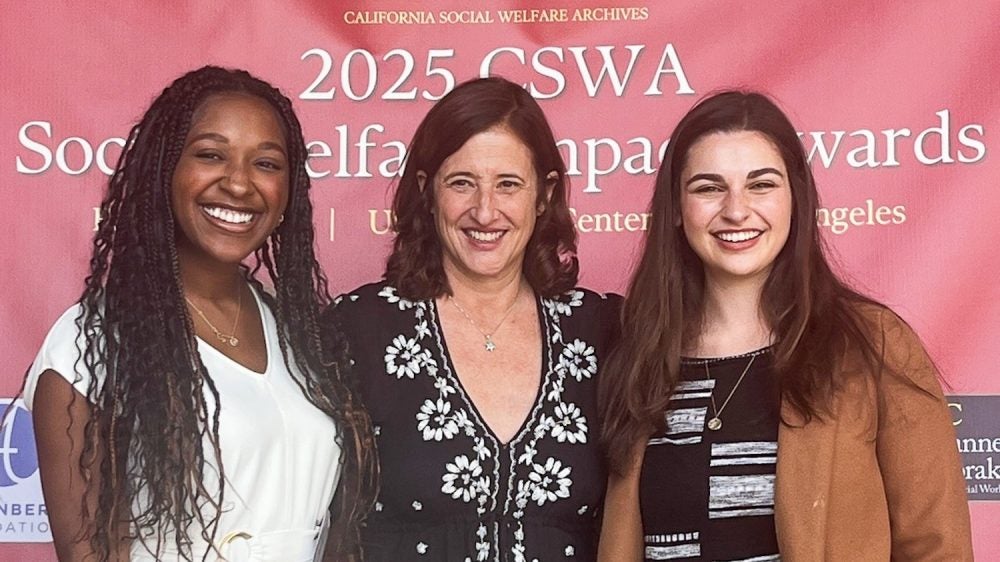
Honors for UCLA Luskin Social Welfare Professor and Alumna

March 4, 2025
Luskin's Latest Blog
Professor Laura Abrams and alumna Aurea Montes-Rodriguez are recognized by the California Social Welfare Archives....
Read More
LAbrmsIncarc1

Abrams on the Decline of Juvenile Incarceration in the United States

February 26, 2025
Luskin in the News
People who are incarcerated at young ages for longer periods of time are less likely to...
Read More
Two people seated in circle of people

Abrams on Promoting Justice for Troubled Youth

February 7, 2025
Luskin in the News
At universities around the country, social workers are being trained in more holistic strategies and practices...
Read More
Photo by fotojog/iStock

New Study Provides First Nationwide Window on Juvenile Lifer Population

June 13, 2024
For Faculty
New study is the first to supply concrete numbers and a full demographic profile of the...
Read More
photo of woman with blond hair in front of flowering plants

Poco Kernsmith Appointed New Chair of Social Welfare

April 29, 2024
Alumni
UCLA Luskin alumna will return to her doctoral alma mater this summer as chair and professor....
Read More
Top16PASGraphic

Social Welfare Rises to Top 8 in U.S. News Rankings

April 9, 2024
For Faculty
Luskin School also continues to rank among the nation’s top graduate schools overall in public affairs....
Read More
team of tree-planting volunteers with shovels

A Push to Plant Trees in L.A.’s Hottest Places

March 26, 2024
Luskin in the News
Designed to combat shade inequity, a new step-by-step framework helps residents, advocates, city leaders and planners...
Read More
young person holding sign with word 'racism' marked out

Breaking Old Cycles and Envisioning New Futures

March 18, 2024
Luskin's Latest Blog
“Young Black Changemakers" tells the stories of L.A. youth who draw strength from their communities to...
Read More
"Top 100"

Abrams, 2 Emeriti Professors on List of Top 100 Social Work Scholars

March 13, 2024
Luskin's Latest Blog
UCLA Luskin's Laura Abrams, Duncan Lindsey and Zeke Hasenfeld are recognized as among the leading contributors...
Read More
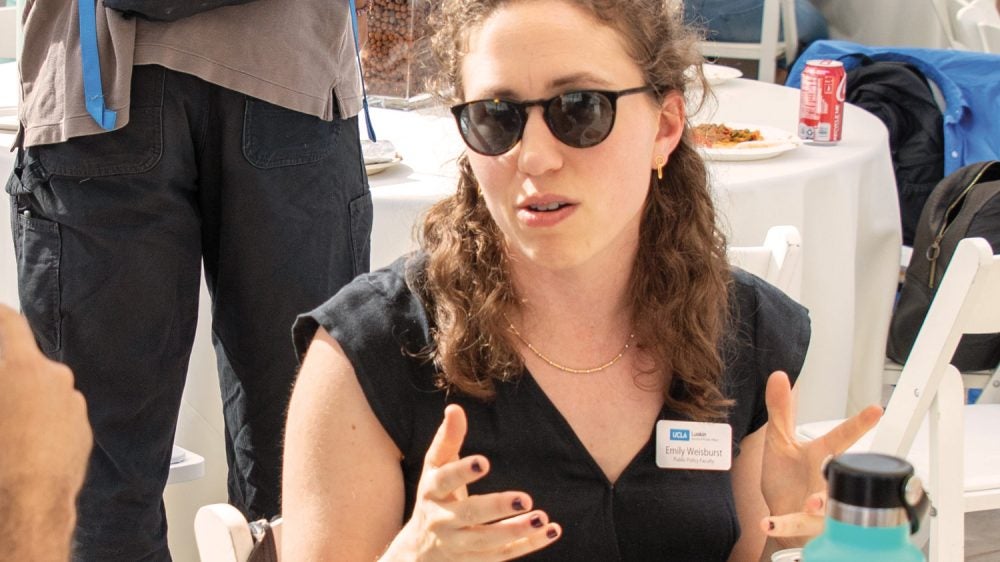
woman in sunglasses gestures while seated an event

Financial Support Advances Timely, Problem-Solving Research

December 21, 2023
Uncategorized
Amid rising costs and declining state support, grants and gifts are more important than ever....
Read More
book cover with headshot of woman|two men and two women with book

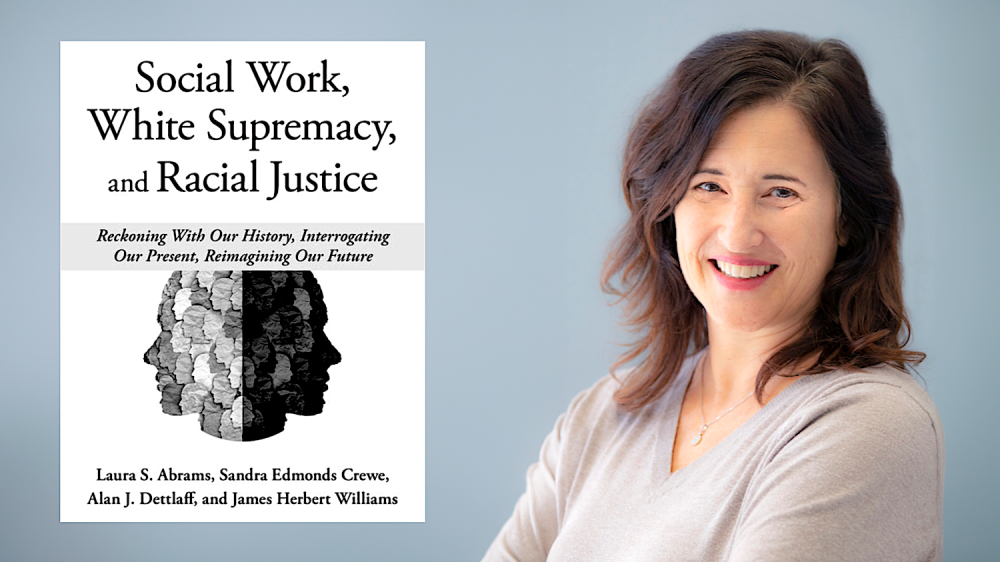
Abrams Co-Edits Book on Social Work’s Reckoning With a Racist History

November 16, 2023
Luskin's Latest Blog
“Social Work, White Supremacy, and Racial Justice" is a call to action to eliminate structural racism...
Read More
Learn more about UCLA Luskin

Find contact information and get answers to your questions.

Contact Us

Public Affairs Building
337 Charles E. Young Drive East
Los Angeles, California 90095

Linkedin Youtube Instagram Facebook X-twitter
Campus Resources
  • Map, Directions, Parking
  • Directory
  • Academic Calendar
  • Careers
  • Map, Directions, Parking
  • Directory
  • Academic Calendar
  • Careers
School Resources
  • About
  • Our Dean
  • Administration
  • Board of Advisors
  • Contact Us
  • Visit Us
  • About
  • Our Dean
  • Administration
  • Board of Advisors
  • Contact Us
  • Visit Us
© 2026 Regents of the University of California
  • Emergency
  • Accessibilty
  • Privacy & Terms of Use
  • Emergency
  • Accessibilty
  • Privacy & Terms of Use
Facebook Instagram Linkedin X-twitter Youtube Threads
Academics
Departments
  • Public Policy
  • Real Estate Development
  • Social Welfare
  • Undergraduate Program
  • Urban Planning
  • Public Policy
  • Real Estate Development
  • Social Welfare
  • Undergraduate Program
  • Urban Planning
Graduate Programs
  • Master of Public Policy (MPP)
  • Master of Real Estate Development (MRED)
  • Master of Social Welfare (MSW)
  • Master of Urban and Regional Planning (MURP)
  • PhD in Social Welfare
  • PhD in Urban Planning
  • Master of Public Policy (MPP)
  • Master of Real Estate Development (MRED)
  • Master of Social Welfare (MSW)
  • Master of Urban and Regional Planning (MURP)
  • PhD in Social Welfare
  • PhD in Urban Planning
Undergraduate Programs
  • BA in Public Affairs
  • Minor in Urban and Regional Studies
  • Minor in Gerontology
  • Minor in Public Affairs
  • BA in Public Affairs
  • Minor in Urban and Regional Studies
  • Minor in Gerontology
  • Minor in Public Affairs
Professional Certificates
  • Data Analytics Certificate
  • Data Analytics Certificate
Admissions
Program Specific Admissions
  • Public Policy
  • Real Estate Development
  • Social Welfare
  • Urban Planning
  • Undergraduate Program
  • Public Policy
  • Real Estate Development
  • Social Welfare
  • Urban Planning
  • Undergraduate Program
Faculty
Our Faculty
  • All Faculty
  • Public Policy
  • Real Estate Development
  • Social Welfare
  • Urban Planning
  • All Faculty
  • Public Policy
  • Real Estate Development
  • Social Welfare
  • Urban Planning
Leadership
  • Our Dean
  • Board of Advisors
  • Faculty Executive Committee
  • Our Dean
  • Board of Advisors
  • Faculty Executive Committee
Research Centers
  • Agile Visual Analytics Lab (AVAL):

    Uses data visualization to improve decision-making for family and child services.

  • Berggruen Governance Index

    Evaluates the quality of political governance and democracy worldwide.

  • Center for Neighborhood Knowledge (CNK)

    Specializes in spatial analysis of socioeconomic disparities in neighborhoods.

  • Center for Policy Research on Aging (CPRA)

    Explores the societal and policy implications of an aging population.

  • Agile Visual Analytics Lab (AVAL):

    Uses data visualization to improve decision-making for family and child services.

  • Berggruen Governance Index

    Evaluates the quality of political governance and democracy worldwide.

  • Center for Neighborhood Knowledge (CNK)

    Specializes in spatial analysis of socioeconomic disparities in neighborhoods.

  • Center for Policy Research on Aging (CPRA)

    Explores the societal and policy implications of an aging population.

  • Institute of Transportation Studies (ITS)

    A national leader in transportation policy and mobility research.

  • Institute on Inequality and Democracy

    Advances scholarship addressing displacement and dispossession in Los Angeles and beyond.

  • Latin American Cities Initiative

    Connects urban planning and policy networks across the Americas.

  • Latino Policy & Politics Institute (LPPI)

    Addresses policy challenges facing Latinos and communities of color.

  • Institute of Transportation Studies (ITS)

    A national leader in transportation policy and mobility research.

  • Institute on Inequality and Democracy

    Advances scholarship addressing displacement and dispossession in Los Angeles and beyond.

  • Latin American Cities Initiative

    Connects urban planning and policy networks across the Americas.

  • Latino Policy & Politics Institute (LPPI)

    Addresses policy challenges facing Latinos and communities of color.

  • Lewis Center for Regional Policy Studies

    Researches housing, transportation, and economic development in Southern California.

  • Los Angeles Education Research Institute (LAERI)

    Collaborates with schools to improve educational outcomes for L.A. students.

  • Luskin Center for Innovation (LCI)

    Focuses on environmental policy, clean energy, and climate justice.

  • UCLA Voting Rights Project

    The flagship project for voting rights litigation and policy research.

  • Lewis Center for Regional Policy Studies

    Researches housing, transportation, and economic development in Southern California.

  • Los Angeles Education Research Institute (LAERI)

    Collaborates with schools to improve educational outcomes for L.A. students.

  • Luskin Center for Innovation (LCI)

    Focuses on environmental policy, clean energy, and climate justice.

  • UCLA Voting Rights Project

    The flagship project for voting rights litigation and policy research.

All Research Centers
Outcomes
Common Search Terms

Results will show as you type.