Skip to content
  • Students & Alumni
    • Career Services
    • Alumni Relations
    • Student Support
    • Graduate Resource Library
    • For Employers
  • News
  • Events
    • Events Calendar
    • Luskin Summit
    • Luskin Lecture Series
    • California Policy Briefing
    • Commencement
  • Students & Alumni
    • Career Services
    • Alumni Relations
    • Student Support
    • Graduate Resource Library
    • For Employers
  • News
  • Events
    • Events Calendar
    • Luskin Summit
    • Luskin Lecture Series
    • California Policy Briefing
    • Commencement
Giving
UCLA Luskin School of Public Affairs Logo
  • Academics
    Departments & Programs
    • Global Public Affairs
    • Public Policy
    • Real Estate Development
    • Social Welfare
    • Urban Planning
    • Undergraduate Program
    • Global Public Affairs
    • Public Policy
    • Real Estate Development
    • Social Welfare
    • Urban Planning
    • Undergraduate Program
    Graduate Degrees
    • Master of Global Public Affairs (MGPA)
    • Master of Public Policy (MPP)
    • Master of Real Estate Development (MRED)
    • Master of Social Welfare (MSW)
    • Master of Urban and Regional Planning (MURP)
    • PhD in Social Welfare
    • PhD in Urban Planning
    • Master of Global Public Affairs (MGPA)
    • Master of Public Policy (MPP)
    • Master of Real Estate Development (MRED)
    • Master of Social Welfare (MSW)
    • Master of Urban and Regional Planning (MURP)
    • PhD in Social Welfare
    • PhD in Urban Planning
    Undergraduate Degrees
    • BA in Public Affairs
    • Minor in Urban and Regional Studies
    • Minor in Gerontology
    • Minor in Public Affairs
    • BA in Public Affairs
    • Minor in Urban and Regional Studies
    • Minor in Gerontology
    • Minor in Public Affairs
    Professional Certificates
    • AI in Public Affairs Certificate
    • AI in Public Affairs Certificate
  • Admissions
    Program Specific Admissions
    • Global Public Affairs
    • Public Policy
    • Real Estate Development
    • Social Welfare
    • Urban Planning
    • Undergraduate Program
    • Global Public Affairs
    • Public Policy
    • Real Estate Development
    • Social Welfare
    • Urban Planning
    • Undergraduate Program
  • Faculty
    Our Faculty
    • All Faculty
    • Public Policy
    • Real Estate Development
    • Social Welfare
    • Urban Planning
    • All Faculty
    • Public Policy
    • Real Estate Development
    • Social Welfare
    • Urban Planning
    Leadership
    • Our Dean
    • Board of Advisors
    • Faculty Executive Committee
    • Our Dean
    • Board of Advisors
    • Faculty Executive Committee
  • Research Centers
    • Agile Visual Analytics Lab (AVAL)

      Empowers stakeholders with data to make informed decisions for children, families, and communities.

    • Berggruen Governance Index

      Evaluates the quality of political governance and democracy worldwide.

    • Center for Neighborhood Knowledge (CNK)

      Specializes in spatial analysis of socioeconomic disparities in neighborhoods.

    • Center for Policy Research on Aging (CPRA)

      Explores the societal and policy implications of an aging population.

    • Institute of Transportation Studies (ITS)

      Advances research, education, and meaningful civic engagement on transportation issues.

    • Institute on Inequality and Democracy

      Advances scholarship that confronts threats to democracy in America and around the world.

    • Latin American Cities Initiative

      Connects urban planning and policy networks across the Americas.

    • Latino Policy & Politics Institute (LPPI)

      Addresses policy challenges facing Latinos and communities of color.

    • Lewis Center for Regional Policy Studies

      Studying housing affordability and transportation equity in the L.A. region.

    • Los Angeles Education Research Institute (LAERI)

      Collaborates with schools to improve educational outcomes for L.A. students.

    • Luskin Center for Innovation

      Informing effective and equitable environmental policy that improves lives.

    • UCLA Voting Rights Project

      The flagship project for voting rights litigation and policy research.

    All Research Centers
  • Outcomes
Home / News / Examining the Unspoken Truth of Sexually Exploited Youth

Examining the Unspoken Truth of Sexually Exploited Youth

Author and researcher Alexandra Lutnick keynotes UCLA Luskin School conference on the hidden problem of youth caught up in the sex trade in the U.S
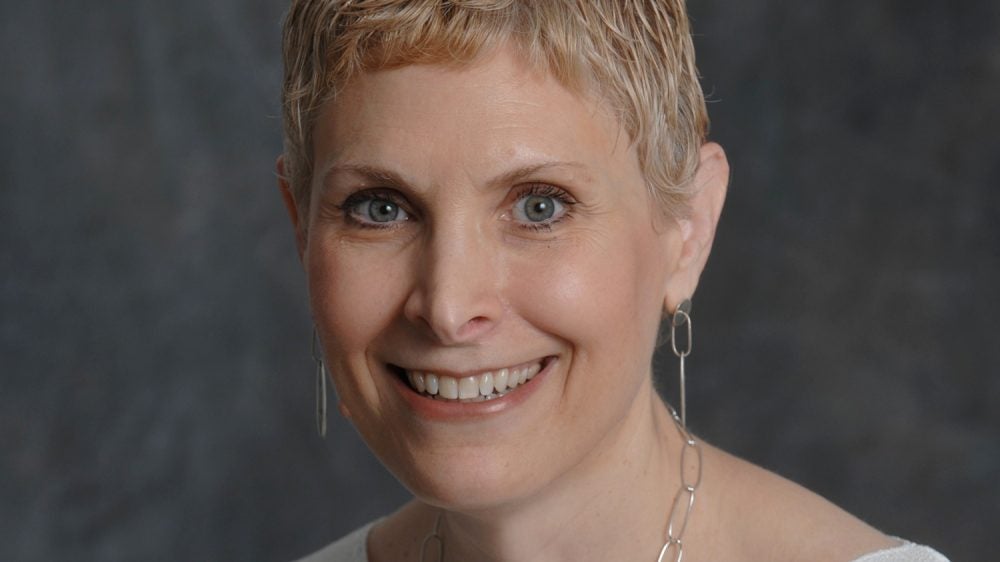
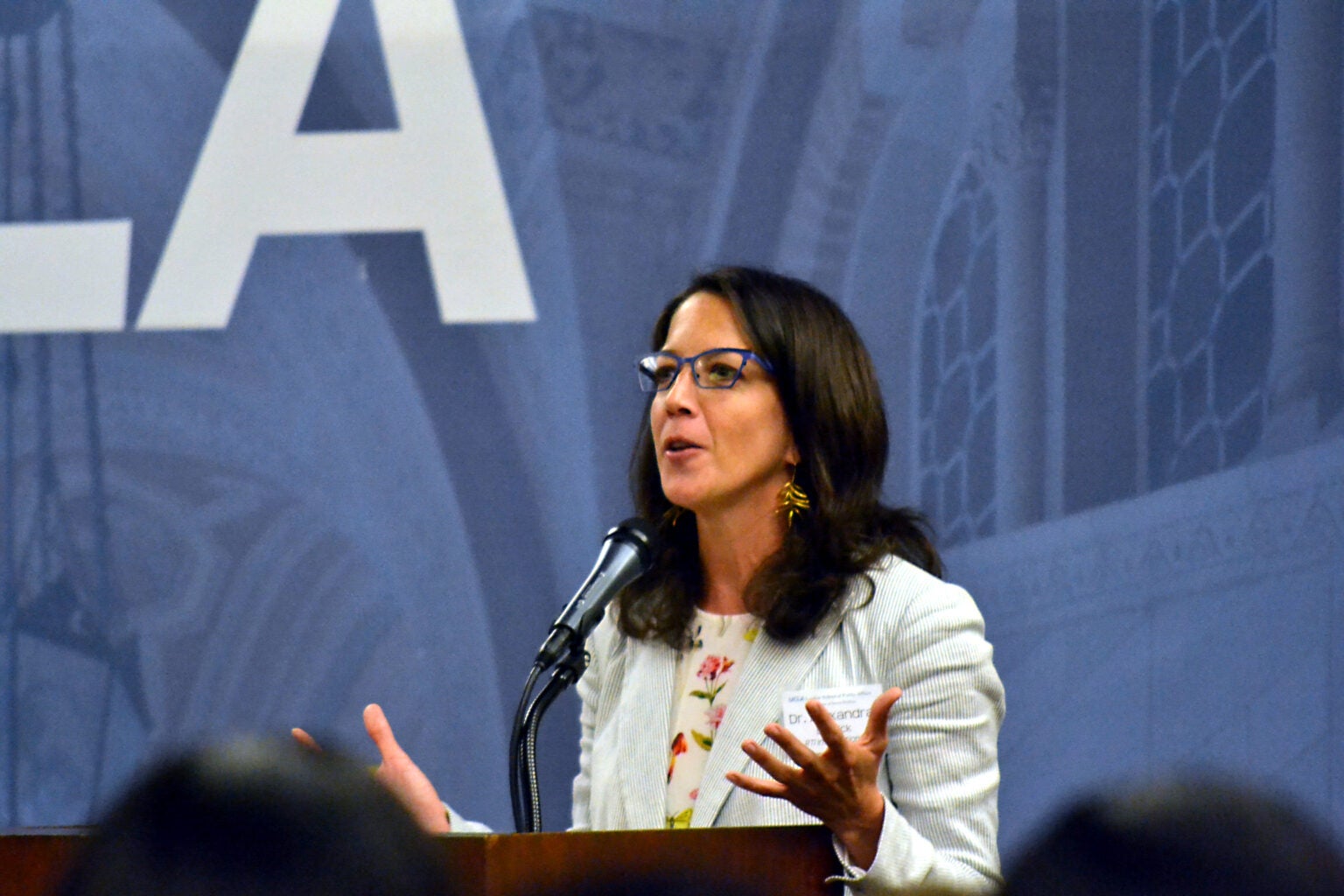
Alexandra Lutnick delivers the keynote address at the 2017 CSEC Conference organized by the UCLA Luskin School of Public Affairs' Department of Social Welfare
Alexandra Lutnick delivers the keynote address at the 2017 CSEC Conference organized by the UCLA Luskin School of Public Affairs' Department of Social Welfare. Photo by Stan Paul

Posted in

  • School of Public Affairs, Social Welfare

Published on

  • May 16, 2017

Share this Article

“The stories I tell no way describe the torture I felt
Years of destruction I knew nothing else
Trusted my mind, body, and soul
In the hands of another human being to control”

from the poem “Mind, Body and Soul,” by Ummra Hang, a second-year master of social welfare student at UCLA Luskin

By Stan Paul

Ummra Hang’s reading of her powerful poem was one of many highlights of a UCLA Luskin School of Public Affairs conference examining sexually exploited children. The event, held May 6, 2017, brought together students, faculty, policy experts, law enforcement and service agency personnel — as well as survivors of abuse and commercial sexual exploitation — to focus on a complicated and emotionally charged problem.

The conference, which included appearances by several alumni from the Luskin School, highlighted how commercial sexual exploitation is not just happening in other countries. It is believed to involve more than 100,000 young people throughout the United States — especially in densely populated California cities such as San Francisco, San Diego and Los Angeles. The conference also served as the final project for — and was conducted by — Luskin master of social welfare research students in the University Consortium for Child and Families (UCCF) program, the culmination of their year-long research projects and part of a three-quarter course led by professor of social welfare Rosina Becerra. UCCF is a federally funded program and partnership between the County of Los Angeles Department of Children and Families and six masters of social work programs in Los Angeles, including UCLA.

Assisting the students in putting on the conference were Consuelo Bingham Mira, a lecturer in social welfare and coordinator of evaluation and research for the Public Child Welfare (PCW) California Social Welfare Education Counsel (CalSWEC) program and social welfare field faculty Michelle Talley.

Although the problem is difficult to measure, research shows that sexual abuse and exploitation is not limited to young girls. It affects males, females and across the spectrum of genders and sexualities for a variety of reasons, said keynote speaker Alexandra Lutnick, a researcher and expert on human trafficking, the sex industry, substance abuse and criminalization.

“Our lesbian, gay, bisexual, transgender, queer, questioning, intersex — all face high rates of incarceration, family rejection, homelessness and child welfare involvement,” said Lutnick, author of the book “Domestic Minor Sex Trafficking: Beyond Victims and Villains.” “Any one of those on their own puts someone at an increased risk of trading sex. And, when we look at the intersectionality of those, we realize the ways in which gender discrimination, discrimination based on sexual orientation, housing insecurity, institutionalized homophobia and transphobia all conspire to make this group of young people more vulnerable to being involved in selling sex.”

Lutnick explained that a complicated issue such as this refutes prevailing narratives.

“We don’t know how many are involved — it’s a hidden population,” she said. “There’s no registry,” and therefore no ability to gather data about the ages of youth entering the sex trade.

Lutnick discussed the role that physical or emotional neglect plays in bringing youth into the sex trade. With emotional neglect, a young person may not find support from the adults in the immediate family, so he or she may seek that support elsewhere.

“That could be coupling with somebody in an intimate partnership,” Lutnick said. “And then that person is asking, coercing or forcing them to sell sex. It could be looking for validation from people who are paying them for sex.”

Adding to this complex story is the role of child abuse, said Lutnick. “Inevitably that’s going to come up in any conversation about young people being involved in the sex trade. For some this means they’re being abused at home and to get away from the abuse they run away and then we’re back into the narrative of the role of homelessness.”

For others, she said, “their involvement in the sex trade is a continuation of the way in which their parents and guardians have been abusing them for many, many years. And it’s just one of the ways that’s now happening,” she said.

Panelist Gabriella Lewis, a supervising case manager with CAST, a Los Angeles-based nonprofit anti-trafficking organization, said that the problem is more common than most people realize. “Anyone can be a victim and anyone can be a trafficker,” Calderon said. “Safety is constantly an issue with this population.”

Solutions are challenging, Lutnick said, and they remain obstructed by nebulous dichotomies such as victim and villain.

The idea of, “Oh, we just need to rescue the good kids and punish the bad people,” flies in the face of the reality on the streets, Lutnick said. “We can’t arrest our way out of this. We can’t legislate our way out of it and we need to direct attention to the root factors that contribute to young people either deciding to that the sex trade is their best or their worst option or finding themselves in situations where someone is specifically taking advantage of the vulnerabilities that they have.”

There is some positive news in California, Lutnick said. The state Senate passed a bill in the past year that decriminalizes youth involvement in the sex trade — progress that was many years in the making.

“Even though you’ve got a federal definition, they’re regulated at the state level,” Lutnick said. “So unless states change their penal codes, young people are still being arrested.”

Lutnick also had some advice for lawmakers and policymakers.

“When we have these proposed outcomes — lawsuits or legislation — what are the questions we need to ask ourselves?” she asked. “Is it going to result in the hoped-for outcome? What are the potential negative impacts? Does it address key vulnerabilities such as poverty, racism homophobia, transphobia? And, if not, maybe we need to work a little harder to do that deeper level work — that macro level work — to come up with solutions that aren’t going to create harm for anybody.”

Two Luskin graduates — Emily Williams MPP ’98, assistant senior deputy for Human Services, Child Welfare, and Education for Los Angeles County Supervisor Mark Ridley-Thomas; and Sarah Godoy MSW ’15, a policy associate for the National Center for the Youth Law’s Child Trafficking Team — were among the expert panelists. Both were part of the juvenile justice/law enforcement panel that included LAPD detective Dana Harris, who specializes in the investigation of human trafficking, and Maria Griglio, a deputy county counsel representing the Department of Children and Family Services.

Recognizing that young people over the age of 18 involved in prostitution may have been a victim of exploitation long before that, Williams talked about the L.A. County Supervisors’ ongoing efforts to end commercial exploitation of children as well as the expansion and implementation of support services to those who are 18-24 years of age.

“We understand they need to be served just as much as children do,” said Williams, who serves as a policy liaison to a number of service agencies including the Department of Children and Family Services, the Department of Public Social Services, Child Support Services and the Los Angeles County Office of Education.

Panelist Monique Calderon, who was part of the “healing to action” panel, shared her own story of getting into “the life” in the sex industry after graduating from college, and how difficult it was to get out.

Conference organizers were pleased with the results of the daylong discussions.

“The conference exceeded my expectations,” UCLA Luskin social welfare field faculty member Michelle Talley MSW ’98 said after the event. “Every panelist enhanced the conference as each one imparted their knowledge and expertise about human trafficking and engaged the audience.”

Every student who participated went above and beyond to ensure the success of the conference, she said. “The conference was a start of an invigorating discussion of sex trafficking of youth in hopes to end trafficking as we know it today,” Talley said.

“This successful conference is just one of the examples of the many activities that the students are able to do in our MSW program,” added Becerra, who also acknowledged generous support for the conference by members of the Los Angeles County Board of Supervisors Mark Ridley-Thomas, Sheila Kuehl and Hilda Solis, as well as by private donors.
Faculty Mentioned in this Article
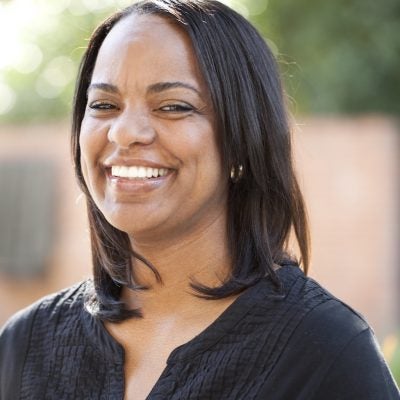
person in dark shirt outdoors

Michelle Talley

MSW Education Faculty of Social Welfare

Michelle Talley is a Licensed Clinical Social Worker whose main area of focus is working with youth and families as...

Related Articles

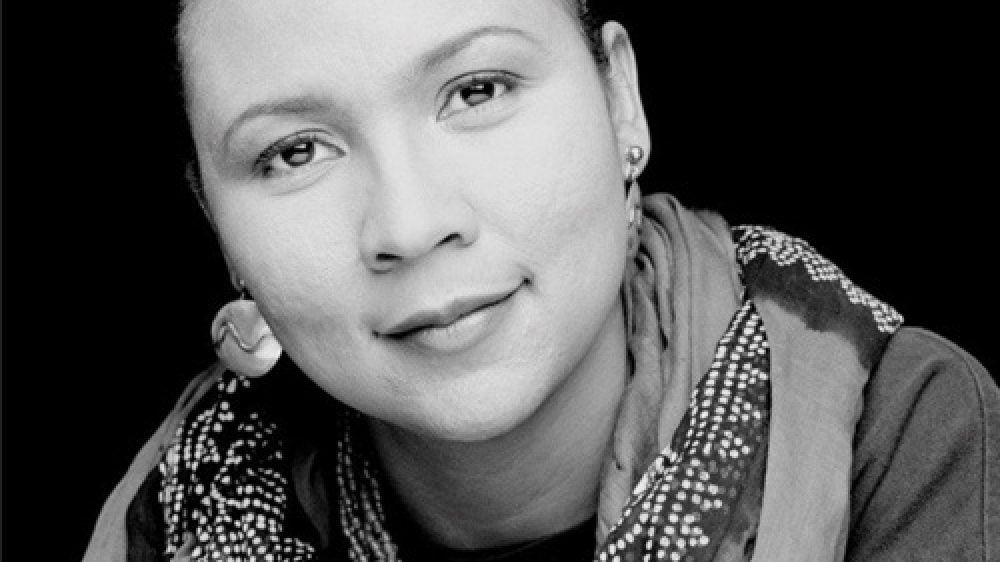
Known by the pen name bell hooks, the author, professor, feminist and social activist died Dec

Luskin Social Welfare Remembers Bell Hooks

February 14, 2022
Social Welfare
A tribute by professor Michelle Talley...
Read More
Portrait of Karen Lee

In Memoriam: Karen Lee, Former Field Faculty Member

January 28, 2022
Alumni
The co-founder of a national consortium focusing on geriatric social work educated and mentored hundreds of...
Read More
header-gradient4

Partnership of Social Workers and Medical Students Enters 2nd Year

October 19, 2017
Luskin's Latest Blog
UCLA medical students are again learning from social workers about the issues they face in medical...
Read More
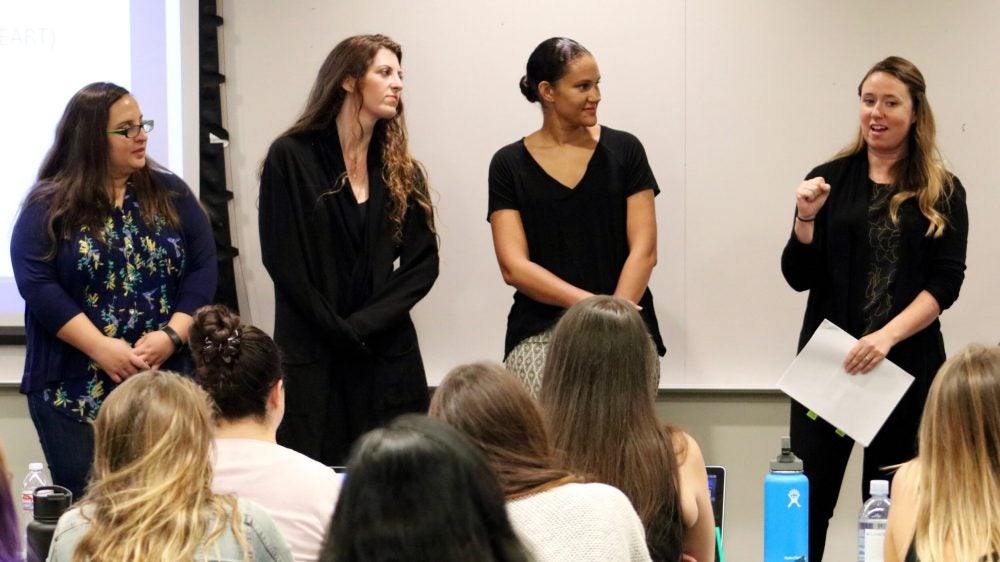
UCLA Luskin master of social welfare alumni speak to the new class of social welfare graduate students Sept

Getting an Early Start on Social Welfare Lessons

September 21, 2017
Alumni
MSW alumnae share advice with incoming UCLA Luskin students who will be serving vulnerable clients and...
Read More
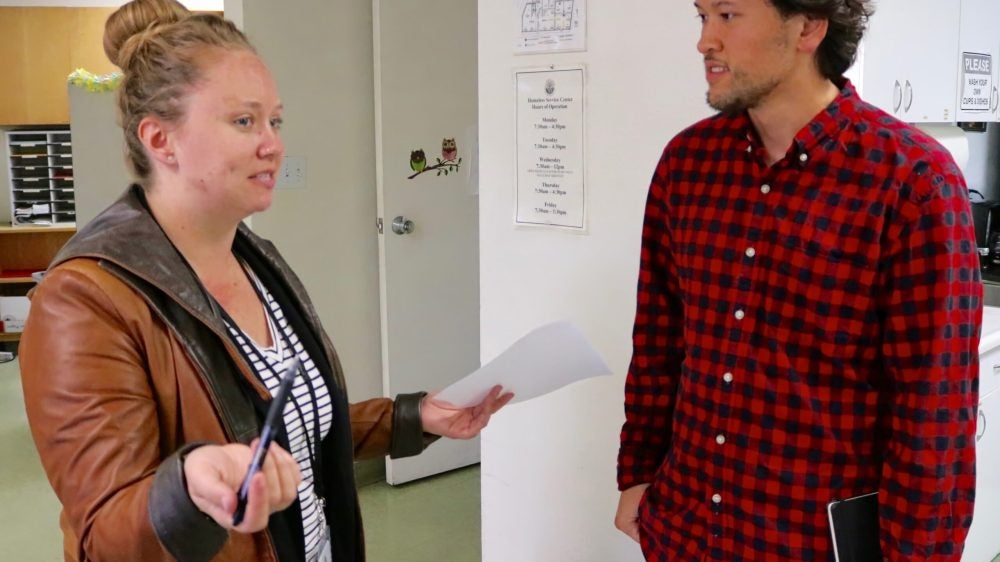
First-year UCLA medical student Matthew Hing, right, listens as social worker Katie Helgason, program manager at the St

Social Workers and Medical Students: ‘The Ideal Team’

June 15, 2017
School of Public Affairs
UCLA Luskin’s Department of Social Welfare provides lessons in social work to first-year students from the...
Read More
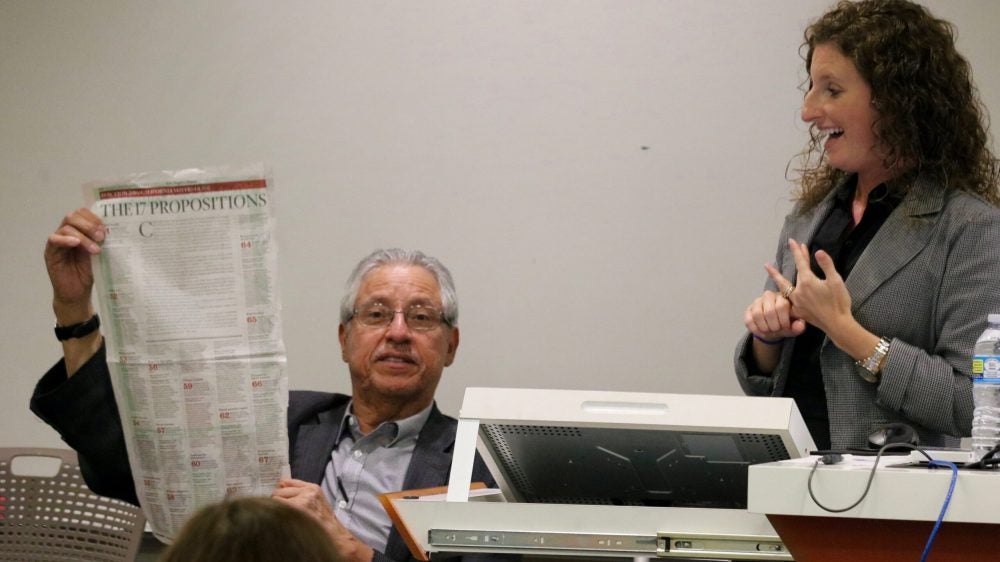
Fernando Torres-Gil, left, holds up a copy of a newspaper article listing the state ballot propositions, as Laura Wray-Lake reacts

2016 California Voter Issues — A Lot More Than Just Hillary and Trump

November 2, 2016
School of Public Affairs
UCLA Luskin Social Welfare faculty members analyze the potential impact of a slew of state and...
Read More
Learn more about UCLA Luskin

Find contact information and get answers to your questions.

Contact Us

Public Affairs Building
337 Charles E. Young Drive East
Los Angeles, California 90095

Linkedin Youtube Instagram Facebook X-twitter
Campus Resources
  • Map, Directions, Parking
  • Directory
  • Academic Calendar
  • Careers
  • Map, Directions, Parking
  • Directory
  • Academic Calendar
  • Careers
School Resources
  • About
  • Our Dean
  • Administration
  • Luskin School Intranet
  • Board of Advisors
  • Contact Us
  • Visit Us
  • About
  • Our Dean
  • Administration
  • Luskin School Intranet
  • Board of Advisors
  • Contact Us
  • Visit Us
UCLA logo
© 2026 Regents of the University of California
  • Emergency
  • Accessibility
  • Privacy & Terms of Use
  • Emergency
  • Accessibility
  • Privacy & Terms of Use
Facebook Instagram Linkedin X-twitter Youtube Threads
UCLA Luskin School of Public Affairs Logo
Academics
Departments
  • Global Public Affairs
  • Public Policy
  • Real Estate Development
  • Social Welfare
  • Urban Planning
  • Undergraduate Program
  • Global Public Affairs
  • Public Policy
  • Real Estate Development
  • Social Welfare
  • Urban Planning
  • Undergraduate Program
Graduate Programs
  • Master of Global Public Affairs (MGPA)
  • Master of Public Policy (MPP)
  • Master of Real Estate Development (MRED)
  • Master of Social Welfare (MSW)
  • Master of Urban and Regional Planning (MURP)
  • PhD in Social Welfare
  • PhD in Urban Planning
  • Master of Global Public Affairs (MGPA)
  • Master of Public Policy (MPP)
  • Master of Real Estate Development (MRED)
  • Master of Social Welfare (MSW)
  • Master of Urban and Regional Planning (MURP)
  • PhD in Social Welfare
  • PhD in Urban Planning
Undergraduate Programs
  • BA in Public Affairs
  • Minor in Urban and Regional Studies
  • Minor in Gerontology
  • Minor in Public Affairs
  • BA in Public Affairs
  • Minor in Urban and Regional Studies
  • Minor in Gerontology
  • Minor in Public Affairs
Professional Certificates
  • AI in Public Affairs Certificate
  • AI in Public Affairs Certificate
Admissions
Program Specific Admissions
  • Global Public Affairs
  • Public Policy
  • Real Estate Development
  • Social Welfare
  • Urban Planning
  • Undergraduate Program
  • Global Public Affairs
  • Public Policy
  • Real Estate Development
  • Social Welfare
  • Urban Planning
  • Undergraduate Program
Faculty
Our Faculty
  • All Faculty
  • Public Policy
  • Real Estate Development
  • Social Welfare
  • Urban Planning
  • All Faculty
  • Public Policy
  • Real Estate Development
  • Social Welfare
  • Urban Planning
Leadership
  • Our Dean
  • Board of Advisors
  • Faculty Executive Committee
  • Our Dean
  • Board of Advisors
  • Faculty Executive Committee
Research Centers
  • Agile Visual Analytics Lab (AVAL)

    Empowers stakeholders with data to make informed decisions for children, families, and communities.

  • Berggruen Governance Index

    Evaluates the quality of political governance and democracy worldwide.

  • Center for Neighborhood Knowledge (CNK)

    Specializes in spatial analysis of socioeconomic disparities in neighborhoods.

  • Center for Policy Research on Aging (CPRA)

    Explores the societal and policy implications of an aging population.

  • Institute of Transportation Studies (ITS)

    Advances research, education, and meaningful civic engagement on transportation issues.

  • Institute on Inequality and Democracy

    Advances scholarship that confronts threats to democracy in America and around the world.

  • Latin American Cities Initiative

    Connects urban planning and policy networks across the Americas.

  • Latino Policy & Politics Institute (LPPI)

    Addresses policy challenges facing Latinos and communities of color.

  • Lewis Center for Regional Policy Studies

    Studying housing affordability and transportation equity in the L.A. region.

  • Los Angeles Education Research Institute (LAERI)

    Collaborates with schools to improve educational outcomes for L.A. students.

  • Luskin Center for Innovation

    Informing effective and equitable environmental policy that improves lives.

  • UCLA Voting Rights Project

    The flagship project for voting rights litigation and policy research.

All Research Centers
Outcomes
Common Search Terms

Results will show as you type.