Skip to content
  • Students & Alumni
    • Overview
    • Career Services
    • Alumni Relations
    • Student Support
    • Graduate Resource Library
  • News
  • Events
    • Events Calendar
    • Luskin Summit
    • Luskin Lecture Series
    • California Policy Briefing
    • Commencement
  • Students & Alumni
    • Overview
    • Career Services
    • Alumni Relations
    • Student Support
    • Graduate Resource Library
  • News
  • Events
    • Events Calendar
    • Luskin Summit
    • Luskin Lecture Series
    • California Policy Briefing
    • Commencement
Giving
  • Academics
    Departments
    • Public Policy
    • Real Estate Development
    • Social Welfare
    • Undergraduate Program
    • Urban Planning
    • Public Policy
    • Real Estate Development
    • Social Welfare
    • Undergraduate Program
    • Urban Planning
    Graduate Programs
    • Master of Public Policy (MPP)
    • Master of Real Estate Development (MRED)
    • Master of Social Welfare (MSW)
    • Master of Urban and Regional Planning (MURP)
    • PhD in Social Welfare
    • PhD in Urban Planning
    • Master of Public Policy (MPP)
    • Master of Real Estate Development (MRED)
    • Master of Social Welfare (MSW)
    • Master of Urban and Regional Planning (MURP)
    • PhD in Social Welfare
    • PhD in Urban Planning
    Undergraduate Programs
    • BA in Public Affairs
    • Minor in Urban and Regional Studies
    • Minor in Gerontology
    • Minor in Public Affairs
    • BA in Public Affairs
    • Minor in Urban and Regional Studies
    • Minor in Gerontology
    • Minor in Public Affairs
    Professional Certificates
    • Data Analytics Certificate
    • Data Analytics Certificate
  • Admissions
    Program Specific Admissions
    • Public Policy
    • Real Estate Development
    • Social Welfare
    • Urban Planning
    • Undergraduate Program
    • Public Policy
    • Real Estate Development
    • Social Welfare
    • Urban Planning
    • Undergraduate Program
  • Faculty
    Our Faculty
    • All Faculty
    • Public Policy
    • Real Estate Development
    • Social Welfare
    • Urban Planning
    • All Faculty
    • Public Policy
    • Real Estate Development
    • Social Welfare
    • Urban Planning
    Leadership
    • Our Dean
    • Board of Advisors
    • Faculty Executive Committee
    • Our Dean
    • Board of Advisors
    • Faculty Executive Committee
  • Research Centers
    • Agile Visual Analytics Lab (AVAL):

      Uses data visualization to improve decision-making for family and child services.

    • Berggruen Governance Index

      Evaluates the quality of political governance and democracy worldwide.

    • Center for Neighborhood Knowledge (CNK)

      Specializes in spatial analysis of socioeconomic disparities in neighborhoods.

    • Center for Policy Research on Aging (CPRA)

      Explores the societal and policy implications of an aging population.

    • Agile Visual Analytics Lab (AVAL):

      Uses data visualization to improve decision-making for family and child services.

    • Berggruen Governance Index

      Evaluates the quality of political governance and democracy worldwide.

    • Center for Neighborhood Knowledge (CNK)

      Specializes in spatial analysis of socioeconomic disparities in neighborhoods.

    • Center for Policy Research on Aging (CPRA)

      Explores the societal and policy implications of an aging population.

    • Institute of Transportation Studies (ITS)

      A national leader in transportation policy and mobility research.

    • Institute on Inequality and Democracy

      Advances scholarship addressing displacement and dispossession in Los Angeles and beyond.

    • Latin American Cities Initiative

      Connects urban planning and policy networks across the Americas.

    • Latino Policy & Politics Institute (LPPI)

      Addresses policy challenges facing Latinos and communities of color.

    • Institute of Transportation Studies (ITS)

      A national leader in transportation policy and mobility research.

    • Institute on Inequality and Democracy

      Advances scholarship addressing displacement and dispossession in Los Angeles and beyond.

    • Latin American Cities Initiative

      Connects urban planning and policy networks across the Americas.

    • Latino Policy & Politics Institute (LPPI)

      Addresses policy challenges facing Latinos and communities of color.

    • Lewis Center for Regional Policy Studies

      Researches housing, transportation, and economic development in Southern California.

    • Los Angeles Education Research Institute (LAERI)

      Collaborates with schools to improve educational outcomes for L.A. students.

    • Luskin Center for Innovation (LCI)

      Focuses on environmental policy, clean energy, and climate justice.

    • UCLA Voting Rights Project

      The flagship project for voting rights litigation and policy research.

    • Lewis Center for Regional Policy Studies

      Researches housing, transportation, and economic development in Southern California.

    • Los Angeles Education Research Institute (LAERI)

      Collaborates with schools to improve educational outcomes for L.A. students.

    • Luskin Center for Innovation (LCI)

      Focuses on environmental policy, clean energy, and climate justice.

    • UCLA Voting Rights Project

      The flagship project for voting rights litigation and policy research.

    All Research Centers
  • Outcomes
Home / 2016 California Voter Issues — A Lot More Than Just Hillary and Trump

2016 California Voter Issues — A Lot More Than Just Hillary and Trump

UCLA Luskin Social Welfare faculty members analyze the potential impact of a slew of state and local ballot initiatives

Posted in

  • School of Public Affairs, Social Welfare

Published on

  • November 2, 2016
  • California election, Donald Trump, Hillary Clinton, UCLA Luskin School of Public Affairs

Share this Article

By Stan Paul

On issues that include condoms, juvenile justice reform and housing for the homeless, California voters will be making important decisions in Tuesday’s national election.

Judging from this year’s unusually hefty state voter’s guide, a lot of those issues will have a great deal of impact closer to home — it’s not just about Hillary and Trump.

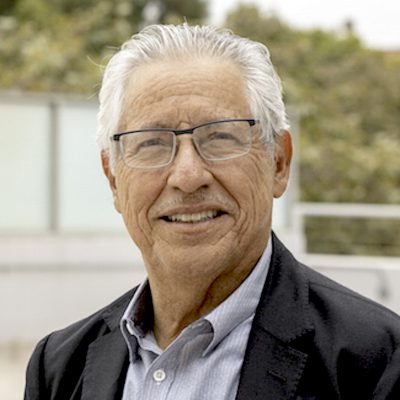
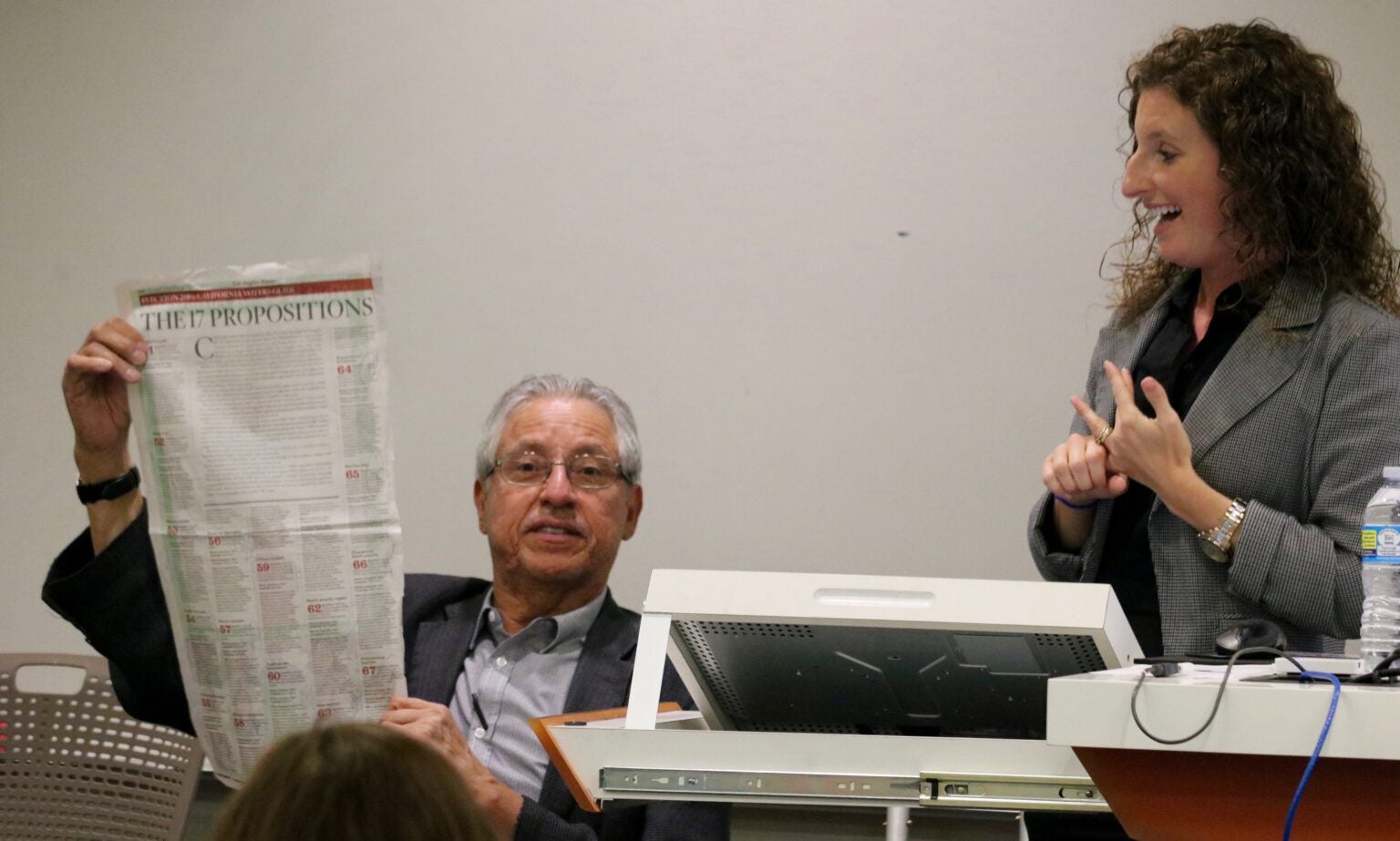
“This election is more than just about the presidential election, which has taken all of the oxygen out of the political room,” said Fernando Torres-Gil, professor of Social Welfare at the UCLA Luskin School of Public Affairs. Torres-Gil served as moderator at a faculty panel discussion held just a week before the general election.

Holding up a full-page news article listing the 17 propositions on the California ballot, Torres-Gil started the discussion highlighting a few key state and countywide initiatives and their impact on social work, justice and quality of life issues. “This does not end on Nov. 8; the issues continue,” he said, acknowledging California’s “extraordinary influence” on the rest of the country.

Voting can be good for you — and habit forming — according to new Luskin Social Welfare faculty member Laura Wray-Lake, encouraging the students in attendance to exert a bit of peer pressure.

“The election is obviously really interesting to me from a research perspective,” said the assistant professor, whose work focuses on youth civic engagement and draws on several disciplines to understand social development among young people.

“When young people start voting, this goes a long way to establishing lifelong habits,” Wray-Lake said. “So, if you get into the habit of voting, you will become a more habitual voter across your adult life, which is important for democracy and is important for you in terms of having your voice be heard.”

Citing Pew Research Center data, Wray-Lake said that there are now as many eligible millennial voters as baby boomers for the first time ever. This translates into millennials being one of the most powerful voting blocs in the country. But, she pointed out, the potential of this powerful voting bloc is offset by the lowest voting rates across all generations. She said this had real implications in both the 2008 and 2012 presidential elections, when youth voting influenced several swing states.

“If young people had voted at a slightly lesser rate, then Romney would have won the [2012] election,” Wray-Lake said. “Young people really carried Obama to victory.”

She cited a recent poll showing that 70 percent of young people have not been contacted by presidential candidates. Candidates, she said, are putting campaign dollars where they think the reliable voters are, and they’re dismissing young people and their issues, including education, poverty and the environment.

On a positive note, Wray-Lake said that the voter registration rate in California has surged to the highest levels in modern history at almost 74 percent.

“That’s more registered voters in California than 46 other states combined,” she said. “You’ll do your demographic proud if you go to the polls,” pointing out that 10,000 new voters were recently registered on the UCLA campus.

Among the state’s initiatives with health implications is Proposition 60, which would add a condom requirement to the California Labor Code for the adult film industry. According to information provided in the voter guide, the primary argument for the proposal is that “Nobody should have to risk their health in order to keep their job!” Opposition to the proposal argues that it would be costly to voters, is opposed by lawmakers and is largely supported by a single special interest group.

Ian Holloway, assistant professor of Social Welfare at UCLA Luskin, said that Proposition 60 had its origins in L.A. County’s Measure B last year — which passed — and is now being rolled out at the state level. Proponents say that Proposition 60 will stem the rise of HIV in California, said Holloway, whose applied behavioral health research looks at factors that contribute to health disparities among sexual and gender and minority populations.

“When it comes to the adult film industry, the majority of adult films that are distributed throughout the United States are made in California and the majority of films made in California are made in Los Angeles County,” said Holloway, who also directs the Southern California HIV/AIDS Policy Research Center. He explained that there could be a significant economic impact because the adult film industry brings a lot of revenue to the state. He noted that one of the fears is that the making and distribution of adult films will move outside of the state if the proposition passes.

While the goal is to protect the health and well-being of adult film actors, Holloway said that many in the community feel that the proposition is misguided.

“When we think about the HIV epidemic in the state of California, we’re talking about 5,000 new infections a year that disproportionately impact gay and bisexual men and racial-ethnic minority communities,” Holloway said. “So, adult film actors, while an important constituency, are a very small proportion of HIV cases in California.”

Holloway argued that if there is a real interest in focusing on reducing HIV among people living in California, the focus should be making prevention technologies more accessible to low-income communities, racial-ethnic minority communities, gay and bisexual men, transgender women, and other sexual and gender minority communities.

“If we’re thinking about this as an HIV-prevention measure, then we have many more tools at our disposal besides condoms,” Holloway said.

Laura Abrams, professor of Social Welfare, has applied her research to improving the well-being of youth and young adults with histories of incarceration. She provided analysis of Proposition 57, which considers criminal sentences and parole as well as juvenile criminal proceedings and sentencing. The proposition, if passed, would make a change to the state constitution that would “increase the number of inmates eligible for parole consideration,” as well as “make changes to the state law to require that youths have a hearing in juvenile court before they can be transferred to adult court.”

“Prop. 57 means a great deal to juvenile justice reform in California,” Abrams said. “It would help to prevent many youth from being directly tried in the adult criminal court system, and instead allow them to go before a judge to determine if they are indeed fit to be tried as an adult.”

Abrams said that, without the previous process known as “direct file,” many youth will be more likely to be offered rehabilitation within the juvenile system instead of languishing in the adult prison system.

Proposition 57 would amend the state constitution to provide the possibility of parole hearings for nonviolent offenders who have served their minimum sentence and incentives toward release for adults within the state prison system who participate in education and rehabilitation programs.

“This likely means that county services will need to be more attuned to those who are released, often with long sentences behind bars and coming home on parole,” Abrams said, and that will have implications for those in the social work field.

“Social workers will need to be attuned to the trauma that people can experience with many years of imprisonment, mental health needs, and to develop appropriate housing, transition, and other types of programming,” Abrams said.

Finally, two Social Welfare faculty went head-to-head on Proposition HHH, a City of Los Angeles initiative that aims to provide permanent supportive housing for the chronically homeless.

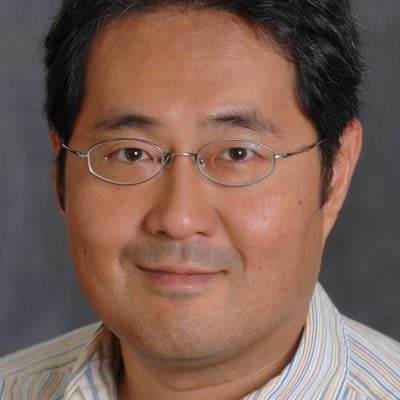
W. Toby Hur and Michelle Tally, members of Luskin’s Social Welfare field faculty, discussed the pros and cons of approving a $1.2 billion general obligation bond. It would be supported by a property tax levied on homeowners to create 10,000 affordable housing units over 10 years for the homeless, including veterans, senior citizens, foster youth and those living on the streets due to mental illness and disability.

Hur, whose interests include ethnic communities, poverty and homelessness, argued that a tax levied on L.A. homeowners would be less than $10 per $100,000 of the value of a home or $50 for a home valued at half a million dollars, although it would increase over subsequent years.

“Initially when I read Proposition HHH it sounded really good and something that I would support,” said Talley, whose interests are in child and family welfare, as well as domestic violence and substance abuse. “Then it talked about increasing property taxes.”

Hur sees minimal burden for homeowners, but Talley said the tax could greatly affect low- and fixed-income residents and even contribute to homelessness for “those who are barely making it,” she said.

“Fifty dollars may not be a lot to you, but there are a lot of people on fixed incomes,” Talley said. “So it’s $50 they would have to take from somewhere else — food on the table, daycare programs. You might potentially have other kinds of consequences.”
 

Faculty Mentioned in this Article
DSC_0210

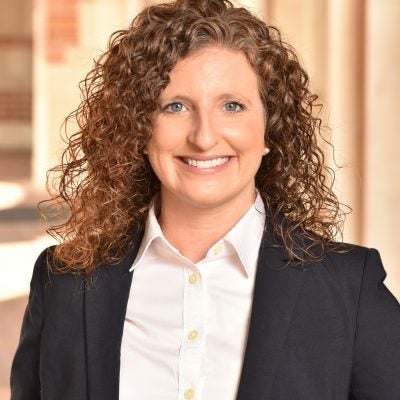
Laura Wray-Lake

Professor of Social Welfare

Dr. Laura Wray-Lake’s research is primarily focused on youth civic engagement. The starting point for this research is the assumption...

person in dark shirt outdoors

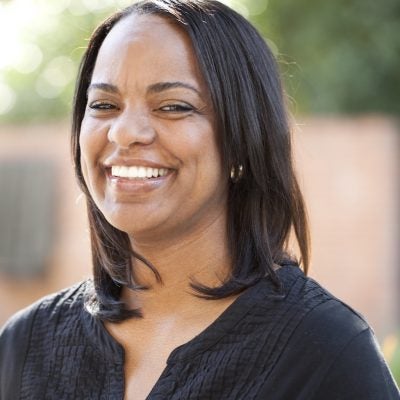
Michelle Talley

MSW Education Faculty of Social Welfare

Michelle Talley is a Licensed Clinical Social Worker whose main area of focus is working with youth and families as...

person with glasses outdoors

Fernando Torres-Gil

Director, UCLA Center for Policy Research on Aging; Professor Emeritus of Social Welfare and Public Policy

Fernando M. Torres-Gil’s multifaceted career spans the academic, professional, and policy arenas. He is a Professor of Social Welfare and...

Woo K. (Toby) Hur

W. Toby Hur

Practicum Education Faculty of Social Welfare

LinkedIn profile Follow him on Facebook YouTube

...

Related Articles

Flames on ridge in back of street with two-story houses

Some Homeowners Are Going Without Insurance But Choosing to Stay Put

January 21, 2026
School of Public Affairs
The inaugural UCLA Luskin California Poll also reveals residents’ experiences of financial well-being, along with wide-ranging...
Read More
Female caretaker helps elderly woman put on her shoes beside the bed.

Fernando Torres-Gil highlights systemic gaps in long-term elder

July 2, 2025
For Faculty
Fernando Torres-Gil highlights systemic gaps in long-term care in Los Angeles Times....
Read More
SurvThrive1

Fernando Torres-Gil Featured in Documentary on Aging in America

May 7, 2025
Luskin's Latest Blog
The program airs on local PBS stations through May....
Read More
LWLart1-16x9

Wray-Lake on Teens Evolving Views of Racism and Equality

March 26, 2025
Luskin in the News
Scholar of adolescent development says youth worldviews have diverged on race and inequality over time....
Read More
Downtown LA just after sunset during blue hour, captured from a helicopter point of view with lighted City Hall building.

UCLA Grants Deepen Ties to the L.A. Community

March 17, 2025
For Faculty
Projects by Luskin faculty will build collaboration among scholars, students and local partners....
Read More
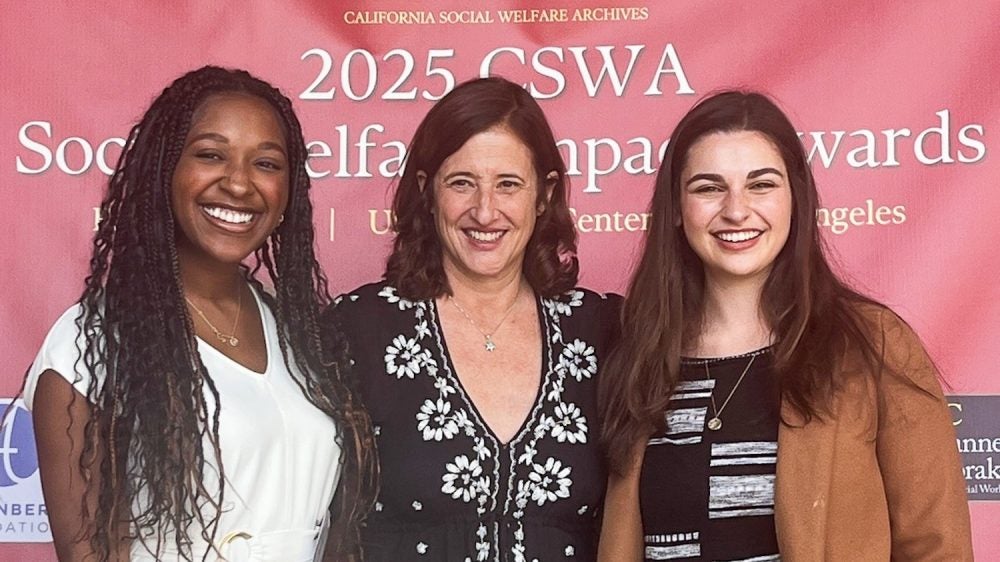
three women|

Honors for UCLA Luskin Social Welfare Professor and Alumna

March 4, 2025
Luskin's Latest Blog
Professor Laura Abrams and alumna Aurea Montes-Rodriguez are recognized by the California Social Welfare Archives....
Read More
LAbrmsIncarc1

Abrams on the Decline of Juvenile Incarceration in the United States

February 26, 2025
Luskin in the News
People who are incarcerated at young ages for longer periods of time are less likely to...
Read More
Two people seated in circle of people

Abrams on Promoting Justice for Troubled Youth

February 7, 2025
Luskin in the News
At universities around the country, social workers are being trained in more holistic strategies and practices...
Read More
Wood framing of house construction

Seeking Solutions for Today’s Issues — and Tomorrow’s

January 25, 2025
Luskin Forum Online
With an equity lens, faculty pursue research on plastic pollution, transportation access, mortgage lending and youth...
Read More
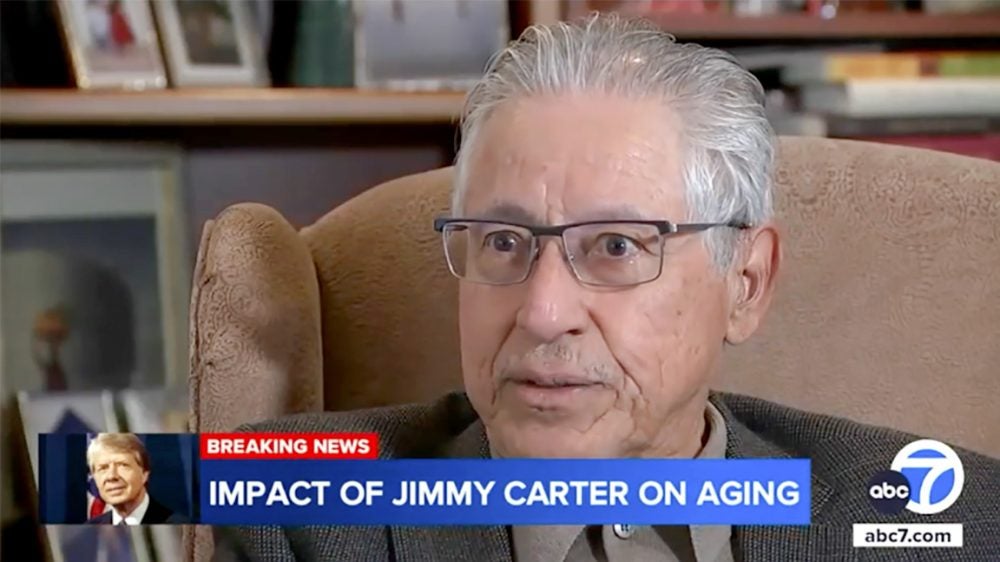
FTGonJC1

Torres-Gil on President Jimmy Carter’s Legacy

January 3, 2025
Luskin in the News
UCLA Luskin expert on aging says former president believed in improving the lives of older Americans....
Read More
FallPreventionImage16x9

Torres-Gil on Providing Culturally Competent Care

December 19, 2024
Luskin in the News
Health care services where language and culture are shared and understood are vital to immigrants, says...
Read More
high school students in classroom

A Movement to Lower the Voting Age

November 7, 2024
Luskin in the News
Brain research shows that young people have the capacity for reasoned decision-making, says UCLA Luskin's Laura...
Read More
Learn more about UCLA Luskin

Find contact information and get answers to your questions.

Contact Us

Public Affairs Building
337 Charles E. Young Drive East
Los Angeles, California 90095

Linkedin Youtube Instagram Facebook X-twitter
Campus Resources
  • Map, Directions, Parking
  • Directory
  • Academic Calendar
  • Careers
  • Map, Directions, Parking
  • Directory
  • Academic Calendar
  • Careers
School Resources
  • About
  • Our Dean
  • Administration
  • Board of Advisors
  • Contact Us
  • Visit Us
  • About
  • Our Dean
  • Administration
  • Board of Advisors
  • Contact Us
  • Visit Us
© 2026 Regents of the University of California
  • Emergency
  • Accessibilty
  • Privacy & Terms of Use
  • Emergency
  • Accessibilty
  • Privacy & Terms of Use
Facebook Instagram Linkedin X-twitter Youtube Threads
Academics
Departments
  • Public Policy
  • Real Estate Development
  • Social Welfare
  • Undergraduate Program
  • Urban Planning
  • Public Policy
  • Real Estate Development
  • Social Welfare
  • Undergraduate Program
  • Urban Planning
Graduate Programs
  • Master of Public Policy (MPP)
  • Master of Real Estate Development (MRED)
  • Master of Social Welfare (MSW)
  • Master of Urban and Regional Planning (MURP)
  • PhD in Social Welfare
  • PhD in Urban Planning
  • Master of Public Policy (MPP)
  • Master of Real Estate Development (MRED)
  • Master of Social Welfare (MSW)
  • Master of Urban and Regional Planning (MURP)
  • PhD in Social Welfare
  • PhD in Urban Planning
Undergraduate Programs
  • BA in Public Affairs
  • Minor in Urban and Regional Studies
  • Minor in Gerontology
  • Minor in Public Affairs
  • BA in Public Affairs
  • Minor in Urban and Regional Studies
  • Minor in Gerontology
  • Minor in Public Affairs
Professional Certificates
  • Data Analytics Certificate
  • Data Analytics Certificate
Admissions
Program Specific Admissions
  • Public Policy
  • Real Estate Development
  • Social Welfare
  • Urban Planning
  • Undergraduate Program
  • Public Policy
  • Real Estate Development
  • Social Welfare
  • Urban Planning
  • Undergraduate Program
Faculty
Our Faculty
  • All Faculty
  • Public Policy
  • Real Estate Development
  • Social Welfare
  • Urban Planning
  • All Faculty
  • Public Policy
  • Real Estate Development
  • Social Welfare
  • Urban Planning
Leadership
  • Our Dean
  • Board of Advisors
  • Faculty Executive Committee
  • Our Dean
  • Board of Advisors
  • Faculty Executive Committee
Research Centers
  • Agile Visual Analytics Lab (AVAL):

    Uses data visualization to improve decision-making for family and child services.

  • Berggruen Governance Index

    Evaluates the quality of political governance and democracy worldwide.

  • Center for Neighborhood Knowledge (CNK)

    Specializes in spatial analysis of socioeconomic disparities in neighborhoods.

  • Center for Policy Research on Aging (CPRA)

    Explores the societal and policy implications of an aging population.

  • Agile Visual Analytics Lab (AVAL):

    Uses data visualization to improve decision-making for family and child services.

  • Berggruen Governance Index

    Evaluates the quality of political governance and democracy worldwide.

  • Center for Neighborhood Knowledge (CNK)

    Specializes in spatial analysis of socioeconomic disparities in neighborhoods.

  • Center for Policy Research on Aging (CPRA)

    Explores the societal and policy implications of an aging population.

  • Institute of Transportation Studies (ITS)

    A national leader in transportation policy and mobility research.

  • Institute on Inequality and Democracy

    Advances scholarship addressing displacement and dispossession in Los Angeles and beyond.

  • Latin American Cities Initiative

    Connects urban planning and policy networks across the Americas.

  • Latino Policy & Politics Institute (LPPI)

    Addresses policy challenges facing Latinos and communities of color.

  • Institute of Transportation Studies (ITS)

    A national leader in transportation policy and mobility research.

  • Institute on Inequality and Democracy

    Advances scholarship addressing displacement and dispossession in Los Angeles and beyond.

  • Latin American Cities Initiative

    Connects urban planning and policy networks across the Americas.

  • Latino Policy & Politics Institute (LPPI)

    Addresses policy challenges facing Latinos and communities of color.

  • Lewis Center for Regional Policy Studies

    Researches housing, transportation, and economic development in Southern California.

  • Los Angeles Education Research Institute (LAERI)

    Collaborates with schools to improve educational outcomes for L.A. students.

  • Luskin Center for Innovation (LCI)

    Focuses on environmental policy, clean energy, and climate justice.

  • UCLA Voting Rights Project

    The flagship project for voting rights litigation and policy research.

  • Lewis Center for Regional Policy Studies

    Researches housing, transportation, and economic development in Southern California.

  • Los Angeles Education Research Institute (LAERI)

    Collaborates with schools to improve educational outcomes for L.A. students.

  • Luskin Center for Innovation (LCI)

    Focuses on environmental policy, clean energy, and climate justice.

  • UCLA Voting Rights Project

    The flagship project for voting rights litigation and policy research.

All Research Centers
Outcomes
Common Search Terms

Results will show as you type.