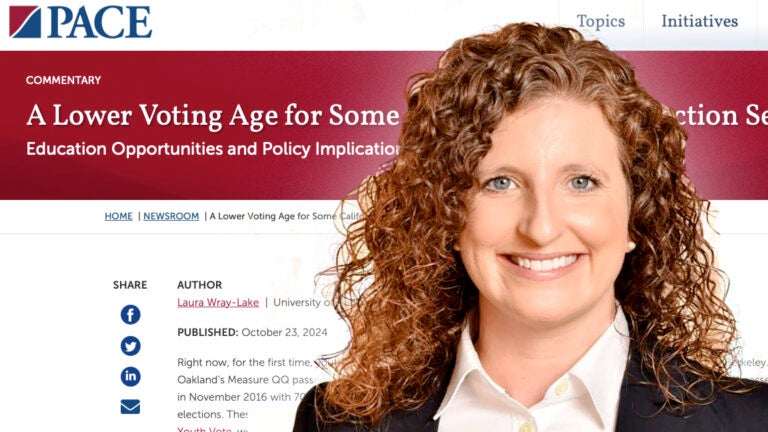
Dr. Laura Wray-Lake’s research is primarily focused on youth civic engagement. The starting point for this research is the assumption that adolescents and young adults hold abundant potential and act as positive change agents and address society’s problems on local, national, and global scales. In Dr. Wray-Lake’s work, civic engagement is intentionally broadly defined to include behaviors as well as values, skills, knowledge, and motivations; political and helping-oriented forms of engagement; and informal and formal ways of being civically engaged. Her work also prioritizes young people’s own definitions of civic engagement, as youth are continually reimagining ways of being civically engaged that align with their opportunities and contexts.Grounded in a developmental perspective, Dr. Wray-Lake uses quantitative and qualitative methodologies to understand how and why young people become civically engaged. Her research has documented developmental change over time in different forms of civic engagement, examined factors that promote and hinder youth civic engagement, and considered the role of culture, context, and historical time in shaping youth civic engagement. Dr. Wray-Lake has published over 80 peer-reviewed articles and book chapters and an SRCD Monograph entitled Pathways to Civic Engagement among Urban Youth of Color. Her forthcoming book, written with a team of colleagues, is called Young Black Changemakers and the Road to Racial Justice (Cambridge University Press, 2023). Dr. Wray-Lake’s research has been funded by the National Science Foundation, Templeton Foundation, Spencer Foundation, Haynes Foundation, and AmeriCorps. She received the Mid-Career Award for Research Excellence from the Society for Research on Adolescence in 2020.Current Research Projects Include:
- A longitudinal study of youth activism in collaboration with the American Civil Liberties Union (ACLU) to understand experiences of youth activists with different social identities.
- A mixed-methods study of ageism against adolescents to understand the negative stereotypes adults have of adolescents that can hinder civic engagement and thriving.