Skip to content
  • Students & Alumni
    • Overview
    • Career Services
    • Alumni Relations
    • Student Support
    • Graduate Resource Library
  • News
  • Events
    • Events Calendar
    • Luskin Summit
    • Luskin Lecture Series
    • California Policy Briefing
    • Commencement
  • Students & Alumni
    • Overview
    • Career Services
    • Alumni Relations
    • Student Support
    • Graduate Resource Library
  • News
  • Events
    • Events Calendar
    • Luskin Summit
    • Luskin Lecture Series
    • California Policy Briefing
    • Commencement
Giving
  • Academics
    Departments
    • Public Policy
    • Real Estate Development
    • Social Welfare
    • Undergraduate Program
    • Urban Planning
    • Public Policy
    • Real Estate Development
    • Social Welfare
    • Undergraduate Program
    • Urban Planning
    Graduate Programs
    • Master of Public Policy (MPP)
    • Master of Real Estate Development (MRED)
    • Master of Social Welfare (MSW)
    • Master of Urban and Regional Planning (MURP)
    • PhD in Social Welfare
    • PhD in Urban Planning
    • Master of Public Policy (MPP)
    • Master of Real Estate Development (MRED)
    • Master of Social Welfare (MSW)
    • Master of Urban and Regional Planning (MURP)
    • PhD in Social Welfare
    • PhD in Urban Planning
    Undergraduate Programs
    • BA in Public Affairs
    • Minor in Urban and Regional Studies
    • Minor in Gerontology
    • Minor in Public Affairs
    • BA in Public Affairs
    • Minor in Urban and Regional Studies
    • Minor in Gerontology
    • Minor in Public Affairs
    Professional Certificates
    • Data Analytics Certificate
    • Data Analytics Certificate
  • Admissions
    Program Specific Admissions
    • Public Policy
    • Real Estate Development
    • Social Welfare
    • Urban Planning
    • Undergraduate Program
    • Public Policy
    • Real Estate Development
    • Social Welfare
    • Urban Planning
    • Undergraduate Program
  • Faculty
    Our Faculty
    • All Faculty
    • Public Policy
    • Real Estate Development
    • Social Welfare
    • Urban Planning
    • All Faculty
    • Public Policy
    • Real Estate Development
    • Social Welfare
    • Urban Planning
    Leadership
    • Our Dean
    • Board of Advisors
    • Faculty Executive Committee
    • Our Dean
    • Board of Advisors
    • Faculty Executive Committee
  • Research Centers
    • Agile Visual Analytics Lab (AVAL):

      Uses data visualization to improve decision-making for family and child services.

    • Berggruen Governance Index

      Evaluates the quality of political governance and democracy worldwide.

    • Center for Neighborhood Knowledge (CNK)

      Specializes in spatial analysis of socioeconomic disparities in neighborhoods.

    • Center for Policy Research on Aging (CPRA)

      Explores the societal and policy implications of an aging population.

    • Agile Visual Analytics Lab (AVAL):

      Uses data visualization to improve decision-making for family and child services.

    • Berggruen Governance Index

      Evaluates the quality of political governance and democracy worldwide.

    • Center for Neighborhood Knowledge (CNK)

      Specializes in spatial analysis of socioeconomic disparities in neighborhoods.

    • Center for Policy Research on Aging (CPRA)

      Explores the societal and policy implications of an aging population.

    • Institute of Transportation Studies (ITS)

      A national leader in transportation policy and mobility research.

    • Institute on Inequality and Democracy

      Advances scholarship addressing displacement and dispossession in Los Angeles and beyond.

    • Latin American Cities Initiative

      Connects urban planning and policy networks across the Americas.

    • Latino Policy & Politics Institute (LPPI)

      Addresses policy challenges facing Latinos and communities of color.

    • Institute of Transportation Studies (ITS)

      A national leader in transportation policy and mobility research.

    • Institute on Inequality and Democracy

      Advances scholarship addressing displacement and dispossession in Los Angeles and beyond.

    • Latin American Cities Initiative

      Connects urban planning and policy networks across the Americas.

    • Latino Policy & Politics Institute (LPPI)

      Addresses policy challenges facing Latinos and communities of color.

    • Lewis Center for Regional Policy Studies

      Researches housing, transportation, and economic development in Southern California.

    • Los Angeles Education Research Institute (LAERI)

      Collaborates with schools to improve educational outcomes for L.A. students.

    • Luskin Center for Innovation (LCI)

      Focuses on environmental policy, clean energy, and climate justice.

    • UCLA Voting Rights Project

      The flagship project for voting rights litigation and policy research.

    • Lewis Center for Regional Policy Studies

      Researches housing, transportation, and economic development in Southern California.

    • Los Angeles Education Research Institute (LAERI)

      Collaborates with schools to improve educational outcomes for L.A. students.

    • Luskin Center for Innovation (LCI)

      Focuses on environmental policy, clean energy, and climate justice.

    • UCLA Voting Rights Project

      The flagship project for voting rights litigation and policy research.

    All Research Centers
  • Outcomes
Home / Seeking Solutions for Today’s Issues — and Tomorrow’s

Seeking Solutions for Today’s Issues — and Tomorrow’s

With an equity lens, faculty pursue research on plastic pollution, transportation access, mortgage lending and youth empowerment
Wood framing of house construction

Posted in

  • Luskin Forum Online

Published on

  • January 25, 2025
  • civic engagement, housing, justice, mobility, mortgage, plastic, pollution, research, Transportation, UCLA, UCLA Luskin, youth

Share this Article

By Stan Paul

The outcome of the 2024 national election will impact our nation and world for decades to come, and during this critical time, UCLA Luskin remains committed to — and actively engaged in — research that addresses pressing global, national, regional and local issues.

One UCLA Luskin research initiative is focused on civic engagement among young people who will be determining the direction of the nation through their vote. Others are investigating housing access and affordability, transportation access, the environment and other issues that intersect the fields of urban planning, social welfare and public policy.

Amid rising costs and declining state funding for the University of California system, external funding sources large and small allow individual scholars and UCLA Luskin-affiliated research centers to continue to pursue important and timely research on numerous policy issues.

During the 2023-2024 fiscal year, donors committed $856.5 million — the second-highest fundraising total in UCLA history. Alumni and friends of the university came forward with more than 68,000 gifts, 94% of which were less than $10,000. The Luskin School’s fundraising efforts brought in $7,811,898 of that total.

Here is a spotlight on faculty research made possible by this funding:

Mitigating Plastics Through an Environmental Justice Lens

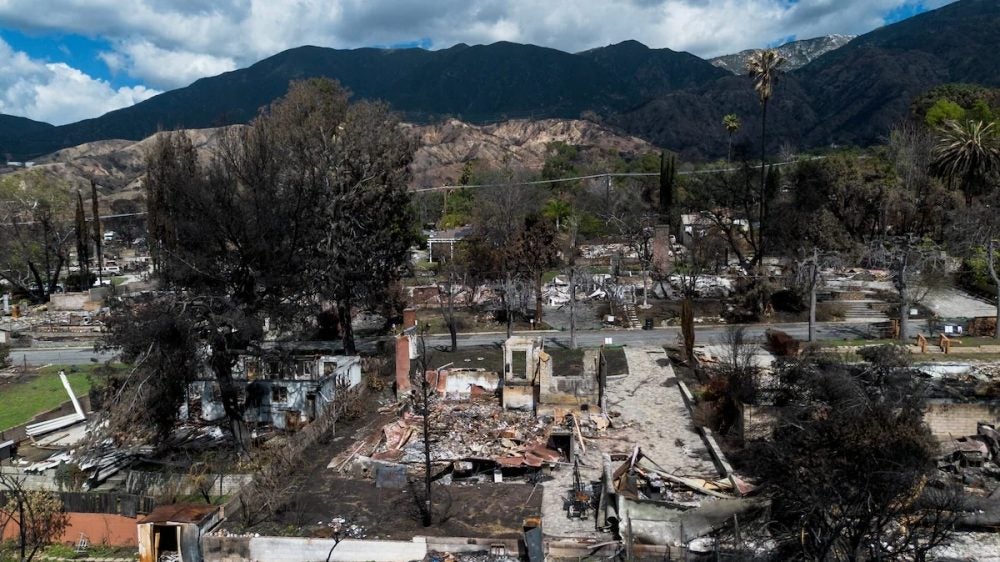
Plastics are all around us — and in us. It’s in our water and soil, the food and water we consume, and the products and packaging that we use on a daily basis. However, some communities are more negatively impacted, or plastic burdened, than others, according to work being conducted by UCLA Luskin researchers.

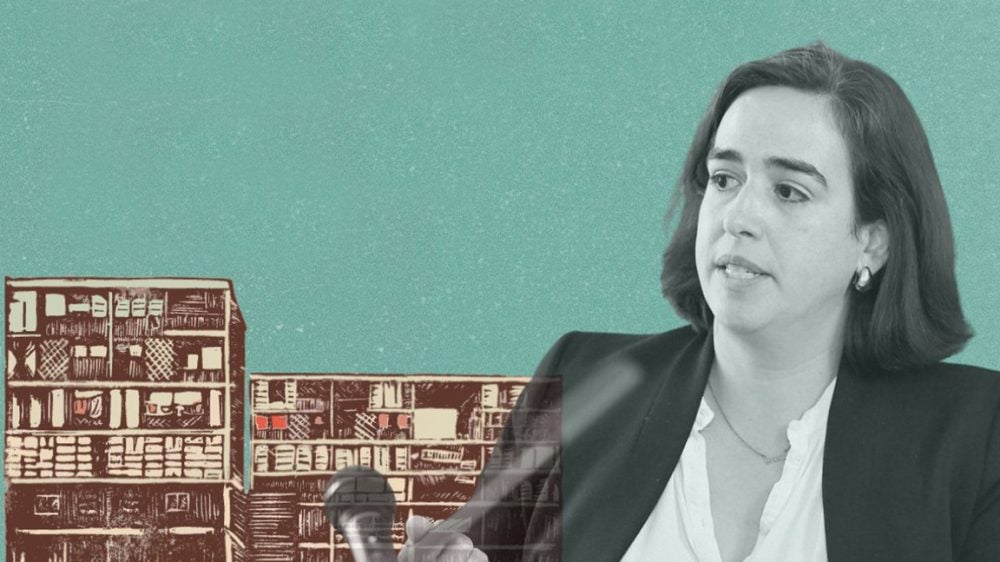
Veronica Herrera, associate professor of urban planning and political science, and Daniel Coffee MPP ’20, a project manager at the UCLA Luskin Center for Innovation (LCI), received funding through LCI from the Resources Legacy Fund Foundation to define and map the plastics burden in California and its communities.

In 2022, California Gov. Gavin Newsom approved SB-54, a bill that would establish the Plastic Pollution Prevention and Packaging Producer Responsibility Act. The law requires producers to ensure that 100% of single-use packaging and plastic food service ware sold in California is recyclable or compostable by 2032, and will provide about $500 million annually for the California Plastic Pollution Mitigation Fund to help communities affected by plastic.

While SB-54 is one of the most comprehensive laws of its kind, there are concerns by environmental justice organizations that the money may not be equitably distributed to communities most impacted by plastic pollution.

“Our research creates an environmental justice framework to help decision makers route the mitigation funds toward communities most disproportionately impacted by plastic pollution, which are communities of color and low-income,” Herrera said.

The report defines the plastics burden as being threefold: site-based exposures (living or working near plastics industrial facilities), dietary exposures (such as via processed foods) and consumer products exposures (such as through personal care products), and shows how these exposures are more likely to present disproportionate impacts on communities of color. Herrera and Coffee have also created a geospatial map that shows the site-based exposures on California’s communities for facilities such as landfills and plastics recyclers.

“Our report stresses that some communities are more likely to be doubly or triply burdened and also have pre-existing vulnerabilities in dealing with these burdens, such as lower access to health care,” Herrera said.

“We want to continue to add to the mapping tool to expand our measures of the plastics burden. Maybe this will inspire researchers in other states to get data to replicate what we are doing for California. More data on the plastics burden will help policymakers make real change.”

Removing Obstacles to Transportation Access

Transportation is not equally accessible or distributed equitably across regions. The lack of reliable and affordable transportation only adds to socioeconomic inequities for low-income communities and individuals, especially for people of color.

Researchers at the Lewis Center for Regional Policy Studies at the UCLA Luskin School of Public Affairs are studying the effects of a novel approach — universal basic mobility (UBM) — to address financial barriers to reliable transportation. UBM was recently piloted in a small number of cities nationwide, including Los Angeles.

Madeline Brozen, co-principal investigator and deputy director of the Lewis Center, is leading the team that is analyzing the effectiveness of the L.A. pilot program, also known as mobility wallets. Researchers at UC Davis also are working with UCLA to complete the comprehensive mixed-methods evaluation examining travel trends, experiences and spending for pilot programs in Los Angeles.

The initial pilot program, launched in 2023 by the city of Los Angeles, with partners LA Metro and the Los Angeles Department of Transportation, is the largest UBM pilot to date. This first phase provided $150 a month to 1,000 participants in South Los Angeles. According to Brozen, a second phase started last fall and also includes 1,000 people from South Los Angeles but has been expanded to include an additional 1,000 participants from throughout Los Angeles County.

Brozen explained that the UBM works like universal basic or guaranteed income in the form of a prepaid debit card, which can be used for a range of transportation options. These include city buses, bikeshare and e-scooters as well as ride-hail servicesincluding Uber and Lyft and Amtrak for more regional travel.And the wallets are being used, she noted. The programshave tracked thousands of transportation transactions since the program began.

So far, the results have been promising. Brozen is working with Lewis Center Director and longtime Luskin Urban Planning Professor Evelyn Blumenberg, as well as Urban Planning PhD students who are assisting with analyzing the experiment’s results.

“People know this is a one-year program. So, they’re not going to change their behavior really drastically for a temporary support,” Brozen said. “Most people have figured out how to get to their job, how to get their groceries, but a lot of times, it’s the trips they aren’t making.”

These include trips that people with reliable transportation may take for granted, like having the ability to see family and friends. It also helps with trips that would normally be expensive, long and in places where transportation would become burdensome for them.

An additional benefit is that program participants are allowed to use the wallet for themselves or anyone else, such as a child that requires transportation, Brozen explained. The mobility wallets give participants options that provide both stress relief and budget relief.

“It gives them autonomy. … There’s improvement to people’s lives,” she said.

Investigating Barriers to Home Ownership

Buying a new home has been challenging for most people before — and, even more so, after —the COVID-19 pandemic. But for low-income people, that dream has moved almost beyond reach.

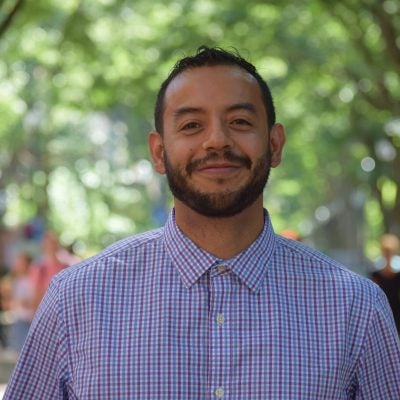
A two-year grant has allowed UCLA Luskin’s José Loya to examine those barriers for low-income people as they seek upward social mobility through homeownership. Loya, an assistant professor of urban planning, received the grant asa 2023-25 Emerging Poverty Scholarship Fellow through theUniversity of Wisconsin’s Institute for Research on Poverty. Loya, also a faculty affiliate with UCLA’s Chicano Studies Research Center, said that the first part of his research is to investigate the relationship between low-income households and homeownership, and barriers in the search for upward social mobility.

Working with Luskin PhD students, he is already seeing some interesting results:

“We see that low-income individuals are heavily constrained in the mortgage market, which limits their home ownership opportunities more broadly,” he said. “That’s both at the individual and community levels. So low-income communities also face very large barriers to accessing or to improving or to increasing ownership opportunities in their neighborhoods as well.”

Another factor is that high home prices coupled with higher interest rates has an impact on whether financial institutions are willing to lend to lower-income individuals, pricing them out of the market.

“The monthly payment itself is just too high to afford homeownership under current circumstances,” Loya said.

A second aspect of the research has been to examine the impact of neighborhood poverty on appraised home values. He explained that while home values are typically thought of as based on the actual home and land, appraised values also are a reflection of community resources.

“And this has a dramatic impact on lower-income neighborhoods or minority neighborhoods that often are neglected when it comes to public investment,” Loya said.

Loya also noted that housing studies for lower-income people has typically focused on rental markets because the majority of low-income residents are renters.

“However, the next stage for upward social mobility is signaled by homeownership, the largest vehicle for generating wealth,” he said. “When we think about low-income households and neighborhoods, essentially we want to determine or assess the opportunities that they have for homeownership and other ways of generating wealth.”

This is where Loya’s research comes in.

“I’m able to look at that intersection of wealth building through homeownership and poverty research,” he said, pointing out that poverty or household income is not static.

“We know that incomes fluctuate, opportunities fluctuate, and homeownership is a good marker of mobility,” he said, explaining, “When people view homeownership as an opportunity, do families have access to it?”

Understanding Youth Civic Engagement and Opportunities

Generations are given labels, stereotyped and defined, and each generation is actively engaged in defining itself.

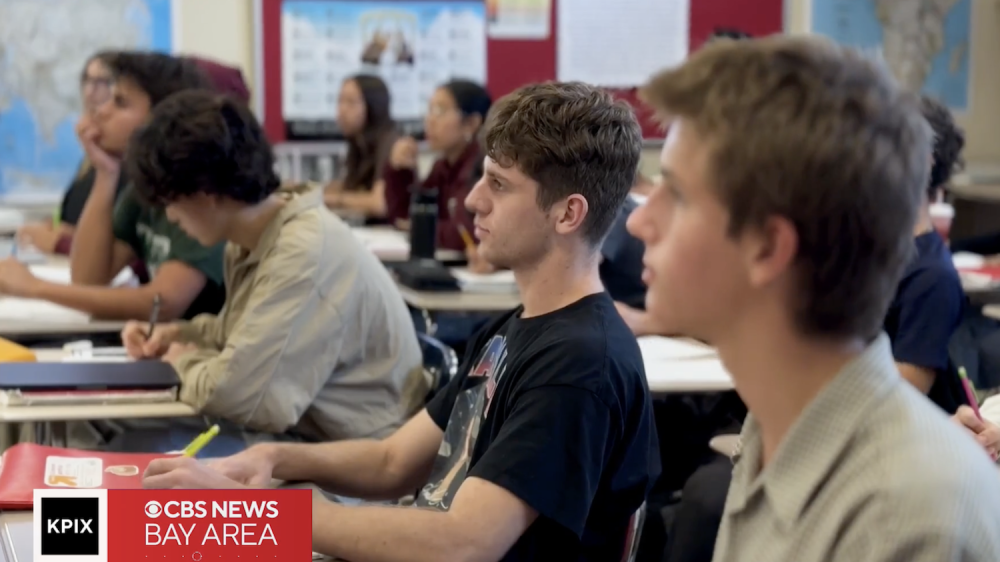
Professor of Social Welfare Laura Wray-Lake is in the third year of research funded by AmeriCorps to assess civic engagement among young people and understand experiences of youth activists with different social identities.

Her research is multi-pronged. In partnership with the American Civil Liberties Union (ACLU), Wray-Lake is looking at survey data from a large sample of youth advocates, which she said will help in understanding “some of the factors that differentiate the way that young people are engaged and the different issues that interest them.”

Another aspect of that work involves evaluating the ACLU’s National Advocacy Institute, a one-week summer training program for youth advocates, to find ways the institute made a difference for participants. Wray-Lake and colleagues surveyed young people who went through the institute before and after the training along with a follow-up six months later.

The findings are showing that institute participants increased their civic knowledge, agency and likelihood of action one week after the institute, relative to a comparison group of civically engaged young people who did not participate in the program, and some of the effects are maintained six months later.

A third part of her AmeriCorps-funded work involves a longitudinal study to map out trajectories of how young people become activists. Over three years starting in 2023, Wray-Lake is tracking 1,000 young participants, ages 14-18, as they transition to adulthood and move on to college or other paths.

“Adolescents are really engaged and really involved in a lot of different issues,” including racial justice, women’s rights, LGBTQ issues, and justice here and abroad related to conflict in the Middle East, Wray-Lake said.

Wray-Lake said the young people she studies represent a general sample and weren’t recruited because they were civically engaged. But she said that the vast majority are engaged in at least one issue.

“Young people today are paying attention. They care about many different things. And so I think the way that relates to the election is they’re looking for which candidates are really speaking to the issues that they’re interested in.

“I’ve noticed that young people have gotten more motivated since Kamala [Harris] has joined in, but they also have issues and interests that neither candidate is really speaking to. I think that’s a piece that’s important.”

And although the youngest of the participants who were surveyed cannot yet vote, their views still matter and their actions can make a difference, she said.

“There might be ways they’re participating, like sharing their views on social media or with friends and family, and some of them might be campaigning for the candidates,” Wray-Lake said, adding that people don’t have to be 18 to be an active citizen.

“The motivation for doing what I do is showing how teenagers can be contributors to society and their communities. They have ideas, they have motivation, and they actually make real change in their communities through youth-led movements and organizations that they’re part of.”
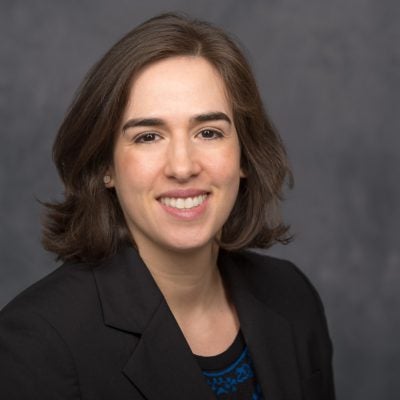
Faculty Mentioned in this Article
Jose Loya

José Loya

Faculty Director of Real Estate Development, Assistant Professor of Urban Planning; Faculty Associate in the Chicano Studies Research Center (CSRC)

José Loya is an Assistant Professor in Urban Planning at UCLA’s Luskin School of Public Affairs and faculty affiliate with...

|Sample||

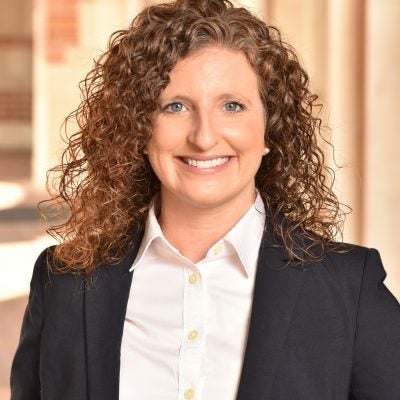
Veronica Herrera

Associate Professor of Urban Planning and Political Science

Veronica Herrera, Ph.D., studies the political economy of development and environmental governance, with a focus on cities, civil society, and...

DSC_0210

Laura Wray-Lake

Professor of Social Welfare

Dr. Laura Wray-Lake’s research is primarily focused on youth civic engagement. The starting point for this research is the assumption...

Related Articles

Oil and Gas Processing Tank and Pipes

Herrera Warns in CalMatters Op-Ed on Plastics Risks After Garden Grove Emergency

July 7, 2026
Luskin in the News
Garden Grove chemical incident highlights systemic plastics industry risks, exposing nearby communities to toxic exposure, accidents,...
Read More
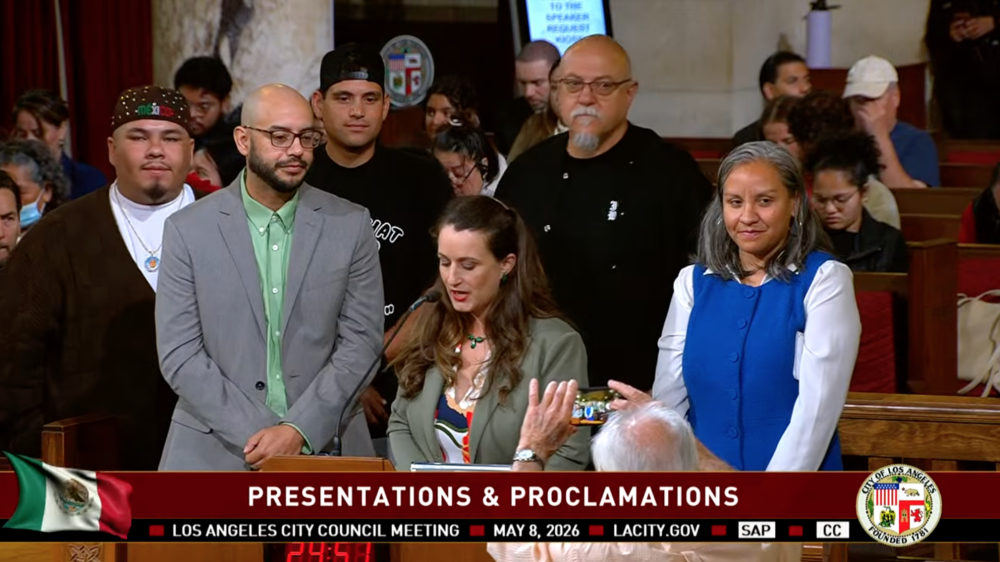
Los Angeles City Council Meeting on May 8, a speaker presents José Loya and Amada Armenta with their "impactful chicanos" award at City Hall.|Two photos next to each other, on the left is Jose Loya and Amada Armenta holding up their "Impactful Chicanos" awards inside City Hall, the photo on the right is of Jose and Amada standing next to a framed illustration of UCLA Latino Policy and Politics Institute.

Amada Armenta and José Loya Honored by Los Angeles City Council

May 15, 2026
Luskin's Latest Blog
Los Angeles City Council recognized Amada Armenta and José Loya during its “Impactful Chicanos in America”...
Read More
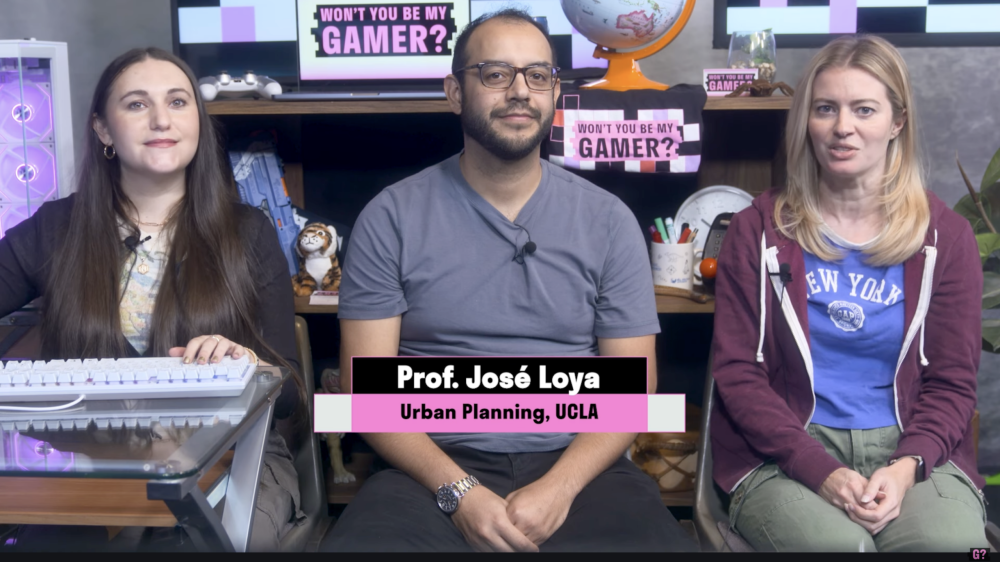
Assistant Professor José Loya sits between the two hosts of PBS SoCal’s Won’t You Be My Gamer? during the show’s gameplay and discussion.|Landscape of New York City

PBS SoCal’s Won’t You Be My Gamer? Explores LA’s “Best” and “Worst” Cities With José Loya

February 5, 2026
Luskin in the News
Loya takes on the challenge of building the “best” and “worst” cities....
Read More
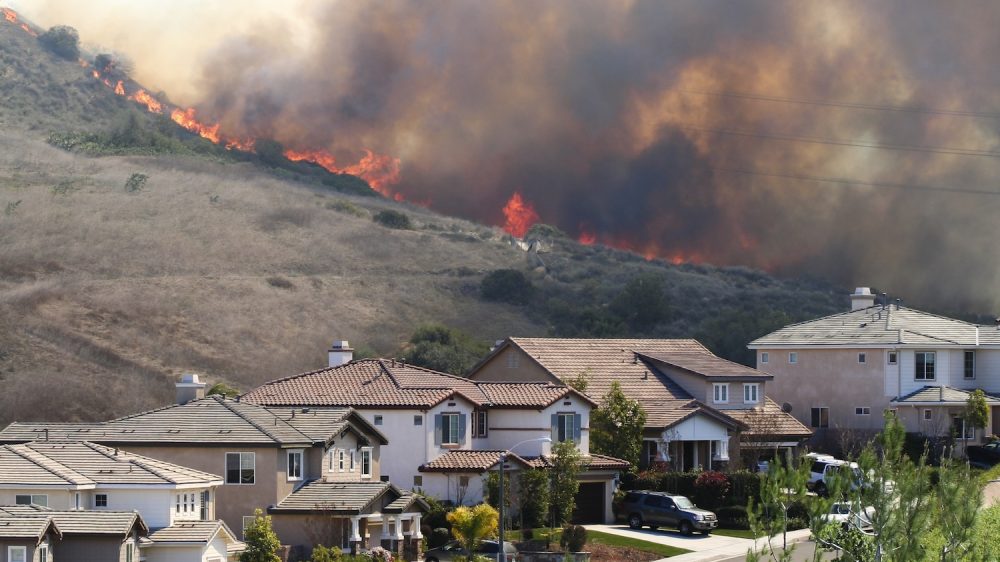
Flames on ridge in back of street with two-story houses

Some Homeowners Are Going Without Insurance But Choosing to Stay Put

January 21, 2026
School of Public Affairs
The inaugural UCLA Luskin California Poll also reveals residents’ experiences of financial well-being, along with wide-ranging...
Read More
male and female holding up a key to their new home standing in front of the house they just purchased.|Professor of Urban Planning Jose Loya Smiles, standing in front of Public Affairs building||Professor of Urban Planning Jose Loya Smiles, standing in front of Public Affairs building||Jose Loya smiles in front of the Meyer and Renee Luskin Public Affairs Building.|Jose Loya stands smiling in front of the Public Affairs building at UCLA.

U.S. Inequality Through the Housing Lens: A Conversation with José Loya

January 15, 2026
Luskin's Latest Blog
As housing costs rise faster than wages, José Loya explores how inequality persists in the U.S....
Read More
Aerial shot of a refinery in the evening

Oil and Gas Companies Sacrificing Plastic-Burdened Communities

January 8, 2026
Environment
The UCLA Luskin Center for Innovation has released a new report examining the links between plastics,...
Read More
In the News Jose Loya

Loya on Building Wealth through Homeownership

November 17, 2025
Development and Housing
As housing prices rise and uncertainty fills the job market, José Loya weighs in on whether...
Read More
Oil well at sunset.

California Communities Impacted by Thousands of Oil and Gas Wells that Feed the Plastic Industry

November 6, 2025
Luskin's Latest Blog
New UCLA report maps plastic’s fossil fuel origins as the state considers investments and laws to...
Read More
VHerr1-16x9

Hererra on Slow Harms and Citizen Action

April 24, 2025
Luskin in the News
UCLA Luskin urban planner’s book sheds new light on the struggles for environmental justice in Latin...
Read More
LWLart1-16x9

Wray-Lake on Teens Evolving Views of Racism and Equality

March 26, 2025
Luskin in the News
Scholar of adolescent development says youth worldviews have diverged on race and inequality over time....
Read More
Professor José Loya speaks to The Washington Post about how the fires are changing the Los Angeles housing market.

Wildfires Reshape Los Angeles’ Housing Market

March 19, 2025
Luskin in the News
Areas previously considered desirable are now seeing fluctuating demand, raising questions about resilience in fire-prone communities,...
Read More
high school students in classroom

A Movement to Lower the Voting Age

November 7, 2024
Luskin in the News
Brain research shows that young people have the capacity for reasoned decision-making, says UCLA Luskin's Laura...
Read More
Learn more about UCLA Luskin

Find contact information and get answers to your questions.

Contact Us

Public Affairs Building
337 Charles E. Young Drive East
Los Angeles, California 90095

Linkedin Youtube Instagram Facebook X-twitter
Campus Resources
  • Map, Directions, Parking
  • Directory
  • Academic Calendar
  • Careers
  • Map, Directions, Parking
  • Directory
  • Academic Calendar
  • Careers
School Resources
  • About
  • Our Dean
  • Administration
  • Board of Advisors
  • Contact Us
  • Visit Us
  • About
  • Our Dean
  • Administration
  • Board of Advisors
  • Contact Us
  • Visit Us
© 2026 Regents of the University of California
  • Emergency
  • Accessibilty
  • Privacy & Terms of Use
  • Emergency
  • Accessibilty
  • Privacy & Terms of Use
Facebook Instagram Linkedin X-twitter Youtube Threads
Academics
Departments
  • Public Policy
  • Real Estate Development
  • Social Welfare
  • Undergraduate Program
  • Urban Planning
  • Public Policy
  • Real Estate Development
  • Social Welfare
  • Undergraduate Program
  • Urban Planning
Graduate Programs
  • Master of Public Policy (MPP)
  • Master of Real Estate Development (MRED)
  • Master of Social Welfare (MSW)
  • Master of Urban and Regional Planning (MURP)
  • PhD in Social Welfare
  • PhD in Urban Planning
  • Master of Public Policy (MPP)
  • Master of Real Estate Development (MRED)
  • Master of Social Welfare (MSW)
  • Master of Urban and Regional Planning (MURP)
  • PhD in Social Welfare
  • PhD in Urban Planning
Undergraduate Programs
  • BA in Public Affairs
  • Minor in Urban and Regional Studies
  • Minor in Gerontology
  • Minor in Public Affairs
  • BA in Public Affairs
  • Minor in Urban and Regional Studies
  • Minor in Gerontology
  • Minor in Public Affairs
Professional Certificates
  • Data Analytics Certificate
  • Data Analytics Certificate
Admissions
Program Specific Admissions
  • Public Policy
  • Real Estate Development
  • Social Welfare
  • Urban Planning
  • Undergraduate Program
  • Public Policy
  • Real Estate Development
  • Social Welfare
  • Urban Planning
  • Undergraduate Program
Faculty
Our Faculty
  • All Faculty
  • Public Policy
  • Real Estate Development
  • Social Welfare
  • Urban Planning
  • All Faculty
  • Public Policy
  • Real Estate Development
  • Social Welfare
  • Urban Planning
Leadership
  • Our Dean
  • Board of Advisors
  • Faculty Executive Committee
  • Our Dean
  • Board of Advisors
  • Faculty Executive Committee
Research Centers
  • Agile Visual Analytics Lab (AVAL):

    Uses data visualization to improve decision-making for family and child services.

  • Berggruen Governance Index

    Evaluates the quality of political governance and democracy worldwide.

  • Center for Neighborhood Knowledge (CNK)

    Specializes in spatial analysis of socioeconomic disparities in neighborhoods.

  • Center for Policy Research on Aging (CPRA)

    Explores the societal and policy implications of an aging population.

  • Agile Visual Analytics Lab (AVAL):

    Uses data visualization to improve decision-making for family and child services.

  • Berggruen Governance Index

    Evaluates the quality of political governance and democracy worldwide.

  • Center for Neighborhood Knowledge (CNK)

    Specializes in spatial analysis of socioeconomic disparities in neighborhoods.

  • Center for Policy Research on Aging (CPRA)

    Explores the societal and policy implications of an aging population.

  • Institute of Transportation Studies (ITS)

    A national leader in transportation policy and mobility research.

  • Institute on Inequality and Democracy

    Advances scholarship addressing displacement and dispossession in Los Angeles and beyond.

  • Latin American Cities Initiative

    Connects urban planning and policy networks across the Americas.

  • Latino Policy & Politics Institute (LPPI)

    Addresses policy challenges facing Latinos and communities of color.

  • Institute of Transportation Studies (ITS)

    A national leader in transportation policy and mobility research.

  • Institute on Inequality and Democracy

    Advances scholarship addressing displacement and dispossession in Los Angeles and beyond.

  • Latin American Cities Initiative

    Connects urban planning and policy networks across the Americas.

  • Latino Policy & Politics Institute (LPPI)

    Addresses policy challenges facing Latinos and communities of color.

  • Lewis Center for Regional Policy Studies

    Researches housing, transportation, and economic development in Southern California.

  • Los Angeles Education Research Institute (LAERI)

    Collaborates with schools to improve educational outcomes for L.A. students.

  • Luskin Center for Innovation (LCI)

    Focuses on environmental policy, clean energy, and climate justice.

  • UCLA Voting Rights Project

    The flagship project for voting rights litigation and policy research.

  • Lewis Center for Regional Policy Studies

    Researches housing, transportation, and economic development in Southern California.

  • Los Angeles Education Research Institute (LAERI)

    Collaborates with schools to improve educational outcomes for L.A. students.

  • Luskin Center for Innovation (LCI)

    Focuses on environmental policy, clean energy, and climate justice.

  • UCLA Voting Rights Project

    The flagship project for voting rights litigation and policy research.

All Research Centers
Outcomes
Common Search Terms

Results will show as you type.