Skip to content
  • Students & Alumni
    • Overview
    • Career Services
    • Alumni Relations
    • Student Support
    • Graduate Resource Library
  • News
  • Events
    • Events Calendar
    • Luskin Summit
    • Luskin Lecture Series
    • California Policy Briefing
    • Commencement
  • Students & Alumni
    • Overview
    • Career Services
    • Alumni Relations
    • Student Support
    • Graduate Resource Library
  • News
  • Events
    • Events Calendar
    • Luskin Summit
    • Luskin Lecture Series
    • California Policy Briefing
    • Commencement
Giving
  • Academics
    Departments
    • Public Policy
    • Real Estate Development
    • Social Welfare
    • Undergraduate Program
    • Urban Planning
    • Public Policy
    • Real Estate Development
    • Social Welfare
    • Undergraduate Program
    • Urban Planning
    Graduate Programs
    • Master of Public Policy (MPP)
    • Master of Real Estate Development (MRED)
    • Master of Social Welfare (MSW)
    • Master of Urban and Regional Planning (MURP)
    • PhD in Social Welfare
    • PhD in Urban Planning
    • Master of Public Policy (MPP)
    • Master of Real Estate Development (MRED)
    • Master of Social Welfare (MSW)
    • Master of Urban and Regional Planning (MURP)
    • PhD in Social Welfare
    • PhD in Urban Planning
    Undergraduate Programs
    • BA in Public Affairs
    • Minor in Urban and Regional Studies
    • Minor in Gerontology
    • Minor in Public Affairs
    • BA in Public Affairs
    • Minor in Urban and Regional Studies
    • Minor in Gerontology
    • Minor in Public Affairs
    Professional Certificates
    • Data Analytics Certificate
    • Data Analytics Certificate
  • Admissions
    Program Specific Admissions
    • Public Policy
    • Real Estate Development
    • Social Welfare
    • Urban Planning
    • Undergraduate Program
    • Public Policy
    • Real Estate Development
    • Social Welfare
    • Urban Planning
    • Undergraduate Program
  • Faculty
    Our Faculty
    • All Faculty
    • Public Policy
    • Real Estate Development
    • Social Welfare
    • Urban Planning
    • All Faculty
    • Public Policy
    • Real Estate Development
    • Social Welfare
    • Urban Planning
    Leadership
    • Our Dean
    • Board of Advisors
    • Faculty Executive Committee
    • Our Dean
    • Board of Advisors
    • Faculty Executive Committee
  • Research Centers
    • Agile Visual Analytics Lab (AVAL):

      Uses data visualization to improve decision-making for family and child services.

    • Berggruen Governance Index

      Evaluates the quality of political governance and democracy worldwide.

    • Center for Neighborhood Knowledge (CNK)

      Specializes in spatial analysis of socioeconomic disparities in neighborhoods.

    • Center for Policy Research on Aging (CPRA)

      Explores the societal and policy implications of an aging population.

    • Agile Visual Analytics Lab (AVAL):

      Uses data visualization to improve decision-making for family and child services.

    • Berggruen Governance Index

      Evaluates the quality of political governance and democracy worldwide.

    • Center for Neighborhood Knowledge (CNK)

      Specializes in spatial analysis of socioeconomic disparities in neighborhoods.

    • Center for Policy Research on Aging (CPRA)

      Explores the societal and policy implications of an aging population.

    • Institute of Transportation Studies (ITS)

      A national leader in transportation policy and mobility research.

    • Institute on Inequality and Democracy

      Advances scholarship addressing displacement and dispossession in Los Angeles and beyond.

    • Latin American Cities Initiative

      Connects urban planning and policy networks across the Americas.

    • Latino Policy & Politics Institute (LPPI)

      Addresses policy challenges facing Latinos and communities of color.

    • Institute of Transportation Studies (ITS)

      A national leader in transportation policy and mobility research.

    • Institute on Inequality and Democracy

      Advances scholarship addressing displacement and dispossession in Los Angeles and beyond.

    • Latin American Cities Initiative

      Connects urban planning and policy networks across the Americas.

    • Latino Policy & Politics Institute (LPPI)

      Addresses policy challenges facing Latinos and communities of color.

    • Lewis Center for Regional Policy Studies

      Researches housing, transportation, and economic development in Southern California.

    • Los Angeles Education Research Institute (LAERI)

      Collaborates with schools to improve educational outcomes for L.A. students.

    • Luskin Center for Innovation (LCI)

      Focuses on environmental policy, clean energy, and climate justice.

    • UCLA Voting Rights Project

      The flagship project for voting rights litigation and policy research.

    • Lewis Center for Regional Policy Studies

      Researches housing, transportation, and economic development in Southern California.

    • Los Angeles Education Research Institute (LAERI)

      Collaborates with schools to improve educational outcomes for L.A. students.

    • Luskin Center for Innovation (LCI)

      Focuses on environmental policy, clean energy, and climate justice.

    • UCLA Voting Rights Project

      The flagship project for voting rights litigation and policy research.

    All Research Centers
  • Outcomes
Home / U.S. Inequality Through the Housing Lens: A Conversation with José Loya

U.S. Inequality Through the Housing Lens: A Conversation with José Loya

How race and policy continue to shape access to homeownership
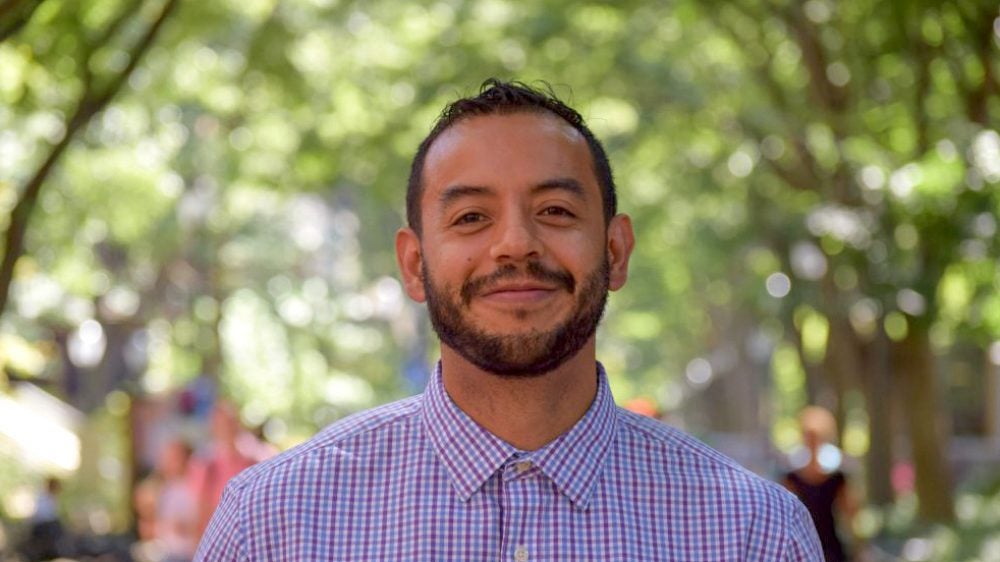
male and female holding up a key to their new home standing in front of the house they just purchased.|Professor of Urban Planning Jose Loya Smiles, standing in front of Public Affairs building||Professor of Urban Planning Jose Loya Smiles, standing in front of Public Affairs building||Jose Loya smiles in front of the Meyer and Renee Luskin Public Affairs Building.|Jose Loya stands smiling in front of the Public Affairs building at UCLA.

Posted in

  • Luskin's Latest Blog, Urban Planning

Published on

  • January 15, 2026
  • access to housing, Affordable housing, homelessness, homeownership, housing inequality, housing solutions

Share this Article

by Peaches Chung

Homeownership is often framed as the American dream. For José Loya, it is also one of the clearest windows into how inequality is reproduced in American society. As an assistant professor of urban planning at UCLA Luskin, Loya examines how race, ethnicity, and structural inequities shape who has access to opportunity — and who doesn’t.

Loya’s interest in housing was sparked as an undergraduate at Brown University during the Great Recession, when countless families faced foreclosure.

“I was trying to understand why people were going into foreclosure and potentially losing everything,” he recalls. Working with a faculty mentor who specialized in homelessness and housing instability, he encountered the question that has guided his research ever since: How do we explain, and ultimately address, racial and economic inequality in the housing market?

Loya describes himself as a social stratification scholar. The patterns he uncovers aren’t new, discrimination in mortgage lending has been proven for decades, but his methods are.
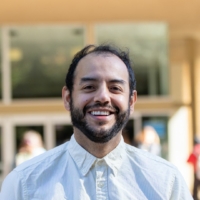
Jose Loya stands smiling in front of the Public Affairs building at UCLA.
Professor José Loya

“I’m using modern statistical tools and richer, more comprehensive datasets than previous generations of researchers had,” he explains. “The findings may not be surprising — that whites and Asians tend to be the most advantaged in the mortgage market — but the nuance is different. I can show how inequality persists today, not necessarily in the same form as 50 or 70 years ago, but still present.”

Much of his recent work examines barriers that prospective homebuyers face in the post–Great Recession era, as well as the ways Latino subgroups experience the mortgage market differently. Traditional research often treats Latinos as a homogenous category, something Loya argues conceals important differences.

“Latinos are an ethnic group, not a racial group. There is tremendous diversity,” he says. “By drilling down into subgroups, we start to see how different racialized experiences among Latinos shape their access to homeownership.”

A Wealth-Building Tool That’s Slipping Out of Reach for Many

Homeownership remains the single largest vehicle for building wealth in the United States. But Loya’s research shows that the tool is becoming increasingly out of reach for the very communities who could benefit from it most.

“In the last decade and a half, home prices have grown much faster than wages or any measure of labor success,” he says. “Middle-class and lower-income families are being squeezed out.”

Add in rising interest rates, limited housing inventory, and skyrocketing demand, and a central question emerges: If homeownership is no longer accessible, how do families achieve upward mobility?

Loya points to a paradox at the heart of U.S. housing policy. “Our banks want you to be a homeowner. The tax system incentivizes it through the mortgage interest deduction, one of the largest subsidies in the U.S. tax code. But the financial risk is growing and making it less achievable for lower and moderate-income households. Today, those subsidies are being largely utilized by higher socioeconomic households.”

According to recent data, the homeownership rate for non-Hispanic white households sits around 73–74%, while Black households own homes at roughly 45–46%, and Hispanic/Latino households at about 50–51%. “Progress has been made,” Loya says. “But the gap is nowhere near closed.”

Why Research Matters Now More Than Ever

For Loya, UCLA Luskin offers the ideal environment to confront these challenges because the school engages students in opportunities for intersectional learning, bringing together perspectives from multiple specialties to tackle social, economic, and environmental challenges.

“Society doesn’t operate in silos,” he says. “If we’re talking about access to homeownership, we’re also talking about labor market insecurity, education access, local zoning, transportation, climate change — all of it.”

[perfectpullquote align=”left” bordertop=”false” cite=”” link=”” color=”” class=”” size=””] “Good research doesn’t always give you an answer. It shows you how much more work is needed to get to an answer.” [/perfectpullquote]

At a time when federal research funding faces threats and universities nationwide are navigating political pressures, Loya is direct about why research still matters.

“Universities don’t just study the problems of today,” he says. “We’re trying to anticipate the problems 20 or 30 years from now.”

His own work, he says, is less about providing immediate fixes and more about documenting how historical patterns of inequality still shape outcomes today — and will continue to shape them in the future if left unaddressed.

Preparing Students for Real-World Challenges

When asked what he hopes his students take away from his classes, his answer is clear but hard to explain.

“Problems are complicated,” he says. “Good research doesn’t always give you an answer. It shows you how much more work is needed to get to an answer.”

Rather than rushing toward solutions, Loya encourages students to sit with uncertainty and ask better questions about the systems shaping outcomes. “In my classes, it’s not necessarily about finding the solution,” he adds. “It’s really about understanding the problem.”

For Loya, that’s often where the work begins — with examining the forces that are often hidden in plain sight — and equipping students with the tools to question them.
Faculty Mentioned in this Article
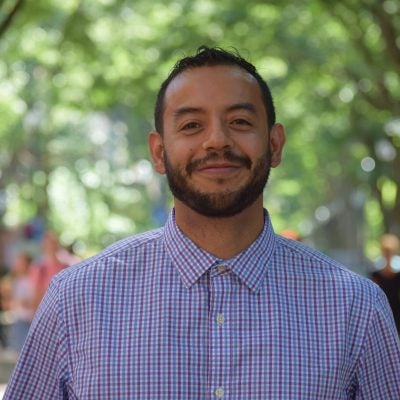
Jose Loya

José Loya

Faculty Director of Real Estate Development, Assistant Professor of Urban Planning; Faculty Associate in the Chicano Studies Research Center (CSRC)

José Loya is an Assistant Professor in Urban Planning at UCLA’s Luskin School of Public Affairs and faculty affiliate with...

Related Articles

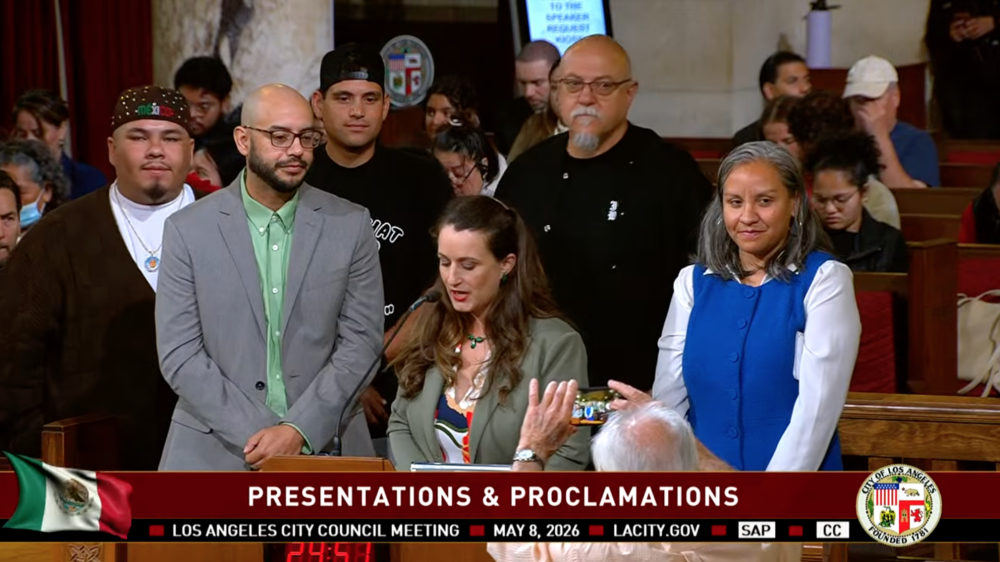
Los Angeles City Council Meeting on May 8, a speaker presents José Loya and Amada Armenta with their "impactful chicanos" award at City Hall.|Two photos next to each other, on the left is Jose Loya and Amada Armenta holding up their "Impactful Chicanos" awards inside City Hall, the photo on the right is of Jose and Amada standing next to a framed illustration of UCLA Latino Policy and Politics Institute.

Amada Armenta and José Loya Honored by Los Angeles City Council

May 15, 2026
Luskin's Latest Blog
Los Angeles City Council recognized Amada Armenta and José Loya during its “Impactful Chicanos in America”...
Read More
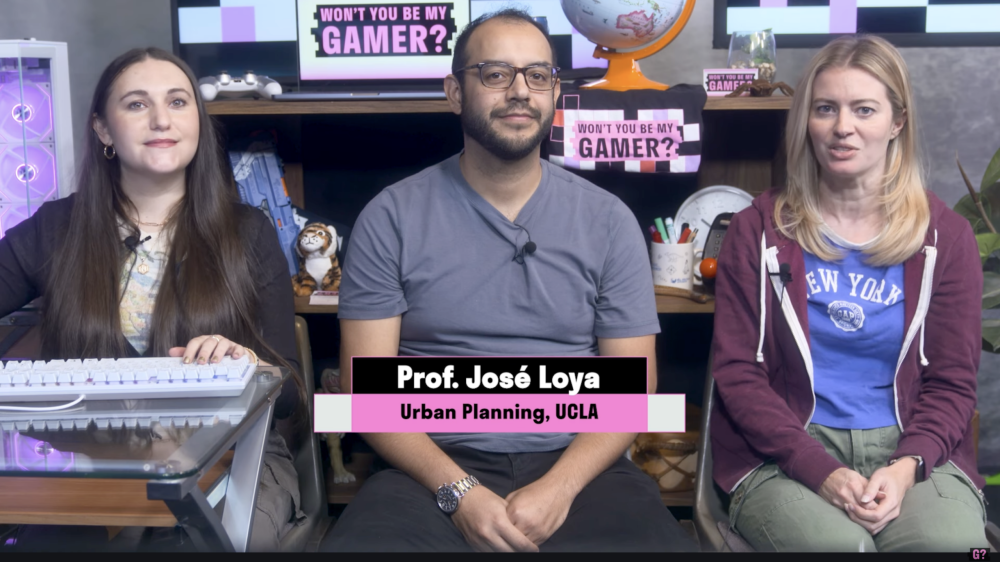
Assistant Professor José Loya sits between the two hosts of PBS SoCal’s Won’t You Be My Gamer? during the show’s gameplay and discussion.|Landscape of New York City

PBS SoCal’s Won’t You Be My Gamer? Explores LA’s “Best” and “Worst” Cities With José Loya

February 5, 2026
Luskin in the News
Loya takes on the challenge of building the “best” and “worst” cities....
Read More
In the News Jose Loya

Loya on Building Wealth through Homeownership

November 17, 2025
Development and Housing
As housing prices rise and uncertainty fills the job market, José Loya weighs in on whether...
Read More
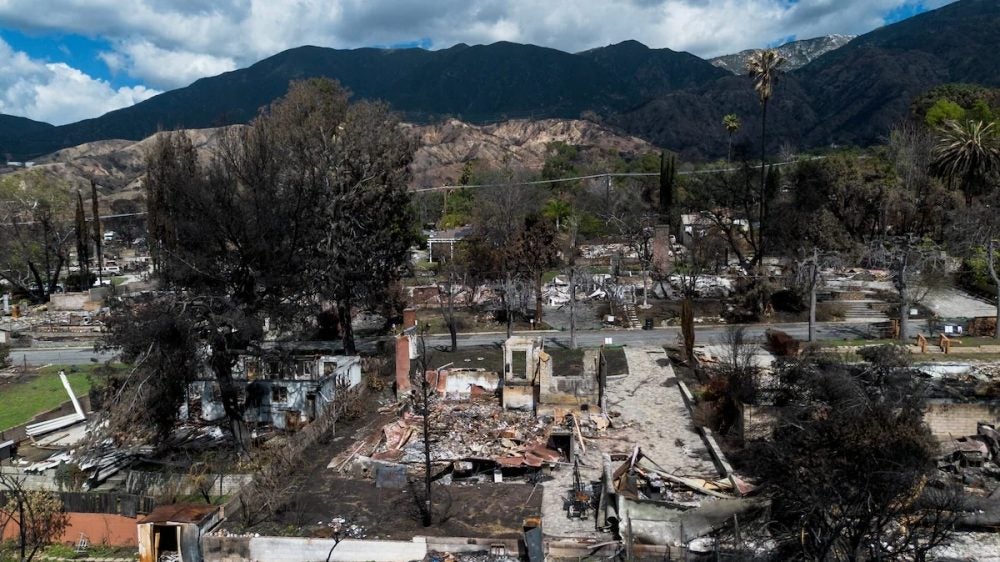
Professor José Loya speaks to The Washington Post about how the fires are changing the Los Angeles housing market.

Wildfires Reshape Los Angeles’ Housing Market

March 19, 2025
Luskin in the News
Areas previously considered desirable are now seeing fluctuating demand, raising questions about resilience in fire-prone communities,...
Read More
Wood framing of house construction

Seeking Solutions for Today’s Issues — and Tomorrow’s

January 25, 2025
Luskin Forum Online
With an equity lens, faculty pursue research on plastic pollution, transportation access, mortgage lending and youth...
Read More
Row of houses

Tearing Down Barriers to Homeownership

July 5, 2024
Luskin in the News
UCLA Luskin's José Loya says overcoming discrimination in the mortgage industry can help secure the future...
Read More
Census worker in front of house

Hurdles to Breaking Into the Housing Market

January 11, 2024
Luskin in the News
Black and Latino homebuyers have applied for mortgages at declining rates since the start of the...
Read More
overhead shot of housing development near manmade lakes

Racial Disparities in Mortgage Approval Rates

December 21, 2023
Luskin in the News
José Loya of UCLA Luskin Urban Planning says a CNN analysis finding a stark gap in...
Read More
UCLA Luskin faculty member José Loya.

Loya’s Research on Mortgage Disparities Bolstered by New LPPI Study

June 8, 2023
Luskin's Latest Blog
Grants will support research efforts aimed at improving the well-being of the country’s Latino population....
Read More
Crystal Marie McDaniels

Loya on Racial Disparities in Mortgage Approval Rates

September 1, 2021
Luskin in the News
A study of over 2 million mortgage applications found that lenders were 80% more likely to...
Read More
NewFaculty2020Image6.1

4 Faculty Additions Join UCLA Luskin Social Welfare and Urban Planning

September 30, 2020
Diversity
Faculty hires for the new academic year bring a wealth of new research and teaching about...
Read More
Learn more about UCLA Luskin

Find contact information and get answers to your questions.

Contact Us

Public Affairs Building
337 Charles E. Young Drive East
Los Angeles, California 90095

Linkedin Youtube Instagram Facebook X-twitter
Campus Resources
  • Map, Directions, Parking
  • Directory
  • Academic Calendar
  • Careers
  • Map, Directions, Parking
  • Directory
  • Academic Calendar
  • Careers
School Resources
  • About
  • Our Dean
  • Administration
  • Board of Advisors
  • Contact Us
  • Visit Us
  • About
  • Our Dean
  • Administration
  • Board of Advisors
  • Contact Us
  • Visit Us
© 2026 Regents of the University of California
  • Emergency
  • Accessibilty
  • Privacy & Terms of Use
  • Emergency
  • Accessibilty
  • Privacy & Terms of Use
Facebook Instagram Linkedin X-twitter Youtube Threads
Academics
Departments
  • Public Policy
  • Real Estate Development
  • Social Welfare
  • Undergraduate Program
  • Urban Planning
  • Public Policy
  • Real Estate Development
  • Social Welfare
  • Undergraduate Program
  • Urban Planning
Graduate Programs
  • Master of Public Policy (MPP)
  • Master of Real Estate Development (MRED)
  • Master of Social Welfare (MSW)
  • Master of Urban and Regional Planning (MURP)
  • PhD in Social Welfare
  • PhD in Urban Planning
  • Master of Public Policy (MPP)
  • Master of Real Estate Development (MRED)
  • Master of Social Welfare (MSW)
  • Master of Urban and Regional Planning (MURP)
  • PhD in Social Welfare
  • PhD in Urban Planning
Undergraduate Programs
  • BA in Public Affairs
  • Minor in Urban and Regional Studies
  • Minor in Gerontology
  • Minor in Public Affairs
  • BA in Public Affairs
  • Minor in Urban and Regional Studies
  • Minor in Gerontology
  • Minor in Public Affairs
Professional Certificates
  • Data Analytics Certificate
  • Data Analytics Certificate
Admissions
Program Specific Admissions
  • Public Policy
  • Real Estate Development
  • Social Welfare
  • Urban Planning
  • Undergraduate Program
  • Public Policy
  • Real Estate Development
  • Social Welfare
  • Urban Planning
  • Undergraduate Program
Faculty
Our Faculty
  • All Faculty
  • Public Policy
  • Real Estate Development
  • Social Welfare
  • Urban Planning
  • All Faculty
  • Public Policy
  • Real Estate Development
  • Social Welfare
  • Urban Planning
Leadership
  • Our Dean
  • Board of Advisors
  • Faculty Executive Committee
  • Our Dean
  • Board of Advisors
  • Faculty Executive Committee
Research Centers
  • Agile Visual Analytics Lab (AVAL):

    Uses data visualization to improve decision-making for family and child services.

  • Berggruen Governance Index

    Evaluates the quality of political governance and democracy worldwide.

  • Center for Neighborhood Knowledge (CNK)

    Specializes in spatial analysis of socioeconomic disparities in neighborhoods.

  • Center for Policy Research on Aging (CPRA)

    Explores the societal and policy implications of an aging population.

  • Agile Visual Analytics Lab (AVAL):

    Uses data visualization to improve decision-making for family and child services.

  • Berggruen Governance Index

    Evaluates the quality of political governance and democracy worldwide.

  • Center for Neighborhood Knowledge (CNK)

    Specializes in spatial analysis of socioeconomic disparities in neighborhoods.

  • Center for Policy Research on Aging (CPRA)

    Explores the societal and policy implications of an aging population.

  • Institute of Transportation Studies (ITS)

    A national leader in transportation policy and mobility research.

  • Institute on Inequality and Democracy

    Advances scholarship addressing displacement and dispossession in Los Angeles and beyond.

  • Latin American Cities Initiative

    Connects urban planning and policy networks across the Americas.

  • Latino Policy & Politics Institute (LPPI)

    Addresses policy challenges facing Latinos and communities of color.

  • Institute of Transportation Studies (ITS)

    A national leader in transportation policy and mobility research.

  • Institute on Inequality and Democracy

    Advances scholarship addressing displacement and dispossession in Los Angeles and beyond.

  • Latin American Cities Initiative

    Connects urban planning and policy networks across the Americas.

  • Latino Policy & Politics Institute (LPPI)

    Addresses policy challenges facing Latinos and communities of color.

  • Lewis Center for Regional Policy Studies

    Researches housing, transportation, and economic development in Southern California.

  • Los Angeles Education Research Institute (LAERI)

    Collaborates with schools to improve educational outcomes for L.A. students.

  • Luskin Center for Innovation (LCI)

    Focuses on environmental policy, clean energy, and climate justice.

  • UCLA Voting Rights Project

    The flagship project for voting rights litigation and policy research.

  • Lewis Center for Regional Policy Studies

    Researches housing, transportation, and economic development in Southern California.

  • Los Angeles Education Research Institute (LAERI)

    Collaborates with schools to improve educational outcomes for L.A. students.

  • Luskin Center for Innovation (LCI)

    Focuses on environmental policy, clean energy, and climate justice.

  • UCLA Voting Rights Project

    The flagship project for voting rights litigation and policy research.

All Research Centers
Outcomes
Common Search Terms

Results will show as you type.