Skip to content
  • Students & Alumni
    • Career Services
    • Alumni Relations
    • Student Support
    • Graduate Resource Library
    • For Employers
  • News
  • Events
    • Events Calendar
    • Luskin Summit
    • Luskin Lecture Series
    • California Policy Briefing
    • Commencement
  • Students & Alumni
    • Career Services
    • Alumni Relations
    • Student Support
    • Graduate Resource Library
    • For Employers
  • News
  • Events
    • Events Calendar
    • Luskin Summit
    • Luskin Lecture Series
    • California Policy Briefing
    • Commencement
Giving
UCLA Luskin School of Public Affairs Logo
  • Academics
    Departments & Programs
    • Global Public Affairs
    • Public Policy
    • Real Estate Development
    • Social Welfare
    • Urban Planning
    • Undergraduate Program
    • Global Public Affairs
    • Public Policy
    • Real Estate Development
    • Social Welfare
    • Urban Planning
    • Undergraduate Program
    Graduate Degrees
    • Master of Global Public Affairs (MGPA)
    • Master of Public Policy (MPP)
    • Master of Real Estate Development (MRED)
    • Master of Social Welfare (MSW)
    • Master of Urban and Regional Planning (MURP)
    • PhD in Social Welfare
    • PhD in Urban Planning
    • Master of Global Public Affairs (MGPA)
    • Master of Public Policy (MPP)
    • Master of Real Estate Development (MRED)
    • Master of Social Welfare (MSW)
    • Master of Urban and Regional Planning (MURP)
    • PhD in Social Welfare
    • PhD in Urban Planning
    Undergraduate Degrees
    • BA in Public Affairs
    • Minor in Urban and Regional Studies
    • Minor in Gerontology
    • Minor in Public Affairs
    • BA in Public Affairs
    • Minor in Urban and Regional Studies
    • Minor in Gerontology
    • Minor in Public Affairs
    Professional Certificates
    • AI in Public Affairs Certificate
    • AI in Public Affairs Certificate
  • Admissions
    Program Specific Admissions
    • Global Public Affairs
    • Public Policy
    • Real Estate Development
    • Social Welfare
    • Urban Planning
    • Undergraduate Program
    • Global Public Affairs
    • Public Policy
    • Real Estate Development
    • Social Welfare
    • Urban Planning
    • Undergraduate Program
  • Faculty
    Our Faculty
    • All Faculty
    • Public Policy
    • Real Estate Development
    • Social Welfare
    • Urban Planning
    • All Faculty
    • Public Policy
    • Real Estate Development
    • Social Welfare
    • Urban Planning
    Leadership
    • Our Dean
    • Board of Advisors
    • Faculty Executive Committee
    • Our Dean
    • Board of Advisors
    • Faculty Executive Committee
  • Research Centers
    • Agile Visual Analytics Lab (AVAL)

      Empowers stakeholders with data to make informed decisions for children, families, and communities.

    • Berggruen Governance Index

      Evaluates the quality of political governance and democracy worldwide.

    • Center for Neighborhood Knowledge (CNK)

      Specializes in spatial analysis of socioeconomic disparities in neighborhoods.

    • Center for Policy Research on Aging (CPRA)

      Explores the societal and policy implications of an aging population.

    • Institute of Transportation Studies (ITS)

      Advances research, education, and meaningful civic engagement on transportation issues.

    • Institute on Inequality and Democracy

      Advances scholarship that confronts threats to democracy in America and around the world.

    • Latin American Cities Initiative

      Connects urban planning and policy networks across the Americas.

    • Latino Policy & Politics Institute (LPPI)

      Addresses policy challenges facing Latinos and communities of color.

    • Lewis Center for Regional Policy Studies

      Studying housing affordability and transportation equity in the L.A. region.

    • Los Angeles Education Research Institute (LAERI)

      Collaborates with schools to improve educational outcomes for L.A. students.

    • Luskin Center for Innovation

      Informing effective and equitable environmental policy that improves lives.

    • UCLA Voting Rights Project

      The flagship project for voting rights litigation and policy research.

    All Research Centers
  • Outcomes
Home / News / Grassroots Environmental and Financial Assistance for L.A. Residents

Grassroots Environmental and Financial Assistance for L.A. Residents

UCLA Luskin researchers find emPOWER campaign reaches areas impacted by poverty and pollution
The emPOWER program builds on community relationships to connect low-income residents with a suite of environment-related financial assistance programs
The emPOWER program builds on community relationships to connect low-income residents with a suite of environment-related financial assistance programs. Photo by Getty Images / iStock

Posted in

  • Climate Change, Environment, Public Policy, School of Public Affairs

Published on

  • July 23, 2020
  • electricity, environment, Los Angeles County, pollution, poverty, utilities, water

Share this Article

By Stan Paul

Low-income households in California face higher energy, transportation and water affordability burdens than other populations as a percentage of household income spent on utilities. Yet the existence of a number of environmental benefit programs provided by state and local agencies does not ensure that these households benefit from them.

A new pilot program designed to enable low-income households across Los Angeles County to realize more fully those benefits is off to a good start, according to a new report by the UCLA Luskin Center for Innovation or LCI. The purpose of the LCI report is to provide an evaluation of the first year of the campaign, including its equity implications, the effectiveness of its outreach and areas for growth.

“The pilot stage’s reach to the most environmentally disadvantaged communities in the region was undeniably a success,” said Gregory Pierce, associate director of the center and lead author of the program evaluation, “emPOWER: A Scalable Model for Improving Community Access to Environmental Benefit Programs in California.” The report was co-authored by Rachel Connolly, a graduate student researcher at the Luskin Center for Innovation. Connolly is a doctoral student in the Environmental Health Sciences department within the Fielding School of Public Health.

The emPOWER outreach campaign was launched in 2019, with Liberty Hill Foundation, a Los Angeles-based social justice philanthropic organization, serving as regional hub administrator. Through existing community relationships, Liberty Hill funded eight community-based organizations across the county to connect low-income residents with a suite of environment-related financial assistance programs, including those offering clean and affordable energy and clean transportation. These incentive programs provide benefits including, but not limited to, utility bill savings, zero-emission vehicle incentives and energy efficiency home upgrades.

The platform was launched to realize opportunities via community relationships and to address longstanding public health issues in environmental justice communities. mark! Lopez, the executive director of one of the organizations, East Yard Communities for Environmental Justice, explains the importance of this neighborhood engagement in Southeast Los Angeles County.

“When our folks have limited income, that reduction [in cost] is everything,” Lopez said. “That reduction is the ability to breathe; it can mean everything for the trajectory of our families.”

“That’s the really novel aspect of the program,” said Pierce, who is also an adjunct assistant professor in urban planning at the UCLA Luskin School of Public Affairs. The community organizations are already connected with a lot of people who can benefit from these programs. “People trust them, and they can convey the opportunities in a much more effective way.”

Pierce pointed out that emPOWER benefit programs are brought together in one place enabling households to sign up at once, “instead of a number of separate programs that are hard for people to understand or sign up for. It’s great that there are so many programs but at this point they can be operated and communicated in a more coherent way.”

The emPOWER program will continue to operate in Los Angeles County in 2020, with goals to expand the campaign model beyond Los Angeles, first to the Inland Empire and ultimately statewide. Broadening and deepening this campaign can help ensure a just transition in the process of climate change adaptation over the next several decades, according to the authors.

Report Findings:

  • The emPOWER campaign serves as a replicable model for the state. It prioritizes funding to authentic grassroots organizations working to build power in communities on the front lines of industrial pollution.
  • Despite some administrative challenges, the campaign engaged more than 11,000 distinct households and received over 2,700 eligibility applications.
  • Especially compared to existing individual programs, the campaign was highly successful in reaching communities disproportionately affected by systemic racism, poverty, pollution and now the pandemic. Over 90% of emPOWER participants live in a state-identified disadvantaged community or low-income community census tract.
  • Monetary benefits for participants are tremendous. On average, each emPOWER participant is eligible for more than nine incentive programs. Eligible participants can receive hundreds of dollars in benefits for their electric, gas and water utility bills. For instance, the average participant could receive $320 annually in electricity bill assistance through Southern California Edison’s CARE program. In addition, many participants can receive up to $9,500 in benefits to trade in an old gas-guzzling vehicle for an electric car through the Replace Your Ride program.
  • Notable process successes of the campaign included community organizations’ ability to build upon existing relationships with their communities, a focus on program benefits that participants were consistently motivated to apply for, and active technical assistance and program adaptation.  Frequently reported challenges that need to be addressed in future phases of the program include community hesitation and misconceptions regarding emPOWER and the associated incentive programs.

Faculty Mentioned in this Article
Headshot of Greg Pierce

Gregory Pierce

Associate Professor in Residence of Urban Planning; Research and Co-Executive Director of the UCLA Luskin Center for Innovation

Greg Pierce (he/him) is the Research and Co-Executive Director of the UCLA Luskin Center for Innovation and the director of...

Related Articles

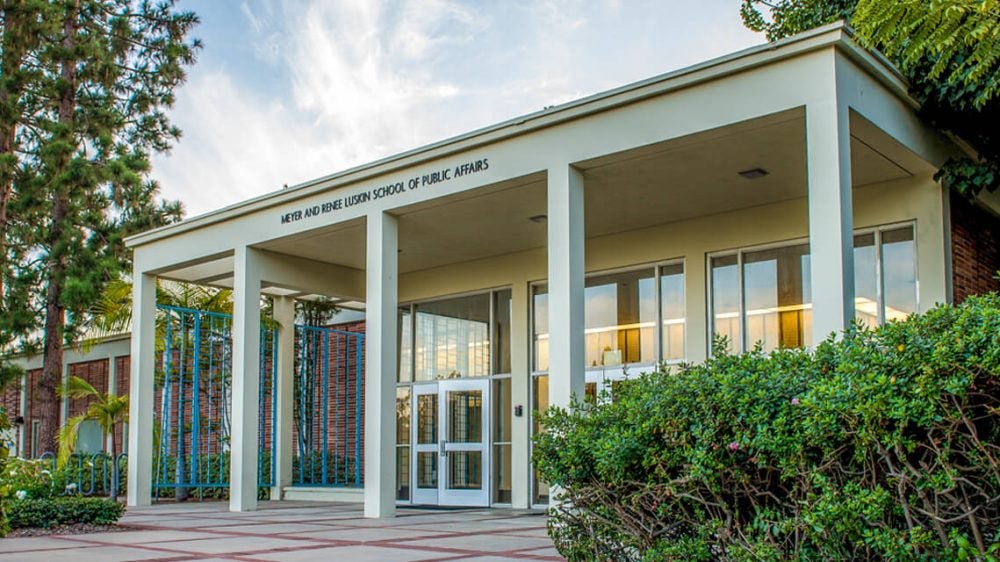
Front entrance of Luskin School of Public Affairs

Luskin Faculty Recognized Among World’s Top 2% of Scientists

November 2, 2026
Luskin's Latest Blog

UCLA Luskin School of Public Affairs faculty members have been recognized in the 2026 Stanford-Elsevier Top...

Read More
Red industrial vehicle with hose taking water from lake

Building a Water Game Plan, Before the Next Wildfire

October 2, 2026
Luskin in the News
Read More
Kitchen faucet running water.

Pierce on the Necessity of Water Filters

March 23, 2026
Luskin in the News
As uncertainty rises over the quality and safety of tap water in the United States, debates...
Read More
A turtle swimming in the ocean.

Pierce on Alternate Solutions for Drinking Water as Global Temperatures Rise

January 26, 2026
Luskin in the News
As global temperatures rise, companies are investigating alternate desalination methods that produce drinking water without harming...
Read More
Hollywood Reservoir from up in the Hollywood Hills

Pierce on LADWP inspections by U.S. EPA

December 22, 2025
Luskin in the News
The EPA has ordered LADWP to inspect nearly 100 reservoirs, though UCLA experts say there’s no...
Read More
Pierce In the News

Pierce on the Closure of the Santa Ynez Reservoir during the Palisades Fire

December 3, 2025
Luskin in the News
Greg Pierce shares his views on the report by California agencies on the investigation into the...
Read More
Learn more about UCLA Luskin

Find contact information and get answers to your questions.

Contact Us

Public Affairs Building
337 Charles E. Young Drive East
Los Angeles, California 90095

Linkedin Youtube Instagram Facebook X-twitter
Campus Resources
  • Map, Directions, Parking
  • Directory
  • Academic Calendar
  • Careers
  • Map, Directions, Parking
  • Directory
  • Academic Calendar
  • Careers
School Resources
  • About
  • Our Dean
  • Administration
  • Luskin School Intranet
  • Board of Advisors
  • Contact Us
  • Visit Us
  • About
  • Our Dean
  • Administration
  • Luskin School Intranet
  • Board of Advisors
  • Contact Us
  • Visit Us
UCLA logo
© 2026 Regents of the University of California
  • Emergency
  • Accessibility
  • Privacy & Terms of Use
  • Emergency
  • Accessibility
  • Privacy & Terms of Use
Facebook Instagram Linkedin X-twitter Youtube Threads
UCLA Luskin School of Public Affairs Logo
Academics
Departments
  • Global Public Affairs
  • Public Policy
  • Real Estate Development
  • Social Welfare
  • Urban Planning
  • Undergraduate Program
  • Global Public Affairs
  • Public Policy
  • Real Estate Development
  • Social Welfare
  • Urban Planning
  • Undergraduate Program
Graduate Programs
  • Master of Global Public Affairs (MGPA)
  • Master of Public Policy (MPP)
  • Master of Real Estate Development (MRED)
  • Master of Social Welfare (MSW)
  • Master of Urban and Regional Planning (MURP)
  • PhD in Social Welfare
  • PhD in Urban Planning
  • Master of Global Public Affairs (MGPA)
  • Master of Public Policy (MPP)
  • Master of Real Estate Development (MRED)
  • Master of Social Welfare (MSW)
  • Master of Urban and Regional Planning (MURP)
  • PhD in Social Welfare
  • PhD in Urban Planning
Undergraduate Programs
  • BA in Public Affairs
  • Minor in Urban and Regional Studies
  • Minor in Gerontology
  • Minor in Public Affairs
  • BA in Public Affairs
  • Minor in Urban and Regional Studies
  • Minor in Gerontology
  • Minor in Public Affairs
Professional Certificates
  • AI in Public Affairs Certificate
  • AI in Public Affairs Certificate
Admissions
Program Specific Admissions
  • Global Public Affairs
  • Public Policy
  • Real Estate Development
  • Social Welfare
  • Urban Planning
  • Undergraduate Program
  • Global Public Affairs
  • Public Policy
  • Real Estate Development
  • Social Welfare
  • Urban Planning
  • Undergraduate Program
Faculty
Our Faculty
  • All Faculty
  • Public Policy
  • Real Estate Development
  • Social Welfare
  • Urban Planning
  • All Faculty
  • Public Policy
  • Real Estate Development
  • Social Welfare
  • Urban Planning
Leadership
  • Our Dean
  • Board of Advisors
  • Faculty Executive Committee
  • Our Dean
  • Board of Advisors
  • Faculty Executive Committee
Research Centers
  • Agile Visual Analytics Lab (AVAL)

    Empowers stakeholders with data to make informed decisions for children, families, and communities.

  • Berggruen Governance Index

    Evaluates the quality of political governance and democracy worldwide.

  • Center for Neighborhood Knowledge (CNK)

    Specializes in spatial analysis of socioeconomic disparities in neighborhoods.

  • Center for Policy Research on Aging (CPRA)

    Explores the societal and policy implications of an aging population.

  • Institute of Transportation Studies (ITS)

    Advances research, education, and meaningful civic engagement on transportation issues.

  • Institute on Inequality and Democracy

    Advances scholarship that confronts threats to democracy in America and around the world.

  • Latin American Cities Initiative

    Connects urban planning and policy networks across the Americas.

  • Latino Policy & Politics Institute (LPPI)

    Addresses policy challenges facing Latinos and communities of color.

  • Lewis Center for Regional Policy Studies

    Studying housing affordability and transportation equity in the L.A. region.

  • Los Angeles Education Research Institute (LAERI)

    Collaborates with schools to improve educational outcomes for L.A. students.

  • Luskin Center for Innovation

    Informing effective and equitable environmental policy that improves lives.

  • UCLA Voting Rights Project

    The flagship project for voting rights litigation and policy research.

All Research Centers
Outcomes
Common Search Terms

Results will show as you type.