Skip to content
  • Students & Alumni
    • Career Services
    • Alumni Relations
    • Student Support
    • Graduate Resource Library
    • For Employers
  • News
  • Events
    • Events Calendar
    • Luskin Summit
    • Luskin Lecture Series
    • California Policy Briefing
    • Commencement
  • Students & Alumni
    • Career Services
    • Alumni Relations
    • Student Support
    • Graduate Resource Library
    • For Employers
  • News
  • Events
    • Events Calendar
    • Luskin Summit
    • Luskin Lecture Series
    • California Policy Briefing
    • Commencement
Giving
UCLA Luskin School of Public Affairs Logo
  • Academics
    Departments & Programs
    • Global Public Affairs
    • Public Policy
    • Real Estate Development
    • Social Welfare
    • Urban Planning
    • Undergraduate Program
    • Global Public Affairs
    • Public Policy
    • Real Estate Development
    • Social Welfare
    • Urban Planning
    • Undergraduate Program
    Graduate Degrees
    • Master of Global Public Affairs (MGPA)
    • Master of Public Policy (MPP)
    • Master of Real Estate Development (MRED)
    • Master of Social Welfare (MSW)
    • Master of Urban and Regional Planning (MURP)
    • PhD in Social Welfare
    • PhD in Urban Planning
    • Master of Global Public Affairs (MGPA)
    • Master of Public Policy (MPP)
    • Master of Real Estate Development (MRED)
    • Master of Social Welfare (MSW)
    • Master of Urban and Regional Planning (MURP)
    • PhD in Social Welfare
    • PhD in Urban Planning
    Undergraduate Degrees
    • BA in Public Affairs
    • Minor in Urban and Regional Studies
    • Minor in Gerontology
    • Minor in Public Affairs
    • BA in Public Affairs
    • Minor in Urban and Regional Studies
    • Minor in Gerontology
    • Minor in Public Affairs
    Professional Certificates
    • AI in Public Affairs Certificate
    • AI in Public Affairs Certificate
  • Admissions
    Program Specific Admissions
    • Global Public Affairs
    • Public Policy
    • Real Estate Development
    • Social Welfare
    • Urban Planning
    • Undergraduate Program
    • Global Public Affairs
    • Public Policy
    • Real Estate Development
    • Social Welfare
    • Urban Planning
    • Undergraduate Program
  • Faculty
    Our Faculty
    • All Faculty
    • Public Policy
    • Real Estate Development
    • Social Welfare
    • Urban Planning
    • All Faculty
    • Public Policy
    • Real Estate Development
    • Social Welfare
    • Urban Planning
    Leadership
    • Our Dean
    • Board of Advisors
    • Faculty Executive Committee
    • Our Dean
    • Board of Advisors
    • Faculty Executive Committee
  • Research Centers
    • Agile Visual Analytics Lab (AVAL)

      Empowers stakeholders with data to make informed decisions for children, families, and communities.

    • Berggruen Governance Index

      Evaluates the quality of political governance and democracy worldwide.

    • Center for Neighborhood Knowledge (CNK)

      Specializes in spatial analysis of socioeconomic disparities in neighborhoods.

    • Center for Policy Research on Aging (CPRA)

      Explores the societal and policy implications of an aging population.

    • Institute of Transportation Studies (ITS)

      Advances research, education, and meaningful civic engagement on transportation issues.

    • Institute on Inequality and Democracy

      Advances scholarship that confronts threats to democracy in America and around the world.

    • Latin American Cities Initiative

      Connects urban planning and policy networks across the Americas.

    • Latino Policy & Politics Institute (LPPI)

      Addresses policy challenges facing Latinos and communities of color.

    • Lewis Center for Regional Policy Studies

      Studying housing affordability and transportation equity in the L.A. region.

    • Los Angeles Education Research Institute (LAERI)

      Collaborates with schools to improve educational outcomes for L.A. students.

    • Luskin Center for Innovation

      Informing effective and equitable environmental policy that improves lives.

    • UCLA Voting Rights Project

      The flagship project for voting rights litigation and policy research.

    All Research Centers
  • Outcomes
Home / News / How Laws and Policies Can Close — or Widen — Gender Gaps

How Laws and Policies Can Close — or Widen — Gender Gaps

New book by UCLA researchers shows that progress toward gender equality has stalled, particularly for caregivers in the U.S.
The United States is one of just a few countries around the world that does not guarantee paid leave for new mothers
The United States is one of just a few countries around the world that does not guarantee paid leave for new mothers.

Posted in

  • Education, Global Public Affairs, Public Policy, Research, School of Public Affairs, Undergraduates

Published on

  • February 28, 2023
  • gender, global affairs, Public Policy, United Nations, women

Share this Article

By Les Dunseith

A comprehensive review of economic gender equality in 193 countries by the UCLA WORLD Policy Analysis Center identifies global trends and exposes policy gaps that include shortcomings when it comes to caregiving.

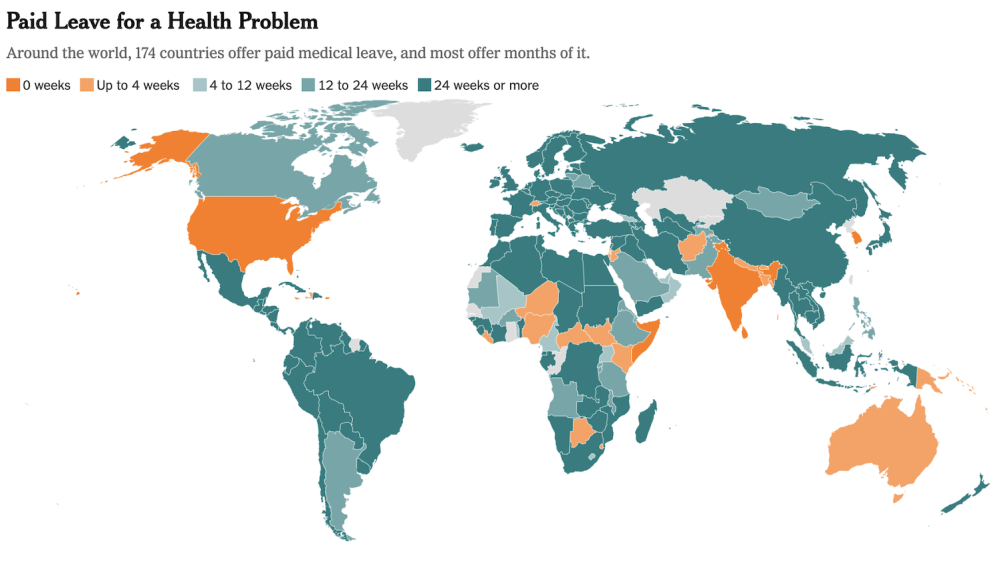
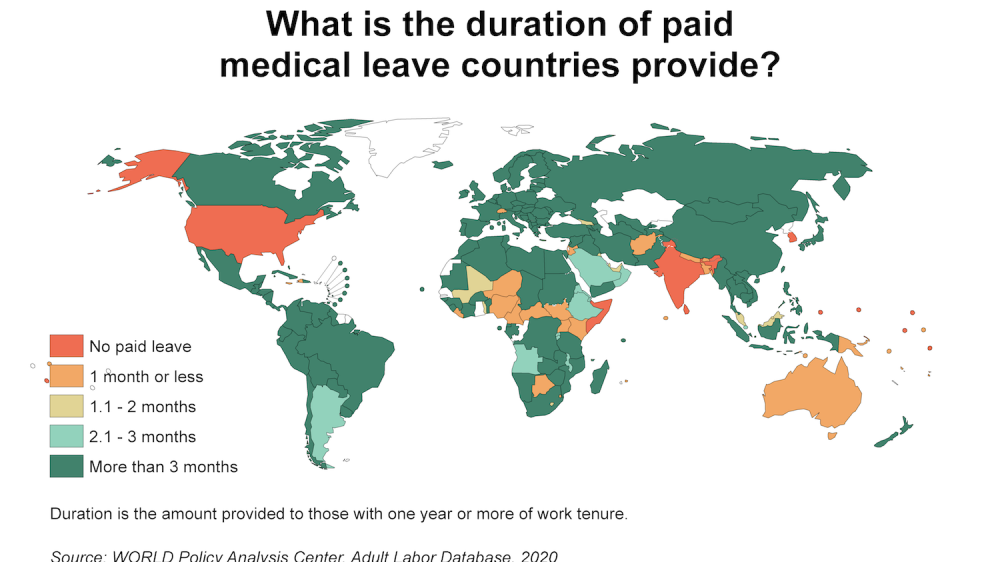
When the authors of a new open-access book first began tracking maternity leave policies around the world in 2000, they were alarmed to find that 18 countries had no national paid leave in place for working mothers. Today, seven remaining countries still lack such protection — five small island nations, Papua New Guinea, and the United States of America.

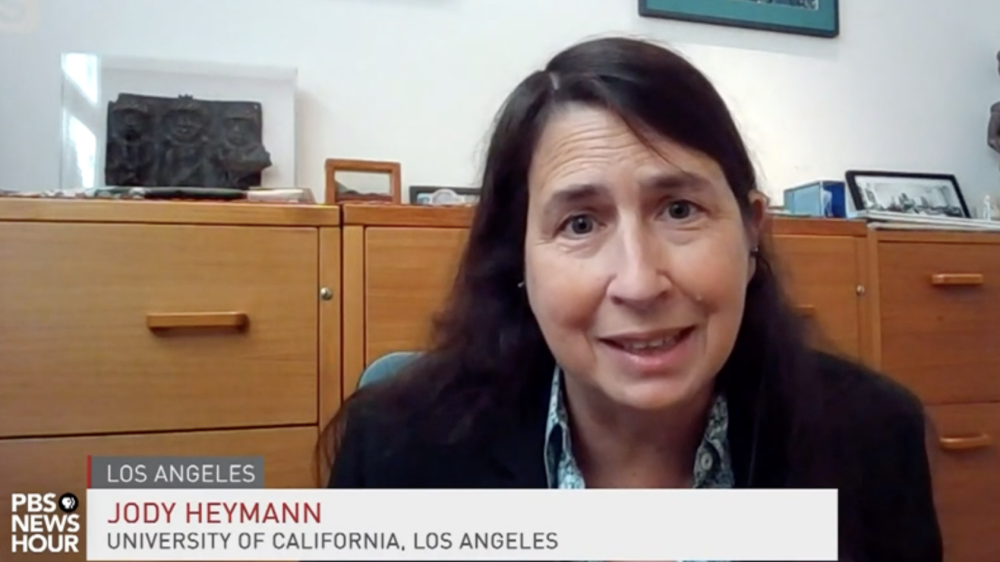
The book, “Equality within Our Lifetimes,” pulls together information from more than a decade of research that has also been collected into a robust, freely downloadable database. Co-author Jody Heymann, a professor at UCLA and founding director of WORLD, said that through the 1980s gender equality was rapidly advancing.

“There were more women entering the workforce. There were increased economic opportunities for women, increased educational opportunities,” she said. “That progress has completely stalled.”

The country’s gender wage gap has barely budged for 15 years. What’s more, it’s even broader among parents. In 2021, the average mother working full-time in the U.S. still earned just 73 cents for each dollar earned by a father working full-time.

Because U.S. women remain predominantly responsible for all types of caregiving, it’s not just new mothers who are impacted by the continued lack of federal paid family leave and other legal protections for caregivers in the workplace. The authors cite studies that show women are three times as likely as men in the U.S. to lose their jobs or to leave the workforce because they’re caring for an ill adult.

The economy has felt the impacts. From 2000 to 2019, the U.S. dropped from 7th to 23rd in a ranking of 36 high-income countries on women’s participation in the labor market, Heymann noted. Amid COVID-19, women’s labor force participation fell to its lowest rate since 1987 and has yet to fully recover — with Black and Latina women experiencing the greatest losses.
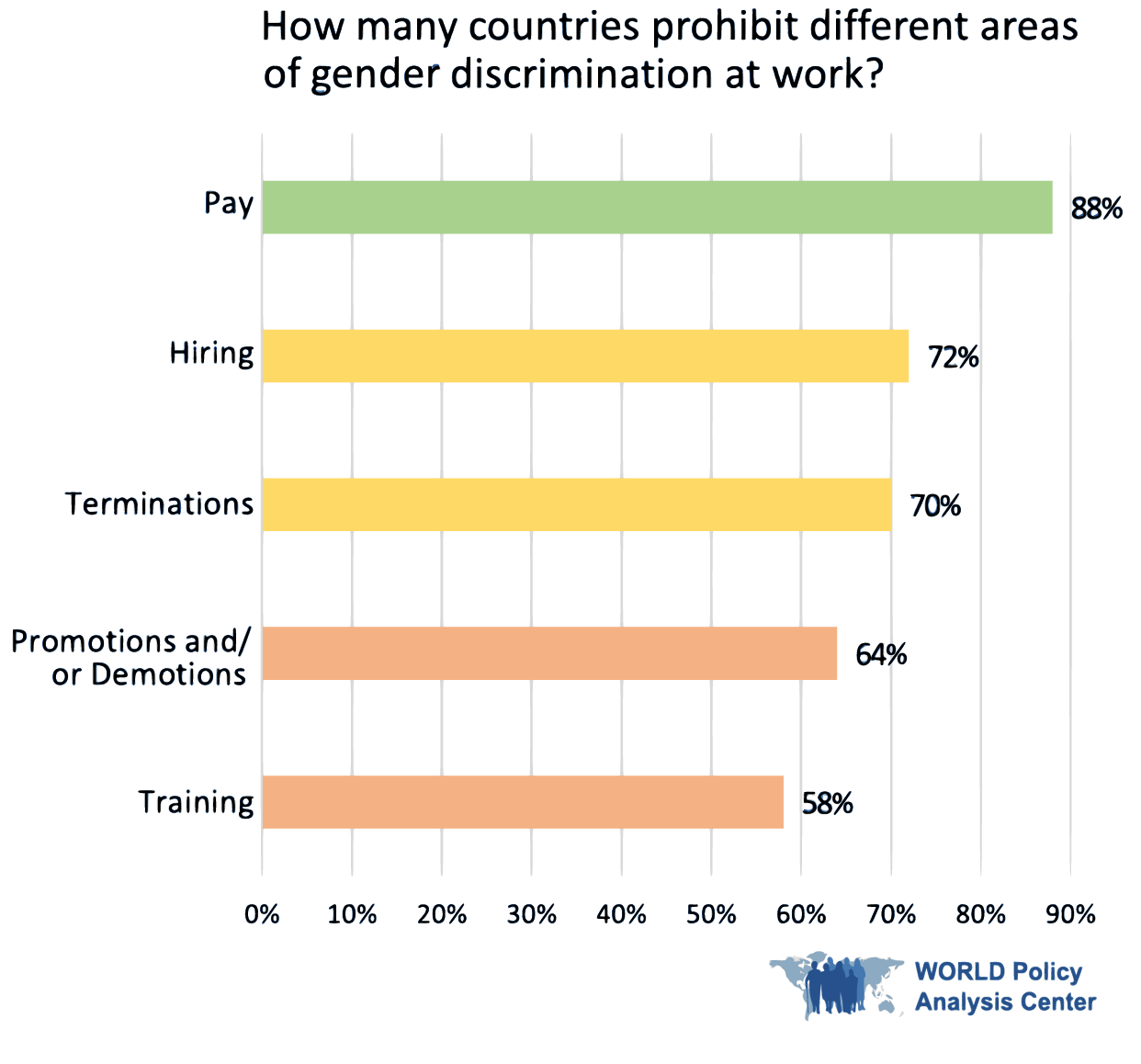
Heymann and her research team analyzed national laws and policies in all 193 countries of the United Nations. Among their findings:

  • Although nearly all countries (93%) now prohibit at least some form of gender discrimination in the workplace, only half prohibit discrimination based on family responsibilities.
  • In 1 in 5 countries, employers can legally discriminate against women of color because laws fail to prohibit employment discrimination based on both gender and race.
  • Over five years since #MeToo went global, 1 in 4 countries still fail to explicitly prohibit sexual harassment at work. In about one-third of countries, the law is silent on employer retaliation, meaning women can be fired if they report harassment.
  • Two- thirds of countries fail to provide paid leave to care for a child during routine illnesses or to take them to the doctor.
  • A majority of countries (58%) provide no paid leave to care for an ill spouse, and 61% offer no paid leave to care for an aging parent.

color coded map

Fathers of infants have far less paid leave available to them than do mothers.

More encouraging for the authors is a worldwide trend toward paid leave for new fathers. Between 1995 and 2022, 71 countries enacted paid leave for dads, increasing the share of countries globally with leave from 24% to 63%. The U.S is not among them.

In the United States, some private employers and 11 states, including California, now offer paid parental leave, although inconsistently. Co-author Aleta Sprague, an attorney and senior legal analyst at WORLD, said the negative impact of not providing paid family leave at the national level is far-reaching.

“It’s no longer in question that our lack of support for new parents and other caregivers is driving women to leave the labor force,” Sprague said. “And that in turn is a barrier to economic growth.”

UC Press is releasing the book — authored by Heymann, Sprague, and co-author Amy Raub, principal research analyst at WORLD — at roughly the halfway point of the Sustainable Development Goals, a 2015 United Nations commitment to ensure equal rights across the globe by 2030. It is being distributed online, accompanied by briefing papers and downloadable assets in multiple languages, as part of a commitment to making top university research readily available to everybody, Heymann said.

The book presents new research on the extent and pace of policy change in 193 countries as well as new longitudinal studies of policy impact, bolstered by case studies that show how change can occur. The lesson from around the world is that solutions exist from every political perspective.

“The way you get to 187 countries providing paid maternity leave, the way you get to every other major economy providing paid sick leave except for the United States, is that there are conservative solutions, there are progressive solutions, there are middle-of-the-road solutions,” Heymann said.

There’s little disagreement among the general public about the need for paid family leave. The Family Medical Leave Act, a 1993 law that guarantees unpaid, job-protected leave for specified family and medical reasons only for some employees, has proven to be inadequate. Heymann said polls have shown that across party lines and across states, paid family leave is popular.

“People want parents to be able to take time to care for a newborn child. They want adults to be able to take time to care for a dying parent,” Heymann said. “And they don’t want American parents to drop into poverty because of it.”

So, is it possible to achieve gender equality in our lifetimes?

“It is completely within our reach,” Heymann said. “There are solutions that can be achieved in real time, that are feasible.”

Sprague’s answer is similar. “I think we know how to get there. One thing that this book illustrates is how feasible it is and how much of a difference a few key policy changes can make.”

Moreover, Heymann emphasized, the standard arguments against some of those key policies in the U.S. overlook critical evidence about their potential for impact. “Too often, policymakers highlight the costs of paid leave without acknowledging its overwhelming payoffs,” she said. “The evidence is clear that when women in particular have access to paid leave for family caregiving needs, they are far more likely to stay in the workforce — and even slightly narrowing the gender gap in labor force participation would boost our GDP by hundreds of billions. It’s a powerful investment.”

Heymann pointed to studies from McKinsey, the World Bank, and others demonstrating how advancing gender equality pays huge dividends.

“At core, gender equality is a basic human right,” she continued. “But it also yields tremendous economic value—and the U.S.’s continued inaction comes at a high cost to us all.”


To conduct the studies referenced in this book, a multilingual, multidisciplinary research team systematically analyzed the laws and policies of all 193 U.N. member states. They also rigorously analyzed the impacts of legal changes around the world. The book is being distributed through UC Press, and downloadable resources are being made available on the website of the UCLA WORLD Policy Analysis Center.

The WORLD Policy Analysis Center (WORLD) at UCLA is the largest independent global policy data center, capturing over 2,500 social, economic, health, and environmental quantitative legal indicators for all 193 U.N. countries. With an international, multilingual, and multidisciplinary team, WORLD collects and analyzes information on every country’s rights, laws, and policies in areas including education, health, adult labor and working conditions, child labor, poverty, constitutional rights, discrimination, childhood, gender, marriage, families, aging, and disability. Heymann, the center’s founding director, is a distinguished professor of public policy, medicine, and health policy and management at UCLA with appointments in the Fielding School of Public Health, Luskin School of Public Affairs and David Geffen School of Medicine. She is also dean emeritus of the Fielding School.
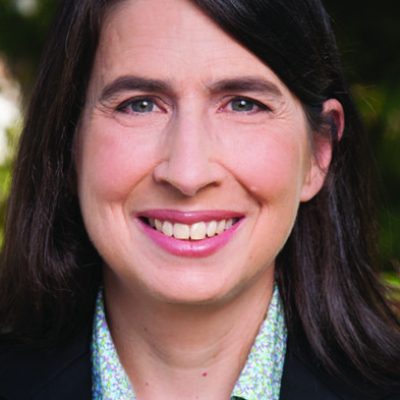
 

Faculty Mentioned in this Article
jody_heymann-e

Jody Heymann

Distinguished Professor of Health Policy and Management, Public Policy, and Medicine

Dr. Jody Heymann is an internationally renowned researcher on health and social policy. She served as dean of the Jonathan...

Related Articles

Front entrance of Luskin School of Public Affairs

Luskin Faculty Recognized Among World’s Top 2% of Scientists

November 2, 2026
Luskin's Latest Blog

UCLA Luskin School of Public Affairs faculty members have been recognized in the 2026 Stanford-Elsevier Top...

Read More
paper shows text reading guns in America in front of a bright screen with images of firearms

Science, Health Leaders Unite Around National Firearm Policy Reforms

June 16, 2022
Luskin's Latest Blog
In letter to Senate, authors cite strong scientific evidence to support policy reforms in four key...
Read More
Screen Shot 2021-11-03 at 11.54.53 PM

U.S. Must Step Up and Provide Family Leave, Heymann Says

November 8, 2021
Luskin in the News
The United States is one of the only countries in the world that does not offer...
Read More
WORLD Policy Health Center paid leave

U.S. Lags on Paid Leave, Heymann Says

October 26, 2021
Luskin in the News
"The rest of the world has found a way to do this,” she says of Congress'...
Read More
Heymann Paid Medical Leave Duration

U.S. Sick and Medical Leave Policies Widen Racial Inequalities, Study Finds

July 26, 2021
Luskin's Latest Blog
The U.S. lags behind other nations in providing access to this important health benefit without excluding...
Read More
child-detention-release-header

UCLA Research Finds U.S. Lags Behind Other Nations in Limiting Detention of Migrant Children

July 14, 2021
Luskin's Latest Blog
Unlike nearly three-quarters of high-income countries, the U.S. has no laws specifically limiting the detention of...
Read More
Learn more about UCLA Luskin

Find contact information and get answers to your questions.

Contact Us

Public Affairs Building
337 Charles E. Young Drive East
Los Angeles, California 90095

Linkedin Youtube Instagram Facebook X-twitter
Campus Resources
  • Map, Directions, Parking
  • Directory
  • Academic Calendar
  • Careers
  • Map, Directions, Parking
  • Directory
  • Academic Calendar
  • Careers
School Resources
  • About
  • Our Dean
  • Administration
  • Luskin School Intranet
  • Board of Advisors
  • Contact Us
  • Visit Us
  • About
  • Our Dean
  • Administration
  • Luskin School Intranet
  • Board of Advisors
  • Contact Us
  • Visit Us
UCLA logo
© 2026 Regents of the University of California
  • Emergency
  • Accessibility
  • Privacy & Terms of Use
  • Emergency
  • Accessibility
  • Privacy & Terms of Use
Facebook Instagram Linkedin X-twitter Youtube Threads
UCLA Luskin School of Public Affairs Logo
Academics
Departments
  • Global Public Affairs
  • Public Policy
  • Real Estate Development
  • Social Welfare
  • Urban Planning
  • Undergraduate Program
  • Global Public Affairs
  • Public Policy
  • Real Estate Development
  • Social Welfare
  • Urban Planning
  • Undergraduate Program
Graduate Programs
  • Master of Global Public Affairs (MGPA)
  • Master of Public Policy (MPP)
  • Master of Real Estate Development (MRED)
  • Master of Social Welfare (MSW)
  • Master of Urban and Regional Planning (MURP)
  • PhD in Social Welfare
  • PhD in Urban Planning
  • Master of Global Public Affairs (MGPA)
  • Master of Public Policy (MPP)
  • Master of Real Estate Development (MRED)
  • Master of Social Welfare (MSW)
  • Master of Urban and Regional Planning (MURP)
  • PhD in Social Welfare
  • PhD in Urban Planning
Undergraduate Programs
  • BA in Public Affairs
  • Minor in Urban and Regional Studies
  • Minor in Gerontology
  • Minor in Public Affairs
  • BA in Public Affairs
  • Minor in Urban and Regional Studies
  • Minor in Gerontology
  • Minor in Public Affairs
Professional Certificates
  • AI in Public Affairs Certificate
  • AI in Public Affairs Certificate
Admissions
Program Specific Admissions
  • Global Public Affairs
  • Public Policy
  • Real Estate Development
  • Social Welfare
  • Urban Planning
  • Undergraduate Program
  • Global Public Affairs
  • Public Policy
  • Real Estate Development
  • Social Welfare
  • Urban Planning
  • Undergraduate Program
Faculty
Our Faculty
  • All Faculty
  • Public Policy
  • Real Estate Development
  • Social Welfare
  • Urban Planning
  • All Faculty
  • Public Policy
  • Real Estate Development
  • Social Welfare
  • Urban Planning
Leadership
  • Our Dean
  • Board of Advisors
  • Faculty Executive Committee
  • Our Dean
  • Board of Advisors
  • Faculty Executive Committee
Research Centers
  • Agile Visual Analytics Lab (AVAL)

    Empowers stakeholders with data to make informed decisions for children, families, and communities.

  • Berggruen Governance Index

    Evaluates the quality of political governance and democracy worldwide.

  • Center for Neighborhood Knowledge (CNK)

    Specializes in spatial analysis of socioeconomic disparities in neighborhoods.

  • Center for Policy Research on Aging (CPRA)

    Explores the societal and policy implications of an aging population.

  • Institute of Transportation Studies (ITS)

    Advances research, education, and meaningful civic engagement on transportation issues.

  • Institute on Inequality and Democracy

    Advances scholarship that confronts threats to democracy in America and around the world.

  • Latin American Cities Initiative

    Connects urban planning and policy networks across the Americas.

  • Latino Policy & Politics Institute (LPPI)

    Addresses policy challenges facing Latinos and communities of color.

  • Lewis Center for Regional Policy Studies

    Studying housing affordability and transportation equity in the L.A. region.

  • Los Angeles Education Research Institute (LAERI)

    Collaborates with schools to improve educational outcomes for L.A. students.

  • Luskin Center for Innovation

    Informing effective and equitable environmental policy that improves lives.

  • UCLA Voting Rights Project

    The flagship project for voting rights litigation and policy research.

All Research Centers
Outcomes
Common Search Terms

Results will show as you type.