Skip to content
  • Students & Alumni
    • Overview
    • Career Services
    • Alumni Relations
    • Student Support
    • Graduate Resource Library
  • News
  • Events
    • Events Calendar
    • Luskin Summit
    • Luskin Lecture Series
    • California Policy Briefing
    • Commencement
  • Students & Alumni
    • Overview
    • Career Services
    • Alumni Relations
    • Student Support
    • Graduate Resource Library
  • News
  • Events
    • Events Calendar
    • Luskin Summit
    • Luskin Lecture Series
    • California Policy Briefing
    • Commencement
Giving
  • Academics
    Departments
    • Public Policy
    • Real Estate Development
    • Social Welfare
    • Undergraduate Program
    • Urban Planning
    • Public Policy
    • Real Estate Development
    • Social Welfare
    • Undergraduate Program
    • Urban Planning
    Graduate Programs
    • Master of Public Policy (MPP)
    • Master of Real Estate Development (MRED)
    • Master of Social Welfare (MSW)
    • Master of Urban and Regional Planning (MURP)
    • PhD in Social Welfare
    • PhD in Urban Planning
    • Master of Public Policy (MPP)
    • Master of Real Estate Development (MRED)
    • Master of Social Welfare (MSW)
    • Master of Urban and Regional Planning (MURP)
    • PhD in Social Welfare
    • PhD in Urban Planning
    Undergraduate Programs
    • BA in Public Affairs
    • Minor in Urban and Regional Studies
    • Minor in Gerontology
    • Minor in Public Affairs
    • BA in Public Affairs
    • Minor in Urban and Regional Studies
    • Minor in Gerontology
    • Minor in Public Affairs
    Professional Certificates
    • Data Analytics Certificate
    • Data Analytics Certificate
  • Admissions
    Program Specific Admissions
    • Public Policy
    • Real Estate Development
    • Social Welfare
    • Urban Planning
    • Undergraduate Program
    • Public Policy
    • Real Estate Development
    • Social Welfare
    • Urban Planning
    • Undergraduate Program
  • Faculty
    Our Faculty
    • All Faculty
    • Public Policy
    • Real Estate Development
    • Social Welfare
    • Urban Planning
    • All Faculty
    • Public Policy
    • Real Estate Development
    • Social Welfare
    • Urban Planning
    Leadership
    • Our Dean
    • Board of Advisors
    • Faculty Executive Committee
    • Our Dean
    • Board of Advisors
    • Faculty Executive Committee
  • Research Centers
    • Agile Visual Analytics Lab (AVAL):

      Uses data visualization to improve decision-making for family and child services.

    • Berggruen Governance Index

      Evaluates the quality of political governance and democracy worldwide.

    • Center for Neighborhood Knowledge (CNK)

      Specializes in spatial analysis of socioeconomic disparities in neighborhoods.

    • Center for Policy Research on Aging (CPRA)

      Explores the societal and policy implications of an aging population.

    • Agile Visual Analytics Lab (AVAL):

      Uses data visualization to improve decision-making for family and child services.

    • Berggruen Governance Index

      Evaluates the quality of political governance and democracy worldwide.

    • Center for Neighborhood Knowledge (CNK)

      Specializes in spatial analysis of socioeconomic disparities in neighborhoods.

    • Center for Policy Research on Aging (CPRA)

      Explores the societal and policy implications of an aging population.

    • Institute of Transportation Studies (ITS)

      A national leader in transportation policy and mobility research.

    • Institute on Inequality and Democracy

      Advances scholarship addressing displacement and dispossession in Los Angeles and beyond.

    • Latin American Cities Initiative

      Connects urban planning and policy networks across the Americas.

    • Latino Policy & Politics Institute (LPPI)

      Addresses policy challenges facing Latinos and communities of color.

    • Institute of Transportation Studies (ITS)

      A national leader in transportation policy and mobility research.

    • Institute on Inequality and Democracy

      Advances scholarship addressing displacement and dispossession in Los Angeles and beyond.

    • Latin American Cities Initiative

      Connects urban planning and policy networks across the Americas.

    • Latino Policy & Politics Institute (LPPI)

      Addresses policy challenges facing Latinos and communities of color.

    • Lewis Center for Regional Policy Studies

      Researches housing, transportation, and economic development in Southern California.

    • Los Angeles Education Research Institute (LAERI)

      Collaborates with schools to improve educational outcomes for L.A. students.

    • Luskin Center for Innovation (LCI)

      Focuses on environmental policy, clean energy, and climate justice.

    • UCLA Voting Rights Project

      The flagship project for voting rights litigation and policy research.

    • Lewis Center for Regional Policy Studies

      Researches housing, transportation, and economic development in Southern California.

    • Los Angeles Education Research Institute (LAERI)

      Collaborates with schools to improve educational outcomes for L.A. students.

    • Luskin Center for Innovation (LCI)

      Focuses on environmental policy, clean energy, and climate justice.

    • UCLA Voting Rights Project

      The flagship project for voting rights litigation and policy research.

    All Research Centers
  • Outcomes
Home / In Reparations Debate, UCLA Students Help Amplify Black Californians’ Voices

In Reparations Debate, UCLA Students Help Amplify Black Californians’ Voices

Public policy graduate students use tools of research to help shape history
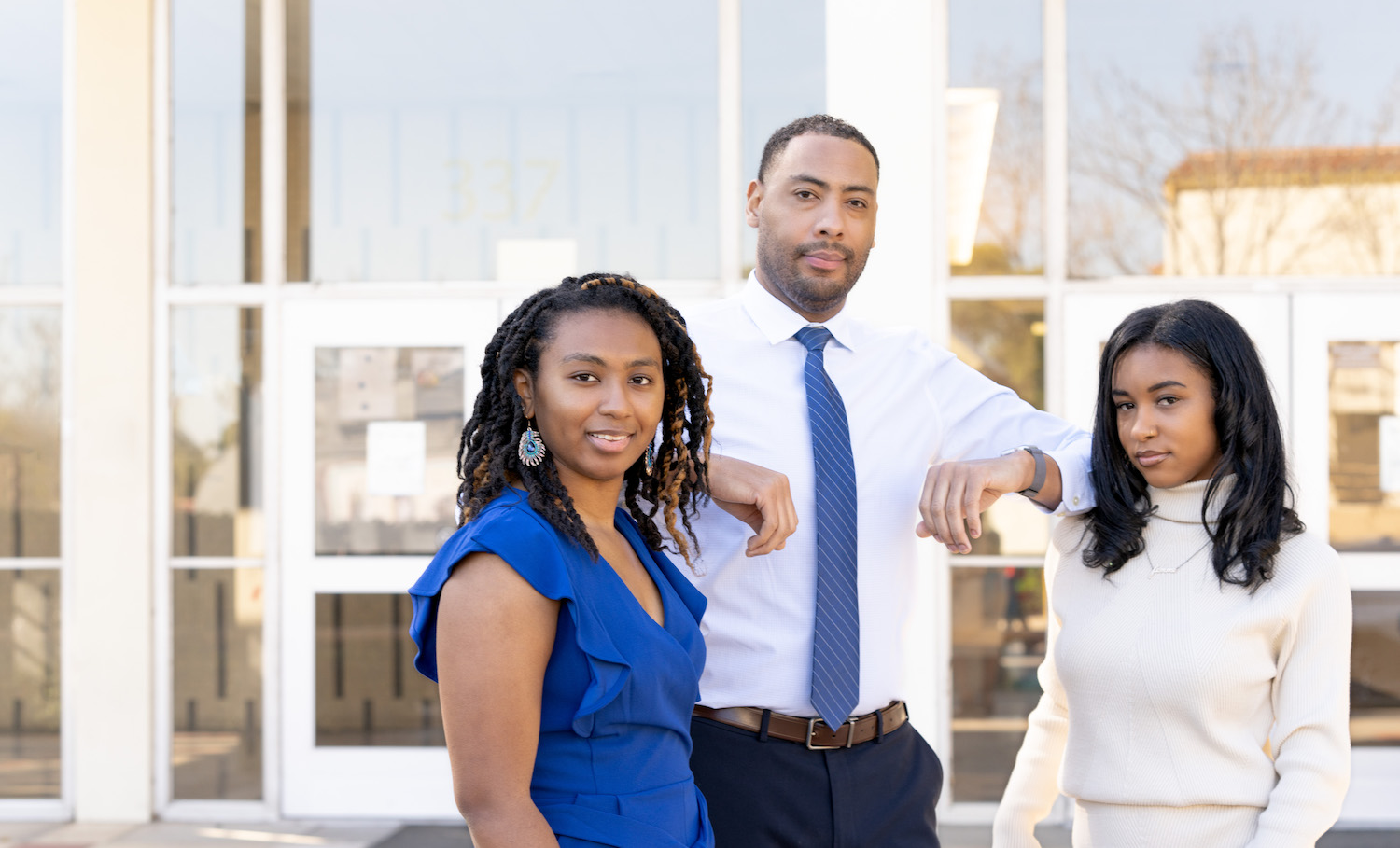
Three students in front of glass entryway

Posted in

  • For Faculty, For Policymakers, For Students, For Undergraduates, Public Policy, Public Policy News, School of Public Affairs

Published on

  • February 2, 2023
  • African American, Black history, California, Public Policy, reparation, slavery, UCLA, UCLA Luskin, UCLA Luskin School of Public Affairs, UCLA Ralph J. Bunche Center for African American Studies

Share this Article

By Mary Braswell

A small team of UCLA graduate students traveled the state, heard from more than 900 residents, surveyed over 4,400 more and analyzed 1,000-plus pages of transcripts over the past year, all to give ordinary Californians a voice in the conversation about how the government should atone for the devastating legacy of slavery.

The students’ work documented the range of harms that have been suffered by Black Americans over generations and captured viewpoints on what just compensation should look like. In the fall, the team reported its findings at a public meeting of the California Reparations Task Force, which is conducting closely watched deliberations on the best path forward.

The group also just delivered an 80-page report to the state Department of Justice, the culmination of an extraordinary opportunity to use the tools of research to help shape momentous policy decisions in real time.

Through it all, the young Black scholars were deeply affected by the stories they heard and the responsibility they carried.

“I understood the significance of what I was working on,” said Elliot Woods, a second-year master of public policy student at the UCLA Luskin School of Public Affairs. “And all I could think about was that I don’t want to disappoint our ancestors.”

[perfectpullquote align=”full” bordertop=”false” cite=”” link=”” color=”” class=”” size=””]’The way it is now, it seems like we’re being pushed out. … We’ve lost family homes. We’ve lost generational homes that have been in our families for years.’

— A Black California resident speaking at a community listening session organized by UCLA’s Black Policy Project[/perfectpullquote]

The nine-member Reparations Task Force, commissioned by the California Legislature and seated in 2021, quickly determined that community input was vital to its work. So it turned to the UCLA Ralph J. Bunche Center for African American Studies, where public policy and urban planning professor Michael Stoll directs the Black Policy Project.

The task was immense and the deadline tight. Within months, the panel required a comprehensive and data-backed accounting of public opinion from across the California spectrum: from rural and urban communities, from every economic rung and every walk of life.

Stoll proposed that his group also systematically document stories of racial discrimination and record residents’ viewpoints on how the state should respond. And he enlisted three master’s students he knew he could count on: Jendalyn Coulter, who analyzed conversations from 17 online and in-person community listening sessions across the state; Chinyere Nwonye, who studied recorded testimonies, photos, videos and other submissions before developing full oral histories of seven Californians, ages 38 to 88; and Woods, who supervised two surveys to gauge support for cash and non-cash reparations and to capture opinions on who should be eligible.

“When you see people who are curious, excited, capable and committed, and who have the passion, it was an easy call about how to assemble the team. And the research they conducted was spectacular,” Stoll said. The project was the type of work that doctoral students might normally do, he added, and it was completed in a fraction of the time such a large project would typically require.

[perfectpullquote align=”full” bordertop=”false” cite=”” link=”” color=”” class=”” size=””]‘I felt like, growing up, we were made to be ashamed of who we are as Black Americans. … I feel like a lot of Black Americans, they don’t have a sense of purpose because they don’t value their legacy. They don’t value what their families went through.’

— A Hollywood professional interviewed for an oral history[/perfectpullquote]

After several weeks of intensive transcribing, coding and analyzing the trove of data they collected, Coulter, Nwonye and Woods worked with Stoll to develop conclusions that will guide the work of the Reparations Task Force. Among them:

  • Black Californians concurred that racial bias in education, policing, housing and the workplace has diminished the quality of their lives, at times leading to emotional trauma and physical ailments.
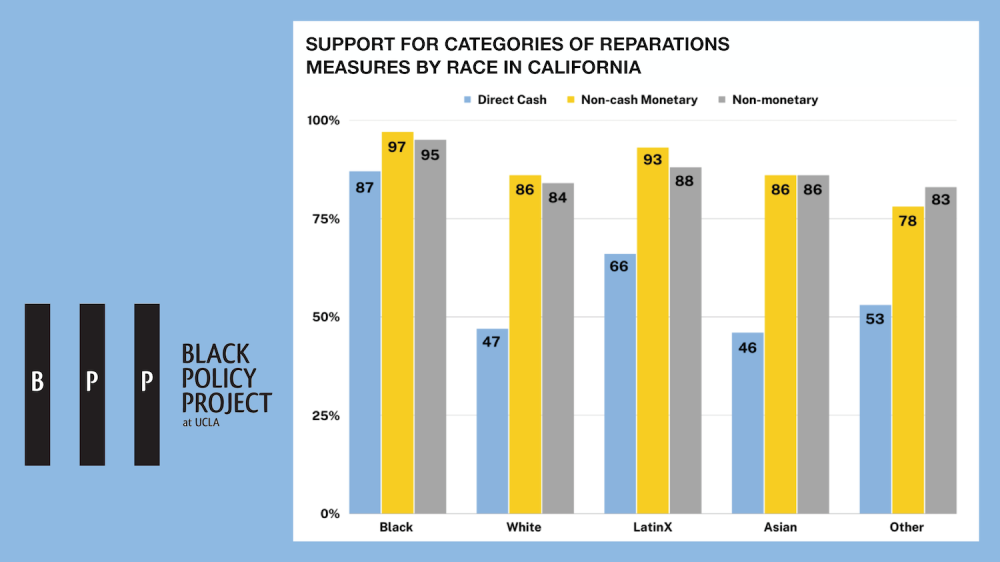
  • An overwhelming majority of survey respondents from all races expressed support for reparations: 77% favored non-cash financial support such as housing assistance, debt forgiveness, land grants and community investment; 73% supported non-monetary remedies such as reforming the education and criminal justice systems; and 64% favored direct cash payments.
  • Those who were surveyed disagreed somewhat on who should be eligible for reparations: all Black Californians (supported by 30% of respondents); those who can establish that they are the direct descendants of slaves (29%); or those who can demonstrate that they have experienced race-based discrimination (24%).

With the community listening sessions complete, the state task force has asked a team of economists for recommendations on implementing an equitable program of reparations; a final report is due this summer. California lawmakers will then consider how to proceed.

Meanwhile at UCLA, the Black Policy Project has launched a study group to further analyze the findings. Stoll said the results of that new work will not only contribute to the ongoing policy conversation but also give more of the public a chance to parse the findings in different ways.

[perfectpullquote align=”full” bordertop=”false” cite=”” link=”” color=”” class=”” size=””]’I really do believe if you fix the descendants of slavery in America … it actually allows the U.S. to say and show we were actually willing to clean up our own messes. We were willing to be the country we said that we were when we said liberty and justice for all.’

— An Oakland, California, resident interviewed for an oral history[/perfectpullquote]

After the group had delivered its report, Woods reflected on the opportunity to play a part in shaping history.

“We are in this unique and very, very privileged position to work on this as students at UCLA,” he said. “It feels like a lot of weight to carry because we know we have a lot of the nation paying attention to what we’re doing.”

For Nwonye, the experience prompted self-examination about researchers’ role when the subject is personal.

“You always want to maintain that level of professionalism that comes from a sense of objectivity. And there were days when I had to step away from it,” Nwonye said.

“But at the same time, I don’t know that we would have found the things that we found if we were not a Black research team. I don’t know that people would have been as open about telling their stories.”

Coulter, who earned dual master’s degrees in public policy and social welfare in 2022, recalled the anguish she found in the pages of transcripts from months of community listening sessions.

“I can’t even begin to fathom the collective trauma and the stress and just the pain that has been inflicted on the community for so long,” she said. “And it was heartbreaking, as a Black person, to hear the distrust and the hesitancy around the purpose of this. Is this massive effort truly going to resonate with the government? Or will it again fall on deaf ears?”

When Stoll and the students appeared at Los Angeles’ California Science Center in September to preview their findings, audio of some of the interviews they conducted was played for the Reparations Task Force and members of the public. The audience included people who had participated in the project, and they thanked the students for telling their stories.

“Even if nothing else happens,” Nwonye said, “we’ve already done something that is really important: allowing people to have their voices be heard.”

Read “Harm and Repair,” the research team’s report to the California Reparations Task Force.
Faculty Mentioned in this Article
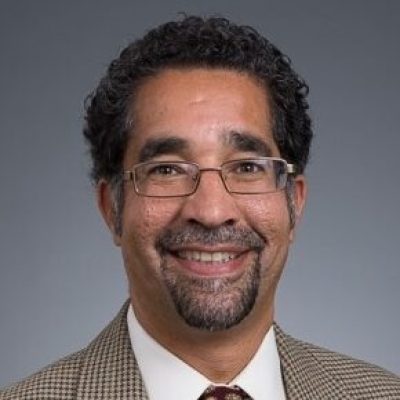
headshot of man with glasses in suit

Michael A. Stoll

Professor of Public Policy and Urban Planning

Michael A. Stoll is Professor of Public Policy in the Luskin School of Public Affairs at the University of California,...

Related Articles

African American female warehouse worker wearing an orange vest doing her job.

New report finds sharply rising rates of unemployment for Black Californians

June 10, 2026
Luskin's Latest Blog
In the latest report in the State of Black California series, the team found that across...
Read More
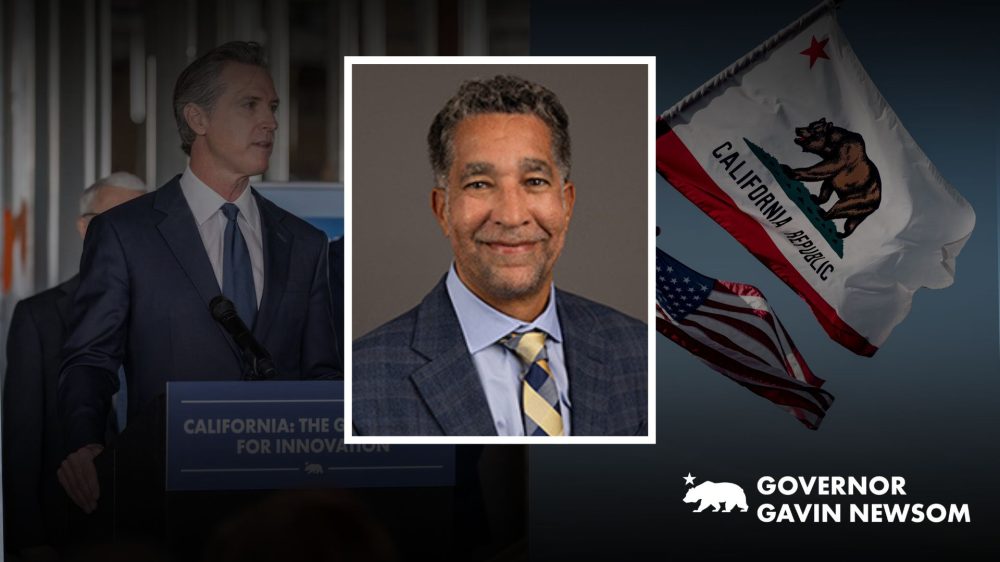
Darkened photo of Governor Gavin Newsom on the left and another darkened photo of the flags of California and United States of America on the right, overlay by a headshot of Michael Stoll in the center.|Meeting to discuss budgets.

Michael Stoll Appointed to Governor Gavin Newsom’s Council of Economic Advisors

May 15, 2026
Luskin in the News
UCLA public policy professor Michael Stoll joins California’s top economic advisory council amid evolving statewide economic...
Read More
Route 66

Looking Back on Route 66’s Historical Role in Westward Migration

April 28, 2026
Luskin in the News
Michael Stoll highlights how transportation continues to influence displacement and communities today....
Read More
Welcome to Nevada sign.

Why California’s Retired State Worker Population is Migrating Out

February 3, 2026
Luskin in the News
An increasing number of California’s retired state worker population receiving CalPERS pension benefits are moving away...
Read More
Stoll In the News

Stoll on the Factors Influencing Migration Patterns within the U.S.

January 9, 2026
Luskin in the News
Most Americans move 11–12 times in their lives, often driven by family, jobs, and affordability....
Read More
three young Black women

Persistent Gaps for Black Californians Would Take Over 248 Years to Close

April 15, 2024
Luskin's Latest Blog
The State of Black California 2024 report, authored by UCLA Luskin Professor Michael Stoll, analyzes two...
Read More
stoll-AIR-1030x580II

Michael Stoll Joins Board of Directors of American Institutes for Research

December 6, 2023
Luskin's Latest Blog
UCLA expert in labor markets and the causes and impacts of poverty will provide guidance to...
Read More
bar chart

Strong Support in California for Black Reparations

May 31, 2023
Luskin's Latest Blog
UCLA survey finds that Californians across the age, gender, racial and political spectrums agree that some...
Read More
stoll section 8

Stoll on Housing Vouchers, Race and Discrimination

December 2, 2022
Luskin in the News
His research found that non-white voucher holders moving into white suburbs does not cause crime rates...
Read More
Two women and two men in front of poster

UCLA Research Guides California Reparations Task Force

September 30, 2022
Luskin's Latest Blog
Graduate students led by Professor Michael Stoll analyze trove of data showing wide support of financial...
Read More
In his new role, Professor Michael Stoll will generate research on wealth inequity and support California's new task force on reparations. Photo by Les Dunseith

Stoll Named Director of UCLA’s Black Policy Project

November 10, 2021
For Faculty
A key priority is making research into the state of Black California accessible to policymakers and...
Read More
download

Domestic Migration Patterns Accelerated by COVID-19, Stoll Says

January 11, 2021
Luskin in the News
During the pandemic, more people cited being closer to family as their reason for moving....
Read More
Learn more about UCLA Luskin

Find contact information and get answers to your questions.

Contact Us

Public Affairs Building
337 Charles E. Young Drive East
Los Angeles, California 90095

Linkedin Youtube Instagram Facebook X-twitter
Campus Resources
  • Map, Directions, Parking
  • Directory
  • Academic Calendar
  • Careers
  • Map, Directions, Parking
  • Directory
  • Academic Calendar
  • Careers
School Resources
  • About
  • Our Dean
  • Administration
  • Board of Advisors
  • Contact Us
  • Visit Us
  • About
  • Our Dean
  • Administration
  • Board of Advisors
  • Contact Us
  • Visit Us
© 2026 Regents of the University of California
  • Emergency
  • Accessibilty
  • Privacy & Terms of Use
  • Emergency
  • Accessibilty
  • Privacy & Terms of Use
Facebook Instagram Linkedin X-twitter Youtube Threads
Academics
Departments
  • Public Policy
  • Real Estate Development
  • Social Welfare
  • Undergraduate Program
  • Urban Planning
  • Public Policy
  • Real Estate Development
  • Social Welfare
  • Undergraduate Program
  • Urban Planning
Graduate Programs
  • Master of Public Policy (MPP)
  • Master of Real Estate Development (MRED)
  • Master of Social Welfare (MSW)
  • Master of Urban and Regional Planning (MURP)
  • PhD in Social Welfare
  • PhD in Urban Planning
  • Master of Public Policy (MPP)
  • Master of Real Estate Development (MRED)
  • Master of Social Welfare (MSW)
  • Master of Urban and Regional Planning (MURP)
  • PhD in Social Welfare
  • PhD in Urban Planning
Undergraduate Programs
  • BA in Public Affairs
  • Minor in Urban and Regional Studies
  • Minor in Gerontology
  • Minor in Public Affairs
  • BA in Public Affairs
  • Minor in Urban and Regional Studies
  • Minor in Gerontology
  • Minor in Public Affairs
Professional Certificates
  • Data Analytics Certificate
  • Data Analytics Certificate
Admissions
Program Specific Admissions
  • Public Policy
  • Real Estate Development
  • Social Welfare
  • Urban Planning
  • Undergraduate Program
  • Public Policy
  • Real Estate Development
  • Social Welfare
  • Urban Planning
  • Undergraduate Program
Faculty
Our Faculty
  • All Faculty
  • Public Policy
  • Real Estate Development
  • Social Welfare
  • Urban Planning
  • All Faculty
  • Public Policy
  • Real Estate Development
  • Social Welfare
  • Urban Planning
Leadership
  • Our Dean
  • Board of Advisors
  • Faculty Executive Committee
  • Our Dean
  • Board of Advisors
  • Faculty Executive Committee
Research Centers
  • Agile Visual Analytics Lab (AVAL):

    Uses data visualization to improve decision-making for family and child services.

  • Berggruen Governance Index

    Evaluates the quality of political governance and democracy worldwide.

  • Center for Neighborhood Knowledge (CNK)

    Specializes in spatial analysis of socioeconomic disparities in neighborhoods.

  • Center for Policy Research on Aging (CPRA)

    Explores the societal and policy implications of an aging population.

  • Agile Visual Analytics Lab (AVAL):

    Uses data visualization to improve decision-making for family and child services.

  • Berggruen Governance Index

    Evaluates the quality of political governance and democracy worldwide.

  • Center for Neighborhood Knowledge (CNK)

    Specializes in spatial analysis of socioeconomic disparities in neighborhoods.

  • Center for Policy Research on Aging (CPRA)

    Explores the societal and policy implications of an aging population.

  • Institute of Transportation Studies (ITS)

    A national leader in transportation policy and mobility research.

  • Institute on Inequality and Democracy

    Advances scholarship addressing displacement and dispossession in Los Angeles and beyond.

  • Latin American Cities Initiative

    Connects urban planning and policy networks across the Americas.

  • Latino Policy & Politics Institute (LPPI)

    Addresses policy challenges facing Latinos and communities of color.

  • Institute of Transportation Studies (ITS)

    A national leader in transportation policy and mobility research.

  • Institute on Inequality and Democracy

    Advances scholarship addressing displacement and dispossession in Los Angeles and beyond.

  • Latin American Cities Initiative

    Connects urban planning and policy networks across the Americas.

  • Latino Policy & Politics Institute (LPPI)

    Addresses policy challenges facing Latinos and communities of color.

  • Lewis Center for Regional Policy Studies

    Researches housing, transportation, and economic development in Southern California.

  • Los Angeles Education Research Institute (LAERI)

    Collaborates with schools to improve educational outcomes for L.A. students.

  • Luskin Center for Innovation (LCI)

    Focuses on environmental policy, clean energy, and climate justice.

  • UCLA Voting Rights Project

    The flagship project for voting rights litigation and policy research.

  • Lewis Center for Regional Policy Studies

    Researches housing, transportation, and economic development in Southern California.

  • Los Angeles Education Research Institute (LAERI)

    Collaborates with schools to improve educational outcomes for L.A. students.

  • Luskin Center for Innovation (LCI)

    Focuses on environmental policy, clean energy, and climate justice.

  • UCLA Voting Rights Project

    The flagship project for voting rights litigation and policy research.

All Research Centers
Outcomes
Common Search Terms

Results will show as you type.