This article originally appeared in the Summer 2026 issue of UCLA Magazine. View the full story.
By John Harlow and Jonathan Riggs
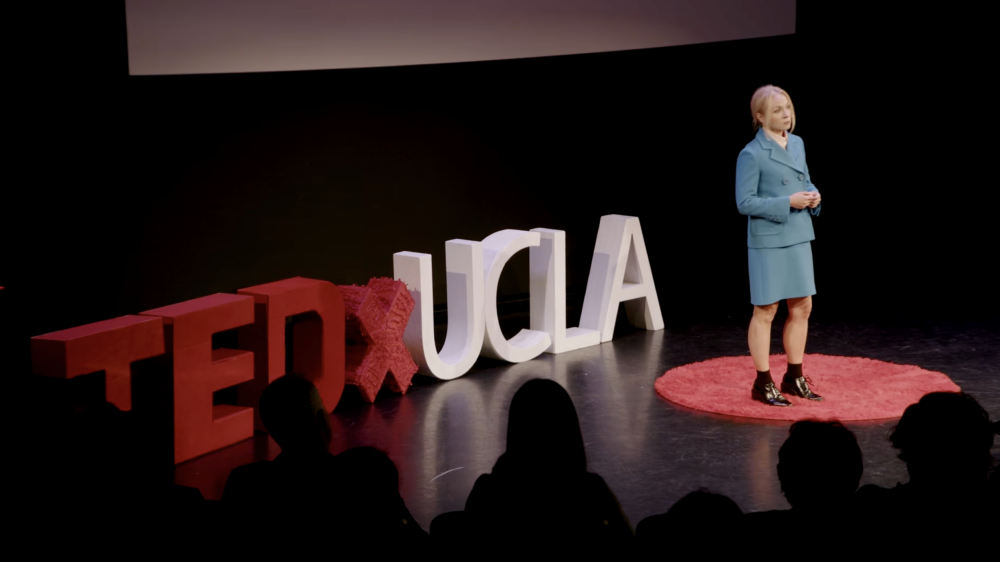
Whether it’s teaching at the UCLA Luskin Center for Innovation or promoting her compelling vision of a cooler tomorrow on the road, V. Kelly Turner often opens her lectures by asking students about their experiences with heat discomfort.
The professor of urban planning and geography then shares a memory of her own: As a New England kid in a Texas summer tennis camp, she was overwhelmed, first dropping her serve, then dropping herself.
“No one had warned me about heatstroke; they were all used to it, because people associated sunshine with health,” she says. “Cities like Los Angeles built their brand on it. Air conditioning insulated us from its more dangerous aspects, but now we know excessive heat kills more Americans than other natural disasters such as floods, earthquakes and wildfires combined.”
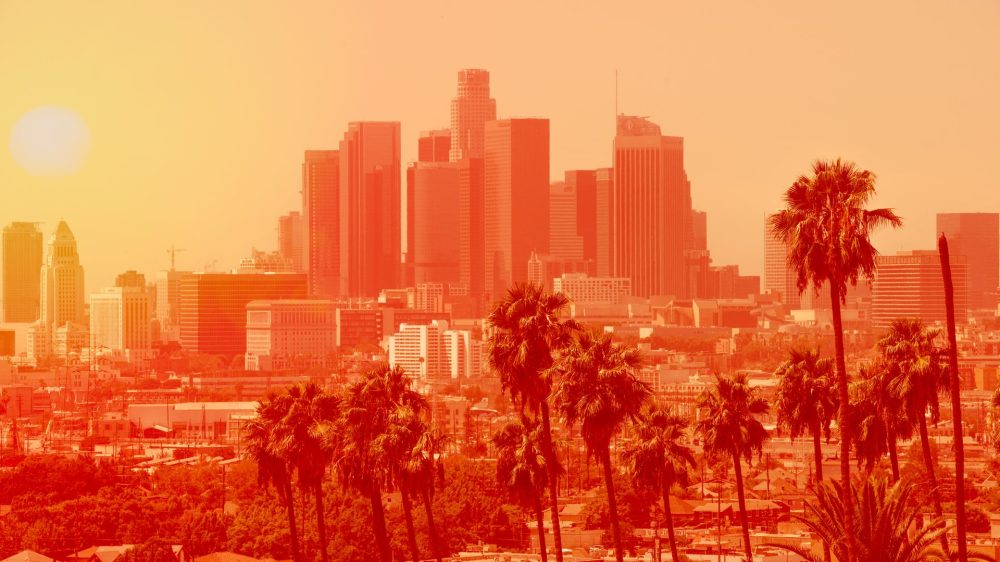
As climate change results in a world where temperatures keep rising, the dangers of heat affect us all. But UCLA researchers like Turner are tackling the issue head-on, determined to halt the slow boil that threatens the very life of our planet.
Urban Shade and Heat Deserts
Parsing the dangers of heat-related harm is challenging. It requires something in short supply in contemporary civic issues discourse: nuance.
That’s because heat is dangerous to different people in different ways. And it requires strategy. An Angeleno jogger might only take the overall temperature into consideration before lacing up their sneakers and heading out. But the temperature they’re running in might differ by as much as 25 degrees between an area of direct sun versus the shade under a tree. For example, a jogger in Los Feliz, parts of which measure up to 40% in tree canopy — twice as high as the average in some other areas of L.A. — will encounter a far different heat risk than a jogger in contiguous East Hollywood, which has only 13% canopy.
When you compare that to areas in narrow-streeted, wealthy enclaves such as Brentwood and equestrian-friendly Shadow Hills, which can go as high as 50% in tree canopy, the disparity in access to shade based on economic well-being seems almost violent in its impact.
In sum, Turner figured out that L.A. has a shade problem: specifically, not enough of it in enough places, and particularly where those on the lower end of the income spectrum live, work and commute. Why? The answer, she discovered, goes back a bit. Almost a century back, in fact, to the administration of President Franklin D. Roosevelt, and a classic case of good intentions and bad consequences from public policy.
In its New Deal efforts to shore up housing and make mortgages more affordable, the federal government created several entities, including the Federal Housing Administration and the Home Owners’ Loan Corporation.
The results, alas, disproportionately benefited white-only housing developments, while realtors drew the infamous “red lines” on maps showing areas left out of the credit scheme. Redlining accelerated racial and class divisions across the country, which, despite many administrations’ policies since that time, continue to manifest in data tracked by income, education, health and, yes, tree canopy.
Faced with all these factors and seeking a solution to L.A.’s shade problem, Turner, who is the associate director of the Luskin Center for Innovation, took action. Over the past decades, there had been sporadic discussion about shade as an indicator of social justice, but little hard data was available to formulate policy and promote change.
“There was no systemic evaluation of urban shade and heat deserts across the nation,” Turner says. “So we teamed up with the venerable nonprofit American Forest to build one.”
And build they have. Using satellite images down to 1 meter of resolution across more than 360 U.S. cities — all shot on the same midsummer day at noon, 3 p.m. and 6 p.m. — Turner and her team literally mapped out where shade was abundant and where it was missing. In June 2025, they released the first U.S. national shade map, a resource available to
Cool Corridors and Hot Spots
Brilliant in their clarity and simplicity, the maps are now benefiting the most vulnerable: construction and food truck workers, mail carriers, seniors, children and incarcerated people without the resource of air conditioning.
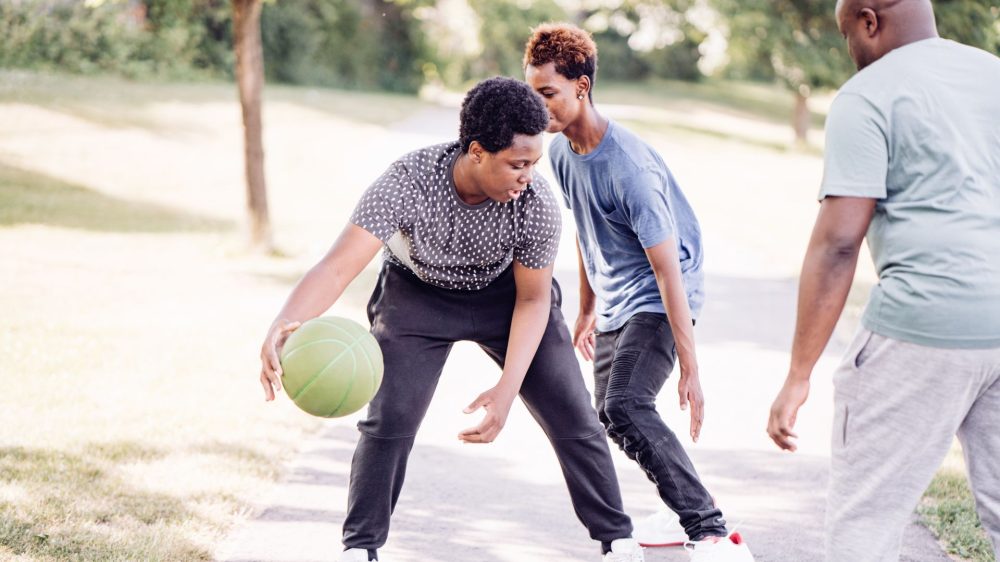
Accordingly, they’re being used by a variety of people for a myriad of reasons, including scheduling outdoor activities: For example, Turner’s team created a “healthy play” index for basketball courts in the Coachella Valley. Inspired by this work, cities such as Phoenix, Austin and Detroit are now using UCLA’s maps to create hundreds of “cool corridors” on pedestrian routes near schools. Even Seattle has consulted the maps when planning the latest community cool-shelter hubs following the 2021 “heat dome,” which killed 138 people over 13 days.
As a mother, Turner frets about the baked state of many school play areas, which can resemble a ZIP code lottery: Wealthier areas generally have more trees and shade sails, meaning advantaged kids can enjoy the benefit of extended hours of safer, healthier play. The solution would appear obvious: Simply plant more trees. But in these days of strangled politics and tight budgets, that’s not as easy a prescription to fill as it sounds.
“More schools would love to plant trees,” Turner says with a note of wistfulness, “but trees are regarded by officials as tripping hazards, and they’re expensive both to plant and maintain.”
In the spring of 2021, the Turner team was invited to Fernangeles Elementary School in Sun Valley in northeastern Los Angeles, to talk to children about heat and shade. Turner describes the area as the epitome of old urban planning: wide boulevards, little tree cover, a lot of heat-enhancing asphalt.
That day, renowned Chicana artist Kristy Sandoval unveiled her latest mural, titled Beat the Heat, at the school. The work was created in reflecting paint, which can reduce surface temperatures by 30%, Turner says.
Also that day, the UCLA team deployed thermal cameras to identify the school’s hot spots. To their surprise, the main heat culprit was not the asphalt, but the playground equipment’s surface temperature: over 100 degrees. That’s hot enough to wound tender young skin. Unfortunately, this is not a rare exception: Turner believes these kinds of temperatures are probably common at hundreds of other LAUSD schools. She fears that children — for whom playing outside is essential for physical, mental and social development — are suffering more types of heat-related harm than the general public is aware of.
In fact, a recent study found an association between extreme heat exposure and youth delinquency.
“As climate change continues to exacerbate extreme heat events,” the study’s authors write, “addressing these disparities becomes increasingly critical to safeguarding the health and development of all children.”
Health Hazards
The threat to health from the sun’s rays is always top of mind when Turner goes out running with her daughter. They dash between cooler areas of walls and trees. “We call it shade-hopping,” she laughs. But even today, in an age when applying sunscreen is as common as buckling your seatbelt, not everyone is aware of just how dangerous the sun can really be.
Way back in 1981, Australia introduced “Sid the Seagull” to teach a skin cancer–prone population to “Slip, slop, slap” on the sunscreen, in the world’s first major sun safety campaign. Ultraviolet rays are associated with melanomas, heart attacks and, in those suffering from autoimmune disorders, even kidney failure; more than 100 people die in L.A. County from such illnesses every day. That number increases by 30% during extended heat spikes, though heat exposure is not always included among the 20 common codes that coroners use to categorize a cause of death.
Michael Levine, an emergency medicine physician at UCLA Health, warns it’s easy for anyone to be damaged both by the sun’s UV rays and the resulting high temperatures that can manifest
“It’s a big issue in the ER — and it can happen to you while you’re indoors, too,” he says. “Sometimes with older patients, they don’t have or use air conditioning, or they’re on medicine that makes them not sweat as much; and for younger people, we frequently see alcohol altering their perceptions and thought processes, so they end up overdoing it in the heat.”
Even one day of heat exposure can cause high blood pressure in pregnant women, with long-term effects on fetal development; premature births increase by 16% during heat waves. The effects of low birth weight can affect a growing child throughout their life.
The ways to avoid such issues are commonplace — wear a hat, drink some nonalcoholic liquid, says Levine.
And find some shade.
Big Thinking
This month marks the one-year anniversary of the founding of ShadeLA, a unique collaboration among UCLA, the University of Southern California, city and regional authorities, and LA28, the Olympic Games organizers. The consortium intends to plant thousands of trees across the basin over the next two years in advance of the “megastorm” of upcoming L.A.-hosted sporting events, including Super Bowl LXI, in February 2027, and the 2028 Summer Olympics and Paralympics. In 2028 alone, the California sun will shine on more than 10,000 athletes and 15 million sports fans from around the world. But when spectators search for shade, it will have to be created by more than palm trees.
In previous L.A. Olympics years — 1932 and 1984 — our much smaller city championed massive tree-planting drives. They were arguably successful on their own terms, but the fruits of those labors will do little to help 2028 Olympic attendees cool down.
In 1932, for example, the city planted 40,000 Mexican fan palms, which produce elegant silhouettes but offer little shelter. In 1981, the nonprofit group TreePeople, fronted by the actor Gregory Peck, spearheaded an initiative to plant a million trees before the 1984 Olympics. It was a massive grassroots success, with the last tree planted weeks before the big event began. However, many of those speedily planted specimens did not outlast the Games — too many were planted in the wrong place or were not looked after.
Enter ShadeLA, with its fresh approach to building a more sustainable tree canopy in the city.
“This is much more than previous pre-Olympic ‘beautification’ programs,” says Edith de Guzman ’02, M.A. ’06, cofounder of ShadeLA and an assistant researcher in urban planning at the UCLA Luskin School of Public Affairs. That’s because this time, the focus is on projecting not only visitors to the Games, but also the most vulnerable people across Los Angeles.
First up: ShadeLA is building on a 2025 report by the Emmett Institute on Climate Change and the Environment within the UCLA School of Law, which researched the laborious, often conflicting thicket of planning and permit regulations that prevent tree planting at office complexes, schools and even single-home parkways.
ShadeLA is looking at “de-paving,” or replacing undertrafficked pavement — for example, lanes in unnecessarily wide boulevards — with hardy shade trees. It’s also scrutinizing such regulations as a ban on food truck operators opening their back doors, even if the inside is uncomfortably hot, because restaurants are not allowed to do such a thing. And it’s holding annual college design competitions for innovative shade zones.
“I have been studying this area for a long time, and with the growth of population in Los Angeles, it has never been more difficult to achieve change,” de Guzman admits. “But with these mega-events taking place, we have a chance.”
She points to the fact that ShadeLA is prioritizing scientifically backed quality over media-friendly quantity.
“One spreading tree with wide dense canopy,” she says, “is worth a forest of tall thin grasses, like palms.”
The Right Kind of Tree
“As caretakers of our native land in the San Fernando and Antelope valleys, we want to use our traditional ecological knowledge in tune with modern climate data to breathe new life into our communities with a native tree reserve,” Rudy Ortega Jr., Tribal president of the Fernandeño Tataviam Band of Mission Indians, told the California State University, Northridge newsroom.
The tribe is starting with a 750-tree nursery in Pacoima which, Ortega hopes will help fuel a broader vision of “thriving forests, clean air and urban communities cooled by trees and open spaces.”
The issue of shade, or lack of it, is urgent in many Native American communities. According to data from the Centers for Disease Control and Prevention, the number of heart attacks among Native Americans has risen by 28% since 2018; that’s just one of the many reasons why Ortega joined the Los Angeles Regional Collaborative for Climate Action and Sustainability (LARC), headquartered on campus at the UCLA Institute of the Environment and Sustainability.
Erin Coutts, LARC’s executive director, emphasizes that increasing coverage in less wealthy areas is a critical issue. But the solution has to be found in the right kind of tree. She believes that while individual organizations can make a difference on their own, they can do even more by banding together, the way LARC is pulling together disparate agencies from across the city to coordinate a massive group effort to cool Los Angeles.
The key to making this happen, of course, is those shady trees.
Today, Los Angeles has around 6 million trees, mixing up native species and imports, largely planted in waves based on then-current taste since the 1920s. But, as we’ve seen, many are the wrong kind of tree by modern standards.
Turner often consults a cheekily titled report called “Fifty Grades of Shade,” by her Arizona State University colleague Ariene Middel, which points out how challenging it is to balance plantings to achieve peak shade. For example, some nonnative trees, such as eucalyptus, can offer more dense shade than natives such as Palo Verde and local pines. But they also require more water.
And although it almost feels like blasphemy to say it, there are times when human-made structures like walls and buildings — architectural shade — can be more reliable than what the natural world provides. It’s all part of the complex factors that UCLA experts take into account as they research and engineer solutions to climate change for every aspect and area of our lives.
Engineering Shade
The Los Angeles Metro public transportation system currently has 12,228 bus stops. But it has only 1,931 bus shelters.
That’s one reason why engineer Aaswath Raman demonstrated his cooling bus shelter last summer at a San Fernando farmers market. “People liked it,” he reports.
That’s hardly surprising. Visitors stood inside a tent lined with aluminum panels cooled by circulated water; the cold surfaces absorb radiant heat from the people inside the tents, cooling them down, while also blocking radiant heat from the pavement outside. The tent was largely transparent, making people feel safe.
“The [outside] temperatures were the same, but people felt 10 degrees cooler,” says the associate professor at the UCLA Samueli School of Engineering. “And, more importantly, much more comfortable.”
Raman has been working on applying radiant cooling theory to everyday life since reading a sobering novel called The Ministry for the Future by Kim Stanley Robinson, a powerful work of what’s now called “cli-fi” (climate fiction) that portrays a near-future where it’s not safe to step outside because the heat will kill you. “That’s an extreme vision,” Raman says, “but there is enough reality there to persuade me into finding real world solutions to these issues.”
The farmers market prototype experiment proved to him that this simple idea could make a huge difference.
“Now I am scaling it up, maybe for a version that could cool an indoor sports arena. Maybe in time for the Olympics,” he says, smiling hopefully. The prototype was plugged in; the larger version may be, perhaps ironically, solar-powered.
Raman trades cooling notes with Salmaan Craig, an associate professor at UCLA Architecture and Urban Design, who, in a previous life, helped both Apple and Bloomberg keep their respective headquarters comfortable while reducing their reliance on air conditioning. Instead, he helped them implement passive cooling techniques that have been used for thousands of years, which include building design tweaks that minimize the amount of admitted or stored heat.
To that end, Craig is working on new — and yet also ancient — ways of passively cooling modern homes.
“The current landscape has been shaped by air conditioning and the car, but with rising energy costs, we need to work out more natural ways to live more comfortably,” he says. “This is why I came to UCLA — to look into passive cooling through design.”
Materials are key. Craig points out that some homes are being reconstructed after the 2025 Southern California fires with more fire-resistant clays and other earthen materials, which also provide an opportunity to create cooler homes: Via a variety of flexible apertures in the walls, nighttime cooling can be harnessed to lower temperatures during the day.
“These apertures can be directed to bring in cooler air, with materials to help store it during the heat of the day. Older homes can be modified with passive cooling techniques, too,” he says — for example, courtyards for shade, like the Romans had.
The Lesson of Smog
A lot has happened since Turner’s awakening to the dangers of heat at tennis camp all those years ago. She’s conducted considerable research and spearheaded lifesaving progress. But there is still much left to be done. Up next: interviewing more than 100 climate decision-makers about how change evolves in an era in which a raft of disinformation and social media tribal warfare has made so many people hostile to the very idea that climate change is real and happening.
And while reimagining and even remaking our cities, systems and lifestyles for a greener future may feel like an overwhelming multigenerational challenge, there is a lot of hope to hold onto here, Turner believes.
Look no further for an example than Los Angeles, the most creative city in the world, where good things have happened — and continue to happen — to make sure we continue to repair the environment, adds UCLA law professor Ann Carlson.
Her new book, Smog and Sunshine: The Surprising Story of How Los Angeles Cleaned Up Its Air, tracks how remarkable environmental change was achieved in the region between the 1970s — when there were around 200 official “smog days” a year — and 2003, which saw the last official smog alert.
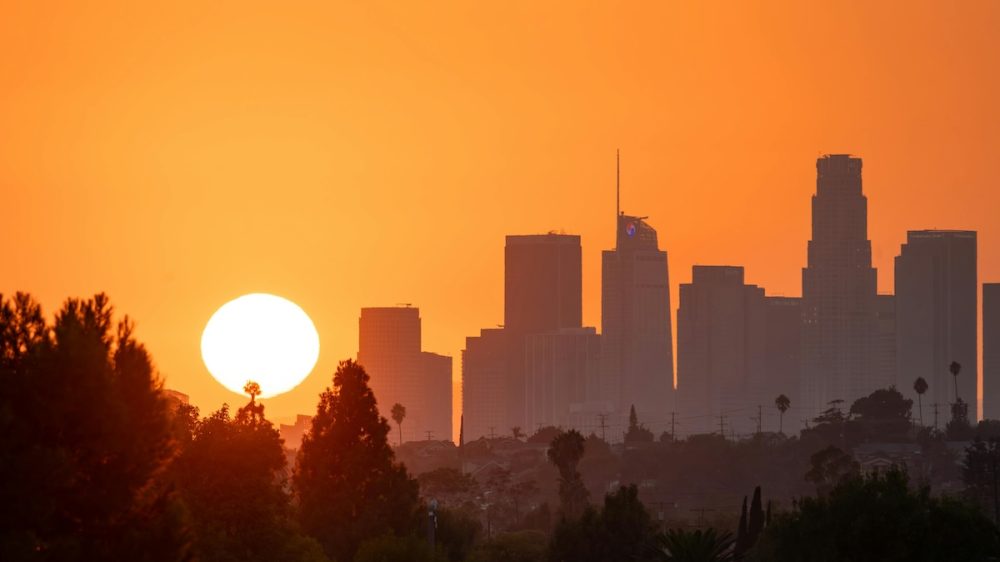
This was thanks to technical innovations such as the catalytic converter and cleaner (if more expensive) car fuels, as well as the efforts and energy of protestors (including a fierce group of mothers in gas masks). These combined efforts helped end the orange-tinted days of choking asthma and higher risks of lung and ovarian cancer. It was — and is — a battle worth fighting.
“L.A. air is still not perfect, but now you can breathe it … mostly,” says Carlson, founding director of the Emmett Institute.
In agreement is science writer Sam Bloch, the author of the critically acclaimed 2025 book Shade: The Promise of a Forgotten Resource. Bloch makes a convincing case that UCLA research is transforming the way America thinks about the hazard of heat — with a certain colleague leading the charge.
“Dr. Turner has brought the shade crisis into impactful focus. If we do live in a cooler world down the line,” he says, “it will be because of the clear thinkers at UCLA.”