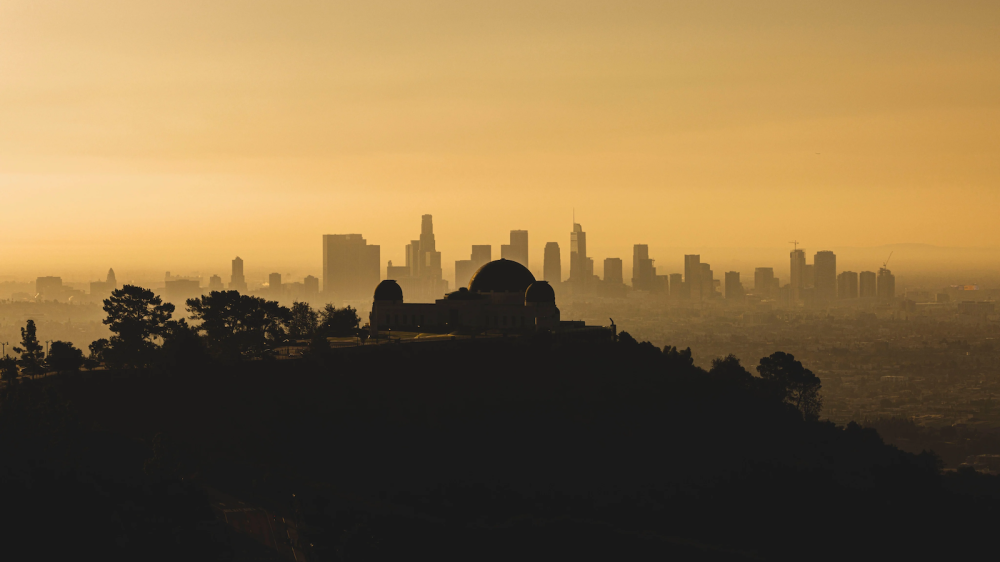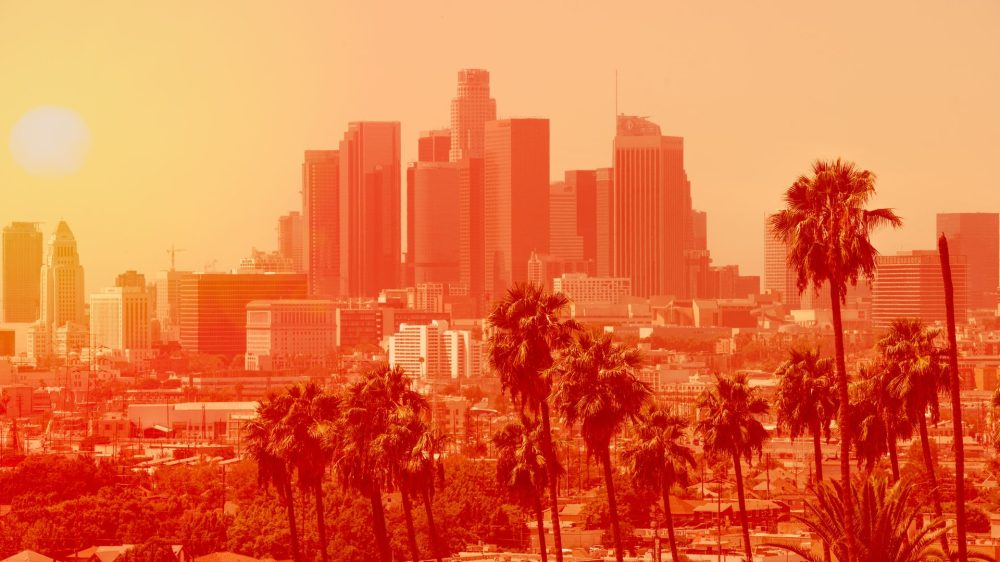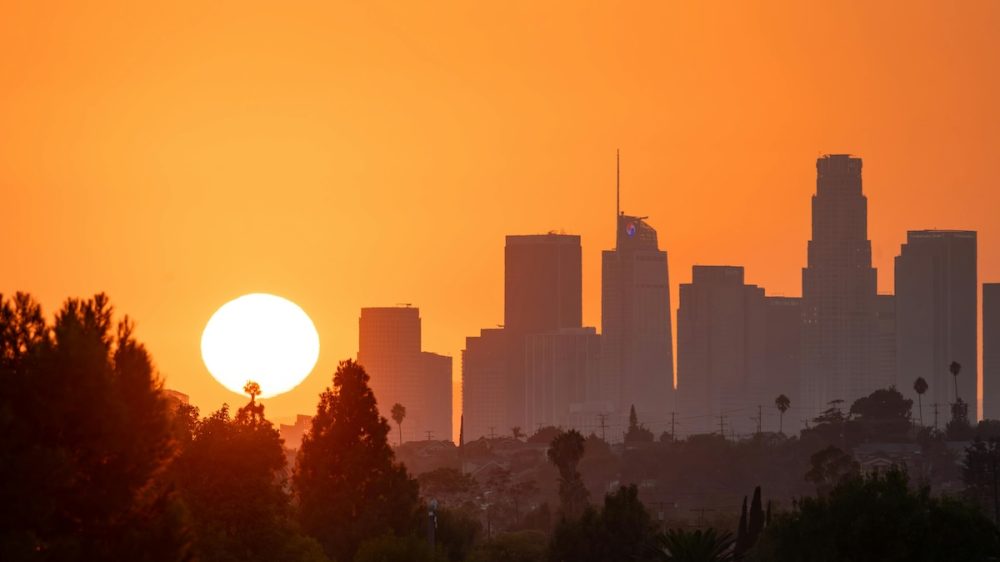
Extreme heat is changing more than temperatures — influencing how people move through their daily lives, whether children can safely play outside, and how people experience public space, health, and work.
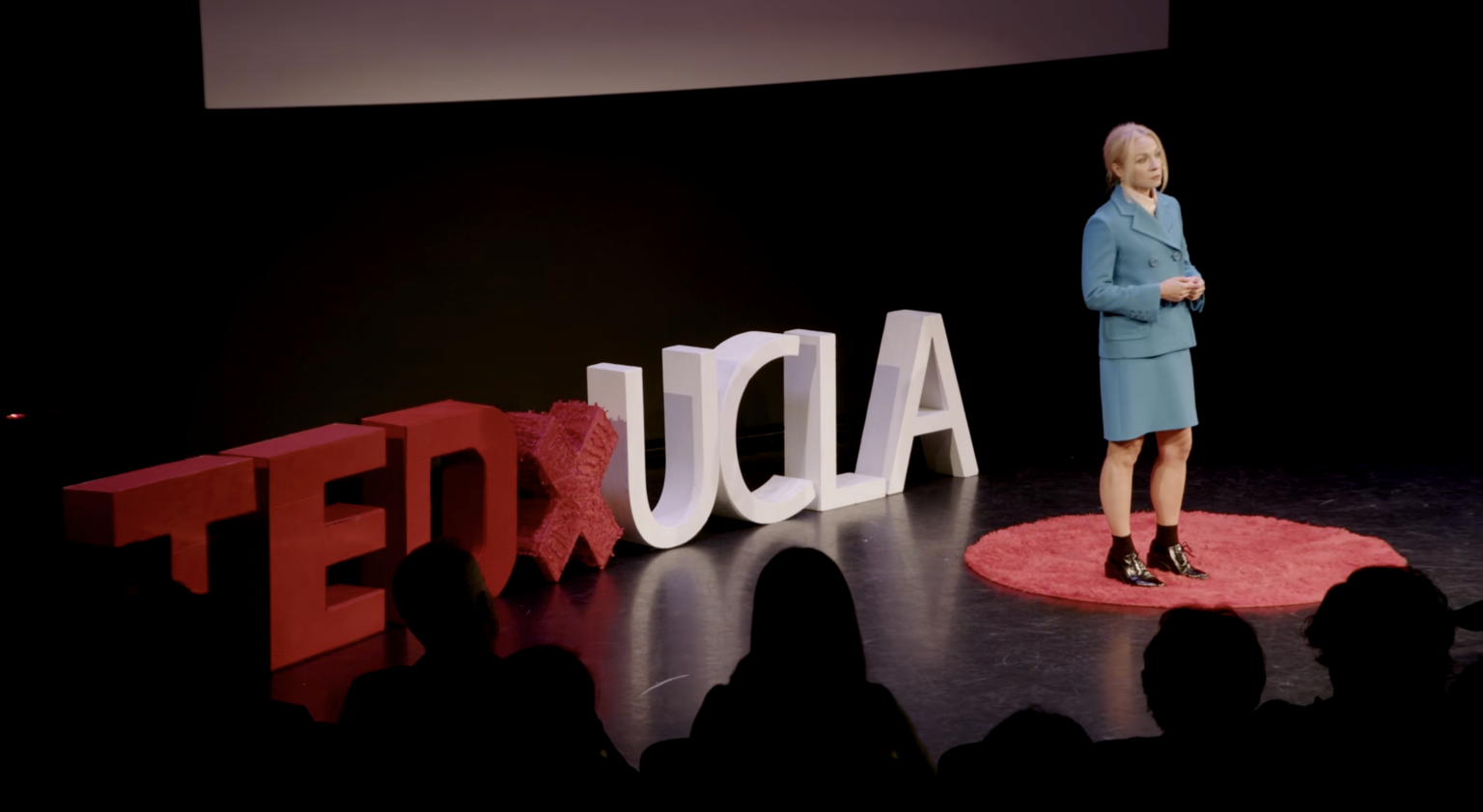
That was the central message of UCLA Luskin Center for Innovation Associate Director Dr. V. Kelly Turner’s TEDxUCLA talk delivered May 26. Her presentation challenged audiences to rethink what it means to live in a warming world.
Drawing on her team’s research at the intersection of heat, public health, urban planning, and environmental equity, Turner argued that current approaches to extreme heat are largely focused on survival rather than ensuring people can live full and healthy lives as temperatures rise. “What if our goal was to live with heat, rather than avoid it?”
Throughout the presentation, Turner illustrated how heat can quietly reshape everyday routines: families avoiding parks and walking routes, workers facing unsafe conditions, and households relying heavily on air conditioning to cope. But she emphasized that the burdens of extreme heat are not experienced equally.
“Even more concerning are the families that didn’t have access to air conditioning or can’t afford to use it. Or the people that work outdoors. Or the kids that go to schools with no air conditioning and no shade,” Turner said during the talk.
Turner also highlighted emerging science that could help communities move beyond one-size-fits-all heat responses and better understand how heat affects different people in different environments. “‘Too hot’ is not universal. It’s individual. And, it’s not just about survival. It’s about whether or not you can live your life,” she explained.
The talk ultimately framed heat resilience not simply as surviving dangerous temperatures, but as creating communities that protect health and well-being where people live, learn, work, and play.