Skip to content
  • Students & Alumni
    • Overview
    • Career Services
    • Alumni Relations
    • Student Support
    • Graduate Resource Library
  • News
  • Events
    • Events Calendar
    • Luskin Summit
    • Luskin Lecture Series
    • California Policy Briefing
    • Commencement
  • Students & Alumni
    • Overview
    • Career Services
    • Alumni Relations
    • Student Support
    • Graduate Resource Library
  • News
  • Events
    • Events Calendar
    • Luskin Summit
    • Luskin Lecture Series
    • California Policy Briefing
    • Commencement
Giving
  • Academics
    Departments
    • Public Policy
    • Real Estate Development
    • Social Welfare
    • Undergraduate Program
    • Urban Planning
    • Public Policy
    • Real Estate Development
    • Social Welfare
    • Undergraduate Program
    • Urban Planning
    Graduate Programs
    • Master of Public Policy (MPP)
    • Master of Real Estate Development (MRED)
    • Master of Social Welfare (MSW)
    • Master of Urban and Regional Planning (MURP)
    • PhD in Social Welfare
    • PhD in Urban Planning
    • Master of Public Policy (MPP)
    • Master of Real Estate Development (MRED)
    • Master of Social Welfare (MSW)
    • Master of Urban and Regional Planning (MURP)
    • PhD in Social Welfare
    • PhD in Urban Planning
    Undergraduate Programs
    • BA in Public Affairs
    • Minor in Urban and Regional Studies
    • Minor in Gerontology
    • Minor in Public Affairs
    • BA in Public Affairs
    • Minor in Urban and Regional Studies
    • Minor in Gerontology
    • Minor in Public Affairs
    Professional Certificates
    • Data Analytics Certificate
    • Data Analytics Certificate
  • Admissions
    Program Specific Admissions
    • Public Policy
    • Real Estate Development
    • Social Welfare
    • Urban Planning
    • Undergraduate Program
    • Public Policy
    • Real Estate Development
    • Social Welfare
    • Urban Planning
    • Undergraduate Program
  • Faculty
    Our Faculty
    • All Faculty
    • Public Policy
    • Real Estate Development
    • Social Welfare
    • Urban Planning
    • All Faculty
    • Public Policy
    • Real Estate Development
    • Social Welfare
    • Urban Planning
    Leadership
    • Our Dean
    • Board of Advisors
    • Faculty Executive Committee
    • Our Dean
    • Board of Advisors
    • Faculty Executive Committee
  • Research Centers
    • Agile Visual Analytics Lab (AVAL):

      Uses data visualization to improve decision-making for family and child services.

    • Berggruen Governance Index

      Evaluates the quality of political governance and democracy worldwide.

    • Center for Neighborhood Knowledge (CNK)

      Specializes in spatial analysis of socioeconomic disparities in neighborhoods.

    • Center for Policy Research on Aging (CPRA)

      Explores the societal and policy implications of an aging population.

    • Agile Visual Analytics Lab (AVAL):

      Uses data visualization to improve decision-making for family and child services.

    • Berggruen Governance Index

      Evaluates the quality of political governance and democracy worldwide.

    • Center for Neighborhood Knowledge (CNK)

      Specializes in spatial analysis of socioeconomic disparities in neighborhoods.

    • Center for Policy Research on Aging (CPRA)

      Explores the societal and policy implications of an aging population.

    • Institute of Transportation Studies (ITS)

      A national leader in transportation policy and mobility research.

    • Institute on Inequality and Democracy

      Advances scholarship addressing displacement and dispossession in Los Angeles and beyond.

    • Latin American Cities Initiative

      Connects urban planning and policy networks across the Americas.

    • Latino Policy & Politics Institute (LPPI)

      Addresses policy challenges facing Latinos and communities of color.

    • Institute of Transportation Studies (ITS)

      A national leader in transportation policy and mobility research.

    • Institute on Inequality and Democracy

      Advances scholarship addressing displacement and dispossession in Los Angeles and beyond.

    • Latin American Cities Initiative

      Connects urban planning and policy networks across the Americas.

    • Latino Policy & Politics Institute (LPPI)

      Addresses policy challenges facing Latinos and communities of color.

    • Lewis Center for Regional Policy Studies

      Researches housing, transportation, and economic development in Southern California.

    • Los Angeles Education Research Institute (LAERI)

      Collaborates with schools to improve educational outcomes for L.A. students.

    • Luskin Center for Innovation (LCI)

      Focuses on environmental policy, clean energy, and climate justice.

    • UCLA Voting Rights Project

      The flagship project for voting rights litigation and policy research.

    • Lewis Center for Regional Policy Studies

      Researches housing, transportation, and economic development in Southern California.

    • Los Angeles Education Research Institute (LAERI)

      Collaborates with schools to improve educational outcomes for L.A. students.

    • Luskin Center for Innovation (LCI)

      Focuses on environmental policy, clean energy, and climate justice.

    • UCLA Voting Rights Project

      The flagship project for voting rights litigation and policy research.

    All Research Centers
  • Outcomes
Home / L.A. County Supervisor Advocates ‘Poverty Disruption’ at Luskin Lecture

L.A. County Supervisor Advocates ‘Poverty Disruption’ at Luskin Lecture

Holly Mitchell wants to reweave the social safety net with an equity focus in the wake of COVID-19 and the stark inequalities it exposed
Two women are seated on stage, where a woman in red speaks and the other listens|woman in red shawl at podium gestures forward as she speaks|people seated at tables in a conference room watch a speaker at the front of the room speak at a podium|Two women are seated on stage, where a woman in red speaks and the other listens|woman in purple dress gestures at podium|Black woman leans forward as a woman holding a child speaks with her

Posted in

  • Diversity, Education, For Faculty, For Policymakers, For Students, For Undergraduates, Public Policy, Public Policy News, School of Public Affairs, Social Welfare, Social Welfare News, Social Welfare PhD

Published on

  • May 9, 2023
  • equality, government, Los Angeles, political action, poverty, public affairs, research

Share this Article

By Les Dunseith

Poverty has been a cornerstone of the professional life of Los Angeles County Supervisor Holly Mitchell as an elected official and in her prior work within child and family welfare organizations. Today, she is at the forefront of next-generation approaches that she thinks could fundamentally dismantle poverty in our society.

Speaking on the UCLA campus during a May 3 Luskin Lecture organized by the Luskin School of Public Affairs, Mitchell urged a crowd of faculty, staff, alumni and students to rally behind a current movement that goes beyond simply strengthening the social safety net.
“I think we have to reweave it, reimagine it and remake it to serve with equality, inclusion and humanity,” Mitchell said. “We have got to be as intentional about equity as previous generations have been intentional about exclusion.”

Organized in conjunction with a yearlong 75th-anniversary celebration of social work education at UCLA,  Mitchell was invited to speak because her focus on poverty coincides with the Luskin School’s mission.   

Social work was born as a profession to respond to poverty and inequality in society, said Laura Abrams, professor of social welfare and department chair, in her introductory remarks. Yet, social services programs like welfare and food stamps “have too often been coercive and judgmental, [with] caste stigma and population stereotypes racialized and inflicting harm on communities.”

Since being elected as a supervisor in 2020, Mitchell has pushed help for disadvantaged communities as a countywide priority, and her office’s effort to ensure that equity is a centerpiece of the local COVID-19 recovery plan has been held up as a national model.

In the wake of the pandemic, public officials have access to what Mitchell described as a “once-in-a-generation onslaught of public funds called COVID-19 recovery dollars.” Past tradition in L.A. County would have meant simply splitting those dollars equally among the five supervisorial districts. That made no sense to Mitchell. 

“From my perspective, it’s really pretty simple math: Those who have been disenfranchised and hit the hardest deserve the disproportionate investment in their recovery,” she said. 

This led to the creation of the first-ever countywide equity formula and public dashboard to ensure that federal dollars reach those most impacted by the pandemic. The L.A. County formula incorporates economic, social and environmental factors to identify the communities with the highest need, so far allocating $1.9 billion to 120 projects from the Antelope Valley to East L.A. to South L.A. and beyond. 

“For many of these neighborhoods, it’s the first time that government puts them at the front of the line for investments,” said Mitchell, who led one of the largest private, nonprofit child care and development corportations in California, Crystal Stairs, before entering politics and going on to serve in the California Assembly and Senate.

[perfectpullquote align=”left” bordertop=”false” cite=”” link=”” color=”” class=”” size=””]’The era of invasive and patronizing social welfare in L.A. County is over,’ says Holly Mitchell.[/perfectpullquote]

A centerpiece of her policy history has been fighting against so-called benefit cliffs — eligibility restrictions on social services benefits that can trap people into cycles of poverty just to remain eligible for public assistance.

During her time at Crystal Stairs, Mitchell said, “my most painful days” related to working mothers faced with the prospect of losing public assistance because a work promotion would put them “pennies, literally, over the eligibility limit. And they were having to decide whether to walk away. ‘Do I keep this $3,000-a-month childcare voucher? Or do I take this promotion at work?’” 

Eliminating such dilemmas requires radically new approaches, Mitchell said.

“The era of invasive and patronizing social welfare in L.A. County is over. I’ll put the final nail in that coffin right now,” she said, prompting supportive applause from the UCLA audience.

“Research has shown us that things like work requirements and impossible barriers to eligibility do nothing to truly address poverty. It just continues to criminalize poverty,” Mitchell said. “We’ve got to go beyond, in my humble opinion, poverty alleviation and focus on poverty disruption.”

Central to her poverty disruption agenda for L.A. County is a pilot program called Breathe L.A., which is one of the largest guaranteed income programs in the nation. Since March 2022, it has been providing 1,000 Angelenos with $1,000 a month. The payment will continue for three years, no strings attached, for randomly selected participants who are 18 years or older and have been negatively affected by the pandemic.

Assistant Professor Judith Perrigo is among the researchers at UCLA Luskin helping to evaluate Breathe L.A., joining scholars currently evaluating similar guaranteed income efforts across the nation and around the world. 

Mitchell said that early results of that research belie the misguided perception put forth by opponents attempting to cast doubt on whether recipients will spend the money wisely.

“What’s the No. 1 thing participants in Breathe L.A. have spent the money on?” Mitchell asked the crowd, pausing a moment to let her listeners think about an answer. “It’s food. Food and basic necessities to feed their families. And making sure one less child is going to bed hungry, I believe that’s a good thing.”

After her prepared remarks, Mitchell was joined on stage by Perrigo for a Q&A session. “You have fire inside of you,” Perrigo told Mitchell, then invited her to describe where she finds the courage to advocate for poverty approaches like guaranteed income that have a history as political lightning rods.

Mitchell stressed the public servant aspect of her role, saying she thinks about the new mothers among her constituency who dream of creating a better life for their children. 

“Everyone has the right to have that dream. And the role of our society is to not create barriers to lift those possibilities,” Mitchell said. “When I think about things like that, it gives me the courage to go against the grain and fight.”

She recalled her effort in Sacramento to do away with a state provision that penalized low-income families receiving cash aid for having another child. After three frustrating defeats, she found success on the fourth try.

It will take similar perseverance to make guaranteed income a cornerstone of social services policy. 

“It’s a righteous fight,” said Mitchell, urging supporters in the audience to look at the gradual rollout of guaranteed income efforts as “an opportunity to expand your warrior base of people who will fight.”

She noted that the basic idea of guaranteed income is not new — Martin Luther King Jr. was a proponent, in fact. Decades later, it’s only now taking hold.

“It’s a movement,” said Mitchell, comparing Breathe L.A. to today’s bedrock public aid programs like Medicare and Social Security. 

“Those were, in their time, cutting-edge, innovative concepts around income security,” she said. “When I think about those game-changing, life-saving policy initiatives that I’m sure had a very rough start also, I believe we can get there.” 

The name, Breathe L.A., implies providing the means to weather a crisis — a little time to breathe — directly to people facing financial hardship.

Perrigo noted the popularity of the idea among lower-income, underserved communities and their advocates. But how will policymakers like Mitchell persuade skeptical taxpayers? 

 “If we are able to create healthier communities, safer communities, everybody benefits,” Mitchell said. 

Public education is also necessary. 

“It’s trying to acknowledge and help [skeptics] understand they started out 10 steps ahead, and this other community is trying to catch up. I think it’s important to have those kinds of conversations,” she said, “because that’s the honest truth.”

Mitchell is also a board member of LA Metro, and in response to a question from the audience, she said her priority for public transportation in the county is bus service “because that’s what a lot of our poor rely on.”

Eventually, she said, her goal is an entirely fareless bus system. For now, she takes heart in the success of Metro’s GoPass pilot program, which has provided more than 241,000 youths a free transit pass since it launched as a pandemic recovery measure in October 2021.

“The data … on school attendance is mind-blowing,” Mitchell said. “For some of us, it may be hard to imagine that $1.75 can stop a lot of people from going to school, but it can. Our K-12 ridership is double the pre-pandemic numbers.” 

Much of Mitchell’s presentation focused on touting accomplishments, but she acknowledged that L.A. County has no shortage of problems yet to be solved. Homelessness is a primary ongoing concern, “and we are 500,000 housing units short in L.A. County,” she said. “So, we have to build.”

Mitchell acknowledged that reality leads to difficult conversations. Want to stir up a political hornet’s nest? There’s no surer way in Los Angeles than going to a community homeowners association and talking about building more densely in neighborhoods zoned for single-family homes, she said.   

“People will roll up on me, and it’s, ‘What do you do about the homeless?’ And I say, ‘Well, as soon as you tell me how you are willing to have the composition of your own block change, I’ll tell you what I’ll do about the homeless,’” Mitchell said. 

“It is our moral dilemma,” she said. “And only when we have decided that we are sick and tired of being sick and tired — and that we’re not going to allow people to live like this anymore — can [developers, public agencies and governments] expand and build the diversity of housing that people need.”

View additional photos on Flickr:

UCLA Luskin Lecture With Holly Mitchell

Faculty Mentioned in this Article
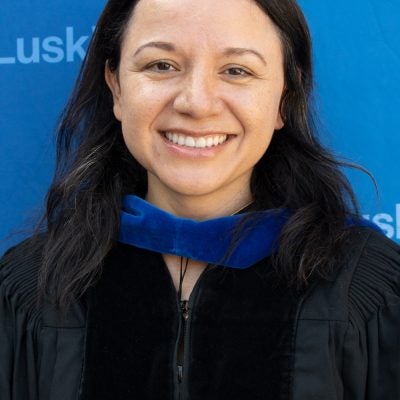
|woman in commencement cap and gown|woman in commencement cap and gown

Judith L. Perrigo

Assistant Professor of Social Welfare

Judith (Judy) Perrigo is an Assistant Professor in the Department of Social Welfare at the UCLA Luskin School of Public...

Related Articles

Children at a table, playing with colorful building blocks

Pandemic Set Kindergartners Back Developmentally

March 25, 2025
Luskin in the News
Research led by UCLA Luskin's Judith Perrigo finds lower scores in language and thinking skills and...
Read More
Downtown LA just after sunset during blue hour, captured from a helicopter point of view with lighted City Hall building.

UCLA Grants Deepen Ties to the L.A. Community

March 17, 2025
For Faculty
Projects by Luskin faculty will build collaboration among scholars, students and local partners....
Read More
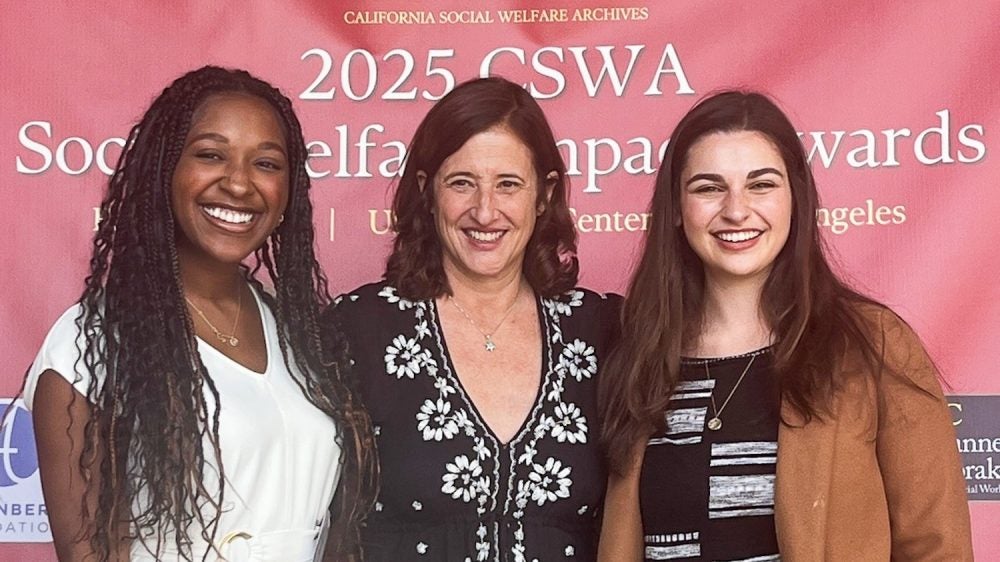
three women|

Honors for UCLA Luskin Social Welfare Professor and Alumna

March 4, 2025
Luskin's Latest Blog
Professor Laura Abrams and alumna Aurea Montes-Rodriguez are recognized by the California Social Welfare Archives....
Read More
LAbrmsIncarc1

Abrams on the Decline of Juvenile Incarceration in the United States

February 26, 2025
Luskin in the News
People who are incarcerated at young ages for longer periods of time are less likely to...
Read More
Two people seated in circle of people

Abrams on Promoting Justice for Troubled Youth

February 7, 2025
Luskin in the News
At universities around the country, social workers are being trained in more holistic strategies and practices...
Read More
adult hand holding baby's hand

Measuring the Impact of Guaranteed-Income Experiments

June 28, 2024
Luskin in the News
UCLA Luskin's Judith Perrigo is researching how direct cash payments, no strings attached, affect the financial...
Read More
Photo by fotojog/iStock

New Study Provides First Nationwide Window on Juvenile Lifer Population

June 13, 2024
For Faculty
New study is the first to supply concrete numbers and a full demographic profile of the...
Read More
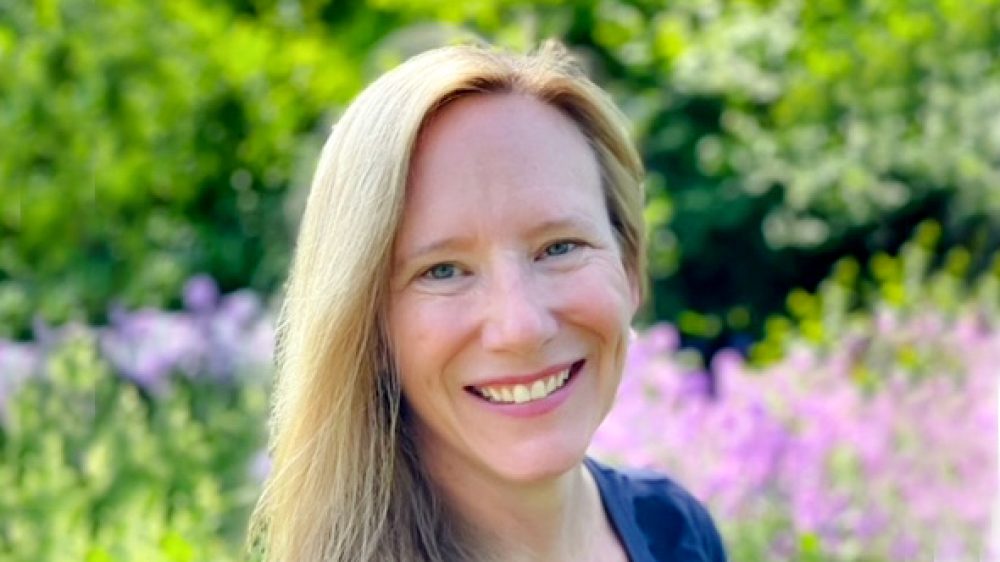
photo of woman with blond hair in front of flowering plants

Poco Kernsmith Appointed New Chair of Social Welfare

April 29, 2024
Alumni
UCLA Luskin alumna will return to her doctoral alma mater this summer as chair and professor....
Read More
Top16PASGraphic

Social Welfare Rises to Top 8 in U.S. News Rankings

April 9, 2024
For Faculty
Luskin School also continues to rank among the nation’s top graduate schools overall in public affairs....
Read More
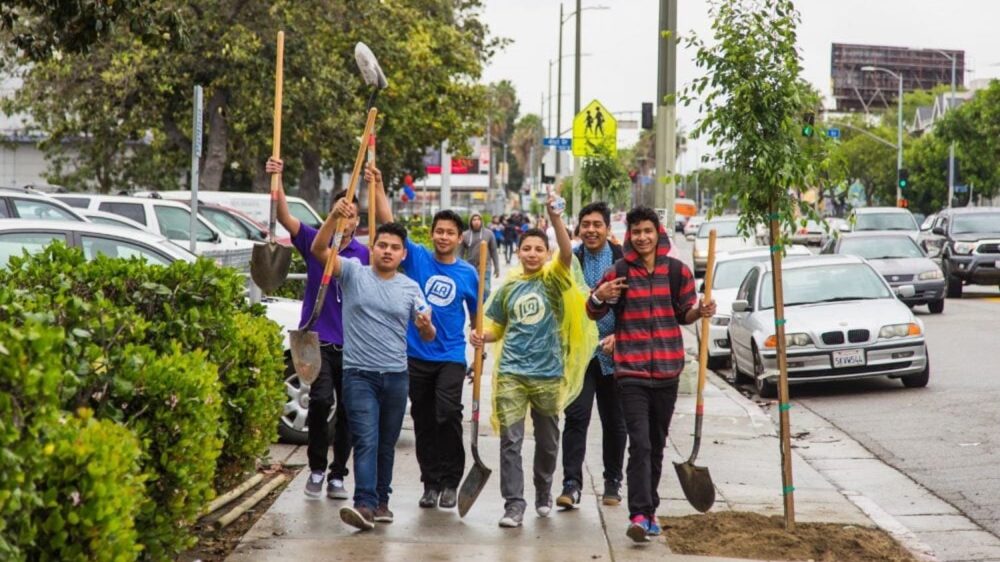
team of tree-planting volunteers with shovels

A Push to Plant Trees in L.A.’s Hottest Places

March 26, 2024
Luskin in the News
Designed to combat shade inequity, a new step-by-step framework helps residents, advocates, city leaders and planners...
Read More
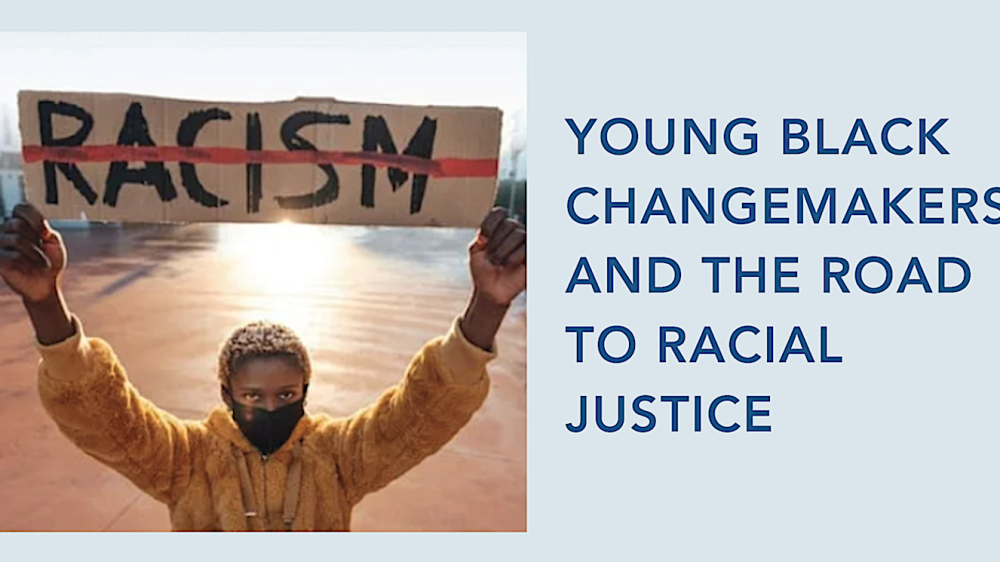
young person holding sign with word 'racism' marked out

Breaking Old Cycles and Envisioning New Futures

March 18, 2024
Luskin's Latest Blog
“Young Black Changemakers" tells the stories of L.A. youth who draw strength from their communities to...
Read More
"Top 100"

Abrams, 2 Emeriti Professors on List of Top 100 Social Work Scholars

March 13, 2024
Luskin's Latest Blog
UCLA Luskin's Laura Abrams, Duncan Lindsey and Zeke Hasenfeld are recognized as among the leading contributors...
Read More
Learn more about UCLA Luskin

Find contact information and get answers to your questions.

Contact Us

Public Affairs Building
337 Charles E. Young Drive East
Los Angeles, California 90095

Linkedin Youtube Instagram Facebook X-twitter
Campus Resources
  • Map, Directions, Parking
  • Directory
  • Academic Calendar
  • Careers
  • Map, Directions, Parking
  • Directory
  • Academic Calendar
  • Careers
School Resources
  • About
  • Our Dean
  • Administration
  • Board of Advisors
  • Contact Us
  • Visit Us
  • About
  • Our Dean
  • Administration
  • Board of Advisors
  • Contact Us
  • Visit Us
© 2026 Regents of the University of California
  • Emergency
  • Accessibilty
  • Privacy & Terms of Use
  • Emergency
  • Accessibilty
  • Privacy & Terms of Use
Facebook Instagram Linkedin X-twitter Youtube Threads
Academics
Departments
  • Public Policy
  • Real Estate Development
  • Social Welfare
  • Undergraduate Program
  • Urban Planning
  • Public Policy
  • Real Estate Development
  • Social Welfare
  • Undergraduate Program
  • Urban Planning
Graduate Programs
  • Master of Public Policy (MPP)
  • Master of Real Estate Development (MRED)
  • Master of Social Welfare (MSW)
  • Master of Urban and Regional Planning (MURP)
  • PhD in Social Welfare
  • PhD in Urban Planning
  • Master of Public Policy (MPP)
  • Master of Real Estate Development (MRED)
  • Master of Social Welfare (MSW)
  • Master of Urban and Regional Planning (MURP)
  • PhD in Social Welfare
  • PhD in Urban Planning
Undergraduate Programs
  • BA in Public Affairs
  • Minor in Urban and Regional Studies
  • Minor in Gerontology
  • Minor in Public Affairs
  • BA in Public Affairs
  • Minor in Urban and Regional Studies
  • Minor in Gerontology
  • Minor in Public Affairs
Professional Certificates
  • Data Analytics Certificate
  • Data Analytics Certificate
Admissions
Program Specific Admissions
  • Public Policy
  • Real Estate Development
  • Social Welfare
  • Urban Planning
  • Undergraduate Program
  • Public Policy
  • Real Estate Development
  • Social Welfare
  • Urban Planning
  • Undergraduate Program
Faculty
Our Faculty
  • All Faculty
  • Public Policy
  • Real Estate Development
  • Social Welfare
  • Urban Planning
  • All Faculty
  • Public Policy
  • Real Estate Development
  • Social Welfare
  • Urban Planning
Leadership
  • Our Dean
  • Board of Advisors
  • Faculty Executive Committee
  • Our Dean
  • Board of Advisors
  • Faculty Executive Committee
Research Centers
  • Agile Visual Analytics Lab (AVAL):

    Uses data visualization to improve decision-making for family and child services.

  • Berggruen Governance Index

    Evaluates the quality of political governance and democracy worldwide.

  • Center for Neighborhood Knowledge (CNK)

    Specializes in spatial analysis of socioeconomic disparities in neighborhoods.

  • Center for Policy Research on Aging (CPRA)

    Explores the societal and policy implications of an aging population.

  • Agile Visual Analytics Lab (AVAL):

    Uses data visualization to improve decision-making for family and child services.

  • Berggruen Governance Index

    Evaluates the quality of political governance and democracy worldwide.

  • Center for Neighborhood Knowledge (CNK)

    Specializes in spatial analysis of socioeconomic disparities in neighborhoods.

  • Center for Policy Research on Aging (CPRA)

    Explores the societal and policy implications of an aging population.

  • Institute of Transportation Studies (ITS)

    A national leader in transportation policy and mobility research.

  • Institute on Inequality and Democracy

    Advances scholarship addressing displacement and dispossession in Los Angeles and beyond.

  • Latin American Cities Initiative

    Connects urban planning and policy networks across the Americas.

  • Latino Policy & Politics Institute (LPPI)

    Addresses policy challenges facing Latinos and communities of color.

  • Institute of Transportation Studies (ITS)

    A national leader in transportation policy and mobility research.

  • Institute on Inequality and Democracy

    Advances scholarship addressing displacement and dispossession in Los Angeles and beyond.

  • Latin American Cities Initiative

    Connects urban planning and policy networks across the Americas.

  • Latino Policy & Politics Institute (LPPI)

    Addresses policy challenges facing Latinos and communities of color.

  • Lewis Center for Regional Policy Studies

    Researches housing, transportation, and economic development in Southern California.

  • Los Angeles Education Research Institute (LAERI)

    Collaborates with schools to improve educational outcomes for L.A. students.

  • Luskin Center for Innovation (LCI)

    Focuses on environmental policy, clean energy, and climate justice.

  • UCLA Voting Rights Project

    The flagship project for voting rights litigation and policy research.

  • Lewis Center for Regional Policy Studies

    Researches housing, transportation, and economic development in Southern California.

  • Los Angeles Education Research Institute (LAERI)

    Collaborates with schools to improve educational outcomes for L.A. students.

  • Luskin Center for Innovation (LCI)

    Focuses on environmental policy, clean energy, and climate justice.

  • UCLA Voting Rights Project

    The flagship project for voting rights litigation and policy research.

All Research Centers
Outcomes
Common Search Terms

Results will show as you type.