Skip to content
  • Students & Alumni
    • Overview
    • Career Services
    • Alumni Relations
    • Student Support
    • Graduate Resource Library
  • News
  • Events
    • Events Calendar
    • Luskin Summit
    • Luskin Lecture Series
    • California Policy Briefing
    • Commencement
  • Students & Alumni
    • Overview
    • Career Services
    • Alumni Relations
    • Student Support
    • Graduate Resource Library
  • News
  • Events
    • Events Calendar
    • Luskin Summit
    • Luskin Lecture Series
    • California Policy Briefing
    • Commencement
Giving
  • Academics
    Departments
    • Public Policy
    • Real Estate Development
    • Social Welfare
    • Undergraduate Program
    • Urban Planning
    • Public Policy
    • Real Estate Development
    • Social Welfare
    • Undergraduate Program
    • Urban Planning
    Graduate Programs
    • Master of Public Policy (MPP)
    • Master of Real Estate Development (MRED)
    • Master of Social Welfare (MSW)
    • Master of Urban and Regional Planning (MURP)
    • PhD in Social Welfare
    • PhD in Urban Planning
    • Master of Public Policy (MPP)
    • Master of Real Estate Development (MRED)
    • Master of Social Welfare (MSW)
    • Master of Urban and Regional Planning (MURP)
    • PhD in Social Welfare
    • PhD in Urban Planning
    Undergraduate Programs
    • BA in Public Affairs
    • Minor in Urban and Regional Studies
    • Minor in Gerontology
    • Minor in Public Affairs
    • BA in Public Affairs
    • Minor in Urban and Regional Studies
    • Minor in Gerontology
    • Minor in Public Affairs
    Professional Certificates
    • Data Analytics Certificate
    • Data Analytics Certificate
  • Admissions
    Program Specific Admissions
    • Public Policy
    • Real Estate Development
    • Social Welfare
    • Urban Planning
    • Undergraduate Program
    • Public Policy
    • Real Estate Development
    • Social Welfare
    • Urban Planning
    • Undergraduate Program
  • Faculty
    Our Faculty
    • All Faculty
    • Public Policy
    • Real Estate Development
    • Social Welfare
    • Urban Planning
    • All Faculty
    • Public Policy
    • Real Estate Development
    • Social Welfare
    • Urban Planning
    Leadership
    • Our Dean
    • Board of Advisors
    • Faculty Executive Committee
    • Our Dean
    • Board of Advisors
    • Faculty Executive Committee
  • Research Centers
    • Agile Visual Analytics Lab (AVAL):

      Uses data visualization to improve decision-making for family and child services.

    • Berggruen Governance Index

      Evaluates the quality of political governance and democracy worldwide.

    • Center for Neighborhood Knowledge (CNK)

      Specializes in spatial analysis of socioeconomic disparities in neighborhoods.

    • Center for Policy Research on Aging (CPRA)

      Explores the societal and policy implications of an aging population.

    • Agile Visual Analytics Lab (AVAL):

      Uses data visualization to improve decision-making for family and child services.

    • Berggruen Governance Index

      Evaluates the quality of political governance and democracy worldwide.

    • Center for Neighborhood Knowledge (CNK)

      Specializes in spatial analysis of socioeconomic disparities in neighborhoods.

    • Center for Policy Research on Aging (CPRA)

      Explores the societal and policy implications of an aging population.

    • Institute of Transportation Studies (ITS)

      A national leader in transportation policy and mobility research.

    • Institute on Inequality and Democracy

      Advances scholarship addressing displacement and dispossession in Los Angeles and beyond.

    • Latin American Cities Initiative

      Connects urban planning and policy networks across the Americas.

    • Latino Policy & Politics Institute (LPPI)

      Addresses policy challenges facing Latinos and communities of color.

    • Institute of Transportation Studies (ITS)

      A national leader in transportation policy and mobility research.

    • Institute on Inequality and Democracy

      Advances scholarship addressing displacement and dispossession in Los Angeles and beyond.

    • Latin American Cities Initiative

      Connects urban planning and policy networks across the Americas.

    • Latino Policy & Politics Institute (LPPI)

      Addresses policy challenges facing Latinos and communities of color.

    • Lewis Center for Regional Policy Studies

      Researches housing, transportation, and economic development in Southern California.

    • Los Angeles Education Research Institute (LAERI)

      Collaborates with schools to improve educational outcomes for L.A. students.

    • Luskin Center for Innovation (LCI)

      Focuses on environmental policy, clean energy, and climate justice.

    • UCLA Voting Rights Project

      The flagship project for voting rights litigation and policy research.

    • Lewis Center for Regional Policy Studies

      Researches housing, transportation, and economic development in Southern California.

    • Los Angeles Education Research Institute (LAERI)

      Collaborates with schools to improve educational outcomes for L.A. students.

    • Luskin Center for Innovation (LCI)

      Focuses on environmental policy, clean energy, and climate justice.

    • UCLA Voting Rights Project

      The flagship project for voting rights litigation and policy research.

    All Research Centers
  • Outcomes
Home / A Lifetime Dedicated to Social Welfare

A Lifetime Dedicated to Social Welfare

Five MSW alumni — ages 76 to 92 and all still working on social issues — recall their time at UCLA and how it shaped their lives
|||||

Posted in

  • School of Public Affairs, Social Welfare, Uncategorized

Published on

  • January 10, 2017
  • Social Welfare, UCLA, UCLA Luskin School of Public Affairs

Share this Article

By George Foulsham

One recalls being among the oldest students in UCLA’s School of Social Welfare. Another remembers going to school when there was still a stigma to being unmarried and pregnant. And another recalls her time studying socialwelfare at UCLA as exciting, terrifying and very rewarding.

We recently sat down for a Q&A with five social welfare alumni who attended UCLA from the 1950s to the 1970s and graduated with a master’s in social welfare. But these five scholars are all unique: Four are in their 70s and 80s, one is 92 years old, and all are continuing to work in their respective social welfare fields, long past the age when most people retire.

We discussed this lifelong dedication to their craft and other UCLA memories during interviews with these extraordinary individuals:
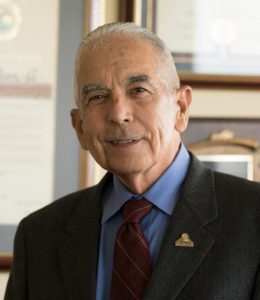
Jean Champommier
Photo by Roberto Gudino Jr.

Jean Champommier MSW ’64. He is 76 years old and the chief executive officer of Alma Family Services, which provides a variety of community-based services for families, including those with special needs.

Ellen Smith Graff MSW ’68. She is 80 years old and has been teaching a class for mid-career social workers and psychologists.

Rod Lackey MSW ’59. He is 79 years old and works for three home health care companies, providing counseling for clients.

Elaine Leader MSW ’70. She is 88 years old and the founder of Teen Line, a teen-to-teen confidential hotline and outreach program affiliated with Cedars-Sinai Hospital.

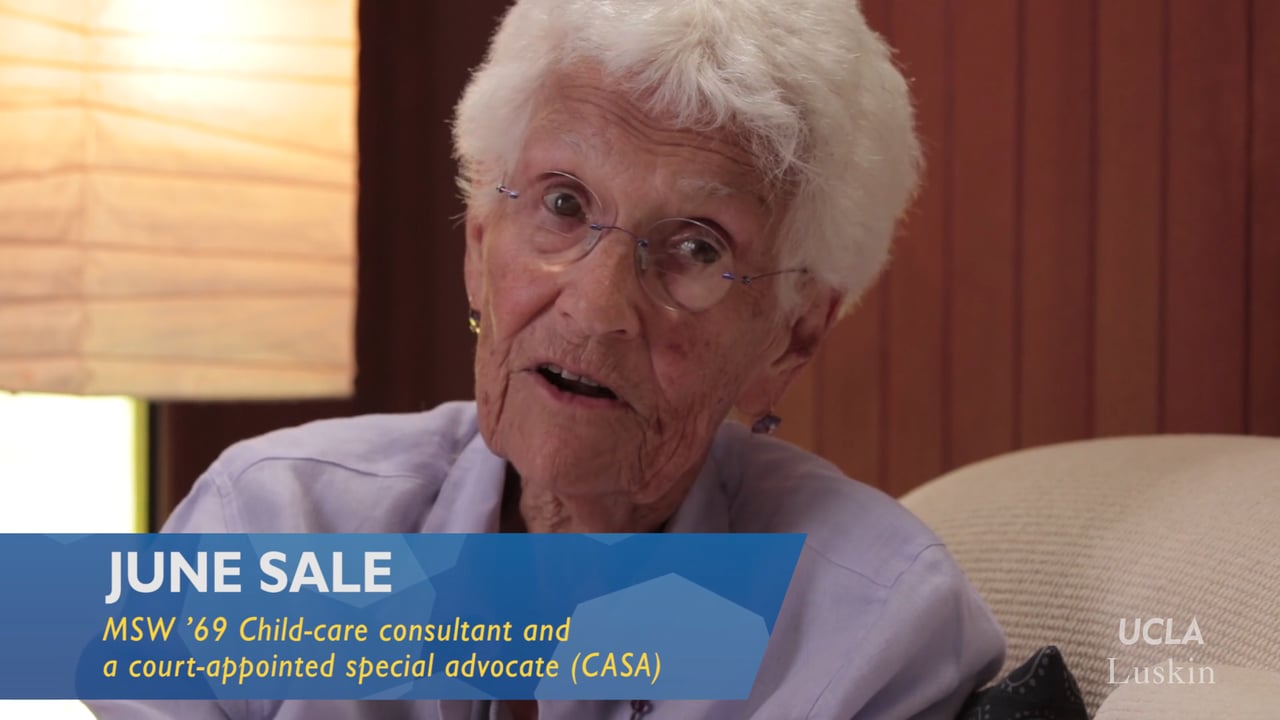
June Sale MSW ’69. She is 92 years old, a child-care consultant, a court-appointed special advocate (CASA) and a board member with Stone Soup Child Care and LA’s BEST, both after-school programs for children.

What are some of the things you remember about studying social welfare at UCLA?

Ellen Smith Graff: My first field placement was at the L.A. County Adoptions Department. A young woman had come in pregnant and she was not married. I had a great supervisor who helped me understand that I was with my client learning about my profession, but I was also too emotional about her situation. In the ’60s there was a stigma of unwed pregnant women and I felt her pain. I believe, though, I was able to facilitate helping her make her own choice to decide to keep her baby while losing some of her shame.

My second year was at the L.A. Children’s Hospital on Vermont Avenue. I learned the difficulty for children and their parents because of [intellectual disabilities] or other physical problems, and that they would never get better.

Both of these experiences stay with me today. They were rich and fulfilling.
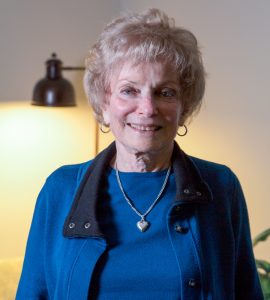
Ellen Smith Graff
Photo by Roberto Gudino Jr.

Jean Champommier: The two things I remember were my field-work placements and the professors I had. My first field-work experience was at the Kennedy Child Study Center, part of St. John’s Medical Center, and working with children with developmental disabilities and their families. It was a pioneering program at the time. That experience combined with my second-year placement in a community field-based social welfare agency formed the basis for my need to develop a multicultural, multilingual holistic service approach in addressing the needs of individuals, families and communities.

Elaine Leader: Meeting people who were interested in the same thing I was interested in. But also there was a lot going on in the country around civil liberties and there were demonstrators on campus. It was very exciting.

June Sale: I remember it being exhilarating, exciting, terrifying and very rewarding. I don’t know which order — it depends on where I was when I was there. I had early childhood training and I saw what was going on and what wasn’t going on, and I was feeling very helpless, sometimes in despair. I realized it was not very effective and I wanted it to be more effective. So I applied to Social Welfare and I was admitted. I was one of the oldest students there.

Rod Lackey: It was a good experience. Of course, in those days, you didn’t have all of the cultural issues you have today. In fact, our class was primarily white. I think we had one black woman and a couple of Asian students and one Latino.

If you look at what Luskin is offering to our students now, how have things changed since you went to UCLA?

Lackey: Oh, it’s a whole new world. Now we are dealing with minority issues, gay and lesbian issues, political issues. We didn’t deal with this that much back then. I think I was the only gay student and, of course, I was closeted. You couldn’t be out. Well, you could, but you know I was very uncomfortable, but now I’m not.
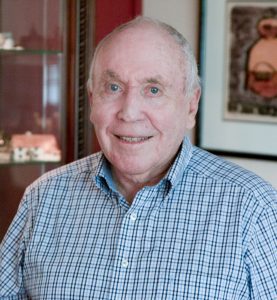
Rod Lackey
Photo by Roberto Gudino Jr.

Sale: My sense is that it is far more complicated now from when I was there, with the advent of computers and all kinds of science and engineering and media communications. I think that somewhat changes the relationship people have with other people. How did we ever live without them (computers) for so long?

Graff: As I look back to the ’60s I see that I was quite naive as I entered Luskin. I grew up in the ’50s, married, and I had two small children. At that time, all mothers were to be at home and take care of children. So I ran back and forth to school and home. We were a group of students wanting to help the world: We all shared the goal to learn and get trained together. Our theses were in groups and we all worked together.

Champommier: In many ways it is a new world. We live in diverse communities which is reflected in a much more diverse student body. However, many of the issues that reverberated in the 1960s are still in contention today such as drug abuse and discrimination based on race/ethnicity, gender, sexual orientation, etc. Scientific research has continued to advance in neurobiology and genetics including the discovery of DNA. There is greater acceptance of the importance of community mental health services, with significant increased federal, state and local funding.

In L.A. County, there is movement toward greater integration of health, mental health and substance abuse services. Luskin is providing a broader educational context in understanding all of these issues by examining public policies and approaches to deal with them.

Why does Luskin matter to you and why should it matter to those students who are considering their MSW at Luskin in the future?

Leader: I thought it was a very good program when I was there and I learned a great deal. I think it has the esteem that many other programs don’t have. I think anything associated with UCLA is very valuable.

Lackey: I think Luskin offers a lot more than just straight social welfare. You’ve got public health and all of these very important areas you need to be knowledgeable about.
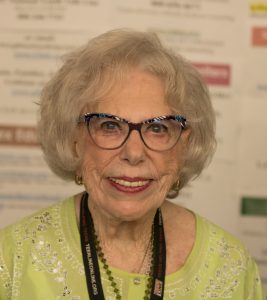
Elaine Leader
Photo by Roberto Gudino Jr.

Champommier: I felt fortunate to enter the social work field in the turbulent 1960s when various institutions were being challenged, including social work itself. This is again a time of significant questioning of institutions charged with meeting the health and welfare needs of individuals, families and communities. Luskin provides a variety of career pathways to become involved in addressing these needs. It’s a wonderful opportunity for students entering the field at this exciting time.

Graff: It seems our world is more complicated now and more open with problems. In 1965 I had a wish to help people who cannot help themselves — rather naive but true. However, Luskin had structure, two or three days of experience in agencies each year, and excellent supervision each week. Luskin is a great school and I took it all in.

Sale: I think it is a pathway to really knowing how to help people. You can’t just go out and do it. You’ve got to know how to reach people. You’ve got to know yourself a little bit better too, and that is one of the real strengths of a social work program.

What motivates you to keep doing this, long after most people would have decided to retire?

Leader: I think I would be very lonely if I didn’t. I am so used to having those kinds of relationships and I would feel adrift without them.

Sale: There’s such inequality in the world and such hate and such awful stuff going on. I look at my grandchildren who are in their 40s and then I look at their children, and wonder what their lives are going to be like. I would liketo be able to think that I’m doing something that will help them, that will eventually make them helpers of the world.

Lackey: Because retirement drove me crazy. I retired from Kaiser home health four years ago. I love home health and after I retired I thought, I can’t stand this staying at home, watching TV, not shaving, this is ridiculous. So I got jobs with three different home health care agencies and I work the hours I want to. I always liked home health because every day is an adventure — different people, different backgrounds, different everything.
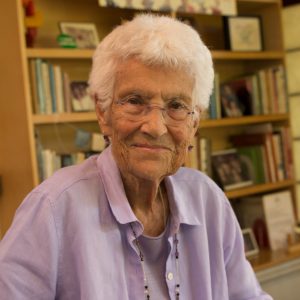
June Sale
Photo by Roberto Gudino Jr.

Graff: It’s something that is priceless to me. I have worked for over 40 years with many agencies as well as with a private practice. I feel richer because my graduate school was so great in preparing me for my profession — the thesis, classes, agencies and supervision.

Champommier: I didn’t know the typical retirement age was 65, for one thing. I’m 76 and as each year goes by I continue to feel engaged in making a positive difference in the lives of individuals, families and communities. I am fortunate in working together with a group of talented leaders both within the agency and in the community. We are by nature both curious and problem solvers. And each solution brings with it new problems to solve. It is a continuing learning process. I tell my staff, the moment that I lose the excitement of change that will be the time to move on.

Finally, what advice do you have for Luskin students?

Leader: Follow your dream and find something that really interests you, and follow that because that’s going to be satisfying to you and a contribution to your community.

Lackey: Try to do something besides going into private practice just to make money. That to me isn’t social work. Social work is making changes in people’s lives.

Graff: I like challenges that my clients bring to the agency: It keeps my brain working. I think new students want to gain those goals too!

Sale: I think each person has a calling that is special to them. I love working with little kids, and that’s what I do.

Champommier: You are in a unique position at Luskin to gain a broad knowledge of the social welfare field. You are indeed fortunate to be provided with the opportunity to examine social welfare issues from various perspectives and analyze the intricate nuances of situations you will contend with in your professional career. Take full advantage of what Luskin has to offer by academically challenging yourself with a spirit of openness and curiosity.

Related Articles

Luskin Alum Kimberly Rutledge Appointed to California Interagency Executive Council on Homelessness

Luskin Alum Kimberly Rutledge Appointed to California Interagency Executive Council on Homelessness

August 3, 2026
Luskin's Latest Blog
Graduate brings extensive experience in disability policy and public service to the statewide leadership council....
Read More
female students hug

A Painful Realization About What’s Behind School Shootings

July 31, 2026
Luskin in the News
UCLA Luskin's Ron Avi Astor says improving campus climate can only go so far in a...
Read More
silhouette of Griffith Observatory set again orange sky and Los Angeles skyline

In the Heat of the Moment, Shade Is a Secret Weapon

July 23, 2026
School of Public Affairs
UCLA Luskin Center for Innovation scholars are among scientists across campus who are helping mitigate the...
Read More
two headshots one of anthony gomez and one of brianna harvey both new faculty members at the ucla luskin school of public affairs social welfare department.

Two UCLA Alumni Return to the Luskin School as Assistant Professors of Social Welfare

July 6, 2026
Luskin's Latest Blog
Luskin welcomes alumni Anthony Gómez and Brianna Harvey back to campus as assistant professors in the...
Read More
Learn more about UCLA Luskin

Find contact information and get answers to your questions.

Contact Us

Public Affairs Building
337 Charles E. Young Drive East
Los Angeles, California 90095

Linkedin Youtube Instagram Facebook X-twitter
Campus Resources
  • Map, Directions, Parking
  • Directory
  • Academic Calendar
  • Careers
  • Map, Directions, Parking
  • Directory
  • Academic Calendar
  • Careers
School Resources
  • About
  • Our Dean
  • Administration
  • Board of Advisors
  • Contact Us
  • Visit Us
  • About
  • Our Dean
  • Administration
  • Board of Advisors
  • Contact Us
  • Visit Us
© 2026 Regents of the University of California
  • Emergency
  • Accessibilty
  • Privacy & Terms of Use
  • Emergency
  • Accessibilty
  • Privacy & Terms of Use
Facebook Instagram Linkedin X-twitter Youtube Threads
Academics
Departments
  • Public Policy
  • Real Estate Development
  • Social Welfare
  • Undergraduate Program
  • Urban Planning
  • Public Policy
  • Real Estate Development
  • Social Welfare
  • Undergraduate Program
  • Urban Planning
Graduate Programs
  • Master of Public Policy (MPP)
  • Master of Real Estate Development (MRED)
  • Master of Social Welfare (MSW)
  • Master of Urban and Regional Planning (MURP)
  • PhD in Social Welfare
  • PhD in Urban Planning
  • Master of Public Policy (MPP)
  • Master of Real Estate Development (MRED)
  • Master of Social Welfare (MSW)
  • Master of Urban and Regional Planning (MURP)
  • PhD in Social Welfare
  • PhD in Urban Planning
Undergraduate Programs
  • BA in Public Affairs
  • Minor in Urban and Regional Studies
  • Minor in Gerontology
  • Minor in Public Affairs
  • BA in Public Affairs
  • Minor in Urban and Regional Studies
  • Minor in Gerontology
  • Minor in Public Affairs
Professional Certificates
  • Data Analytics Certificate
  • Data Analytics Certificate
Admissions
Program Specific Admissions
  • Public Policy
  • Real Estate Development
  • Social Welfare
  • Urban Planning
  • Undergraduate Program
  • Public Policy
  • Real Estate Development
  • Social Welfare
  • Urban Planning
  • Undergraduate Program
Faculty
Our Faculty
  • All Faculty
  • Public Policy
  • Real Estate Development
  • Social Welfare
  • Urban Planning
  • All Faculty
  • Public Policy
  • Real Estate Development
  • Social Welfare
  • Urban Planning
Leadership
  • Our Dean
  • Board of Advisors
  • Faculty Executive Committee
  • Our Dean
  • Board of Advisors
  • Faculty Executive Committee
Research Centers
  • Agile Visual Analytics Lab (AVAL):

    Uses data visualization to improve decision-making for family and child services.

  • Berggruen Governance Index

    Evaluates the quality of political governance and democracy worldwide.

  • Center for Neighborhood Knowledge (CNK)

    Specializes in spatial analysis of socioeconomic disparities in neighborhoods.

  • Center for Policy Research on Aging (CPRA)

    Explores the societal and policy implications of an aging population.

  • Agile Visual Analytics Lab (AVAL):

    Uses data visualization to improve decision-making for family and child services.

  • Berggruen Governance Index

    Evaluates the quality of political governance and democracy worldwide.

  • Center for Neighborhood Knowledge (CNK)

    Specializes in spatial analysis of socioeconomic disparities in neighborhoods.

  • Center for Policy Research on Aging (CPRA)

    Explores the societal and policy implications of an aging population.

  • Institute of Transportation Studies (ITS)

    A national leader in transportation policy and mobility research.

  • Institute on Inequality and Democracy

    Advances scholarship addressing displacement and dispossession in Los Angeles and beyond.

  • Latin American Cities Initiative

    Connects urban planning and policy networks across the Americas.

  • Latino Policy & Politics Institute (LPPI)

    Addresses policy challenges facing Latinos and communities of color.

  • Institute of Transportation Studies (ITS)

    A national leader in transportation policy and mobility research.

  • Institute on Inequality and Democracy

    Advances scholarship addressing displacement and dispossession in Los Angeles and beyond.

  • Latin American Cities Initiative

    Connects urban planning and policy networks across the Americas.

  • Latino Policy & Politics Institute (LPPI)

    Addresses policy challenges facing Latinos and communities of color.

  • Lewis Center for Regional Policy Studies

    Researches housing, transportation, and economic development in Southern California.

  • Los Angeles Education Research Institute (LAERI)

    Collaborates with schools to improve educational outcomes for L.A. students.

  • Luskin Center for Innovation (LCI)

    Focuses on environmental policy, clean energy, and climate justice.

  • UCLA Voting Rights Project

    The flagship project for voting rights litigation and policy research.

  • Lewis Center for Regional Policy Studies

    Researches housing, transportation, and economic development in Southern California.

  • Los Angeles Education Research Institute (LAERI)

    Collaborates with schools to improve educational outcomes for L.A. students.

  • Luskin Center for Innovation (LCI)

    Focuses on environmental policy, clean energy, and climate justice.

  • UCLA Voting Rights Project

    The flagship project for voting rights litigation and policy research.

All Research Centers
Outcomes
Common Search Terms

Results will show as you type.