Skip to content
  • Students & Alumni
    • Career Services
    • Alumni Relations
    • Student Support
    • Graduate Resource Library
    • For Employers
  • News
  • Events
    • Events Calendar
    • Luskin Summit
    • Luskin Lecture Series
    • California Policy Briefing
    • Commencement
  • Students & Alumni
    • Career Services
    • Alumni Relations
    • Student Support
    • Graduate Resource Library
    • For Employers
  • News
  • Events
    • Events Calendar
    • Luskin Summit
    • Luskin Lecture Series
    • California Policy Briefing
    • Commencement
Giving
UCLA Luskin School of Public Affairs Logo
  • Academics
    Departments & Programs
    • Global Public Affairs
    • Public Policy
    • Real Estate Development
    • Social Welfare
    • Urban Planning
    • Undergraduate Program
    • Global Public Affairs
    • Public Policy
    • Real Estate Development
    • Social Welfare
    • Urban Planning
    • Undergraduate Program
    Graduate Degrees
    • Master of Global Public Affairs (MGPA)
    • Master of Public Policy (MPP)
    • Master of Real Estate Development (MRED)
    • Master of Social Welfare (MSW)
    • Master of Urban and Regional Planning (MURP)
    • PhD in Social Welfare
    • PhD in Urban Planning
    • Master of Global Public Affairs (MGPA)
    • Master of Public Policy (MPP)
    • Master of Real Estate Development (MRED)
    • Master of Social Welfare (MSW)
    • Master of Urban and Regional Planning (MURP)
    • PhD in Social Welfare
    • PhD in Urban Planning
    Undergraduate Degrees
    • BA in Public Affairs
    • Minor in Urban and Regional Studies
    • Minor in Gerontology
    • Minor in Public Affairs
    • BA in Public Affairs
    • Minor in Urban and Regional Studies
    • Minor in Gerontology
    • Minor in Public Affairs
    Professional Certificates
    • AI in Public Affairs Certificate
    • AI in Public Affairs Certificate
  • Admissions
    Program Specific Admissions
    • Global Public Affairs
    • Public Policy
    • Real Estate Development
    • Social Welfare
    • Urban Planning
    • Undergraduate Program
    • Global Public Affairs
    • Public Policy
    • Real Estate Development
    • Social Welfare
    • Urban Planning
    • Undergraduate Program
  • Faculty
    Our Faculty
    • All Faculty
    • Public Policy
    • Real Estate Development
    • Social Welfare
    • Urban Planning
    • All Faculty
    • Public Policy
    • Real Estate Development
    • Social Welfare
    • Urban Planning
    Leadership
    • Our Dean
    • Board of Advisors
    • Faculty Executive Committee
    • Our Dean
    • Board of Advisors
    • Faculty Executive Committee
  • Research Centers
    • Agile Visual Analytics Lab (AVAL)

      Empowers stakeholders with data to make informed decisions for children, families, and communities.

    • Berggruen Governance Index

      Evaluates the quality of political governance and democracy worldwide.

    • Center for Neighborhood Knowledge (CNK)

      Specializes in spatial analysis of socioeconomic disparities in neighborhoods.

    • Center for Policy Research on Aging (CPRA)

      Explores the societal and policy implications of an aging population.

    • Agile Visual Analytics Lab (AVAL)

      Empowers stakeholders with data to make informed decisions for children, families, and communities.

    • Berggruen Governance Index

      Evaluates the quality of political governance and democracy worldwide.

    • Center for Neighborhood Knowledge (CNK)

      Specializes in spatial analysis of socioeconomic disparities in neighborhoods.

    • Center for Policy Research on Aging (CPRA)

      Explores the societal and policy implications of an aging population.

    • Institute of Transportation Studies (ITS)

      Advances research, education, and meaningful civic engagement on transportation issues.

    • Institute on Inequality and Democracy

      Advances scholarship that confronts threats to democracy in America and around the world.

    • Latin American Cities Initiative

      Connects urban planning and policy networks across the Americas.

    • Latino Policy & Politics Institute (LPPI)

      Addresses policy challenges facing Latinos and communities of color.

    • Institute of Transportation Studies (ITS)

      Advances research, education, and meaningful civic engagement on transportation issues.

    • Institute on Inequality and Democracy

      Advances scholarship that confronts threats to democracy in America and around the world.

    • Latin American Cities Initiative

      Connects urban planning and policy networks across the Americas.

    • Latino Policy & Politics Institute (LPPI)

      Addresses policy challenges facing Latinos and communities of color.

    • Lewis Center for Regional Policy Studies

      Studying housing affordability and transportation equity in the L.A. region.

    • Los Angeles Education Research Institute (LAERI)

      Collaborates with schools to improve educational outcomes for L.A. students.

    • Luskin Center for Innovation

      Informing effective and equitable environmental policy that improves lives.

    • UCLA Voting Rights Project

      The flagship project for voting rights litigation and policy research.

    • Lewis Center for Regional Policy Studies

      Studying housing affordability and transportation equity in the L.A. region.

    • Los Angeles Education Research Institute (LAERI)

      Collaborates with schools to improve educational outcomes for L.A. students.

    • Luskin Center for Innovation

      Informing effective and equitable environmental policy that improves lives.

    • UCLA Voting Rights Project

      The flagship project for voting rights litigation and policy research.

    All Research Centers
  • Outcomes
Home / News / Luskin Lecture Peers Into Future of an Aging America

Luskin Lecture Peers Into Future of an Aging America

AARP’s Jo Ann Jenkins urges society to ‘disrupt aging’ with a fresh outlook on the nation’s increasingly older population — and how society must change as a result
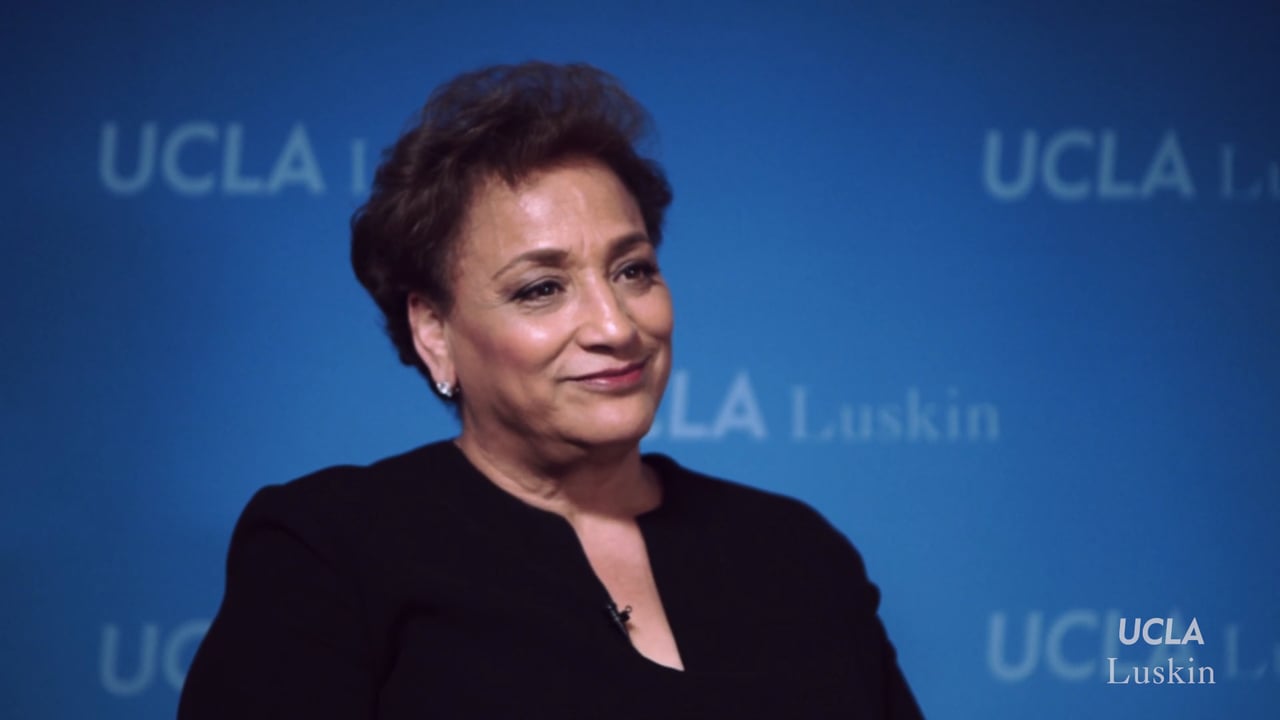
Jo Ann Jenkins, the CEO of AARP, delivered a Luskin Lecture on Feb
Jo Ann Jenkins, the CEO of AARP, delivered a Luskin Lecture on Feb. 7, 2017, at Skirball Center.

Posted in

  • Alumni, School of Public Affairs, Transportation, Urban Planning

Published on

  • February 10, 2017
  • aging, gerontology, Medicaid, Social Security, UCLA

Share this Article

By Les Dunseith

The number of Americans age 85 and older now constitutes the fastest growing segment of the U.S. population.

The second-fastest growing age group? Those age 100 and older.

The impact on society of increased longevity thanks to advances in medicine and healthier lifestyles was a centerpiece of a presentation by Jo Ann Jenkins, CEO of AARP, as part of the Meyer and Renee Luskin Lecture Series held Feb. 7, 2017.

Jenkins, whose bestselling book “Disrupt Aging” also served as the title for her lecture, talked about the necessity to rethink how we view the aging process in the years ahead.

“It’s not just about adding years to the end of life. It’s about changing the way we live throughout our lives,” Jenkins told a crowd of more than 200 people at Skirball Cultural Center. “Our ability to live longer, healthier and more productive lives is one of mankind’s greatest accomplishments. And yet we don’t see it that way. We often view it as a problem rather than an accomplishment.”

She urged the audience to think about a youngster they know today, perhaps a child or grandchild around 10 years old. Current research thinking predicts that child will have about a 50/50 chance of living to be 100.

She also noted that gerontology experts speculate that the first person who will live to be age 150 has already been born. “In this audience,” she joked, and the room erupted in laughter.

Her point, of course, is that increased longevity for a significant portion of the population not only impacts healthcare and public policy and the infrastructure of communities, but also the way people deal with the aging process and its impacts on their loved ones and themselves.

“The way people are aging is changing, but our attitudes and our stereotypes have not changed,” Jenkins said in an interview prior to the lecture. “I would like for us to be this ageless society. So that regardless of your age, you are judged on the quality of your mind and what you bring to the workplace, or what you bring into the environment. And that it’s not about being a particular age.”

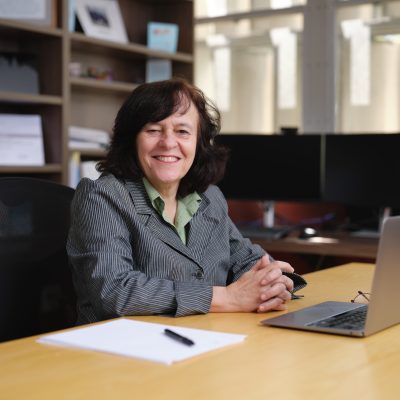
Coping with the societal impact of the demographic reality is a challenge that “we find ourselves woefully unprepared” to deal with, said UCLA Luskin urban planning professor Anastasia Loukaitou-Sideris, who is also UCLA’s associate provost for academic planning. “Most seniors live in cities, but the cities are not really designed, planned or developed for them.”

New policies and approaches are needed to successfully adjust to an aging population. “Older adults are equal citizens who have a right to expect the same rights and benefits and amenities from cities as other groups,” Loukaitou-Sideris said. “This is not yet happening. The onus is on the people who are the city builders, the policymakers, the planners, the politicians.”

Because those are the types of people who work and study at the UCLA Luskin School of Public Affairs, hosting a visit by Jenkins was a natural fit. She is the CEO of an influential national organization that has about 38 million members over age 50.

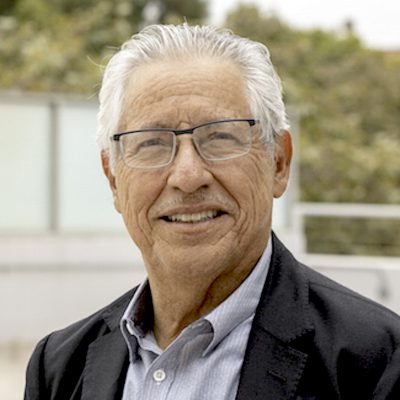
The Luskin Lecture by Jenkins was also an example of a growing relationship between the university and AARP that was fostered by Fernando Torres-Gil, professor of social welfare and public policy, over the past few years while he served on the organization’s board of directors.

“UCLA is the premier university when it comes to geriatrics and the biomedical side of gerontology,” Torres-Gil said in advance of the lecture. “UCLA, as a university, has tremendous research strength in issues of aging.”

AARP is “beginning to understand what we can do for them,” he said about UCLA and its research, educational and planning capabilities. “In a nation becoming old and moving to majority-minority status, AARP needs to take a leadership role in responding to multicultural populations and the nexus with aging.”

People at UCLA in fields of study such as medicine, gerontology, public policy and urban planning “have an enormous opportunity to rethink the course of life,” Jenkins said. “If we are going to live to be 100, how might that change the way we educate — not only the youth, but all of us — throughout the lifespan?”

California and Los Angeles, in particular, present a perfect opportunity for organizations such as AARP to achieve a better understanding of the needs of older Americans from diverse ethnic and cultural backgrounds. One aspect of that effort is a $300,000 grant from AARP to help fund the research of faculty members such as Loukaitou-Sideris, whose studies of the public environment in and around cities have previously noted shortcomings related to the needs of older residents, particularly those in minority populations.

In a question and answer session that followed the lecture and was moderated by Torres-Gil, he asked for Jenkins’ perspective on diversity given the fact that so many of those entering old age are from ethnic minority populations.

“We at AARP have a huge role to play in showing how nonprofit organizations ought to be community partners at the local level,” Jenkins responded. “Our goal at AARP is to be in your life every day, concerned about the issues that are important to you, not just necessarily about what’s important to AARP. And that absolutely includes diverse communities all across this country.”

Not only are people living longer, but their expectations for quality of life are changing as well. This notion of rethinking what it means to grow old is one that Jenkins has championed since she became the leader of AARP in 2014, and it is the core message of “Disrupt Aging.”

“We ought to accept our age and feel good about where we are in life,” Jenkins said. “Among our members, many of them are not retiring. They might be leaving a particular job, but it’s to do something different.”

Still, she noted, American society is obsessed with age. When people are asked what they are most likely to lie about, age is the top answer. “But what if we could eliminate our preoccupation with a number? For example, what if we decided that middle age started at 65? What would that do to your own preconceptions?” Jenkins asked.

“It’s not our own aging that we need to fight against,” Jenkins said during the lecture. “It’s the ageist attitudes and perceptions that permeate society and play such a huge role in our culture.”

She acknowledged that aging does create challenges that older Americans wrestle with every day. “As we get older, many of us find things that we have always taken for granted more difficult to achieve,” she said. “Our wants and our needs change, but our environment does not always adapt to address those changes.”

In her view, the capacity to deal successfully with that reality is an issue that impacts individuals, governments and businesses in equal measure. “We blame ourselves. Instead of changing our environment to fit our needs, we bemoan getting older,” she said.

Efforts by AARP and by researchers such as Loukaitou-Sideris seek ways to make communities more livable for an aging population. Jenkins cited a research example that focuses on the fact that many older people have trouble getting in and out of a car.

“We attribute it to the weakening of the leg muscles and the loss of sense of balance rather than considering the inadequacies of a car seat that does not swivel and allow us to emerge straight forward rather than trying to slide out of the car sideways,” Jenkins said. “Car seats were not made with a 75-year-old in mind.”

The idea of refocusing our thinking to better accommodate an aging population also applies to communities and housing. Today, more people are living into their 80s and 90s and want to stay in their homes as long as possible.

“Basic access should be built into the homes, just like wiring and plumbing,” Jenkins said. “Living in a community with services nearby and having a home that accommodates our needs are tremendous assets for those of us who want to age in place.”
Faculty Mentioned in this Article
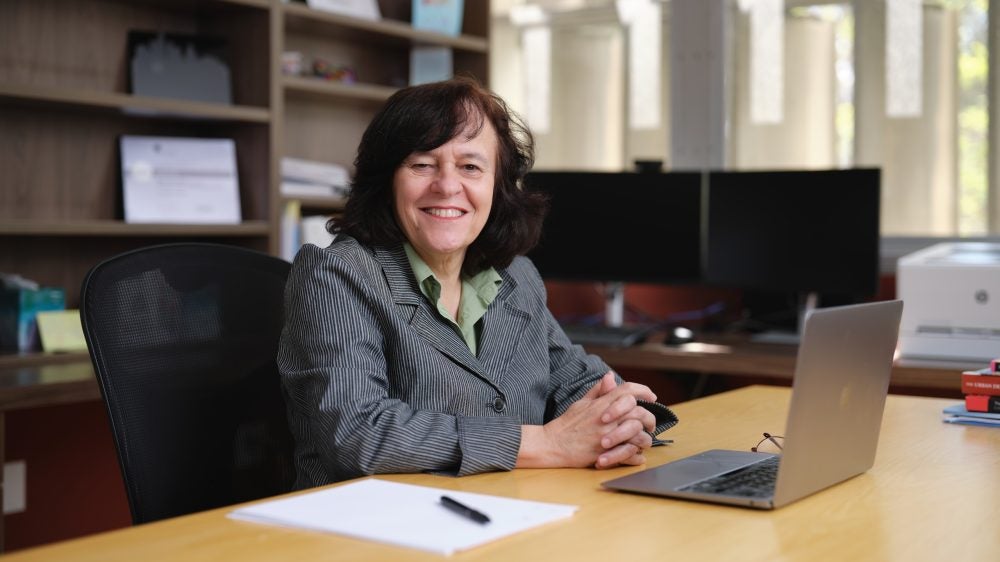
Headshot of Anastasia Loukaitou-Sideris

Anastasia Loukaitou-Sideris

Dean, Luskin School of Public Affairs; Distinguished Professor of Urban Planning.

Anastasia Loukaitou-Sideris is the Dean of the UCLA Luskin School of Public Affairs, a former Associate Dean, a Distinguished Professor...

person with glasses outdoors

Fernando Torres-Gil

Director, UCLA Center for Policy Research on Aging; Professor Emeritus of Social Welfare and Public Policy

Fernando M. Torres-Gil’s multifaceted career spans the academic, professional, and policy arenas. He is a Professor of Social Welfare and...

Related Articles

book cover on left, photo of woman with dark hair wearing jacket on right

New Book Serves as Authoritative Reference on Transit Crime Around the World

September 24, 2026
School of Public Affairs

A new book co-edited by UCLA Luskin Dean Anastasia Loukaitou-Sideris provides a comprehensive overview of crime...

Read More
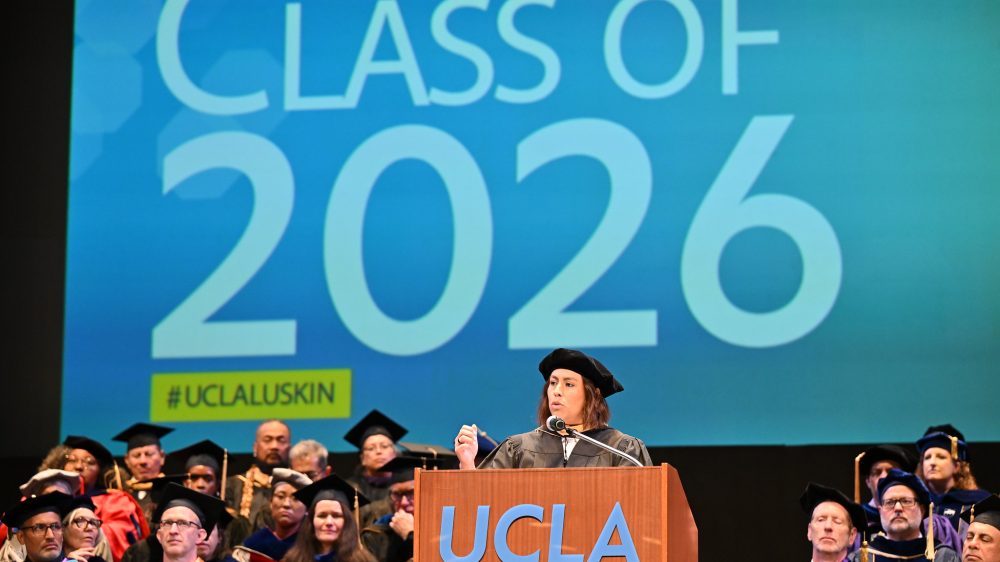
California State Senator Caroline Menjivar inspires graduates during her keynote address at the UCLA Luskin Graduate Commencement Ceremony on June 12

A Rousing Sendoff for UCLA Luskin’s Class of 2026

June 16, 2026
Alumni

UCLA Luskin celebrated its Class of 2026 with two commencement ceremonies on June 12, one for...

Read More
Headshot of Anastasia Loukaitou-Sideris

Anastasia Loukaitou-Sideris Named Dean of UCLA Luskin School of Public Affairs

June 1, 2026
School of Public Affairs

Anastasia Loukaitou-Sideris, who has served as interim dean of the UCLA Luskin School of Public Affairs...

Read More
Tina Hordzwick/UCLA

UCLA Luskin Social Welfare Receives Landmark $13.5 Million Investment to Revolutionize Youth Mental Health Training

April 7, 2026
School of Public Affairs
UCLA Luskin Social Welfare receives $13.5M from Ballmer Group to train social workers addressing youth mental...
Read More
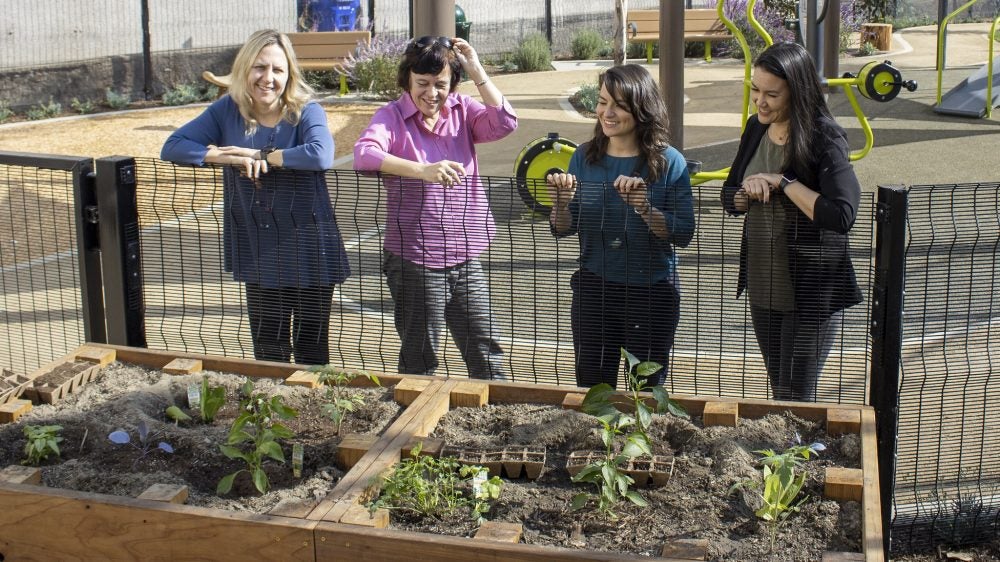
Anastasia and her research team stand over a raised garden bed at the Golden Age Park in Westlake.

Reimagining Parking Lots into Senior-Friendly Parks in Los Angeles

March 5, 2026
Luskin in the News
Anastasia Loukaitou-Sideris led research transforming underused urban spaces into safe and inclusive parks for older adults....
Read More
two people at bus stop at night

Loukaitou-Sideris on How to Keep Public Transit Safe and Welcoming

October 22, 2025
Luskin in the News
UCLA scholar recommends employing a suite of strategies at transportation hubs, including thoughtful design and new...
Read More
Learn more about UCLA Luskin

Find contact information and get answers to your questions.

Contact Us

Public Affairs Building
337 Charles E. Young Drive East
Los Angeles, California 90095

Linkedin Youtube Instagram Facebook X-twitter
Campus Resources
  • Map, Directions, Parking
  • Directory
  • Academic Calendar
  • Careers
  • Map, Directions, Parking
  • Directory
  • Academic Calendar
  • Careers
School Resources
  • About
  • Our Dean
  • Administration
  • Luskin School Intranet
  • Board of Advisors
  • Contact Us
  • Visit Us
  • About
  • Our Dean
  • Administration
  • Luskin School Intranet
  • Board of Advisors
  • Contact Us
  • Visit Us
UCLA logo
© 2026 Regents of the University of California
  • Emergency
  • Accessibility
  • Privacy & Terms of Use
  • Emergency
  • Accessibility
  • Privacy & Terms of Use
Facebook Instagram Linkedin X-twitter Youtube Threads
UCLA Luskin School of Public Affairs Logo
Academics
Departments
  • Global Public Affairs
  • Public Policy
  • Real Estate Development
  • Social Welfare
  • Urban Planning
  • Undergraduate Program
  • Global Public Affairs
  • Public Policy
  • Real Estate Development
  • Social Welfare
  • Urban Planning
  • Undergraduate Program
Graduate Programs
  • Master of Global Public Affairs (MGPA)
  • Master of Public Policy (MPP)
  • Master of Real Estate Development (MRED)
  • Master of Social Welfare (MSW)
  • Master of Urban and Regional Planning (MURP)
  • PhD in Social Welfare
  • PhD in Urban Planning
  • Master of Global Public Affairs (MGPA)
  • Master of Public Policy (MPP)
  • Master of Real Estate Development (MRED)
  • Master of Social Welfare (MSW)
  • Master of Urban and Regional Planning (MURP)
  • PhD in Social Welfare
  • PhD in Urban Planning
Undergraduate Programs
  • BA in Public Affairs
  • Minor in Urban and Regional Studies
  • Minor in Gerontology
  • Minor in Public Affairs
  • BA in Public Affairs
  • Minor in Urban and Regional Studies
  • Minor in Gerontology
  • Minor in Public Affairs
Professional Certificates
  • AI in Public Affairs Certificate
  • AI in Public Affairs Certificate
Admissions
Program Specific Admissions
  • Global Public Affairs
  • Public Policy
  • Real Estate Development
  • Social Welfare
  • Urban Planning
  • Undergraduate Program
  • Global Public Affairs
  • Public Policy
  • Real Estate Development
  • Social Welfare
  • Urban Planning
  • Undergraduate Program
Faculty
Our Faculty
  • All Faculty
  • Public Policy
  • Real Estate Development
  • Social Welfare
  • Urban Planning
  • All Faculty
  • Public Policy
  • Real Estate Development
  • Social Welfare
  • Urban Planning
Leadership
  • Our Dean
  • Board of Advisors
  • Faculty Executive Committee
  • Our Dean
  • Board of Advisors
  • Faculty Executive Committee
Research Centers
  • Agile Visual Analytics Lab (AVAL)

    Empowers stakeholders with data to make informed decisions for children, families, and communities.

  • Berggruen Governance Index

    Evaluates the quality of political governance and democracy worldwide.

  • Center for Neighborhood Knowledge (CNK)

    Specializes in spatial analysis of socioeconomic disparities in neighborhoods.

  • Center for Policy Research on Aging (CPRA)

    Explores the societal and policy implications of an aging population.

  • Agile Visual Analytics Lab (AVAL)

    Empowers stakeholders with data to make informed decisions for children, families, and communities.

  • Berggruen Governance Index

    Evaluates the quality of political governance and democracy worldwide.

  • Center for Neighborhood Knowledge (CNK)

    Specializes in spatial analysis of socioeconomic disparities in neighborhoods.

  • Center for Policy Research on Aging (CPRA)

    Explores the societal and policy implications of an aging population.

  • Institute of Transportation Studies (ITS)

    Advances research, education, and meaningful civic engagement on transportation issues.

  • Institute on Inequality and Democracy

    Advances scholarship that confronts threats to democracy in America and around the world.

  • Latin American Cities Initiative

    Connects urban planning and policy networks across the Americas.

  • Latino Policy & Politics Institute (LPPI)

    Addresses policy challenges facing Latinos and communities of color.

  • Institute of Transportation Studies (ITS)

    Advances research, education, and meaningful civic engagement on transportation issues.

  • Institute on Inequality and Democracy

    Advances scholarship that confronts threats to democracy in America and around the world.

  • Latin American Cities Initiative

    Connects urban planning and policy networks across the Americas.

  • Latino Policy & Politics Institute (LPPI)

    Addresses policy challenges facing Latinos and communities of color.

  • Lewis Center for Regional Policy Studies

    Studying housing affordability and transportation equity in the L.A. region.

  • Los Angeles Education Research Institute (LAERI)

    Collaborates with schools to improve educational outcomes for L.A. students.

  • Luskin Center for Innovation

    Informing effective and equitable environmental policy that improves lives.

  • UCLA Voting Rights Project

    The flagship project for voting rights litigation and policy research.

  • Lewis Center for Regional Policy Studies

    Studying housing affordability and transportation equity in the L.A. region.

  • Los Angeles Education Research Institute (LAERI)

    Collaborates with schools to improve educational outcomes for L.A. students.

  • Luskin Center for Innovation

    Informing effective and equitable environmental policy that improves lives.

  • UCLA Voting Rights Project

    The flagship project for voting rights litigation and policy research.

All Research Centers
Outcomes
Common Search Terms

Results will show as you type.