Skip to content
  • Students & Alumni
    • Overview
    • Career Services
    • Alumni Relations
    • Student Support
    • Graduate Resource Library
  • News
  • Events
    • Events Calendar
    • Luskin Summit
    • Luskin Lecture Series
    • California Policy Briefing
    • Commencement
  • Students & Alumni
    • Overview
    • Career Services
    • Alumni Relations
    • Student Support
    • Graduate Resource Library
  • News
  • Events
    • Events Calendar
    • Luskin Summit
    • Luskin Lecture Series
    • California Policy Briefing
    • Commencement
Giving
  • Academics
    Departments
    • Public Policy
    • Real Estate Development
    • Social Welfare
    • Undergraduate Program
    • Urban Planning
    • Public Policy
    • Real Estate Development
    • Social Welfare
    • Undergraduate Program
    • Urban Planning
    Graduate Programs
    • Master of Public Policy (MPP)
    • Master of Real Estate Development (MRED)
    • Master of Social Welfare (MSW)
    • Master of Urban and Regional Planning (MURP)
    • PhD in Social Welfare
    • PhD in Urban Planning
    • Master of Public Policy (MPP)
    • Master of Real Estate Development (MRED)
    • Master of Social Welfare (MSW)
    • Master of Urban and Regional Planning (MURP)
    • PhD in Social Welfare
    • PhD in Urban Planning
    Undergraduate Programs
    • BA in Public Affairs
    • Minor in Urban and Regional Studies
    • Minor in Gerontology
    • Minor in Public Affairs
    • BA in Public Affairs
    • Minor in Urban and Regional Studies
    • Minor in Gerontology
    • Minor in Public Affairs
    Professional Certificates
    • Data Analytics Certificate
    • Data Analytics Certificate
  • Admissions
    Program Specific Admissions
    • Public Policy
    • Real Estate Development
    • Social Welfare
    • Urban Planning
    • Undergraduate Program
    • Public Policy
    • Real Estate Development
    • Social Welfare
    • Urban Planning
    • Undergraduate Program
  • Faculty
    Our Faculty
    • All Faculty
    • Public Policy
    • Real Estate Development
    • Social Welfare
    • Urban Planning
    • All Faculty
    • Public Policy
    • Real Estate Development
    • Social Welfare
    • Urban Planning
    Leadership
    • Our Dean
    • Board of Advisors
    • Faculty Executive Committee
    • Our Dean
    • Board of Advisors
    • Faculty Executive Committee
  • Research Centers
    • Agile Visual Analytics Lab (AVAL):

      Uses data visualization to improve decision-making for family and child services.

    • Berggruen Governance Index

      Evaluates the quality of political governance and democracy worldwide.

    • Center for Neighborhood Knowledge (CNK)

      Specializes in spatial analysis of socioeconomic disparities in neighborhoods.

    • Center for Policy Research on Aging (CPRA)

      Explores the societal and policy implications of an aging population.

    • Agile Visual Analytics Lab (AVAL):

      Uses data visualization to improve decision-making for family and child services.

    • Berggruen Governance Index

      Evaluates the quality of political governance and democracy worldwide.

    • Center for Neighborhood Knowledge (CNK)

      Specializes in spatial analysis of socioeconomic disparities in neighborhoods.

    • Center for Policy Research on Aging (CPRA)

      Explores the societal and policy implications of an aging population.

    • Institute of Transportation Studies (ITS)

      A national leader in transportation policy and mobility research.

    • Institute on Inequality and Democracy

      Advances scholarship addressing displacement and dispossession in Los Angeles and beyond.

    • Latin American Cities Initiative

      Connects urban planning and policy networks across the Americas.

    • Latino Policy & Politics Institute (LPPI)

      Addresses policy challenges facing Latinos and communities of color.

    • Institute of Transportation Studies (ITS)

      A national leader in transportation policy and mobility research.

    • Institute on Inequality and Democracy

      Advances scholarship addressing displacement and dispossession in Los Angeles and beyond.

    • Latin American Cities Initiative

      Connects urban planning and policy networks across the Americas.

    • Latino Policy & Politics Institute (LPPI)

      Addresses policy challenges facing Latinos and communities of color.

    • Lewis Center for Regional Policy Studies

      Researches housing, transportation, and economic development in Southern California.

    • Los Angeles Education Research Institute (LAERI)

      Collaborates with schools to improve educational outcomes for L.A. students.

    • Luskin Center for Innovation (LCI)

      Focuses on environmental policy, clean energy, and climate justice.

    • UCLA Voting Rights Project

      The flagship project for voting rights litigation and policy research.

    • Lewis Center for Regional Policy Studies

      Researches housing, transportation, and economic development in Southern California.

    • Los Angeles Education Research Institute (LAERI)

      Collaborates with schools to improve educational outcomes for L.A. students.

    • Luskin Center for Innovation (LCI)

      Focuses on environmental policy, clean energy, and climate justice.

    • UCLA Voting Rights Project

      The flagship project for voting rights litigation and policy research.

    All Research Centers
  • Outcomes
Home / Recalling Social Welfare’s ‘Finest Moment’

Recalling Social Welfare’s ‘Finest Moment’

After Los Angeles erupted in racially charged violence 30 years ago, UCLA faculty and students gave people in a city under siege the chance to talk
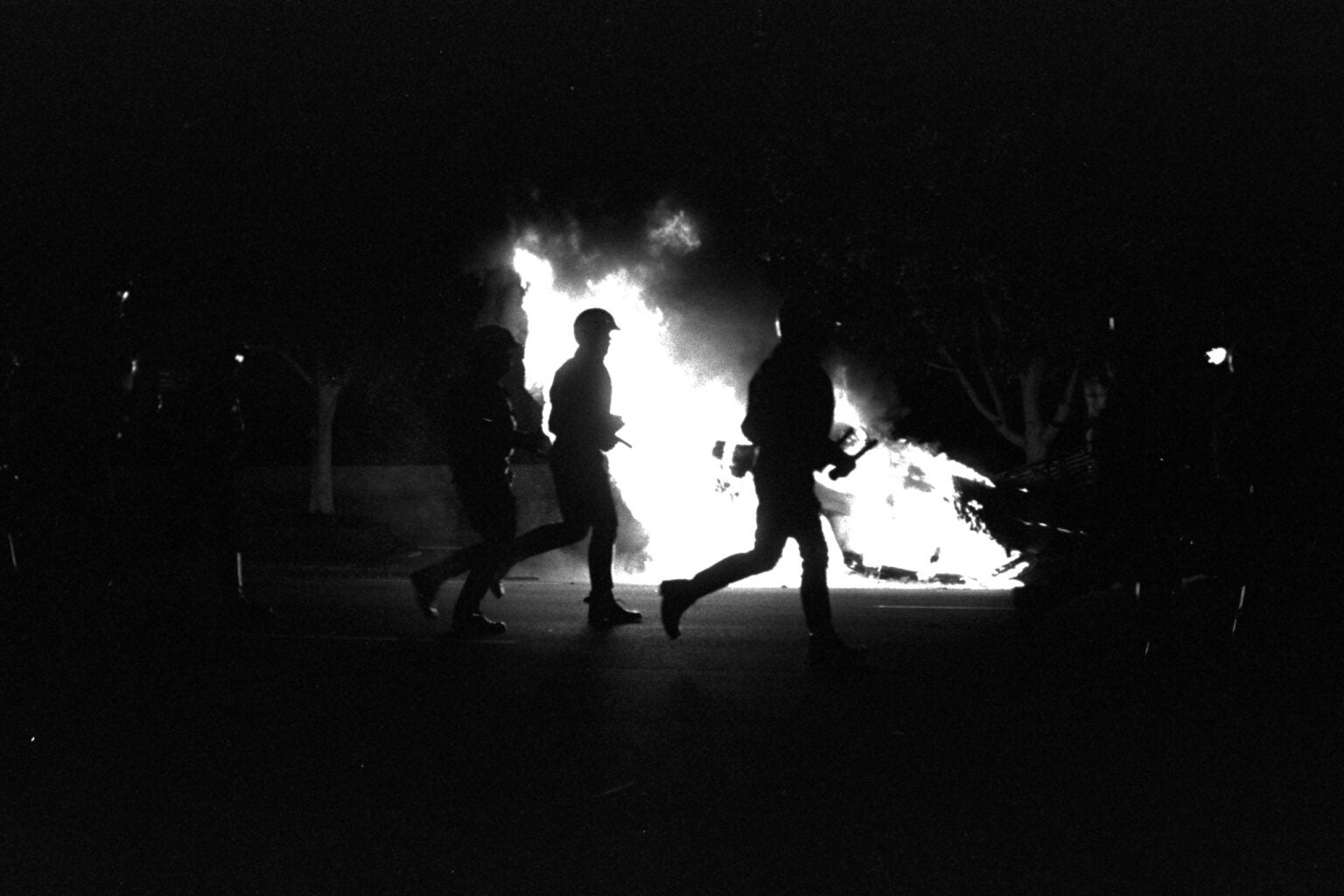
three figures silhouetted against a fire burning in the background|woman sits in chair in her office|woman smiles as she faces the camera|man in center listens as younger people talk in a classroom setting|woman rests her head on her hand while sitting outside on a bench

Posted in

  • Luskin Forum Online

Published on

  • January 4, 2023
  • civil unrest, counseling, ethnicity, hotline, L.A. riots, LAPD, race, Rodney King, social work

Share this Article

illustration of diamond with text

By Les Dunseith and Stan Paul

In 1992, four police officers were acquitted in the beating of a Black man, Rodney King, whose brutal arrest had been caught on camera. Pent-up fury from years of racial and economic inequality in Los Angeles spilled onto the streets in waves of burning, looting and violence that lasted three days and left 45 people dead.
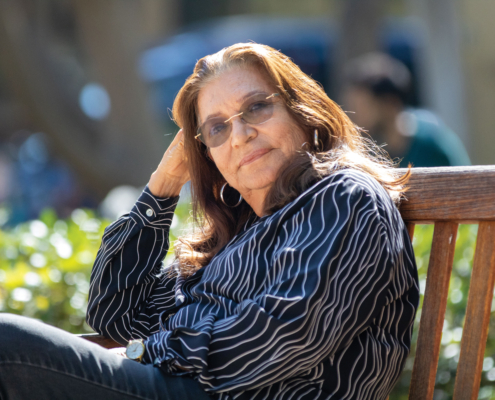
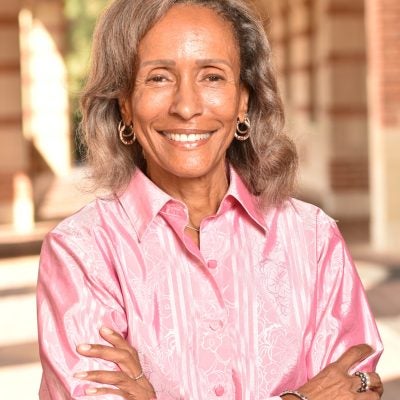
woman rests her head on her hand while sitting outside on a bench
Distinguished Professor Emerita Rosina Becerra was dean of the School of Social Work at UCLA in 1992. Photo by Les Dunseith

Rosina Becerra was dean of UCLA Social Welfare at the time. Joe Nunn and Alfreda Iglehart were on the faculty. Laura Alongi was in her early 20s and a second-year master’s student studying to be a social worker.

What they and others did next was “perhaps our finest moment,” said Nunn, who like Becerra and Iglehart is now a professor emeritus at the Luskin School of Public Affairs.

“There were people who were afraid to leave their houses,” Becerra remembered. “A lot of people were unable to figure out where to get services. They didn’t know who to call.”

Within days of the uprising, officials at Los Angeles’ public television station, KCET, reached out seeking advice through Mitch Maki, a field faculty member at the time whose wife was a station employee. Becerra recalls sitting at a conference table with Maki and station employees eager to assist but unsure how to respond to people’s emotional turmoil. What did people need?

“Mostly, they need a chance to talk,” Becerra told them.

Three days later, UCLA Social Welfare and KCET-TV launched a crisis line during which faculty, students and other volunteers recruited by UCLA answered calls from distressed citizens via the telephones normally used during the station’s pledge drives. They called it, “A Chance to Talk: Emotional Support in Times of Crisis.”
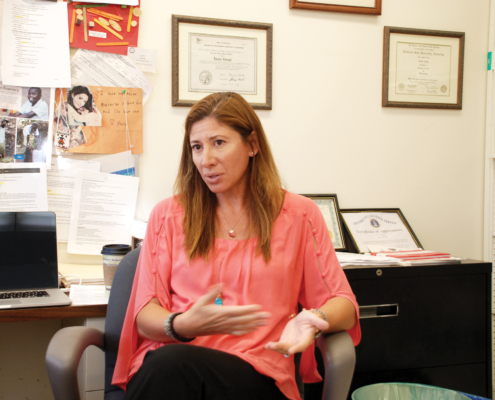
woman sits in chair in her office
Field faculty member Laura Alongi was a student in 1992. UCLA Luskin file photo

Alongi was one of the student volunteers, helping to fill weekday shifts that ran for four hours each morning and four more in the evenings, plus 8 a.m. to 11 p.m. on weekends. While the crisis line was in operation, KCET viewers were encouraged by news anchor Val Zavala to call a number shown on their screens if they needed to talk to one of the people working the phones behind her.

Because of the urgency of the situation, volunteers like Alongi only had time for a brief orientation. She had never worked a crisis hotline. Moving about the city to get to the TV studio still felt dangerous. And racial tensions remained high, especially between Black residents and the Korean shop owners whose properties had been a frequent target of rioters.

Alongi remembers being filled with anxiety.

“Is this something I should be doing?” she worried. “Do I even have the right to do this, given that I’m, you know, a young white woman and not impacted in the same way?”

Her anxiety was replaced by a sense of fulfillment once she began taking calls.

“It was fantastic,” said Alongi, now a member of UCLA Social Welfare’s field faculty herself. “The people I spoke to were all just afraid and hurt and sad. They wanted to be able to talk about that with another human being.”

Alongi recalled speaking with an older woman who lived in South Los Angeles near where the unrest began.

“She was crying. And she said, ‘How did it get to this? How did we end up being these people that fight each other in this way?’”

Some calls involved directing people to services. One caller said her market had burned down and she didn’t know where to go now for food. But mostly, Alongi said, she was there just to listen.
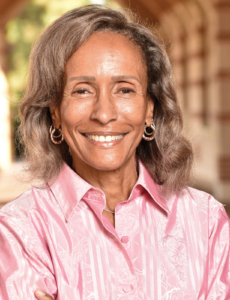
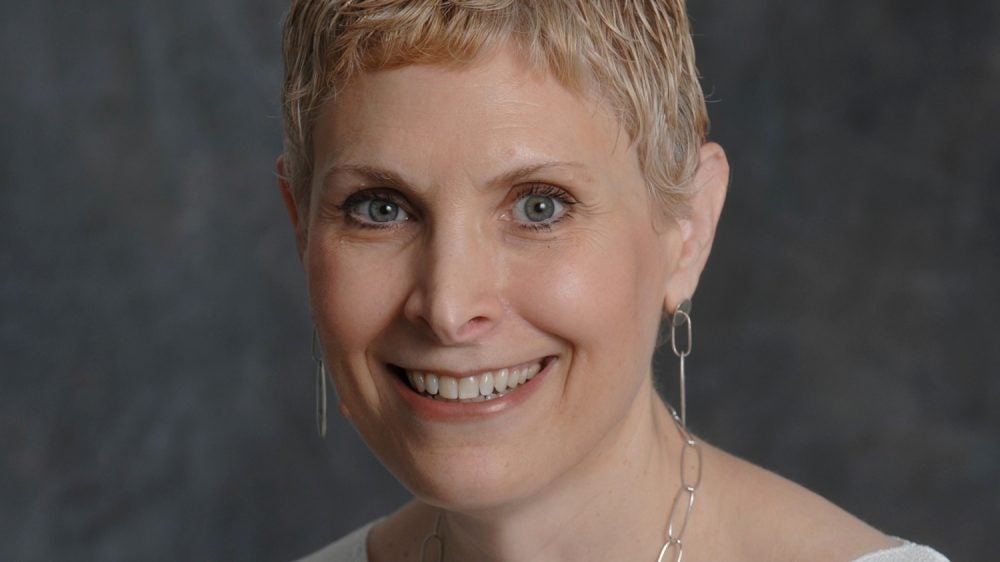
woman smiles as she faces the camera
Professor Emerita Alfreda Iglehart helped organize the crisis hotline after the civil unrest.

“We didn’t know what to expect,” said Iglehart, who helped organize the effort and later contributed to an academic paper about it. “And you did have some angry callers.”

Volunteers were instructed to remain calm, Becerra said. “No matter what anyone ever said to you, you’re not to get mad.”

Later analysis showed the initial reason for most calls were feelings of anger and frustration (22%), followed by fear or anxiety (19%) and a desire to discuss the current situation (11%).

About 4% of the calls were racist and hateful in nature. Although relatively small in number, these calls were powerful and ended up occupying a disproportionate amount of debriefing time afterward, researchers noted.

The academic report details an incident in which a Black female volunteer received a call from an angry white male who made racist and disparaging remarks regarding African Americans.

“Both caller and listener were aware of each other’s ethnicity, and the call proceeded to last about half an hour,” according to the report, which was written by Iglehart, Nunn and Maki, with contributions from Cayleen Nakamura at KCET. “The listener validated the caller’s underlying personal feelings and carefully challenged him to reframe his thinking. The caller ended the call by stating that he realized that he had said some hurtful things, acknowledged that the listener had stuck with him, and thanked her.”

The report also mentions other callers:

  • a man who was despondent over the destruction of his business said he contemplated suicide;
  • a 10-year-old boy found it unfair that he could not go out and play because of the unrest;
  • an elderly woman spoke of her fear of waiting at bus stops;
  • a 7-year-old girl called to say that she was having problems sleeping because of thoughts that “the riots will happen again.”

“We validated people feelings if they were fearful. If they felt alone, we validated that,” Iglehart said. “We wanted people to feel that what you are going through and what you’re experiencing is not unique to you. Other people around you are feeling this way.”

Given the cultural diversity of Los Angeles and the randomness of calls, listeners fluent in Spanish, Korean
and several other languages were  always present.
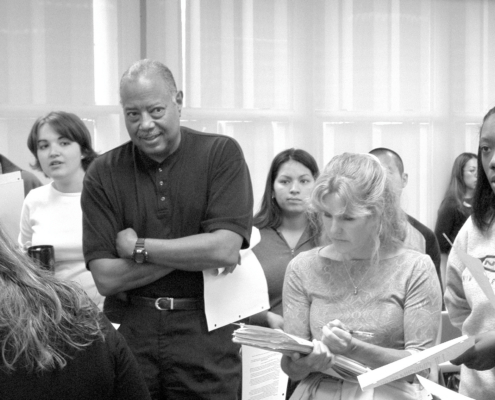
man in center listens as younger people talk in a classroom setting
Professor Emeritus Joe Nunn participated in the crisis hotline and says it exemplified the ideals of social work education at UCLA.

“When people would call in, if they spoke Spanish or they spoke Tagalog or whatever language, you’d hold up a sign that said you needed someone with that language skill to come over,” Nunn said.

The crisis line started with UCLA faculty and students, but it soon expanded.

“There is a great deal of credibility that goes with the UCLA name,” Iglehart said. “With that kind of credibility and legitimacy, people say, ‘Oh, this must be a good idea. I want to be involved.’”

Soon, organizers had mobilized their contacts and recruited local professionals in the helping professions and additional student volunteers from other L.A.-area universities. In all, more than 300 volunteers took calls from about 2,000 individuals. By the 10th day of the project, the Los Angeles County Department of Mental Health had established its own telephone hotline, and the UCLA-KCET project was terminated.

For those involved, the effort remains a treasured memory that exemplifies UCLA Social Welfare’s long history and tradition of providing service to Southern California.

“We’re in a university where we talk about teaching, our research and service,” said Iglehart, noting that in academia that tends to mean service to the profession, such as reviewing articles for an academic journal. “This was direct hands-on service to the community of Southern California, and I think that’s really important.”

“People from my student cohort went out onto the streets and were doing cleanup after the fires and the looting,” Alongi said. “Just literally sweeping up broken glass.”

They had listened and they had acted, doing whatever they could to help a fractured city begin to piece itself  back together.
Faculty Mentioned in this Article
becerra_rosina

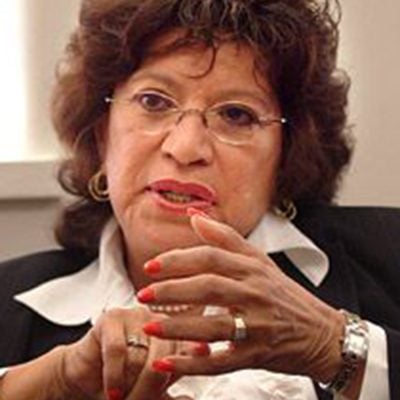
Rosina Becerra

Professor Emerita of Social Welfare

Professor Becerra’s research focuses on policy issues in health and mental health over the life span, with particular emphasis in...

iglehart Headshot

Alfreda P. Iglehart

Professor Emerita of Social Welfare

Professor Iglehart’s research centers on adolescents in foster care; aging out of care and the transition to adulthood; and service...

Related Articles

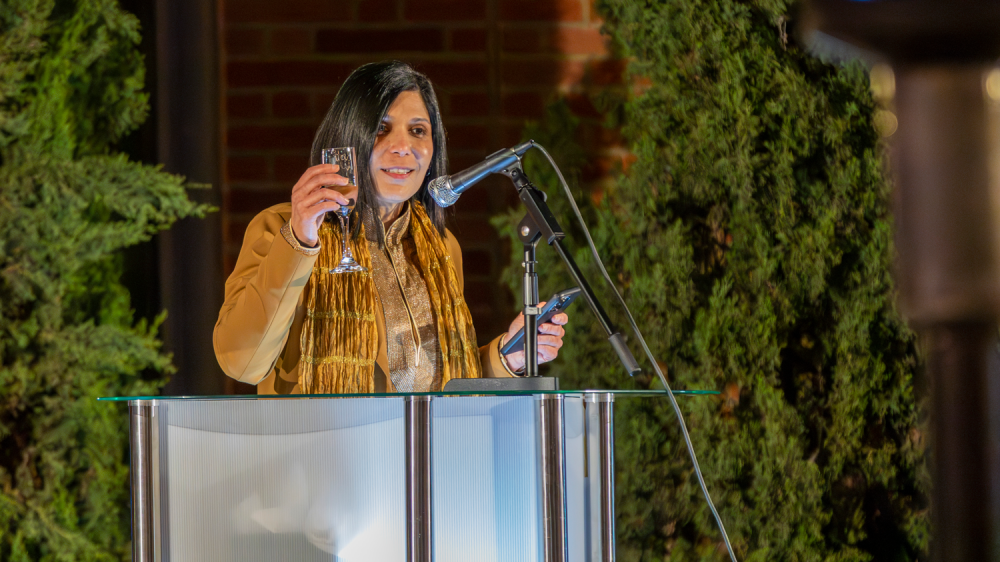
woman at podium raises champagne glass

Toasting Social Welfare’s Diamond Anniversary

May 10, 2023
Alumni
Alumni, faculty, students and friends gather to celebrate 75 years of advancing justice....
Read More
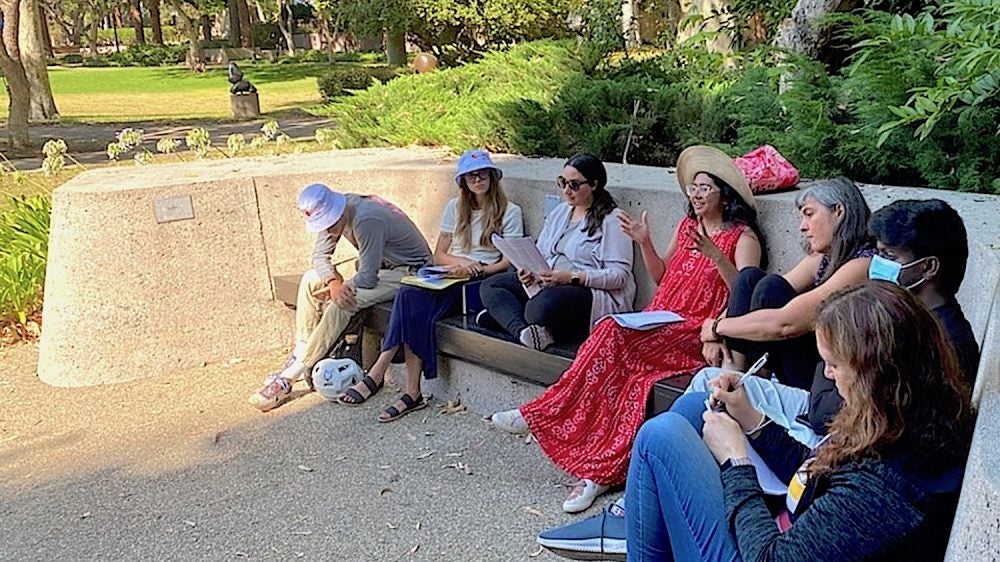
Participants in the International Summer University in Social Work gather on the UCLA campus to share their reflections. Photo by Amy Ritterbusch

Social Workers Who Drive Social Change

August 3, 2022
Alumni
Students from around the world gather at UCLA to reimagine their chosen field through a justice-first...
Read More
Portrait of Karen Lee

In Memoriam: Karen Lee, Former Field Faculty Member

January 28, 2022
Alumni
The co-founder of a national consortium focusing on geriatric social work educated and mentored hundreds of...
Read More
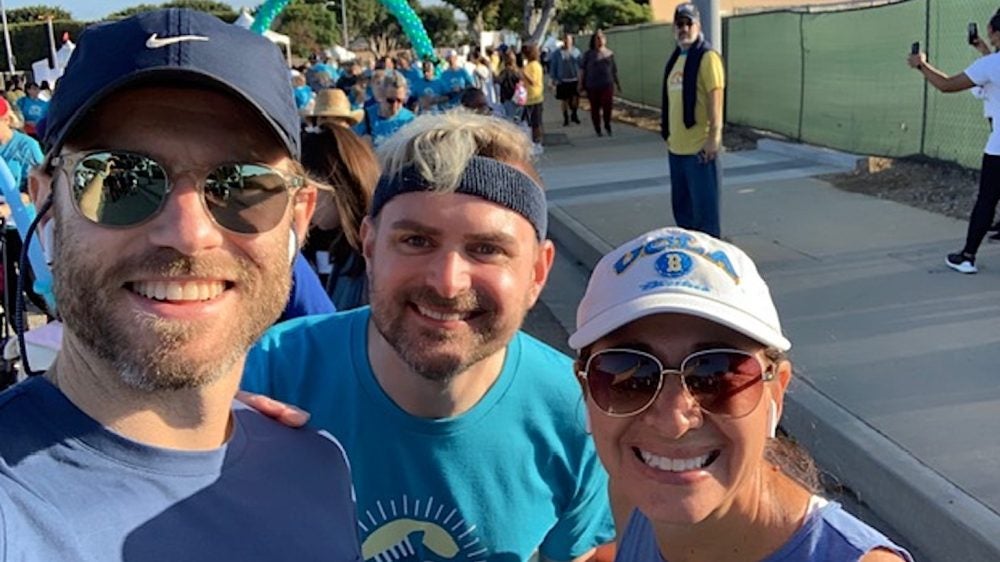
First-year MSW students Patrick McCormick, left, and Syd Peterson join field faculty member Laura Alongi Brinderson at the Alive & Running 5K.

MSW Team Hits the Streets to Support Suicide Awareness

September 30, 2019
Luskin's Latest Blog
The Alive & Running 5K team raises funds for the Didi Hirsch Suicide Prevention Center, which...
Read More
|||||

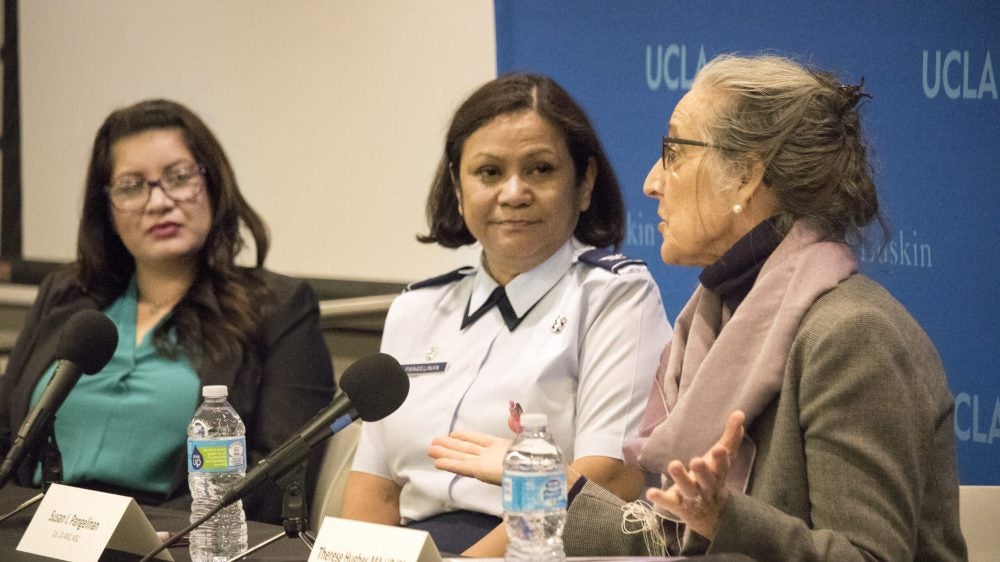
Panel Highlights Growing Presence of Women in Military

November 14, 2016
Diversity
Veterans Day seminar explores the role, challenges and accomplishments of women in the armed services...
Read More
Learn more about UCLA Luskin

Find contact information and get answers to your questions.

Contact Us

Public Affairs Building
337 Charles E. Young Drive East
Los Angeles, California 90095

Linkedin Youtube Instagram Facebook X-twitter
Campus Resources
  • Map, Directions, Parking
  • Directory
  • Academic Calendar
  • Careers
  • Map, Directions, Parking
  • Directory
  • Academic Calendar
  • Careers
School Resources
  • About
  • Our Dean
  • Administration
  • Board of Advisors
  • Contact Us
  • Visit Us
  • About
  • Our Dean
  • Administration
  • Board of Advisors
  • Contact Us
  • Visit Us
© 2026 Regents of the University of California
  • Emergency
  • Accessibilty
  • Privacy & Terms of Use
  • Emergency
  • Accessibilty
  • Privacy & Terms of Use
Facebook Instagram Linkedin X-twitter Youtube Threads
Academics
Departments
  • Public Policy
  • Real Estate Development
  • Social Welfare
  • Undergraduate Program
  • Urban Planning
  • Public Policy
  • Real Estate Development
  • Social Welfare
  • Undergraduate Program
  • Urban Planning
Graduate Programs
  • Master of Public Policy (MPP)
  • Master of Real Estate Development (MRED)
  • Master of Social Welfare (MSW)
  • Master of Urban and Regional Planning (MURP)
  • PhD in Social Welfare
  • PhD in Urban Planning
  • Master of Public Policy (MPP)
  • Master of Real Estate Development (MRED)
  • Master of Social Welfare (MSW)
  • Master of Urban and Regional Planning (MURP)
  • PhD in Social Welfare
  • PhD in Urban Planning
Undergraduate Programs
  • BA in Public Affairs
  • Minor in Urban and Regional Studies
  • Minor in Gerontology
  • Minor in Public Affairs
  • BA in Public Affairs
  • Minor in Urban and Regional Studies
  • Minor in Gerontology
  • Minor in Public Affairs
Professional Certificates
  • Data Analytics Certificate
  • Data Analytics Certificate
Admissions
Program Specific Admissions
  • Public Policy
  • Real Estate Development
  • Social Welfare
  • Urban Planning
  • Undergraduate Program
  • Public Policy
  • Real Estate Development
  • Social Welfare
  • Urban Planning
  • Undergraduate Program
Faculty
Our Faculty
  • All Faculty
  • Public Policy
  • Real Estate Development
  • Social Welfare
  • Urban Planning
  • All Faculty
  • Public Policy
  • Real Estate Development
  • Social Welfare
  • Urban Planning
Leadership
  • Our Dean
  • Board of Advisors
  • Faculty Executive Committee
  • Our Dean
  • Board of Advisors
  • Faculty Executive Committee
Research Centers
  • Agile Visual Analytics Lab (AVAL):

    Uses data visualization to improve decision-making for family and child services.

  • Berggruen Governance Index

    Evaluates the quality of political governance and democracy worldwide.

  • Center for Neighborhood Knowledge (CNK)

    Specializes in spatial analysis of socioeconomic disparities in neighborhoods.

  • Center for Policy Research on Aging (CPRA)

    Explores the societal and policy implications of an aging population.

  • Agile Visual Analytics Lab (AVAL):

    Uses data visualization to improve decision-making for family and child services.

  • Berggruen Governance Index

    Evaluates the quality of political governance and democracy worldwide.

  • Center for Neighborhood Knowledge (CNK)

    Specializes in spatial analysis of socioeconomic disparities in neighborhoods.

  • Center for Policy Research on Aging (CPRA)

    Explores the societal and policy implications of an aging population.

  • Institute of Transportation Studies (ITS)

    A national leader in transportation policy and mobility research.

  • Institute on Inequality and Democracy

    Advances scholarship addressing displacement and dispossession in Los Angeles and beyond.

  • Latin American Cities Initiative

    Connects urban planning and policy networks across the Americas.

  • Latino Policy & Politics Institute (LPPI)

    Addresses policy challenges facing Latinos and communities of color.

  • Institute of Transportation Studies (ITS)

    A national leader in transportation policy and mobility research.

  • Institute on Inequality and Democracy

    Advances scholarship addressing displacement and dispossession in Los Angeles and beyond.

  • Latin American Cities Initiative

    Connects urban planning and policy networks across the Americas.

  • Latino Policy & Politics Institute (LPPI)

    Addresses policy challenges facing Latinos and communities of color.

  • Lewis Center for Regional Policy Studies

    Researches housing, transportation, and economic development in Southern California.

  • Los Angeles Education Research Institute (LAERI)

    Collaborates with schools to improve educational outcomes for L.A. students.

  • Luskin Center for Innovation (LCI)

    Focuses on environmental policy, clean energy, and climate justice.

  • UCLA Voting Rights Project

    The flagship project for voting rights litigation and policy research.

  • Lewis Center for Regional Policy Studies

    Researches housing, transportation, and economic development in Southern California.

  • Los Angeles Education Research Institute (LAERI)

    Collaborates with schools to improve educational outcomes for L.A. students.

  • Luskin Center for Innovation (LCI)

    Focuses on environmental policy, clean energy, and climate justice.

  • UCLA Voting Rights Project

    The flagship project for voting rights litigation and policy research.

All Research Centers
Outcomes
Common Search Terms

Results will show as you type.