Skip to content
  • Students & Alumni
    • Career Services
    • Alumni Relations
    • Student Support
    • Graduate Resource Library
    • For Employers
  • News
  • Events
    • Events Calendar
    • Luskin Summit
    • Luskin Lecture Series
    • California Policy Briefing
    • Commencement
  • Students & Alumni
    • Career Services
    • Alumni Relations
    • Student Support
    • Graduate Resource Library
    • For Employers
  • News
  • Events
    • Events Calendar
    • Luskin Summit
    • Luskin Lecture Series
    • California Policy Briefing
    • Commencement
Giving
UCLA Luskin School of Public Affairs Logo
  • Academics
    Departments & Programs
    • Global Public Affairs
    • Public Policy
    • Real Estate Development
    • Social Welfare
    • Urban Planning
    • Undergraduate Program
    • Global Public Affairs
    • Public Policy
    • Real Estate Development
    • Social Welfare
    • Urban Planning
    • Undergraduate Program
    Graduate Degrees
    • Master of Global Public Affairs (MGPA)
    • Master of Public Policy (MPP)
    • Master of Real Estate Development (MRED)
    • Master of Social Welfare (MSW)
    • Master of Urban and Regional Planning (MURP)
    • PhD in Social Welfare
    • PhD in Urban Planning
    • Master of Global Public Affairs (MGPA)
    • Master of Public Policy (MPP)
    • Master of Real Estate Development (MRED)
    • Master of Social Welfare (MSW)
    • Master of Urban and Regional Planning (MURP)
    • PhD in Social Welfare
    • PhD in Urban Planning
    Undergraduate Degrees
    • BA in Public Affairs
    • Minor in Urban and Regional Studies
    • Minor in Gerontology
    • Minor in Public Affairs
    • BA in Public Affairs
    • Minor in Urban and Regional Studies
    • Minor in Gerontology
    • Minor in Public Affairs
    Professional Certificates
    • AI in Public Affairs Certificate
    • AI in Public Affairs Certificate
  • Admissions
    Program Specific Admissions
    • Global Public Affairs
    • Public Policy
    • Real Estate Development
    • Social Welfare
    • Urban Planning
    • Undergraduate Program
    • Global Public Affairs
    • Public Policy
    • Real Estate Development
    • Social Welfare
    • Urban Planning
    • Undergraduate Program
  • Faculty
    Our Faculty
    • All Faculty
    • Public Policy
    • Real Estate Development
    • Social Welfare
    • Urban Planning
    • All Faculty
    • Public Policy
    • Real Estate Development
    • Social Welfare
    • Urban Planning
    Leadership
    • Our Dean
    • Board of Advisors
    • Faculty Executive Committee
    • Our Dean
    • Board of Advisors
    • Faculty Executive Committee
  • Research Centers
    • Agile Visual Analytics Lab (AVAL)

      Empowers stakeholders with data to make informed decisions for children, families, and communities.

    • Berggruen Governance Index

      Evaluates the quality of political governance and democracy worldwide.

    • Center for Neighborhood Knowledge (CNK)

      Specializes in spatial analysis of socioeconomic disparities in neighborhoods.

    • Center for Policy Research on Aging (CPRA)

      Explores the societal and policy implications of an aging population.

    • Institute of Transportation Studies (ITS)

      Advances research, education, and meaningful civic engagement on transportation issues.

    • Institute on Inequality and Democracy

      Advances scholarship that confronts threats to democracy in America and around the world.

    • Latin American Cities Initiative

      Connects urban planning and policy networks across the Americas.

    • Latino Policy & Politics Institute (LPPI)

      Addresses policy challenges facing Latinos and communities of color.

    • Lewis Center for Regional Policy Studies

      Studying housing affordability and transportation equity in the L.A. region.

    • Los Angeles Education Research Institute (LAERI)

      Collaborates with schools to improve educational outcomes for L.A. students.

    • Luskin Center for Innovation

      Informing effective and equitable environmental policy that improves lives.

    • UCLA Voting Rights Project

      The flagship project for voting rights litigation and policy research.

    All Research Centers
  • Outcomes
Home / News / UCLA Luskin Students Watch and Learn During Presidential Face-Off

UCLA Luskin Students Watch and Learn During Presidential Face-Off

Debate sparks intense interest and frequent bemusement at gathering of Public Policy master's candidates

Posted in

  • Public Policy, School of Public Affairs

Published on

  • September 27, 2016
  • Donald Trump, politics, President

Share this Article

By Les Dunseith

The more than 50 Public Policy students who gathered Monday night at the UCLA Luskin School of Public Affairs to watch the first presidential debate had an opportunity to see their political studies play out in real time as an election that has repeatedly defied expectations again seized the public spotlight.  

With a reporting team from KTLA Channel 5 on hand to cover the students’ reactions, Public Policy chair Mark Peterson set the stage beforehand by noting the intense public interest in this debate and reminding students of Donald Trump’s recent dramatic surge in political polls. Peterson speculated about how the debate was likely to play out.

“Is Donald Trump going to get red-faced and throw insults at Hillary Clinton? Is she going to get defensive?” Peterson said. “Of all the single events that exist in the election process, we are watching tonight one that may — may — have the potential to move the numbers.”

Well-versed in policy issues, the students knew going in that Clinton would probably show a better grasp of details. Trump, on the other hand, was more likely to be bombastic and speak in generalities. Both would blame the other for the nation’s problems. It would get testy. Insults were likely.

The results did not disappoint. And, in the students’ minds, the debate had a clear winner.

“It was Hillary Clinton,” first-year MPP student Estafania Zavala told KTLA’s Mary Beth McDade after the debate had ended. “She was reasonable. She was skeptical of the things that Trump was saying. She never lost her cool.”

Tony Castelletto, a second-year MPP candidate, agreed that Clinton had the advantage. “Basically, she won it just by being the only adult on stage.”

That kind of skepticism about Trump and his debate performance was shared by other students during the viewing, which, at times, sounded more like a raucous Super Bowl party than a serious-minded political discussion. The room frequently filled with laughter — much of it derisive of Trump — as the candidates sparred around questions and traded quips.

The controversial and combative style that served the Republican candidate well in building fervent support among voters in the primaries did not play well with these Luskin students from diverse cultural and ethnic backgrounds. It also didn’t win Trump favor with former Bernie Sanders supporters, who filled half the room, second-year student Reid Meadows speculated. Yet Meadows, a longtime Clinton supporter, was uncertain about how other voters might respond to the debate.

“I think to a lot of people who aren’t studying politics on a regular basis, it might come off like Donald Trump won it,” Meadows told KTLA.

Zavala, who described herself as less of a Clinton supporter and more of a Trump opponent, said she was surprised by how well Clinton handled herself in the debate. “Clinton was a lot more honest, more humorous, more human than I expected her to be,” she said.

Peterson saw the debate viewing as a valuable learning experience for Public Policy students. “Our MPP students are dedicating their professional lives to careers in public service informed by facts, evidence and analysis, but they know their opportunities for action will also be shaped by the contest of ideas, emotions and values in the political process, often most sharply drawn in the race for the White  House,” he said. “What better way for policy students to witness and assess these forces than to have the shared experience of watching and talking together about the crucible of a presidential debate?”

The prevailing conclusion of students milling about after the debate was that Clinton had successfully kept Trump on the defensive. Her air of mild exasperation in reaction to many of Trump’s statements was an effective approach for the setting, they said.

Regarding Trump, however, Peterson noted that it is a challenge for anyone, even political experts like himself, to judge Trump’s debate performance because his approach is so different from that of previous presidential candidates. “We just haven’t had this kind of candidate, or personality, as we have in Donald Trump.”

Overall, the debate held few surprises for Peterson.

“Some of it was what I expected in that it was pretty harsh,” he said. “Hillary Clinton, the longtime politician, was trying to stay within the boundaries of what had been established for the debate. And Donald Trump was trying to push those boundaries and be disruptive.”

Ultimately, it will take awhile before the debate’s results are fully understood.

“Donald Trump was the wild card going into this,” Peterson said. “He, on the one hand, showed somewhat more self-discipline than one might have imagined. At the same time, there was the real Donald Trump there — in your face, interrupting, making certain kinds of characterizations and comments that one would not normally see in a presidential debate. We’ll have to see how the American public reacts to that.”


Related Articles

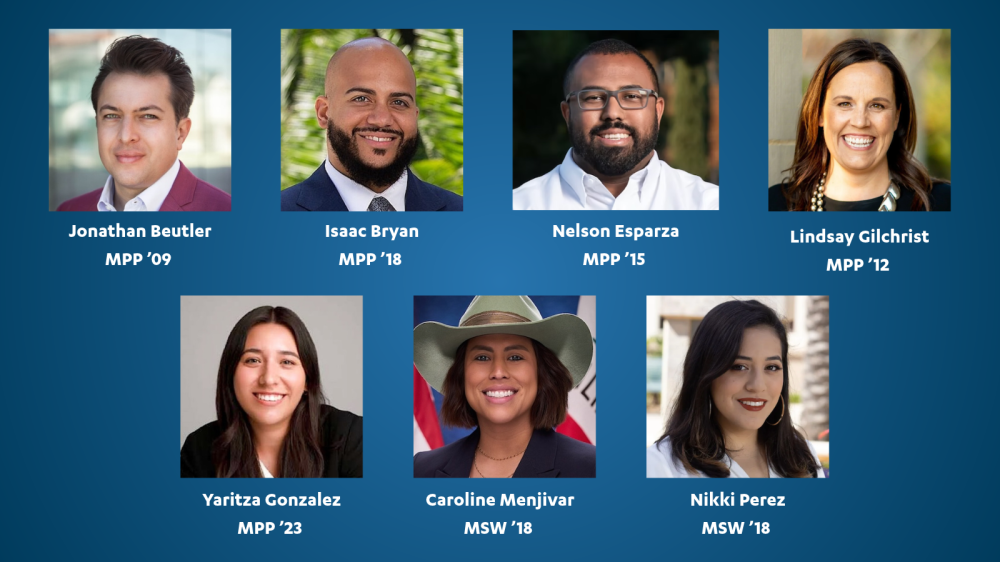
headshots of three men and four women

UCLA Luskin Alumni Elected to Office

November 18, 2026
School of Public Affairs

Seven UCLA Luskin alumni have turned their records of civic engagement into successful bids for public...

Read More
nmUYzerLsDF-vxznBj2iXWQ0Suy8NJ4vzW2r74pRkPkEOv61Xwd2U4CM47cJ9HhH1IlDmaPSWHxNactfpEPdBMDHq2QaixcBSrPsq8ORpez8sfBiLYhJGpJpVqLXEFc847Icua7x-AHfxx0Si1g1-GTVk1pddSOWlGV9TQStUDoT7Ih2Su_Xgd6DkmDkZZDd (1)

Nithya Raman Defeats Karen Bass to Become Los Angeles Mayor

November 16, 2026
Luskin in the News
Read More
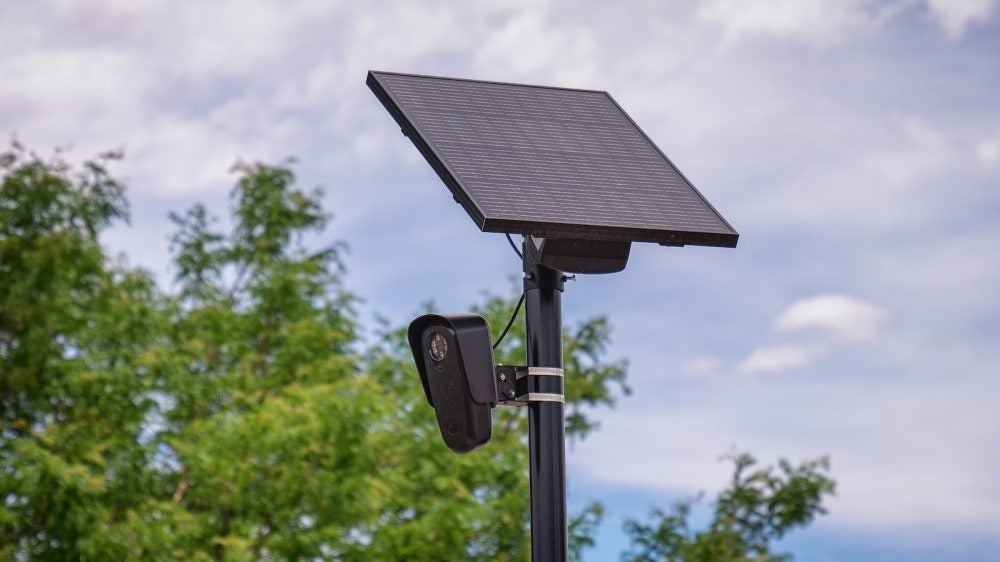
small black camera and black solar panel set against blue sky with treeline in background

What’s Next for Flock Cameras: A Q&A With Zachary Steinert-Threlkeld

November 12, 2026
Public Policy

With the proliferation of security cameras, smart doorbells, facial recognition, location sharing and social media tracking,...

Read More
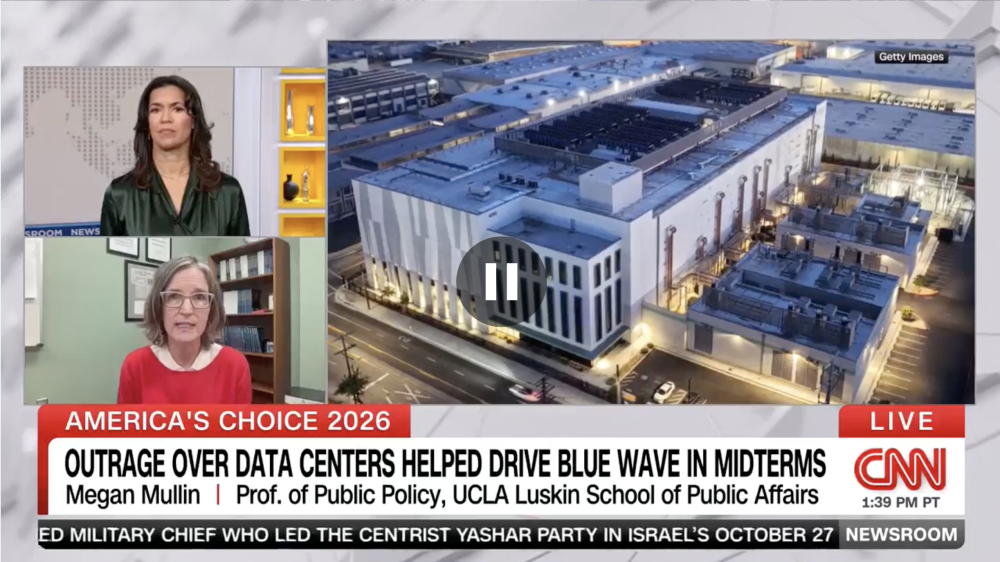
Professor Megan Mullin joins CNN Newsroom With Fredricka Whitfield

Mullin Discusses Growing Opposition to AI Data Centers After Midterm Elections

November 10, 2026
Public Policy
Read More
Learn more about UCLA Luskin

Find contact information and get answers to your questions.

Contact Us

Public Affairs Building
337 Charles E. Young Drive East
Los Angeles, California 90095

Linkedin Youtube Instagram Facebook X-twitter
Campus Resources
  • Map, Directions, Parking
  • Directory
  • Academic Calendar
  • Careers
  • Map, Directions, Parking
  • Directory
  • Academic Calendar
  • Careers
School Resources
  • About
  • Our Dean
  • Administration
  • Luskin School Intranet
  • Board of Advisors
  • Contact Us
  • Visit Us
  • About
  • Our Dean
  • Administration
  • Luskin School Intranet
  • Board of Advisors
  • Contact Us
  • Visit Us
UCLA logo
© 2026 Regents of the University of California
  • Emergency
  • Accessibility
  • Privacy & Terms of Use
  • Emergency
  • Accessibility
  • Privacy & Terms of Use
Facebook Instagram Linkedin X-twitter Youtube Threads
UCLA Luskin School of Public Affairs Logo
Academics
Departments
  • Global Public Affairs
  • Public Policy
  • Real Estate Development
  • Social Welfare
  • Urban Planning
  • Undergraduate Program
  • Global Public Affairs
  • Public Policy
  • Real Estate Development
  • Social Welfare
  • Urban Planning
  • Undergraduate Program
Graduate Programs
  • Master of Global Public Affairs (MGPA)
  • Master of Public Policy (MPP)
  • Master of Real Estate Development (MRED)
  • Master of Social Welfare (MSW)
  • Master of Urban and Regional Planning (MURP)
  • PhD in Social Welfare
  • PhD in Urban Planning
  • Master of Global Public Affairs (MGPA)
  • Master of Public Policy (MPP)
  • Master of Real Estate Development (MRED)
  • Master of Social Welfare (MSW)
  • Master of Urban and Regional Planning (MURP)
  • PhD in Social Welfare
  • PhD in Urban Planning
Undergraduate Programs
  • BA in Public Affairs
  • Minor in Urban and Regional Studies
  • Minor in Gerontology
  • Minor in Public Affairs
  • BA in Public Affairs
  • Minor in Urban and Regional Studies
  • Minor in Gerontology
  • Minor in Public Affairs
Professional Certificates
  • AI in Public Affairs Certificate
  • AI in Public Affairs Certificate
Admissions
Program Specific Admissions
  • Global Public Affairs
  • Public Policy
  • Real Estate Development
  • Social Welfare
  • Urban Planning
  • Undergraduate Program
  • Global Public Affairs
  • Public Policy
  • Real Estate Development
  • Social Welfare
  • Urban Planning
  • Undergraduate Program
Faculty
Our Faculty
  • All Faculty
  • Public Policy
  • Real Estate Development
  • Social Welfare
  • Urban Planning
  • All Faculty
  • Public Policy
  • Real Estate Development
  • Social Welfare
  • Urban Planning
Leadership
  • Our Dean
  • Board of Advisors
  • Faculty Executive Committee
  • Our Dean
  • Board of Advisors
  • Faculty Executive Committee
Research Centers
  • Agile Visual Analytics Lab (AVAL)

    Empowers stakeholders with data to make informed decisions for children, families, and communities.

  • Berggruen Governance Index

    Evaluates the quality of political governance and democracy worldwide.

  • Center for Neighborhood Knowledge (CNK)

    Specializes in spatial analysis of socioeconomic disparities in neighborhoods.

  • Center for Policy Research on Aging (CPRA)

    Explores the societal and policy implications of an aging population.

  • Institute of Transportation Studies (ITS)

    Advances research, education, and meaningful civic engagement on transportation issues.

  • Institute on Inequality and Democracy

    Advances scholarship that confronts threats to democracy in America and around the world.

  • Latin American Cities Initiative

    Connects urban planning and policy networks across the Americas.

  • Latino Policy & Politics Institute (LPPI)

    Addresses policy challenges facing Latinos and communities of color.

  • Lewis Center for Regional Policy Studies

    Studying housing affordability and transportation equity in the L.A. region.

  • Los Angeles Education Research Institute (LAERI)

    Collaborates with schools to improve educational outcomes for L.A. students.

  • Luskin Center for Innovation

    Informing effective and equitable environmental policy that improves lives.

  • UCLA Voting Rights Project

    The flagship project for voting rights litigation and policy research.

All Research Centers
Outcomes
Common Search Terms

Results will show as you type.