Skip to content
  • Students & Alumni
    • Career Services
    • Alumni Relations
    • Student Support
    • Graduate Resource Library
    • For Employers
  • News
  • Events
    • Events Calendar
    • Luskin Summit
    • Luskin Lecture Series
    • California Policy Briefing
    • Commencement
  • Students & Alumni
    • Career Services
    • Alumni Relations
    • Student Support
    • Graduate Resource Library
    • For Employers
  • News
  • Events
    • Events Calendar
    • Luskin Summit
    • Luskin Lecture Series
    • California Policy Briefing
    • Commencement
Giving
UCLA Luskin School of Public Affairs Logo
  • Academics
    Departments & Programs
    • Global Public Affairs
    • Public Policy
    • Real Estate Development
    • Social Welfare
    • Urban Planning
    • Undergraduate Program
    • Global Public Affairs
    • Public Policy
    • Real Estate Development
    • Social Welfare
    • Urban Planning
    • Undergraduate Program
    Graduate Degrees
    • Master of Global Public Affairs (MGPA)
    • Master of Public Policy (MPP)
    • Master of Real Estate Development (MRED)
    • Master of Social Welfare (MSW)
    • Master of Urban and Regional Planning (MURP)
    • PhD in Social Welfare
    • PhD in Urban Planning
    • Master of Global Public Affairs (MGPA)
    • Master of Public Policy (MPP)
    • Master of Real Estate Development (MRED)
    • Master of Social Welfare (MSW)
    • Master of Urban and Regional Planning (MURP)
    • PhD in Social Welfare
    • PhD in Urban Planning
    Undergraduate Degrees
    • BA in Public Affairs
    • Minor in Urban and Regional Studies
    • Minor in Gerontology
    • Minor in Public Affairs
    • BA in Public Affairs
    • Minor in Urban and Regional Studies
    • Minor in Gerontology
    • Minor in Public Affairs
    Professional Certificates
    • AI in Public Affairs Certificate
    • AI in Public Affairs Certificate
  • Admissions
    Program Specific Admissions
    • Global Public Affairs
    • Public Policy
    • Real Estate Development
    • Social Welfare
    • Urban Planning
    • Undergraduate Program
    • Global Public Affairs
    • Public Policy
    • Real Estate Development
    • Social Welfare
    • Urban Planning
    • Undergraduate Program
  • Faculty
    Our Faculty
    • All Faculty
    • Public Policy
    • Real Estate Development
    • Social Welfare
    • Urban Planning
    • All Faculty
    • Public Policy
    • Real Estate Development
    • Social Welfare
    • Urban Planning
    Leadership
    • Our Dean
    • Board of Advisors
    • Faculty Executive Committee
    • Our Dean
    • Board of Advisors
    • Faculty Executive Committee
  • Research Centers
    • Agile Visual Analytics Lab (AVAL)

      Empowers stakeholders with data to make informed decisions for children, families, and communities.

    • Berggruen Governance Index

      Evaluates the quality of political governance and democracy worldwide.

    • Center for Neighborhood Knowledge (CNK)

      Specializes in spatial analysis of socioeconomic disparities in neighborhoods.

    • Center for Policy Research on Aging (CPRA)

      Explores the societal and policy implications of an aging population.

    • Institute of Transportation Studies (ITS)

      Advances research, education, and meaningful civic engagement on transportation issues.

    • Institute on Inequality and Democracy

      Advances scholarship that confronts threats to democracy in America and around the world.

    • Latin American Cities Initiative

      Connects urban planning and policy networks across the Americas.

    • Latino Policy & Politics Institute (LPPI)

      Addresses policy challenges facing Latinos and communities of color.

    • Lewis Center for Regional Policy Studies

      Studying housing affordability and transportation equity in the L.A. region.

    • Los Angeles Education Research Institute (LAERI)

      Collaborates with schools to improve educational outcomes for L.A. students.

    • Luskin Center for Innovation

      Informing effective and equitable environmental policy that improves lives.

    • UCLA Voting Rights Project

      The flagship project for voting rights litigation and policy research.

    All Research Centers
  • Outcomes
Home / News / UCLA Study Finds Price of Freedom Too High for Poor L.A. Families

UCLA Study Finds Price of Freedom Too High for Poor L.A. Families

While bail companies made millions in profit, hundreds of thousands of residents in poor communities remained behind bars awaiting trial, according to researchers
According to the study, disproportionately bearing the burden of the actual dollars paid for bail bonds were women, “namely black women and Latinas."
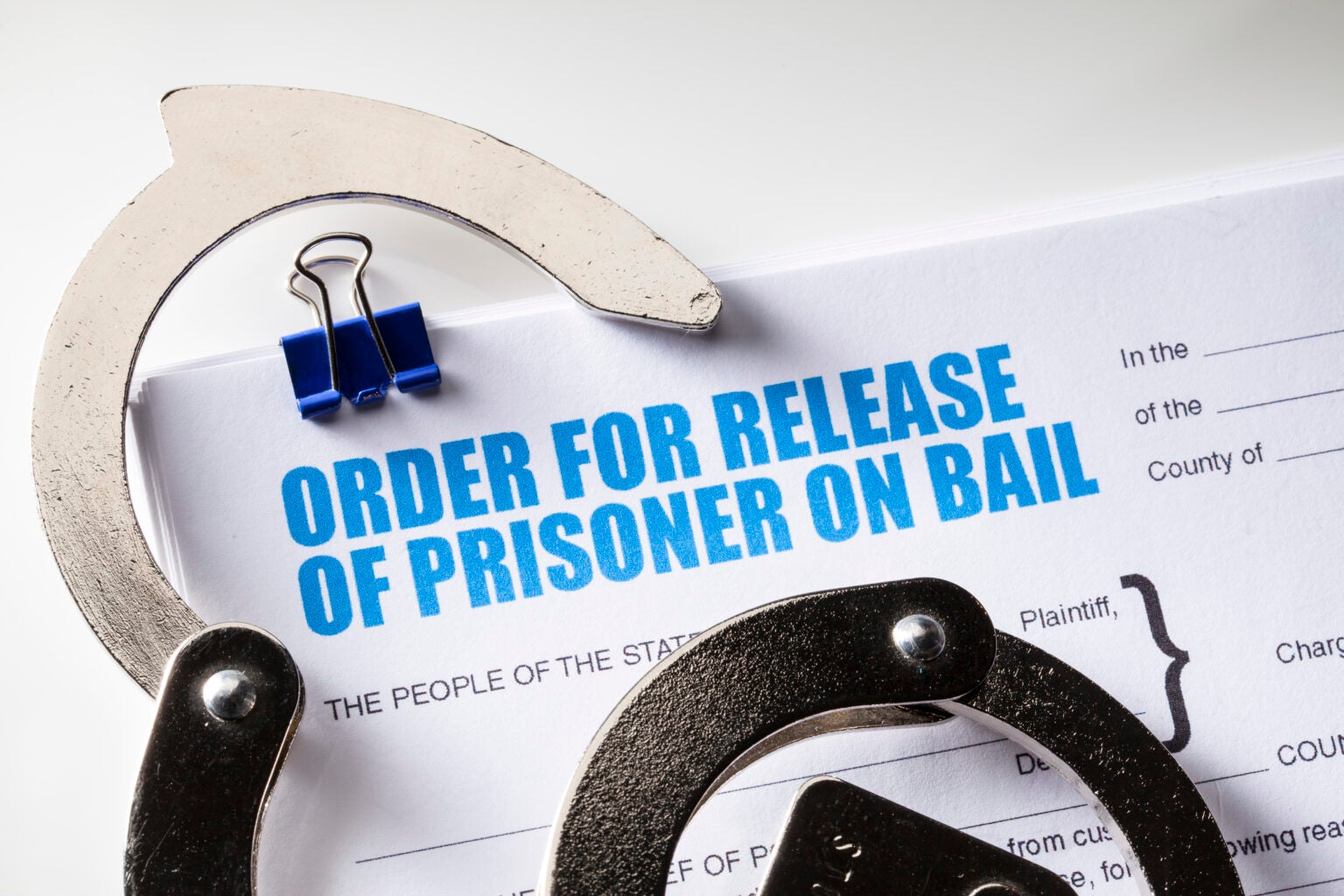
According to the study, disproportionately bearing the burden of the actual dollars paid for bail bonds were women, “namely black women and Latinas." iStock/Bill Oxford

Posted in

  • Public Policy, School of Public Affairs

Published on

  • December 8, 2017
  • crime, criminal justice, justice

Share this Article

By Stan Paul

Between 2012 and 2016 more than $19 billion in bail was levied on individuals arrested for felonies and misdemeanors by the Los Angeles Police Department (LAPD), according to a new study conducted by the Million Dollar Hoods Research team based at UCLA. Of this, $17.5 million in cash went to the court and more than $193 million in nonrefundable bail bond deposits were pocketed by bail bond agents.

The report, “The Price for Freedom: Bail in the City of L.A.,” is the work of Kelly Lytle Hernandez, interim director of UCLA’s Ralph J. Bunche Center for African American Studies, and two UCLA graduate students: Isaac Bryan, a master of public policy student at the UCLA Luskin School of Public Affairs, and Terry Allen, an education Ph.D. candidate.

In California, those who are arrested for crimes, in most cases, have the right to freedom prior to trial if they can post bail determined by the court. Money bail is the mechanism for this freedom, which is also intended to ensure that the accused will appear for all court pretrial and trial proceedings.

Of the total of bail assessed — nearly $4 billion for each of the years in the study — approximately 70 percent was unpaid, meaning that nearly a quarter of a million people remained in custody before arraignment and trial. This percentage, which translates to more than $13.5 billion that went unpaid, also represents overwhelmingly those unable to pay — the poor. According to the study, disproportionately bearing the burden of the actual dollars paid for bail bonds were women, “namely black women and Latinas, representing mothers, grandmothers, aunts, friends and wives of the accused,” the researchers said in the report.

“This is an astounding toll that Los Angeles residents — not yet convicted of any crime — are charged for their freedom,” said Hernandez, also an associate professor of history at UCLA and one of the nation’s leading historians on race, policing, immigration and incarceration. “It’s no wonder that so many Californians remain imprisoned before trial simply because they cannot afford bail. This is an extraordinary amount of wealth taken primarily from low-income, communities of color.”

Of almost $200 million paid for bail bonds, Latinos represented $92.1 million, African Americans $40.7 million, and whites $37.9 million, the study’s authors reported. Among communities studied, four out of the top five were located in South Central Los Angeles and the greatest amounts of bail paid were in city council districts with the highest unemployment, with homeless individuals making up nearly $4 billion of the money bail levied in the areas studied.

The information, obtained through public records act requests fulfilled by the LAPD in March of 2017, was broken down by City Council districts “so elected officials can see how much their constituents are paying to a private industry that doesn’t generate outcomes,” Hernandez said.

Bryan, who served as lead author of the report, is a second-year MPP student at UCLA Luskin.

“I think the bail report will revive a conversation on the economic sustainability of such a wide net in pretrial incarceration, the morality of such a punitive system reaction to poverty, and the disparate racial impacts associated with the current money bail system,” he said. “I am hoping it is the final push that is needed to spur policymakers toward a more equitable pretrial system.” Bryan is also serving as a David Bohnett Fellow in Mayor Eric Garcetti’s Office of Reentry, established in 2015.

Hernandez said that other states have found other non-monetary ways to ensure that the accused will return to court. Six states currently use an algorithm to help determine risk to public safety and risk of flight, Bryan said. New Jersey, for example, uses such a risk assessment tool. Prosecutors are still able to disagree with the algorithm, which may require another hearing before a judge.

According to Hernandez, the alternatives have “functioned well, if not better than money bail.”

But, for L.A., most people are not able to pay money bail, according to the researchers. For those who pay bail bond agents, that money — typically about 10 percent of the bail amount levied — is never returned and additional fees apply, the research team reported. “Among them, many individuals as well as their families and communities are simply too poor to pay the price of freedom,” they conclude.

The report may be accessed online.
Related Articles

Professor Megan Mullin joins CNN Newsroom With Fredricka Whitfield

Mullin Discusses Growing Opposition to AI Data Centers After Midterm Elections

November 10, 2026
Public Policy
Read More
Front entrance of Luskin School of Public Affairs

Luskin Faculty Recognized Among World’s Top 2% of Scientists

November 2, 2026
Luskin's Latest Blog

UCLA Luskin School of Public Affairs faculty members have been recognized in the 2026 Stanford-Elsevier Top...

Read More
Headshot of Kamal Cheema MPP 23 on the left and a group photo on the right. He worked with Laura Edwards, Thomas Hernandez, Mei Naito and Ibuki Yamada on One Dollar a Day: Labor Conditions Within California Immigrant Detention Centers

Three Years After Graduation, UCLA Luskin Alumni See Their Research Help Shape California Law

October 30, 2026
Public Policy

Research conducted by UCLA Luskin Master of Public Policy students in 2023 has helped inform new...

Read More
Illustration of the Statue of Liberty melting into a bright pink landscape, her torch engulfed in flames. Barbed-wire fences, melting ice and a rising sun surround her, with a financial data chart visible in the upper-right corner.

What’s Really Happening With Immigration

October 22, 2026
Luskin's Latest Blog

Excerpt from “What’s Really Happening With Immigration,” by Delan Bruce, published in UCLA Magazine on October...

Read More
Learn more about UCLA Luskin

Find contact information and get answers to your questions.

Contact Us

Public Affairs Building
337 Charles E. Young Drive East
Los Angeles, California 90095

Linkedin Youtube Instagram Facebook X-twitter
Campus Resources
  • Map, Directions, Parking
  • Directory
  • Academic Calendar
  • Careers
  • Map, Directions, Parking
  • Directory
  • Academic Calendar
  • Careers
School Resources
  • About
  • Our Dean
  • Administration
  • Luskin School Intranet
  • Board of Advisors
  • Contact Us
  • Visit Us
  • About
  • Our Dean
  • Administration
  • Luskin School Intranet
  • Board of Advisors
  • Contact Us
  • Visit Us
UCLA logo
© 2026 Regents of the University of California
  • Emergency
  • Accessibility
  • Privacy & Terms of Use
  • Emergency
  • Accessibility
  • Privacy & Terms of Use
Facebook Instagram Linkedin X-twitter Youtube Threads
UCLA Luskin School of Public Affairs Logo
Academics
Departments
  • Global Public Affairs
  • Public Policy
  • Real Estate Development
  • Social Welfare
  • Urban Planning
  • Undergraduate Program
  • Global Public Affairs
  • Public Policy
  • Real Estate Development
  • Social Welfare
  • Urban Planning
  • Undergraduate Program
Graduate Programs
  • Master of Global Public Affairs (MGPA)
  • Master of Public Policy (MPP)
  • Master of Real Estate Development (MRED)
  • Master of Social Welfare (MSW)
  • Master of Urban and Regional Planning (MURP)
  • PhD in Social Welfare
  • PhD in Urban Planning
  • Master of Global Public Affairs (MGPA)
  • Master of Public Policy (MPP)
  • Master of Real Estate Development (MRED)
  • Master of Social Welfare (MSW)
  • Master of Urban and Regional Planning (MURP)
  • PhD in Social Welfare
  • PhD in Urban Planning
Undergraduate Programs
  • BA in Public Affairs
  • Minor in Urban and Regional Studies
  • Minor in Gerontology
  • Minor in Public Affairs
  • BA in Public Affairs
  • Minor in Urban and Regional Studies
  • Minor in Gerontology
  • Minor in Public Affairs
Professional Certificates
  • AI in Public Affairs Certificate
  • AI in Public Affairs Certificate
Admissions
Program Specific Admissions
  • Global Public Affairs
  • Public Policy
  • Real Estate Development
  • Social Welfare
  • Urban Planning
  • Undergraduate Program
  • Global Public Affairs
  • Public Policy
  • Real Estate Development
  • Social Welfare
  • Urban Planning
  • Undergraduate Program
Faculty
Our Faculty
  • All Faculty
  • Public Policy
  • Real Estate Development
  • Social Welfare
  • Urban Planning
  • All Faculty
  • Public Policy
  • Real Estate Development
  • Social Welfare
  • Urban Planning
Leadership
  • Our Dean
  • Board of Advisors
  • Faculty Executive Committee
  • Our Dean
  • Board of Advisors
  • Faculty Executive Committee
Research Centers
  • Agile Visual Analytics Lab (AVAL)

    Empowers stakeholders with data to make informed decisions for children, families, and communities.

  • Berggruen Governance Index

    Evaluates the quality of political governance and democracy worldwide.

  • Center for Neighborhood Knowledge (CNK)

    Specializes in spatial analysis of socioeconomic disparities in neighborhoods.

  • Center for Policy Research on Aging (CPRA)

    Explores the societal and policy implications of an aging population.

  • Institute of Transportation Studies (ITS)

    Advances research, education, and meaningful civic engagement on transportation issues.

  • Institute on Inequality and Democracy

    Advances scholarship that confronts threats to democracy in America and around the world.

  • Latin American Cities Initiative

    Connects urban planning and policy networks across the Americas.

  • Latino Policy & Politics Institute (LPPI)

    Addresses policy challenges facing Latinos and communities of color.

  • Lewis Center for Regional Policy Studies

    Studying housing affordability and transportation equity in the L.A. region.

  • Los Angeles Education Research Institute (LAERI)

    Collaborates with schools to improve educational outcomes for L.A. students.

  • Luskin Center for Innovation

    Informing effective and equitable environmental policy that improves lives.

  • UCLA Voting Rights Project

    The flagship project for voting rights litigation and policy research.

All Research Centers
Outcomes
Common Search Terms

Results will show as you type.