Skip to content
  • Students & Alumni
    • Career Services
    • Alumni Relations
    • Student Support
    • Graduate Resource Library
    • For Employers
  • News
  • Events
    • Events Calendar
    • Luskin Summit
    • Luskin Lecture Series
    • California Policy Briefing
    • Commencement
  • Students & Alumni
    • Career Services
    • Alumni Relations
    • Student Support
    • Graduate Resource Library
    • For Employers
  • News
  • Events
    • Events Calendar
    • Luskin Summit
    • Luskin Lecture Series
    • California Policy Briefing
    • Commencement
Giving
UCLA Luskin School of Public Affairs Logo
  • Academics
    Departments & Programs
    • Global Public Affairs
    • Public Policy
    • Real Estate Development
    • Social Welfare
    • Urban Planning
    • Undergraduate Program
    • Global Public Affairs
    • Public Policy
    • Real Estate Development
    • Social Welfare
    • Urban Planning
    • Undergraduate Program
    Graduate Degrees
    • Master of Global Public Affairs (MGPA)
    • Master of Public Policy (MPP)
    • Master of Real Estate Development (MRED)
    • Master of Social Welfare (MSW)
    • Master of Urban and Regional Planning (MURP)
    • PhD in Social Welfare
    • PhD in Urban Planning
    • Master of Global Public Affairs (MGPA)
    • Master of Public Policy (MPP)
    • Master of Real Estate Development (MRED)
    • Master of Social Welfare (MSW)
    • Master of Urban and Regional Planning (MURP)
    • PhD in Social Welfare
    • PhD in Urban Planning
    Undergraduate Degrees
    • BA in Public Affairs
    • Minor in Urban and Regional Studies
    • Minor in Gerontology
    • Minor in Public Affairs
    • BA in Public Affairs
    • Minor in Urban and Regional Studies
    • Minor in Gerontology
    • Minor in Public Affairs
    Professional Certificates
    • AI in Public Affairs Certificate
    • AI in Public Affairs Certificate
  • Admissions
    Program Specific Admissions
    • Global Public Affairs
    • Public Policy
    • Real Estate Development
    • Social Welfare
    • Urban Planning
    • Undergraduate Program
    • Global Public Affairs
    • Public Policy
    • Real Estate Development
    • Social Welfare
    • Urban Planning
    • Undergraduate Program
  • Faculty
    Our Faculty
    • All Faculty
    • Public Policy
    • Real Estate Development
    • Social Welfare
    • Urban Planning
    • All Faculty
    • Public Policy
    • Real Estate Development
    • Social Welfare
    • Urban Planning
    Leadership
    • Our Dean
    • Board of Advisors
    • Faculty Executive Committee
    • Our Dean
    • Board of Advisors
    • Faculty Executive Committee
  • Research Centers
    • Agile Visual Analytics Lab (AVAL)

      Empowers stakeholders with data to make informed decisions for children, families, and communities.

    • Berggruen Governance Index

      Evaluates the quality of political governance and democracy worldwide.

    • Center for Neighborhood Knowledge (CNK)

      Specializes in spatial analysis of socioeconomic disparities in neighborhoods.

    • Center for Policy Research on Aging (CPRA)

      Explores the societal and policy implications of an aging population.

    • Agile Visual Analytics Lab (AVAL)

      Empowers stakeholders with data to make informed decisions for children, families, and communities.

    • Berggruen Governance Index

      Evaluates the quality of political governance and democracy worldwide.

    • Center for Neighborhood Knowledge (CNK)

      Specializes in spatial analysis of socioeconomic disparities in neighborhoods.

    • Center for Policy Research on Aging (CPRA)

      Explores the societal and policy implications of an aging population.

    • Institute of Transportation Studies (ITS)

      Advances research, education, and meaningful civic engagement on transportation issues.

    • Institute on Inequality and Democracy

      Advances scholarship that confronts threats to democracy in America and around the world.

    • Latin American Cities Initiative

      Connects urban planning and policy networks across the Americas.

    • Latino Policy & Politics Institute (LPPI)

      Addresses policy challenges facing Latinos and communities of color.

    • Institute of Transportation Studies (ITS)

      Advances research, education, and meaningful civic engagement on transportation issues.

    • Institute on Inequality and Democracy

      Advances scholarship that confronts threats to democracy in America and around the world.

    • Latin American Cities Initiative

      Connects urban planning and policy networks across the Americas.

    • Latino Policy & Politics Institute (LPPI)

      Addresses policy challenges facing Latinos and communities of color.

    • Lewis Center for Regional Policy Studies

      Studying housing affordability and transportation equity in the L.A. region.

    • Los Angeles Education Research Institute (LAERI)

      Collaborates with schools to improve educational outcomes for L.A. students.

    • Luskin Center for Innovation

      Informing effective and equitable environmental policy that improves lives.

    • UCLA Voting Rights Project

      The flagship project for voting rights litigation and policy research.

    • Lewis Center for Regional Policy Studies

      Studying housing affordability and transportation equity in the L.A. region.

    • Los Angeles Education Research Institute (LAERI)

      Collaborates with schools to improve educational outcomes for L.A. students.

    • Luskin Center for Innovation

      Informing effective and equitable environmental policy that improves lives.

    • UCLA Voting Rights Project

      The flagship project for voting rights litigation and policy research.

    All Research Centers
  • Outcomes
Home / News / Social Workers and Medical Students: ‘The Ideal Team’

Social Workers and Medical Students: ‘The Ideal Team’

UCLA Luskin’s Department of Social Welfare provides lessons in social work to first-year students from the David Geffen School of Medicine at UCLA
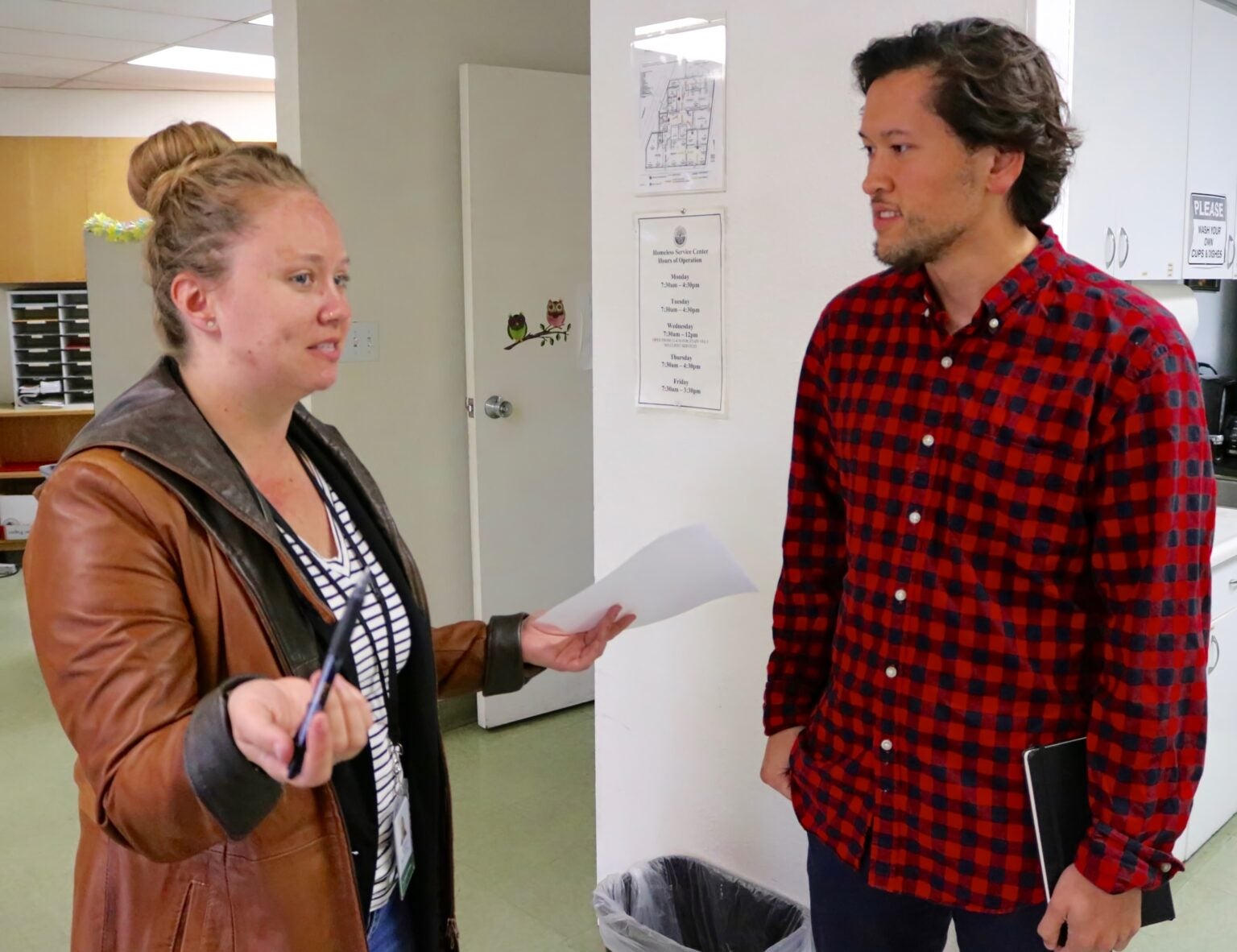
First-year UCLA medical student Matthew Hing, right, listens as social worker Katie Helgason, program manager at the St
First-year UCLA medical student Matthew Hing, right, listens as social worker Katie Helgason, program manager at the St. Joseph Center in Venice, describes a typical day at the facility where she and others work to address the needs of the homeless. Photo by George Foulsham

Posted in

  • School of Public Affairs, Social Welfare

Published on

  • June 15, 2017
  • UCLA, UCLA Luskin School of Public Affairs

Share this Article

By George Foulsham

Matthew Hing is a first-year medical student at UCLA, but on this April morning he’s a visitor in a nondescript building on Lincoln Boulevard in Venice — the St. Joseph Center, home of the Chronically Homeless Intervention Program.

Hing enters through a back door, weaving through a crowd of homeless people who gather each morning to take advantage of St. Joseph’s services. This isn’t your typical med school classroom, but Hing believes the experience will be a vital part of his training — adding more educational insight to his medical school curriculum.

Thanks to a partnership between the UCLA Luskin School of Public Affairs’ Department of Social Welfare and the David Geffen School of Medicine at UCLA, Hing and 19 other medical students are receiving a lesson in social work.

A month earlier, the students gathered in a classroom in the Public Affairs building for an orientation session arranged by Todd Franke, the chair of the Department of Social Welfare; Gerry Laviña MSW ’88, director of field education at UCLA Luskin; and Michelle Talley MSW ’98, a member of UCLA Luskin’s field education faculty and a licensed clinical social worker (LCSW).

“I think this is a fantastic opportunity,” Franke said as he greeted the students. “We hope this is a marvelous success.”

Laviña talked about how much he learned from similar experiences earlier in his career. “I learned so much from the doctors and nurses and social workers,” he said. “Literally, I would not be here today if I hadn’t had that experience.”

Talley told the students about having worked in child welfare, and how she spent time working with public health nurses on adoption cases. “It was very helpful and useful in my role as a social worker, understanding some of the medical issues that a child could be faced with,” she said.

Hing’s day at the homeless center was the “shadowing” piece of the social work lesson. He spent a day observing and debriefing social workers and a psychiatrist, all of whom specialize in tending to the needs of the homeless.

“The psychiatrist, he saw three clients — all very different cases,” Hing said. “One was an intake case, the second time he had seen the client, so he was really getting a sense of what was going on — what had led to this individual becoming homeless, and how they were doing now.

“The second was much more stable — he’s been seen for several months — but there were new stresses in his life,” Hing said. “It was just a lot of things that a psychiatrist knew to ask that I never knew about.”

The third case involved a patient who was struggling with the anti-psychotic medication that she was taking, and how it was making her fall asleep. “So she was worried about her safety on the street,” he said. “This was something for me in a patient interaction that I would never think about, but you can learn from a social worker. Seeing those unique insights at work in this population — that’s what I got from shadowing.”

Hing shadowed those working with the homeless, and his fellow students had a variety of other experiences. One participated in a forensic interview on a child-abuse case — “an intense experience,” Hing said he heard later.

Hing’s trip to St. Joseph Center was arranged by Laviña, and the two have been the driving forces behind making the partnership a reality. After attending a conference about social medicine in October, Hing emailed a proposal for the program to members of the curriculum committee at the Geffen School. He and his colleagues, fellow medical students Amrita Ayer, Brian Dang, Lyolya Hovhannisyan and Samantha Mohammad, produced a potential syllabus, which led to a formal presentation to UCLA Luskin.

After emailing Laviña and Franke, Hing received an overwhelmingly positive response.

“Todd thought it was an excellent idea,” Hing said. “He wondered why it hadn’t already happened, and was excited about the possibilities.”

The concept resonated with Laviña, who sees it as a logical extension of what social welfare experts provide to Luskin’s master’s students.

“Social workers have always worked in multidisciplinary settings, so we strive for collaboration with physicians and all other disciplines,” Laviña said. “We were happy to work with Matt and his peers, along with our faculty and panelists, to bring very direct feedback as to how they can become doctors who work with their patients and families using cultural humility and truly seeking a holistic approach.”

The orientation session was the first part of the program. In addition to the introductions by Laviña, Franke and Talley, the session included a panel of seven social welfare experts: Rosella Youse, a manager with the Los Angeles County Department of Children and Family Services (DCFS); Kim Tran MSW ’11, a forensic interviewer with DCFS who is stationed at Harbor UCLA Medical Center; Deborah Tuckman MSW ’99, a social worker in the emergency department at Cedars-Sinai; Thomas Pier, LCSW at Simms/Mann UCLA Center for Integrative Oncology; Brian C. Wren, LCSW at Providence Health & Services; James Coomes MSW ’96, LCSW at the county department of mental health; and Kim Griffin-Esperon MSW ’98, LCSW with the Los Angeles Unified School District.

The experts shared stories about dealing with child abuse, testifying in court for child welfare and neglect cases, helping assist children with spina bifida and cancer, providing guidance on home health care and about coping with many other social issues doctors might encounter during their careers.

“You won’t know child welfare social work like we do,” Youse told the medical students. “But I don’t know the medical field like you do. So together we are really the ideal team.”

The program is also supported by those who work with the students in the Geffen School.

“Caring for patients takes a diverse team of experts,” said Sheila Naghshineh, chair of the doctoring program for first-year medical students. “Having a social worker on the team is often vital to providing high-quality, customized care for patients in both the outpatient and inpatient setting.”

It is important for health care providers to understand the role of social workers so that they can learn to work together as a team, Naghshineh said. “The social worker shadowing pilot program helps medical students experience first-hand how to effectively work with social workers, and understand how and when to utilize their services, resources and expertise to benefit patients,” she said.

Asked if he thinks social work should be a part of the medical students’ curriculum, Hing’s response was definitive: “Yes, yes, yes.”

“Ideally, this should be part of our curriculum,” said Hing, who was raised in a medical family — his mother is a social worker and his father is a physician. “I think it is important for us to witness the empathy that social workers bring forth for their patients, who are often from the most vulnerable, marginalized parts of our society. I’d love to make sure that all of my classmates have this opportunity to see the incredible work that is going on around this.”

Laviña said he was inspired to witness and experience the students’ openness to the feedback. “I am heartened to think about the type of doctors they will become — and how they will better serve our communities,” he said.
Faculty Mentioned in this Article
person in dark shirt outdoors

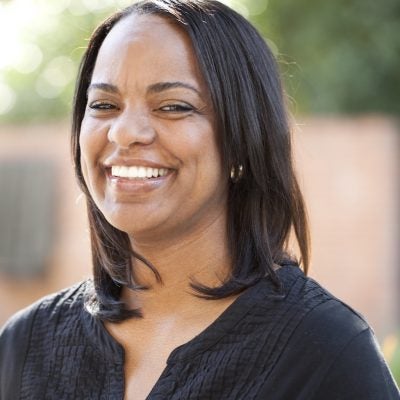
Michelle Talley

MSW Education Faculty of Social Welfare

Michelle Talley is a Licensed Clinical Social Worker whose main area of focus is working with youth and families as...

todd-franke_9009187534_o_e-e1462560296166

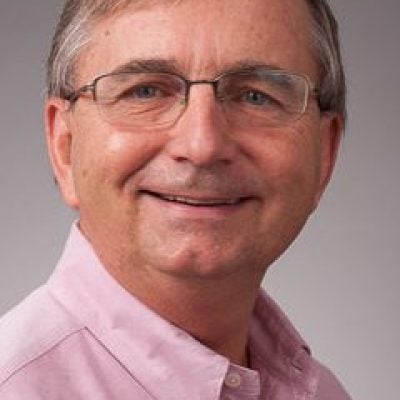
Todd Franke

Professor Emeritus of Social Welfare

Trained in social work and educational psychology, Professor Franke seeks to achieve a better understanding of, and improve the responsiveness...

Related Articles

Jorja Leap Ford Foundation|Jorja Leap Ford Foundation

UCLA Luskin’s Two-Year Evaluation of Community-Led Violence Intervention in Newark

February 24, 2026
Luskin in the News
UCLA’s two-year evaluation shows Newark’s Community Street Team reduces violent crime, builds trust, and strengthens sustainable,...
Read More
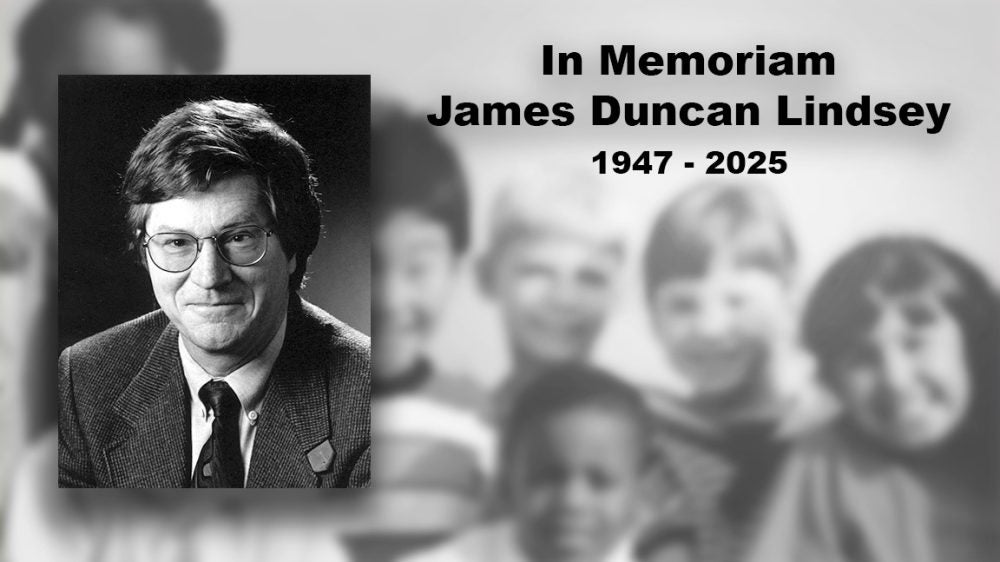
Duncan Lindsey. Photo by Alan Braus.

In Memoriam: James Duncan Lindsey

June 25, 2025
School of Public Affairs
The UCLA Luskin Social Welfare professor emeritus was a pioneering scholar of child welfare....
Read More
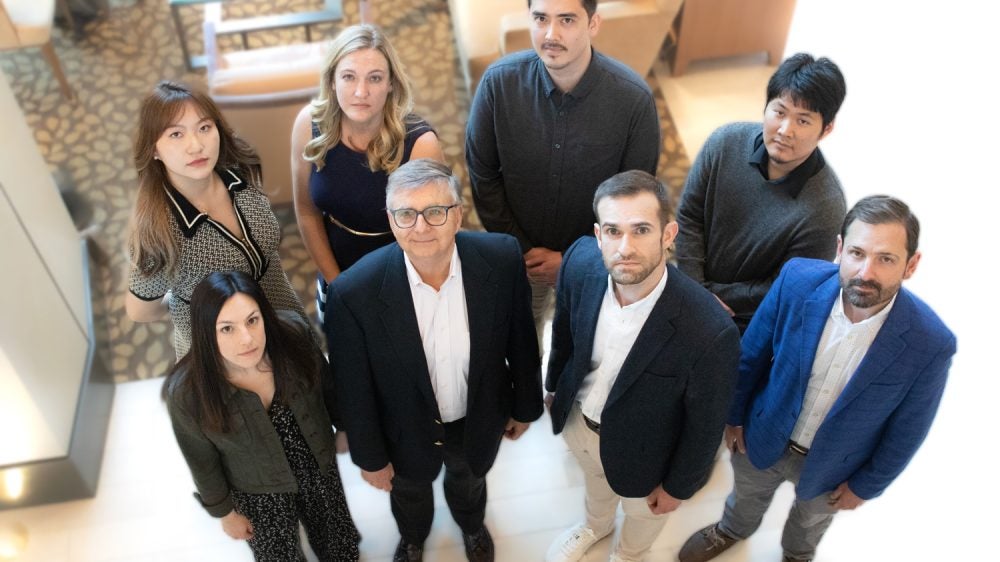
Members of the Agile Visual Analytics Lab hosted the Human Services Workforce Development Evaluation Symposium (HSWDES) at UCLA in May 2023

Data to the People

December 19, 2023
School of Public Affairs
Data experts like Jianchao Lai SW PhD ’23 of the UCLA Agile Visual Analytics Lab strive...
Read More
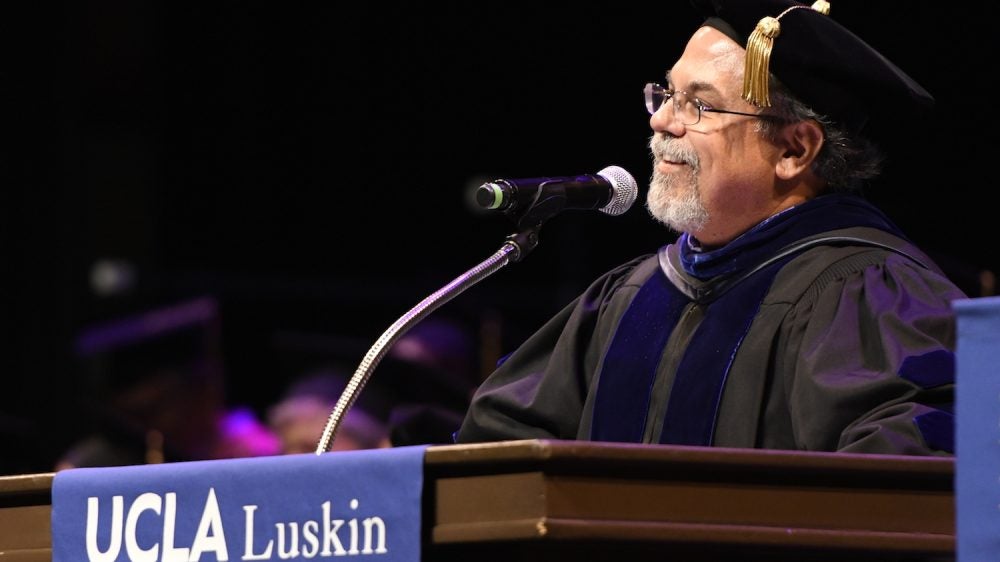
'Act! Make this world better

Gary Segura Reappointed to 2nd Term as UCLA Luskin Dean

May 5, 2022
Education
Segura, who was first appointed as dean in 2016, has overseen the addition of a new...
Read More
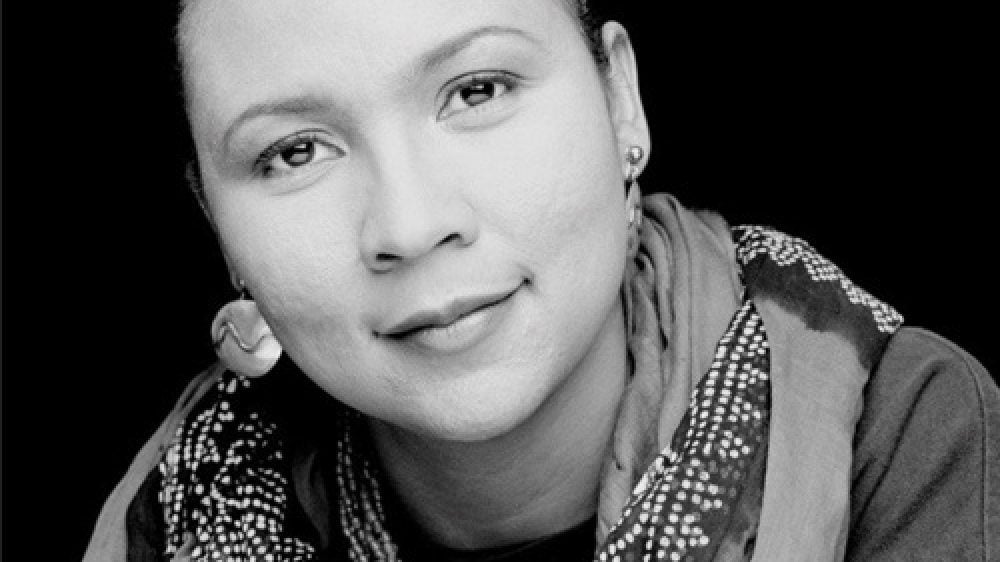
Known by the pen name bell hooks, the author, professor, feminist and social activist died Dec

Luskin Social Welfare Remembers Bell Hooks

February 14, 2022
Social Welfare
A tribute by professor Michelle Talley...
Read More
Portrait of Karen Lee

In Memoriam: Karen Lee, Former Field Faculty Member

January 28, 2022
Alumni
The co-founder of a national consortium focusing on geriatric social work educated and mentored hundreds of...
Read More
Learn more about UCLA Luskin

Find contact information and get answers to your questions.

Contact Us

Public Affairs Building
337 Charles E. Young Drive East
Los Angeles, California 90095

Linkedin Youtube Instagram Facebook X-twitter
Campus Resources
  • Map, Directions, Parking
  • Directory
  • Academic Calendar
  • Careers
  • Map, Directions, Parking
  • Directory
  • Academic Calendar
  • Careers
School Resources
  • About
  • Our Dean
  • Administration
  • Board of Advisors
  • Contact Us
  • Visit Us
  • About
  • Our Dean
  • Administration
  • Board of Advisors
  • Contact Us
  • Visit Us
UCLA logo
© 2026 Regents of the University of California
  • Emergency
  • Accessibility
  • Privacy & Terms of Use
  • Emergency
  • Accessibility
  • Privacy & Terms of Use
Facebook Instagram Linkedin X-twitter Youtube Threads
UCLA Luskin School of Public Affairs Logo
Academics
Departments
  • Global Public Affairs
  • Public Policy
  • Real Estate Development
  • Social Welfare
  • Urban Planning
  • Undergraduate Program
  • Global Public Affairs
  • Public Policy
  • Real Estate Development
  • Social Welfare
  • Urban Planning
  • Undergraduate Program
Graduate Programs
  • Master of Global Public Affairs (MGPA)
  • Master of Public Policy (MPP)
  • Master of Real Estate Development (MRED)
  • Master of Social Welfare (MSW)
  • Master of Urban and Regional Planning (MURP)
  • PhD in Social Welfare
  • PhD in Urban Planning
  • Master of Global Public Affairs (MGPA)
  • Master of Public Policy (MPP)
  • Master of Real Estate Development (MRED)
  • Master of Social Welfare (MSW)
  • Master of Urban and Regional Planning (MURP)
  • PhD in Social Welfare
  • PhD in Urban Planning
Undergraduate Programs
  • BA in Public Affairs
  • Minor in Urban and Regional Studies
  • Minor in Gerontology
  • Minor in Public Affairs
  • BA in Public Affairs
  • Minor in Urban and Regional Studies
  • Minor in Gerontology
  • Minor in Public Affairs
Professional Certificates
  • AI in Public Affairs Certificate
  • AI in Public Affairs Certificate
Admissions
Program Specific Admissions
  • Global Public Affairs
  • Public Policy
  • Real Estate Development
  • Social Welfare
  • Urban Planning
  • Undergraduate Program
  • Global Public Affairs
  • Public Policy
  • Real Estate Development
  • Social Welfare
  • Urban Planning
  • Undergraduate Program
Faculty
Our Faculty
  • All Faculty
  • Public Policy
  • Real Estate Development
  • Social Welfare
  • Urban Planning
  • All Faculty
  • Public Policy
  • Real Estate Development
  • Social Welfare
  • Urban Planning
Leadership
  • Our Dean
  • Board of Advisors
  • Faculty Executive Committee
  • Our Dean
  • Board of Advisors
  • Faculty Executive Committee
Research Centers
  • Agile Visual Analytics Lab (AVAL)

    Empowers stakeholders with data to make informed decisions for children, families, and communities.

  • Berggruen Governance Index

    Evaluates the quality of political governance and democracy worldwide.

  • Center for Neighborhood Knowledge (CNK)

    Specializes in spatial analysis of socioeconomic disparities in neighborhoods.

  • Center for Policy Research on Aging (CPRA)

    Explores the societal and policy implications of an aging population.

  • Agile Visual Analytics Lab (AVAL)

    Empowers stakeholders with data to make informed decisions for children, families, and communities.

  • Berggruen Governance Index

    Evaluates the quality of political governance and democracy worldwide.

  • Center for Neighborhood Knowledge (CNK)

    Specializes in spatial analysis of socioeconomic disparities in neighborhoods.

  • Center for Policy Research on Aging (CPRA)

    Explores the societal and policy implications of an aging population.

  • Institute of Transportation Studies (ITS)

    Advances research, education, and meaningful civic engagement on transportation issues.

  • Institute on Inequality and Democracy

    Advances scholarship that confronts threats to democracy in America and around the world.

  • Latin American Cities Initiative

    Connects urban planning and policy networks across the Americas.

  • Latino Policy & Politics Institute (LPPI)

    Addresses policy challenges facing Latinos and communities of color.

  • Institute of Transportation Studies (ITS)

    Advances research, education, and meaningful civic engagement on transportation issues.

  • Institute on Inequality and Democracy

    Advances scholarship that confronts threats to democracy in America and around the world.

  • Latin American Cities Initiative

    Connects urban planning and policy networks across the Americas.

  • Latino Policy & Politics Institute (LPPI)

    Addresses policy challenges facing Latinos and communities of color.

  • Lewis Center for Regional Policy Studies

    Studying housing affordability and transportation equity in the L.A. region.

  • Los Angeles Education Research Institute (LAERI)

    Collaborates with schools to improve educational outcomes for L.A. students.

  • Luskin Center for Innovation

    Informing effective and equitable environmental policy that improves lives.

  • UCLA Voting Rights Project

    The flagship project for voting rights litigation and policy research.

  • Lewis Center for Regional Policy Studies

    Studying housing affordability and transportation equity in the L.A. region.

  • Los Angeles Education Research Institute (LAERI)

    Collaborates with schools to improve educational outcomes for L.A. students.

  • Luskin Center for Innovation

    Informing effective and equitable environmental policy that improves lives.

  • UCLA Voting Rights Project

    The flagship project for voting rights litigation and policy research.

All Research Centers
Outcomes
Common Search Terms

Results will show as you type.