Skip to content
  • Students & Alumni
    • Career Services
    • Alumni Relations
    • Student Support
    • Graduate Resource Library
    • For Employers
  • News
  • Events
    • Events Calendar
    • Luskin Summit
    • Luskin Lecture Series
    • California Policy Briefing
    • Commencement
  • Students & Alumni
    • Career Services
    • Alumni Relations
    • Student Support
    • Graduate Resource Library
    • For Employers
  • News
  • Events
    • Events Calendar
    • Luskin Summit
    • Luskin Lecture Series
    • California Policy Briefing
    • Commencement
Giving
UCLA Luskin School of Public Affairs Logo
  • Academics
    Departments & Programs
    • Global Public Affairs
    • Public Policy
    • Real Estate Development
    • Social Welfare
    • Urban Planning
    • Undergraduate Program
    • Global Public Affairs
    • Public Policy
    • Real Estate Development
    • Social Welfare
    • Urban Planning
    • Undergraduate Program
    Graduate Degrees
    • Master of Global Public Affairs (MGPA)
    • Master of Public Policy (MPP)
    • Master of Real Estate Development (MRED)
    • Master of Social Welfare (MSW)
    • Master of Urban and Regional Planning (MURP)
    • PhD in Social Welfare
    • PhD in Urban Planning
    • Master of Global Public Affairs (MGPA)
    • Master of Public Policy (MPP)
    • Master of Real Estate Development (MRED)
    • Master of Social Welfare (MSW)
    • Master of Urban and Regional Planning (MURP)
    • PhD in Social Welfare
    • PhD in Urban Planning
    Undergraduate Degrees
    • BA in Public Affairs
    • Minor in Urban and Regional Studies
    • Minor in Gerontology
    • Minor in Public Affairs
    • BA in Public Affairs
    • Minor in Urban and Regional Studies
    • Minor in Gerontology
    • Minor in Public Affairs
    Professional Certificates
    • AI in Public Affairs Certificate
    • AI in Public Affairs Certificate
  • Admissions
    Program Specific Admissions
    • Global Public Affairs
    • Public Policy
    • Real Estate Development
    • Social Welfare
    • Urban Planning
    • Undergraduate Program
    • Global Public Affairs
    • Public Policy
    • Real Estate Development
    • Social Welfare
    • Urban Planning
    • Undergraduate Program
  • Faculty
    Our Faculty
    • All Faculty
    • Public Policy
    • Real Estate Development
    • Social Welfare
    • Urban Planning
    • All Faculty
    • Public Policy
    • Real Estate Development
    • Social Welfare
    • Urban Planning
    Leadership
    • Our Dean
    • Board of Advisors
    • Faculty Executive Committee
    • Our Dean
    • Board of Advisors
    • Faculty Executive Committee
  • Research Centers
    • Agile Visual Analytics Lab (AVAL)

      Empowers stakeholders with data to make informed decisions for children, families, and communities.

    • Berggruen Governance Index

      Evaluates the quality of political governance and democracy worldwide.

    • Center for Neighborhood Knowledge (CNK)

      Specializes in spatial analysis of socioeconomic disparities in neighborhoods.

    • Center for Policy Research on Aging (CPRA)

      Explores the societal and policy implications of an aging population.

    • Institute of Transportation Studies (ITS)

      Advances research, education, and meaningful civic engagement on transportation issues.

    • Institute on Inequality and Democracy

      Advances scholarship that confronts threats to democracy in America and around the world.

    • Latin American Cities Initiative

      Connects urban planning and policy networks across the Americas.

    • Latino Policy & Politics Institute (LPPI)

      Addresses policy challenges facing Latinos and communities of color.

    • Lewis Center for Regional Policy Studies

      Studying housing affordability and transportation equity in the L.A. region.

    • Los Angeles Education Research Institute (LAERI)

      Collaborates with schools to improve educational outcomes for L.A. students.

    • Luskin Center for Innovation

      Informing effective and equitable environmental policy that improves lives.

    • UCLA Voting Rights Project

      The flagship project for voting rights litigation and policy research.

    All Research Centers
  • Outcomes
Home / News / A Push to Make Voting Both a Right and Requirement

A Push to Make Voting Both a Right and Requirement

Full participation at the ballot box is the surest way to defend democracy, a Luskin Lecture audience is told
woman and two men on stage
Sonni Waknin of the UCLA Voting Rights Project, left, moderates a UCLA Luskin Lecture with authors E.J. Dionne and Miles Rapoport. Photo by Les Dunseith

Posted in

  • Politics, Public Policy, School of Public Affairs, Undergraduates

Published on

  • April 12, 2022
  • democracy, Luskin Lecture, political engagement, Voting Rights Project

Share this Article

By Mary Braswell

Voting rights advocates are moving from state to state to challenge a rash of new laws limiting access to the ballot box. But what if there were a more sweeping, permanent and celebratory way to protect American democracy?

That vision is within reach, two prominent political observers told a UCLA audience, if the nation is willing to make casting a ballot both a right and a civic obligation.

A system of mandatory voting would be akin to requirements that Americans serve on a jury, wear a seatbelt or educate their children, said E.J. Dionne and Miles Rapoport, authors of the new book “100% Democracy: The Case for Universal Voting.”

Rather than a burden, they envision exercising the right to vote as a treasured experience woven into the fabric of American culture.

“Defenders of democracy have been on the defensive for too long. …  We want Americans to think about something broader, something affirmative, something that’s ahead of us,” Dionne said. “Why not have a system that can be broadly inclusive and make our country the democratic model that we aspire to be?”

Rapoport cited poll results showing that 61% of respondents consider voting both a right and a duty. “We think that there is something in that value that people hold that we can really build on,” he said.

Dionne and Rapoport took the stage April 7 at UCLA’s Kerckhoff Hall as part of the Meyer and Renee Luskin Lecture Series. They were joined by moderator Sonni Waknin, an attorney with the UCLA Voting Rights Project, which is currently in litigation around the country to protect access to the ballot.

‘Why not have a system that can be broadly inclusive and make our country the democratic model that we aspire to be?’ — E.J. Dionne, co-author of “100% Democracy”

The authors spoke about the 2020 election cycle, marked by efforts to suppress the vote amid a contentious presidential contest but also by accommodations made necessary by the COVID-19 pandemic. Many jurisdictions allowed citizens to vote early, vote by mail and use drop boxes, among other reforms, and a record 66% of U.S. voters participated.

But that number would be dwarfed by the 90% turnout anticipated under a system in which citizens must vote or face a modest penalty, Rapoport said.

More importantly, he added, “the people who actually vote would be fully representative of the country as a whole, as opposed to now, where the voting rolls are skewed away from young voters, away from low-income voters, away from voters in communities of color.”

Mandatory voting would also transform political campaigns that now deploy “enrage to engage” tactics to mobilize a candidate’s base, the authors argued. If “likely voters” include everyone of age, candidates would spend less energy on polarizing messages to a small slice of the electorate.

“One of the beautiful things about this system is you create incentives to reach the less engaged so they get political information,” Dionne said. “Yes, some of that is campaign propaganda. But there are a lot of studies that show that voters, in comparing campaign propaganda, actually can figure a lot of things out.”

In their book and at the lecture, the authors drew on decades of experience in politics, journalism and academia. Dionne is a senior fellow at the Brookings Institution, a columnist for the Washington Post, a professor at Georgetown University and a visiting professor at Harvard. Rapoport, a former elected official in Connecticut state government, is a senior fellow at the Harvard Kennedy School’s Ash Center for Democratic Governance and has also served as president of Demos and of Common Cause.

While acknowledging that they generally support progressive candidates, the authors stressed that universal voting would not favor one party over the other. As one example, they pointed to the robust turnout in 2020 that led to a 10-seat gain for the GOP in the U.S. House of Representatives.

The authors also noted that the universal vote has worked smoothly in 26 countries as diverse as Greece and Uruguay. In Australia, which pioneered the system nearly 100 years ago, election day has taken on a party atmosphere, with food stands selling “democracy sausages” to benefit the schools, churches and civic groups serving as polling stations.

“They have created through this requirement a culture of participation,” Dionne said. “Elections become a celebration of freedom, not a dreary six-hour wait in line. … So, no laws saying you can’t have water at the polls.”

Noting his audience’s proximity to the ocean, he described his favorite Australian election-day image: four surfers in wetsuits taking time out to vote near Sydney’s Bondi Beach.

“It’s that sense of civic obligation, that you jump out of the surf,  cast your vote and happily jump back into the surf,” he said.

Universal voting is not a cure-all for every problem facing democracy, and it won’t be an easy sell, the authors said.

They anticipate that some Americans would declare their right not to vote. Dionne concurred that, “as a moral matter, we don’t think you can require anybody to vote for a candidate who is not a candidate of their choice.” But he would ask those voters to show up anyway and pick the “none of the above” choice that each ballot would include.

Dionne and Rapoport said their intent is to launch a conversation, start small, perhaps at the city or county level, and ignite a movement that ultimately proves the value of the mandatory vote.

“We hope we can fire people’s imaginations a bit, to imagine that a democracy that includes everyone could be a healthier democracy that inspires more trust than we have now, more engagement with each other than we have now,” Dionne said. “And if we did this, I think we’d look back and say, why didn’t we do this all along?

The UCLA Luskin School of Public Affairs hosts the Luskin Lecture Series to enhance public discourse on topics relevant to the betterment of society. The UCLA Voting Rights Project, the flagship project of the UCLA Latino Policy and Politics Initiative, uses impact litigation, research and clinical education to expand access to the ballot box.

View photos and video of the lecture. 

Faculty Mentioned in this Article
Headshot of Anastasia Loukaitou-Sideris

Anastasia Loukaitou-Sideris

Dean, Luskin School of Public Affairs; Distinguished Professor of Urban Planning.

Anastasia Loukaitou-Sideris is the Dean of the UCLA Luskin School of Public Affairs, a former Associate Dean, a Distinguished Professor...

Related Articles

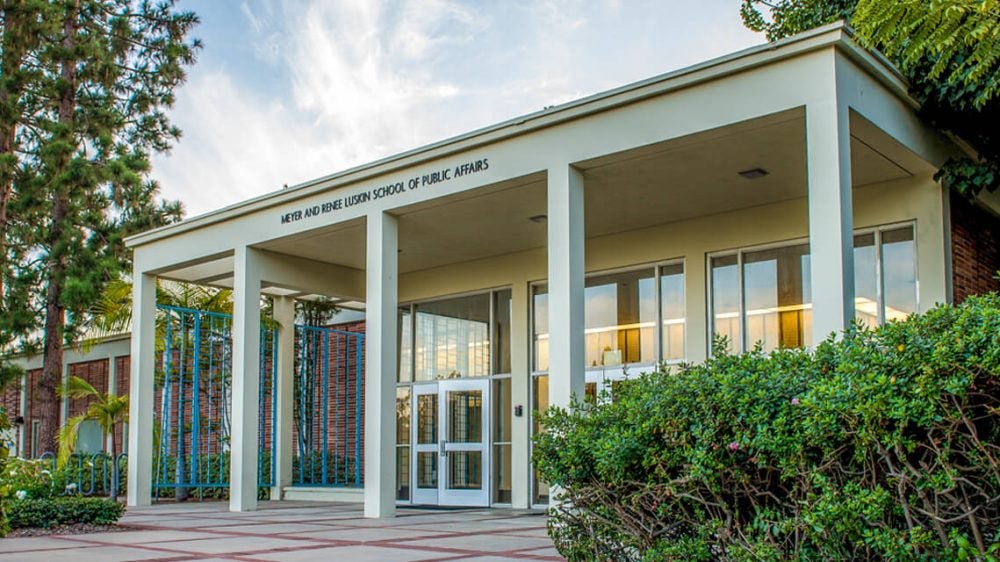
Front entrance of Luskin School of Public Affairs

Luskin Faculty Recognized Among World’s Top 2% of Scientists

November 2, 2026
Luskin's Latest Blog

UCLA Luskin School of Public Affairs faculty members have been recognized in the 2026 Stanford-Elsevier Top...

Read More
book cover on left, photo of woman with dark hair wearing jacket on right

New Book Serves as Authoritative Reference on Transit Crime Around the World

September 24, 2026
School of Public Affairs

A new book co-edited by UCLA Luskin Dean Anastasia Loukaitou-Sideris provides a comprehensive overview of crime...

Read More
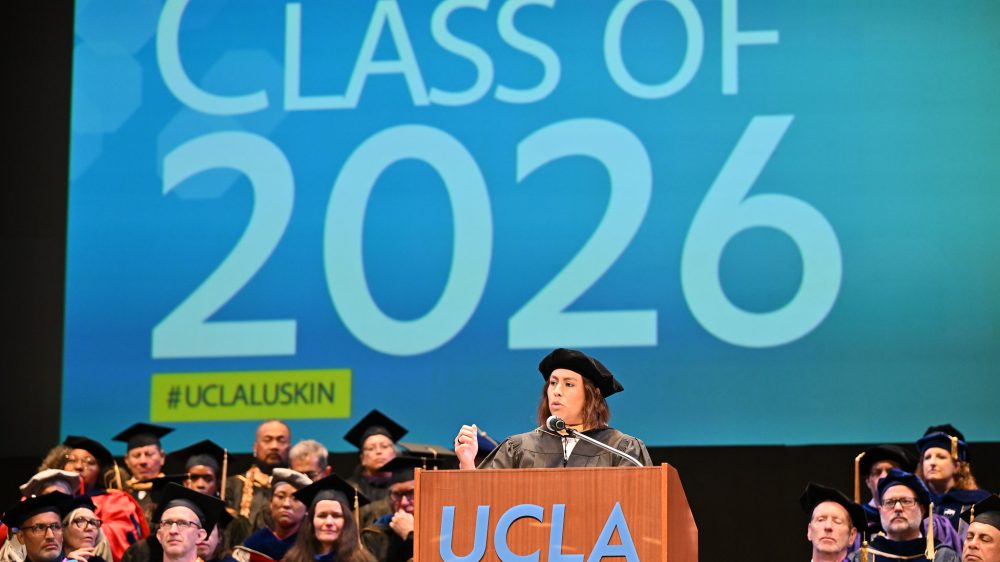
California State Senator Caroline Menjivar inspires graduates during her keynote address at the UCLA Luskin Graduate Commencement Ceremony on June 12

A Rousing Sendoff for UCLA Luskin’s Class of 2026

June 16, 2026
Alumni

UCLA Luskin celebrated its Class of 2026 with two commencement ceremonies on June 12, one for...

Read More
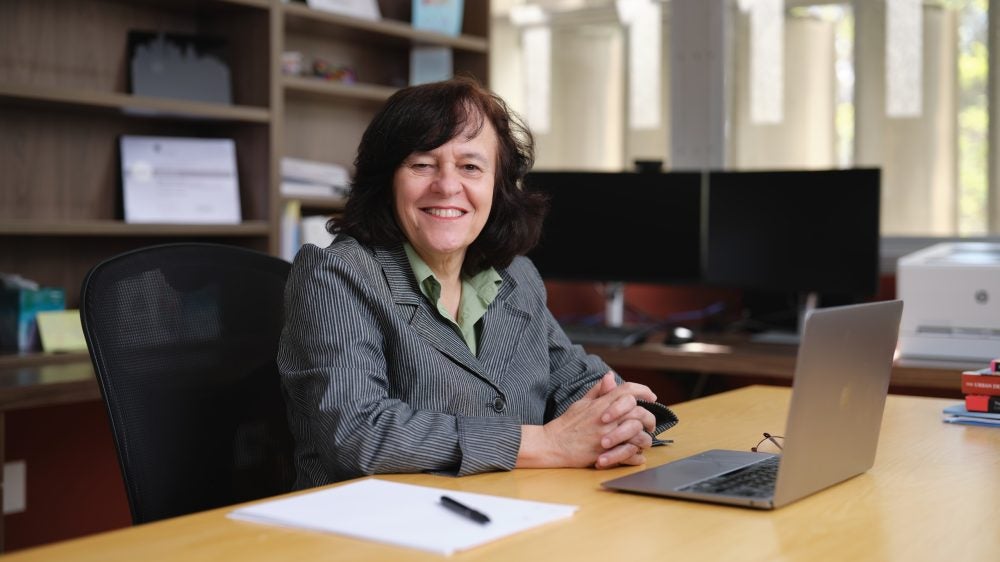
Headshot of Anastasia Loukaitou-Sideris

Anastasia Loukaitou-Sideris Named Dean of UCLA Luskin School of Public Affairs

June 1, 2026
School of Public Affairs

Anastasia Loukaitou-Sideris, who has served as interim dean of the UCLA Luskin School of Public Affairs...

Read More
Tina Hordzwick/UCLA

UCLA Luskin Social Welfare Receives Landmark $13.5 Million Investment to Revolutionize Youth Mental Health Training

April 7, 2026
School of Public Affairs
UCLA Luskin Social Welfare receives $13.5M from Ballmer Group to train social workers addressing youth mental...
Read More
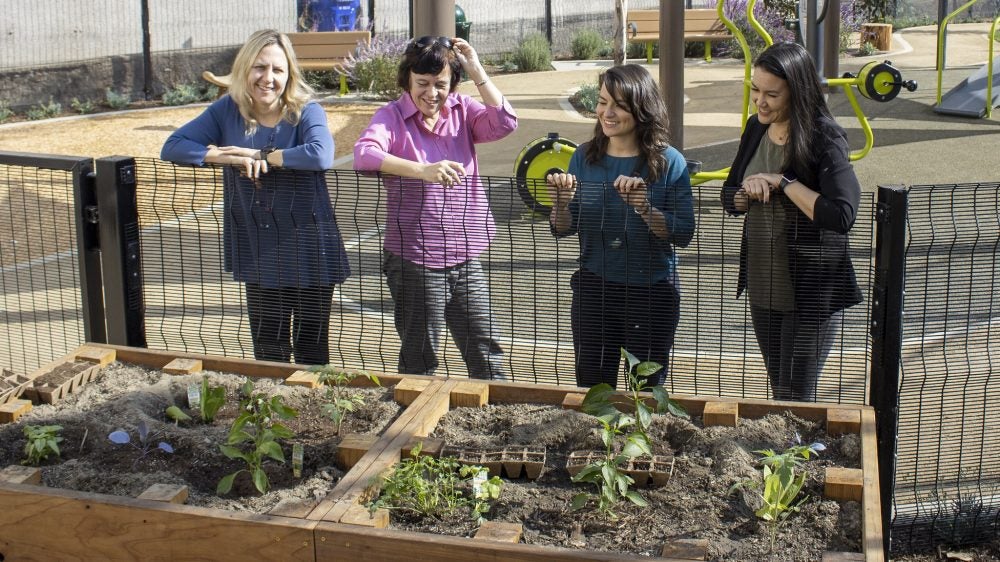
Anastasia and her research team stand over a raised garden bed at the Golden Age Park in Westlake.

Reimagining Parking Lots into Senior-Friendly Parks in Los Angeles

March 5, 2026
Luskin in the News
Anastasia Loukaitou-Sideris led research transforming underused urban spaces into safe and inclusive parks for older adults....
Read More
Learn more about UCLA Luskin

Find contact information and get answers to your questions.

Contact Us

Public Affairs Building
337 Charles E. Young Drive East
Los Angeles, California 90095

Linkedin Youtube Instagram Facebook X-twitter
Campus Resources
  • Map, Directions, Parking
  • Directory
  • Academic Calendar
  • Careers
  • Map, Directions, Parking
  • Directory
  • Academic Calendar
  • Careers
School Resources
  • About
  • Our Dean
  • Administration
  • Luskin School Intranet
  • Board of Advisors
  • Contact Us
  • Visit Us
  • About
  • Our Dean
  • Administration
  • Luskin School Intranet
  • Board of Advisors
  • Contact Us
  • Visit Us
UCLA logo
© 2026 Regents of the University of California
  • Emergency
  • Accessibility
  • Privacy & Terms of Use
  • Emergency
  • Accessibility
  • Privacy & Terms of Use
Facebook Instagram Linkedin X-twitter Youtube Threads
UCLA Luskin School of Public Affairs Logo
Academics
Departments
  • Global Public Affairs
  • Public Policy
  • Real Estate Development
  • Social Welfare
  • Urban Planning
  • Undergraduate Program
  • Global Public Affairs
  • Public Policy
  • Real Estate Development
  • Social Welfare
  • Urban Planning
  • Undergraduate Program
Graduate Programs
  • Master of Global Public Affairs (MGPA)
  • Master of Public Policy (MPP)
  • Master of Real Estate Development (MRED)
  • Master of Social Welfare (MSW)
  • Master of Urban and Regional Planning (MURP)
  • PhD in Social Welfare
  • PhD in Urban Planning
  • Master of Global Public Affairs (MGPA)
  • Master of Public Policy (MPP)
  • Master of Real Estate Development (MRED)
  • Master of Social Welfare (MSW)
  • Master of Urban and Regional Planning (MURP)
  • PhD in Social Welfare
  • PhD in Urban Planning
Undergraduate Programs
  • BA in Public Affairs
  • Minor in Urban and Regional Studies
  • Minor in Gerontology
  • Minor in Public Affairs
  • BA in Public Affairs
  • Minor in Urban and Regional Studies
  • Minor in Gerontology
  • Minor in Public Affairs
Professional Certificates
  • AI in Public Affairs Certificate
  • AI in Public Affairs Certificate
Admissions
Program Specific Admissions
  • Global Public Affairs
  • Public Policy
  • Real Estate Development
  • Social Welfare
  • Urban Planning
  • Undergraduate Program
  • Global Public Affairs
  • Public Policy
  • Real Estate Development
  • Social Welfare
  • Urban Planning
  • Undergraduate Program
Faculty
Our Faculty
  • All Faculty
  • Public Policy
  • Real Estate Development
  • Social Welfare
  • Urban Planning
  • All Faculty
  • Public Policy
  • Real Estate Development
  • Social Welfare
  • Urban Planning
Leadership
  • Our Dean
  • Board of Advisors
  • Faculty Executive Committee
  • Our Dean
  • Board of Advisors
  • Faculty Executive Committee
Research Centers
  • Agile Visual Analytics Lab (AVAL)

    Empowers stakeholders with data to make informed decisions for children, families, and communities.

  • Berggruen Governance Index

    Evaluates the quality of political governance and democracy worldwide.

  • Center for Neighborhood Knowledge (CNK)

    Specializes in spatial analysis of socioeconomic disparities in neighborhoods.

  • Center for Policy Research on Aging (CPRA)

    Explores the societal and policy implications of an aging population.

  • Institute of Transportation Studies (ITS)

    Advances research, education, and meaningful civic engagement on transportation issues.

  • Institute on Inequality and Democracy

    Advances scholarship that confronts threats to democracy in America and around the world.

  • Latin American Cities Initiative

    Connects urban planning and policy networks across the Americas.

  • Latino Policy & Politics Institute (LPPI)

    Addresses policy challenges facing Latinos and communities of color.

  • Lewis Center for Regional Policy Studies

    Studying housing affordability and transportation equity in the L.A. region.

  • Los Angeles Education Research Institute (LAERI)

    Collaborates with schools to improve educational outcomes for L.A. students.

  • Luskin Center for Innovation

    Informing effective and equitable environmental policy that improves lives.

  • UCLA Voting Rights Project

    The flagship project for voting rights litigation and policy research.

All Research Centers
Outcomes
Common Search Terms

Results will show as you type.