Skip to content
  • Students & Alumni
    • Career Services
    • Alumni Relations
    • Student Support
    • Graduate Resource Library
    • For Employers
  • News
  • Events
    • Events Calendar
    • Luskin Summit
    • Luskin Lecture Series
    • California Policy Briefing
    • Commencement
  • Students & Alumni
    • Career Services
    • Alumni Relations
    • Student Support
    • Graduate Resource Library
    • For Employers
  • News
  • Events
    • Events Calendar
    • Luskin Summit
    • Luskin Lecture Series
    • California Policy Briefing
    • Commencement
Giving
UCLA Luskin School of Public Affairs Logo
  • Academics
    Departments & Programs
    • Global Public Affairs
    • Public Policy
    • Real Estate Development
    • Social Welfare
    • Urban Planning
    • Undergraduate Program
    • Global Public Affairs
    • Public Policy
    • Real Estate Development
    • Social Welfare
    • Urban Planning
    • Undergraduate Program
    Graduate Degrees
    • Master of Global Public Affairs (MGPA)
    • Master of Public Policy (MPP)
    • Master of Real Estate Development (MRED)
    • Master of Social Welfare (MSW)
    • Master of Urban and Regional Planning (MURP)
    • PhD in Social Welfare
    • PhD in Urban Planning
    • Master of Global Public Affairs (MGPA)
    • Master of Public Policy (MPP)
    • Master of Real Estate Development (MRED)
    • Master of Social Welfare (MSW)
    • Master of Urban and Regional Planning (MURP)
    • PhD in Social Welfare
    • PhD in Urban Planning
    Undergraduate Degrees
    • BA in Public Affairs
    • Minor in Urban and Regional Studies
    • Minor in Gerontology
    • Minor in Public Affairs
    • BA in Public Affairs
    • Minor in Urban and Regional Studies
    • Minor in Gerontology
    • Minor in Public Affairs
    Professional Certificates
    • AI in Public Affairs Certificate
    • AI in Public Affairs Certificate
  • Admissions
    Program Specific Admissions
    • Global Public Affairs
    • Public Policy
    • Real Estate Development
    • Social Welfare
    • Urban Planning
    • Undergraduate Program
    • Global Public Affairs
    • Public Policy
    • Real Estate Development
    • Social Welfare
    • Urban Planning
    • Undergraduate Program
  • Faculty
    Our Faculty
    • All Faculty
    • Public Policy
    • Real Estate Development
    • Social Welfare
    • Urban Planning
    • All Faculty
    • Public Policy
    • Real Estate Development
    • Social Welfare
    • Urban Planning
    Leadership
    • Our Dean
    • Board of Advisors
    • Faculty Executive Committee
    • Our Dean
    • Board of Advisors
    • Faculty Executive Committee
  • Research Centers
    • Agile Visual Analytics Lab (AVAL)

      Empowers stakeholders with data to make informed decisions for children, families, and communities.

    • Berggruen Governance Index

      Evaluates the quality of political governance and democracy worldwide.

    • Center for Neighborhood Knowledge (CNK)

      Specializes in spatial analysis of socioeconomic disparities in neighborhoods.

    • Center for Policy Research on Aging (CPRA)

      Explores the societal and policy implications of an aging population.

    • Institute of Transportation Studies (ITS)

      Advances research, education, and meaningful civic engagement on transportation issues.

    • Institute on Inequality and Democracy

      Advances scholarship that confronts threats to democracy in America and around the world.

    • Latin American Cities Initiative

      Connects urban planning and policy networks across the Americas.

    • Latino Policy & Politics Institute (LPPI)

      Addresses policy challenges facing Latinos and communities of color.

    • Lewis Center for Regional Policy Studies

      Studying housing affordability and transportation equity in the L.A. region.

    • Los Angeles Education Research Institute (LAERI)

      Collaborates with schools to improve educational outcomes for L.A. students.

    • Luskin Center for Innovation

      Informing effective and equitable environmental policy that improves lives.

    • UCLA Voting Rights Project

      The flagship project for voting rights litigation and policy research.

    All Research Centers
  • Outcomes
Home / News / A Wealth of Knowledge About Debt

A Wealth of Knowledge About Debt

In a new role as associate faculty director at the Institute on Inequality and Democracy at UCLA Luskin, Hannah Appel will focus on the future of finance in an era of mass household indebtedness
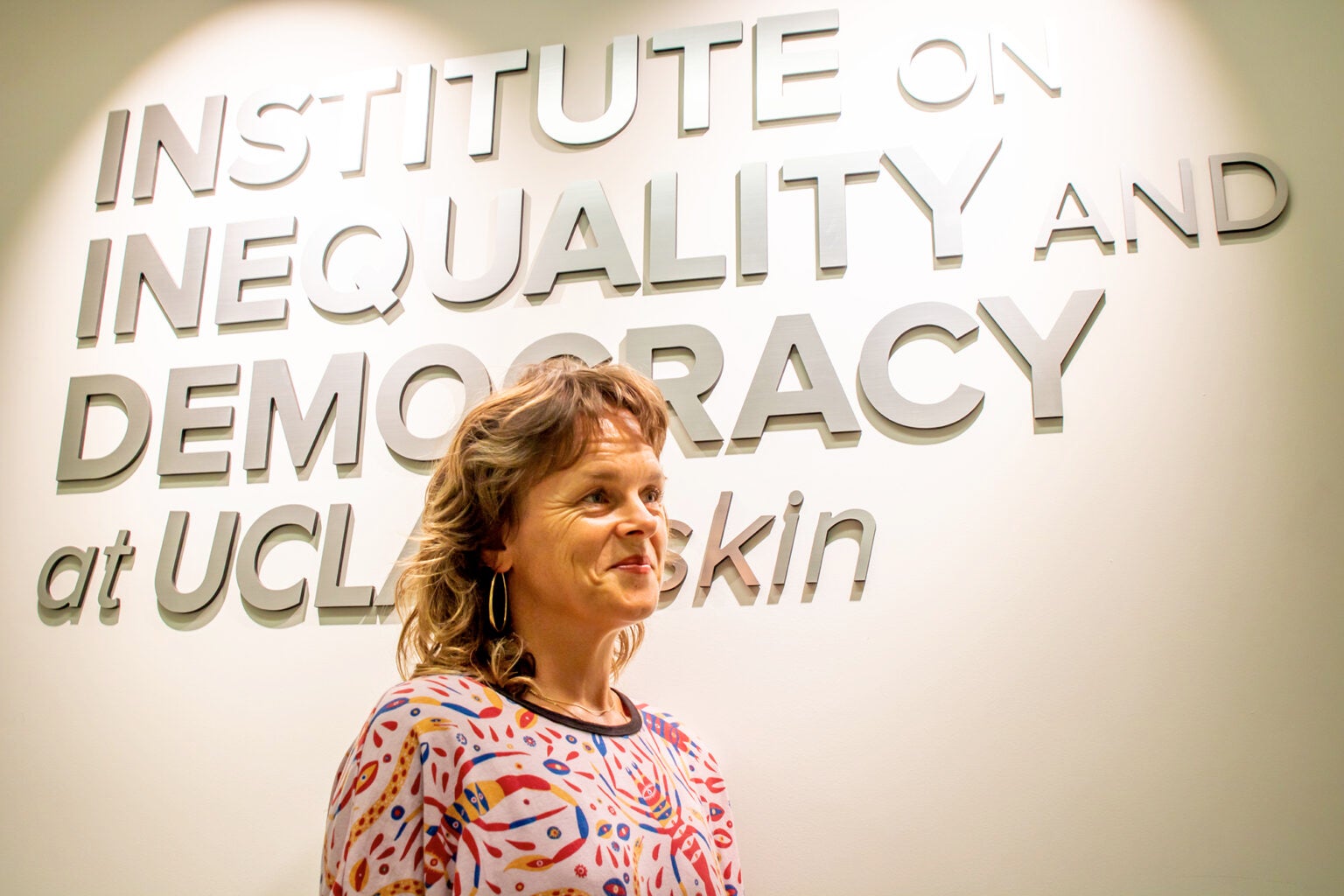
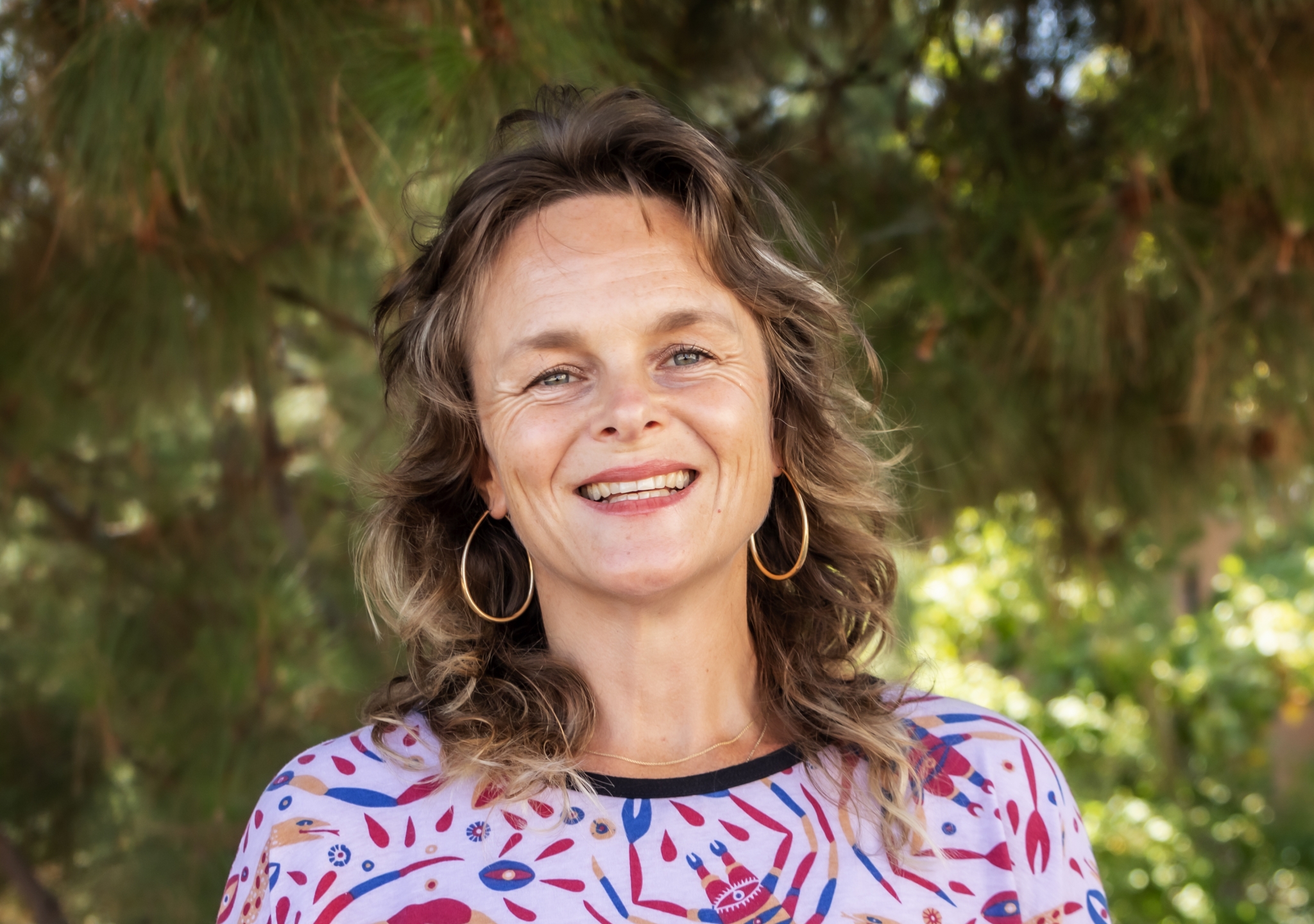
Hannah Appel's new role will draw on her expertise about household debt gained through research and personal involvement in social movements
Hannah Appel's new role will draw on her expertise about household debt gained through research and personal involvement in social movements. Photo by Les Dunseith

Posted in

  • Education, Politics, School of Public Affairs, Urban Planning

Published on

  • October 3, 2019
  • activism, debt, finance, inequality

Share this Article

By Les Dunseith

There are at least 13,500,000,000,000 reasons why people should care about the expertise of Hannah Appel and what she will be bringing to her new role as associate faculty director at the Institute on Inequality and Democracy at the UCLA Luskin School of Public Affairs.

That eye-popping number represents $13.5 trillion — the Federal Reserve’s current estimate of consumer debt (which Appel prefers to call “household debt”) in the United States.

Ananya Roy, director of the institute, says Appel’s scholarship and her participation in organized efforts to combat predatory financial practices make her an ideal fit for a leadership role at the institute, which promotes a unique pairing of research and critical thought with social movements and activism in its efforts to combat societal inequalities.

“Hannah Appel is one of those rare academics whose scholarship has had a direct impact on the urgent social justice issues of the day,” said Roy, professor of urban planning, social welfare and geography at UCLA. “We expect that she will greatly expand the impact of the institute on one of the key structural processes of inequality in the United States: crushing debt and predatory financialization.”

Financialization, which relates to a “growing scale and profitability of the finance sector at the expense of the rest of the economy,” according to Forbes, will be a primary focus for Appel as she oversees one of the four research streams heralded by the institute — “Debt and Predatory Financialization.”


‘You are not alone, you are not a loan, and you are not defined by the kinds of financial relationships you have.’
—Hannah Appel, assistant professor of anthropology and global studies
One of her first goals? Rethink the name.

“I feel like debt is something that people feel trapped in — in a kind of permanent way. ‘I’m in it and I can never get out of it,’” Appel said.

By changing the terminology — the working title is the “Future of Finance” — she hopes to redirect conversations toward solutions; specifically, to look at the power that debt can wield if leveraged collectively. “You are not alone, you are not a loan, and you are not defined by the kinds of financial relationships you have,” Appel said.

Although Roy and the Institute on Inequality and Democracy she founded in 2015-16 are based at UCLA Luskin, the mission has always been cross-departmental. Appel is an assistant professor of anthropology and global studies in the UCLA College and co-founder of the Debt Collective, an activist group that organizes debtors’ unions.

As she was finishing her doctorate in anthropology from Stanford during the Great Recession, Appel landed a postdoctoral fellowship at Columbia University in New York City that happened to coincide with the start of the Occupy Wall Street movement there.

She soon found herself amid a collection of like-minded activists and intellectuals who were troubled by the fact that so many people wound up losing their homes as a result of greed and risky financial decisions made by wealthy investment interests.

“Why is it that this kind of drama on Wall Street is dispossessing people of their homes or knocking people out of their jobs?” Appel recalls thinking at the time. “People used to phrase it about 10 years ago as the relationship between Wall Street and Main Street. And I was very compelled by that question.”

The search for an answer relates directly to Appel’s involvement in social movements — and the promise of her role at the Institute on Inequality and Democracy.

Viewed in isolation, she says, household debt may seem like a personal problem. But in aggregate — remember that $13.5 trillion? — such debt is potentially a new form of collective financial power.

Appel studies and teaches on the daily life of capitalism, from transnational corporations and the private sector in Africa to the relationship between financialization and household debt in the United States, where household indebtedness has become increasingly systemic during the last 30 years.

The astronomical rise in student debt is certainly part of that. “But there are people indebted for their own incarceration and having to pay legal fines and fees,” Appel said. “And then, of course, there is scale. It scales to municipal debt — where our cities are indebted and can no longer afford to fix streets or fund public schools.”

At the heart of Appel’s scholarship are people in crisis.

She cites an all-too-common example of a person saddled with student debt and household debt who then gets cancer and discovers that health insurance doesn’t fully pay for chemotherapy.

“If they can manage to pay for the chemo and still make the mortgage payments, of course they’re not going to pay their student loan, right?” Appel said. “So, there are ways that these forms of debt are always intersecting and can never be understood separately.”

Regarding student debt, she is encouraged that “transformative policy proposals are on the table” in the current presidential campaign. “Certainly, it’s the first time in my lifetime that there are two articulated proposals to discharge all $1.6 trillion in student debt,” Appel said, noting that other policy proposals would eliminate tuition and fees at public colleges like the University of California system.

Even if such sweeping policy changes never come to pass, however, Appel is certain that solutions to predatory financial practices can be achieved. It’s an optimism that is based on her own experience.

Appel’s involvement in Occupy Wall Street and her ongoing research related to the anthropology of capitalism led her to help found the Debt Collective. It’s an approach that borrows from workers’ unions by bringing together people with shared leverage over the financial system.

“If one of the very simple lessons of a union is that there’s power in numbers, then what would collective action under finance capitalism look like? Thinking analogously to workers’ unions, then the answer is debtors’ unions,” Appel said.

Soon after it started, the Debt Collective found success by uniting former Corinthian College students who were saddled with debt. At the time, Corinthian was the second-largest national chain of for-profit colleges in the country.

One group of people in Ontario, California, had a “tremendous amount of debt from the Corinthian Colleges. Some had degrees that were worthless or had dropped out because they realized how much debt they were accruing and how bad their education was,” Appel said.

The Debt Collective began working with Corinthian College debtors and this initial effort eventually led to “an enormous union of for-profit college debtors — roughly 150,000 people … and that union has discharged over $1 billion of for-profit students’ debt.”

Appel says this example shows that debtors’ unions can work.

She pauses to contemplate years of study, struggle and frustration that finally seem to be paying off in benefits for people in need. Appel takes a deep breath, smiles, then continues.

“You know, I also have a tremendous amount of student debt myself. I was thinking of making T-shirts that said, ‘I am your professor. I also have student debt, and I think yours is unjust. Let’s talk.”
Faculty Mentioned in this Article
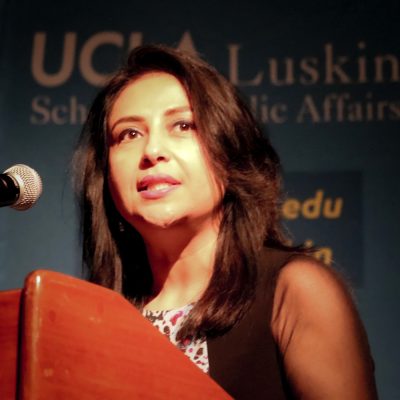
Ananya-Roy-2x3

Ananya Roy

Professor of Urban Planning, Social Welfare, and Geography

Ananya Roy is Professor of Urban Planning, Social Welfare, and Geography at the University of California, Los Angeles. From 2015...

Related Articles

More from This series See all ARTICLES A vacant lot between two homes in a suburban or rural street How NY Communities Are Repurposing Vacant Properties to Fight Homelessness November 6, 2026 | Tarik Abdelazim and Mallory Rappaport An orange multistory building viewed from close up and below, labeled "Julia West House" “Trying to Keep Our Heads Above Water”: Congress Must Keep Homeless Service Providers Afloat October 28, 2026 | Garrett L. Grainger Subscribe to Shelterforce Sign up for our free newsletter and get our original reporting, new series, and more in your inbox. Email(Required) Email address* Submit This article is part of the Under the Lens series Shifting Ground Across the U.S., homelessness has been steadily rising. Federal attacks on Housing First, inadequate funding, and increased criminalization are only making things worse. In this Under the Lens series, we explore why it's a unique era for homelessness policy, and what solutions advocates and homeless people are finding to help. slide 1 of 6 The public exhibition at the Skid Row History Museum & Archive. Photo by Anthony Orendorff

After Police Removal, an Archive Preserves the Memory of an LA Encampment

November 9, 2026
Luskin in the News
Read More
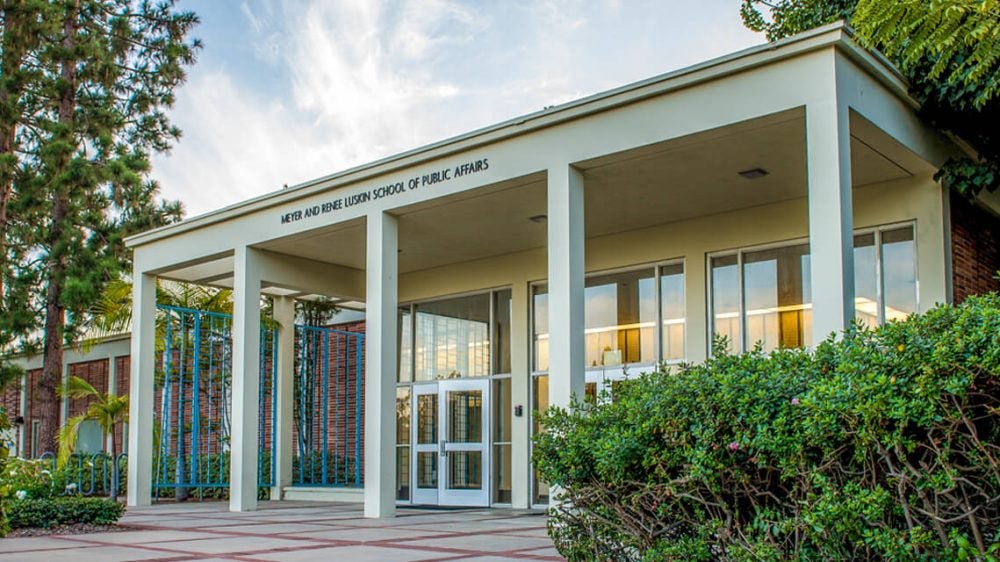
Front entrance of Luskin School of Public Affairs

Luskin Faculty Recognized Among World’s Top 2% of Scientists

November 2, 2026
Luskin's Latest Blog

UCLA Luskin School of Public Affairs faculty members have been recognized in the 2026 Stanford-Elsevier Top...

Read More
Illustration of the Statue of Liberty melting into a bright pink landscape, her torch engulfed in flames. Barbed-wire fences, melting ice and a rising sun surround her, with a financial data chart visible in the upper-right corner.

What’s Really Happening With Immigration

October 22, 2026
Luskin's Latest Blog

Excerpt from “What’s Really Happening With Immigration,” by Delan Bruce, published in UCLA Magazine on October...

Read More
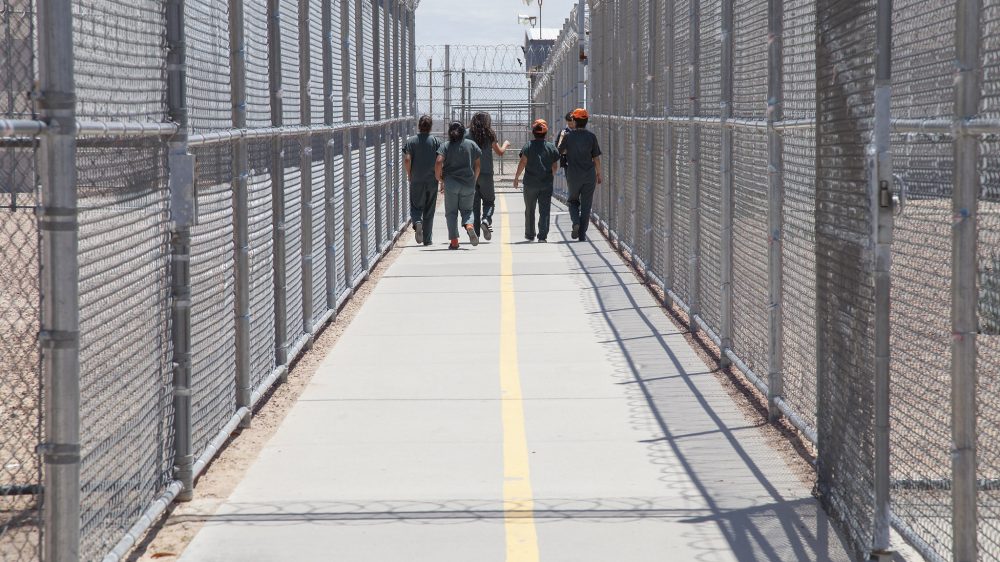
Group of people walking together in a fenced and gated ICE detention center.

Fugitive Sanctuaries: Ananya Roy on Migration, Solidarity, and Sanctuary

February 13, 2026
Luskin in the News
Luskin professor examines how migrant movements, not states, create safety in the face of structural violence....
Read More
box with four headshots

Welcoming the 2026 UCLA Activists-in-Residence

February 11, 2026
Luskin's Latest Blog
The five-month residency provides time to reflect and recharge, envision new projects, and connect with UCLA...
Read More
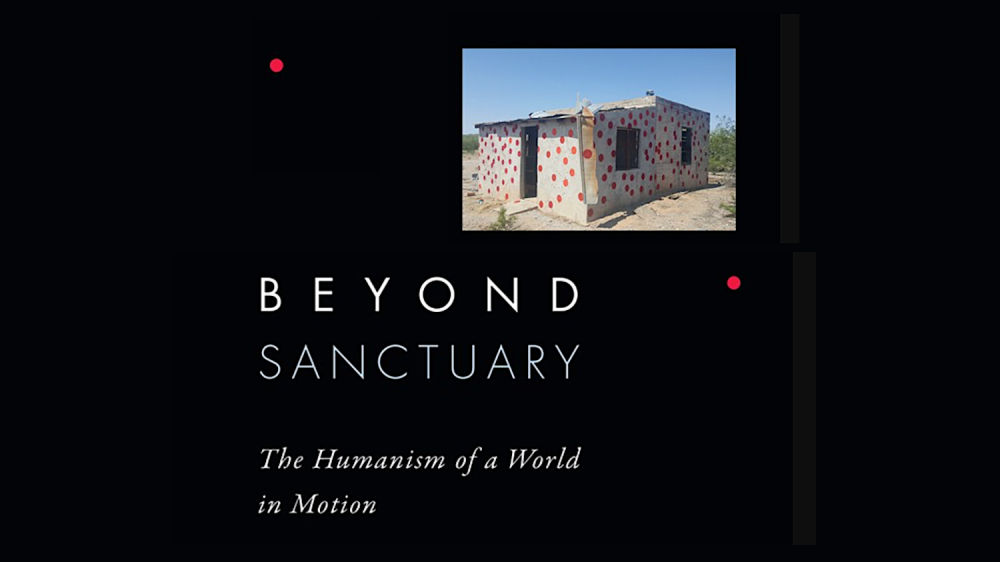
black background with book title and red spotted house

On Migrant Crackdowns and Empty Humanitarian Rhetoric

October 31, 2025
Luskin in the News
UCLA Luskin’s Ananya Roy explores themes in the recently published book "Beyond Sanctuary: The Humanism of...
Read More
Learn more about UCLA Luskin

Find contact information and get answers to your questions.

Contact Us

Public Affairs Building
337 Charles E. Young Drive East
Los Angeles, California 90095

Linkedin Youtube Instagram Facebook X-twitter
Campus Resources
  • Map, Directions, Parking
  • Directory
  • Academic Calendar
  • Careers
  • Map, Directions, Parking
  • Directory
  • Academic Calendar
  • Careers
School Resources
  • About
  • Our Dean
  • Administration
  • Luskin School Intranet
  • Board of Advisors
  • Contact Us
  • Visit Us
  • About
  • Our Dean
  • Administration
  • Luskin School Intranet
  • Board of Advisors
  • Contact Us
  • Visit Us
UCLA logo
© 2026 Regents of the University of California
  • Emergency
  • Accessibility
  • Privacy & Terms of Use
  • Emergency
  • Accessibility
  • Privacy & Terms of Use
Facebook Instagram Linkedin X-twitter Youtube Threads
UCLA Luskin School of Public Affairs Logo
Academics
Departments
  • Global Public Affairs
  • Public Policy
  • Real Estate Development
  • Social Welfare
  • Urban Planning
  • Undergraduate Program
  • Global Public Affairs
  • Public Policy
  • Real Estate Development
  • Social Welfare
  • Urban Planning
  • Undergraduate Program
Graduate Programs
  • Master of Global Public Affairs (MGPA)
  • Master of Public Policy (MPP)
  • Master of Real Estate Development (MRED)
  • Master of Social Welfare (MSW)
  • Master of Urban and Regional Planning (MURP)
  • PhD in Social Welfare
  • PhD in Urban Planning
  • Master of Global Public Affairs (MGPA)
  • Master of Public Policy (MPP)
  • Master of Real Estate Development (MRED)
  • Master of Social Welfare (MSW)
  • Master of Urban and Regional Planning (MURP)
  • PhD in Social Welfare
  • PhD in Urban Planning
Undergraduate Programs
  • BA in Public Affairs
  • Minor in Urban and Regional Studies
  • Minor in Gerontology
  • Minor in Public Affairs
  • BA in Public Affairs
  • Minor in Urban and Regional Studies
  • Minor in Gerontology
  • Minor in Public Affairs
Professional Certificates
  • AI in Public Affairs Certificate
  • AI in Public Affairs Certificate
Admissions
Program Specific Admissions
  • Global Public Affairs
  • Public Policy
  • Real Estate Development
  • Social Welfare
  • Urban Planning
  • Undergraduate Program
  • Global Public Affairs
  • Public Policy
  • Real Estate Development
  • Social Welfare
  • Urban Planning
  • Undergraduate Program
Faculty
Our Faculty
  • All Faculty
  • Public Policy
  • Real Estate Development
  • Social Welfare
  • Urban Planning
  • All Faculty
  • Public Policy
  • Real Estate Development
  • Social Welfare
  • Urban Planning
Leadership
  • Our Dean
  • Board of Advisors
  • Faculty Executive Committee
  • Our Dean
  • Board of Advisors
  • Faculty Executive Committee
Research Centers
  • Agile Visual Analytics Lab (AVAL)

    Empowers stakeholders with data to make informed decisions for children, families, and communities.

  • Berggruen Governance Index

    Evaluates the quality of political governance and democracy worldwide.

  • Center for Neighborhood Knowledge (CNK)

    Specializes in spatial analysis of socioeconomic disparities in neighborhoods.

  • Center for Policy Research on Aging (CPRA)

    Explores the societal and policy implications of an aging population.

  • Institute of Transportation Studies (ITS)

    Advances research, education, and meaningful civic engagement on transportation issues.

  • Institute on Inequality and Democracy

    Advances scholarship that confronts threats to democracy in America and around the world.

  • Latin American Cities Initiative

    Connects urban planning and policy networks across the Americas.

  • Latino Policy & Politics Institute (LPPI)

    Addresses policy challenges facing Latinos and communities of color.

  • Lewis Center for Regional Policy Studies

    Studying housing affordability and transportation equity in the L.A. region.

  • Los Angeles Education Research Institute (LAERI)

    Collaborates with schools to improve educational outcomes for L.A. students.

  • Luskin Center for Innovation

    Informing effective and equitable environmental policy that improves lives.

  • UCLA Voting Rights Project

    The flagship project for voting rights litigation and policy research.

All Research Centers
Outcomes
Common Search Terms

Results will show as you type.