Skip to content
  • Students & Alumni
    • Career Services
    • Alumni Relations
    • Student Support
    • Graduate Resource Library
    • For Employers
  • News
  • Events
    • Events Calendar
    • Luskin Summit
    • Luskin Lecture Series
    • California Policy Briefing
    • Commencement
  • Students & Alumni
    • Career Services
    • Alumni Relations
    • Student Support
    • Graduate Resource Library
    • For Employers
  • News
  • Events
    • Events Calendar
    • Luskin Summit
    • Luskin Lecture Series
    • California Policy Briefing
    • Commencement
Giving
UCLA Luskin School of Public Affairs Logo
  • Academics
    Departments & Programs
    • Global Public Affairs
    • Public Policy
    • Real Estate Development
    • Social Welfare
    • Urban Planning
    • Undergraduate Program
    • Global Public Affairs
    • Public Policy
    • Real Estate Development
    • Social Welfare
    • Urban Planning
    • Undergraduate Program
    Graduate Degrees
    • Master of Global Public Affairs (MGPA)
    • Master of Public Policy (MPP)
    • Master of Real Estate Development (MRED)
    • Master of Social Welfare (MSW)
    • Master of Urban and Regional Planning (MURP)
    • PhD in Social Welfare
    • PhD in Urban Planning
    • Master of Global Public Affairs (MGPA)
    • Master of Public Policy (MPP)
    • Master of Real Estate Development (MRED)
    • Master of Social Welfare (MSW)
    • Master of Urban and Regional Planning (MURP)
    • PhD in Social Welfare
    • PhD in Urban Planning
    Undergraduate Degrees
    • BA in Public Affairs
    • Minor in Urban and Regional Studies
    • Minor in Gerontology
    • Minor in Public Affairs
    • BA in Public Affairs
    • Minor in Urban and Regional Studies
    • Minor in Gerontology
    • Minor in Public Affairs
    Professional Certificates
    • AI in Public Affairs Certificate
    • AI in Public Affairs Certificate
  • Admissions
    Program Specific Admissions
    • Global Public Affairs
    • Public Policy
    • Real Estate Development
    • Social Welfare
    • Urban Planning
    • Undergraduate Program
    • Global Public Affairs
    • Public Policy
    • Real Estate Development
    • Social Welfare
    • Urban Planning
    • Undergraduate Program
  • Faculty
    Our Faculty
    • All Faculty
    • Public Policy
    • Real Estate Development
    • Social Welfare
    • Urban Planning
    • All Faculty
    • Public Policy
    • Real Estate Development
    • Social Welfare
    • Urban Planning
    Leadership
    • Our Dean
    • Board of Advisors
    • Faculty Executive Committee
    • Our Dean
    • Board of Advisors
    • Faculty Executive Committee
  • Research Centers
    • Agile Visual Analytics Lab (AVAL)

      Empowers stakeholders with data to make informed decisions for children, families, and communities.

    • Berggruen Governance Index

      Evaluates the quality of political governance and democracy worldwide.

    • Center for Neighborhood Knowledge (CNK)

      Specializes in spatial analysis of socioeconomic disparities in neighborhoods.

    • Center for Policy Research on Aging (CPRA)

      Explores the societal and policy implications of an aging population.

    • Agile Visual Analytics Lab (AVAL)

      Empowers stakeholders with data to make informed decisions for children, families, and communities.

    • Berggruen Governance Index

      Evaluates the quality of political governance and democracy worldwide.

    • Center for Neighborhood Knowledge (CNK)

      Specializes in spatial analysis of socioeconomic disparities in neighborhoods.

    • Center for Policy Research on Aging (CPRA)

      Explores the societal and policy implications of an aging population.

    • Institute of Transportation Studies (ITS)

      Advances research, education, and meaningful civic engagement on transportation issues.

    • Institute on Inequality and Democracy

      Advances scholarship that confronts threats to democracy in America and around the world.

    • Latin American Cities Initiative

      Connects urban planning and policy networks across the Americas.

    • Latino Policy & Politics Institute (LPPI)

      Addresses policy challenges facing Latinos and communities of color.

    • Institute of Transportation Studies (ITS)

      Advances research, education, and meaningful civic engagement on transportation issues.

    • Institute on Inequality and Democracy

      Advances scholarship that confronts threats to democracy in America and around the world.

    • Latin American Cities Initiative

      Connects urban planning and policy networks across the Americas.

    • Latino Policy & Politics Institute (LPPI)

      Addresses policy challenges facing Latinos and communities of color.

    • Lewis Center for Regional Policy Studies

      Studying housing affordability and transportation equity in the L.A. region.

    • Los Angeles Education Research Institute (LAERI)

      Collaborates with schools to improve educational outcomes for L.A. students.

    • Luskin Center for Innovation

      Informing effective and equitable environmental policy that improves lives.

    • UCLA Voting Rights Project

      The flagship project for voting rights litigation and policy research.

    • Lewis Center for Regional Policy Studies

      Studying housing affordability and transportation equity in the L.A. region.

    • Los Angeles Education Research Institute (LAERI)

      Collaborates with schools to improve educational outcomes for L.A. students.

    • Luskin Center for Innovation

      Informing effective and equitable environmental policy that improves lives.

    • UCLA Voting Rights Project

      The flagship project for voting rights litigation and policy research.

    All Research Centers
  • Outcomes
Home / News / How Weather Woes Led Jack Rothman to UCLA

How Weather Woes Led Jack Rothman to UCLA

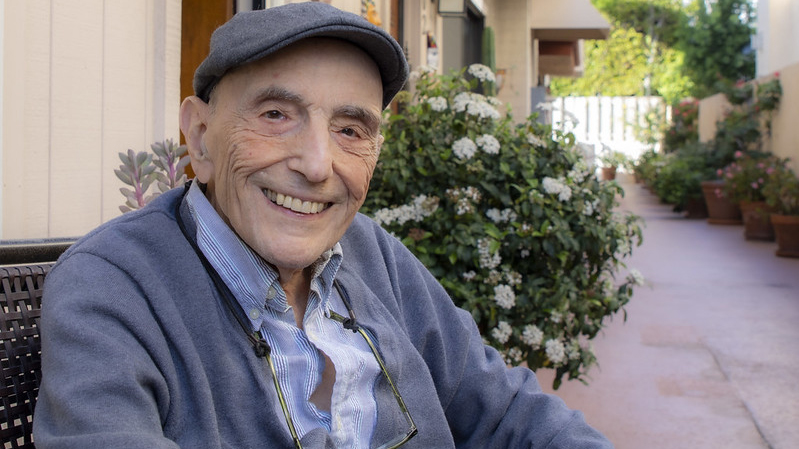
Emeritus professor, now 96, tells why he relocated his pioneering academic research on community organizing to sunny California in the 1980s
UCLA Luskin Professor Emeritus Jack Rothman
UCLA Luskin Professor Emeritus Jack Rothman. Photo by Les Dunseith

Posted in

  • Alumni, Education, School of Public Affairs, Social Welfare, Undergraduates

Published on

  • March 16, 2023
  • community organizing, Social Welfare, social work

Share this Article

By Stan Paul

Jack Rothman was in a rut — literally.

It was winter in the early 1980s and he found himself walking down “automobile tire tracks, you know, trudging along” amid thick snow as he made his way from his job at the University of Michigan to his home about a mile away.

“Why am I doing this as a grown intelligent man living in the winter all the time? I’ve been in New York, Pittsburgh, now Michigan,” the UCLA Luskin emeritus professor recalled thinking. “First chance I get, I’m moving to warm weather, particularly California.”
“It was January. I was writing a paper — my constant preoccupation,” Rothman said. “I hear a voice, ‘This is Dean Leonard Schneiderman, you know, school of social work at UCLA. Would you be willing to come out for an interview visit?’”

Outside his window, it was snowing. “‘You’re darn right. I’ll be out as soon as I can make it,'” he said. It was 80 degrees in Los Angeles during his interview with Schneiderman, former dean of Social Welfare at UCLA. “I had improved my temperature by 70 degrees,” Rothman said. “And that was it.”

He spent the next decade teaching, researching and writing at the Westwood campus. He has been officially retired for three decades, but Rothman’s work, influence and longstanding reputation in the field remain current, according to colleagues and former students.

“He was the first to conceptualize and describe community practice in an academic way as fundamental to the profession,” said JoAnn Damron-Rodriguez, an adjunct professor emerita of social welfare and longtime former faculty member at the Luskin School. She cited his seminal theoretical piece, “Three Models of Community Organization Practice.”

“His textbook on models of community organization became a classic with seven editions and generations of students using these practice approaches to shape their careers,” Damron-Rodriguez said.

More books followed on related areas of practice: case management, intervention research, action-directed agency and community change, community intervention and more.

“All are on a path to structural change related to the same knotty problems social workers confront today,” Damron-Rodriguez said.

Rothman is a prolific writer — with more than 25 scholarly book titles. His “Planning and Organizing for Social Change: Action Principles from Social Science Research” is one of the earliest efforts to formulate systematic, empirically based practice.

About his interest in community organizing, “I was inherently attracted from my early years to values reflecting equality, social justice and anti-racism,” Rothman said. “These ideals were embedded in my family,” who were immigrants who fled the Ukraine in 1920 during the civil war surrounding the Russian Revolution after centuries-long antisemitism.

Following military service in World War II, Rothman entered academia, completing a bachelor’s degree from City College of New York and a master’s degree from the Ohio State University.

“I started my master’s studies in 1949, almost the same time that the UCLA [Social Welfare] school started. And would you believe there were only two schools in the whole United States that had a concentration or major in community organization,” Rothman said.

“I was really on the ground floor. I decided then I would enter the field with the aspiration of  expanding on the ‘Jane Addams’ social change dimension of the profession,” said Rothman, who completed his Ph.D. from Columbia University in 1960 with an emphasis on social psychology.

At the time, there were not many graduate programs in social work in the U.S., Rothman said. Today, it’s over 200. “Instead of taking [classes in] community organizing in only two schools, you could probably take it now in the majority of schools … so that’s a really big change,” he said.

‘My hope is that Social Welfare at UCLA continues along the same path and remains one of the major programs in the country.’

In 1984 — the same year Rothman came to UCLA — Marshall Wong MSW ’86 entered UCLA’s social welfare program and was among the first class to take Rothman’s course on community organizing.

Out of 70-plus MSW students in his class, 11 ended up working in the community area, said Wong, who is now a senior intergroup relations specialist for the Los Angeles County Commission on Human Relations.

“[Rothman] is an extremely modest, amiable person. At the time, I don’t think any of us had any idea of his towering reputation in the field. It took a little while for us to realize,” Wong said.

Rothman’s teaching was foundational for Wong, his classmates and colleagues.

“He really encouraged his students to draw upon their own life experiences as kind of the base for what community organizing techniques and strategies would be effective, and so there was a real, a dynamic relationship between the theoretical and practical,” Wong said.

In 2015, Rothman was honored by the Council on Social Work Education with the Significant Lifetime Achievement in Social Work Education Award and he is the namesake of an annual award for Structural Change Practice by the Special Commission to Advance Macro Practice in Social Work.

Rothman took part in Social Welfare’s 50th anniversary celebration, and he plans to be back on campus for the 75th gala celebration to help mark the program and its achievements.
Related Articles

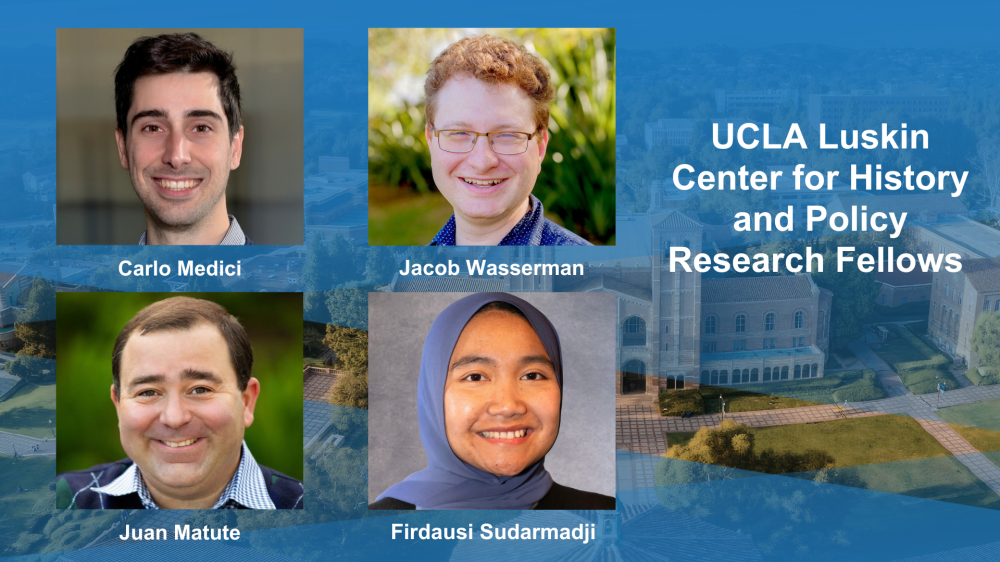
Four headshots set against aerial view of a campus

Awards Support Research Into Confederate Monuments, Caltrans Naming Conventions

October 6, 2026
School of Public Affairs

Several scholars from the UCLA Luskin School of Public Affairs have been awarded research fellowships aimed...

Read More
Photo of Jorja Leap professor of social work smiling on the left with "What we get wrong about gangs" on the right which is the thumbnail for the podcast episode

Jorja Leap on What Homeboy Industries Taught Her About Transformation

October 1, 2026
Luskin's Latest Blog

UCLA Luskin Social Welfare Professor Jorja Leap reflected on nearly four decades of research, friendship and...

Read More
Interior of data technology center with servers and flashing lights

How Data Centers Are Uniting Americans From Across the Partisan Divide

September 28, 2026
Public Policy

As artificial intelligence reshapes daily life, it’s also reshaping the landscape — literally. Across the United...

Read More
book cover on left, photo of woman with dark hair wearing jacket on right

New Book Serves as Authoritative Reference on Transit Crime Around the World

September 24, 2026
School of Public Affairs

A new book co-edited by UCLA Luskin Dean Anastasia Loukaitou-Sideris provides a comprehensive overview of crime...

Read More
Learn more about UCLA Luskin

Find contact information and get answers to your questions.

Contact Us

Public Affairs Building
337 Charles E. Young Drive East
Los Angeles, California 90095

Linkedin Youtube Instagram Facebook X-twitter
Campus Resources
  • Map, Directions, Parking
  • Directory
  • Academic Calendar
  • Careers
  • Map, Directions, Parking
  • Directory
  • Academic Calendar
  • Careers
School Resources
  • About
  • Our Dean
  • Administration
  • Board of Advisors
  • Contact Us
  • Visit Us
  • About
  • Our Dean
  • Administration
  • Board of Advisors
  • Contact Us
  • Visit Us
UCLA logo
© 2026 Regents of the University of California
  • Emergency
  • Accessibility
  • Privacy & Terms of Use
  • Emergency
  • Accessibility
  • Privacy & Terms of Use
Facebook Instagram Linkedin X-twitter Youtube Threads
UCLA Luskin School of Public Affairs Logo
Academics
Departments
  • Global Public Affairs
  • Public Policy
  • Real Estate Development
  • Social Welfare
  • Urban Planning
  • Undergraduate Program
  • Global Public Affairs
  • Public Policy
  • Real Estate Development
  • Social Welfare
  • Urban Planning
  • Undergraduate Program
Graduate Programs
  • Master of Global Public Affairs (MGPA)
  • Master of Public Policy (MPP)
  • Master of Real Estate Development (MRED)
  • Master of Social Welfare (MSW)
  • Master of Urban and Regional Planning (MURP)
  • PhD in Social Welfare
  • PhD in Urban Planning
  • Master of Global Public Affairs (MGPA)
  • Master of Public Policy (MPP)
  • Master of Real Estate Development (MRED)
  • Master of Social Welfare (MSW)
  • Master of Urban and Regional Planning (MURP)
  • PhD in Social Welfare
  • PhD in Urban Planning
Undergraduate Programs
  • BA in Public Affairs
  • Minor in Urban and Regional Studies
  • Minor in Gerontology
  • Minor in Public Affairs
  • BA in Public Affairs
  • Minor in Urban and Regional Studies
  • Minor in Gerontology
  • Minor in Public Affairs
Professional Certificates
  • AI in Public Affairs Certificate
  • AI in Public Affairs Certificate
Admissions
Program Specific Admissions
  • Global Public Affairs
  • Public Policy
  • Real Estate Development
  • Social Welfare
  • Urban Planning
  • Undergraduate Program
  • Global Public Affairs
  • Public Policy
  • Real Estate Development
  • Social Welfare
  • Urban Planning
  • Undergraduate Program
Faculty
Our Faculty
  • All Faculty
  • Public Policy
  • Real Estate Development
  • Social Welfare
  • Urban Planning
  • All Faculty
  • Public Policy
  • Real Estate Development
  • Social Welfare
  • Urban Planning
Leadership
  • Our Dean
  • Board of Advisors
  • Faculty Executive Committee
  • Our Dean
  • Board of Advisors
  • Faculty Executive Committee
Research Centers
  • Agile Visual Analytics Lab (AVAL)

    Empowers stakeholders with data to make informed decisions for children, families, and communities.

  • Berggruen Governance Index

    Evaluates the quality of political governance and democracy worldwide.

  • Center for Neighborhood Knowledge (CNK)

    Specializes in spatial analysis of socioeconomic disparities in neighborhoods.

  • Center for Policy Research on Aging (CPRA)

    Explores the societal and policy implications of an aging population.

  • Agile Visual Analytics Lab (AVAL)

    Empowers stakeholders with data to make informed decisions for children, families, and communities.

  • Berggruen Governance Index

    Evaluates the quality of political governance and democracy worldwide.

  • Center for Neighborhood Knowledge (CNK)

    Specializes in spatial analysis of socioeconomic disparities in neighborhoods.

  • Center for Policy Research on Aging (CPRA)

    Explores the societal and policy implications of an aging population.

  • Institute of Transportation Studies (ITS)

    Advances research, education, and meaningful civic engagement on transportation issues.

  • Institute on Inequality and Democracy

    Advances scholarship that confronts threats to democracy in America and around the world.

  • Latin American Cities Initiative

    Connects urban planning and policy networks across the Americas.

  • Latino Policy & Politics Institute (LPPI)

    Addresses policy challenges facing Latinos and communities of color.

  • Institute of Transportation Studies (ITS)

    Advances research, education, and meaningful civic engagement on transportation issues.

  • Institute on Inequality and Democracy

    Advances scholarship that confronts threats to democracy in America and around the world.

  • Latin American Cities Initiative

    Connects urban planning and policy networks across the Americas.

  • Latino Policy & Politics Institute (LPPI)

    Addresses policy challenges facing Latinos and communities of color.

  • Lewis Center for Regional Policy Studies

    Studying housing affordability and transportation equity in the L.A. region.

  • Los Angeles Education Research Institute (LAERI)

    Collaborates with schools to improve educational outcomes for L.A. students.

  • Luskin Center for Innovation

    Informing effective and equitable environmental policy that improves lives.

  • UCLA Voting Rights Project

    The flagship project for voting rights litigation and policy research.

  • Lewis Center for Regional Policy Studies

    Studying housing affordability and transportation equity in the L.A. region.

  • Los Angeles Education Research Institute (LAERI)

    Collaborates with schools to improve educational outcomes for L.A. students.

  • Luskin Center for Innovation

    Informing effective and equitable environmental policy that improves lives.

  • UCLA Voting Rights Project

    The flagship project for voting rights litigation and policy research.

All Research Centers
Outcomes
Common Search Terms

Results will show as you type.