Skip to content
  • Students & Alumni
    • Career Services
    • Alumni Relations
    • Student Support
    • Graduate Resource Library
    • For Employers
  • News
  • Events
    • Events Calendar
    • Luskin Summit
    • Luskin Lecture Series
    • California Policy Briefing
    • Commencement
  • Students & Alumni
    • Career Services
    • Alumni Relations
    • Student Support
    • Graduate Resource Library
    • For Employers
  • News
  • Events
    • Events Calendar
    • Luskin Summit
    • Luskin Lecture Series
    • California Policy Briefing
    • Commencement
Giving
UCLA Luskin School of Public Affairs Logo
  • Academics
    Departments & Programs
    • Global Public Affairs
    • Public Policy
    • Real Estate Development
    • Social Welfare
    • Urban Planning
    • Undergraduate Program
    • Global Public Affairs
    • Public Policy
    • Real Estate Development
    • Social Welfare
    • Urban Planning
    • Undergraduate Program
    Graduate Degrees
    • Master of Global Public Affairs (MGPA)
    • Master of Public Policy (MPP)
    • Master of Real Estate Development (MRED)
    • Master of Social Welfare (MSW)
    • Master of Urban and Regional Planning (MURP)
    • PhD in Social Welfare
    • PhD in Urban Planning
    • Master of Global Public Affairs (MGPA)
    • Master of Public Policy (MPP)
    • Master of Real Estate Development (MRED)
    • Master of Social Welfare (MSW)
    • Master of Urban and Regional Planning (MURP)
    • PhD in Social Welfare
    • PhD in Urban Planning
    Undergraduate Degrees
    • BA in Public Affairs
    • Minor in Urban and Regional Studies
    • Minor in Gerontology
    • Minor in Public Affairs
    • BA in Public Affairs
    • Minor in Urban and Regional Studies
    • Minor in Gerontology
    • Minor in Public Affairs
    Professional Certificates
    • AI in Public Affairs Certificate
    • AI in Public Affairs Certificate
  • Admissions
    Program Specific Admissions
    • Global Public Affairs
    • Public Policy
    • Real Estate Development
    • Social Welfare
    • Urban Planning
    • Undergraduate Program
    • Global Public Affairs
    • Public Policy
    • Real Estate Development
    • Social Welfare
    • Urban Planning
    • Undergraduate Program
  • Faculty
    Our Faculty
    • All Faculty
    • Public Policy
    • Real Estate Development
    • Social Welfare
    • Urban Planning
    • All Faculty
    • Public Policy
    • Real Estate Development
    • Social Welfare
    • Urban Planning
    Leadership
    • Our Dean
    • Board of Advisors
    • Faculty Executive Committee
    • Our Dean
    • Board of Advisors
    • Faculty Executive Committee
  • Research Centers
    • Agile Visual Analytics Lab (AVAL)

      Empowers stakeholders with data to make informed decisions for children, families, and communities.

    • Berggruen Governance Index

      Evaluates the quality of political governance and democracy worldwide.

    • Center for Neighborhood Knowledge (CNK)

      Specializes in spatial analysis of socioeconomic disparities in neighborhoods.

    • Center for Policy Research on Aging (CPRA)

      Explores the societal and policy implications of an aging population.

    • Institute of Transportation Studies (ITS)

      Advances research, education, and meaningful civic engagement on transportation issues.

    • Institute on Inequality and Democracy

      Advances scholarship that confronts threats to democracy in America and around the world.

    • Latin American Cities Initiative

      Connects urban planning and policy networks across the Americas.

    • Latino Policy & Politics Institute (LPPI)

      Addresses policy challenges facing Latinos and communities of color.

    • Lewis Center for Regional Policy Studies

      Studying housing affordability and transportation equity in the L.A. region.

    • Los Angeles Education Research Institute (LAERI)

      Collaborates with schools to improve educational outcomes for L.A. students.

    • Luskin Center for Innovation

      Informing effective and equitable environmental policy that improves lives.

    • UCLA Voting Rights Project

      The flagship project for voting rights litigation and policy research.

    All Research Centers
  • Outcomes
Home / News / L.A.’s Economic Slide: A Who-Done-It Written Over Several Decades

L.A.’s Economic Slide: A Who-Done-It Written Over Several Decades

UCLA Luskin's Michael Storper and Zev Yaroslavsky unravel the past and future of the city at Town Hall Los Angeles gathering
Michael Storper, left, and Zev Yaroslavsky speak during their appearance before Town Hall Los Angeles
Michael Storper, left, and Zev Yaroslavsky speak during their appearance before Town Hall Los Angeles. Photo by Stan Paul

Posted in

  • Public Policy, School of Public Affairs, Urban Planning

Published on

  • February 14, 2017
  • economics, Los Angeles, San Francisco

Share this Article

By Stan Paul

Los Angeles has long been the setting for detective stories and Hollywood noir, but the real who-done-it is the region’s economy over the past several decades, according to UCLA Luskin School of Public Affairs researcher and author Michael Storper.

There are false leads and possibly a smoking gun to be found in solving how Los Angeles — a leader among cities for most of the 20th century — began an economic slide after 1970, falling behind regions such as the Bay Area.

Storper, the distinguished professor of regional and international development in the Luskin School’s Department of Urban Planning, put the city’s economic history under a magnifying glass during a conversation with former Los Angeles city councilman and county supervisor Zev Yaroslavsky on Feb. 8, 2017, at a gathering of Town Hall Los Angeles, a nonprofit leadership forum founded in 1937.

“1970 is an interesting moment; it’s not just an arbitrary date,” said Storper, whose comments reflected research from his recent book, “The Rise and Fall of Urban Economies: Lessons from San Francisco and Los Angeles.” “It’s pretty much the time when what we call the old economies about the middle of the 20th century, based principally on manufacturing, began to shift in what we would now call the new economy.”

Just the Facts

“We started with a simple fact that you can see,” said Storper. “We observed that in 1970 the Bay Area and greater Los Angeles were about equal in what we might call their wealth and development level,” using per capita income as a way to measure wealth, he explained. “Today the Bay Area is still number one, but we’re number 25 out of the regions that have more than 2 million people. That’s a really big slippage that does not put us, frankly, in the best of company.”

The time period in question included the IT revolution, finance revolution, “flipping the switch” for more globalization and the development of advanced services, Storper said. So, the Bay Area is now 30 percent richer than Los Angeles. “What that suggests is that the Bay Area somehow managed the transition more successfully than we did here in Southern California,” he said.

Since 1970, the Bay Area gave birth to Silicon Valley, refocused its economy in finance, landed several IT-related corporate headquarters and is currently winning in biotech. By contrast, greater Los Angeles lost high-wage aerospace and defense firms, as well as several corporate headquarters. “We grow in light manufacturing, but light manufacturing is the low-wage part of the economy,” he added.

And, while L.A. has Hollywood, or as Storper calls it, “the bright star, our super-dynamic, supernova,” it is not enough to float a region of 18 million people. “It has huge positive benefits, but it’s just not big enough,” he said.

“We have to ask ourselves, why is this happening, given that L.A. was the envy of the country and the world for much of the 20th century?” Storper said. “And, if you look at L.A., if you roll back the film to 1970, we had more engineers; we had a vibrant entrepreneurial culture; we had more tech firms; we had equal education levels; and we, in many ways, had better infrastructure than the Bay Area did.”

Storper said he is often asked if there is some kind of “optical illusion” at work, given that the Bay Area’s housing is so much more expensive than in L.A. Are people really better off in Northern California?

“The answer is yes,” Storper said. “When you correct for cost of living of each part of the part of the population at each income level, and the amount of money they spent on housing, they still come out with having somewhere between 20 to 25 percent higher per capita income than we do.”

Another question Storper is asked: Is it because L.A. is so much bigger? No, it’s not a question of geographical scale, Storper said. “Seventy-five percent of the population of the Bay Area lives in counties that are higher in per capita income than our richest county, which is Orange County. They have regionwide prosperity up in Northern California.”

Then Who Done It?

Storper said he and his co-researchers started looking into the different core sectors of the economy: aerospace, information technology, entertainment, finance, logistics, trade and biotech. They found very different stories about how IT and biotech firms, business leaders, leadership groups and public agencies use the resources of their regions to establish a foothold in the new economy.

“There’s a really strong business leadership group in the Bay Area,” Storper said. “We didn’t really know where things were going, but the Bay Area Council got on it early in the 1980s and said, ‘The future is in being the high-tech, high-wage, and high-skill economy. We’re never going to make it in manufacturing again. We’re too expensive and there’s no way to roll that back significantly,’ so they pushed a high-road vision for the Bay Area.”

And the Bay Area Council wasn’t acting alone, relying on business leadership networks. Storper said his researchers looked at the major firms of both regions and asked who sits the boards of directors.

“What emerges is an absolutely striking difference,” Storper said. “In the Bay Area it’s highly networked. They are all networked and talking to each other because they are all on each other’s boards of directors.” Not so for Los Angeles. “You look at L.A. and that’s not the case,” he said. “It’s a bunch of separate communities.”

In addition to industry, scientists and university-based researchers are more networked in the northern part of the state, said Storper, citing a seven times more per capita tendency for a university-based researcher to start a firm or to patent something that becomes commercialized in the Bay Area.

“And it’s not because our universities aren’t as good,” he said. “It’s because theirs are more connected than ours.”

For Storper, the core issue is whether we can “rebuild and change the way we do things and in particular rebuild our human connectivity” in order to be innovative and move forward in the new economy.

An Eyewitness

“I think that Michael’s book is one of the most important pieces of literature I’ve read on Los Angeles in an awful long time,” said Yarosklavsky, former Los Angeles councilman and five-term county supervisor, who spoke following Storper’s economic overview. “What it did was hold up a mirror to us those of us in public life, the private sector, stakeholders in the community. It said, ‘Here’s what’s been happening in the last 40 years.’”

Yaroslavsky, who was born and raised in Los Angeles and who has lived a public life as a civic leader, offered his observations.

“There are a lot of factors in why this happened. I think public investment is a huge piece of this puzzle,” said Yaroslavsky, who currently serves as director of the Los Angeles Initiative based at UCLA Luskin.

Investment in transportation is a prime example, according to Yaroslavsky. “Starting 1970 the BART system was under way,” he said. “By the time we cut the ribbon on the first 4.4 miles of the subway in Los Angeles, it was 1993.”

Going back to the early 1970s, Yaroslavsky said that San Francisco had plateaued while Los Angeles seemed to be on a roll.

“The Korean and Vietnam wars, the Cold War, the space race, and the aircraft and aerospace industries were a backbone of the regional economy, and there was no thought that this would dissipate any time soon,” he said. “As a result, San Francisco’s business leaders looked ahead to position their region for the economy of the future, while Los Angeles’ leaders were looking in the rear-view mirror, searching for ways to preserve aerospace, manufacturing, and other industries that had carried it since the war years.”

Yaroslavsky said that, within a span of 20 years, these portions of L.A.’s economic base had diminished or disappeared, while the Bay Area was on its way. And, he said, L.A. is still playing catch-up.

He also pointed out that much of the political power in the state was based in Northern California, citing the influence of Northern Californians as U.S. senators, state legislators and assembly speakers for half of the 40-year period.

“These were important in that considerable public resources were invested in the north to provide infrastructure for the burgeoning industries of the future,” he said. “The Bay Area had a focused vision of where they wanted to go, and their federal and state representatives partnered with them to help make it happen.”

Southern California did not have a similar cohesive, focused civic leadership with a road map of where they wanted to go, Yaroslavsky said. In fact, during this period most of the remaining Fortune 500 corporations that called L.A. home left.

But Yaroslavsky said that there are signs that Southern California is turning the corner, mentioning several voter-approved measures in the last six years that will provide hundreds of billions of dollars of transportation infrastructure investment in this region.

Political power has also shifted in Southern California’s favor, he said. “The leaders of our legislature are both from L.A. county. The region seems to be working more collaboratively in recent years than in the past.”

Yaroslavsky said L.A.’s economic future is promising, but cautioned that this cannot be taken for granted.

“We are competing with other metropolitan areas along the coast, across the country and around the world,” he said. “Investments in our infrastructure — transit, harbor, airports, and communications are critical to facilitate private sector expansion. Public education and housing costs also heavily influence where private investment is made.”
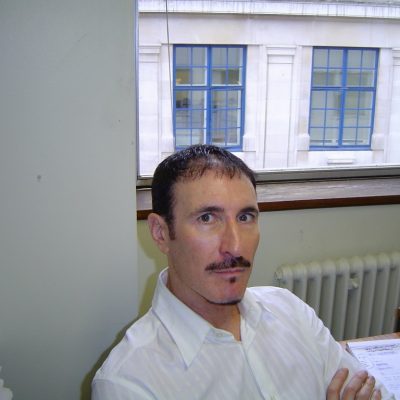
Faculty Mentioned in this Article
Michael-Storper_photo-by-roberto-gudino|webface

Michael Storper

Distinguished Professor of Regional and International Development in Urban Planning

I am an economic geographer and my research is about the geography of economic development. The world economy entered a...

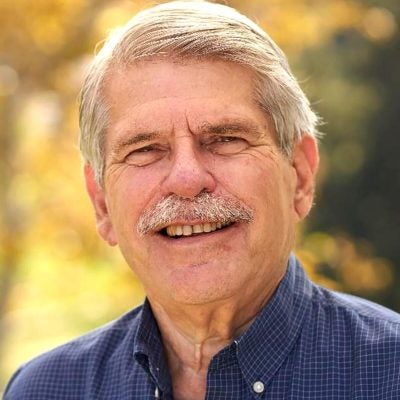
Man with moustache smiling outdoors

Zev Yaroslavsky

Director, Los Angeles Initiative

During a career in public life spanning nearly four decades, Zev Yaroslavsky has been at the forefront of Los Angeles...

Related Articles

Two researchers looking at a monitor

California Proposition 38 Seeks to Authorize State Bonds for Immunology Medical Research

November 10, 2026
Luskin in the News
Read More
Front entrance of Luskin School of Public Affairs

Luskin Faculty Recognized Among World’s Top 2% of Scientists

November 2, 2026
Luskin's Latest Blog

UCLA Luskin School of Public Affairs faculty members have been recognized in the 2026 Stanford-Elsevier Top...

Read More
Memorial Coliseum is site of many landmark events including two summer Olympics the latest in 1984. The landmark building may become obsolete due to safety issues. January 21, 2014, Los Angeles

Zev Yaroslavsky Weighs In on L.A.’s 2028 Olympic Arts Festival

October 21, 2026
Luskin in the News
Read More
California flag with bear and star, overlaid against dollar bills

What to Know About the Billionaire Tax: A Q&A With Zev Yaroslavsky

October 14, 2026
Politics

With Election Day just weeks away, Californians are preparing to weigh in on no fewer than...

Read More
U.S. flags in front of L.A. City Hall

In Race for L.A. Mayor, the Real Challenge Is to Articulate a Vision

September 30, 2026
Luskin in the News
Read More
American flag and the California flag flying on a flag pole in front of a palm tree

Avenal Recall Dispute Raises Questions About California’s Democratic Process

August 21, 2026
Luskin in the News

Avenal, a small Central Valley city of 13,500, has been plunged into political turmoil after voters...

Read More
Learn more about UCLA Luskin

Find contact information and get answers to your questions.

Contact Us

Public Affairs Building
337 Charles E. Young Drive East
Los Angeles, California 90095

Linkedin Youtube Instagram Facebook X-twitter
Campus Resources
  • Map, Directions, Parking
  • Directory
  • Academic Calendar
  • Careers
  • Map, Directions, Parking
  • Directory
  • Academic Calendar
  • Careers
School Resources
  • About
  • Our Dean
  • Administration
  • Luskin School Intranet
  • Board of Advisors
  • Contact Us
  • Visit Us
  • About
  • Our Dean
  • Administration
  • Luskin School Intranet
  • Board of Advisors
  • Contact Us
  • Visit Us
UCLA logo
© 2026 Regents of the University of California
  • Emergency
  • Accessibility
  • Privacy & Terms of Use
  • Emergency
  • Accessibility
  • Privacy & Terms of Use
Facebook Instagram Linkedin X-twitter Youtube Threads
UCLA Luskin School of Public Affairs Logo
Academics
Departments
  • Global Public Affairs
  • Public Policy
  • Real Estate Development
  • Social Welfare
  • Urban Planning
  • Undergraduate Program
  • Global Public Affairs
  • Public Policy
  • Real Estate Development
  • Social Welfare
  • Urban Planning
  • Undergraduate Program
Graduate Programs
  • Master of Global Public Affairs (MGPA)
  • Master of Public Policy (MPP)
  • Master of Real Estate Development (MRED)
  • Master of Social Welfare (MSW)
  • Master of Urban and Regional Planning (MURP)
  • PhD in Social Welfare
  • PhD in Urban Planning
  • Master of Global Public Affairs (MGPA)
  • Master of Public Policy (MPP)
  • Master of Real Estate Development (MRED)
  • Master of Social Welfare (MSW)
  • Master of Urban and Regional Planning (MURP)
  • PhD in Social Welfare
  • PhD in Urban Planning
Undergraduate Programs
  • BA in Public Affairs
  • Minor in Urban and Regional Studies
  • Minor in Gerontology
  • Minor in Public Affairs
  • BA in Public Affairs
  • Minor in Urban and Regional Studies
  • Minor in Gerontology
  • Minor in Public Affairs
Professional Certificates
  • AI in Public Affairs Certificate
  • AI in Public Affairs Certificate
Admissions
Program Specific Admissions
  • Global Public Affairs
  • Public Policy
  • Real Estate Development
  • Social Welfare
  • Urban Planning
  • Undergraduate Program
  • Global Public Affairs
  • Public Policy
  • Real Estate Development
  • Social Welfare
  • Urban Planning
  • Undergraduate Program
Faculty
Our Faculty
  • All Faculty
  • Public Policy
  • Real Estate Development
  • Social Welfare
  • Urban Planning
  • All Faculty
  • Public Policy
  • Real Estate Development
  • Social Welfare
  • Urban Planning
Leadership
  • Our Dean
  • Board of Advisors
  • Faculty Executive Committee
  • Our Dean
  • Board of Advisors
  • Faculty Executive Committee
Research Centers
  • Agile Visual Analytics Lab (AVAL)

    Empowers stakeholders with data to make informed decisions for children, families, and communities.

  • Berggruen Governance Index

    Evaluates the quality of political governance and democracy worldwide.

  • Center for Neighborhood Knowledge (CNK)

    Specializes in spatial analysis of socioeconomic disparities in neighborhoods.

  • Center for Policy Research on Aging (CPRA)

    Explores the societal and policy implications of an aging population.

  • Institute of Transportation Studies (ITS)

    Advances research, education, and meaningful civic engagement on transportation issues.

  • Institute on Inequality and Democracy

    Advances scholarship that confronts threats to democracy in America and around the world.

  • Latin American Cities Initiative

    Connects urban planning and policy networks across the Americas.

  • Latino Policy & Politics Institute (LPPI)

    Addresses policy challenges facing Latinos and communities of color.

  • Lewis Center for Regional Policy Studies

    Studying housing affordability and transportation equity in the L.A. region.

  • Los Angeles Education Research Institute (LAERI)

    Collaborates with schools to improve educational outcomes for L.A. students.

  • Luskin Center for Innovation

    Informing effective and equitable environmental policy that improves lives.

  • UCLA Voting Rights Project

    The flagship project for voting rights litigation and policy research.

All Research Centers
Outcomes
Common Search Terms

Results will show as you type.