Skip to content
  • Students & Alumni
    • Overview
    • Career Services
    • Alumni Relations
    • Student Support
    • Graduate Resource Library
  • News
  • Events
    • Events Calendar
    • Luskin Summit
    • Luskin Lecture Series
    • California Policy Briefing
    • Commencement
  • Students & Alumni
    • Overview
    • Career Services
    • Alumni Relations
    • Student Support
    • Graduate Resource Library
  • News
  • Events
    • Events Calendar
    • Luskin Summit
    • Luskin Lecture Series
    • California Policy Briefing
    • Commencement
Giving
  • Academics
    Departments & Programs
    • Public Policy
    • Real Estate Development
    • Social Welfare
    • Urban Planning
    • Undergraduate Program
    • Public Policy
    • Real Estate Development
    • Social Welfare
    • Urban Planning
    • Undergraduate Program
    Graduate Degrees
    • Master of Public Policy (MPP)
    • Master of Real Estate Development (MRED)
    • Master of Social Welfare (MSW)
    • Master of Urban and Regional Planning (MURP)
    • PhD in Social Welfare
    • PhD in Urban Planning
    • Master of Public Policy (MPP)
    • Master of Real Estate Development (MRED)
    • Master of Social Welfare (MSW)
    • Master of Urban and Regional Planning (MURP)
    • PhD in Social Welfare
    • PhD in Urban Planning
    Undergraduate Degrees
    • BA in Public Affairs
    • Minor in Urban and Regional Studies
    • Minor in Gerontology
    • Minor in Public Affairs
    • BA in Public Affairs
    • Minor in Urban and Regional Studies
    • Minor in Gerontology
    • Minor in Public Affairs
    Professional Certificates
    • Data Analytics Certificate
    • Data Analytics Certificate
  • Admissions
    Program Specific Admissions
    • Public Policy
    • Real Estate Development
    • Social Welfare
    • Urban Planning
    • Undergraduate Program
    • Public Policy
    • Real Estate Development
    • Social Welfare
    • Urban Planning
    • Undergraduate Program
  • Faculty
    Our Faculty
    • All Faculty
    • Public Policy
    • Real Estate Development
    • Social Welfare
    • Urban Planning
    • All Faculty
    • Public Policy
    • Real Estate Development
    • Social Welfare
    • Urban Planning
    Leadership
    • Our Dean
    • Board of Advisors
    • Faculty Executive Committee
    • Our Dean
    • Board of Advisors
    • Faculty Executive Committee
  • Research Centers
    • Agile Visual Analytics Lab (AVAL)

      Empowers stakeholders with data to make informed decisions for children, families, and communities.

    • Berggruen Governance Index

      Evaluates the quality of political governance and democracy worldwide.

    • Center for Neighborhood Knowledge (CNK)

      Specializes in spatial analysis of socioeconomic disparities in neighborhoods.

    • Center for Policy Research on Aging (CPRA)

      Explores the societal and policy implications of an aging population.

    • Agile Visual Analytics Lab (AVAL)

      Empowers stakeholders with data to make informed decisions for children, families, and communities.

    • Berggruen Governance Index

      Evaluates the quality of political governance and democracy worldwide.

    • Center for Neighborhood Knowledge (CNK)

      Specializes in spatial analysis of socioeconomic disparities in neighborhoods.

    • Center for Policy Research on Aging (CPRA)

      Explores the societal and policy implications of an aging population.

    • Institute of Transportation Studies (ITS)

      Advances research, education, and meaningful civic engagement on transportation issues.

    • Institute on Inequality and Democracy

      Advances scholarship that confronts threats to democracy in America and around the world.

    • Latin American Cities Initiative

      Connects urban planning and policy networks across the Americas.

    • Latino Policy & Politics Institute (LPPI)

      Addresses policy challenges facing Latinos and communities of color.

    • Institute of Transportation Studies (ITS)

      Advances research, education, and meaningful civic engagement on transportation issues.

    • Institute on Inequality and Democracy

      Advances scholarship that confronts threats to democracy in America and around the world.

    • Latin American Cities Initiative

      Connects urban planning and policy networks across the Americas.

    • Latino Policy & Politics Institute (LPPI)

      Addresses policy challenges facing Latinos and communities of color.

    • Lewis Center for Regional Policy Studies

      Studying housing affordability and transportation equity in the L.A. region.

    • Los Angeles Education Research Institute (LAERI)

      Collaborates with schools to improve educational outcomes for L.A. students.

    • Luskin Center for Innovation

      Informing effective and equitable environmental policy that improves lives.

    • UCLA Voting Rights Project

      The flagship project for voting rights litigation and policy research.

    • Lewis Center for Regional Policy Studies

      Studying housing affordability and transportation equity in the L.A. region.

    • Los Angeles Education Research Institute (LAERI)

      Collaborates with schools to improve educational outcomes for L.A. students.

    • Luskin Center for Innovation

      Informing effective and equitable environmental policy that improves lives.

    • UCLA Voting Rights Project

      The flagship project for voting rights litigation and policy research.

    All Research Centers
  • Outcomes
Home / News / Protecting the Ballot: Inside UCLA’s Voting Rights Project

Protecting the Ballot: Inside UCLA’s Voting Rights Project

Chad Dunn on protecting the fundamental right to vote through litigation, research, and student advocacy
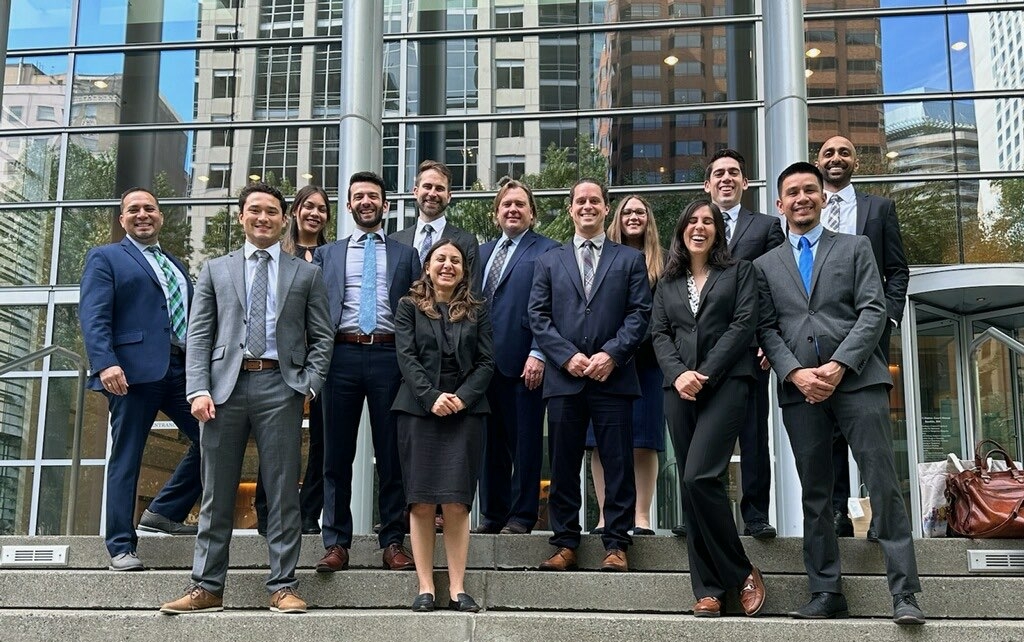
Group photo of the Voting Rights Project team including students and Chad Dunn and Matt Barreto.|Voting Rights Project team stands in front of the States of United States Court House|Galveston Trial group photo of Voting Rights Project Team with Chad Dunn|headshot of Chad Dunn|
| |Galveston Trial group photo of Voting Rights Project Team.||

Posted in

  • Luskin's Latest Blog

Published on

  • March 9, 2026
  • democracy, UCLA, UCLA Luskin, UCLA Voting Rights Project, vote, voting, voting rights

Share this Article

Voting is supposed to be a right—but in America, it’s never guaranteed.

Even in California, a state widely regarded for its robust voter protections, local jurisdictions can dilute votes through local rules, district boundaries, and administrative practices. From city councils to school boards, the mechanics of democracy still decide whose voices are heard.

For Chad Dunn, legal director and co-founder of the UCLA Voting Rights Project (VRP), that reality is precisely why the work exists.

“Every generation of Americans and every generation of people in a democracy has to re-secure their democratic rights,” Dunn says. “They’re never permanently safe.”
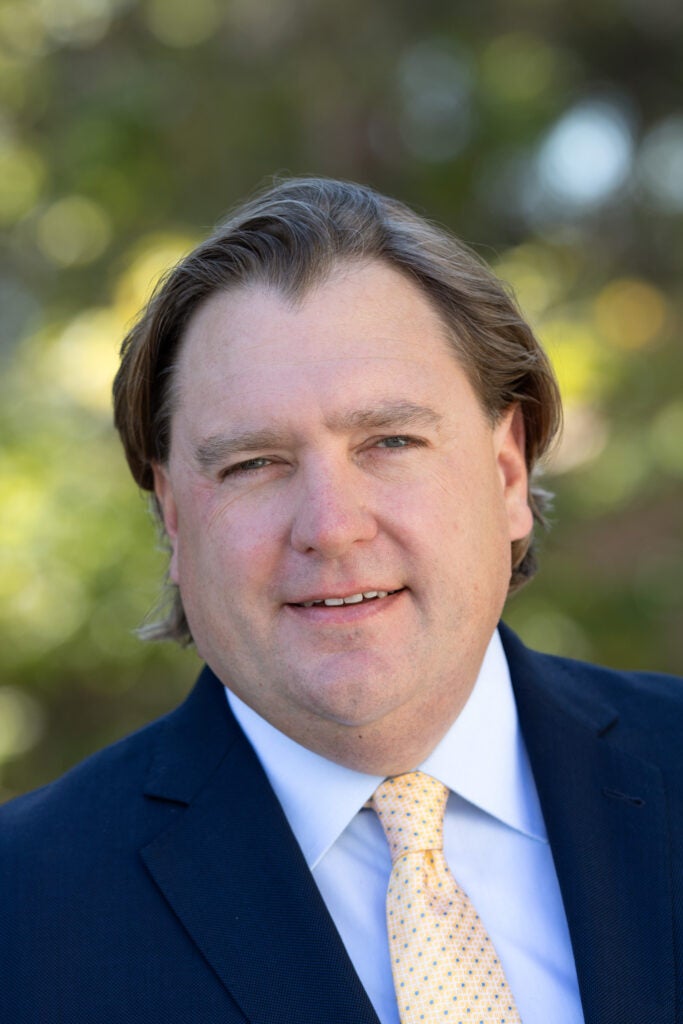
Headshot of Chad Dunn
Chad Dunn

Dunn, who also serves as a lecturer at the UCLA School of Law and the Luskin School of Public Affairs, describes the program as blending high-stakes litigation with rigorous research and hands-on student training.

“The Voting Rights Project is training the next generation of voting rights practitioners,” he explains, “whether it be lawyers, data scientists, or courtroom experts, to secure democracy in the future with real-life active cases and published research.”

Founded in 2018, the project has grown steadily. At any given time, between 30 and 40 students are involved, working directly on cases that span the country.

Dunn makes clear that voting rights in the United States are not static, they “ebb and flow, as we’ve seen throughout American history.” While constitutional and statutory protections exist at the federal and state levels, discriminatory practices persist, which makes enforcement essential.

“The Voting Rights Project is training the next generation of voting rights practitioners, whether it be lawyers, data scientists, or courtroom experts, to secure democracy in the future with real-life active cases and published research.”

The VRP addresses this reality by taking on cases nationwide — including in Texas, Florida and Georgia. While some states require heightened oversight, Dunn notes that California is not immune, pointing to instances in which counties, local governments, and school districts have engaged in vote dilution.

Central to much of this work is the Voting Rights Act of 1965, the landmark federal law which prohibits racial discrimination in voting. Dunn discusses how this law operates in practice and how students in the project are trained to identify and prove violations under the Act.

“One of the key provisions that we teach in our course is what it takes to prove a Voting Rights Act claim,” he says. “And that is under attack throughout the country at a level that we’ve not seen in 30 or 40 years.”

The project currently represents Latino voters in Texas and Washington, Native voters in New Mexico and Montana, Asian American communities, and African American voters in multiple jurisdictions. A case in Galveston, Texas, Dunn notes, has had nationwide implications and is ultimately on its way to the U.S. Supreme Court.
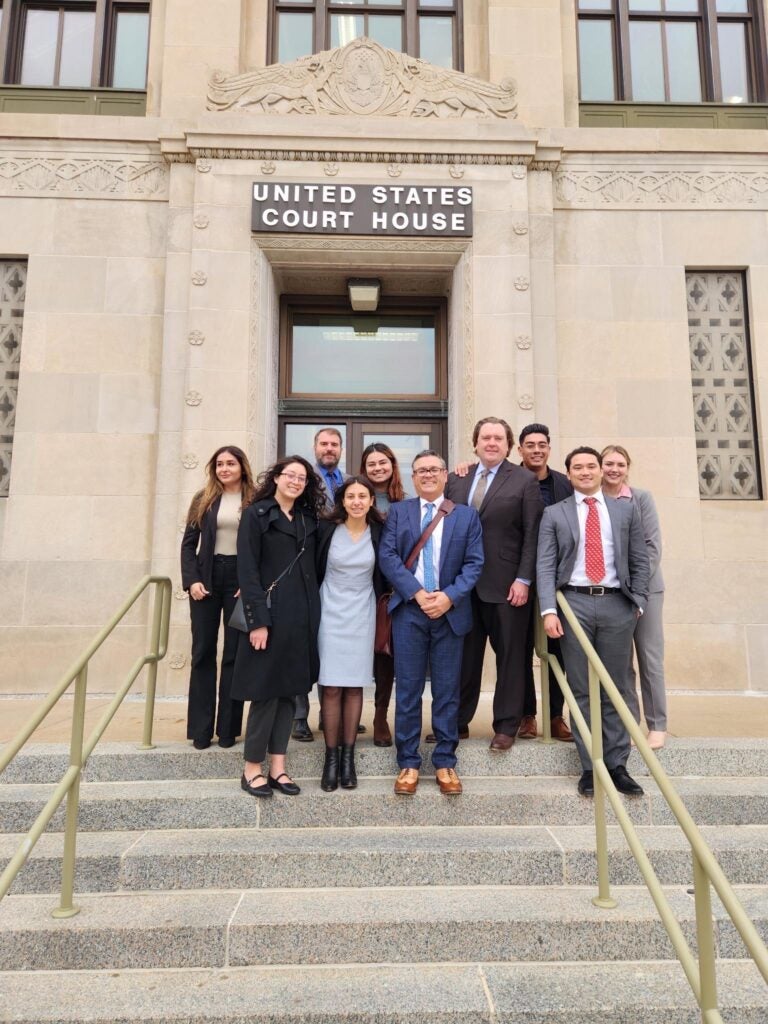
Voting Rights Project at the Dodge Trial in front of the courthouse steps.

Dunn is particularly emphatic about correcting a common misconception: that voting rights litigation is inherently partisan.

“The Voting Rights Project is here to protect everyone’s right to vote,” he says. “We’ve brought cases in communities where candidates of choice for the people we were protecting were Republicans. We’ve brought cases where they were Democrats.”

He stresses that voting rights laws are not about guaranteeing partisan outcomes or ensuring that demographic groups elect specific candidates. “A lot of people get confused that voting rights relate to your entitlement to have so many Democrats in office or so many Republicans,” Dunn says. “These laws don’t have any consideration for those things.”

Instead, the focus is on the individual voter. “What we do is focus on the interests of the individual voters and ensure that whatever the voters’ choices are—whether it’s to have a Black elected official or a white elected official, or Republican or Democrat—those choices are respected and counted,” he says. “That’s the fundamental right to vote.”

One of the VRP’s primary areas of engagement is redistricting. While voting is the act of registering and casting a ballot, geographical location also plays a critical role.

“We can give you the right to vote… we can count your vote… but if we draw you in a particular geography, we can make sure that you’re never actually able to elect your candidate of choice.”

The project analyzes congressional, state legislative, city council, and school district maps. Students examine district histories, racial demographics, voting patterns, and the map-drawing process itself. When discrimination is found, VRP begins with community advocacy, engages enforcement agencies, and files suit if necessary.

This combination of litigation, data analysis, and advocacy exemplifies the project’s interdisciplinary approach. While many participants are law students gaining courtroom experience, the project also includes social scientists, data scientists, and students from anthropology, history, and even medical school.

“One of the fantastic things about UCLA is the diversity of our students,” Dunn says—not only in background, but in talent and interests. “The neat thing about the Voting Rights Project is you can have varying interests and still gain a lot from the program—and you can provide a lot to the program.”

In a typical year, Dunn and his team average two to four trials. Weeks of preparation culminate in courtroom arguments shaped by months or even years of research, collaboration, and strategy. Beyond litigation, VRP conducts analytical projects such as dispersion plots to visually track voting patterns, studies on redistricting techniques, and other research critical to proving cases in court.

For Dunn, the mission is as much about the future as it is about responding to the present.

“American history shows that every generation has needed people on the front lines to defend our right to vote. What we’ve built here at UCLA Luskin is a center dedicated to training those people—it’s truly one of its kind in the United States.”
Related Articles

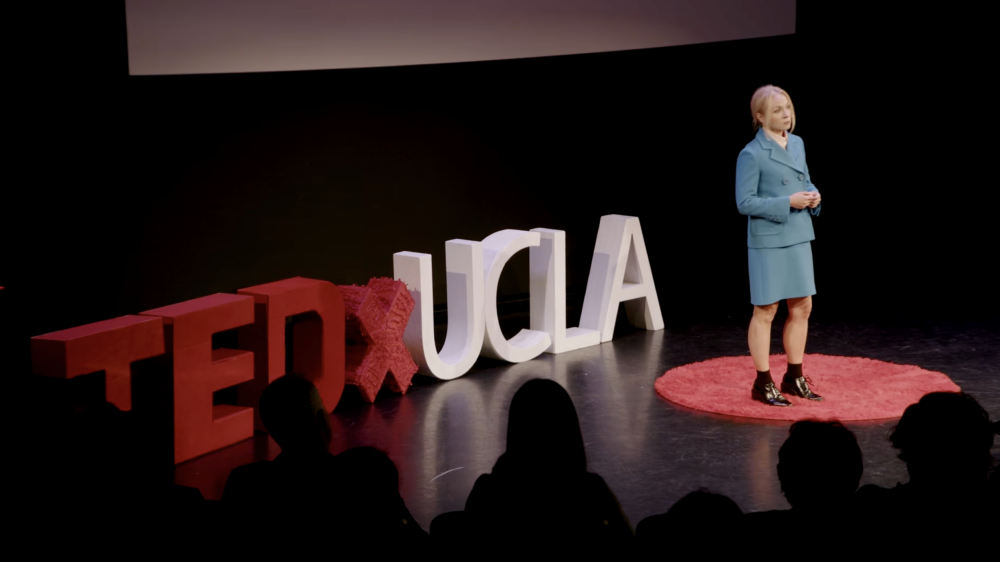
Kelly Turner TedXUCLA talk screenshot with her on a black stage in a blue blazer and skirt.

What does it mean to be too hot, a TEDxUCLA talk

August 27, 2026
Luskin's Latest Blog

By Mara Elana Burstein Extreme heat is changing more than temperatures — influencing how people move...

Read More
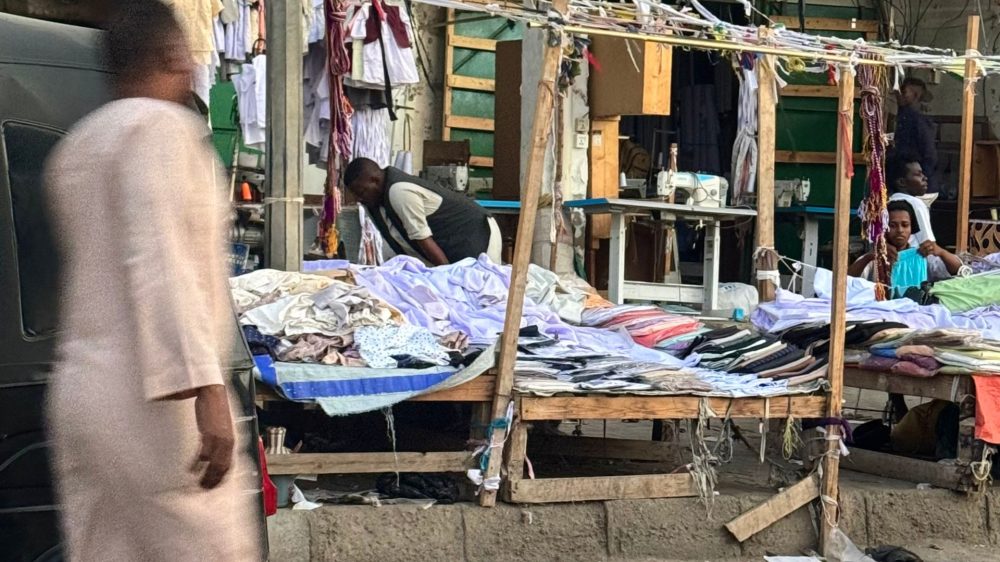
Merchants and vendors at Port Sundan, Sudan, with a man walk across the street

Summer Spotlight: Muram Ibrahim Explores Urban Planning in Post-Conflict Port Sudan

August 11, 2026
Luskin's Latest Blog

This summer, Muram Ibrahim MURP ’27 worked with the Municipal Office of Planning in Port Sudan,...

Read More
Luka Marks stands with Nancy Pelosi and group of women at Feminist Majority Foundation|Luka Marks Stands in front of wall holding up a poster that says Ms. This is what democracy looks like.

Summer Spotlight: Luka Marks Champions Reproductive Justice at the Feminist Majority Foundation

August 7, 2026
Luskin's Latest Blog
UCLA MPP student Luka Marks reflects on her Feminist Majority Foundation internship supporting reproductive justice, research...
Read More
Headshot of Robert Fairlie with cover of his new book the Fall and Rise of Small Businesses.

New Book Examines Small Business Recovery and Racial Equity After the Pandemic

August 7, 2026
Luskin's Latest Blog
UCLA Luskin Professor Robert Fairlie explores how government aid, entrepreneurship and racial inequality shaped small business...
Read More
Learn more about UCLA Luskin

Find contact information and get answers to your questions.

Contact Us

Public Affairs Building
337 Charles E. Young Drive East
Los Angeles, California 90095

Linkedin Youtube Instagram Facebook X-twitter
Campus Resources
  • Map, Directions, Parking
  • Directory
  • Academic Calendar
  • Careers
  • Map, Directions, Parking
  • Directory
  • Academic Calendar
  • Careers
School Resources
  • About
  • Our Dean
  • Administration
  • Board of Advisors
  • Contact Us
  • Visit Us
  • About
  • Our Dean
  • Administration
  • Board of Advisors
  • Contact Us
  • Visit Us
© 2026 Regents of the University of California
  • Emergency
  • Accessibility
  • Privacy & Terms of Use
  • Emergency
  • Accessibility
  • Privacy & Terms of Use
Facebook Instagram Linkedin X-twitter Youtube Threads
Academics
Departments
  • Public Policy
  • Real Estate Development
  • Social Welfare
  • Urban Planning
  • Undergraduate Program
  • Public Policy
  • Real Estate Development
  • Social Welfare
  • Urban Planning
  • Undergraduate Program
Graduate Programs
  • Master of Public Policy (MPP)
  • Master of Real Estate Development (MRED)
  • Master of Social Welfare (MSW)
  • Master of Urban and Regional Planning (MURP)
  • PhD in Social Welfare
  • PhD in Urban Planning
  • Master of Public Policy (MPP)
  • Master of Real Estate Development (MRED)
  • Master of Social Welfare (MSW)
  • Master of Urban and Regional Planning (MURP)
  • PhD in Social Welfare
  • PhD in Urban Planning
Undergraduate Programs
  • BA in Public Affairs
  • Minor in Urban and Regional Studies
  • Minor in Gerontology
  • Minor in Public Affairs
  • BA in Public Affairs
  • Minor in Urban and Regional Studies
  • Minor in Gerontology
  • Minor in Public Affairs
Professional Certificates
  • Data Analytics Certificate
  • Data Analytics Certificate
Admissions
Program Specific Admissions
  • Public Policy
  • Real Estate Development
  • Social Welfare
  • Urban Planning
  • Undergraduate Program
  • Public Policy
  • Real Estate Development
  • Social Welfare
  • Urban Planning
  • Undergraduate Program
Faculty
Our Faculty
  • All Faculty
  • Public Policy
  • Real Estate Development
  • Social Welfare
  • Urban Planning
  • All Faculty
  • Public Policy
  • Real Estate Development
  • Social Welfare
  • Urban Planning
Leadership
  • Our Dean
  • Board of Advisors
  • Faculty Executive Committee
  • Our Dean
  • Board of Advisors
  • Faculty Executive Committee
Research Centers
  • Agile Visual Analytics Lab (AVAL)

    Empowers stakeholders with data to make informed decisions for children, families, and communities.

  • Berggruen Governance Index

    Evaluates the quality of political governance and democracy worldwide.

  • Center for Neighborhood Knowledge (CNK)

    Specializes in spatial analysis of socioeconomic disparities in neighborhoods.

  • Center for Policy Research on Aging (CPRA)

    Explores the societal and policy implications of an aging population.

  • Agile Visual Analytics Lab (AVAL)

    Empowers stakeholders with data to make informed decisions for children, families, and communities.

  • Berggruen Governance Index

    Evaluates the quality of political governance and democracy worldwide.

  • Center for Neighborhood Knowledge (CNK)

    Specializes in spatial analysis of socioeconomic disparities in neighborhoods.

  • Center for Policy Research on Aging (CPRA)

    Explores the societal and policy implications of an aging population.

  • Institute of Transportation Studies (ITS)

    Advances research, education, and meaningful civic engagement on transportation issues.

  • Institute on Inequality and Democracy

    Advances scholarship that confronts threats to democracy in America and around the world.

  • Latin American Cities Initiative

    Connects urban planning and policy networks across the Americas.

  • Latino Policy & Politics Institute (LPPI)

    Addresses policy challenges facing Latinos and communities of color.

  • Institute of Transportation Studies (ITS)

    Advances research, education, and meaningful civic engagement on transportation issues.

  • Institute on Inequality and Democracy

    Advances scholarship that confronts threats to democracy in America and around the world.

  • Latin American Cities Initiative

    Connects urban planning and policy networks across the Americas.

  • Latino Policy & Politics Institute (LPPI)

    Addresses policy challenges facing Latinos and communities of color.

  • Lewis Center for Regional Policy Studies

    Studying housing affordability and transportation equity in the L.A. region.

  • Los Angeles Education Research Institute (LAERI)

    Collaborates with schools to improve educational outcomes for L.A. students.

  • Luskin Center for Innovation

    Informing effective and equitable environmental policy that improves lives.

  • UCLA Voting Rights Project

    The flagship project for voting rights litigation and policy research.

  • Lewis Center for Regional Policy Studies

    Studying housing affordability and transportation equity in the L.A. region.

  • Los Angeles Education Research Institute (LAERI)

    Collaborates with schools to improve educational outcomes for L.A. students.

  • Luskin Center for Innovation

    Informing effective and equitable environmental policy that improves lives.

  • UCLA Voting Rights Project

    The flagship project for voting rights litigation and policy research.

All Research Centers
Outcomes
Common Search Terms

Results will show as you type.