Skip to content
  • Students & Alumni
    • Career Services
    • Alumni Relations
    • Student Support
    • Graduate Resource Library
    • For Employers
  • News
  • Events
    • Events Calendar
    • Luskin Summit
    • Luskin Lecture Series
    • California Policy Briefing
    • Commencement
  • Students & Alumni
    • Career Services
    • Alumni Relations
    • Student Support
    • Graduate Resource Library
    • For Employers
  • News
  • Events
    • Events Calendar
    • Luskin Summit
    • Luskin Lecture Series
    • California Policy Briefing
    • Commencement
Giving
UCLA Luskin School of Public Affairs Logo
  • Academics
    Departments & Programs
    • Global Public Affairs
    • Public Policy
    • Real Estate Development
    • Social Welfare
    • Urban Planning
    • Undergraduate Program
    • Global Public Affairs
    • Public Policy
    • Real Estate Development
    • Social Welfare
    • Urban Planning
    • Undergraduate Program
    Graduate Degrees
    • Master of Global Public Affairs (MGPA)
    • Master of Public Policy (MPP)
    • Master of Real Estate Development (MRED)
    • Master of Social Welfare (MSW)
    • Master of Urban and Regional Planning (MURP)
    • PhD in Social Welfare
    • PhD in Urban Planning
    • Master of Global Public Affairs (MGPA)
    • Master of Public Policy (MPP)
    • Master of Real Estate Development (MRED)
    • Master of Social Welfare (MSW)
    • Master of Urban and Regional Planning (MURP)
    • PhD in Social Welfare
    • PhD in Urban Planning
    Undergraduate Degrees
    • BA in Public Affairs
    • Minor in Urban and Regional Studies
    • Minor in Gerontology
    • Minor in Public Affairs
    • BA in Public Affairs
    • Minor in Urban and Regional Studies
    • Minor in Gerontology
    • Minor in Public Affairs
    Professional Certificates
    • AI in Public Affairs Certificate
    • AI in Public Affairs Certificate
  • Admissions
    Program Specific Admissions
    • Global Public Affairs
    • Public Policy
    • Real Estate Development
    • Social Welfare
    • Urban Planning
    • Undergraduate Program
    • Global Public Affairs
    • Public Policy
    • Real Estate Development
    • Social Welfare
    • Urban Planning
    • Undergraduate Program
  • Faculty
    Our Faculty
    • All Faculty
    • Public Policy
    • Real Estate Development
    • Social Welfare
    • Urban Planning
    • All Faculty
    • Public Policy
    • Real Estate Development
    • Social Welfare
    • Urban Planning
    Leadership
    • Our Dean
    • Board of Advisors
    • Faculty Executive Committee
    • Our Dean
    • Board of Advisors
    • Faculty Executive Committee
  • Research Centers
    • Agile Visual Analytics Lab (AVAL)

      Empowers stakeholders with data to make informed decisions for children, families, and communities.

    • Berggruen Governance Index

      Evaluates the quality of political governance and democracy worldwide.

    • Center for Neighborhood Knowledge (CNK)

      Specializes in spatial analysis of socioeconomic disparities in neighborhoods.

    • Center for Policy Research on Aging (CPRA)

      Explores the societal and policy implications of an aging population.

    • Institute of Transportation Studies (ITS)

      Advances research, education, and meaningful civic engagement on transportation issues.

    • Institute on Inequality and Democracy

      Advances scholarship that confronts threats to democracy in America and around the world.

    • Latin American Cities Initiative

      Connects urban planning and policy networks across the Americas.

    • Latino Policy & Politics Institute (LPPI)

      Addresses policy challenges facing Latinos and communities of color.

    • Lewis Center for Regional Policy Studies

      Studying housing affordability and transportation equity in the L.A. region.

    • Los Angeles Education Research Institute (LAERI)

      Collaborates with schools to improve educational outcomes for L.A. students.

    • Luskin Center for Innovation

      Informing effective and equitable environmental policy that improves lives.

    • UCLA Voting Rights Project

      The flagship project for voting rights litigation and policy research.

    All Research Centers
  • Outcomes
Home / News / Transportation and Isolation: Serious Challenges for Diverse, Older Angelenos

Transportation and Isolation: Serious Challenges for Diverse, Older Angelenos

Research conducted by UCLA Luskin and USC Leonard Davis — and supported by AARP — examines travel, technology and mobility issues
Surveys of diverse, older Angelenos explored their travel patterns, use of technology and the mobility problems they face, which include long rides on public
Surveys of diverse, older Angelenos explored their travel patterns, use of technology and the mobility problems they face, which include long rides on public transit. Photo by AARP California

Posted in

  • Transportation, Urban Planning

Published on

  • December 11, 2018
  • aging, diversity, Los Angeles, mobility, technology, transportation

Share this Article

In an effort to identify solutions to improve the lives of older adults and people of all ages and abilities, the UCLA Luskin School of Public Affairs and USC Leonard Davis School of Gerontology, with the support of AARP, recently conducted surveys of diverse, older Angelenos, exploring their travel patterns, use of technology, and the mobility problems they face.

“We united on one common goal, the importance for understanding community needs, opportunities, and barriers that can support, create and sustain livable and age-friendly communities in Los Angeles,” said Nancy McPherson, State Director of AARP. “We know that the more connected and engaged people are with their community, the more likely they are to age successfully and remain living in their homes for as long as possible, as the vast majority wish to do.”

The UCLA research team focused on identifying mobility and travel patterns by conducting focus groups and interviews with 81 older adults in the neighborhoods of Koreatown, Westlake and East Hollywood, including adults visiting St. Barnabas Senior Services (SBSS), a local organization that provides health and social services. The UCLA report, “Bolstering Mobility and Transportation Options for Low-Income Older Adults,” found that:

  • Participants expressed difficulty in getting around, often endure long transit trips and uncomfortable or scary walking environments and social hazards that could cause them to trip and fall, significantly reducing their independence and quality of life.
  • For many, walking around their neighborhoods is the primary mode of transportation; however, there are significant physical and social impediments that constrain mobility.
  • A small number own cars and many rely on family and friends to drive them. Use of point-to-point travel services (e.g., taxis, ride-hailing services) is rare and constrained by finances.
  • Many lack competency with technology to order ride-hailing services.
  • Mobility constraints affect the number and frequency of trips.
  • Differences exist among study participants in regard to the numbers of social and recreational trips. Older adults visiting SBSS take a larger number of daily trips and have a higher likelihood of making social and recreational trips than those who are not visiting SBSS.

“Mobility affects the quality of life. Decreased mobility means also decreased access to city amenities or jobs, and socialization opportunities, as well as a higher risk for social isolation. Our findings suggest that certain improvements both in the physical environment and in the transit and paratransit services can help increase the mobility of low-income, older adults, and we articulate these improvements in our report,” said Anastasia Loukaitou-Sideris, Associate Dean of the UCLA Luskin School of Public Affairs. “We are welcoming the opportunity to join forces with the AARP and our USC colleagues and advocate for more age-friendly California cities.”

For more information on the UCLA Lewis Center for Regional Policy Studies report, “Bolstering Mobility and Transportation Options for Low-Income Older Adults,” click here.

In recent years, there has been a growing focus on the consequences of loneliness and isolation, especially among older adults. While adoption of technology and social media has the potential to reduce isolation, issues such as cost, disinterest and lack of the skills needed to use various devices may hinder older adults’ adoption. Los Angeles’ ethnically, linguistically and geographically diverse population of older adults made it an ideal location for the USC Leonard School of Gerontology to explore how this population uses technology and the extent to which they believe it can improve connectivity and reduce isolation.

The USC research team conducted six focus groups in English, Spanish and Korean at SBSS with 48 older adults living in a low-income area of Los Angeles, home to a diverse, largely immigrant population. Key findings from this report, “Aging in Place in Los Angeles: Recognizing Challenges to Social Connectedness,” include:

  • A relatively high use of some technology among this engaged group, as well as a wide range in social connectivity with family, friends, and members of the community;
  • Although some older adults did not have the resources or the desire to use technology, others used mobile phones, smart phones, tablets, and computers – either in combination or alone – for purposes of contacting their family and friends, accessing health care information, getting the news, shopping, and watching television;
  • Cost, disinterest, and lack of the skills needed to use various devices hindered older adults’ adoption of technology and social media;
  • Many older adults indicated a reluctance to adopt newer technology because they preferred to communicate in-person and they expressed concerns that technology is too complicated or too expensive; others used it for entertainment, to plan local and long-distance travels, and to communicate with their loved ones.

“Our findings suggest that although technology isn’t a cure all for loneliness, it can be a tool in the tool box for addressing social isolation. Policy makers and tech developers need to consider how older adults currently use technology, how it can better suit their needs, and barriers that prevent them from using it effectively,” said Kate Wilber, USC Leonard Davis School of Gerontology professor. “We are thankful that AARP and our UCLA collaborators recognize the importance of addressing social isolation and look forward to working toward solutions that benefit older adults in Los Angeles and beyond.”

For more information on USC’s “Disrupting Isolation in Housing for an Aging Population,” click here.
Faculty Mentioned in this Article
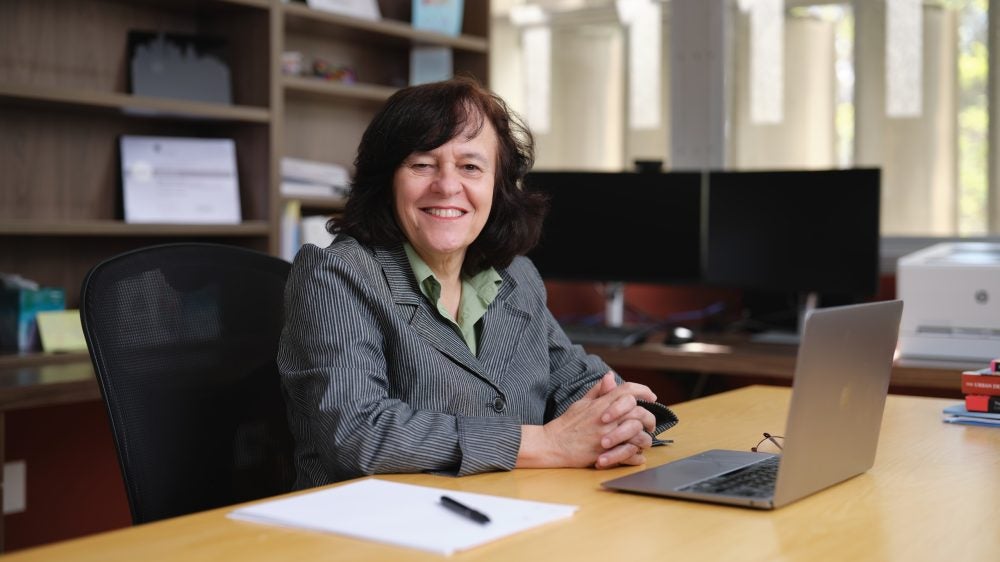
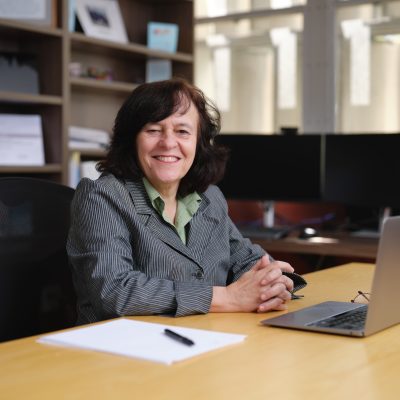
Headshot of Anastasia Loukaitou-Sideris

Anastasia Loukaitou-Sideris

Dean, Luskin School of Public Affairs; Distinguished Professor of Urban Planning.

Anastasia Loukaitou-Sideris is the Dean of the UCLA Luskin School of Public Affairs, a former Associate Dean, a Distinguished Professor...

Related Articles

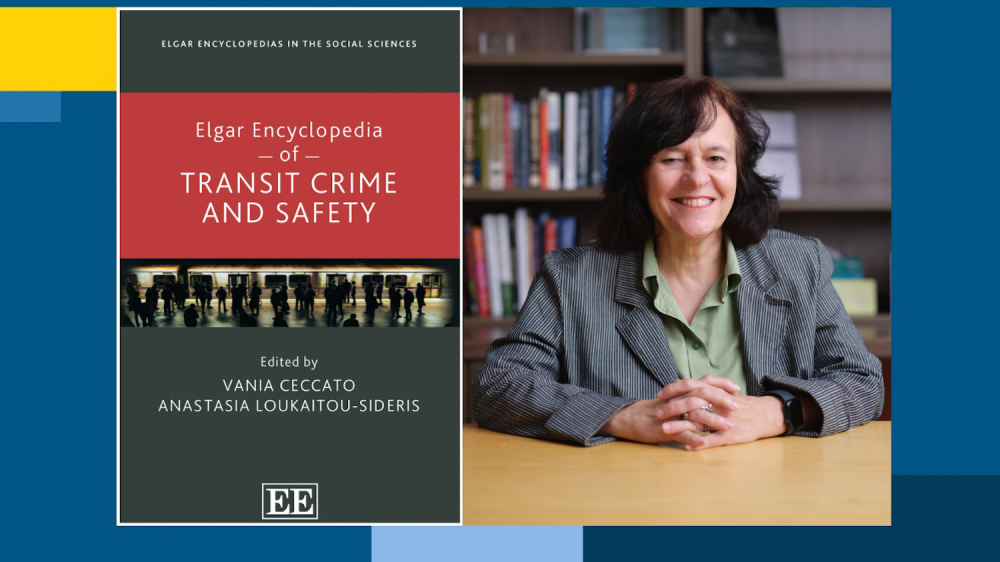
book cover on left, photo of woman with dark hair wearing jacket on right

New Book Serves as Authoritative Reference on Transit Crime Around the World

September 24, 2026
School of Public Affairs

A new book co-edited by UCLA Luskin Dean Anastasia Loukaitou-Sideris provides a comprehensive overview of crime...

Read More
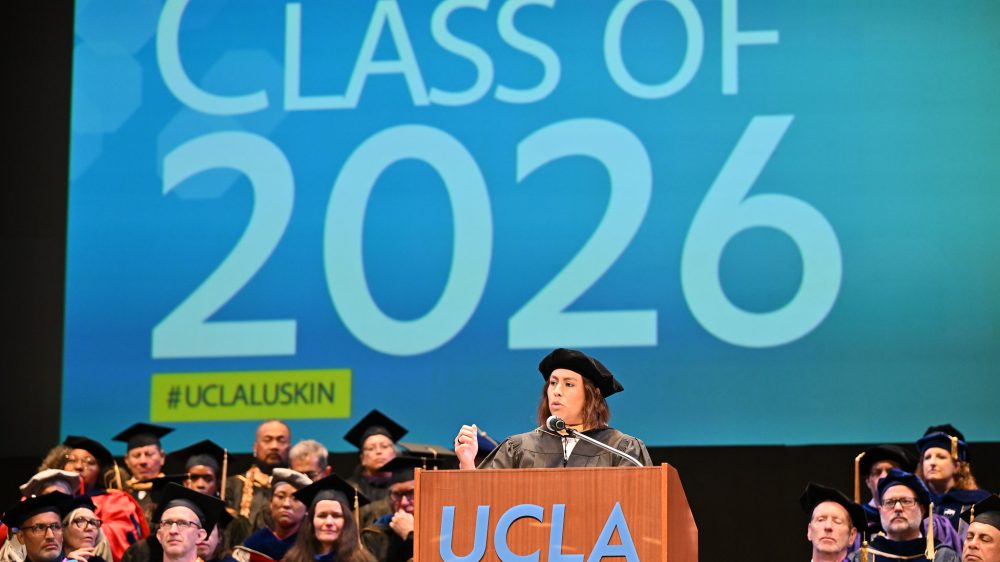
California State Senator Caroline Menjivar inspires graduates during her keynote address at the UCLA Luskin Graduate Commencement Ceremony on June 12

A Rousing Sendoff for UCLA Luskin’s Class of 2026

June 16, 2026
Alumni

UCLA Luskin celebrated its Class of 2026 with two commencement ceremonies on June 12, one for...

Read More
Headshot of Anastasia Loukaitou-Sideris

Anastasia Loukaitou-Sideris Named Dean of UCLA Luskin School of Public Affairs

June 1, 2026
School of Public Affairs

Anastasia Loukaitou-Sideris, who has served as interim dean of the UCLA Luskin School of Public Affairs...

Read More
Tina Hordzwick/UCLA

UCLA Luskin Social Welfare Receives Landmark $13.5 Million Investment to Revolutionize Youth Mental Health Training

April 7, 2026
School of Public Affairs
UCLA Luskin Social Welfare receives $13.5M from Ballmer Group to train social workers addressing youth mental...
Read More
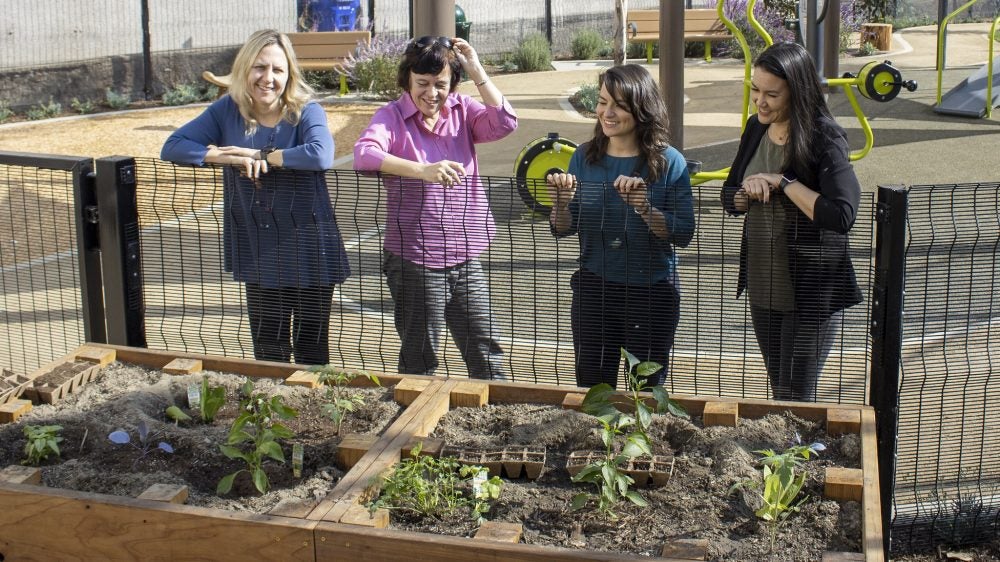
Anastasia and her research team stand over a raised garden bed at the Golden Age Park in Westlake.

Reimagining Parking Lots into Senior-Friendly Parks in Los Angeles

March 5, 2026
Luskin in the News
Anastasia Loukaitou-Sideris led research transforming underused urban spaces into safe and inclusive parks for older adults....
Read More
two people at bus stop at night

Loukaitou-Sideris on How to Keep Public Transit Safe and Welcoming

October 22, 2025
Luskin in the News
UCLA scholar recommends employing a suite of strategies at transportation hubs, including thoughtful design and new...
Read More
Learn more about UCLA Luskin

Find contact information and get answers to your questions.

Contact Us

Public Affairs Building
337 Charles E. Young Drive East
Los Angeles, California 90095

Linkedin Youtube Instagram Facebook X-twitter
Campus Resources
  • Map, Directions, Parking
  • Directory
  • Academic Calendar
  • Careers
  • Map, Directions, Parking
  • Directory
  • Academic Calendar
  • Careers
School Resources
  • About
  • Our Dean
  • Administration
  • Luskin School Intranet
  • Board of Advisors
  • Contact Us
  • Visit Us
  • About
  • Our Dean
  • Administration
  • Luskin School Intranet
  • Board of Advisors
  • Contact Us
  • Visit Us
UCLA logo
© 2026 Regents of the University of California
  • Emergency
  • Accessibility
  • Privacy & Terms of Use
  • Emergency
  • Accessibility
  • Privacy & Terms of Use
Facebook Instagram Linkedin X-twitter Youtube Threads
UCLA Luskin School of Public Affairs Logo
Academics
Departments
  • Global Public Affairs
  • Public Policy
  • Real Estate Development
  • Social Welfare
  • Urban Planning
  • Undergraduate Program
  • Global Public Affairs
  • Public Policy
  • Real Estate Development
  • Social Welfare
  • Urban Planning
  • Undergraduate Program
Graduate Programs
  • Master of Global Public Affairs (MGPA)
  • Master of Public Policy (MPP)
  • Master of Real Estate Development (MRED)
  • Master of Social Welfare (MSW)
  • Master of Urban and Regional Planning (MURP)
  • PhD in Social Welfare
  • PhD in Urban Planning
  • Master of Global Public Affairs (MGPA)
  • Master of Public Policy (MPP)
  • Master of Real Estate Development (MRED)
  • Master of Social Welfare (MSW)
  • Master of Urban and Regional Planning (MURP)
  • PhD in Social Welfare
  • PhD in Urban Planning
Undergraduate Programs
  • BA in Public Affairs
  • Minor in Urban and Regional Studies
  • Minor in Gerontology
  • Minor in Public Affairs
  • BA in Public Affairs
  • Minor in Urban and Regional Studies
  • Minor in Gerontology
  • Minor in Public Affairs
Professional Certificates
  • AI in Public Affairs Certificate
  • AI in Public Affairs Certificate
Admissions
Program Specific Admissions
  • Global Public Affairs
  • Public Policy
  • Real Estate Development
  • Social Welfare
  • Urban Planning
  • Undergraduate Program
  • Global Public Affairs
  • Public Policy
  • Real Estate Development
  • Social Welfare
  • Urban Planning
  • Undergraduate Program
Faculty
Our Faculty
  • All Faculty
  • Public Policy
  • Real Estate Development
  • Social Welfare
  • Urban Planning
  • All Faculty
  • Public Policy
  • Real Estate Development
  • Social Welfare
  • Urban Planning
Leadership
  • Our Dean
  • Board of Advisors
  • Faculty Executive Committee
  • Our Dean
  • Board of Advisors
  • Faculty Executive Committee
Research Centers
  • Agile Visual Analytics Lab (AVAL)

    Empowers stakeholders with data to make informed decisions for children, families, and communities.

  • Berggruen Governance Index

    Evaluates the quality of political governance and democracy worldwide.

  • Center for Neighborhood Knowledge (CNK)

    Specializes in spatial analysis of socioeconomic disparities in neighborhoods.

  • Center for Policy Research on Aging (CPRA)

    Explores the societal and policy implications of an aging population.

  • Institute of Transportation Studies (ITS)

    Advances research, education, and meaningful civic engagement on transportation issues.

  • Institute on Inequality and Democracy

    Advances scholarship that confronts threats to democracy in America and around the world.

  • Latin American Cities Initiative

    Connects urban planning and policy networks across the Americas.

  • Latino Policy & Politics Institute (LPPI)

    Addresses policy challenges facing Latinos and communities of color.

  • Lewis Center for Regional Policy Studies

    Studying housing affordability and transportation equity in the L.A. region.

  • Los Angeles Education Research Institute (LAERI)

    Collaborates with schools to improve educational outcomes for L.A. students.

  • Luskin Center for Innovation

    Informing effective and equitable environmental policy that improves lives.

  • UCLA Voting Rights Project

    The flagship project for voting rights litigation and policy research.

All Research Centers
Outcomes
Common Search Terms

Results will show as you type.