
Overview
Explore UCLA Luskin Urban Planning students’ Applied Planning Research Projects (APRPs) through the interactive map below. Each pin represents a client-based capstone project, highlighting the diverse partnerships and planning initiatives students have undertaken across Los Angeles and throughout California.
In 2026, nearly 30 students collaborated with nonprofit organizations, public agencies, and planning practitioners to address a wide range of real-world planning challenges. Their work spanned issues at multiple scales – from developing community-centered strategies for lot redevelopment in Little Tokyo, to advancing tenants rights across Los Angeles, to improving equestrian trail access in the San Fernando Valley. Students also examined pressing statewide challenges, including the relationship between water supply and affordable housing, and approaches to advancing equity in California’s climate action planning.
Across the 2026 cohort, several themes emerged that reflect the region’s most pressing planning challenges and opportunities. In the wake of the Eaton Fire, students partnered with communities in Altadena to support recovery and resilience efforts through research on inclusive and youth-centered design, public realm connectivity and mobility, and equitable rebuilding strategies for displaced residents. Several projects focused on strengthening public and active transportation ahead of the 2028 Olympic and Paralympic Games, while others addressed the impacts of a warming climate through heat equity strategies such as schoolyard tree planting and cool pavement implementation.
These projects reflect the breadth of UCLA Luskin’s Urban Planning program and its commitment to preparing students to work collaboratively with communities and organizations to address complex planning challenges across the region.
2026 Featured Capstone Projects
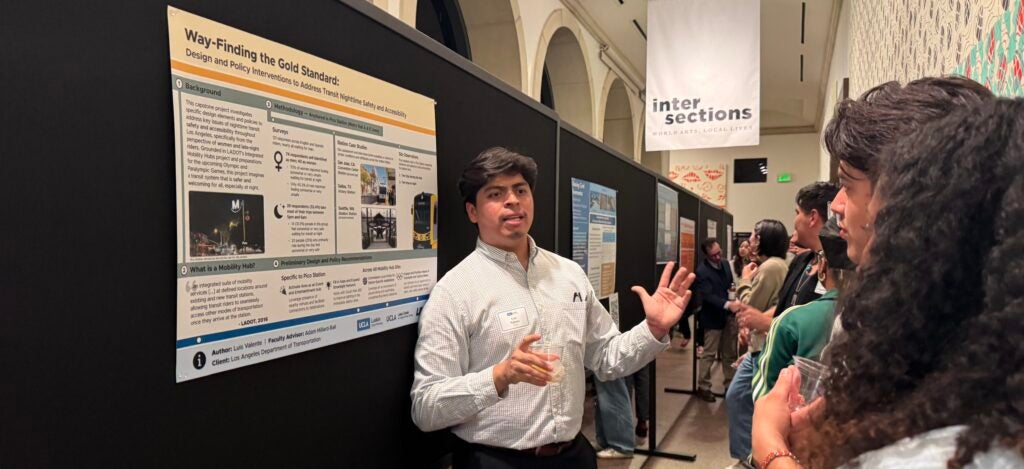
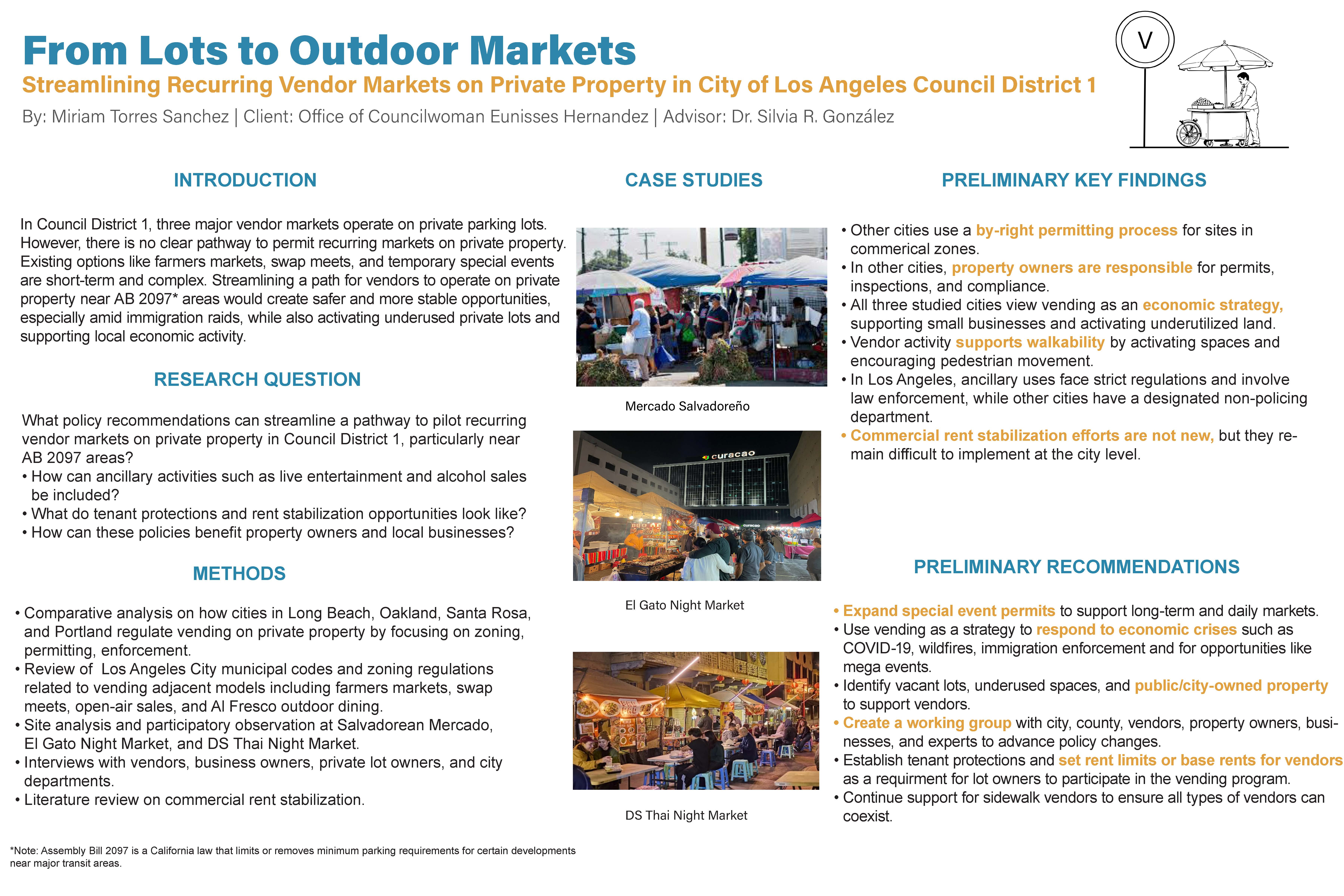
Opportunity Lots: Piloting Rent-Stabilized Vendor Markets on Private Property in Los Angeles’ City Council District 1
By Miriam Torres-Sanchez
Council District 1’s vendor markets on private properties in Pico-Union, Westlake, and Chinatown generate significant economic and cultural benefits, yet lack a formal permitting framework. This regulatory gap creates instability, exposing vendors and property owners to enforcement actions, displacement, unsafe conditions, and rising costs. In her project, Miriam explores recommendations for permitting pathways to support vendors, activate underused spaces, foster partnerships with local businesses, and strengthen CD 1’s economic vitality.
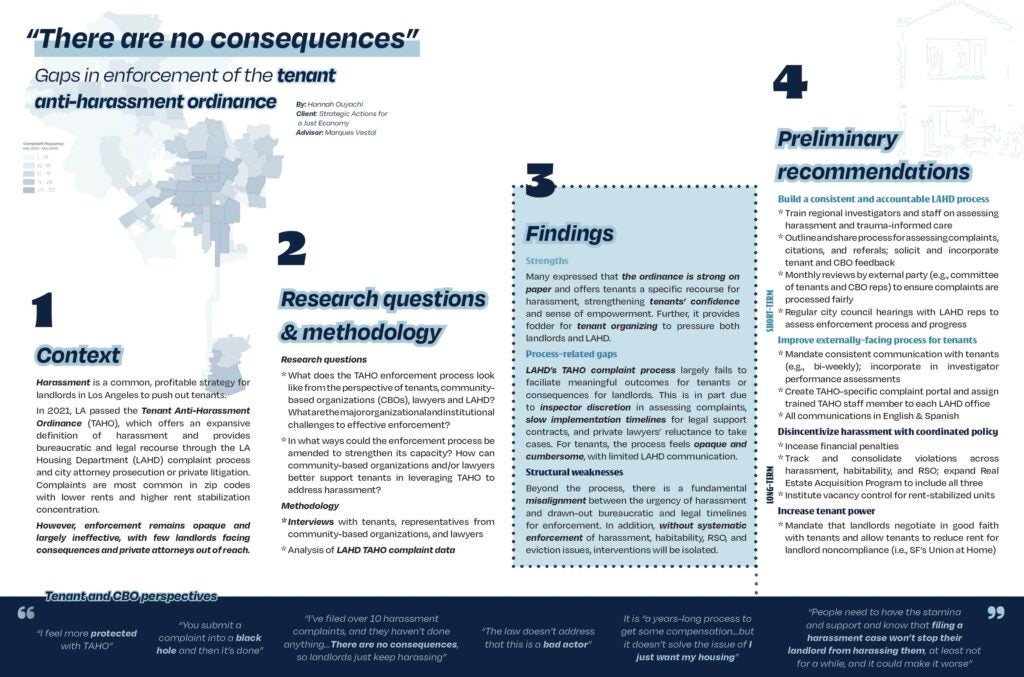
Harassed in LA: A Study of the Barriers to Implementing and Enforcing the Tenant Anti-Harassment Ordinance
By Hannah Ouyachi
Hannah evaluates the effectiveness of Los Angeles’ Tenant Anti-Harassment Ordinance (TAHO) as a tool for protecting tenants from harassment and displacement. Drawing on interviews with tenants, attorneys, community organizations, and city staff, as well as analysis of complaint data, the project examines the strengths and limitations of TAHO enforcement.The project finds that while TAHO offers important protections, more effective administrative enforcement and broader structural reforms are needed to address the underlying drivers of tenant harassment and displacement.
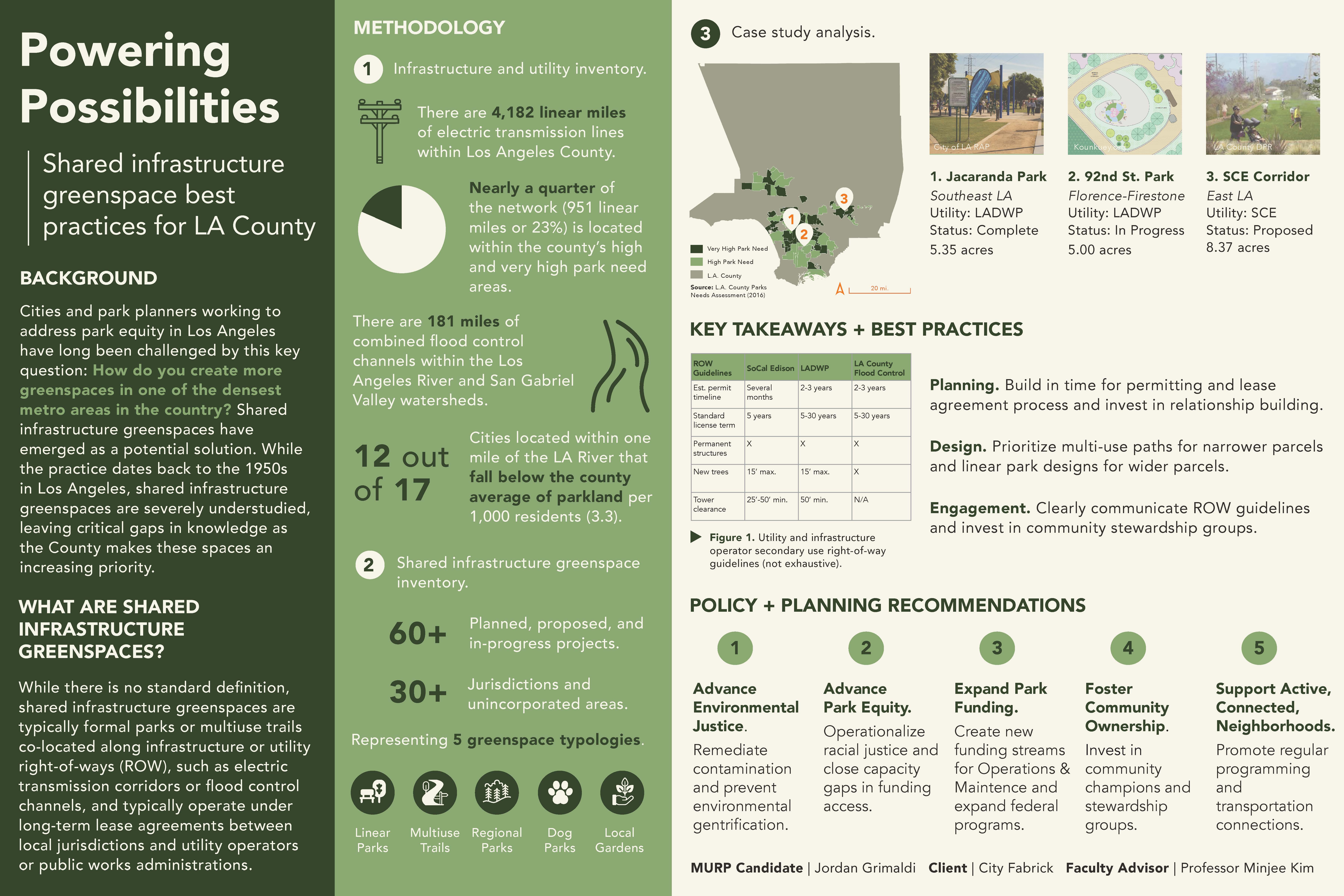
Powering Possibilities: Best Practices for Shared Infrastructure Greenspaces in Los Angeles County
By Jordan Grimaldi
Jordan examines the use of shared infrastructure greenspaces as a strategy for expanding park access in Los Angeles County, where more than half of residents live in areas with high or very high park needs. Drawing on Los Angeles-based case studies, the project develops an inventory of parks and multiuse trails located within infrastructure and utility corridors, such as transmission lines, flood control channels, and former rail corridors. The study highlights shared infrastructure greenspaces as an important tool for addressing park inequities in dense urban areas and provides best practices and policy recommendations to guide future implementation efforts.
Past Capstone Projects
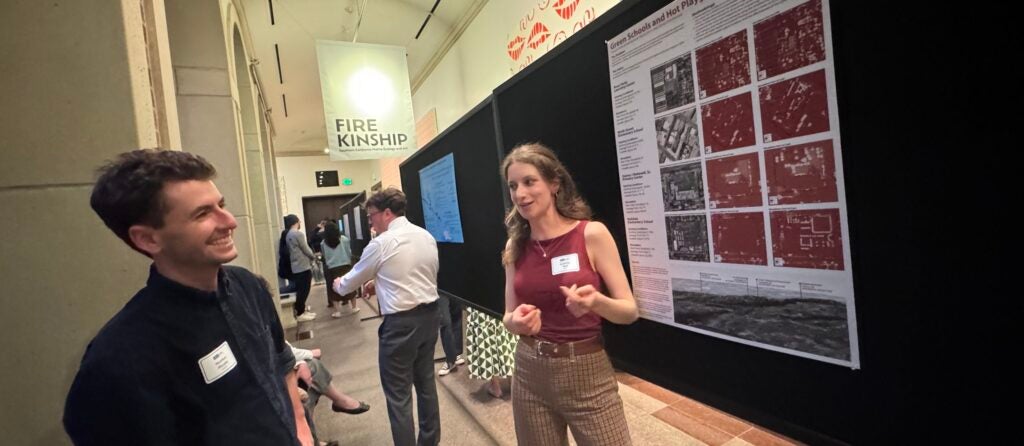
Explore the archive of past capstone projects completed in previous academic years. The searchable database features research and applied planning work across topics including housing, transportation, climate resilience, environmental justice, urban design and community development.
Note: Capstone projects between 1973 and 2011 can be found at http://catalog.library.ucla.edu/ by searching this call number: LD791.9 .U7. Access to view materials in person may be required.